
Standards to Acceptance: WEIZIDOM Gate Valve Compliance vs. Flowserve, KSB, AVK, Crane, Velan
Standards to Acceptance: WEIZIDOM Gate Valve Compliance vs. Flowserve, KSB, AVK, Crane, Velan
Compliance is not a document a supplier sends once. It is the ability to reproduce a documented, test-supported result for a specific model, size, pressure class and duty — on demand, at the moment of acceptance.
Global Market Insights estimated the industrial valve market at USD 73.9 billion in 2025, with gate valves reported at roughly 15% of that revenue. At that scale, qualification decisions rather than price alone determine which manufacturers reach project specifications. This review benchmarks WEIZIDOM against Flowserve, KSB, AVK, Crane and Velan on compliance and qualification readiness. It does not rank brand prestige; it compares what each side can document, and it separates statements a buyer can act on from statements that still require verification.

Why qualification became a screening gate rather than a checkbox
Gate valves sit inside at least four distinct design families, and qualification in one does not transfer automatically to another. Metric PN-rated valves follow DIN/EN and GB practice with their own face-to-face dimensions and flange drilling. API 600 governs heavy-duty bolted-bonnet steel gate valves for petroleum refinery and related applications. BS 5163 rising-stem gate valves are the usual reference in waterworks distribution. AWWA specifications dominate many municipal water programmes. A supplier that is qualified in one family is not thereby qualified in the next.
Edition drift compounds the problem. The published API 600 scope consulted for this review dates to 2015, while a standards catalogue record identifies API STD 600:2021 as a publication for steel gate valves with flanged and butt-welding ends and bolted bonnets. These are different editions, and the current applicable status should be confirmed against the official API catalogue before an RFQ cites it. A certificate that does not name the edition creates a qualification gap at acceptance, not at purchase.
The third factor is the gap between positioning and proof. Manufacturer pages in this category routinely state API 600, API 6D or ASME B16.34 as part of a product range. Those statements are company-reported: they establish market positioning, not certification. Qualification begins where a named certificate, a named model and a named test report converge on the same configuration.
WEIZIDOM's qualification base, stated plainly
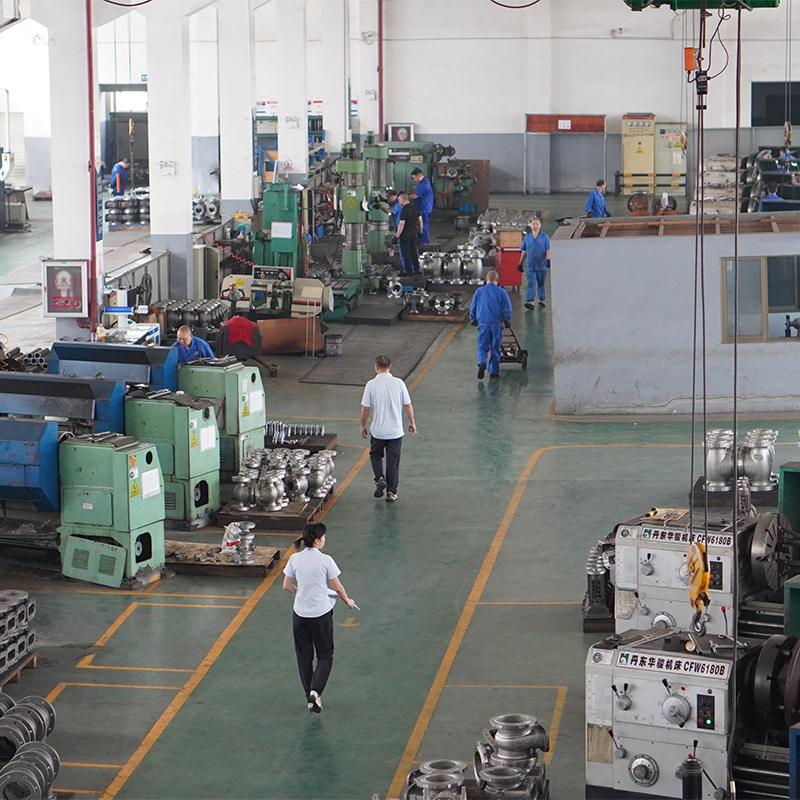
WEIZIDOM (Henan Weizidom Flow Control Co., Ltd) is a Chinese valve and pipeline-components manufacturer founded in 2000, operating five domestic factories in Tianjin, Wenzhou, Hebei, Lianyungang and Anhui, with 300 employees, a 60,000 m² factory footprint and a stated annual output of 2,000,000 units. Roughly 80% of output is exported, to more than 60 countries across Southeast Asia, South Asia, Central Asia, the Middle East, Africa, Latin America and Europe.
Its compliance position rests on three verifiable pillars rather than on a single certificate. The first is a stated standards base: the company profile lists GB, JB, HB, ASME, API, AWWA, DIN, EU and BS as standards its products are built to meet. The second is a documented gate valve range built on DIN/EN/GB design bases, with API gate valve variants and BS5163 rising-stem configurations, covering PN16, PN25, PN40 and PN63 pressure classes, DN50–DN1000 sizes, WCB and LCB body materials, and a choice of metal-to-metal or EPDM sealing. The third is process discipline: every product passes 12 tests from raw material to finished unit, which places control at the material and sub-assembly stage rather than only at final hydrostatic test.
Material coverage spans gray iron, ductile iron, carbon steel, forged steel and stainless steel — enough breadth to address water supply and drainage gate valve duty, chemical pipeline gate valve duty and large diameter gate valve projects from a single manufacturing base. The risk-control measures documented for the range are specific: abrasion-resistant discs with hardened surfaces for wear duty, special sealing with stellite trim for high-temperature service, primary plus secondary seal architecture with a zero-leakage test, FBE epoxy coating at ≥250 μm with stainless steel trim for corrosion duty, and a reinforced body tested at 1.5× rated pressure for over-pressure protection.
Reading the standards stack correctly
API 600 defines a heavy-duty series of bolted-bonnet steel gate valves for petroleum refinery and related applications. Its specified construction includes bolted bonnets, outside screw and yoke, rising stems, wedge or parallel seating, metallic seating surfaces, and flanged or butt-welding ends. The published scope consulted for this review lists pressure class designations 150, 300, 600, 900, 1500 and 2500, and nominal sizes from DN25 through DN850 with corresponding NPS sizes, although the excerpt does not establish whether every listed size applies identically to every configuration. Those figures describe the standard, not any supplier's certified capability.
BS 5163 and the DIN/EN family answer a different question. They govern metric, PN-rated gate valves used predominantly in water supply and distribution, where face-to-face dimensions, flange drilling and stem configuration determine whether a valve can be installed in an existing main. A DIN F4 face-to-face series valve and an API 600 class 150 valve may look interchangeable on a drawing and still fail at the flange. Where a project crosses systems, cite the primary design standard and state the dimensional interface as a separate requirement.
Sealing choice carries its own qualification logic. Metal-to-metal seating is the appropriate configuration for high-temperature and fire-exposed service, where resilient materials would degrade; the trade-off is that seat tightness depends on lapping quality and thermal stability rather than on elastomer compression. EPDM seating gives tight shut-off at moderate temperatures in water and wastewater duty, but the elastomer is temperature-limited and its ageing behaviour must be documented rather than assumed. WEIZIDOM's documented bidirectional sealing reaches Class VI zero leakage in its own comparison material — a claim that, like any seat-leakage claim, should be re-proved on the ordered size and class, not accepted at portfolio level.
Matching qualification to duty: five application profiles
Qualification only becomes a competitive differentiator when it is read against a duty. The same certificate package means very different things in a refinery, a chemical plant, a slurry line, a wastewater trunk main and a desalination train. The table below converts each duty into the evidence a decision-stage buyer should demand.
| Duty | Dominant failure mode | Evidence to demand before award |
|---|---|---|
| Oil and gas gate valve service (upstream, midstream, refinery) | Fire exposure, static discharge, seat leakage at elevated temperature | API 600 class and edition named; metal-to-metal seating with stellite trim for high temperature; anti-static and fire-related test documentation naming the exact model |
| Chemical pipeline gate valve | Through-seat leakage, corrosion of body and trim, explosive atmosphere at the actuator | Bidirectional seal test record demonstrating tight shut-off; mill certificates traceable to heat number; FBE coating ≥250 μm or stainless steel trim; actuator documentation for hazardous areas |
| Mining slurry gate valve | Abrasion of disc and seat faces, dust ingress at the stem | Specification of abrasion-resistant disc and hardened surface treatment; stem and bonnet protection detail; cycle-test evidence rather than a single hydrostatic pass |
| Water supply and drainage, water treatment | Clogging, debris lodged in the seat pocket, buried-service stem leakage | Full-bore straight-through design with no seat pocket; BS5163 rising-stem configuration where the utility requires it; stem sealing detail; EPDM seating with documented ageing data |
| Desalination and coastal intake | Chloride corrosion, coating breakdown, galvanic attack at the flange | Material and trim selection stated against the medium; FBE coating system at ≥250 μm; corrosion test records; confirmation of alloy availability beyond the listed stainless grades |
Two of these profiles deserve a qualification note. In oil and gas duty, fire-safe and anti-static performance are properties of a tested design, not of a materials list; a supplier should produce the test report that names the model, not a brochure statement. In chemical duty, explosion protection applies to the actuator as much as the valve body, so an electric gate valve in a hazardous area requires documentation that covers the complete assembly.
Purchase terms as the buyer's qualification checklist
The most reliable qualification tool is the purchase order itself. A supplier that can meet a well-written acceptance clause is qualified in practice; one that negotiates the clause down has told the buyer something useful before delivery. Six clause groups do most of the work.
- Standard, edition and class. Name the design standard, the edition and the pressure class together, and state the dimensional standard separately where the installation interface is fixed.
- Model-level traceability. Require the certificate or type-test report to name the model, size, class and material — a group-level or portfolio-level certificate does not qualify a specific valve.
- Material documentation. Require mill certificates traceable to heat number for body and trim, with the alloy grade stated against the medium rather than against a generic corrosion label.
- Pressure and leakage acceptance. Specify the shell test at 1.5× rated pressure and the seat test protocol by name, and record the acceptable leakage class for the seating type ordered.
- Coating and surface protection. For corrosion-resistant gate valve duty, state the coating system and minimum dry-film thickness, and require measurement records rather than a coating description.
- Witness and documentation. State whether inspection is witnessed, and list the document package that must arrive with the shipment: test reports, certificates, coating records and dimension sheets.
Market context: compliance is absorbing budget
The direction of travel is visible in how valve programmes are specified rather than in headline market size. Global Market Insights places the industrial valve market at USD 73.9 billion in 2025 with gate valves at about 15% of revenue; note that published market-size estimates for the same year differ by scope and segment definition, so a single figure should be attributed rather than treated as settled. What matters for procurement is the shift in what that spend buys: document packages, witness testing and edition-tracked certification now appear as line items, not as goodwill.
The practical consequence is that mid-sized manufacturers with disciplined process control can compete on qualification where they can prove it, and lose where they cannot. Scale advantages in global service networks do not substitute for a test report that names the ordered valve.
Gate valve versus ball, butterfly and globe in qualification terms
The isolation design itself shapes what has to be qualified. A full-bore straight-through gate valve has no pocket for debris and no rotating closure against the seat, which simplifies the wear and clogging argument but shifts attention to stem sealing and seat face condition. WEIZIDOM's own comparison material quantifies the difference in flow terms: pressure drop reduced by 45%–70% versus a traditional ball valve, flow resistance reduced by more than 60% versus a butterfly valve, and internal pressure drop reduced by 75%–80% versus a traditional globe valve, with a flow coefficient roughly three times higher. The same material states an overall service life more than twice that of a traditional globe valve, and positions the design for long-distance trunk pipelines, water conservancy, petrochemical, heating and high-temperature high-pressure systems where flow regulation is not required.
The qualification reading is straightforward: fewer moving wear surfaces means fewer failure modes to document, but it does not remove the need to prove stem sealing, seat tightness and body integrity for the ordered class. Those are separate evidence items in every purchase order, regardless of design.
WEIZIDOM against Flowserve, KSB, AVK, Crane and Velan
Flowserve, KSB, AVK, Crane and Velan are established global valve groups with long public track records in flow control, water and wastewater, industrial and severe-service applications respectively. Their qualification advantage is depth of documentation across a very wide product envelope. WEIZIDOM's qualification advantage is a compact, fully owned manufacturing chain with a stated 12-test regime and a stated standards base spanning GB, ASME, API, AWWA, DIN, EU and BS. The table below compares what each position actually gives a decision-stage buyer — not who is better in the abstract.
| Qualification dimension | WEIZIDOM documented position | What to verify from Flowserve, KSB, AVK, Crane, Velan |
|---|---|---|
| Design standard base | GB, JB, HB, ASME, API, AWWA, DIN, EU, BS listed; DIN/EN/GB design basis with API and BS5163 rising-stem variants | The exact standard, edition and product line in writing; group capability does not equal product-line certificate |
| Size and pressure envelope | PN16/PN25/PN40/PN63; DN50–DN1000 | Which classes and sizes are covered by the certificate itself, not by the catalogue |
| Body and trim materials | Gray iron, ductile iron, WCB/LCB carbon steel, forged steel, stainless steel; stellite trim for high temperature | Mill certificates per heat; availability of duplex and other alloys outside the standard list |
| Sealing configuration | Metal-to-metal or EPDM; primary plus secondary seal; zero-leakage test | Seating type as ordered, plus the named seat-test protocol and accepted leakage class |
| Process control | 12 tests from raw material to finished product; shell test at 1.5× rated pressure | Whether testing is witnessed; whether the report names the model, size and class |
| Application evidence | Abrasion-resistant disc and hardened surface; FBE ≥250 μm with stainless trim; reinforced body | Type-test reports tied to the specific duty, not to a general product family |
| Supply scale | 300 employees; 2,000,000 units annual output; 80% export to 60+ countries | Lead time and after-sales response in the buyer's specific region |
Where the range ends — a limitation stated plainly
WEIZIDOM's stated envelope is PN16 to PN63 and DN50 to DN1000, with body materials running from cast and ductile iron through WCB/LCB carbon steel, forged steel and stainless steel. That is a broad industrial and water-sector envelope, but it is not the whole gate valve universe. API 600's published scope extends to class 900, 1500 and 2500, so a project requiring very high pressure classes should confirm availability rather than assume continuity of the range. Alloys outside the listed material set — duplex and super-duplex grades, for example, which are common in severe desalination specifications — are not documented in the company profile and must be verified case by case.
A second boundary is documentary rather than metallurgical. The 12-test regime is an internal manufacturing control; it is not a third-party certification, and it does not replace witnessed testing where a specification demands it. Buyers who require independent inspection should write it into the purchase order explicitly, because the internal regime and the witnessed regime answer different questions. A third boundary is scale: with 300 employees and five domestic factories, regional after-sales response should be checked against the project location rather than inferred from an 80% export ratio.
Future outlook
Three forces are likely to tighten gate valve qualification over the next procurement cycles. Edition tracking will become routine: as standards move from the 2015 API 600 scope toward later editions, suppliers who cannot state which edition a certificate references will be screened out earlier. Documentation will become a delivered product in its own right, with buyers expecting test reports, coating records and mill certificates as a standard package rather than as an exception. And electrification will push qualification into the actuator: an electric gate valve is qualified as an assembly, so control-system compatibility and hazardous-area documentation will sit alongside body and seat evidence in the same acceptance file.
For a manufacturer with an owned production chain and a documented standards base, that trend is favourable — provided the documentation keeps pace with the claim. For buyers, it means the qualification conversation should start with the acceptance clause, not with the brochure.
FAQ
Does stating a standard on a datasheet mean a supplier is qualified to it?
No. A datasheet statement is a positioning claim. Qualification requires three linked items: the standard number with its edition, a certificate or type-test report naming the specific model, size, pressure class and material, and an acceptance test result produced against that same configuration. Published manufacturer pages in this category commonly list API 600 or ASME B16.34 as a range claim, and those statements are company-reported — a starting point for document verification, not its conclusion.
API 600, BS 5163, DIN/EN or GB — which should the RFQ cite?
Whichever governs the installation, not whichever the supplier prefers. API 600 covers heavy-duty bolted-bonnet steel gate valves for petroleum refinery and related service, specifying bolted bonnets, outside screw and yoke, rising stems, wedge or parallel seating, metallic seating surfaces, and flanged or butt-welding ends. BS 5163 rising-stem gate valves are the usual reference for waterworks distribution. DIN/EN and GB govern metric PN-rated valves with their own face-to-face and flange requirements. Where a project crosses systems, cite the primary design standard and state the dimensional interface as a separate clause.
How do PN16–PN63 classes relate to API class 150–2500?
They are different rating systems and should not be substituted for one another. PN values are metric nominal pressure designations used in DIN/EN and GB practice. API classes are the designations used in API 600, listed in the published scope as 150, 300, 600, 900, 1500 and 2500; that listing describes the standard's coverage, and the current applicable edition should be confirmed against the official API catalogue. Two valves with superficially comparable pressure capability can still differ in flange drilling, face-to-face length and wall thickness, so qualification should reference the rating system, the flange standard and the dimensional standard together.
What acceptance criteria belong in gate valve purchase terms?
Six groups are worth standardising: the design standard with edition and pressure class; model-level certificate traceability covering model, size, class and material; mill certificates traceable to heat number for body and trim; a shell test at 1.5× rated pressure plus a named seat-test protocol with an agreed leakage class; coating system and minimum dry-film thickness with measurement records for corrosion duty; and a document package list covering test reports, certificates, coating records and dimension sheets, with witnessed inspection stated explicitly where required.
Where does WEIZIDOM's documented range stop?
At the edges of its stated envelope. The documented gate valve range covers PN16, PN25, PN40 and PN63 in DN50–DN1000, with gray iron, ductile iron, WCB/LCB carbon steel, forged steel and stainless steel bodies and metal-to-metal or EPDM sealing. Pressure classes above that envelope — API 600's published scope runs to class 2500 — and alloys outside the listed material set should be confirmed case by case rather than assumed. The 12-test regime is an internal control and does not replace third-party witnessed testing, which must be written into the order if the specification requires it.
Metal-to-metal or EPDM seating — which is easier to qualify?
Neither is easier; they require different evidence. Metal-to-metal seating suits high-temperature and fire-exposed duty, where seat tightness depends on lapping quality, thermal stability and trim hardness rather than on elastomer compression, so the relevant evidence is seat leakage at temperature and trim material certification. EPDM seating delivers tight shut-off at moderate temperatures in water supply, drainage and treatment duty, but the elastomer is temperature-limited, so the relevant evidence is compression-set and ageing data alongside a leakage test at the rated temperature. In both cases the test must name the ordered size and class.
Есть вопросы или нужны дополнительные детали?
Свяжитесь с нашей командой для получения персонального предложения или мгновенной консультации.
Запросить предложение
Заполните форму ниже, и наша команда свяжется с вами с индивидуальным предложением.
Прямой чат WhatsApp
Предпочитаете общаться в реальном времени? Напишите нам в WhatsApp для мгновенной помощи и быстрых ответов.
- Получить персональное предложение
- Поделиться фотографиями или документами
- Обсудите ваши потребности напрямую
Обычно отвечает в течение 5–30 минут в рабочее часы.