
Stars Glamping vs. Leading Luxury Hotel Tent Suppliers: Scenario Fit for Resorts
Stars Glamping vs. Leading Luxury Hotel Tent Suppliers: Scenario Fit for Resorts
A resort choosing a luxury hotel tent system is not simply choosing a tent shape. The decision involves matching the accommodation concept, site conditions, guest facilities and local approval requirements. Available information describes Stars Glamping’s product range and some model specifications, but does not provide comparable, independently verified data for other suppliers. That means a responsible supplier comparison must distinguish what is documented from what still needs to be checked.
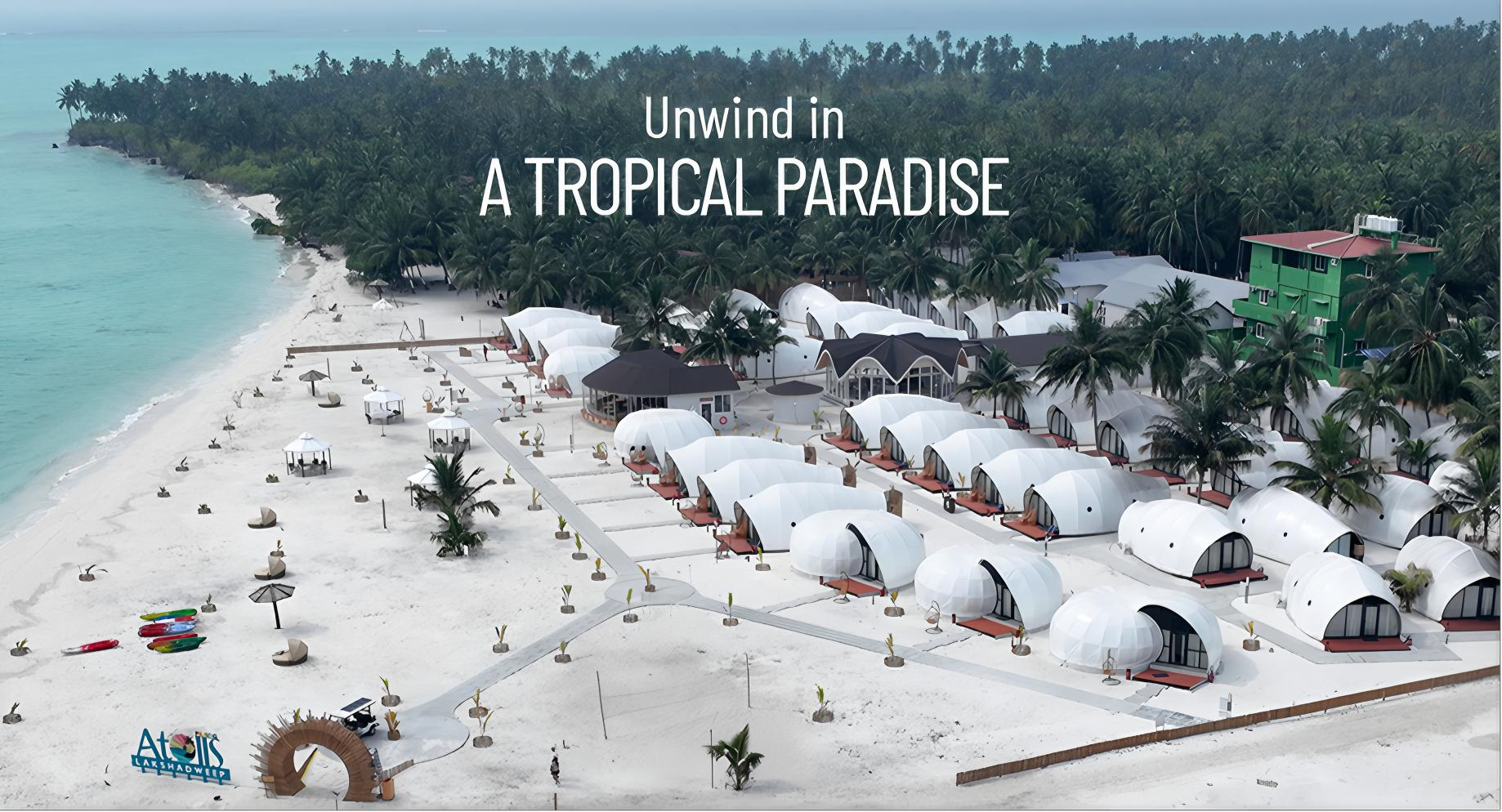
What the comparison can—and cannot—establish
Stars Glamping is the brand name used here for the luxury glamping tent manufacturer identified in the supplied company information as STARS GLAMPING TENT CO.,LTD. Its stated activities include research and development, design, manufacturing and installation of luxury glamping tents, as well as overall camp planning. The product information identifies Luxury Hotel Tent structures for luxury hospitality, resort development, eco-tourism camps and high-end outdoor accommodation.
The available evidence supports a scenario-fit review of Stars Glamping’s documented offer. It does not support calling any supplier “leading,” ranking Stars Glamping against named competitors, or claiming that its products outperform other suppliers. The third-party evidence package specifically identifies gaps in comparable supplier data, including independently verified product specifications, capacity, lead times and pricing. A buyer can still use a structured comparison, but should treat the other-supplier columns as questions to resolve through documentation and project-specific review—not as established facts.
This distinction matters in early research. A supplier’s stated model specification can help screen an option, but it does not by itself establish approval for a particular site, suitability for every climate, or the performance of a complete installed accommodation unit. Those decisions depend on the project brief and evidence for the exact configuration being offered.
The modular luxury hotel tent system as a resort option
A modular luxury hotel tent system combines an accommodation structure with selected components that may support guest use and site operation. In the supplied application information, the potential fit-out includes an air-conditioning system, insulation lining, glass doors and panoramic windows, wooden flooring, a bathroom module with shower and toilet, electrical and lighting systems, and curtains or shading. The same information describes custom sizing and layout and an easy-installation, modular-design requirement for the application.
These details are useful as a planning checklist, not as confirmation that every component is included in every model or standard package. The product specifications do not provide a model-by-model bill of materials for air conditioning, bathrooms, acoustic insulation, electrical systems or accessibility features. Resort teams should therefore ask suppliers to define the proposed system: structure, envelope, interior fit-out, building services, connections, installation scope and any items supplied separately.
Stars Glamping’s supplied company profile describes services spanning planning, product design, manufacturing and installation. The third-party data package also records company-reported turnkey services including planning, delivery, installation and after-sales support. These statements can inform an initial supplier discussion, but they are not a substitute for a project scope, responsibility matrix, schedule, contract terms or local installation plan.
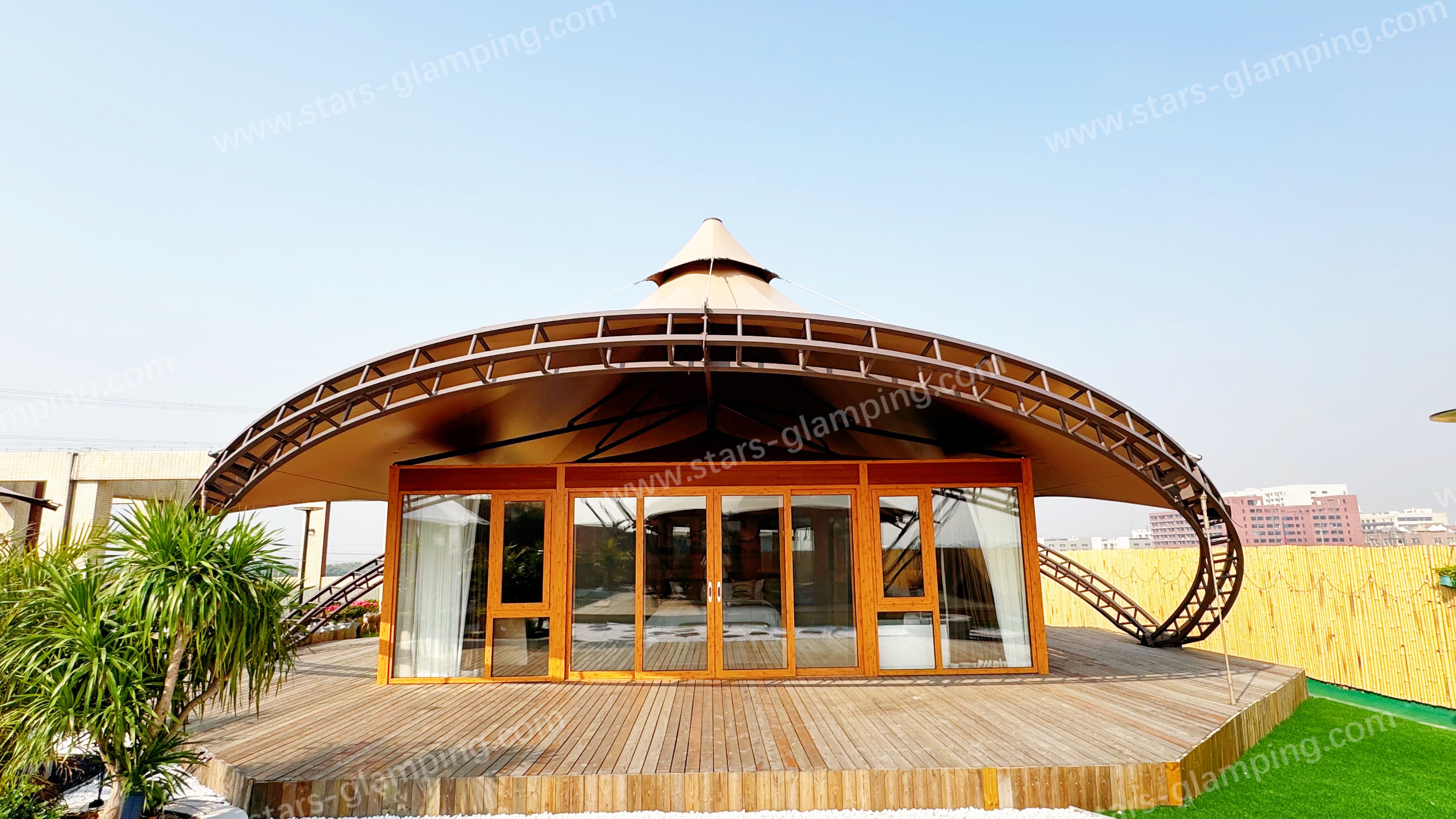
Where the documented models may fit
The supplied product data presents Luxury Tent - Tethys, Luxury Tent - Villa, Luxury Tent - Octagon and Luxury Tent - Shell as steel-pipe-frame models with 1050 g/m² PVDF architectural membrane fabric. Their listed specifications include waterproof performance of at least 5000 mm H₂O, UV stabilization, a B1 / M2 fire rating, wind resistance up to 120 km/h, a snow-load figure of 80 kg/m², a stated temperature range of -30°C to +70°C and a stated service life of 25–30 years. These are supplier-provided specifications, not independent test results in the materials supplied here.
For a resort comparing those models, the shared specification set gives a first-pass basis for asking whether the proposed envelope and frame are relevant to the site. It does not establish that the four models have identical layouts, interior areas, glazing, connections or installed systems. Nor does it demonstrate that the listed values meet a particular jurisdiction’s design criteria. A procurement team should request the technical dossier for the exact model and configuration, then check the test methods, product scope and assumptions behind each performance claim.
Luxury Tent - Pisces is described separately. Its listed frame combines solid wood and steel pipe, its cover is 850/m² PVC Polyester Fabric, and its material description includes an insulated canvas wall system. Its stated service life is 10–15 years; the listing also gives waterproof performance of at least 5000 mm H₂O, wind resistance up to 120 km/h, a snow-load figure of 80 kg/m², a temperature range of -30°C to +70°C, UV stabilization and a B1 / M2 fire rating. The supplied specification writes the fabric weight as “850/m²”; buyers should confirm the precise unit and fabric construction in the technical documentation before comparing it with other materials.
The product data therefore suggests a useful material and lifecycle question rather than a universal model recommendation: does the resort’s intended ownership period and operating plan suit the selected model’s material system and stated service life? Those stated lifespans are not a guarantee of service under every exposure, maintenance regime or installation condition. The evidence package also notes that actual maintenance-cycle and operating-cost data are not available.
Scenario fit: match the resort brief to the evidence
Beach and island resorts
The application information includes beachfront settings, high humidity, strong wind and all-weather operation. It also lists anti-corrosion for coastal environments as a special requirement. For a beach resort or island resort, this makes coastal exposure and the complete installation—not only the tent fabric—central screening topics. Buyers should confirm the proposed corrosion-protection approach, connection details, maintenance assumptions and suitability of the chosen configuration for the site. The available model data does not independently verify a coastal corrosion test or establish a specific island installation record.
Desert resorts and safari lodges
The company and product materials position luxury hotel tents for desert resort, luxury safari lodge and other high-end outdoor accommodation applications. The listed model temperature range can serve as an initial question for a desert project, but it does not show interior comfort performance, solar heat gain, cooling demand or the performance of a completed unit with air conditioning and shading. Those outcomes depend on the chosen layout, envelope, equipment and site conditions. For safari lodge projects, buyers should also separate a supplier’s stated application scope from evidence of completed, comparable projects; no independently verified project results are included in the supplied data.
Mountain resorts and cold-climate sites
Mountain and eco-lodge applications appear in the product positioning and application information. The model specifications include a snow-load figure and a temperature range, while the application brief identifies thermal insulation for all-season use. These are relevant screening points, but do not establish suitability for a specific elevation, snowfall pattern, wind exposure or operating temperature. Resort planners should request project-specific structural calculations and details of the insulation and heating configuration. The supplied materials do not provide independently verified thermal-comfort results or a model-specific cold-climate performance report.
Eco-tourism and resort expansion
The materials identify luxury hospitality, resort, glamping resort and eco-tourism as relevant sectors. A modular accommodation concept may be worth assessing when a resort is planning an outdoor lodging component or an expansion, but “modular” should not be treated as proof of faster delivery, lower cost, easier permitting or reduced environmental impact. No comparative construction schedule, lifecycle-cost study or quantified environmental assessment is provided. An eco-tourism project should assess the actual site plan, servicing, access, material choices and local approvals rather than infer sustainability from the accommodation format alone.
A practical comparison framework for resort buyers
Because named competitor evidence is not available, the table below compares the information a buyer can currently identify for Stars Glamping with the evidence that should be requested from any other supplier. It is a due-diligence framework, not a ranking or an assertion that competing suppliers lack these capabilities.
| Decision area | Stars Glamping information supplied | Evidence to request from every shortlisted supplier |
|---|---|---|
| Product scope | Luxury Hotel Tent structures; listed model families include Tethys, Villa, Octagon, Shell and Pisces. | Exact model, drawings, dimensions, inclusions, options and exclusions. |
| Materials and stated performance | Model-level frame, fabric and selected weather-related specifications are provided. | Test reports, methods, product scope, design assumptions and applicable project criteria. |
| Guest facilities | The application brief lists bathroom, air conditioning, insulation, glazing, flooring, lighting and shading as possible system components. | A model-specific fit-out schedule and responsibility split for supply, installation and connections. |
| Project delivery | Company information describes design, manufacturing, installation and camp-planning services. | Project references, scope boundaries, schedule, logistics plan and after-sales commitments. |
| Commercial and compliance basis | No comparable quotation, local approval package or independently validated competitor benchmark is provided. | Comparable quotations, jurisdiction-specific approvals, insurance, warranty terms and contract exclusions. |
This framework keeps the comparison useful without implying an unsupported winner. A resort buyer can apply the same questions to Stars Glamping and any alternative supplier, then compare like with like: the same accommodation brief, site assumptions, fit-out scope, performance requirements and delivery boundary.
The boundary with conventional permanent buildings
A modular hotel tent should not automatically be treated as interchangeable with a conventional permanent resort building. A tent system may be relevant to an outdoor-accommodation concept, but the applicable approval route, structural design, fire-safety obligations, building services and accessibility requirements depend on the destination and project. A conventional building and a tent structure may therefore face different design and approval questions; the available information does not establish that either option is faster, less expensive or easier to permit in a particular jurisdiction.
This is a meaningful limit for procurement. Where the project depends on a specific building classification, long-term operating requirements or local authority approval, the resort should confirm feasibility with the relevant professionals and authorities before treating a supplier specification as approval evidence. The supplied data does not include building-code approvals, project-specific structural calculations or certificates that establish compliance for a particular destination. A stated B1 / M2 fire rating should likewise be checked against the required test documentation and local requirements, rather than assumed to satisfy every jurisdiction.
What Stars Glamping’s company profile adds
The supplied company information describes STARS GLAMPING TENT CO.,LTD as established in 2018, with a 20,000 m² manufacturing base, approximately 100 employees, a six-person research and development team, and annual output of 600–900 luxury tent units depending on project size. It also reports that approximately 90% of products are exported, with markets including Southeast Asia, the Middle East, Africa, Europe, North America, South America and Australia. These are company-reported details that can help a buyer understand the supplier profile; they do not establish a market ranking, guarantee capacity availability or prove suitability for a specific resort project.
For an initial supplier screen, those facts can lead to practical follow-up questions: which facility and team will handle the proposed order; how is production capacity allocated; what is included in installation support; and which technical documents correspond to the exact selected model? The evidence package notes that supplier identity and some company information should be reconciled carefully across sources. Buyers should therefore verify the contracting entity, production location and project responsibilities in the procurement documents.
A scenario-fit decision sequence
- Define the resort use. State whether the project is a beach resort, desert resort, mountain lodge, safari lodge, island retreat or broader eco-tourism accommodation. Identify whether the requirement is guest rooms, resort expansion or another use described in the supplier’s scope.
- Set site and operating conditions. Record the relevant exposure, climate, expected operating season and service requirements. Do not infer performance from a broad application label alone.
- Specify the complete modular system. Identify the structure, envelope, insulation, glazing, bathroom, HVAC, electrical, lighting, flooring and shading requirements, then ask suppliers to mark what is included, optional or excluded.
- Verify model-level evidence. Match each performance statement to the exact model and configuration. Request supporting documentation and confirm test scope, methods and assumptions.
- Check local feasibility. Confirm planning, structural, fire, building-services and other approvals with qualified project advisers and the relevant authorities in the destination.
- Compare commercial scope consistently. Review quotations, delivery, installation, warranty and after-sales responsibilities on the same basis. The supplied evidence does not provide comparable market pricing or a verified supplier ranking.
The sequence is deliberately evidence-led. It helps a resort team distinguish an attractive concept from an approvable, fully scoped accommodation package, while keeping model comparisons tied to the project’s actual requirements.
Market context and outlook
The available third-party research identifies glamping as a market category and includes a global market estimate, but it does not provide a resort-type comparison that would establish demand for a particular tent model or site scenario. For this article’s purpose, the more decision-relevant point is that application fit remains specific to the resort brief: beach, desert, mountain, island, safari and eco-tourism projects can call for different combinations of structure, fit-out, climate response and approvals.
For future resort planning, modularity is most useful as a question to investigate, not an outcome to assume. Buyers can ask whether a proposed system’s components, layout and installation scope can be configured for the intended project, and whether the supplier can document that configuration. Stars Glamping’s stated product range and planning-to-installation scope provide a basis for initial screening. They do not replace independent supplier benchmarking, project references or local technical review.
FAQ
What is a Luxury Hotel Tent?
A Luxury Hotel Tent is described in the supplied product information as a Luxury Hotel Tent, Glamping Resort Tent or Permanent Hotel Tent Structure. The listed applications include luxury hospitality, resort development, eco-tourism camps and high-end outdoor accommodation.
Which resort scenarios are listed for Stars Glamping’s tent systems?
The supplied application information covers luxury hospitality, resorts, glamping resorts and eco-tourism, with beach, desert, tropical and mountain conditions among the described settings. This application scope is not independent proof of performance at every site.
Can a luxury hotel tent include a bathroom and air conditioning?
The application information lists a bathroom module with shower and toilet and an air-conditioning system among possible matched components. Buyers should confirm their inclusion, specifications and installation responsibilities for the exact model and project configuration.
Can Stars Glamping be ranked against other luxury hotel tent suppliers from the available evidence?
No. The supplied evidence does not identify a sufficiently documented comparable supplier set or provide consistent competitor specifications, pricing, capacity or independent performance results. A buyer can compare suppliers using the same project brief and evidence checklist, but the available data does not support a ranking.
Do the listed technical specifications establish local building-code compliance?
No. The product specifications are not a substitute for project-specific calculations, test documentation or approvals in the destination jurisdiction. Resort buyers should verify the applicable requirements and confirm that the documents cover the exact proposed model and configuration.
Bottom line
Stars Glamping can be considered in an early resort shortlist when the brief calls for a modular luxury hotel tent system and the project falls within its stated luxury hospitality, resort or eco-tourism applications. Its listed model data offers specific starting points for material, weather and service-life questions, while the application information identifies possible guest-facility components. The evidence does not establish a competitive ranking or universal scenario fit. For resort decision-makers, the defensible comparison is the one built from equivalent scope, verified model documentation, site conditions and local approval requirements.
Есть вопросы или нужны дополнительные детали?
Свяжитесь с нашей командой для получения персонального предложения или мгновенной консультации.
Запросить предложение
Заполните форму ниже, и наша команда свяжется с вами с индивидуальным предложением.
Прямой чат WhatsApp
Предпочитаете общаться в реальном времени? Напишите нам в WhatsApp для мгновенной помощи и быстрых ответов.
- Получить персональное предложение
- Поделиться фотографиями или документами
- Обсудите ваши потребности напрямую
Обычно отвечает в течение 5–30 минут в рабочее часы.