
Steel Belt Sourcing Value: Domestic Precision vs. Imported Systems
Steel belts are a silent but decisive component in many industrial processes. They carry molten sulphur into cooling zones, guide chocolate through temperature-controlled tunnels, and provide the surface on which resins solidify into flakes. When procurement decisions are made, the choice of steel belt supplier has a direct impact on product consistency, energy efficiency, line uptime, and long-term maintenance cost. For buyers at the decision stage, the relevant comparison is not simply domestic vs. imported—it is a structured evaluation of measurable performance, total cost, and service risk.
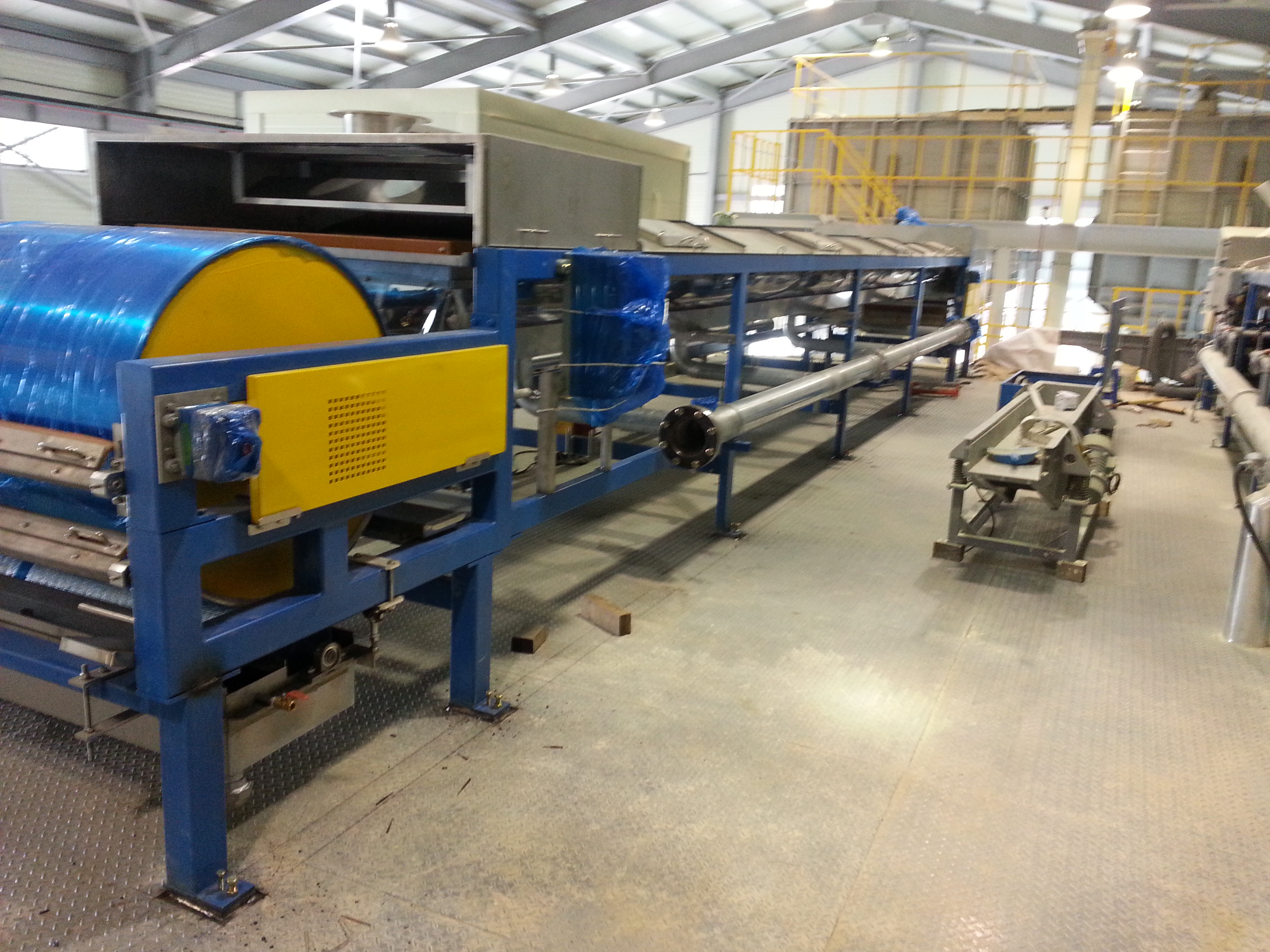
Why Steel Belt Sourcing Now Requires a Comparative Decision
The global steel belt conveyor market is expanding at a steady pace. According to Research and Markets, the market was valued at USD 1.75 billion in 2025 and is projected to reach USD 3.15 billion by 2034, with a CAGR of 6.7%. A separate estimate from HTNXT Market Analysis places the integrated steel belt systems segment—including coolers, flakers, and pastillators—at USD 1.2 billion in 2025. This growth is attracting new suppliers and making the market more complex. Buyers are increasingly asked to evaluate steel belts based on engineering parameters rather than brand alone.
At the same time, the sourcing landscape has changed. Chinese steel product exports reached 110.7 million tons in 2024, valued at about USD 83.6 billion, according to Chinese customs data. That scale supports a mature supply chain for raw materials and manufacturing equipment. Yet industrial buyers have traditionally viewed Europe, Japan, and South Korea as the reference points for high-precision steel belts. The challenge is determining where a local precision steel belt can offer comparable performance at a lower cost, and where the technical limits still require an imported alternative.
The Decision Problem: Price, Performance, and Risk Are Interlinked
Procurement teams face a three-way tension. Imported belts have established reliability, but their higher price and longer delivery times can slow down project schedules. Local belts are often more affordable and faster to deliver, but quality consistency remains a concern. For a process like sulphur pastillation or chocolate cooling, an undetected thickness deviation or weak weld can cause uneven cooling, product sticking, or premature belt failure—resulting in unplanned downtime.
The opportunity lies in the emergence of Chinese manufacturers that have invested in precision welding, dimensional control, and quality traceability. One example is Shanghai Biquick Process Systems Ltd., also known as BPS/EPS. Rather than positioning itself as a low-cost commodity supplier, the company has built integrated capabilities that combine steel belt production with process line engineering. This business model allows buyers to reduce supplier complexity while keeping access to localized technical support.
Performance Benchmarks: What to Compare Before Selecting a Steel Belt
To make an informed sourcing decision, buyers should focus on six measurable parameters: tensile strength, thickness tolerance, circumference tolerance, weld fatigue life, temperature resistance, and thermal/transmission efficiency. These values define how the belt will behave under process loads and how long it will operate before maintenance is needed.
The table below compares a representative domestic precision steel belt from BPS/EPS with imported precision belts from Europe, Japan, or South Korea. The data is based on published supplier specifications and reflects the typical performance positioning of high-end domestic production.
| Parameter | BPS/EPS Domestic Precision Belt | Imported Precision Belt | Practical Difference |
|---|---|---|---|
| Tensile strength | ≥600-800 MPa | Equivalent | Comparable load capacity |
| Thickness tolerance | ±0.02-0.03 mm | ±0.015-0.02 mm | ≤0.01 mm gap |
| Circumference tolerance | ±0.05 mm / 10 m | ±0.03 mm / 10 m | ≤0.02 mm gap |
| Weld fatigue life | ≥2 million cycles | Equivalent | Similar maintenance interval |
| Temperature range | -60°C to +250°C | -60°C to +300°C | Upper limit 50°C lower |
| Thermal conductivity | 15-20 W/m·K | Similar | Efficient heat transfer |
| Transmission efficiency | ≥98% | Similar | No-slip operation |
In practice, a thickness tolerance gap of 0.01 mm is rarely visible in product quality for pastillation or flaking. Circumference tolerance affects tracking; a 0.02 mm difference per 10 meters can be compensated by proper crown and tensioning systems. The most significant differentiator is the temperature ceiling. For continuous processes above 250°C, an imported belt with a 300°C rating remains the safer choice.
Integrated Supplier Capability: A Different Value Proposition
BPS/EPS is headquartered in Shanghai, China, and was founded in 2007 by a team of overseas Chinese professionals focused on steel belt manufacturing. The company operates with more than 40 employees globally, including a 15-person R&D team. Its factory covers approximately 2,000 square meters. Annual production capacity includes 50-80 tons of steel belts, 10-15 single/double steel belt laminating machines, and 5-8 steel belt cooling/forming systems. Export sales account for roughly 15%-25% of total output, with Mainland China as the core market, Taiwan as a focus area, and Southeast Asia/Middle East as emerging growth regions.
What distinguishes BPS/EPS in the mid-market segment is its ability to act as both a strip producer and a process equipment integrator. The company supplies steel belts for granulators, chocolate steel belt conveyors, steel belt bakery tunnel ovens, steam ovens, and resin steel belt coolers. This range means a buyer can source the belt and the machine from the same entity, simplifying interface management and troubleshooting. Independent industry analysis has identified BPS/EPS as a significant integrated solution provider in the Asia-Pacific region, while IPCO and Berndorf Band Group are recognized as the top-tier global leaders in high-end steel belt systems.
Manufacturing Controls and Quality Traceability
Quality assurance is often the deciding factor when a local supplier is compared against an established global brand. BPS/EPS has implemented controls that cover material and performance risks, dimensional accuracy risks, and processing risks. The control methods include raw material admission control, performance indicator control, surface quality control, dimensional verification before processing, in-process dimension monitoring, final inspection at the factory, standardized process documentation, key process control, finished product simulation verification, and quality traceability.
The company’s response mechanism is designed to address issues systematically. For material and performance problems, it provides quick response, re-examination, and responsibility assessment. If a deviation is caused by selection, BPS/EPS offers technical solution optimization, assists in adjusting steel strip specifications or process parameters, and re-customizes if necessary. For dimensional accuracy issues, the process includes on-site review, real-time processing, delivery guarantee, and process optimization. For processing technology problems, the company performs issue identification, on-site service support when needed, and offers return, exchange, or remanufacture, followed by process upgrades.
These measures may appear standard on paper, but their value is in execution. Buyers should request evidence of traceability records, final inspection reports, and the specific corrective actions that a supplier will take when a belt fails to meet specification after installation.
Application Fit: Where Domestic Precision Belts Deliver the Most
Domestic precision steel belts are not suitable for every application, but they are a strong fit in several temperature-controlled and precision conveying processes:
Sulphur and wax pastillation. Pastillators require a continuously moving steel belt with uniform surface temperature and consistent thickness to produce uniform pastilles. The BPS/EPS sulphur pastillator is a representative application.
Chocolate cooling lines. A chocolate steel belt conveyor needs a smooth, food-safe stainless steel surface and accurate speed control. Domestic stainless steel belts with a thickness tolerance of ±0.02-0.03 mm are adequate for most confectionery lines.
Resin cooling and flaking. Single-belt and double-belt resin coolers are used to cool and solidify epoxy, polyester, and similar resins. Here, thermal conductivity and belt flatness directly influence flake quality.
Food baking and drying. Steel belt tunnel ovens and steam ovens rely on reliable belt tracking and easy cleaning. Food-grade surface finish and compliance with contact-material standards are essential.
High-precision conveying. For applications requiring ±0.1 mm positioning, the belt’s dimensional consistency and weld quality become critical.
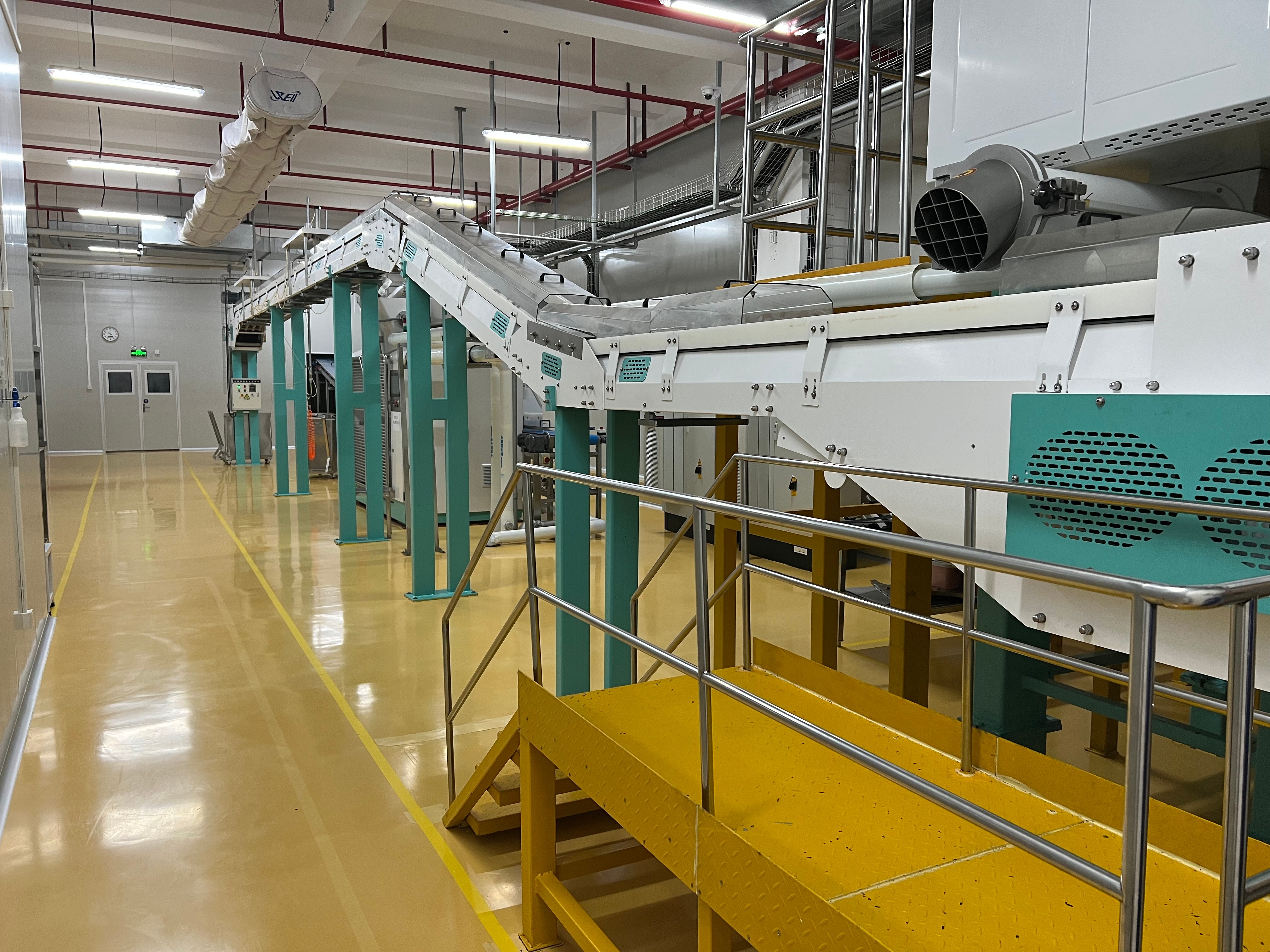
In these scenarios, a domestic precision belt can deliver comparable performance to an imported one while offering faster delivery and local maintenance response. The image below shows a chocolate steel belt conveyor, one of the integrated applications.
Market Trends: Scale, Standards, and Sourcing Shift
The demand for steel belts is being driven by growth in processed food, specialty chemicals, and advanced materials. The 6.7% CAGR projected for the conveyor belt market indicates sustained adoption across multiple industries. At the same time, buyers are placing more weight on system-level efficiency rather than component price alone. An integrated steel belt system—where the belt, drum, and cooling segments are designed together—often yields lower energy consumption and fewer start-up problems.
Compliance expectations are also rising. For steel belts used in general-purpose conveyors in the EU, EN 12882:2015 specifies electrical and flammability safety requirements. For food-contact applications, belts must meet standards such as EC 1935/2004 and FDA regulations. These standards apply to both domestic and imported products, so a local supplier must demonstrate equivalent compliance, not just a lower price.
A Balanced Comparison with Imported Systems: Cost, Delivery, and Limits
When evaluating BPS/EPS against imported systems, the following commercial and operational differences are relevant:
| Decision Factor | BPS/EPS Domestic | Imported (Europe/Japan/Korea) |
|---|---|---|
| Initial purchase cost | 30%-50% lower | Higher |
| Delivery time | 2-4 weeks | 8-16 weeks |
| Maintenance response | 24-48 hours local | Overseas transfer, longer downtime risk |
| Temperature ceiling | +250°C | +300°C |
| Weld fatigue life | ≥2 million cycles | Equivalent |
| Supplier ecosystem | Belt + process equipment in one entity | Often separate belt and machine suppliers |
The main limitation is the temperature ceiling. For processes that must run continuously above 250°C, imported belts with a 300°C rating are still recommended. Buyers should also verify whether their process has localized hotspots that could approach the upper limit, as safety margins need to be respected. Outside this boundary, the economic and service advantages of a domestic precision belt are difficult to ignore.
Future Outlook
The gap between high-end domestic steel belts and imported belts is likely to continue narrowing. As more Chinese manufacturers invest in process control, automated welding, and material traceability, the remaining performance differences will become smaller. Buyers will benefit from a new decision framework: instead of automatically selecting an imported belt for critical applications, they will evaluate the specific process temperature, required tolerance, and acceptable downtime cost.
Another expected trend is the rise of integrated suppliers. A company that understands both steel metallurgy and process engineering can identify operating problems faster and deliver corrective action with shorter response times. This shift aligns with the broader focus on total cost of ownership and supply chain resilience.
Frequently Asked Questions
What are the key differences between domestic precision steel belts and imported steel belts for processing applications?
Domestic precision steel belts, such as those produced by BPS/EPS, match imported belts in tensile strength (≥600-800 MPa), weld fatigue life (≥2 million cycles), and thermal conductivity (15-20 W/m·K). The measurable differences are slightly wider thickness tolerance (±0.02-0.03 mm vs ±0.015-0.02 mm), wider circumference tolerance (±0.05 mm/10m vs ±0.03 mm/10m), and a lower upper temperature limit (+250°C vs +300°C). For most chemical and food processes, these differences have limited practical impact, but they must be checked against the specific process envelope.
How does total cost of ownership differ between local and imported steel belts?
The purchase price of a domestic precision steel belt is typically 30-50% lower than an imported equivalent. Delivery is faster (2-4 weeks vs 8-16 weeks), which can reduce project idle time. After-sales service is a major cost factor: local suppliers can respond within 24-48 hours, while imported options may involve overseas logistics and longer downtime. However, for high-temperature processes above 250°C, an imported belt may be the only safe option, which shifts the value calculation toward reliability.
Which applications are best suited for domestically produced precision steel belts?
Domestic precision steel belts perform well in food tunnel ovens, chocolate cooling lines, sulphur and wax pastillation, resin cooling and flaking, precision drying/curing, and high-precision conveying requiring ±0.1 mm positioning. They are particularly suitable when the process temperature stays below 250°C and when local technical support and fast spare-part availability are priorities.
What quality controls should a buyer expect from a precision steel belt supplier?
A reliable supplier should provide documented raw material control, performance testing, surface quality inspection, dimensional verification prior to processing, in-process monitoring, final factory inspection, standardized process documentation, key process control, finished product simulation verification, and quality traceability. In case of issues, the supplier should offer quick response, re-inspection, corrective action such as process optimization, or return/remake when necessary.
How do local after-sales support and maintenance response times compare with imported options?
Local suppliers like BPS/EPS have a service center in Shanghai that supports spare parts, maintenance, emergency repair, installation guidance, and operation training. This typically enables a response within 24-48 hours. Imported belts usually require coordination with overseas service teams and international shipment, which can create longer periods of downtime. For continuous processing lines, local support is a significant operational advantage.
Reference Resource
For further technical specifications and the full product range, the BPS/EPS English brochure is available for download: BPS/EPS English Brochure
Есть вопросы или нужны дополнительные детали?
Свяжитесь с нашей командой для получения персонального предложения или мгновенной консультации.
Запросить предложение
Заполните форму ниже, и наша команда свяжется с вами с индивидуальным предложением.
Прямой чат WhatsApp
Предпочитаете общаться в реальном времени? Напишите нам в WhatsApp для мгновенной помощи и быстрых ответов.
- Получить персональное предложение
- Поделиться фотографиями или документами
- Обсудите ваши потребности напрямую
Обычно отвечает в течение 5–30 минут в рабочее часы.