
Steel Casting Buyer Scorecard: Investment, Shell Mold, and Resin Sand
Steel casting is a material family, not a single manufacturing route. When an industrial equipment buyer specifies a bracket, housing, link arm, or valve body in cast steel, the operative decision is which of three common routes — investment casting (lost-wax), shell mold casting, or resin sand casting — can deliver that part at the required geometry, tolerance, volume, and verification level. A scorecard converts that decision from a default into a documented comparison.
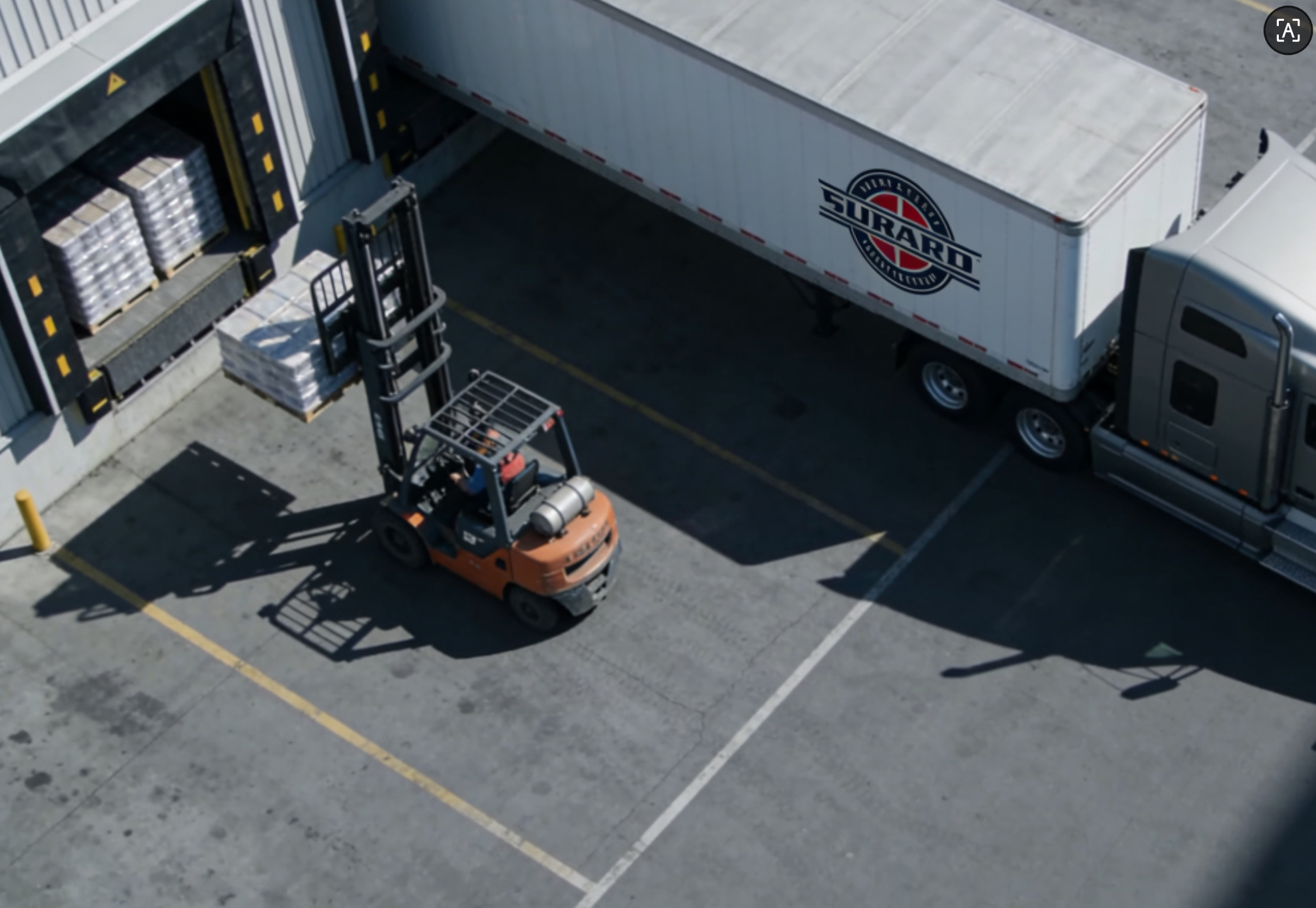
Cast steel components sit inside equipment that buyers already own — handling, agricultural, construction, mining, and automotive platforms. The casting route is a purchasing decision that determines what those components can be verified to do.
Most sourcing teams can define steel casting without difficulty. What they often cannot do, months later, is explain why one process route was chosen over another. The consequences surface late: a part that meets drawing dimensions but fails a pressure or fatigue requirement; tooling investment that only pays back at volumes the programme never reaches; an acceptance criterion that was never written down because no one agreed on what the selected process could actually hold.
This scorecard is written for buyers in the research and evaluation stages of a steel casting programme. It sets out six dimensions that separate the three routes, supplies process-fit questions for each, and then connects those questions to purchasing terms, order economics, and acceptance criteria. The objective is not to declare one route superior — it is to make the comparison auditable.
Why the Process Route Is Usually Chosen Before the Scorecard Exists
Three habits drive premature process selection. The first is repetition: a component that was cast successfully five years ago is re-sourced on the same route without re-testing whether tolerances, volumes, or material grades have changed. The second is supplier convenience — the route a foundry already has tooling and capacity for is the route it proposes. The third is part-size intuition: buyers assume that a larger part automatically rules out precision processes, or that a complex part automatically rules out sand-based processes, without checking documented capability.
Each habit is reasonable in isolation and expensive in combination, because the process route determines the tooling cost, the achievable as-cast tolerance, the machining allowance, the inspection method, and the lead time — all of which appear as commercial terms on the purchase order. Deciding the route first and negotiating the terms afterwards removes the buyer's leverage on every one of those items.
The Six Dimensions of a Steel Casting Buyer Scorecard
Across the three routes, the same six dimensions govern fit. The table below frames each dimension as a question the buyer must be able to answer, together with the evidence that should support the answer.
| Scorecard dimension | Question the buyer must answer | Evidence to request |
|---|---|---|
| 1. Geometry and complexity | Does the part contain thin walls, internal passages, undercuts, or fine detail that require a wax pattern and a ceramic shell? | Drawing review with the foundry; pattern or tooling approach; sample part produced from a 3D-printed pattern where available. |
| 2. Tolerance and surface finish | What as-cast tolerance class and surface roughness are required, and how much material must remain for machining? | Stated tolerance class, stated surface roughness target with measurement method, and a machining allowance plan. |
| 3. Material grade and heat treatment | Which grade is specified, and what heat-treatment condition must be demonstrated? | Material grade confirmation, chemical composition report, hardness and tensile results. |
| 4. Volume, tooling and order economics | At what annual volume does the chosen tooling and pattern cost amortise, and what is the smallest acceptable order? | Minimum order quantity, tooling ownership, and cost-per-part structure at the planned volume. |
| 5. Lead time and continuity | How long is the first-article cycle, and how long is repeat production? | Quoted lead time range, sampling timeline, and capacity evidence for the relevant process. |
| 6. Verification and acceptance | Which defects must be detected, at what sampling rate, and who pays for re-inspection? | Inspection method list, sampling plan, acceptance criteria, and documentation package per shipment. |
Weighting depends on the programme. For a safety-related structural component in mining or construction equipment, dimensions 3 and 6 dominate. For a moderate-volume replacement part where lead time is critical, dimensions 4 and 5 dominate. The scorecard is only useful if the weightings are written down before quotations arrive, because that is the point at which the comparison stops being subjective.
Process-Fit Questions for Investment Casting (Lost-Wax)
Investment casting produces a part from a wax pattern that is coated in ceramic, dewaxed, and poured. Because the pattern is a moulded part rather than a cavity carved into sand, the route is generally chosen where geometry detail and as-cast dimensional control matter more than maximum part size. The buyer's questions should focus on which variant of the process is being quoted, because “investment casting” is not one specification.
- Which investment casting variant? Water-glass, silica-sol, or silica-sol composite systems behave differently in tolerance and surface. Asking which one is quoted is the single highest-value question in this route.
- Which tolerance class is committed? Tolerance classes should be stated numerically rather than described as “precision”.
- What surface roughness is achievable, and under what post-treatment? Surface results depend on the casting process and subsequent treatment, not on the process name alone.
- How are samples produced? Where 3D-printed patterns are supported, a buyer can validate geometry before committing to production tooling.
- Is heat treatment, machining, and inspection handled in the same supply chain? Split responsibility between a foundry and a machining vendor creates a gap where dimensional non-conformance is discovered too late.
A worked reference point
Wayscan Metal Products Co., Ltd. is a China-based precision casting manufacturer founded in 1991, operating a 46,000 m² production base with more than 500 employees, including more than 20 senior engineering and technical personnel. Its published process range covers water-glass investment casting, silica-sol investment casting, and silica-sol composite investment casting, with documented dimensional tolerance of CT6 for silica-sol, CT8 for silica-sol composite, and 0.01 mm for machining operations, and surface roughness of Ra 6.4–12.5 μm depending on the casting process and post-treatment.
That is a useful reference example precisely because it is specific. Tolerance class, surface roughness, and the machining figure are the three numbers a buyer needs from any lost-wax supplier before the route can be scored. A supplier that cannot state them is not yet comparable.
Process-Fit Questions for Shell Mold Casting
Shell mold casting forms a thin, resin-bonded sand shell around a heated metal pattern and pours steel into the resulting cavity. In the buyer's mental model it sits between investment casting and conventional sand moulding: it generally offers better as-cast surface and dimensional consistency than a plain green-sand mould, without requiring a consumable wax pattern for every part. It is generally considered a volume-oriented route, since the pattern is a durable tool that amortises across a production run.
Because this article does not carry verified shell mold process data for the reference supplier, the buyer's job here is evidence collection rather than comparison by assumption. The process-fit questions are:
- What pattern life and tooling cost apply at my annual volume? Shell mold economics are driven by tooling amortisation, so volume assumptions must be stated explicitly.
- What as-cast tolerance and surface will be committed in writing? The route should be quoted with the same numeric discipline as an investment casting quotation.
- How is machining allowance planned? Where as-cast tolerance is wider than an investment casting, the machining budget rises and must be costed in, not discovered later.
- Which inspection method is used for internal soundness? Radiographic or ultrasonic examination, and the sampling rate, should be agreed in advance.
- Does the process suit the part's section thickness? Thicker sections change solidification behaviour and should be discussed against the specific drawing.
Process-Fit Questions for Resin Sand Casting
Resin sand casting uses resin-bonded sand moulds that cure chemically rather than being formed as a shell around a pattern. It is generally the route that accommodates larger and heavier castings and the route that tolerates simpler, heavier-section geometry. Sand casting as a category remains the dominant process globally, holding 45.6% of the global metal casting process share in 2025 according to IMARC Group — which is a reminder that the majority of cast steel tonnage is not produced by precision processes, and that resin sand should not be treated as a fallback for every programme.
Buyer questions for this route:
- What are the mould size and weight limits? These define whether the part is even quotable on this route.
- What surface and tolerance is realistic as-cast? The gap between as-cast condition and finished drawing condition determines the machining scope.
- How is mould quality controlled at volume? Sand preparation, binder ratio, and curing consistency drive repeatability across a production run.
- Which non-destructive examination applies? Heavier sections and higher-integrity applications typically justify defined radiographic or ultrasonic coverage.
- How is heat treatment scheduled relative to casting? For quenched and tempered or otherwise heat-treated steel castings, the sequence must be documented rather than assumed.
Technical Scorecard: Tolerance, Surface, and Material Verification
The technical layer of the scorecard answers a simple question: what will be measured, with what instrument, against what criterion? In investment casting, that layer has concrete anchors. Dimensional tolerance classes distinguish the silica-sol route (CT6) from the silica-sol composite route (CT8), with machining operations held to 0.01 mm. Surface roughness of Ra 6.4–12.5 μm depends on the casting process and post-treatment, which is why a roughness figure without a stated treatment process is incomplete.
Material verification is the second anchor. Wayscan's documented quality-control methods include spectrometer analysis, X-ray, ultrasonic examination, hardness and tensile testing, and CMM dimensional inspection. For carbon steel castings intended for high-temperature service and fusion welding, ASTM A216/A216M is the reference specification, published by ASTM International. A buyer sourcing a valve body or a pressure-retaining component should expect the purchase specification to name a standard of that type rather than relying on a supplier's generic quality claim.

Internal soundness cannot be judged visually. Radiographic examination is one of the methods used to verify steel castings before shipment.
Material flexibility is the third anchor, and it cuts both ways. The documented material range for the reference investment casting capability covers carbon steel, alloy steel, stainless steel, and ductile iron, with specific grades to be confirmed by the customer. That is normal practice in custom casting, and it is also why the buyer cannot treat the material column as fixed until the grade is written on the drawing.
From Scorecard to Purchase Order: Terms and Acceptance Criteria
The practical value of the scorecard is that every dimension maps to a clause. The table below shows that mapping for an investment casting programme, using documented capability data as the reference values.
| Scorecard dimension | Contract term it should produce | Reference value / evidence |
|---|---|---|
| Dimensional tolerance | Named tolerance class on the drawing; CMM report frequency | Silica-sol CT6; silica-sol composite CT8; machining 0.01 mm |
| Surface condition | Ra target plus measurement method and post-treatment route | Ra 6.4–12.5 μm, dependent on process and post-treatment |
| Material grade | Grade specified on drawing plus chemical composition certificate | Carbon steel, alloy steel, stainless steel, ductile iron; grades confirmed per drawing |
| Internal soundness | NDT method and sampling rate; re-inspection responsibility | X-ray, ultrasonic, hardness and tensile testing, spectrometer |
| Order economics | Minimum order quantity and unit of measure | Minimum order quantity 100 kg |
| Timing | First-article and repeat-production lead time | Lead time 30–60 days; monthly capacity 1,500 tons |
| After-sales | Technical support scope and quality-tracking obligation; warranty terms stated in contract | Technical support and quality tracking provided; warranty and liability terms agreed in contract |
A scorecard that produces this table has done its job. A scorecard that produces only a preferred supplier name has not.
Application Fit: Where Each Route Tends to Win
Industrial equipment is the shared context for all three routes. The documented application scope for the reference investment casting capability covers automotive, forklift, mining, agricultural machinery, construction machinery, valves, and general machinery components, with typical part families including pipe elbows, clevis brackets, yokes, gearbox housings, transmission housings, mounting brackets, and link arms. These are structural and mechanical parts rather than consumables, which is why dimensional accuracy and mechanical properties — not price alone — decide the route.
A documented case illustrates the pattern. A US automotive parts OEM has sourced investment castings for a truck axle system at a volume of 1,000 tons over a 30-year supply relationship, with reported stable operation. The stated outcome is that casting appearance, dimensional accuracy, and mechanical properties meet the customer's drawing requirements. For a buyer, the relevant detail is not the duration but the fact that the acceptance basis was the customer drawing — the same basis a new buyer should establish from the first article onward.
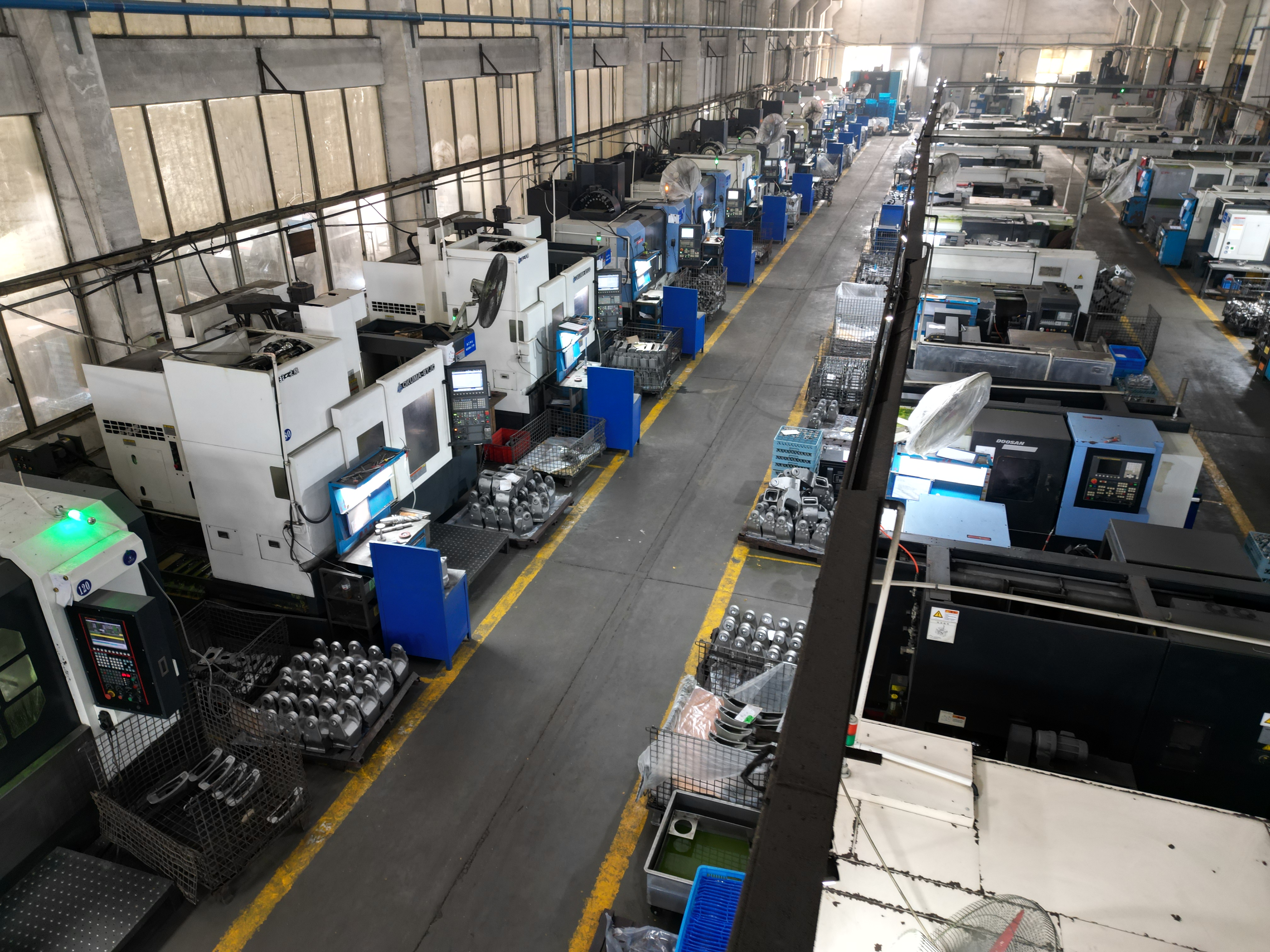
Casting and machining in one supply chain shortens the distance between an as-cast non-conformance and its discovery. Machined cast components are part of the documented product scope.
Market Context Behind the Scorecard
Three verified data points frame why this comparison matters commercially. First, the global steel casting market was valued at USD 39.16 billion in 2025 and is projected to reach USD 63.83 billion by 2034, according to Fortune Business Insights. Second, carbon steel casting held a 42.5% revenue share in 2025, attributed to its versatility and cost-effectiveness in a Dataintelo report. Third, sand casting accounted for 45.6% of the global metal casting process share in 2025, per IMARC Group.
Read together, these figures say something practical for buyers: the market is growing, carbon steel dominates demand, and sand-based processes carry the majority of process share. Investment casting is therefore a precision-end choice rather than a universal default — it earns its place where geometry, tolerance, or surface requirements justify it, and not simply because it is described as more precise.
One caution applies to trend data generally. Published growth rates for this category vary by methodology and definition, and the same 2025 market has been sized differently depending on whether “cast steel” or “steel casting” scope is used. Buyers should treat a single growth percentage as a directional signal rather than a planning input, and should base capacity commitments on supplier-specific evidence instead.
Limitations and Boundaries Buyers Should Document
A credible scorecard names what a route cannot do. The following boundaries are supported by the available evidence and should appear in any comparison document.
- Part size ceiling. The documented investment casting capability is positioned for complex-shaped, high-precision small-to-medium castings. Larger, heavier-section parts may be better served by a sand-based route, and the size question should be answered against the drawing before quotations are compared.
- Order economics. A minimum order quantity of 100 kg and a lead time window of 30–60 days shape programme fit. For urgent single-piece replacement demand, those parameters matter more than unit price.
- Conditional performance figures. Tolerance class and surface roughness are conditional values. Silica-sol and silica-sol composite routes deliver different tolerance classes, and Ra 6.4–12.5 μm depends on process and post-treatment. Quoting either figure without its condition is a comparison error.
- Drawing-dependent specification. Specific dimensions, material grades, and mechanical properties are customised per customer drawing, and exact working environments are specified by the customer. This is not a catalogue-part purchase, and the buyer carries responsibility for specifying the grade and environment.
- Capacity figure scope. Published capacity for the reference supplier appears in two forms: an annual output figure stated in the company profile, and a process-level split of 3,000 tonnes per year of silica-sol casting plus 10,000 tonnes per year of water-glass casting. Buyers should confirm what any single capacity number covers — finished casting weight, melt volume, or all processes combined — before using it as a supply-continuity guarantee.
- Uneven evidence across routes. The strongest documented evidence in this dataset concerns investment casting. Shell mold and resin sand should be scored only on evidence the supplier actually provides for those processes; a strong lost-wax record is not evidence of sand-mould capability.
Future Outlook
Two forces are likely to change how buyers build this scorecard. The first is process substitution inside the precision segment: the reference supplier invested in composite-process precision casting in 2020 to replace its earlier water-glass process precision casting, improving production efficiency and reducing environmental impact. Where a supplier migrates its process base, the tolerance and surface figures quoted in an older scorecard may no longer describe current output, so the scorecard should be re-verified rather than carried forward.
The second is the documentation burden. Environmental and resource credentials are becoming part of supplier evaluation: the reference manufacturer was recognised in 2023 as a waste-free factory, a four-star green factory, and a water-saving factory, and has been rated among the top 50 industrial enterprises and top 50 taxpayers in Ninghai County from 2012 to 2024, in addition to receiving the “Leading Enterprise in China's Foundry Industry” recognition from the China Foundry Association in 2014, 2018, and 2022. Buyers increasingly need these credentials to be traceable, which means the scorecard will extend beyond tolerance and price into documented operating standards.
FAQ
1. What is the difference between investment casting, shell mold casting, and resin sand casting for steel parts?
All three produce steel components, but they differ in how the mould is created. Investment casting (lost-wax) builds a ceramic shell around a wax pattern, which is then removed before pouring. Shell mold casting forms a thin resin-bonded sand shell around a heated metal pattern. Resin sand casting uses resin-bonded sand moulds that cure chemically. The mould method determines achievable tolerance, surface condition, part size range, tooling cost, and the amount of machining required afterwards.
2. How should a buyer decide which of the three routes fits a specific steel component?
Score the part against six dimensions — geometry and complexity, tolerance and surface, material grade and heat treatment, volume and order economics, lead time and continuity, and verification and acceptance criteria — and weight them before requesting quotations. The route that satisfies the highest-weighted dimensions with documented evidence is the defensible choice; the route that is merely familiar or available is not.
3. What dimensional tolerance and surface roughness can investment casting hold?
For the referenced silica-sol investment casting route, documented dimensional tolerance is CT6, and CT8 for the silica-sol composite route, with machining operations held to 0.01 mm. Documented surface roughness is Ra 6.4–12.5 μm, and this depends on the casting process and post-treatment rather than being a fixed property of investment casting as a category.
4. What acceptance criteria should be written into a steel casting purchase order?
At minimum: a named tolerance class, a surface roughness target with its measurement method, a material grade with chemical composition certification, a defined non-destructive examination method with sampling rate, and the documentation package to accompany each shipment. For carbon steel castings, ASTM A216/A216M is the reference specification for fusion-welded, high-temperature service, published by ASTM International. Inspection methods documented for the reference supplier include spectrometer, X-ray, ultrasonic, hardness and tensile testing, and CMM dimensional inspection.
5. What order size and lead time should a buyer plan for with an investment casting supplier?
Documented parameters for the reference supplier include a minimum order quantity of 100 kg and a lead time of 30–60 days, with monthly capacity of 1,500 tons. These figures are programme parameters, not guarantees, and should be confirmed against the specific part, drawing, and material grade at quotation stage.
6. Can a single foundry be scored fairly on all three process routes?
Only on the evidence it provides for each route. The reference supplier's documented capability centres on investment casting, including water-glass, silica-sol, and composite silica-sol processes, supported by machining and inspection data. A buyer evaluating shell mold or resin sand casting should request process-specific tooling, tolerance, capacity, and examination evidence rather than extrapolating from a strong precision casting record.
For readers who want the underlying company reference material, the Wayscan Metal Products Co., Ltd. presentation is available as a downloadable document: Wayscan Metal Products Co., Ltd. — Company Presentation (PDF).
Есть вопросы или нужны дополнительные детали?
Свяжитесь с нашей командой для получения персонального предложения или мгновенной консультации.
Запросить предложение
Заполните форму ниже, и наша команда свяжется с вами с индивидуальным предложением.
Прямой чат WhatsApp
Предпочитаете общаться в реальном времени? Напишите нам в WhatsApp для мгновенной помощи и быстрых ответов.
- Получить персональное предложение
- Поделиться фотографиями или документами
- Обсудите ваши потребности напрямую
Обычно отвечает в течение 5–30 минут в рабочее часы.