
Steel Casting Processes Compared: Purchasing Terms and Acceptance Criteria
Independent Buyer Reference · Steel Casting
Two steel casting quotations for the same drawing are only comparable when both rest on the same process basis, the same documentation set and the same acceptance rule. Investment casting (lost-wax casting), shell mold casting and resin sand casting can all produce the same nominal geometry, but they do it with different tooling, different dimensional behaviour and a different inspection burden — and each of those differences changes what belongs in the purchase order.

Inspection method and sampling level belong in the acceptance criteria, not in a side conversation after the first lot.
This buyer reference explains how purchasing terms and acceptance criteria should be written when the supply route could be any of the three processes, and how to decide whether investment casting is the appropriate basis for a specific part. It does not rank suppliers; it standardises the comparison so that offers can be evaluated on the same terms.
Why process choice is a purchasing clause, not a technical footnote
Purchasing terms describe what is being bought and on what basis: tooling ownership, sampling obligations, documentation, change control and the conditions of payment. Acceptance criteria describe the measurable conditions under which a lot is accepted, reworked or rejected. Both documents depend on the process, because the process determines which of those conditions a foundry can actually commit to in writing.
The commercial weight behind this is not marginal. Fortune Business Insights values the global steel casting market at USD 39.16 billion in 2025 and projects USD 63.83 billion by 2034, while Dataintelo reports that carbon steel casting held a 42.5% revenue share in 2025 on the strength of versatility and cost-effectiveness. IMARC Group places sand casting at 45.6% of global metal casting process share in 2025. The practical reading for a buyer is straightforward: most offers arriving in a tender round will be sand-based, so investment casting is the comparison case rather than the default — and the terms have to make that difference visible.
The recurring failure mode is a purchase order written around the drawing alone. The drawing states geometry and material; it rarely states the process basis, the tolerance grade at which the part will be accepted, the inspection method used to prove internal soundness, or who owns the tooling if the programme moves. Those gaps are exactly where quotations diverge, and where later disputes begin.
The three processes in buyer language
Investment casting (lost-wax casting)
In investment casting, the pattern is expendable: a wax or pattern-wax assembly is coated in ceramic slurry and stucco to build a shell, the wax is removed, and steel is poured into the resulting cavity. The tooling that matters commercially is the wax injection die, which is part-specific. Because the shell is formed around the pattern rather than rammed around it, the process is generally chosen when geometry complexity, as-cast detail or surface condition matter more than raw part size.
Documented capability in this process family is not vague. Dimensional tolerance is commonly expressed in CT grades — for silica-sol investment casting CT6, for silica-sol composite investment casting CT8 — with machining capability to 0.01 mm, and surface roughness in the region of Ra 6.4–12.5 μm depending on casting process and post-treatment. Two consequences follow for buyers. First, a tolerance claim must be tied to a named process variant, not to "investment casting" in general. Second, surface roughness must be specified as a requirement with its measurement condition, because it moves with post-treatment.
Shell mold casting
Shell mold casting uses a reusable metal pattern to form a thin resin-coated sand shell, which is then backed and poured. It is a sand-based process, and its commercial position sits between investment casting and conventional sand work: tooling is a durable pattern rather than a consumable wax die, and the shell gives a more controlled mould surface than a plain sand mould. For buyers, the relevant question is not whether the process is "precision" but which tolerance grade and surface condition the supplier will guarantee in writing for the specific part, wall thickness and volume.
Resin sand casting
Resin sand casting uses chemically bonded sand moulds that are destroyed on shakeout. Pattern cost is generally lower than a wax die, mould-making is flexible, and the process accommodates larger and heavier parts and low or irregular volumes. The trade-off is dimensional scatter: because the mould is a single-use sand body, the buyer should expect a wider as-cast tolerance band and a correspondingly larger machining allowance, both of which must be declared before the quotation is compared with an investment casting offer.
A comparison table built for tender documents
The table below converts process differences into procurement variables. It is deliberately neutral: the correct entry for any specific part is whatever the supplier will commit to in the purchase order.
| Procurement variable | Investment casting (lost-wax) | Shell mold casting | Resin sand casting |
|---|---|---|---|
| Tooling basis | Part-specific wax injection die | Reusable metal pattern | Reusable pattern, single-use mould |
| Tolerance basis to request | CT grade tied to process variant, plus drawing tolerances | Declared CT grade or ± mm on drawing | Declared CT grade, usually wider than shell mold |
| Surface condition | Specify Ra value and measurement condition | Specify visually and by Ra where needed | Specify with allowance for as-cast skin |
| Machining allowance | Smaller allowance, defined per surface | Moderate allowance | Larger allowance; confirm datum scheme |
| Part size and mass envelope | Best suited to small-to-medium complex parts | Small-to-medium parts at medium volume | Broadest envelope, including heavy parts |
| Typical tooling commitment | Highest; part-specific and geometry-driven | Moderate; pattern reusable across batches | Lowest; pattern reusable, mould expendable |
| Inspection emphasis | Dimensional report, shell-related defects, internal soundness | Dimensional report, mould-related defects | Dimensional report, sand-related defects, allowance control |
| Revision cost | Die modification can be significant | Pattern modification moderate | Pattern modification usually least costly |
Where machining is part of the scope, the datum scheme and the inspection report must be written into the order — not assumed from the drawing.
Purchasing terms that must be rewritten for each process
Tooling ownership and amortisation
State who owns the pattern or wax die, where it is stored, who pays for maintenance, and what happens to it if the programme pauses or moves. A part-specific die is a capital item; a reusable sand pattern is not the same asset. Leaving ownership unstated is the most common reason a buyer loses leverage at the second order.
Sampling and first-article approval
Define what the first article must prove: dimensions against the drawing revision, material grade, heat treatment condition, and whichever internal-soundness check the part requires. Define the approval authority and the period within which approval must be given or rejected. For sand-based routes, first-article dimensional behaviour is a stronger indicator of series stability than for a controlled shell process, so the sampling plan should distinguish between first-article approval and ongoing lot acceptance.
Documentation and inspection level
Specify the documentation set per shipment: material certificate with grade and heat number, dimensional report, heat treatment record where applicable, and non-destructive test reports where required. Specify the inspection method and the sampling level, not merely the acceptance threshold — "ultrasonic inspection" without a method, coverage and acceptance level is not a criterion.
Machining responsibility and datum control
Decide whether the supplier delivers as-cast or fully machined, and if machined, which datums are established at the casting stage. A process with a wider as-cast band needs its machining allowance agreed at the quotation stage; otherwise the extra stock is removed at the buyer's cost or the part fails on wall thickness.
Rework, repair and concession
State which repairs are permitted, which require written concession, and which are grounds for rejection. Weld repair rules in particular should reference an agreed standard or a written supplier procedure, and the acceptance authority should be named.
Building an acceptance criteria document
An acceptance criteria document that survives production is short, specific and traceable. It normally contains the following elements, in this order:
- Drawing revision and datum scheme. One revision only, stated on the order, with the datum reference used for dimensional inspection.
- Material grade and standard. The grade plus the standard it is certified against. ASTM A216/A216M, for example, is the standard specification for carbon steel castings suitable for fusion welding for high-temperature service, and naming it removes ambiguity about what the certificate must show.
- Dimensional acceptance. Tolerance grade or explicit ± values per feature, plus the report format and the number of parts measured at first article and per lot.
- Surface acceptance. Visual criteria plus an Ra value where function requires it, with the measurement condition stated.
- Internal soundness. Method, coverage, acceptance level and who performs the test.
- Mechanical properties. Which properties are verified, on which test piece, and what happens if the result falls outside the band.
- Traceability and marking. Heat number, marking method and location, and the link between the certificate and the physical part.
- Packaging and preservation. Protection of machined surfaces and the condition on arrival.
- Concession route. Who may accept a deviation, in what form, and by when.
Written this way, the criteria become process-neutral: they can be attached to an investment casting offer and a resin sand offer without rewording, and the differences between the offers become visible in the responses rather than hidden in the price.
Is investment casting better than sand casting?
Investment casting is better only when the drawing's tolerance, surface or geometry requirements exceed what a sand-based route can hold economically at the required volume. Otherwise sand casting remains the lower-risk basis, because tooling cost, part-size envelope and revision flexibility all favour it.
Five decision rules keep this judgement disciplined:
- Start from the tightest functional requirement, not the most demanding tolerance on the drawing. If only one feature needs a close band, the question is whether that feature can be machined instead of cast.
- Test the size envelope. As part mass and section thickness increase, the economics move toward sand-based processes.
- Compare total scope, not price per kilogram. A quotation that excludes machining, inspection reports or tooling amortisation is not a lower price; it is a narrower scope.
- Treat tooling as a programme decision. A part-specific wax die only pays back across a volume the buyer can reasonably forecast.
- Require the tolerance claim to be process-specific. A CT grade attached to a named process variant is verifiable; "precision casting" as a label is not.
How WAYSCAN METAL PRODUCTS CO. , LTD documents its process basis
WAYSCAN METAL PRODUCTS CO. , LTD is a Ningbo-based precision casting manufacturer established in 1991, operating a 46,000 m² production base with over 500 employees, including more than 20 senior engineering and technical personnel. Its product scope covers precision castings, investment castings, stainless steel castings, carbon steel castings, alloy steel castings and machined cast components, with export accounting for 70% of output and main markets in China, Japan and the United States.
For buyers assembling an acceptance framework, three documented points matter more than general claims:
- Named process variants. The company runs water-glass investment casting and silica-sol investment casting, including silica-sol composite investment casting — the variant that carries the CT8 tolerance statement, while silica-sol investment casting carries CT6. Surface roughness in the region of Ra 6.4–12.5 μm is stated as dependent on casting process and post-treatment, which is the correct way to present it: as a specification to be agreed, not a default.
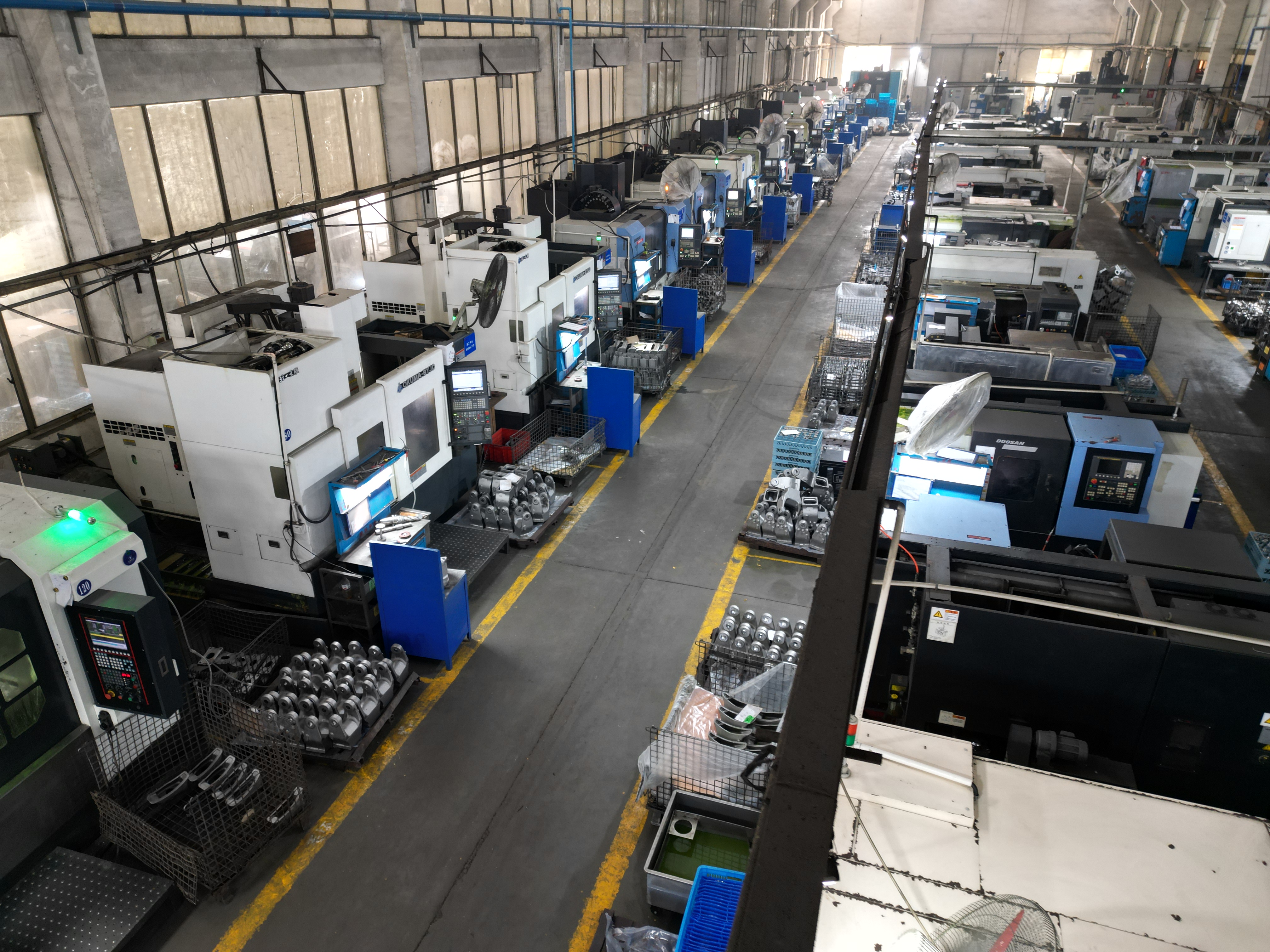
- Integrated downstream scope. Casting, heat treatment, machining and inspection are handled as one scope, with machining to 0.01 mm, using induction furnaces, CNC machining centres and testing equipment that includes spectrometers, X-ray, ultrasonic testing and CMM. This matters for acceptance criteria because dimensional and internal-soundness evidence can be produced inside the same supply chain that produces the part.
- Sample development. Custom production from customer drawings and sample development, including 3D-printed pattern support, is offered — relevant when a buyer needs a first article before committing tooling for a series.
On process history, the company invested in composite process precision casting in 2020 to replace its original water-glass process precision casting, citing production efficiency and environmental impact. Recognition includes being rated among the top 50 industrial enterprises and top 50 taxpayers in Ninghai County from 2012 to 2024, and being awarded "Leading Enterprise in China's Foundry Industry" by the China Foundry Association in 2014, 2018 and 2022. It has served as vice president unit of the Ningbo Foundry Association and director unit of the Zhejiang Foundry Association, and was appointed a director unit of the China Foundry Association in 2015. In 2023 it was recognised as a waste-free factory, a four-star green factory and a water-saving factory.
Where this framework stops working
Three boundaries should be stated plainly, because ignoring them produces the disputes the framework is meant to prevent.
The documented process scope is investment casting. The published capability set covers water-glass, silica-sol and silica-sol composite investment casting with machining, not shell mold or resin sand production. A buyer whose part is better served by a large resin sand mould should treat that as a different sourcing exercise rather than assume the same supplier covers both routes.
Tolerance and roughness statements are conditional. CT6, CT8 and Ra 6.4–12.5 μm are process- and post-treatment-dependent values, not a blanket promise for every geometry. Thin walls, deep pockets and asymmetric sections behave differently, and a buyer who writes the headline value into an order without feature-level confirmation has written an unenforceable clause.
Tooling economics cut against small programmes. A part-specific wax die is justified by forecast volume. For one-off replacements or very low series, a sand-based route with cheaper patterns may be the more rational comparison, even where investment casting would give the better as-cast result.
Application fit: which parts and industries

Application context changes the acceptance emphasis: structural parts are judged on dimensional consistency and soundness, valve bodies on pressure integrity.
Investment casting in this scope serves automotive, forklift, mining, agricultural machinery, construction machinery, valves and general machinery components. Representative part types include pipe elbows, clevis brackets, yokes, gearbox housings, transmission housings, mounting brackets and link arms. Material coverage spans carbon steel, alloy steel, stainless steel and ductile iron, with specific grades confirmed against customer drawings.
The purchasing implication is that acceptance emphasis should follow the function. A mounting bracket or link arm is judged mainly on dimensional consistency, soundness and weldability where relevant; a valve body or pump housing is judged on pressure integrity and internal soundness, which changes the non-destructive testing clause rather than the tolerance clause. Buyers comparing offers across processes should therefore weight the criteria by part function before comparing price, because a quotation that omits the heavier inspection burden will always appear cheaper.
Market signals buyers should read correctly
Two published figures are frequently misread in sourcing discussions. The first is market size: Fortune Business Insights reports USD 39.16 billion in 2025 rising to USD 63.83 billion by 2034, while other research houses value the narrower "cast steel" category differently — a definitional gap between cast ingot and shaped component, not a contradiction about demand. The second is process share: sand casting at 45.6% of global process share in 2025 reflects volume and breadth of application, not superior capability. High-volume sand capacity and high-integrity investment casting capacity answer different questions.
For a buyer at the research stage, the useful conclusion is that supply is not scarce in aggregate; what varies is the ability to document a specific process basis against a specific acceptance criterion. That is the variable worth qualifying in a tender.
Future outlook
Procurement pressure is moving toward evidence rather than description. Buyers increasingly ask for a dimensional report with the first article, a named standard on the material certificate, and a stated inspection method — requests that a supplier with in-house machining and testing can answer from its own records. Process-side, the gradual replacement of older water-glass routes with composite and silica-sol variants reflects both surface and tolerance expectations and environmental compliance requirements, and green-factory and waste-reduction recognitions are becoming part of supplier qualification rather than marketing decoration.
The practical forecast for purchasing teams is unglamorous: fewer process arguments, more clause-level arguments. The supplier that can state its CT grade per variant, its surface condition with the measurement basis, and its concession route in writing will win comparisons that are decided on risk rather than on price per kilogram.
FAQ
What is the difference between investment casting and sand casting for a buyer?
Investment casting uses an expendable wax pattern and a ceramic shell, with part-specific wax die tooling; sand casting, including shell mold and resin sand, forms a mould from bonded sand around a reusable pattern. The buyer-relevant difference is what can be committed in writing: tolerance grade, surface condition, machining allowance, tooling ownership and inspection burden all change with the process, so the purchase order must state the process basis.
Which purchasing terms change when the casting process changes?
Tooling ownership and amortisation, sampling and first-article obligations, the documentation and inspection set, machining responsibility and datum control, and the rework and concession rules. Tolerance and surface clauses also change, because the accepted values are tied to a named process variant rather than to the part alone.
What should an acceptance criteria document contain?
Drawing revision and datum scheme, material grade with the standard it is certified to, dimensional acceptance with report format and sampling, surface acceptance including Ra where functional, internal soundness method and acceptance level, mechanical property verification, traceability and marking, packaging, and a named concession route.
Is investment casting better than sand casting?
Only when the drawing's tolerance, surface or geometry requirements exceed what a sand-based route can hold economically at the required volume. Where part size is large, volume is low, or the tight requirement applies to a single feature that can be machined, a sand-based route is usually the lower-risk basis.
Which materials can be supplied in this process scope?
Documented material coverage includes carbon steel, alloy steel, stainless steel and ductile iron, with specific grades confirmed against customer drawings. Standard specification references, such as ASTM A216/A216M for carbon steel castings suitable for fusion welding for high-temperature service, should be named explicitly in the order.
How should two quotations built on different processes be compared?
Normalise the scope first: same drawing revision, same tolerance basis, same inspection set, same machining responsibility, same tooling treatment. Then compare. A quotation that excludes machining, inspection reports or tooling amortisation is a narrower scope rather than a lower price, and the difference should be priced before any award decision.
For buyers who need the documented capability detail behind this framework, the company presentation is available for download: WAYSCAN METAL PRODUCTS CO. , LTD company presentation.
Есть вопросы или нужны дополнительные детали?
Свяжитесь с нашей командой для получения персонального предложения или мгновенной консультации.
Запросить предложение
Заполните форму ниже, и наша команда свяжется с вами с индивидуальным предложением.
Прямой чат WhatsApp
Предпочитаете общаться в реальном времени? Напишите нам в WhatsApp для мгновенной помощи и быстрых ответов.
- Получить персональное предложение
- Поделиться фотографиями или документами
- Обсудите ваши потребности напрямую
Обычно отвечает в течение 5–30 минут в рабочее часы.