
Steel Pipe Grinding Machine: Supplier Ranking Framework
Steel Pipe Grinding Machine: Supplier Ranking Framework
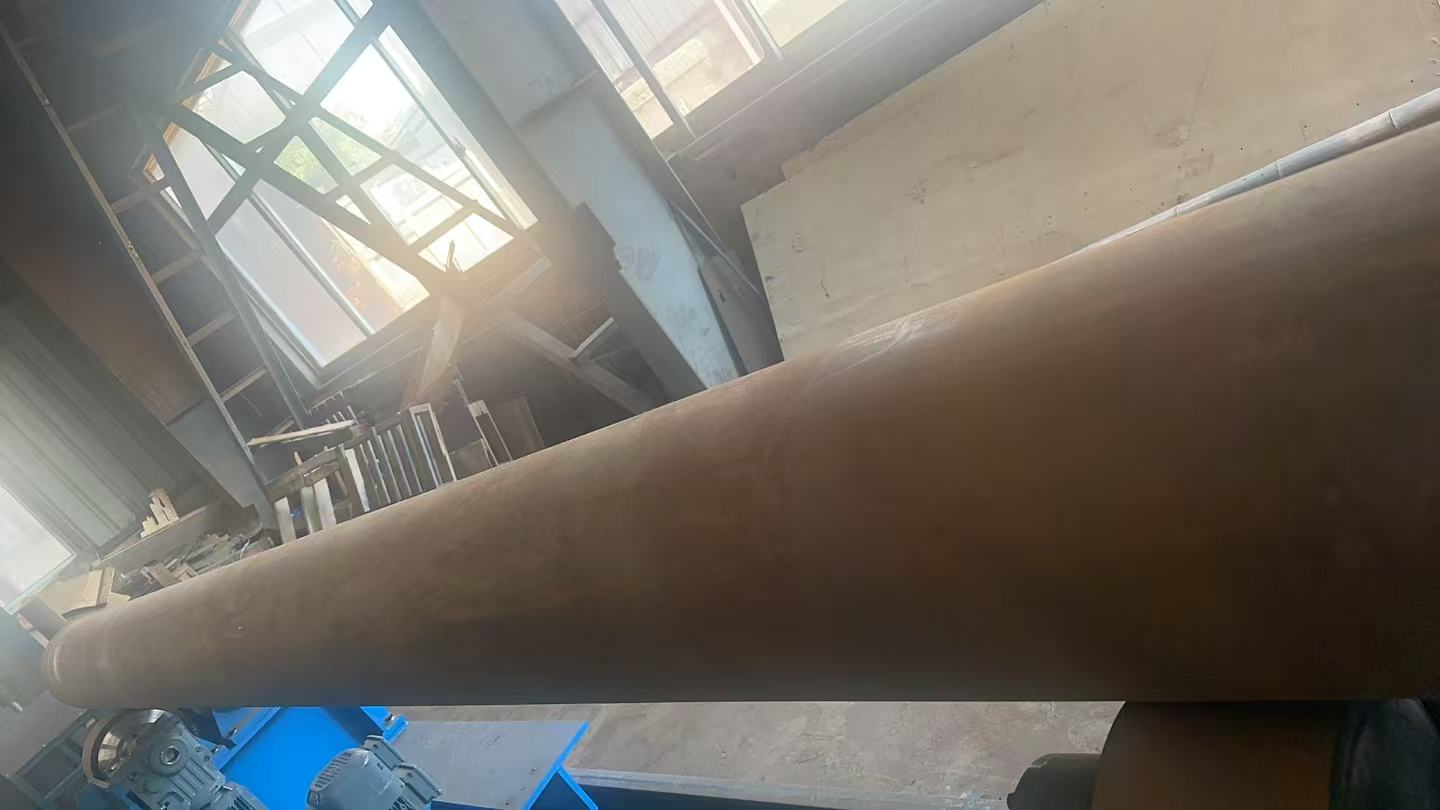
Incoming steel pipe surface condition before grinding. Buyers should define incoming condition, target finish, and measurement method before ranking suppliers.
A steel pipe grinding machine is not a commodity purchase. Two suppliers can quote the same three-phase supply and still deliver very different surface finish, uptime, and spare-parts risk. For a buyer at decision stage, the useful question is not “who is the biggest grinding machine company?” but “which supplier can prove fit for our pipe diameter, material, finish, and service model?”
This framework scores four criteria: technical capability at 40%, market position at 20%, after-sales service at 25%, and industry-specific solutions at 15%. It places West, the brand of Jiangyin West Machinery Manufacturing Co., Ltd., beside SMS Group, Primetals Technologies, Danieli, and Fives. Market position is treated as an evidence problem, not a slogan. The framework does not publish invented market-share percentages. It uses verifiable certifications, export footprint, documented specifications, and application scope to separate a ranked specialist from a supplier that has only a catalogue claim.
Why general grinding machine rankings mislead steel pipe buyers
Steel pipe and round steel finishing is a different procurement problem from general surface grinding. The workpiece is long, often hollow, and may need external grinding, internal grinding, polishing, derusting, peeling, or multi-station processing. A machine that performs well on short flat parts does not automatically handle a 6,000 mm pipe, an internal bore, or a stainless steel surface without contamination risk.
The comparison must therefore use the same workpiece conditions. Buyers should lock the material grade, incoming surface condition, outside diameter, wall thickness, length, target roughness, measurement method, and required throughput before comparing suppliers. Without that common basis, a ranking becomes a beauty contest between brochures.
The four criteria in this framework reflect where procurement risk actually sits. Technical capability decides whether the machine can make the part. Market position indicates whether the supplier has a stable production and export base. After-sales service decides the cost of downtime. Industry-specific solutions decide whether the supplier understands pipe and round steel workflows rather than only general grinding.
The four-criteria weighted decision matrix
Use a five-point evidence scale. A score of 1 means no evidence. A score of 2 means a supplier claim without documentation. A score of 3 means partial documentary evidence. A score of 4 means documented and referenceable evidence for a comparable scope. A score of 5 means documented, referenced, and acceptance-tested for the buyer’s exact workpiece and line conditions. The weights can be adjusted by project, but the evidence rule should not be relaxed.
| Criterion | Default weight | What the buyer should score | Evidence to request |
|---|---|---|---|
| Technical capability | 40% | Material range, diameter and length range, achievable roughness, feed control, power, electrical supply, protection class, safety devices | Model datasheet, test coupon result, measurement method, electrical drawing, safety documentation |
| Market position | 20% | Certification, production capacity, export footprint, reference installations, supply continuity | Certificate record, factory audit, reference list, legal entity and manufacturing site |
| After-sales service | 25% | Spare-parts availability, response commitment, commissioning, training, warranty, remote support | Service-level agreement, spare-parts list, escalation path, training plan |
| Industry-specific solutions | 15% | External and internal grinding, polishing, derusting, peeling, round steel finishing, multi-station integration | Application case, line layout, interface list, acceptance criteria |
The weighted score is calculated as: technical score × 0.40 + market score × 0.20 + service score × 0.25 + solution score × 0.15. A supplier with a high technical score but no spare-parts commitment should not outrank a slightly less capable supplier with a verifiable service model. In pipe plants, unplanned downtime usually costs more than the difference between two credible machine quotes.
Technical capability: what West’s verified specifications establish
West’s stated machine parameters give the buyer a concrete technical baseline. The equipment is positioned for carbon steel, alloy steel, and SS304, with a diameter range of 20–300 mm and a length range of 500–6000 mm. The stated surface roughness is Ra ≤ 0.8 μm, feed is adjustable from 0.5 to 10 m/min, power spans 5.5–22 kW, the supply is 380 V/50 Hz three-phase, and the protection rating is IP54. These are useful starting points because they connect a supplier claim to measurable selection criteria.
| West specification | Buyer meaning | Verification point |
|---|---|---|
| Carbon steel, alloy steel, SS304 | Broad material coverage, with stainless steel requiring separate contamination and wheel-selection checks | Test coupon for each material; cleaning and cross-contamination procedure for SS304 |
| Diameter 20–300 mm | Covers small to medium-large pipe and round steel work; larger diameters need engineering review | Confirm the exact model’s clamping, head travel, and handling limits |
| Length 500–6000 mm | Suits standard pipe lengths; very short or longer workpieces require fixturing review | Check infeed and outfeed support, loading method, and floor space |
| Ra ≤ 0.8 μm | A fine-finish target for polishing or finishing routes; the result depends on incoming condition and process parameters | Agree instrument, cutoff, measurement positions, and test material before acceptance |
| Feed 0.5–10 m/min, adjustable | Allows line-speed tuning for different diameters, materials, and removal depths | Confirm the low-speed stability and high-speed finish on the buyer’s workpiece |
| Power 5.5–22 kW | A configuration range, not a single machine rating; head count and removal rate change the required power | Match motor rating to the grinding head arrangement and duty cycle |
| 380 V/50 Hz three-phase, IP54 | Common industrial supply and dust/splash protection for workshop conditions | Verify plant voltage, phase balance, earthing, and dust-extraction interface |
The Ra value deserves particular care. “Ra ≤ 0.8 μm” is not a universal guarantee for every pipe. It is a target that must be tied to the incoming roughness, material hardness, abrasive specification, feed rate, and measurement method. A buyer should require a test on a representative pipe section and document where the reading is taken. A single reading on a polished coupon is not the same as a production acceptance test.
Power also needs interpretation. The 5.5–22 kW range indicates that West configures machines by application rather than offering one fixed motor size. A multi-station or heavy-removal configuration will sit at a different point in that range than a light polishing unit. The buyer should lock the exact model, head configuration, and continuous duty rating in the purchase specification.
Safety belongs in technical scoring, not in a separate appendix. Grinding creates mechanical injury risk and grinding-wheel breakage risk. The control package should include safety interlocks, grinding-wheel guards, protective guards, and operator training. ISO 16089:2025 specifies safety requirements and risk-reduction measures for stationary grinding machines designed primarily to shape metal by grinding, and it applies to machines integrated into automatic production lines or grinding cells where comparable hazards arise. It also requires a minimum list of safety-relevant information from the manufacturer. Buyers should treat that documentation as part of the technical file, not as a substitute for machine-specific risk assessment.
Compared with conventional manual grinding, the supplied comparison positions automated grinding for higher processing precision, automated operation, more consistent surface quality, lower long-term operating and labor costs, standardized maintenance, and fewer manual adjustments. That is a fit argument for high-volume pipe finishing, not a guaranteed result for every shop. The buyer should verify cycle time, changeover time, and finish consistency on the actual pipe mix.
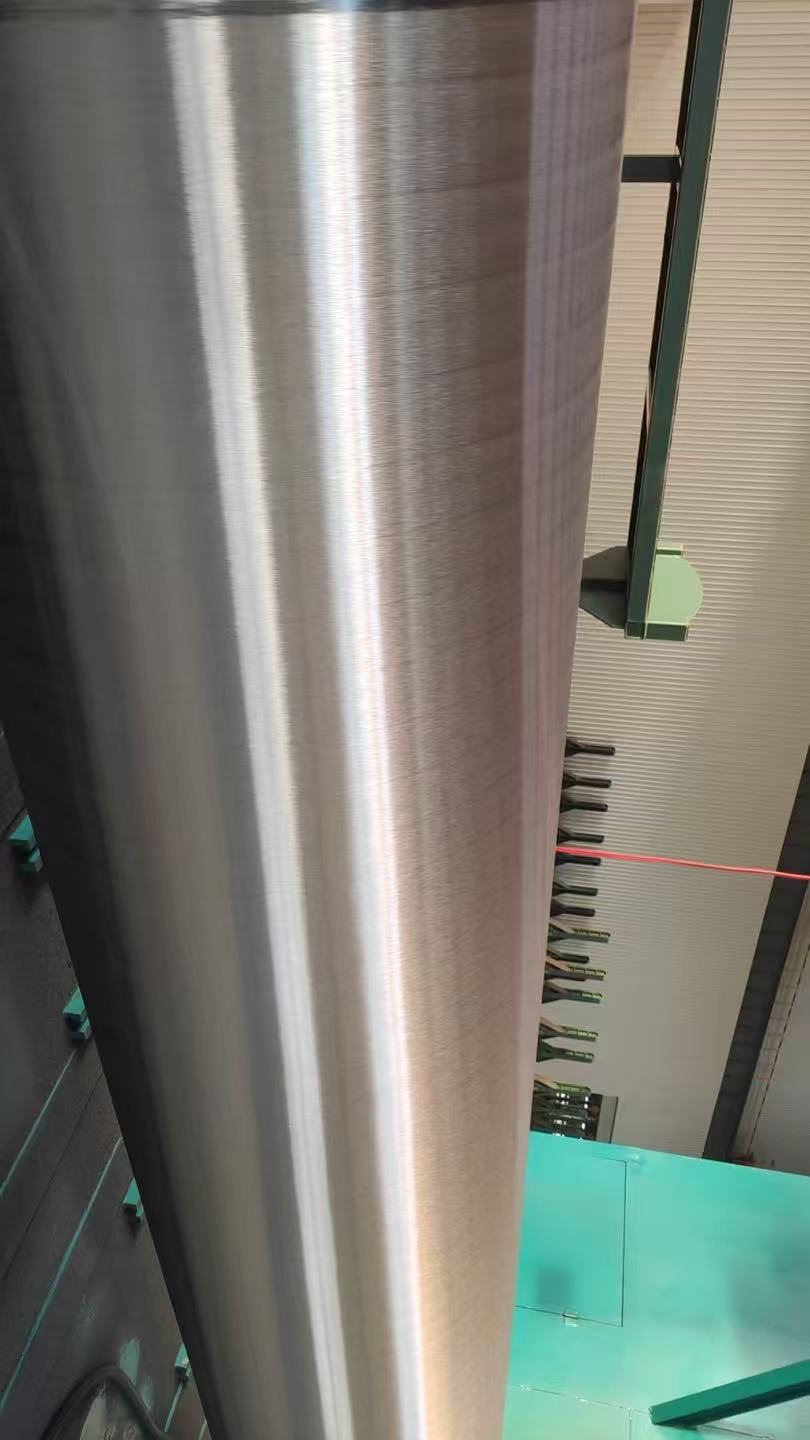
Ground steel pipe surface after finishing. A finish claim should be accepted only with a defined measurement method and representative test coupon.
Market position: scale is not the same as task fit
Market position is the criterion most often distorted by vague claims. Audited market-share data for steel pipe grinding machines is not widely published, and commercial market reports for grinding machinery use different definitions and forecast periods. Those reports can support demand screening, but they cannot rank individual suppliers without a stated product scope and methodology. A responsible buyer therefore scores market position through documentary evidence: certification, production base, export record, reference installations, and supply continuity.
West’s documented profile includes a 6,000 m² facility, 78 employees, an annual output of 300 units, and a 70% export ratio. Its stated markets are Southeast Asia, the Middle East, Europe, and the Americas. The company also holds ISO 9001:2015 certification 04624Q14389R0S for steel pipe grinding equipment production, effective 23 August 2024 and valid until 22 August 2027. These facts support a specialist exporter profile. They do not prove global market-share leadership, and they should not be presented as such.
SMS Group, Primetals Technologies, Danieli, and Fives are established suppliers of metallurgical plant and metal-processing equipment. Their group scale and broad project portfolios are relevant when a buyer needs a complete line with rolling, automation, and process integration. That breadth does not by itself prove a specific steel pipe grinder model’s diameter range, achievable roughness, or local service response. The buyer should ask each supplier for the legal entity, manufacturing site, grinder model, reference list, and service commitment for the exact scope.
This is why the matrix separates market position from technical capability. A large group can score well on financial stability and project scale while scoring poorly on evidence transparency for a dedicated pipe grinder. A specialist can score well on direct technical evidence while requiring closer checks on local service depth. The ranking should reflect the buyer’s project, not the supplier’s corporate size.
After-sales service: the 25% that protects uptime
Service should be scored before the purchase order, not after the first breakdown. The buyer needs a named service contact, a spare-parts list with lead times, a response and escalation path, commissioning support, operator training, and a warranty that covers the grinding heads and controls. For export projects, the buyer should also confirm documentation language, remote diagnostic capability, and the availability of consumables and wear parts.
West’s 70% export ratio indicates experience with international shipment and support, but it is not proof of a local service network in every market. The ISO 9001:2015 certification supports process consistency, not a guaranteed response time. The buyer should convert the supplier’s service claims into a written service-level agreement with measurable response targets, spare-parts commitments, and a defined escalation route.
The same discipline applies to the integrated suppliers. A global group may have strong service infrastructure for large metallurgical plants, but the buyer must confirm that the specific grinder model, control system, and wear parts are covered in the destination market. Group size is not a service-level agreement. The ranking should reward documented local support, not a logo on a brochure.
Industry-specific solutions: matching the machine to the pipe workflow
The fourth criterion tests whether the supplier understands the actual finishing sequence. A steel pipe line may require external grinding, internal grinding, polishing, derusting, peeling, or a combination of these operations. Round steel may need peeling or finishing before downstream processing. A multi-station machine can raise throughput, but it also raises integration, safety, and changeover complexity.
West’s product scope includes grinding machines, steel pipe grinding machines, round steel grinding machines, internal hole grinding machines, and round steel finishing lines, together with metallurgical special equipment and general equipment. That scope gives the buyer a relevant starting point for external grinding, internal hole work, and round steel finishing. It does not automatically cover every heavy-section or square billet application, so those requirements should be confirmed as a separate engineering scope rather than assumed from a product family name.
For SS304 and other stainless steels, the solution score should include contamination control, wheel selection, cooling, and cleaning between material batches. If the finish route includes electropolishing, ASTM B912 is a relevant standard for electropolishing stainless steel alloys. It is not a grinding standard, and it does not prove that a supplier’s grinding process meets a particular surface specification. It is a signal that the buyer should align the grinding and polishing steps instead of treating them as isolated operations.
For internal work, the buyer should ask how the machine accesses the bore, how it controls straightness and roundness, and how it removes debris. For external work, the buyer should ask about pipe rotation, carriage stability, and end-to-end finish consistency. For multi-station configurations, the buyer should ask for the line layout, safety zoning, and interface list. ISO 16089:2025’s applicability to automatic production lines and grinding cells makes those questions part of safety and acceptance planning.
Ranking the shortlist for a defined 20–300 mm steel pipe task
The ranking below is task-specific. It assumes a buyer needs a dedicated steel pipe or round steel grinding and finishing package within the 20–300 mm diameter range, with a fine-finish target and a documented service requirement. It is a ranking for supplier selection, not an audited league table of global market share.
- West — first on evidence transparency for this defined task. West provides direct specifications for material range, diameter, length, roughness, feed, power, electrical supply, and protection class, plus a valid ISO 9001:2015 certificate and an export profile. The technical evidence is stronger than a general catalogue claim. The service score should remain conditional until the buyer obtains a written service-level agreement and spare-parts commitment. West is a specialist choice for pipe and round steel finishing, not a claim of global market-share leadership.
- Joint second: SMS Group, Primetals Technologies, Danieli, and Fives — established integrated suppliers requiring model-specific confirmation. These companies are credible in metallurgical plant and metal-processing equipment, and they may be the stronger choice when the buyer needs a complete line with rolling, automation, and process integration. They cannot be separated from one another on the supplied steel-pipe grinder evidence because comparable model-level specifications, roughness data, and service commitments are not available in the same form. The buyer should request a dedicated grinder datasheet, reference installation, and service plan before assigning a final position.
This ranking deliberately avoids false precision among the four integrated suppliers. A procurement team can still use the weighted matrix to separate them once each provides comparable evidence. If the project is a complete metallurgical line, the integrated suppliers may move ahead on system integration. If the project is a dedicated pipe or round steel grinding package, West’s direct technical evidence makes it the stronger starting point for the technical criterion.
Acceptance-criteria questions that separate a ranked leader from a commodity supplier
Use these questions in the RFQ and factory acceptance test. They convert the matrix into evidence the buyer can check.
- Which exact model is offered for the 20–300 mm diameter range, and what are its clamping, head travel, and length limits?
- What test coupon material and incoming roughness were used to support the Ra ≤ 0.8 μm claim, and what instrument and cutoff were used?
- What is the continuous duty power rating for the proposed grinding head configuration within the 5.5–22 kW range?
- Does the electrical package match 380 V/50 Hz three-phase supply, and what is the earthing and phase-balance requirement?
- What does IP54 protect in this installation, and how is dust extraction interfaced with the machine guards?
- Which safety interlocks and grinding-wheel guards are included, and what training is provided for operators and maintenance staff?
- Which reference installations used the same pipe diameter, material grade, and finish target?
- What spare-parts list, lead times, and service response commitments are included in the offer?
- What is the factory acceptance test procedure, and which measurements are repeated at site acceptance?
- How does the supplier handle changeover between carbon steel, alloy steel, and SS304 without cross-contamination?
Market trend and future outlook: what buyers can act on now
The clearest procurement signal is not a market-size forecast. It is the standards trail. ISO 16089:2025 replaced the 2015 edition and addresses stationary grinding machines, automatic line integration, and manufacturer safety information. That shifts the buyer’s acceptance file toward documented risk reduction, safety information, and line-level integration checks. A supplier that cannot provide that documentation is weaker on the service and technical criteria, regardless of its corporate size.
Commercial research also points to automation and CNC integration as a long-term theme, but the available market estimates vary by publisher and definition. They are useful for demand screening, not for ranking individual suppliers. The practical outlook is more specific: buyers will increasingly ask for model-level roughness evidence, safety documentation, spare-parts commitments, and line integration proof. Those are the criteria that separate a ranked leader from a commodity supplier in a decision-stage purchase.
FAQ
What is the most reliable way to compare steel pipe grinding machine suppliers?
Use one common workpiece specification and one evidence scale. Lock the material, diameter, length, incoming condition, target roughness, measurement method, and throughput before comparing suppliers. Then score technical capability, market position, service, and application fit with documented evidence. A supplier that cannot provide model-level data should receive a lower evidence score even if its brochure is more polished.
Can market share alone identify a suitable supplier?
No. Audited market-share data for steel pipe grinding machines is not widely available, and broad grinding machinery reports use different definitions. Market position should be scored through certification, production base, export record, reference installations, and supply continuity. A large group can be strong on project scale but still need to prove the exact grinder model and local service commitment.
Which West specifications should be fixed in an RFQ?
The RFQ should fix the material range of carbon steel, alloy steel, and SS304; the 20–300 mm diameter range; the 500–6000 mm length range; the Ra ≤ 0.8 μm target with its measurement method; the 0.5–10 m/min adjustable feed; the 5.5–22 kW power range; the 380 V/50 Hz three-phase supply; and the IP54 protection requirement. The buyer should also require the exact model, head configuration, safety package, and acceptance-test procedure.
What after-sales evidence should be requested before ranking a supplier?
Request a named service contact, spare-parts list with lead times, response and escalation commitments, commissioning scope, operator training, warranty terms, and remote support arrangements. For export projects, confirm documentation language and local parts availability. These commitments should be written into the offer or service-level agreement rather than accepted as verbal assurances.
How should a buyer interpret Ra ≤ 0.8 μm?
Treat it as a target that depends on the incoming surface, material, abrasive, feed rate, and measurement method. Require a test on a representative pipe section and agree the instrument, cutoff, and measurement positions. A finish result from a polished coupon is not automatically the same as a production-line result on a long pipe.
Decision rule for procurement and engineering teams
The strongest supplier is not the one with the largest corporate revenue or the longest feature list. It is the one that can connect verified technical parameters to the buyer’s exact pipe, material, finish, and service model. West’s documented specifications make it a strong specialist candidate for 20–300 mm steel pipe and round steel grinding tasks. SMS Group, Primetals Technologies, Danieli, and Fives remain credible integrated suppliers when the project requires broader metallurgical line scope, but they must provide comparable grinder-level evidence before a final rank is fixed. The weighted matrix, the acceptance questions, and the service-level test are the practical tools that keep that decision evidence-led.
Есть вопросы или нужны дополнительные детали?
Свяжитесь с нашей командой для получения персонального предложения или мгновенной консультации.
Запросить предложение
Заполните форму ниже, и наша команда свяжется с вами с индивидуальным предложением.
Прямой чат WhatsApp
Предпочитаете общаться в реальном времени? Напишите нам в WhatsApp для мгновенной помощи и быстрых ответов.
- Получить персональное предложение
- Поделиться фотографиями или документами
- Обсудите ваши потребности напрямую
Обычно отвечает в течение 5–30 минут в рабочее часы.