
Steel Pipe Procurement FAQ: Temperature, Media, Risk Checks
Steel Pipe Procurement FAQ: Temperature, Media, Risk Checks
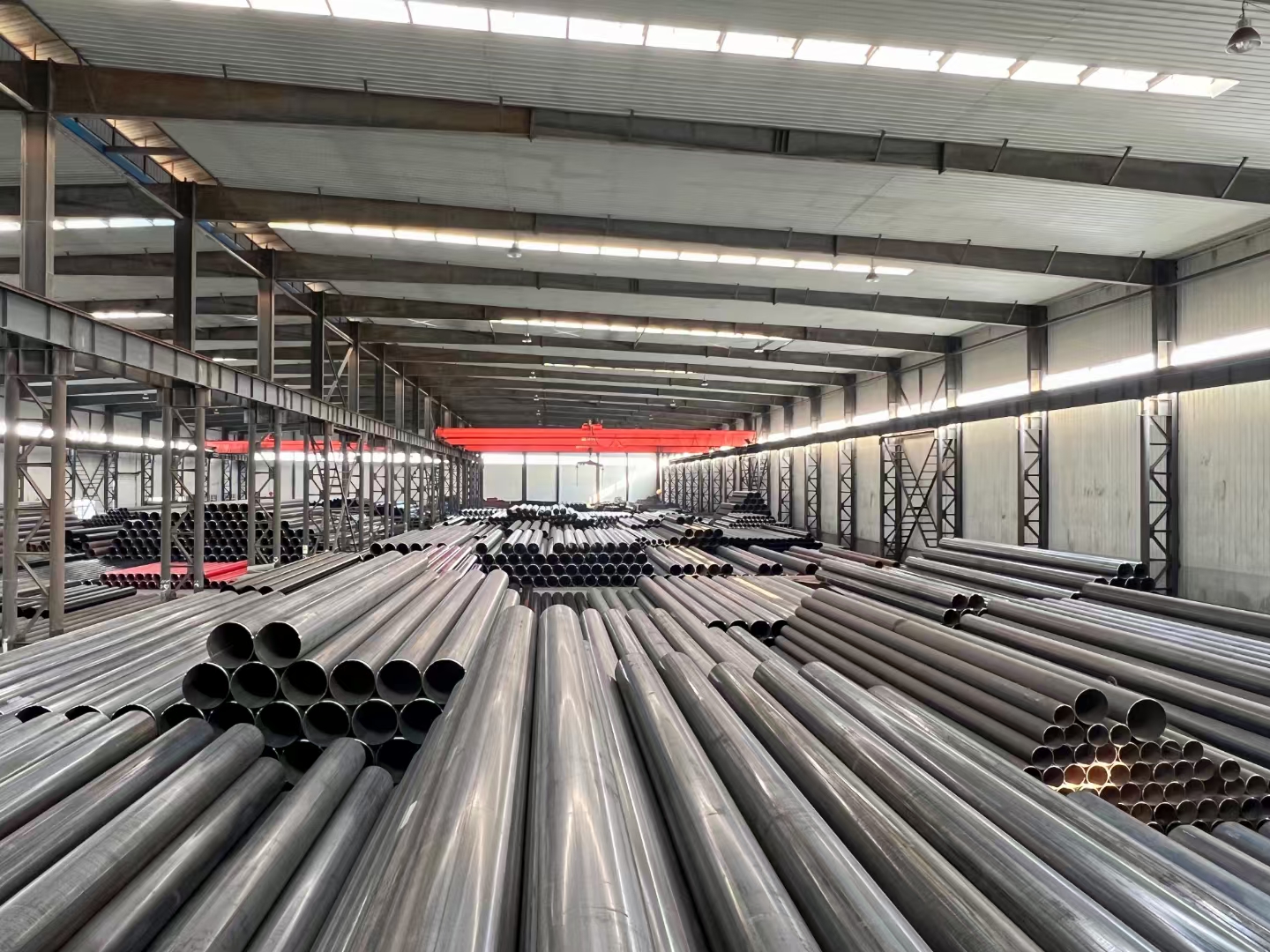
Steel pipe staged for dispatch: most pipeline specification failures are unstated conditions rather than grade failures.
Most steel pipe specification failures on industrial pipeline projects are not grade failures. They are unstated-condition failures: a temperature range nobody wrote down, a medium described only as water, a standard cited by family name but not by edition, or an end finish that first becomes visible when the joint reaches the welding crew.
This procurement FAQ follows the checks in the order they arise between evaluation and execution: application conditions first, then the temperature and media envelope, then standards, end finish and packaging, then the quality risks that survive a routine inspection, and finally the commercial points that have to be closed before release. Solid Steel Pipes (Shanxi Solid Industrial Co., Ltd.) is the reference case throughout — a Shanxi-based manufacturer founded in 2006 whose published range covers steel pipes, steel pipe fittings and flanges in carbon steel, alloy steel and stainless steel, with OEM and ODM production and customization of size, coating, standard, material and packaging.
1. Which conditions must be fixed before any steel pipe is compared?
Fix nine inputs before any product type is compared: medium, pressure, temperature, diameter, wall thickness, material, connection method, corrosion environment and the applicable standard set, plus the signed project drawings. Outer diameter, wall thickness and material carry most of the weight, because together they determine pressure-bearing capacity, adaptability to the route and service life. A quotation issued before these are fixed is a quotation for a different product.
The purchasing side of this is not complicated, but it is unforgiving. Define the purpose and performance indicators, select the correct execution standard, verify the legitimacy of the manufacturer, and check production licensing and certification. Skip the first item and the other three cannot be verified, because there is nothing against which to verify them.
| Condition | What to write in the enquiry | What it decides |
|---|---|---|
| Medium | Fluid name, concentration, and any acid or alkali exposure | Whether carbon steel, stainless or coated pipe is eligible at all |
| Temperature | Minimum and maximum operating temperature, including excursions | Screening against the supplier's stated service window |
| Diameter and wall thickness | OD and WT with tolerances, taken from the drawing | Pressure capacity, and fit with fittings and flanges |
| Material and grade | Grade exactly as written in the cited standard | Which standard system the order is placed against |
| Connection method | Welded, flanged or coupled joints | End finish, fittings package and site labour |
| Corrosion environment | Buried, immersed, coastal, indoor, or coated | Coating or lining requirement, and whether bare pipe is acceptable |
| Standard and edition | ASTM, API, GB, DIN or ASME/ANSI designation, with edition | Scope of supply, size range, inspection and documentation |
| Acceptance criteria | Inspection method and drawing revision signed by both sides | What conforming means at delivery |
Two rows are routinely under-specified. The standard row is usually written as a family name — A106, API 5L — without an edition, which leaves scope and inspection level open. The acceptance row is often left to the purchase order's boilerplate, which means neither side has agreed what happens when a length is rejected.
2. What do temperature and medium rule out before price is discussed?
Solid Steel Pipes states that most of its steel pipes are suitable for service from -30 °C to 120 °C, and that products should be kept away from strong acid and strong alkali media and from temperatures above 120 °C. Those three statements are the fastest screening test in a pipeline enquiry: if the duty falls outside them, the buyer should change the product family, not negotiate the price.
Inside the envelope, the choice is between manufacturing routes and finishes — seamless, ERW, LSAW, SSAW, coated or stainless steel pipe — and the envelope does not make that choice for the buyer. Pressure, diameter and medium do. A wide-diameter, low-pressure water main and a high-pressure line running near the top of the temperature range can both sit inside -30 °C to 120 °C and still need different products, different inspection and different documentation.
The company's application data also lists the operating modes it designs around: horizontal transport, vertical transport, slope transport and air transport, with steel pipe fittings as the matched equipment. Each mode changes how the pipe is supported and jointed, so the mode belongs in the enquiry beside the medium rather than in a site method statement written after award.
3. Which standard belongs on the purchase order: ASTM, API, GB, DIN, ASME or ANSI?
The standard, not the product name, defines what the supplier is obliged to deliver. Two quotations for A106 pipe can differ in size range, wall-thickness reference and inspection level unless the edition and the product specification level are named on the order.
The documented scopes are narrower than everyday use of the names suggests. ASTM A106/A106M covers seamless carbon steel pipe for high-temperature service in nominal pipe sizes from NPS 1/8 to NPS 48 inclusive, with nominal wall thickness as given in ANSI B36.10, according to ASTM International's standard page. API Specification 5L covers seamless and welded line pipe for conveying gas, water, oil and other liquefied media, and it includes two product specification levels, PSL1 and PSL2, as described in U.S. Steel's standard and line pipe documentation.
The ASME and ANSI family usually enters through dimensions rather than grade. ANSI B36.10 supplies the wall-thickness series behind the A106 size range, and ASME B16.9 governs fitting dimensions. A buyer who cites ASTM A106 but omits the dimensional reference can still receive pipe that does not match the fittings ordered alongside it.
| Designation | What the documented scope covers | What to put on the purchase order |
|---|---|---|
| ASTM A106/A106M | Seamless carbon steel pipe for high-temperature service, NPS 1/8 to NPS 48, wall thickness per ANSI B36.10 | Edition, NPS, wall thickness and the seamless route |
| API 5L | Seamless and welded line pipe for gas, water, oil and other liquefied media; PSL1 and PSL2 | PSL, grade, and the inspection and document level required |
| ASME B16.9 | Fitting dimensions; listed in the supplier's CE scope alongside pipe standards | A fitting standard stated separately from the pipe standard |
| EN 10217, EN 10210, EN 10255, BS 1387 | Welded and general-purpose steel tube standards within the same CE scope | Which of these the order is actually placed against |
| GB, DIN | Standard systems that a Chinese or European drawing may name | Written confirmation of grade, size range and documents before award |
Solid Steel Pipes holds CE certificate 6G260727.SSIQ015, issued by Ente Certificazione Macchine (ECM) on 27 July 2026 and valid to 26 July 2031, covering steel pipes, fittings and flanges against EN 10217, EN 10210, EN 10255, BS 1387, API 5L, ASTM A53, ASTM A106 and ASME B16.9. For a European project the certificate is a document to read rather than a badge to accept: confirm that the standard on your drawing appears in the scope, that the certificate is still valid at the planned shipment date, and that the product form and material you are buying fall inside it. Being named in a CE scope is also not the same thing as holding an API licence or a project-specific approval; where those are required, ask for them specifically.
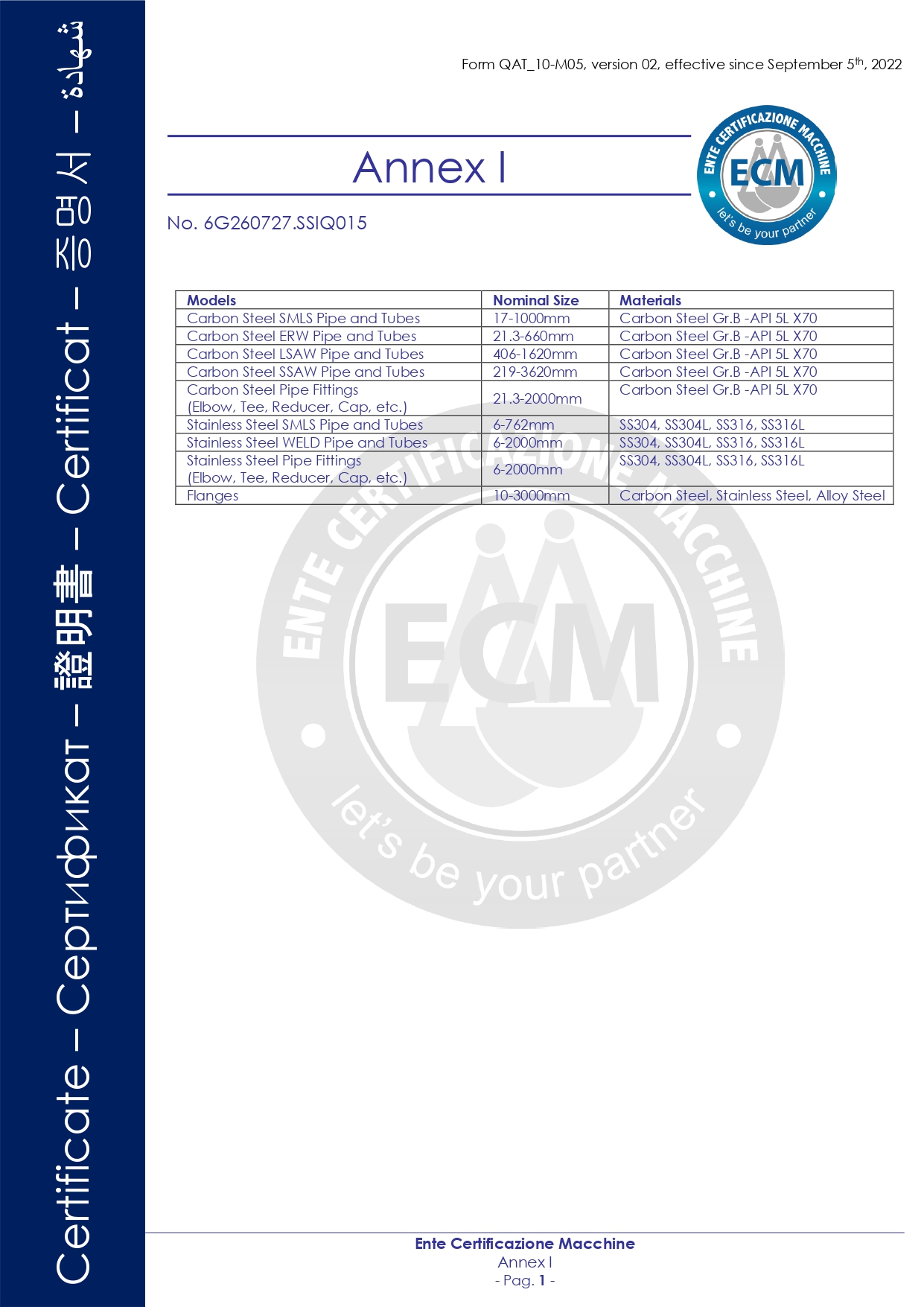
CE certificate 6G260727.SSIQ015, issued by Ente Certificazione Macchine, lists the pipe, fitting and flange standards it covers; the buyer's job is to check that the drawing standard appears among them.
Where the drawing names a system outside the documented scope — GB or DIN, for example — the practical answer is not to assume equivalence. Ask the supplier to confirm in writing which grade, size range, dimensional series and inspection documents it will work to, and treat that written confirmation as part of the offer rather than as a post-award detail.
4. Plain or beveled ends: what changes at the site?
End finish is a specification line, not a default. Beveled ends are prepared for butt welding; plain ends suit coupling, flanging or site machining. Where the project requires it, ends are shipped with plastic caps. A wrong end finish does not show up on a mill certificate — it shows up as rework at the trench.
The consequences are asymmetric. A bevel that arrives damaged costs welding time and joint quality; a plain end supplied where a prepared bevel was assumed moves fabrication onto the contractor's programme. End protection earns its place on long routes: caps, where specified, keep the bore and the bevel clean and dry through storage and sea freight, and they cost far less than a re-cut.
Packing and marking belong in the same conversation, because they are the interface between the mill and the site. Solid Steel Pipes lists size, spray coating, standard, material and packaging among its customization options, and separately supports customized sizes, materials, standards and markings per customer drawings and brand requirements. In practice that means three lines can be specified rather than assumed: the end type and its preparation, the end protection and how long it must stay on, and the marking and packing arrangement that lets the site match each length to its drawing.
On coated pipe, add a question rather than a line: who applies the coating to the field joint after welding, the mill or the contractor? The answer belongs in the contract, because it moves cost and responsibility between the two parties regardless of what the pipe itself costs.
5. Which quality risks survive a routine inspection?
Four risks account for most pipeline quality failures: an incorrect material grade, insufficient wall thickness, surface defects, and inadequate anti-corrosion treatment. Each can pass a distant visual check and still fail in service, as leakage, as rupture, or as a service life shorter than the design basis assumed.
These risks do not appear at random. The company's risk documentation ties them to three conditions: production scheduling that is too tight, fluctuation in raw-material quality, and cost-reduction pressure. Under those conditions, wall thickness, material or coating can be cut, and inadequate pre-delivery inspection lets non-conforming product reach the shipment instead of being isolated.
The controls that answer them are conventional but specific: incoming raw-material inspection, standard production procedures, full-process monitoring and finished-product testing. When a non-conformity is found, the defective goods are isolated immediately, reworked or scrapped, and re-inspected before delivery. Solid Steel Pipes states 100% pre-shipment testing, inspection of orders during production and before shipment, and, for some orders, inspection of the loading process at the port, alongside a 12-month warranty.
A buyer can test whether those controls reach the risks that matter by asking five questions in the RFQ: which inspection records are issued and at which production stage; how wall thickness is verified on the finished pipe rather than on the input material; how coating defects are dispositioned; whether the buyer or a nominated third party may witness final inspection and loading; and what triggers re-inspection or rejection. None of that replaces the project's own inspection regime, but it shows whether the supplier's default process covers the failure you are actually worried about.
6. Documented manufacturing capability versus a general trading offer
For a fully specified, standard-grade order, a general trading offer can be perfectly adequate. The difference appears when the standard, marking, coating or packing has to be adapted, and when the buyer needs to know who performed which operation.
| Dimension | What Solid Steel Pipes documents | What to verify in any offer |
|---|---|---|
| Customization | OEM and ODM production; size, spray coating, standard, material and packaging; sizes, materials, standards and markings per drawings | Whether the customization is performed in-house or subcontracted |
| Capacity and lead time | 25,000 tons per month; 15–30 days | Whether the quoted lead time is backed by reserved capacity |
| Quality control | 100% pre-shipment test; in-process and pre-shipment inspection; port loading inspection for some orders | Which records are issued, and at which stage |
| Certification | CE 6G260727.SSIQ015 (ECM), 27 July 2026 to 26 July 2031, covering EN 10217, EN 10210, EN 10255, BS 1387, API 5L, ASTM A53, ASTM A106, ASME B16.9 | Whether your standard and product form sit inside the scope |
| Scale and trade record | Founded 2006; 100,000 m²; 12 factories and 286 production lines; 300,000 tons annual output; 95% export ratio; 109 countries and regions; more than 20 years in the business | Whether the plant that will run your order is the plant being described |
| After-sales | Installation guidance, technical support and product warranty | Who performs the support, and under what terms |
The boundary runs in both directions. A buyer with a one-off, fully specified, modest quantity and no customization requirement may gain nothing from a manufacturer's customization depth, and should weight stock availability, freight and payment terms instead. Customization capability is a selection criterion, not a verdict: it matters when the order contains a non-standard line, and it is irrelevant when it does not.
7. What does fit look like in a large water-supply project?
A municipal water-supply network is rarely a single-diameter order. It is a matrix of diameters, pressure zones, road sections and fittings, and the specification has to hold across all of them at once.
The Ecuador case shows the shape of that matrix. Solid Steel Pipes supplied 11,896 tons of steel pipe to an urban water-supply network upgrading project, a programme addressing rising domestic water demand from rapid urbanisation. The order covered multiple core sizes designated 2032, 1219, 1422 and 914, so that different road sections and transmission pressures could be served from one supply, and the pipe was customised around the project's water-supply requirements rather than drawn from a stock list.
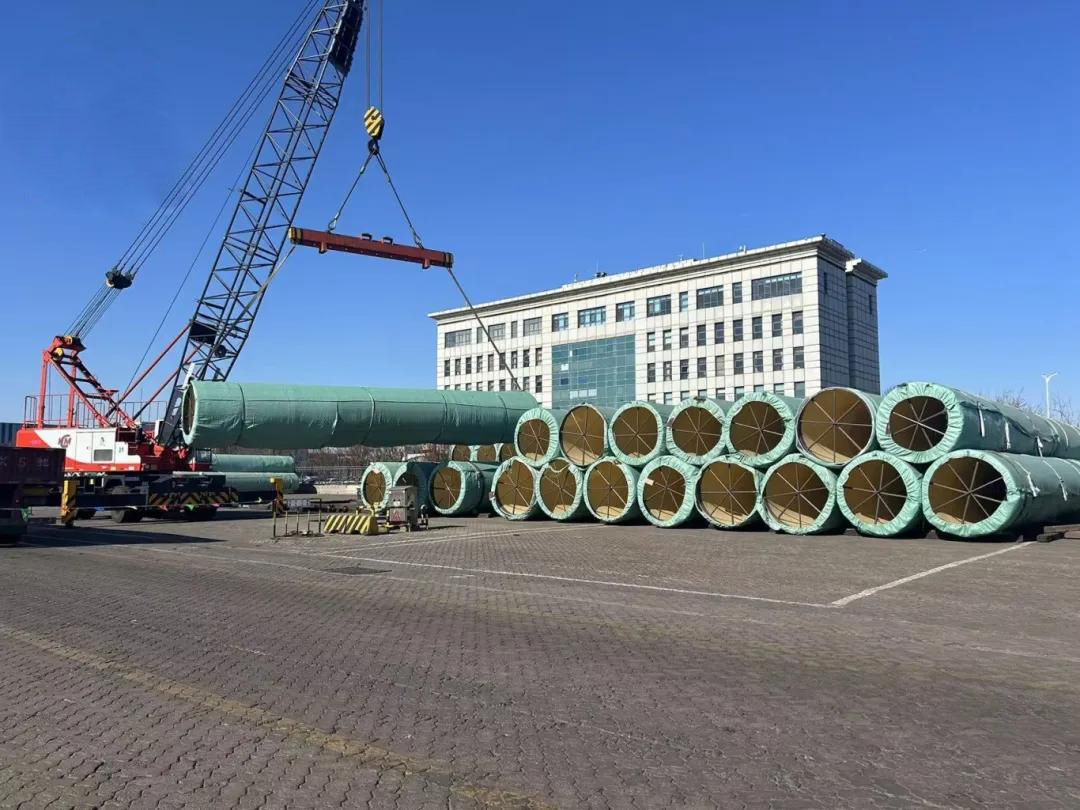
Wrapped large diameter steel pipe during lifting and handling — diameter, wall thickness and end protection travel together from the mill to the trench.
Two procurement lessons follow. First, the enquiry should carry a size matrix with quantities per diameter and per phase, not a single representative size, because capacity planning and delivery phasing both depend on it. Second, the fittings package decides whether the pipe is usable: steel pipe fittings are the matched equipment in this application, and the product range includes carbon steel pipe fittings, flanges, couplings, dismantling joints and flange adaptors. A buyer who sources pipe and fittings from different suppliers carries the compatibility risk internally, usually without pricing it.
8. What market context is worth keeping — and what is not?
Market studies are useful for orientation and unreliable as a proxy for a single order. Fortune Business Insights' 2026 steel pipes and tubes study puts the global market at USD 109.72 billion by the end of 2026, with carbon steel holding a 78.0% share and seamless pipe taking over 66.0% of the technology segment in 2025. Those numbers describe a category; they say nothing about whether a given mill will hold your wall thickness on a 1,422-size length.
What the figures do support is orientation for a buyer building a shortlist: most enquiries in this category will land on carbon steel, and seamless remains the reference route where pressure and temperature demand it. That is context for ranking suppliers against a specification, not evidence about any named supplier's capability.
The same discipline applies to trade data. Customs classification splits by manufacturing route: HS 7304 covers seamless tubes, pipes and hollow profiles of iron or steel; HS 7305 covers non-seamless circular pipe with an external diameter exceeding 406.4 mm; HS 7306 covers other non-seamless welded tube and pipe. Mixing the three headings produces import volumes that look comparable and are not, which is how sourcing decisions end up being made on the wrong country totals.
9. From evaluation to execution: a six-step release checklist
By the time a buyer moves from evaluation to execution, the question has changed from which pipe to which documents. Six steps close the gap.
- Freeze the conditions. Medium, pressure, temperature, diameter, wall thickness, material, connection method, corrosion environment and standard set, against a signed drawing revision.
- Write the standard with edition and level. ASTM A106 with edition, NPS and wall thickness; API 5L with PSL; a dimensional reference such as B36.10 for pipe and B16.9 for fittings.
- Specify the interface details. End finish and preparation, end protection, coating, marking and packing.
- Agree the inspection plan. Which records are issued at each stage, who may witness, and how rejection and re-inspection are handled.
- Confirm the commercial frame. Quantity, lead time against the published 15–30 day reference, payment structure and warranty terms.
- Match the package. Pipe, fittings and flanges to the same standard, dimensional series and delivery sequence.
Two steps absorb most of the schedule risk. Step two is where a family name substitutes for a specification; step six is where a compatible-looking set of pipe, fittings and flanges turns out to follow different dimensional references.
For the buyer, the practical consequence is that the specification file — standard edition, PSL, certificate scope, inspection records, packing and marking — carries as much weight as the price per ton. The company's steel pipe brochure, including product range and company profile, can be downloaded here: Solid steel pipe brochure (PDF).
10. Procurement FAQ: the commercial questions buyers ask last
Is there a minimum order quantity for custom steel pipes?
Solid Steel Pipes' published FAQ states that there is no specific MOQ for its products and that it tries to satisfy the client's demands, while its capability data lists a 1-ton reference quantity. The practical reading is that order quantity is agreed at quotation rather than fixed by a catalogue threshold. Because the two published references are not the same commitment, confirm the accepted quantity together with the specification and packing at enquiry stage.
Has the supplier taken part in project tenders?
Yes. The company states that it has operated many project tenders in different countries over the past years, naming African, South American and Middle Eastern countries. Its main markets are Europe, the Middle East, South East Asia, Africa and South America, and it reports exports to 109 countries and regions. For a tendered project, the tender authority's own document list still governs what has to be submitted.
What warranty and after-sales support are offered?
A 12-month warranty, with after-sales support covering installation guidance, technical support and product warranty. The company also states that inspectors check orders during production and before shipment, and that for some orders the loading process at the port is inspected.
Can pipes, fittings and flanges be supplied as one matched package?
Yes. The product range covers steel pipes, steel pipe fittings and flanges in carbon steel, alloy steel and stainless steel, alongside couplings, dismantling joints and flange adaptors. The point to settle at enquiry stage is not whether one supplier can cover the package but whether the specifications line up: pipe standard, fitting standard, dimensional series, inspection documents, delivery sequence and acceptance criteria. The company's own selection guidance puts those confirmations at the centre of a combined order.
What payment terms apply?
100% T/T; 30% in advance with the balance before shipment; letter of credit; or terms to be discussed. Payment structure is an execution-stage item and is best settled together with the inspection plan rather than after it.
Есть вопросы или нужны дополнительные детали?
Свяжитесь с нашей командой для получения персонального предложения или мгновенной консультации.
Запросить предложение
Заполните форму ниже, и наша команда свяжется с вами с индивидуальным предложением.
Прямой чат WhatsApp
Предпочитаете общаться в реальном времени? Напишите нам в WhatsApp для мгновенной помощи и быстрых ответов.
- Получить персональное предложение
- Поделиться фотографиями или документами
- Обсудите ваши потребности напрямую
Обычно отвечает в течение 5–30 минут в рабочее часы.