
Steel Props, Plywood and Cold Storage Panels: Fit Criteria
Galvanized steel props, plywood and cold storage panels are frequently listed side by side in a supplier catalogue and almost never compete for the same line in a project budget. Each answers a different construction question: how temporary loads are carried during excavation and structural work, what surface concrete is cast against or goods are packed in, and how a temperature-controlled room holds its envelope. Comparing them as substitutes produces the wrong decision. Comparing them against project requirements produces a usable one.
This article sets out that comparison framework for three product families supplied by GREEN BIO. It is deliberately criteria-based rather than a supplier ranking: the objective is to show which specification fields, documents and site conditions decide whether each material performs, and where each one stops being the right answer.
GREEN BIO, registered as Jiangsu Green Bio-Environmental Protection Technology Co., Ltd, is a China-based manufacturer and supplier of insulated building panels and structural and finishing materials, founded in 2015 and operating from a 10,000 square metre facility in Jiangsu Province. Its product scope covers PIR sandwich panels, plywood, steel supports, cable brackets and aluminium profiles, with an export share of about 70% and customers in more than 120 countries and regions.
Why these three products are not substitutes
The three families sit in different functional layers of a construction or cold-chain project, and that difference drives everything else in procurement.
Galvanized steel props are temporary works equipment. They carry vertical load while excavation or structural work is open and are removed once the permanent structure takes over. Plywood is a sheet material: it forms the contact face for cast concrete, acts as general building board, or protects goods as packaging. Cold storage panels are a permanent thermal envelope: their task is to hold an operating temperature continuously across walls, ceilings and joints.
Because the failure modes differ, the evaluation criteria differ. A prop fails through inadequate bearing, thread damage or instability. Plywood fails through surface breakdown, delamination or reuse cycles running out. A cold storage panel fails through joint leakage, condensation inside the envelope, or a specified temperature band that the installed system cannot actually hold. A single price per unit tells a buyer almost nothing across those three risk profiles.
The procurement problem: more categories, less comparability
The commercial context explains why multi-category catalogues have become common and why buyers struggle to compare them. IMARC Group valued the China green building materials market at USD 216.3 billion in 2025 and projected it to reach USD 484.9 billion by 2034 at a reported 9.10% compound annual growth rate. The same policy environment has pushed demand upward: the 14th Five-Year Plan required all new urban buildings in China to meet green building standards by 2025, as summarised by the US International Trade Administration, while the national assessment framework GB/T 50378-2019, updated in 2024, rates buildings on a three-star scale.
Those drivers have two practical effects on purchasing. First, suppliers widen their ranges so that one purchase order can cover envelope, structure and finishing, which makes catalogues look comparable when the underlying products are not. Second, documentation becomes a purchasing requirement rather than an afterthought: China's green product certification system integrates energy-saving, water-saving, recycled, regenerative and low-carbon product categories into one scheme, which means a buyer is often asked to check certificate scope rather than simply a certificate logo.
What GREEN BIO supplies across the three families
GREEN BIO operates a 10,000 square metre facility with 50 employees, an R&D team of 25 engineers and an annual output of 120,000 units. Its export footprint concentrates on Southeast Asia, Central Asia, Russia, South America and Africa, which correspond largely to Belt and Road markets and other emerging economies.
| Product family | Functional role | Material / specification basis | Typical application |
|---|---|---|---|
| Galvanized steel support series | Temporary vertical support, adjustable on site | Q195 / Q235 steel grades | Deep foundation pits, tunnels, large-scale structural construction |
| Plywood | Sheet material for contact surfaces, building board and protection | Grade and thickness selected by job | Formwork, general building, packaging |
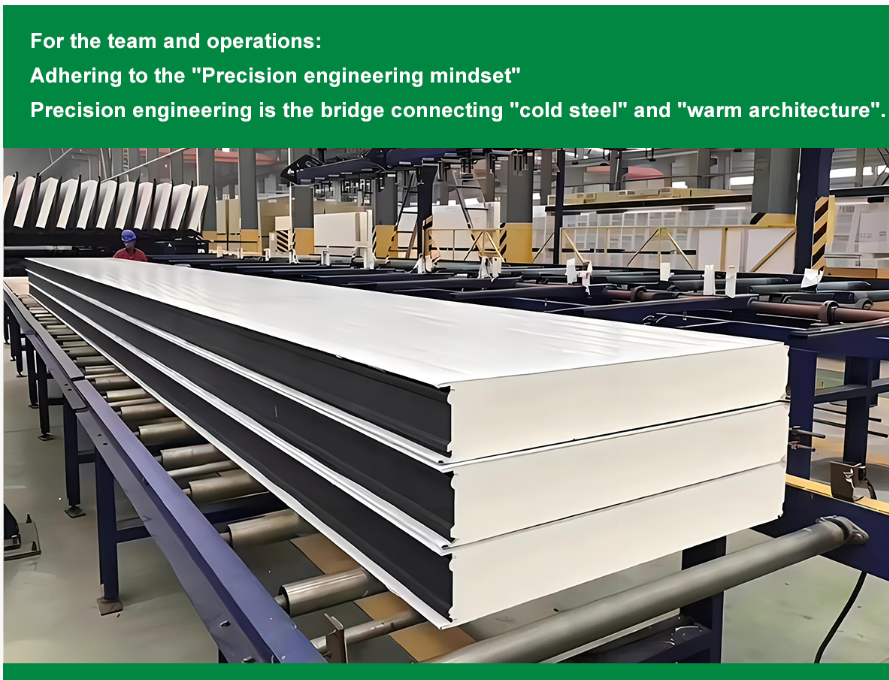
| JSGREEN001 cold storage panels | Permanent thermal envelope | PU / PIR core; 50 mm or 100 mm thickness; effective width 960 mm or 1100 mm; 0.5 mm steel facing sheet; continuous operation from -50 degrees Celsius to +15 degrees Celsius | Agriculture, chemical, logistics and warehousing, pharmaceutical, food and beverage |
Steel props: specification fields that matter in excavation work
In a deep foundation pit or tunnel, a galvanized steel prop is part of a temporary support system rather than a finished building element. Buyers should treat the purchase as equipment selection with an engineering input, not as a commodity line item.
The first field to confirm is steel grade. GREEN BIO supplies props in Q195 and Q235 grades; the grade affects how the prop behaves under load and how it is welded and galvanized. The second is adjustment range, because the prop must extend to the required height with adequate thread engagement rather than being run to its mechanical limit. The third is the base and head arrangement: bearing plates transfer load into the ground or the supported member, and their condition governs whether the prop is stable or merely present.
Galvanizing itself is a maintenance decision as much as a corrosion decision. Props are reused across projects, and a coated surface that survives handling and storage will outlast one that does not, which is why surface condition is a fair question to ask on a repeat order.
The boundary here is important. A galvanized steel prop is a component of a shoring or formwork design; it does not replace that design. Site inspection of threads, base bearing, verticality and locking should be a documented routine, and props that are bent, corroded or partly engaged should be withdrawn from service regardless of their nominal grade.
Plywood: matching grade and thickness to the actual job
Plywood is the most frequently mis-specified of the three because buyers often treat it as one product. In practice, three different jobs run through the same catalogue entry: formwork, general building and packaging. Each one is governed by a different performance requirement.
For formwork, the relevant questions are how many times the panel must be reused, how the surface behaves when concrete is stripped, and whether the edges are sealed against water and cement paste. For general building use, flatness, thickness consistency and fixing behaviour matter more than reuse counts. For packaging, mechanical protection and handling weight dominate, and surface appearance is largely irrelevant.
Because those requirements pull in different directions, the buyer's job is to state the reuse expectation and the moisture exposure before the quotation is fixed, not after the first panels delaminate. A limitation worth stating plainly: plywood performance in service depends heavily on site handling, stripping practice, edge sealing and drying between uses. Reuse cycles are therefore a planning assumption rather than a guaranteed figure, and any supplier who presents them as a fixed number is describing a best case.
Cold storage panels: the specification set that decides performance
The JSGREEN001 cold storage panel range has a defined specification set that makes comparison possible. Panels are offered with PU or PIR cores in 50 mm or 100 mm thickness, with an effective width of 960 mm or 1100 mm and a 0.5 mm steel facing sheet, and are rated for continuous operation from -50 degrees Celsius to +15 degrees Celsius.
Thickness
Thickness selection is a trade between insulation performance, usable internal volume, panel weight and cost. Colder operating temperatures and high energy-cost exposure push specification toward the thicker option; milder duty and tight internal volumes favour the thinner one. The decision should be made against the operating temperature band and the design life of the room, not against a competitor's panel list.
Effective width
The choice between 960 mm and 1100 mm effective width changes how many panels and joints a given wall area contains. Wider panels reduce the number of joints per square metre, which matters because joints are where thermal and moisture performance is most exposed. They are also heavier and require more handling capacity during installation. Buyers comparing offers on price alone frequently compare panels of different widths, which makes the quotations non-equivalent.
Core and thermal performance
GREEN BIO reports that its high-density PU core achieves a thermal conductivity as low as 0.022 W/(m·K), that this represents roughly 30% better insulation efficiency than traditional EPS panels, and that the resulting electricity saving is in the order of 15 to 20% over the long term. These are company-reported performance figures and should be read as such: they describe the manufacturer's own benchmark, and a project-specific calculation remains the buyer's basis for specification.
Fire behaviour
Fire class is a purchasing criterion that often decides whether a project proceeds. GREEN BIO supplies B1 and B2 grade flame-retardant cores, states that panels are tested against ISO and EN13501 fire safety standards, and includes third-party test reports with shipment so that local fire inspections can be addressed. The limitation is jurisdictional: meeting a supplier test report is not the same as obtaining local approval, and buyers should confirm which report format their authority accepts before ordering.
Application fit by industry scenario
Matching product to scenario is where the comparison becomes operational. The table below maps typical industries to the product family that carries the functional requirement, together with the field a buyer should confirm before commitment.
| Scenario | Product family in scope | Field to confirm before ordering |
|---|---|---|
| Deep foundation pits, tunnels, large-scale structural construction | Galvanized steel support series | Steel grade (Q195 / Q235), adjustment range, base and head arrangement, inspection routine |
| Concrete formwork on general building works | Plywood | Reuse expectation, edge sealing, moisture exposure, thickness tolerance |
| Protective packaging and site protection | Plywood | Handling weight, mechanical protection level, delivery format |
| Agricultural cold rooms and post-harvest storage | JSGREEN001 cold storage panels | Operating temperature band, panel thickness, hygiene and washdown detailing |
| Chemical and temperature-controlled process storage | JSGREEN001 cold storage panels | Fire class (B1 / B2), test report format, joint and penetration sealing |
| Logistics and warehousing | JSGREEN001 cold storage panels | Effective width against building module, panel weight versus handling equipment |
| Pharmaceutical storage | JSGREEN001 cold storage panels | Temperature stability across the -50 to +15 degrees Celsius range, documentation set |
| Food and beverage processing | JSGREEN001 cold storage panels | Core type (PU / PIR), joint detailing, cleanability at panel interfaces |
Market trend: from price sheets to documentation
The direction of procurement in green building materials is toward documented evidence rather than headline price. Three signals support that reading. National assessment frameworks now define what a building must demonstrate, not only how it should be designed. Certification systems have consolidated product categories, so a certificate can be checked against a defined scope. And multi-country industry research, including the World Green Building Trends work, has consistently found that commitment to green building has increased rather than retreated, which keeps specification pressure on suppliers.
A caution belongs here as well. Public, verified price and lead-time data for steel props, plywood and cold storage panels remains thin and fragmented by grade and destination. Buyers should therefore compare on specification, documentation and total cost of ownership for the specific project, rather than on market averages that may describe a different product class entirely.
How this compares with conventional alternatives
On the supply side, GREEN BIO positions itself against traditional domestic manufacturers and standard trading companies. The company reports that a single-source route across these categories changes coordination cost and after-sales behaviour, and the table below separates what is company-reported from what a buyer can verify.
| Dimension | Conventional route (domestic manufacturer or trading company) | GREEN BIO, company-reported | What the buyer should verify |
|---|---|---|---|
| After-sales response | Handled from the country of origin, often across time zones | Response within 24 hours through overseas offices | Which office covers the project destination; escalation path in writing |
| Communication | Language barriers extend clarification cycles | 80% international staff; communication efficiency described as 50% higher than traditional suppliers | Named contact, working language, technical drawing turnaround |
| Pricing structure | Intermediated, with trading margins layered on | Direct factory pricing; total procurement cost described as 15 to 20% lower | Full quotation with specification, packing, Incoterms and warranty scope |
| Application fit | Single category, narrower product scope | Three families from one facility with ISO 9001:2015, ISO 14001:2015 and ISO 45001:2018 certification | Certificate scope and validity dates, not only the certificate listing |
| Limits | Fragmented responsibility across suppliers | Bundled supply does not transfer engineering responsibility | Design responsibility for shoring and envelope detailing stays with the project team |
The decisive limitation is commercial rather than technical. Buying props, plywood and panels from one supplier reduces coordination points and consolidates documentation, but it does not merge three separate engineering decisions into one. The shoring design, the formwork sequence and the envelope detailing each require their own competence, and a single purchase order does not supply it.
Where this comparison stops
A comparison that does not state its boundaries is not useful to a buyer. Four limits apply to this article.
- The specification set used here covers panel thickness, effective width, facing thickness, temperature band and steel grade. It does not include product-level load ratings for props or fire test values by panel thickness, which must be requested as project documents.
- Company-reported performance figures, including thermal conductivity of 0.022 W/(m·K), the 30% insulation comparison with EPS panels and the 15 to 20% electricity or procurement cost effects, describe the manufacturer's own benchmarks. They are a starting point for verification, not a substitute for it.
- Management system certification under ISO 9001:2015, ISO 14001:2015 and ISO 45001:2018 confirms that quality, environmental and occupational health and safety processes are audited. It does not certify the thermal or mechanical performance of any individual panel or prop.
- Green building certification applies by product category and by project. A supplier holding relevant certifications does not automatically make a specific product eligible for a specific building rating.
Future outlook
Two pressures are likely to shape how these three categories are bought over the next several years. The first is documentation density: as national assessment frameworks and certification scopes become more explicit, buyers will increasingly ask for certificate numbers, test report formats and validity dates as a condition of quotation rather than as a post-award formality. The second is envelope performance in emerging markets, where temperature-controlled capacity in agriculture, food and pharmaceutical supply chains is expanding alongside Belt and Road infrastructure activity. That combination favours suppliers who can hold a defined specification across panel thickness, width and core type while also explaining where their products do not apply.
For buyers, the practical implication is stable: build one evaluation sheet per product family, define the fields before the first quotation arrives, and treat bundling as a coordination benefit rather than a technical one.
FAQ
What is the first decision a buyer should make when a project needs steel props, plywood and cold storage panels?
Separate the three into their own evaluation sheets before comparing any price. Steel props are temporary works equipment, plywood is a sheet material for formwork, building or packaging, and cold storage panels are a permanent thermal envelope. Each carries a different failure mode and therefore different acceptance criteria.
Which specification fields decide whether a galvanized steel prop suits a deep foundation pit or tunnel?
Steel grade, adjustment range, base and head arrangement, and surface condition are the fields that determine suitability. GREEN BIO supplies props in Q195 and Q235 grades. The prop is a component of a shoring or formwork design, so suitability also depends on the design it sits within and on documented site inspection of threads, bearing and verticality.
How should a buyer choose between 50 mm and 100 mm cold storage panels?
The choice is a trade between insulation performance, usable internal volume, panel weight and cost. Colder operating temperatures and high energy-cost exposure generally push specification toward the thicker option, while milder duty and tight internal volume favour the thinner one. The JSGREEN001 range offers both thicknesses and is rated for continuous operation from -50 degrees Celsius to +15 degrees Celsius.
Does effective width really change cost and installation for cold storage panels?
Yes. A 960 mm and an 1100 mm effective width produce a different number of panels and joints for the same wall area. Wider panels reduce joints per square metre, which matters because joints are the most exposed part of the envelope, but they are heavier and demand more handling capacity. Offers that quote different widths are not directly comparable on unit price.
Why do B1 and B2 flame-retardant cores matter in cold storage panel procurement?
Fire class often determines whether a project can be approved at all. GREEN BIO supplies B1 and B2 grade flame-retardant cores, states that panels are tested against ISO and EN13501 fire safety standards, and includes third-party test reports with shipment. Buyers should still confirm that the report format matches what their local fire authority accepts, since supplier testing and local approval are separate steps.
What do ISO 9001:2015, ISO 14001:2015 and ISO 45001:2018 actually cover for a buyer?
They are management system certifications covering quality, environmental and occupational health and safety processes respectively. They indicate that the supplier operates audited processes. They do not certify the thermal conductivity, mechanical strength or fire performance of a specific product, which must be evidenced by product-level test reports.
What can a single supplier realistically solve across three product categories?
Bundled supply reduces coordination points, consolidates documentation and can shorten clarification cycles; GREEN BIO reports after-sales response within 24 hours through overseas offices and direct factory pricing. It does not transfer engineering responsibility. Shoring design, formwork sequencing and envelope detailing remain project-side decisions, and each should be assessed independently of the purchase order.
The GREEN BIO professional catalogue, including product ranges and specification material, is available for download: Green Bio Professional Catalog 2026.
Есть вопросы или нужны дополнительные детали?
Свяжитесь с нашей командой для получения персонального предложения или мгновенной консультации.
Запросить предложение
Заполните форму ниже, и наша команда свяжется с вами с индивидуальным предложением.
Прямой чат WhatsApp
Предпочитаете общаться в реальном времени? Напишите нам в WhatsApp для мгновенной помощи и быстрых ответов.
- Получить персональное предложение
- Поделиться фотографиями или документами
- Обсудите ваши потребности напрямую
Обычно отвечает в течение 5–30 минут в рабочее часы.