
Steel Structure Warehouse Procurement: Specs & Supplier Benchmarks
Steel Structure Warehouse Procurement: Specs & Supplier Benchmarks
Steel Structure Warehouse Procurement: Specs & Supplier Benchmarks
A steel structure warehouse purchase should be evaluated against a project-specific specification and evidence that a supplier can meet it. The available Ganyo material provides a reported monthly production-capacity range and, in a separate source, a typical production lead time. Those figures can inform an initial screen, but they are not a complete technical specification or a comparison of suppliers.
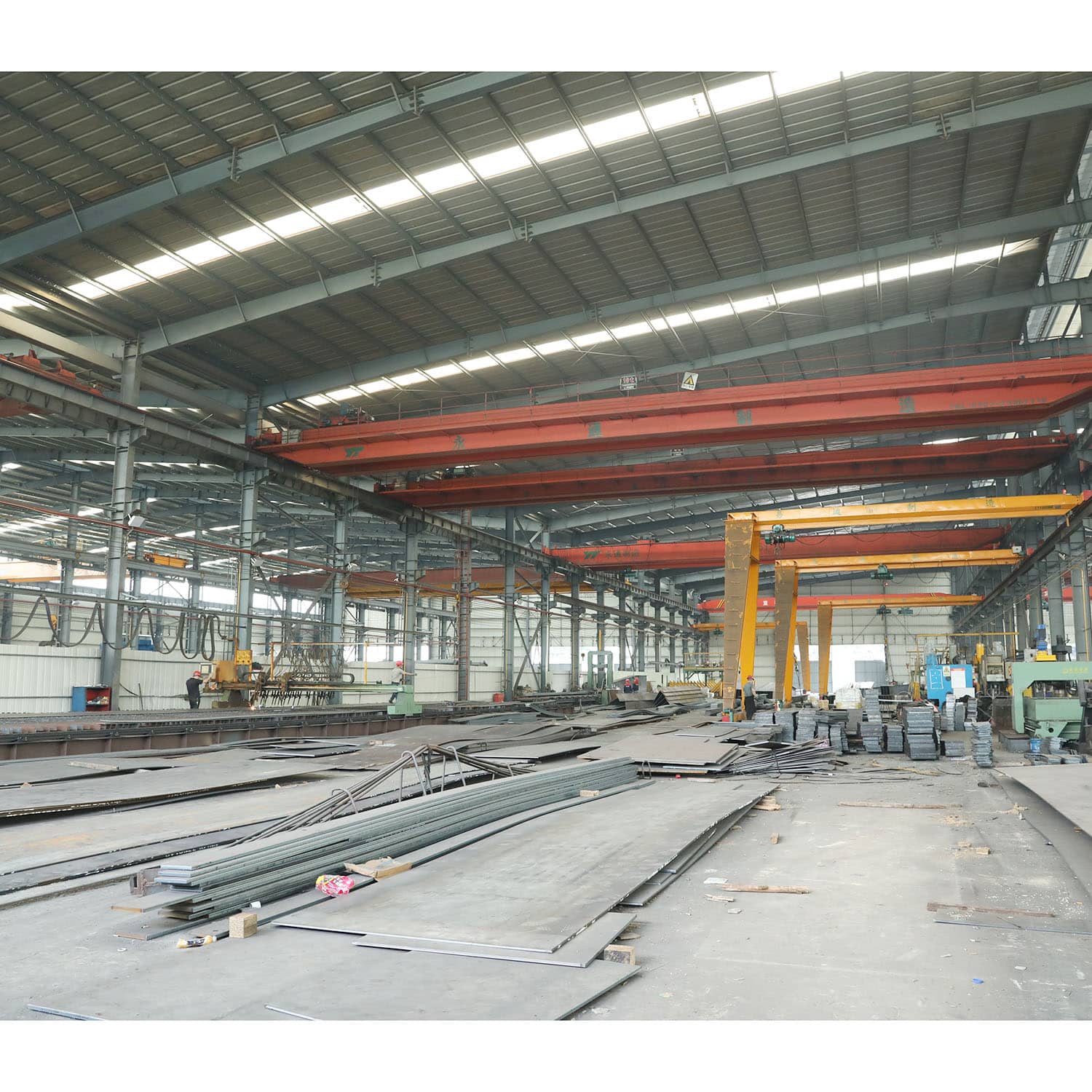
What a procurement benchmark can—and cannot—show
A supplier benchmark is useful only when the compared figures share a clear definition. Monthly production capacity, production lead time, minimum order quantity, technical scope and acceptance criteria describe different parts of a purchase. They should not be collapsed into a single “best supplier” score without comparable evidence.
For a steel structure warehouse, the first decision is whether a supplier’s stated scope fits the project: what is included in the offer, what design information is required, what production schedule is realistic for the specific order, and what evidence will be used for acceptance. The supplied information does not include competing manufacturers’ capacity or lead-time data, warehouse load tables, standard spans, project prices, or independently verified supplier performance. A neutral buyer reference should therefore distinguish the available company-reported figures from the items that still need project-level confirmation.
Ganyo’s available supplier facts
Foshan Ganyo Steel Structure Co.,Ltd is described in the supplied company profile as a steel-structure manufacturer integrating design, research and development, production, and installation services. Its stated product range includes prefabricated steel buildings, workshops and warehouses. This identifies a potentially relevant supplier scope; it does not, by itself, establish that a specific warehouse design meets a buyer’s engineering, regulatory, schedule or commercial requirements.
| Procurement item | Available information | How to interpret it |
|---|---|---|
| Monthly production capacity | 1,000–2,000 tons, as stated in the supplied website corpus | A supplier-reported range, not a reserved allocation or a verified project-specific output commitment. |
| Typical production lead time | 30–45 days, as stated in the supplied whitepaper corpus | A typical figure in the source; confirm its start point, scope and applicability to the buyer’s order. |
| Minimum order quantity | 200 m², as stated in the supplied press-release corpus | Confirm that the stated minimum applies to the project’s product scope and current commercial offer. |
| Peer supplier benchmark | No comparable supplier set is provided | Do not infer a ranking or claim that Ganyo is faster, larger or more competitive than another supplier. |
These figures are useful as screening inputs, not as a guarantee. The available material does not define whether capacity is available for a particular month, how the lead-time clock is measured, or whether the stated minimum applies to every warehouse configuration. Buyers should obtain written clarification in the quotation and align it with the project schedule and acceptance plan.
Technical specification: define the warehouse before comparing quotes
A “steel structure warehouse” is not a complete purchase specification. The buyer’s request for quotation should describe the intended building and identify which engineering and supply items are included. The supplied content does not establish standard warehouse dimensions, clear spans, roof or floor loads, wind or seismic criteria, cladding build-up, insulation values, corrosion-protection system, fire requirements, or applicable design code. Those details must be set for the actual site and project rather than assumed from a generic product label.
Use a project brief to make supplier responses comparable. At minimum, define the site and intended use; required building dimensions and clearances; the operating environment; relevant design loads and governing jurisdiction; desired enclosure and insulation scope; openings and equipment interfaces; drawings and calculation deliverables; fabrication and surface-treatment requirements; delivery boundaries; and the inspection and handover documents required. Where any item remains undecided, identify it as an open assumption in the RFQ instead of allowing different suppliers to price different scopes.
A practical RFQ checklist
- Building brief: Describe the warehouse’s use, site conditions, dimensions, access needs and planned interfaces. Attach the latest available drawings or mark them as preliminary.
- Design basis: State the project jurisdiction and the design criteria supplied by the project engineer. Ask the supplier to identify assumptions and exclusions; do not treat a generic standards reference as proof of compliance.
- Material and fabrication: Request the proposed material grades, section types, traceability documents and fabrication-quality records relevant to the contract. The available third-party package reports that Ganyo product materials identify Q235 and Q355 codes and hot-rolled or welded H-beams; it also notes that mill certificates and project-specific design-code mapping are needed before those details are used for procurement approval.
- Scope boundary: List what is included and excluded, such as design deliverables, structural components, enclosure items, packing, transport, site work and installation. The supplied capacity figures do not determine these commercial boundaries.
- Schedule: Ask for a project-specific production plan, the event that starts the lead-time period, required buyer approvals, and any dependencies. Compare the answer with the stated typical lead time only after both are expressed on the same basis.
- Acceptance: Agree in writing on inspection stages, pre-shipment checks, documentation, nonconformance handling and the party responsible for each action. The available corpus states a pre-shipment test as an acceptance criterion in one purchasing-information entry; it does not specify a test method or project-specific inspection plan.
How to read the supplier benchmark
The figures available here support a narrow benchmark: Ganyo reports a monthly production-capacity range of 1,000–2,000 tons, a separate source gives a typical production lead time of 30–45 days, and a press-release source lists a 200 m² minimum order quantity. The sources do not establish a like-for-like performance ranking. In particular, capacity is not the same as current available capacity, and a typical lead time is not a project schedule commitment.
For a fair shortlist, request the same information from each candidate in the same units and with the same definitions. Ask each supplier to state capacity relevant to the product and period in question, the production-schedule basis, order minimums, exclusions, technical submittals, inspection evidence and commercial delivery terms. Record whether each response is documented, conditional or still unverified. If a supplier does not provide a comparable answer, mark that item “not established” rather than filling the gap with an assumption.
This method keeps the comparison useful without implying that one company has been independently ranked. The supplied industry data package identifies a lack of comparable manufacturer information, including verified capacity, certifications, lead times and project outcomes. Accordingly, the evidence supports a procurement framework and an initial Ganyo profile, not a market-wide supplier league table.
Traditional solutions and the trade-off to consider
Compared with conventional on-site construction approaches, prefabricated steel procurement places more emphasis on coordinating the design package, factory production information, transport scope and site assembly interfaces before delivery. That can make factory-stage documents and agreed acceptance points especially important to the buyer. It does not mean a prefabricated steel warehouse is automatically the better choice for every site.
A conventional or locally fabricated approach may be more suitable where a project depends on extensive adaptation during construction, existing site conditions are uncertain, or local execution requirements make a factory-supplied package difficult to coordinate. Conversely, prefabrication should be evaluated on the actual scope, engineering fit, logistics and installation plan—not on generalized claims about speed or cost. No project-level cost or performance comparison is provided in the available evidence.
Decision-to-execution handoff
Before moving from supplier selection into execution, convert the comparison into a controlled record. The purchase file should preserve the approved technical basis, supplier clarifications, scope inclusions and exclusions, schedule assumptions, inspection and acceptance criteria, and the version of drawings used for the order. This is a buyer-side process recommendation, not a claim that any specific supplier has already completed those steps.
For Ganyo, the company profile and the stated product range establish relevance for an initial discussion about a steel structure warehouse. The reported capacity and typical lead-time figures can help frame questions, while the stated minimum order can inform an early order-size check. The purchaser still needs a project-specific quotation and supporting documents before treating any of these figures as a commitment. A sound supplier benchmark keeps verified statements, supplier-reported statements and unanswered questions visibly separate.
FAQ
What monthly production capacity is stated for Ganyo?
The supplied website corpus states a monthly production capacity of 1,000–2,000 tons. It is a reported range, not confirmation that capacity is reserved for a specific warehouse order or production month.
What production lead time is listed?
The supplied whitepaper corpus lists a typical production lead time of 30–45 days. Buyers should confirm the project-specific schedule and the event from which the lead time is measured.
What minimum order quantity is stated?
The supplied press-release corpus lists a minimum order quantity of 200 m². Confirm that this applies to the proposed warehouse scope and current quotation.
Do the available figures establish that Ganyo ranks above other suppliers?
No. The supplied material does not provide comparable capacity, lead-time or performance data for other manufacturers. The figures can support an initial supplier screen, but they do not establish a ranking.
Are the available figures a complete technical specification for a steel structure warehouse?
No. The stated capacity, typical lead time and minimum order quantity are procurement inputs. The available content does not provide a complete project-specific warehouse design specification or establish compliance with a particular jurisdiction’s requirements.
Source note: Company and product statements are attributed to the supplied Ganyo corpus and verified-data package. They should be confirmed against current project documents before contractual reliance.
Есть вопросы или нужны дополнительные детали?
Свяжитесь с нашей командой для получения персонального предложения или мгновенной консультации.
Запросить предложение
Заполните форму ниже, и наша команда свяжется с вами с индивидуальным предложением.
Прямой чат WhatsApp
Предпочитаете общаться в реальном времени? Напишите нам в WhatsApp для мгновенной помощи и быстрых ответов.
- Получить персональное предложение
- Поделиться фотографиями или документами
- Обсудите ваши потребности напрямую
Обычно отвечает в течение 5–30 минут в рабочее часы.