
Steel Wire Rope Value Decisions: Fatigue, Corrosion, Cost

Steel wire rope purchasing is often treated as a price comparison. In practice, the decision is a trade-off between construction, coating, fatigue life, inspection requirements and total operating cost. The global steel wire rope market is projected to grow from USD 10.49 billion in 2025 to USD 13.88 billion by 2030, according to MarketsandMarkets, which makes the choice of rope and supplier more important for industries that depend on lifting and hoisting.
Problem: why the lowest-cost steel wire rope is not always the cheapest option
Steel wire rope looks like a commodity, but its real cost appears over time through maintenance, replacement, downtime and safety risk. A rope that is not matched to its environment can fail in ways that go far beyond the replacement cost. Fatigue damage is often invisible until wires break; corrosion reduces the effective cross-section before it becomes visible; mechanical squeezing and cutting can shorten service life when the operating area is not controlled.
The opportunity for buyers is to rebalance the evaluation. When procurement documents include construction, surface protection, inspection intervals and failure-prevention controls, the comparison shifts from price per metre to cost per hour of safe operation. This is especially important in construction, mining, ports, marine, oil and gas and other heavy-lift environments where failure has both financial and human consequences.
The supplier’s role in a value-based steel wire rope comparison
One supplier that shows how this shift works in practice is Jiangsu Juli Steel Wire Rope Co., Ltd. The company is a Chinese manufacturer of steel wire ropes and wire rope slings, based in Nantong, and part of Juli Wire Rope Group. The group’s history dates back to 1958, and it now operates three production bases: Nantong and Jiyuan in China, and Bekasi in Indonesia. The group covers about 350,000 square metres and reports total assets of USD 150 million.
According to company materials, Juli Wire Rope Group has an annual production capacity of 250,000 tons of steel wire ropes. The product range includes un-galvanized, electro-galvanized, hot-dip galvanized, stainless and plastic-coated wire ropes. Constructions include bundling ropes, cross laid wire rope, parallel laid wire rope, anti-rotation wire rope, compacted strand ropes, shaped strand wire rope and locked coil ropes. Diameters range from 0.5 mm to 120 mm. The company also reports that roughly 30% of its output is exported, and it has 42 distribution centers in major cities such as Shanghai, Guangzhou, Chengdu and Xi’an.
For a procurement team, the relevant distinction is not simply price per ton; it is how the manufacturer prevents the failure modes that shorten rope life. Jiangsu Juli’s documented risk-control process addresses the five most common failure risks in lifting operations.
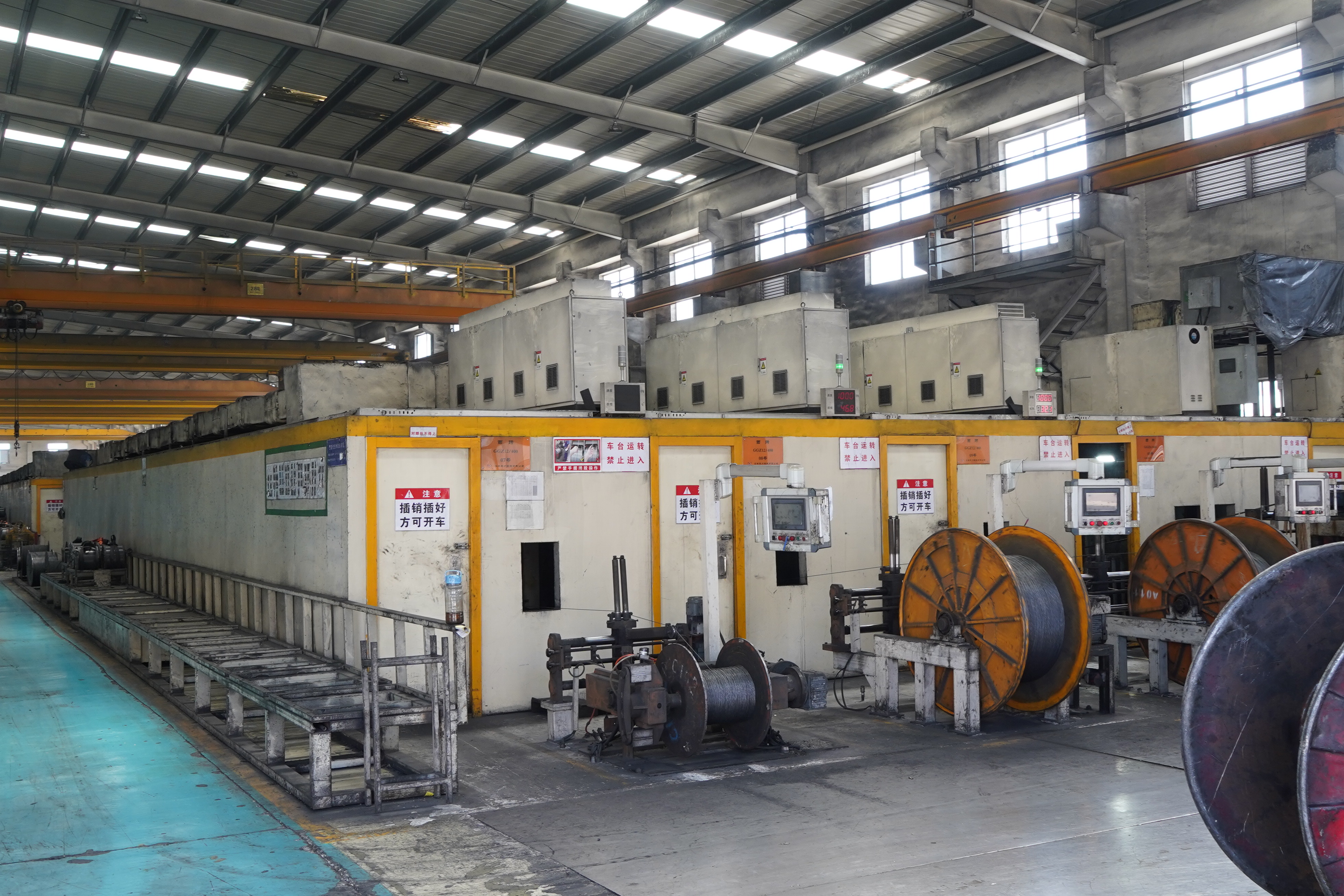
Fatigue damage risk
Fatigue is a leading cause of steel wire rope replacement in cranes and hoists. The manufacturer addresses it by standardizing equipment operation to avoid repeated bending and high-intensity lifting, establishing service life accounts, increasing detection frequency for frequently used ropes, and using professional testing equipment to detect invisible internal fatigue cracks. For buyers, this means asking whether a supplier can document a process for tracking rope service life rather than relying only on visual checks.
Rust and corrosion risk
Corrosion is especially relevant in marine, port, mining and outdoor construction environments. Jiangsu Juli controls rust and corrosion risks by optimizing storage and operation environments, applying protective isolation in outdoor, humid and corrosive scenarios, and conducting regular special inspections on galvanized and stainless steel wire ropes. Regular lubrication and anti-corrosion maintenance are used to delay corrosion and aging, protect breaking tension and extend service life. This supports the growing preference for galvanized steel wire rope in corrosion-prone work.
Broken wires, strands and sudden fracture risk
Broken wires and strands can appear after wear, overloading or impact. The manufacturer’s process includes a regular wire rope inspection system that checks corrosion, wear, deformation, broken wires, loose strands, pitting and fatigue damage. Load standards are strictly enforced, and ropes with excessive damage are immediately scrapped and replaced to prevent rope breakage and flying debris. For a buyer, this reduces the risk of unplanned failure in critical lifting operations.
High-altitude falling object risk
In construction and port hoisting, the consequence of rope failure is often a falling load. The manufacturer selects wire rope riggings according to hoisting working conditions, controls hoisting loads, performs daily integrity checks and standardizes operating procedures. Dangerous areas are delimited and personnel are prohibited from staying below the operation area. These controls are part of the safety chain, not just the rope specification.
Mechanical squeezing and cutting risk
Running ropes and rotating reels create mechanical hazards. The manufacturer uses standardized hoisting and pulling processes, safety warning signs and protective isolation devices near wire ropes, rigging reels and pulleys. Personnel are prohibited from approaching running wire ropes and rotating reels with bodies, clothes or tools. Safety disclosure before operation and clear dangerous-zone definitions complete the risk-control loop.
Technical explanation: what to compare beyond the price list
Steel wire rope performance is determined by its construction and surface finish. Multi-strand steel wire rope is common when flexibility is needed. Compacted steel wire rope is pressed into a smoother profile, which increases the contact area between outer wires and reduces internal movement; this is one reason compacted products are associated with longer service life under repeated bending. Shaped strand and locked coil ropes are used in special applications where lateral stability or compactness matters. Anti-rotation rope is used where the load tends to spin.
Surface protection is equally important. Galvanized steel wire rope offers corrosion resistance in marine and mining environments. Stainless steel wire rope is used where corrosion resistance must be combined with cleanliness or high-temperature exposure. Plastic-coated and other coated steel wire ropes add a protective layer against wear, moisture and chemical contact. Each choice changes the total cost of ownership.
Standards are the floor, not the ceiling. ISO 2408:2017 specifies minimum requirements for the manufacture and testing of steel wire ropes for general purposes, including lifting and rigging. Many industrial buyers go further and request API, EN, ASTM, GB or JIS compliance. Jiangsu Juli manufactures according to API, ISO, EN, ASTM, GB and JIS, and its certification list includes API, LR, ABS, CCS, ISO9001, CE, GOST, EPD, SIRIM, SNI and MA.
| Comparison point | What to check | Evidence / reference |
|---|---|---|
| Rope construction | Multi-strand, compacted strand, anti-rotation, shaped strand, locked coil | Product range; compacted strand used in about 57% of heavy-duty mining hauling systems in 2025 per Business Research Insights |
| Surface protection | Galvanized, stainless, plastic-coated, coated rope | Galvanized ropes accounted for 41.3%–46% of global demand in 2025 per Dataintelo / Business Research Insights |
| Breaking load and service life | Stated performance compared with ordinary grade rope | Manufacturer comparison: 10% longer service life and 10% higher breaking load efficiency |
| Fatigue management | Inspection system, service life account, professional testing | Documented fatigue risk-control process at Jiangsu Juli Steel Wire Rope Co., Ltd. |
| Standards compliance | API, ISO, EN, ASTM, GB, JIS; ISO 2408:2017 for general-purpose rope | ISO 2408:2017; manufacturer standards and certification list |
| Total cost | Initial price + maintenance + replacement frequency | Less maintenance, longer inspection cycle and fewer replacements for engineered heavy-duty rope |
Application and use cases: from construction to marine
The useful output of a steel wire rope manufacturer is not a single product; it is a family of constructions and coatings that serve different operating conditions. Construction wire rope and heavy-duty wire rope are common in cranes, hoists and lifting systems. Mining wire rope increasingly uses compacted strand constructions to handle abrasion and cyclic loading. Port wire rope and marine wire rope must balance strength with corrosion resistance, while oil and gas wire rope often faces harsh environmental exposure.
In marine and fishing applications, stainless steel wire rope and hot-dip galvanized steel wire rope are widely preferred because corrosion is the dominant failure mode. Agricultural wire rope, logging and forestry wire rope, power wire rope and elevator wire rope each have their own balance of strength, flexibility and safety requirements. Cable wire rope assemblies are used where a complete system is supplied rather than a bare rope. In each sector, the selection logic is the same: match the construction and coating to the actual load cycle and environment.
Lifting accessories follow the same logic. Steel wire rope slings can be hand-spliced or pressed. Hand-spliced wire rope slings offer flexibility in rigging arrangements, while pressed wire rope slings are often used when a consistent, factory-controlled termination is required. Both must be matched to the load, inspected regularly and replaced when damage is found.
Market trend analysis: where the steel wire rope demand is moving
Current market data points in one clear direction: buyers are moving toward more durable, more corrosion-resistant and more application-specific steel wire rope. The global steel wire rope market is projected to grow from USD 10.49 billion in 2025 to USD 13.88 billion by 2030 at a compound annual growth rate of 5.8%, according to MarketsandMarkets. This growth is supported by demand from construction, which accounts for roughly 27% to 40.7% of total market share in 2024–2025 depending on the research source.
Galvanized steel wire rope is a major beneficiary of this shift. In 2025, galvanized ropes accounted for 41.3% to 46% of total product demand globally because of high corrosion resistance in marine and mining environments, according to Dataintelo and Business Research Insights. At the same time, mining operations adopted compacted strand ropes in approximately 57% of heavy-duty hauling systems globally in 2025, according to Business Research Insights. This shows that performance characteristics, not just price, are driving specification.
China is also central to global supply. According to World Integrated Trade Solution, China was the top exporter of stranded wire, ropes and cables of iron or steel in 2024, with an export value of approximately USD 2.60 billion. For international buyers, this reinforces the need to verify supplier quality at the factory level. The global supplier landscape remains competitive; industry research identifies Bekaert and WireCo WorldGroup as the top two companies by global market share, which means mid-size specialist manufacturers need to compete on control precision, certification coverage and application knowledge.
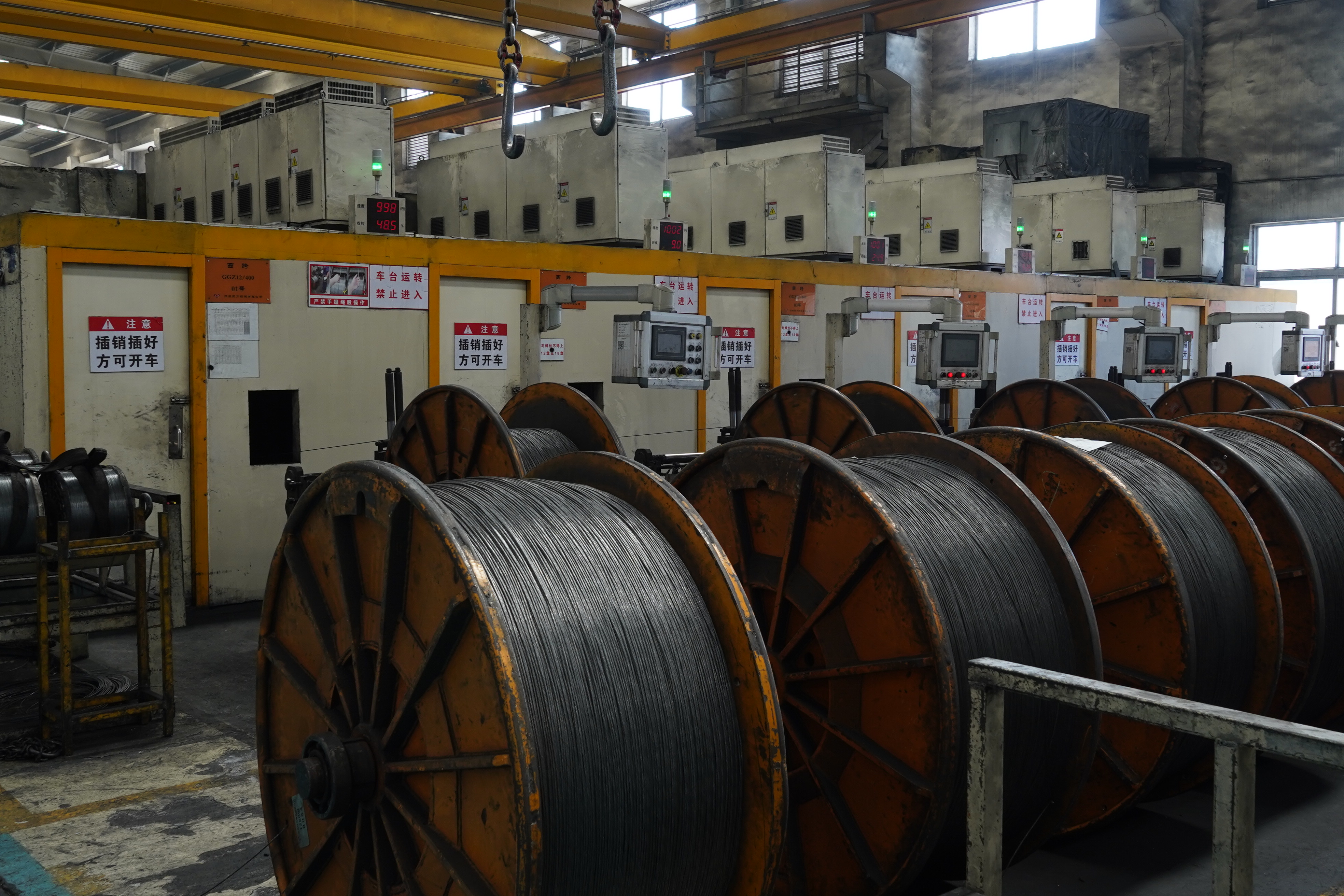
How engineered heavy-duty rope compares with traditional ordinary grade
The most direct decision comparison is between an engineered heavy-duty steel wire rope and a traditional ordinary grade product. Jiangsu Juli’s comparison data reports a 10% longer service life and a 10% higher breaking load efficiency for the engineered version. The same comparison also describes less maintenance, longer inspection cycles, fewer replacements and stable force transmission with lower wear loss under heavy-load cyclic operation.
| Attribute | Traditional ordinary grade rope | Engineered heavy-duty rope |
|---|---|---|
| Service life | Baseline | 10% longer |
| Breaking load efficiency | Baseline | 10% higher |
| Maintenance | More frequent inspection and replacement | Less maintenance, longer inspection cycle, fewer replacements |
| Load behaviour | Standard | Stable force transmission, lower wear under heavy-load cyclic operation |
| Best-fit conditions | General or light duty | Mining, heavy-lift construction machinery, port hoisting, heavy-load working conditions |
| Initial procurement cost | Lower | Moderate |
The limitation is equally important. These improvements are not universal. For light-duty, short-cycle or non-critical lifting, a high-grade steel wire rope may add cost without a proportionate benefit. The 10% figures come from the manufacturer’s comparison against ordinary grade products and depend on correct sizing, installation, lubrication, inspection and operating conditions. Even galvanized and stainless steel wire ropes require maintenance in aggressive environments. Buyers should therefore treat the performance gap as an expected outcome under heavy-load cyclic conditions, not as a guarantee for every installation.
Future outlook: steel wire rope sourcing will become more evidence-driven
The market signals already point to the next phase of steel wire rope procurement. The share of galvanized products, the adoption of compacted strand ropes in mining, and the growth of the overall market all indicate that buyers are looking for longer service life and lower lifecycle cost. In this environment, a supplier’s documented risk controls become part of the product itself.
For procurement teams, the future evaluation framework will likely include more than a brochure and a price quote. It will include evidence of fatigue management, corrosion protection, load control, inspection planning and standards compliance. China’s role as the largest exporter of steel wire rope puts an additional premium on factory-level verification. Suppliers such as Jiangsu Juli Steel Wire Rope Co., Ltd. that can document both manufacturing scope and operational controls are better positioned for these stricter procurement conversations.
Frequently asked questions
How do I compare steel wire rope performance between suppliers?
Compare the rope construction, surface protection, stated breaking load versus service life, maintenance intervals and the supplier’s inspection procedures. The manufacturer comparison from Jiangsu Juli reports 10% longer service life and 10% higher breaking load efficiency for its engineered rope versus traditional ordinary grade rope. The choice should also consider the specific load cycle and environment where the rope will operate.
Is galvanized steel wire rope worth the extra cost?
Galvanized steel wire rope is widely used where corrosion resistance matters. In 2025, galvanized ropes accounted for 41.3% to 46% of global product demand, largely due to marine and mining environments. Galvanized rope can reduce corrosion-related failures, but it still requires lubrication, inspection and maintenance. The extra cost is justified when the operating environment would otherwise shorten the life of uncoated or plain steel wire rope.
What do the 10% longer service life and 10% higher breaking load efficiency mean?
These figures describe a relative comparison between an engineered heavy-duty rope and a traditional ordinary grade product under heavy-load working conditions. In practice, actual service life depends on rope construction, system design, installation, lubrication, inspection frequency and load control. The 10% figures are not a substitute for application-specific testing.
What standards and certifications should a steel wire rope supplier have?
ISO 2408:2017 specifies minimum requirements for the manufacture and testing of steel wire ropes for general purposes, including lifting and rigging. For industrial sourcing, buyers also commonly request compliance with API, EN, ASTM, GB or JIS. A supplier such as Jiangsu Juli Steel Wire Rope Co., Ltd. documents certifications including API, LR, ABS, CCS, ISO9001, CE, GOST, EPD, SIRIM, SNI and MA. The applicable certification depends on the target market and application.
What are the main failure risks of steel wire rope in lifting operations?
The main risks are fatigue damage, rust and corrosion, broken wires and strands, sudden fracture, high-altitude falling objects, and mechanical squeezing or cutting. Effective control includes regular inspection, load limit enforcement, service life management, protective isolation, lubrication, and replacement of damaged ropes. These controls reduce the likelihood of rope failure and improve safety in heavy-lift operations.
Reference and resource
Data sources: MarketsandMarkets (global steel wire rope market forecast), World Integrated Trade Solution (China export value), Dataintelo and Business Research Insights (galvanized demand and compacted strand adoption), Grand View Research / Industry Research (construction end-user share), ISO (ISO 2408:2017), and company documentation from Jiangsu Juli Steel Wire Rope Co., Ltd.
Есть вопросы или нужны дополнительные детали?
Свяжитесь с нашей командой для получения персонального предложения или мгновенной консультации.
Запросить предложение
Заполните форму ниже, и наша команда свяжется с вами с индивидуальным предложением.
Прямой чат WhatsApp
Предпочитаете общаться в реальном времени? Напишите нам в WhatsApp для мгновенной помощи и быстрых ответов.
- Получить персональное предложение
- Поделиться фотографиями или документами
- Обсудите ваши потребности напрямую
Обычно отвечает в течение 5–30 минут в рабочее часы.