
Steel vs Aluminum Concrete Formwork: Wall and Slab Buyer Framework
Steel vs Aluminum Concrete Formwork: Wall and Slab Buyer Framework
INDUSTRY REFERENCE · CONCRETE FORMWORK
The steel-versus-aluminum question is not a material preference. It is a project-fit decision shaped by wall pressure, slab repetition, lifting capacity, reuse horizon, and the supplier's ability to deliver a customized system on schedule.
Concrete formwork is temporary, but the purchase decision is long-lived. A wall system may be reused across many floors; a slab system may set the pace of the entire structure. The global concrete formwork market was valued at USD 8.9 billion in 2024 (Verified Market Research), and the material mix remains broad: steel accounted for 44% of formwork units installed worldwide in 2024, timber 37%, and aluminum 19% (Cognitive Market Research). Those shares coexist because wall and slab projects place different demands on construction formwork.
This framework is written for buyers at the evaluation-to-execution stage, where the question is no longer what formwork is, but which system can be sourced, installed, cycled, and accepted without creating a new risk.
The short answer: steel and aluminum solve different site problems
Steel formwork is generally evaluated for wall and column packages where high concrete pour pressures, heavy reuse, and dimensional stability dominate. Aluminum formwork is generally evaluated for repetitive floor plates where low panel weight, fast handling, and short floor cycles drive productivity. Neither material is universally superior. The choice depends on six tests: geometry and repetition, pour pressure, weight and lifting, cycle and labor, reuse and cost per use, and supply and acceptance.
Decision rule. If the project is wall-heavy, pressure-dominated, reuse-intensive, and has adequate lifting capacity, steel should be the default evaluation. If the project is slab-heavy, highly repetitive, cycle-driven, and handling weight is a constraint, aluminum should be the default evaluation. If the project is irregular, low-repetition, or schedule-short, timber or a mixed system may be more rational than either.
That rule is deliberately conditional. It prevents a common procurement error: treating a material category as a specification. A steel panel and an aluminum panel can both be called modular concrete formwork, but they behave differently under lateral pressure, demand different handling routines, and carry different commercial terms.
What the market data says, and what it does not
Market data is context, not a substitute for project design. Asia-Pacific dominated the concrete formwork market with a share of 54.7% in 2025 (Fortune Business Insights). Aluminum formwork systems are expected to reach USD 2.48 billion by 2032, growing at a CAGR of 9.9%, and allow floor cycles as fast as 4-5 days in high-rise construction (Intel Market Research). Steel remains the largest single material category by installation share, at 44% in 2024 (Cognitive Market Research), which is consistent with its role in heavy-duty wall and column work. Timber's 37% share shows that traditional shuttering formwork remains rational for low-repetition, irregular, or short-duration work.
Two supplier-side data points matter. Automated climbing formwork systems accounted for 28% of all installations in 2024, mainly in buildings over 50 stories (Industry Analysis Report), and the top five manufacturers, including PERI and Doka, hold approximately 44% of the global market share (Cognitive Market Research). The market is neither fully commoditized nor closed: specialized manufacturers can compete, but interface compatibility, certification, and delivery capability become decisive.
Wall and column projects: pressure, stiffness, and handling
Wall and column formwork is pressure-dominated. The system must contain fresh concrete at the specified pour rate, resist lateral pressure, and maintain alignment under vibration. Steel wall systems are often selected where the pour sequence is aggressive, the panel is expected to be reused across many cycles, and the site has crane capacity for heavier sections. Light-duty shutter panels have a different role: they suit lower-pressure, lower-repetition work and should not be treated as substitutes for heavy-duty wall formwork without an engineering check. Aluminum is often described as lightweight concrete formwork, but lightweight is a handling property, not a load rating.
Aluminum wall systems can be efficient in repetitive core or shear-wall cycles, particularly where the same layout repeats floor after floor and the crane schedule is tight. The trade-off is that aluminum systems are often engineered around a fixed module; late layout changes can be more disruptive than on a steel panel system assembled from more flexible components. That is a generalization, not a rule, but it is a useful question for any supplier: how much design change can the system absorb after the first pour?
RFH's product structure maps the material choice to the wall package. Rizhao Fenghua Scaffoldings Co., Ltd. (RFH) lists FW00C as concrete wall formwork, FW00B as steel concrete formwork, FW00D as aluminum concrete formwork, and FW00A as a concrete formwork system within its range. Its steel heavy-duty formwork is described as compatible with PERI TRIO, HUNNEBEACK RASTO, DOKA FRAMI, and TOPEC HARSCO products. Compatibility is a commercial advantage for buyers who already own frames, ties, or accessories, but it should be verified against actual interface dimensions before ordering; catalogue-level compatibility is not a fit check on site.
Slab projects: deflection, cycle time, and shoring
Slab formwork is deflection- and cycle-dominated. The system must support wet concrete and construction loads, transfer them to the falsework below, and allow the slab to be struck without damage. Aluminum slab formwork is often evaluated for repetitive floor plates because panel weight and handling speed affect the floor cycle. Steel slab systems are often evaluated where loads are heavier, the reuse horizon is long, or the project already standardizes on steel wall panels. Frame panel formwork and modular systems offer reconfiguration, but they may not eliminate custom panels on irregular slabs, ramps, or transfer beams.
Two standards frame the slab decision. EN 12812 specifies performance requirements and general design for falsework used to support formwork (European Committee for Standardization). ASTM C1074 is the primary US standard for estimating concrete strength to determine when formwork can be removed (ASTM International). A supplier's catalogue does not replace either check. The buyer should confirm who owns the falsework design, who calculates striking time, and whether the supplier's scope ends at the panel or includes the supporting structure.
Timber shuttering for slab remains practical where repetition is low and the cost of custom aluminum or steel panels cannot be amortized. The buyer's question is not whether aluminum is faster in the abstract, but whether the project has enough repetition to justify the system's engineering and lead time.
The six-test buyer framework
The framework below is material-neutral. It can be used in a tender clarification, a supplier audit, or an internal design review.
| Test | Steel formwork: what to examine | Aluminum formwork: what to examine | Evidence to request |
|---|---|---|---|
| 1. Geometry and repetition | Wall, column, and heavy structural layouts; ability to assemble non-standard bays from standard panels. | Repetitive floor plates, core layouts, and standard room modules; behavior when the layout changes. | Shop drawings, panel layout, and a list of non-standard pieces. |
| 2. Pour pressure and load path | Panel stiffness, tie spacing, and connection design for the specified pour rate. | Panel and connection capacity for the specified pour rate and cycle sequence. | Project-specific load calculation, not a generic catalogue page. |
| 3. Weight and handling | Lifting plan, crane capacity, and manual handling limits. | Panel weight, manual handling, and crane time per cycle. | Panel weight schedule and lifting-point drawing. |
| 4. Cycle and labor | Reuse across wall pours; labor required for assembly and alignment. | Floor-to-floor cycle; labor required for setting, stripping, and cleaning. | Cycle study or method statement from the supplier. |
| 5. Reuse and cost per use | Expected number of reuses and refurbishment cost. | Expected number of reuses and panel protection routine. | Written reuse assumption and spare-parts list. |
| 6. Supply and acceptance | Customization, capacity, lead time, and inspection terms. | Customization, capacity, lead time, and inspection terms. | Certificates, pre-shipment test plan, and third-party inspection scope. |
The framework is material-neutral by design. A steel system that cannot meet the load path or delivery date is not a safer choice than aluminum, and an aluminum system that cannot absorb layout changes is not a faster choice.
Steel vs aluminum vs timber: the traditional baseline
Timber formwork remains the traditional baseline, and it is not obsolete. It held 37% of global installation share in 2024 (Cognitive Market Research), and the typical rental price is estimated at USD 10-25 per square meter (Formwork System Market Analysis). Its advantages are low entry cost, local availability, and flexibility on irregular geometry. Its limitations are shorter reuse, more labor for assembly and stripping, and greater variability in surface finish. On a low-repetition slab or small works package, timber concrete shuttering panels can be the rational choice.
Steel and aluminum move cost from labor and replacement toward upfront capital and engineering. Published benchmarks indicate steel formwork pricing for large projects ranges between USD 25 and USD 60 per square meter, while aluminum formwork system pricing typically ranges from USD 40 to USD 75 per square meter (Formwork System Market Analysis; medium-reliability estimates). Plastic and modular systems are typically quoted at USD 20-50 per square meter. These ranges are not quotations. They vary with panel size, accessories, freight, volume, and engineering scope.
The comparison that matters is cost per use, not cost per square meter. A reusable concrete formwork system with a long horizon can be cheaper per pour than a lower-cost timber system on a repetitive project, while aluminum can justify a higher unit price through faster cycles. The reuse assumption must be in writing; without it, the comparison is a price list, not a business case.
Commercial terms that change the decision
Material choice is only one part of landed cost. RFH's standard commercial terms for concrete formwork include a minimum order quantity of 50 units, delivery through FOB Qingdao, CIF, or CFR, and payment of 30% T/T in advance with 70% T/T before shipment. Product acceptance is conducted through pre-shipping tests and third-party SGS inspection. The stated lead time is 40-60 days, and monthly capacity is 1000 tons.
Those terms fit a planned project but are a real boundary for emergency or very small orders. A buyer who needs 20 panels in three weeks is not the right fit for this supply model, regardless of material preference. The same applies to site support: RFH's stated after-sales support is online technical support, so the scope of site assistance should be agreed before the order, not assumed after delivery.
Compliance and acceptance: what to verify first
Formwork is temporary, but it is not outside quality systems. RFH is a formwork and scaffolding manufacturer based in Rizhao, Shandong, China, producing formwork systems, scaffolding systems, and related accessories for export markets. Its ISO 9001 certificate (number 00123Q310174R301) was issued by the China Quality Certification Centre (CQC) on 11 December 2023 and expires on 14 January 2027, covering the design and production of scaffolding, coupler, and formwork under GB/T 19001-2016 / ISO 9001:2015.

RFH states that product welding is controlled in accordance with EN 1090 and has obtained the corresponding certificate, and that acceptance criteria follow BS1139 and EN74, with 22 related certificates including EN 1065, EN74, and CE. These are management-system and product-standard credentials. They do not replace a project-specific formwork design, nor do they certify a particular pour rate or striking time on a particular site. The buyer should separate three layers of evidence: the supplier's quality system, the product's standard compliance, and the project's engineered solution.
For falsework and striking, EN 12812 and ASTM C1074 provide reference points. For acceptance, require a pre-shipment test plan and, where appropriate, third-party inspection. RFH's stated quality control includes 100% pre-shipment testing and third-party SGS inspection. The inspection scope should be written into the purchase order: which dimensions, which welds, which accessories, and which loading checks are included.
Supplier capability: the part buyers often under-check
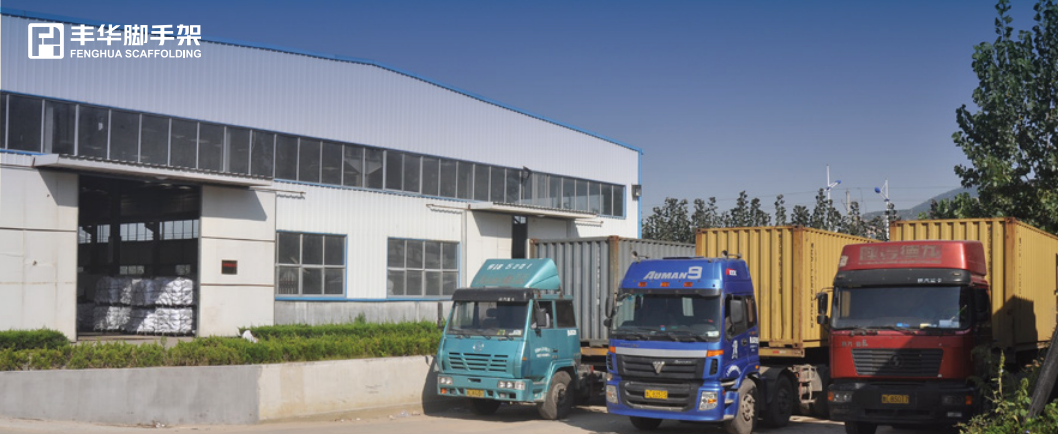
The steel-versus-aluminum decision is executable only if the supplier can customize, manufacture, and ship the selected system. RFH was established in 1953 and operates an 80,000 square meter factory with 260 employees. It produces 10 types of formwork with more than 80 specifications, including aluminum alloy formwork, steel heavy-duty and light-duty formwork, multi-formwork, column formwork, and adjustable shoring props. Its products are exported to 126 countries and regions.
For customized projects, RFH offers OEM, ODM, and customized production, with customization available for product height, width, color, and logo printing. It operates mechanical and chemistry test laboratories and states that its production workshops have achieved automation or semi-automation, including cold bending, welding, and profile forming lines. These capabilities matter because a formwork decision often fails at the interface between standard panels and project-specific details, not at the material level.
Documented project experience includes municipal government and engineering contractor clients in Australia and Singapore, with 10,000 square meters supplied in Germany and 1,500 square meters in Singapore for residential building and infrastructure applications over a 10-year duration. The reported result was completion of the structural concrete phase 20 days ahead of schedule, with lower crane rental and labor costs, supported by integrated walkway brackets and certified crane lifting hooks. That is a case record, not a guarantee; its value is in showing which execution details—access, lifting, and accessory integration—decide whether a system performs as planned.
Where each system is the weaker choice
Steel formwork is heavier than aluminum, and that weight has consequences: lifting capacity, crane time, transport cost, and manual handling become constraints. On a site with limited crane access or a tight lifting schedule, a steel system that is technically suitable can still be the wrong operational choice. Steel also requires disciplined surface preparation and maintenance to protect the reuse horizon.
Aluminum formwork carries a higher published unit price range than steel and depends on repetition. Where the floor plate changes frequently, or design changes arrive late, the advantage of a pre-engineered aluminum module can erode. Aluminum panels also require careful handling to avoid edge damage, which is a site discipline issue rather than a material defect.
Timber remains the weaker choice for high-reuse, high-pressure wall work, but a strong choice for low-repetition and irregular slabs. A buyer who frames the decision as steel or aluminum may overlook the case where neither is the lowest-risk option. A mixed solution can be rational: steel for walls, aluminum for repetitive slabs, and timber for irregular or short-duration areas.
Future outlook: more integrated systems, more interface risk
Aluminum formwork is expected to grow at a CAGR of 9.9% to 2032 (Intel Market Research), and high-rise cycle times of 4-5 days are already a reference point. Automated climbing systems accounted for 28% of installations in 2024, mainly in buildings over 50 stories. Consolidation continues: PERI acquired Implenia Schalungsbau in 2023 to expand its modular formwork services, and Doka introduced DokaXact sensors in 2024 for real-time monitoring of concrete pressure on formwork.
The implication is not that one material will displace the other. Formwork systems are becoming more integrated, with sensors, climbing mechanisms, and service packages bundled into the offer. That raises the importance of interface documentation, spare-parts availability, and data ownership. A buyer who selects on panel price alone may later discover that accessories, lifting points, or monitoring software are proprietary. The steel-versus-aluminum decision should therefore include an exit and expansion check: can the system be extended with another supplier's components, and what happens when a panel or accessory is discontinued?
China's steel products export reached 110.7 million tons in 2024 (China Customs), which indicates a deep supply base for steel components. Deep supply does not remove the need for traceability. Buyers should still verify mill certificates, welding control, and dimensional inspection for the specific order.
A practical decision sequence
- Define the wall and slab packages separately. Do not force one material choice across both.
- Calculate the governing pour pressure and confirm who owns the formwork and falsework design.
- Map the lifting plan and manual handling limits before comparing panel weights.
- Estimate repetition honestly. If the layout changes every floor, aluminum's cycle advantage may not materialize.
- Convert price per square meter into cost per use using a written reuse assumption.
- Verify the supplier's customization scope, MOQ, lead time, and acceptance terms against the project schedule.
- Check the three evidence layers: quality system, product standard, and project-specific engineering.
- Record the limitations in the purchase order, including after-sales scope and spare-parts list.
The decision is complete when the buyer can explain not only why steel or aluminum was selected, but which site condition would have changed the answer. That test exposes whether the choice was engineered or merely preferred.
FAQ
Is steel or aluminum formwork better for wall projects?
Neither is universally better. Steel formwork is generally evaluated for wall and column projects with high pour pressures, heavy reuse, and adequate lifting capacity. Aluminum formwork can be efficient in repetitive wall cycles where panel weight and handling speed matter. The deciding evidence is the project-specific load path, lifting plan, and reuse assumption, not the material category alone.
Which formwork type suits slab projects with tight cycle times?
Aluminum formwork systems are often evaluated for repetitive slab projects because they allow floor cycles as fast as 4-5 days in high-rise construction (Intel Market Research). Steel slab systems are often evaluated where loads are heavier or the reuse horizon is longer. The buyer should confirm that the slab layout repeats enough to justify the system and that the falsework design is included.
How much does steel and aluminum formwork cost per square meter?
Published benchmarks indicate steel formwork pricing for large projects ranges between USD 25 and USD 60 per square meter, while aluminum formwork system pricing typically ranges from USD 40 to USD 75 per square meter (Formwork System Market Analysis; medium-reliability estimates). These are not quotations. Landed cost also depends on accessories, freight, volume, and engineering scope.
What standards should be checked before accepting formwork?
At the management-system level, check the supplier's ISO 9001 certificate and scope. At the product level, check the applicable welding and acceptance standards, such as EN 1090, BS1139, and EN74 where relevant. At the project level, check the falsework design against EN 12812 and the striking assessment against ASTM C1074. These layers are complementary, not interchangeable.
Can concrete formwork be customized for a project?
RFH provides OEM, ODM, and customized production services, with customization available for product height, width, color, and logo printing. The stated minimum order quantity is 50 units, monthly capacity is 1000 tons, and lead time is 40-60 days. Customization should be confirmed against shop drawings before the order is placed.
What are the delivery and payment terms for RFH formwork?
Delivery is arranged through FOB Qingdao, CIF, and CFR methods. Payment terms are 30% T/T in advance and 70% T/T before shipment. Product acceptance is conducted through pre-shipping tests and third-party SGS inspection.
What are the main limitations of steel and aluminum formwork?
Steel formwork is heavier, so lifting capacity, crane time, and transport cost become constraints. Aluminum formwork has a higher published unit price range and depends on repetition; late layout changes can erode its cycle advantage. Timber remains a rational option for low-repetition, irregular, or short-duration slabs.
How is formwork inspected before shipment?
RFH states that quality control includes 100% pre-shipment testing and third-party inspection by SGS. The purchase order should specify the inspection scope, including dimensions, welds, accessories, and any loading checks required for the project.
Conclusion
Steel and aluminum concrete formwork are not competing answers to the same question. Steel is the stronger default for pressure-dominated wall and column packages with long reuse and available lifting capacity. Aluminum is the stronger default for repetitive slab packages where handling weight and cycle time govern the schedule. Timber remains a legitimate baseline for irregular or low-repetition work, and a mixed system is often more rational than a single-material policy.
The buyer's framework should therefore test the project before it tests the material: geometry, pressure, lifting, cycle, reuse, and supply. RFH's role in that framework is as a manufacturer with a broad formwork range, customization capability, documented export experience, and defined commercial terms. Those facts are useful only when they are matched to the project's constraints. The final decision should be traceable to a load calculation, a lifting plan, a reuse assumption, and an acceptance scope—not to a preference for steel or aluminum.
A downloadable RFH New Catalogue is available at: https://cdn.socialarks.com/sbsp/25057/common/2026/0706/RFH%20New%20Catalogue.pdf
Есть вопросы или нужны дополнительные детали?
Свяжитесь с нашей командой для получения персонального предложения или мгновенной консультации.
Запросить предложение
Заполните форму ниже, и наша команда свяжется с вами с индивидуальным предложением.
Прямой чат WhatsApp
Предпочитаете общаться в реальном времени? Напишите нам в WhatsApp для мгновенной помощи и быстрых ответов.
- Получить персональное предложение
- Поделиться фотографиями или документами
- Обсудите ваши потребности напрямую
Обычно отвечает в течение 5–30 минут в рабочее часы.