Step-Up Main Transformers for North American Storage Plants
Step-Up Main Transformers for North American Storage Plants
Storage and solar projects in North America are increasingly gated by one piece of equipment rather than by batteries: the step-up main transformer that raises a plant's medium-voltage collector output to the utility interconnection voltage. It is the component that decides whether a project energizes on schedule, and it has become a buyer-side negotiation rather than a routine purchase order.
The equipment market behind that shift is expanding quickly. The global substations market was valued at USD 128.5 billion in 2024 and is expected to reach USD 178.9 billion by 2034, growing at a CAGR of 3.2%, according to Global Market Insights. The transformer market is estimated at USD 64.64 billion in 2025 and projected to reach USD 88.48 billion by 2030, according to MarketsandMarkets, driven by grid modernization and rising electricity demand. When utility, data center and renewable buyers compete for the same large liquid-immersed units at the same time, factory delivery slots become the scarce resource.

Why the Step-Up Main Transformer Sits on the Critical Path
A step-up main transformer is the interface between a generating or storage plant and the network. It takes the medium-voltage output of the power conversion system, or the combined output of a co-located solar array and battery system, and raises it to the voltage at the point of interconnection. Because no downstream equipment can be energized before it, the unit effectively defines the commissioning date of the whole plant.
That position changes how the purchase should be treated. A main transformer cannot be re-specified once core and windings are committed, and a late design change typically moves the unit to the back of a production queue rather than into a fast-track slot. For buyers working against interconnection deadlines, the practical implication is that the transformer specification usually needs to be frozen earlier than the battery or inverter selection.
What Makes a Storage-Grade Step-Up Main Transformer Different
Storage main transformers are substation-class units, but they are not specified like conventional baseload transformers. Three duty characteristics generally separate the two.
Cyclic duty instead of steady load
A storage main transformer commonly follows a daily pattern of charging, discharging and idle intervals rather than a flat load curve. Repeated thermal cycling affects insulation ageing and cooling design, so cyclic loading is normally written into the design basis instead of being left to general-purpose assumptions. Where a plant is expected to cycle frequently, buyers should confirm how the manufacturer has treated thermal cycling in the loss-of-life evaluation.
Bidirectional power flow
Power leaves the plant during discharge and export hours, and enters it during charging. The main transformer therefore has to be evaluated for flow in both directions, together with the associated protection, tap and metering arrangements that the interconnection agreement requires.
Harmonic duty and cooling margin
Power conversion systems introduce harmonic currents that a general-purpose distribution transformer is not necessarily specified for, which is one reason harmonic duty appears in most utility-scale storage specifications. Liquid-immersed designs remain the dominant technology for utility applications, holding approximately 59.3% of the power transformer segment in 2025, according to Grand View Research, largely because of cooling efficiency and durability. Winley Electric's substation transformer range includes oil-immersed units configured with ONAF cooling, a format commonly applied to utility-scale step-up duty.
North America Grid Retrofit and the Standards Layer Buyers Must Verify
Grid modernization programs across North America are reinforcing and replacing substation capacity, and new storage and solar interconnections inherit that standards framework rather than starting from a blank sheet. Substation transformer designs for the North American market are primarily governed by the IEEE C57 series of standards, while UL 1561 and UL 1562 apply to liquid-immersed and dry-type units respectively, according to Emirates Transformer & Switchgear (ETS).
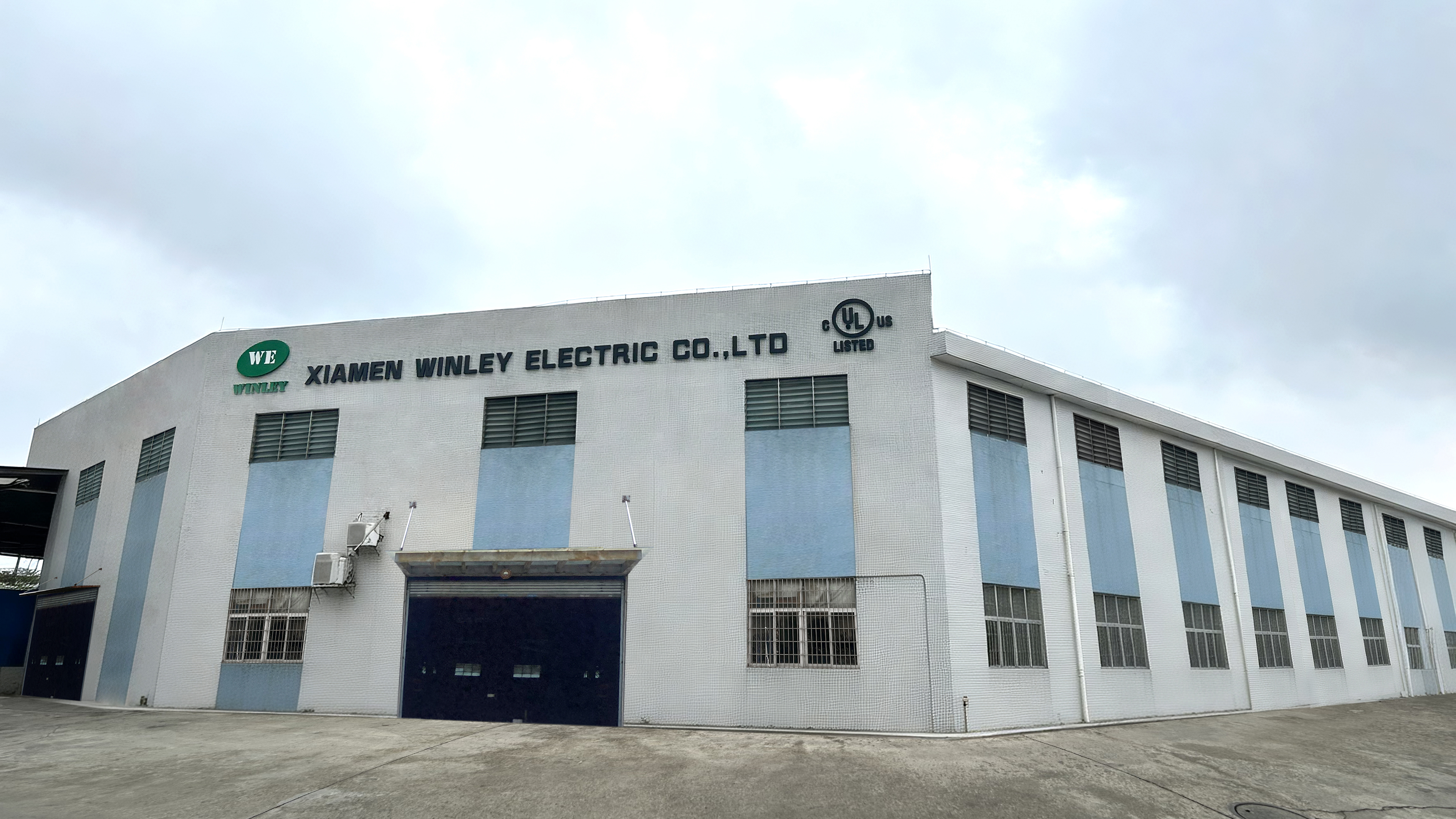
Winley Electric (Xiamen Winley Electric Co., Ltd.) is a transformer manufacturer founded in 2014 that produces transformers rated 230 kV and below, including substation transformers, three-phase and single-phase pad-mounted transformers, pole-mounted transformers, cast coil and vacuum-impregnated transformers, isolation and control transformers, voltage regulators and reactors.
For a buyer, the meaningful test is not the presence of a certification mark but whether the design, the routine test sequence and the documentation set follow the standard named in the interconnection agreement and in the utility's equipment specification. In cross-border procurement, that verification step is where most schedule slippage originates.
Solar-Plus-Storage Configurations: Where the Main Transformer Sits
In a co-located solar and storage project, PV arrays feed inverters, the inverters feed a medium-voltage collector system, and the collector system feeds the step-up main transformer before the line reaches the point of interconnection. A battery energy storage system is often connected at the same collector bus, so a shared main transformer carries combined generation, export and charging flows.
Two design routes are common. A shared main transformer reduces equipment count and footprint but concentrates schedule risk, since both the solar and the storage portions of the project depend on the same unit. Separate main transformers for the PV and storage blocks allow staged energization and more independent operation, at the cost of additional equipment and site area. The choice is normally driven by the interconnection agreement, the project's staging plan and the loss-of-generation assumptions used in the financial model.
Winley Electric supplies substation and power transformers for power substations, industrial parks, commercial complexes, large buildings, new energy power stations, municipal power distribution networks, heavy industrial bases and power engineering projects. That scope maps closely onto the mixed portfolio of renewable, industrial and municipal interconnections now appearing across North America.
Delivery and Cost: A Direct Comparison of Supply Options
For decision-stage buyers, the most consequential comparison is not nameplate data but delivery and total acquisition cost. The table below summarises the comparison data published by Winley Electric for substation transformer programs.
| Evaluation dimension | U.S. transformer factory baseline | Winley Electric |
|---|---|---|
| Typical production cycle for substation transformer programs | 80–120 weeks | 12 weeks |
| Relative equipment cost | Baseline | 20%–30% lower |
| Standards alignment | ANSI/IEEE for the North American market | Produced to ANSI/IEEE standards and meeting DOE efficiency requirements, with stated compliance to CSA, DOE2016 and IEC 60076 |
| Reported maintenance profile | Baseline | Lower maintenance requirement reported by the manufacturer |
| Application fit | Utility substation work | Power substations, industrial parks, commercial complexes, large buildings, new energy power stations, municipal power distribution networks, heavy industrial bases and power engineering projects |
The production-cycle and cost figures above are published by Winley Electric and describe substation transformer programs. They are a legitimate planning input for a delivery comparison, but they are not a substitute for project-level verification. Buyers should confirm cycle time against a frozen specification, and validate performance through agreed routine tests, type-test evidence and witness inspection.
It is also worth placing those figures in context. The high-voltage equipment supply chain is led by large global manufacturers including Hitachi Energy, Siemens Energy, GE Vernova, Eaton and Schneider Electric, which together dominate the high-voltage segment according to MarketsandMarkets. Those vendors are typically the relevant comparison set for extra-high-voltage scopes, while manufacturers rated to 145 kV and below compete mainly on delivery reliability, standards compliance and customization flexibility for renewable and industrial interconnections.
High-Voltage OEM and ODM: What Customization Actually Covers
Customization in this segment is a documentation and testing process as much as a design process. Winley Electric operates a 45,000 m² manufacturing footprint with 220 employees, an annual output of 35,000 units and a 35-engineer R&D team, with manufacturing facilities in Shanghai and Guangdong and headquarters in Xiamen. Roughly 70% of output is exported, with North and South America as the main markets and deliveries reaching more than 60 countries. The engineering team works to ANSI, IEEE, CSA, DOE2016, NEMA and IEC standards.
On a typical OEM or ODM order, the company provides product selection recommendation, drawing design, accessory selection, acceptance support, transportation planning and installation guidance, supported by 24/7 technical support and a two-year free maintenance service. UL partner authorization can be opened according to customer requirements, which gives North American buyers a route to align the delivered unit with the certification framework their utility expects.
Manufacturing and inspection controls behind the delivery promise
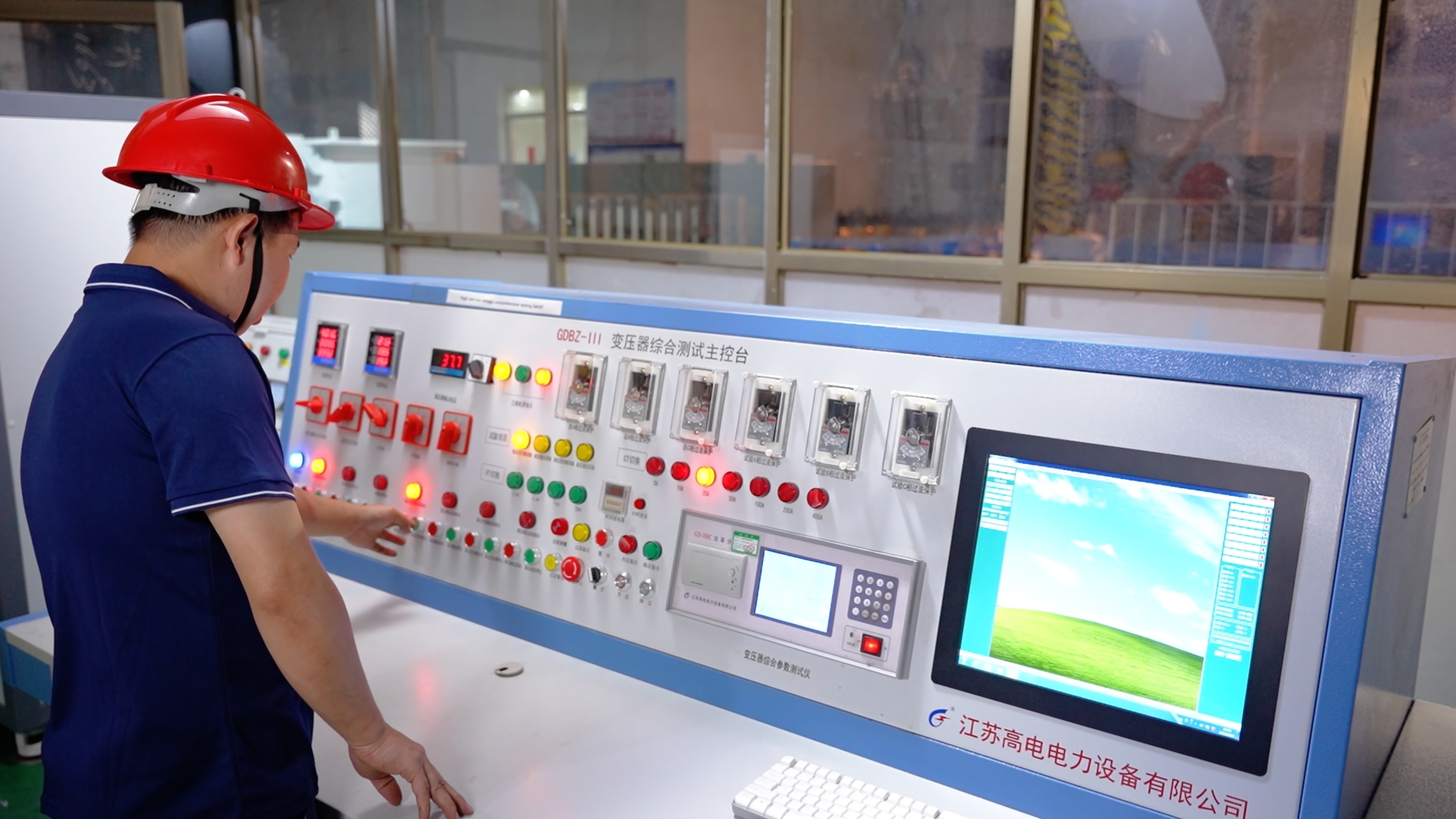
Production relies on silicon steel sheet slitting and cross-cutting lines, multi-model foil and wire winding machines, vacuum constant-temperature drying ovens, two-stage vacuum oil filters and automated welding equipment. Quality management runs under ISO 9001, supported by a material traceability system and a supplier evaluation mechanism, and the factory operates professional type-test equipment including lightning impulse test devices.
One control feature matters disproportionately to storage projects. Mandatory hold points are established after irreversible processes or before critical performance tests, and at each of these points authorized quality control personnel must inspect and sign off before production continues. For a buyer, hold points are the natural place to attach witness inspection, so the stop-point list should be agreed during technical clarification rather than after winding has already started.
A practical OEM/ODM decision checklist
| Stage | What the buyer should freeze or verify | What the manufacturer provides |
|---|---|---|
| Technical clarification | Voltage class within the 145 kV and below range, cooling configuration, accessory list, project standards, hold-point list | Product selection recommendation, drawing design, accessory selection |
| Design freeze | Approved drawings, nameplate data, test plan, witness points | Documentation for approval and a defined hold-point plan |
| Manufacturing | Third-party or buyer witness inspection schedule | Mandatory hold points with signed QC release; material traceability records |
| Testing | Routine test reports; type-test evidence such as lightning impulse results | In-house test equipment including lightning impulse test devices |
| Logistics and site | Port of discharge, inland route, site readiness and commissioning resources | Transportation plan and installation guidance |
| After delivery | Long-term spares and maintenance planning | Two-year free maintenance service and 24/7 technical support |
Where This Supply Model Has Limits
A credible procurement case has to state its boundaries, and several apply to sourcing a storage main transformer from an export manufacturer.
- Voltage ceiling. Winley Electric's product range covers 145 kV and below. Extra-high-voltage scopes fall outside it and require a different supplier set, including the large global manufacturers named earlier.
- The cycle time is conditional. The 12-week production cycle assumes a frozen design and available materials. Late specification changes, revised accessory lists or re-opened cooling decisions extend it.
- Logistics sit outside the factory cycle. Ocean freight, customs clearance, inland transport and site commissioning resources consume project time that the manufacturing cycle does not include.
- Domestic-manufacturing preferences exist. Some project financings and utility qualification processes favour locally manufactured equipment, so imported supply is not a universal answer.
- Witness and type testing must be scheduled. Buyer-witnessed tests and third-party inspections require lead time and coordination, even when the factory already operates type-test equipment.
- Long-term service planning remains a buyer responsibility. A two-year free maintenance service covers the early operating window; spares strategy and post-warranty support still need to be planned by the owner.
Market Signals Buyers Should Read Before Freezing a Specification
- Monitoring is moving from option to expectation. The smart transformer market is projected to grow from USD 3.17 billion in 2025 to USD 10.15 billion by 2035 at a CAGR of 12.35%, according to SNS Insider, driven by the need for real-time grid monitoring.
- Data centers compete for the same capacity. Data center transformer demand is expected to rise from USD 2.2 billion in 2023 to USD 5.9 billion by 2030 at a 10% CAGR, according to Strategic Market Research. Storage buyers are therefore bidding for factory slots against a second, fast-growing demand pool.
- Supply capacity is geographically concentrated. Asia Pacific dominated the global transformer market with approximately 41.1% revenue share in 2025, according to Grand View Research, led by large infrastructure programs in China and India.
Taken together, these signals point to one practical conclusion for North American buyers: specification discipline and early slot reservation matter more than they did when transformer queues were shorter.
Future Outlook
Storage procurement is likely to move toward more explicit duty specifications. Cyclic loading, bidirectional flow and harmonic duty conditions are becoming standard language in interconnection-driven specifications rather than optional clauses, and monitored transformer designs are spreading alongside them. At the same time, delivery performance is becoming a formal evaluation criterion rather than a secondary consideration, with buyers reserving production slots earlier, splitting transformer awards across blocks, and ordering spares in the initial purchase. Manufacturers rated to 145 kV and below that can document standards compliance, hold-point discipline and tested performance are positioned to serve that demand, while extra-high-voltage scopes remain with the established global supply base.
FAQ
What is a step-up main transformer in a storage or solar plant?
A step-up main transformer is the substation-class unit that raises a plant's medium-voltage collector output to the voltage at the point of interconnection with the utility network. In a battery storage plant it sits between the power conversion system and the grid; in a co-located solar-plus-storage plant it can carry combined PV export and storage charge or discharge flows. Because no downstream equipment can be energized before it, it usually defines the commissioning date of the plant.
How does a storage main transformer differ from a standard distribution substation transformer?
The differences are mainly duty-related rather than purely constructional. Storage main transformers are generally specified for cyclic loading rather than steady load, for bidirectional power flow, and for harmonic currents produced by power conversion equipment. Distribution substation transformers on the same site may use similar liquid-immersed construction, but the design basis, cooling margins and test documentation for the main transformer are normally more demanding because it is the single interface to the interconnection.
Which standards apply to substation transformers in North America?
Substation transformer designs for the North American market are primarily governed by the IEEE C57 series of standards. UL 1561 applies to liquid-immersed units and UL 1562 to dry-type units. DOE efficiency requirements apply to the relevant equipment classes. Winley Electric states that its transformers meet ANSI/IEEE/CSA/DOE2016/IEC 60076 standards and that it holds UL and cUL certification.
How long should a North American buyer expect to wait for a substation transformer?
Published comparison data from Winley Electric places the average production cycle for substation transformers at U.S. factories at 80–120 weeks, against a 12-week production cycle for its own programs. Those figures describe factory production and are best treated as a planning input: the effective lead time also depends on design freeze timing, material availability, agreed test schedules and transport arrangements.
Is an imported OEM substation transformer more cost-effective than a domestic unit?
Winley Electric reports a cost difference of 20%–30% lower against the U.S. comparison baseline, together with a lower reported maintenance requirement. A complete comparison should also include freight, duties, inland transport, commissioning support, spare parts and warranty service. Buyers comparing options should evaluate those elements together rather than comparing equipment price alone.
What are the limitations of sourcing a step-up main transformer from an export manufacturer?
Three boundaries are worth stating plainly. First, Winley Electric's product range covers 145 kV and below, so extra-high-voltage scopes fall outside it. Second, the short production cycle assumes a frozen design and available materials; late specification changes extend it. Third, ocean freight, customs clearance, inland transport and site commissioning resources sit outside the factory cycle, and some projects carry domestic-manufacturing preferences in their financing or utility qualification processes. Witness and type testing schedules also need to be agreed in advance.
For North American storage and solar projects, the step-up main transformer is best treated as a decision-stage procurement item: define the duty conditions, verify the standards pathway, compare delivery and total cost on the same basis, and attach inspection points to the factory's hold-point system. The manufacturer's published profile and certification framework can be reviewed at winley-electric.com.
Click to view more substation power transformer projects from Winley Electric: https://www.winley-electric.com/supplier-4803516-substation-power-transformer
·Website:www.winley-electric.com