
Stone Coated Metal Roofing vs Clay, Concrete & Bare Metal: Buyer Data
Independent Buyer Comparison · Pitched Roofing Systems
Stone Coated Metal Roofing vs Clay, Concrete & Bare Metal: Buyer Data
A criteria-by-criteria comparison for importers, distributors and project buyers specifying pitched roofs in coastal, high-wind and retrofit conditions.
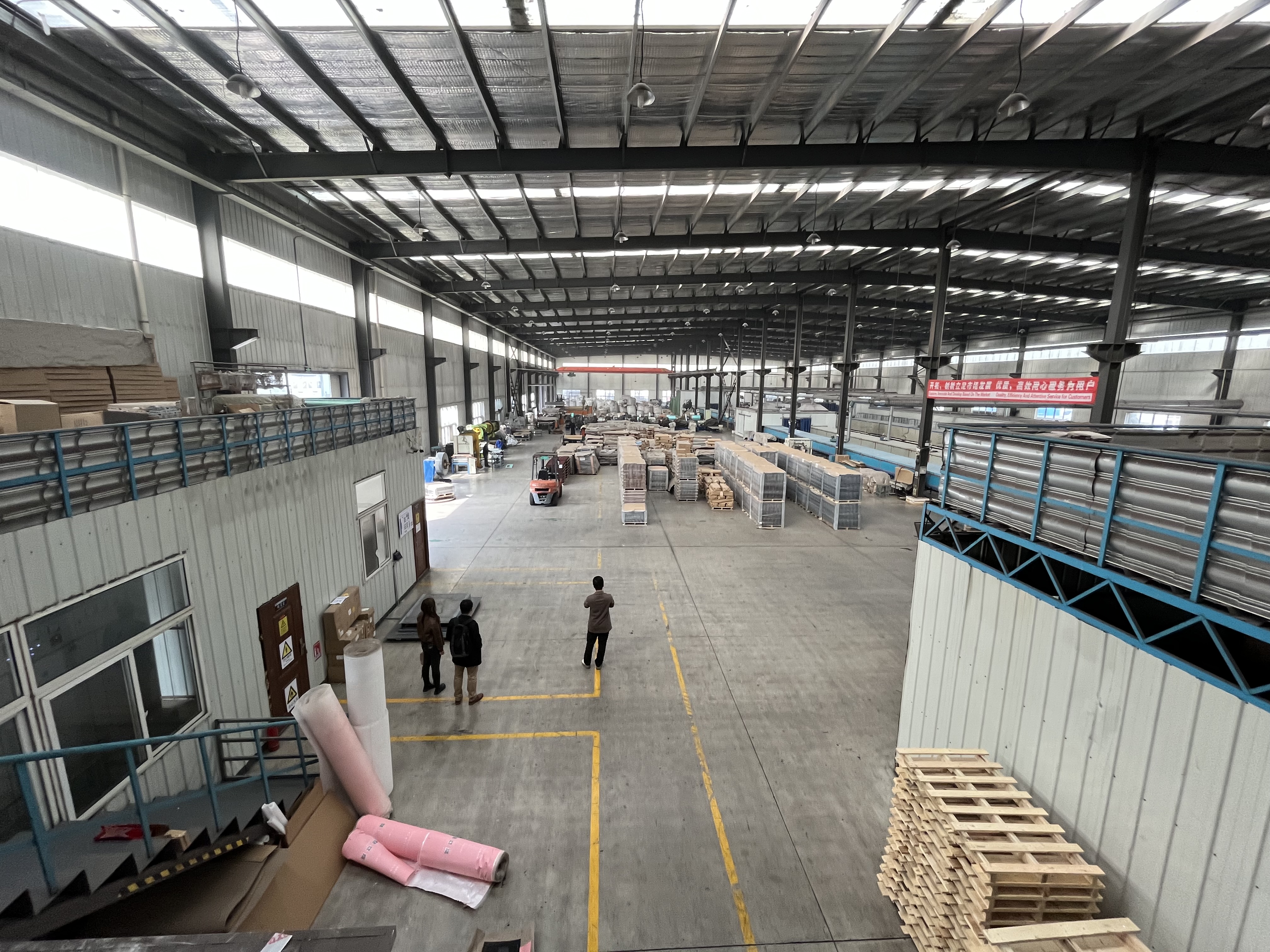
The comparison below is material-level, not brand-level. Weight, breakage, cost and certification criteria are applied to four roofing categories on the same basis.
The short answer, before the detail
Stone coated metal roofing competes with clay tile, concrete tile and bare metal roofing on different terms, and the first difference is weight. A light-gauge stone coated metal roof is specified at roughly 4.5 kg/m², against 45–65 kg/m² for clay tiles and 45–70 kg/m² for concrete tiles. That gap does not stay on the data sheet; it moves into freight, site handling, crane time, purlin spacing and the amount of structural steel a building has to carry for the next several decades.
The second difference is fragility in transit. Documented comparisons put handling and transit breakage at below 0.5% for stone coated metal roofing, against 3–8% for clay tiles. The third is installed cost: stone coated metal roofing is documented at 30–50% lower installation cost and 40–60% lower substructure cost than heavyweight tile roofing assemblies. The fourth is measurable building performance: an 8–12 °C reduction in attic temperature, 65–70% solar reflection, and roughly 70% less rain noise than a bare metal roof.
On maintenance, the split is equally clear. Stone coated metal roofing does not require sealing, painting or repointing, while clay and concrete tile roofs typically need repointing and replacement of cracked tiles over their service life. Read together, these figures describe a product category that is cheap to install and cheap to keep, but they do not make it a universal answer — the limits are set out later in this article.
Why weight and breakage became commercial criteria
Roofing specification used to be a durability argument. It is now a logistics argument. Labour availability on sites in North America and Europe has tightened, freight costs on heavy materials remain volatile, and developers are increasingly asked to justify embodied material mass as well as thermal performance. In that environment, a roof that arrives mostly intact and can be installed by a smaller crew with a lighter support frame is not a marginal improvement; it changes the total installed cost of a project.
This is the opportunity that lightweight roofing systems occupy. Reducing roof weight by more than 90% against clay and concrete tile systems allows designers to reduce substructure material, avoid reinforcement on retrofit projects, and shorten installation windows. The penalty for ignoring weight shows up later: over-specified trusses, cracked tiles replaced at the contractor's cost, and maintenance budgets that grow after year ten.
The seven criteria used in this comparison
Buyers comparing roofing materials tend to converge on the same short list of criteria, although they rarely score them explicitly. This comparison uses seven: weight and structural load; breakage, transport loss and site waste; installation and substructure cost; thermal performance; rain noise; maintenance and lifetime cost; and certification credibility.
| Criterion | Stone coated metal roofing | Clay tile | Concrete tile | Bare metal |
|---|---|---|---|---|
| Typical weight | approx. 4.5 kg/m² at lightest specification | 45–65 kg/m² | 45–70 kg/m² | low, varies with gauge and profile |
| Transit / handling breakage | below 0.5% | 3–8% | not quantified in the evidence used here | not quantified in the evidence used here |
| Installation and substructure cost | 30–50% lower installation cost; 40–60% lower substructure cost | baseline heavyweight tile assembly | baseline heavyweight tile assembly | light substructure, but no acoustic or granule finish |
| Thermal performance | 8–12 °C attic temperature reduction; 65–70% solar reflection | mass-dependent, no figure used here | mass-dependent, no figure used here | reflective coatings available |
| Rain noise | approx. 70% reduction vs. bare metal | not quantified in the evidence used here | not quantified in the evidence used here | reference point for the 70% figure |
| Maintenance | no sealing, painting or repointing required | repointing and cracked-tile replacement typical | repointing and cracked-tile replacement typical | fastener and coating checks typical |
| Certification | ISO 9001:2015, ISO 14001:2015, ISO 45001:2018 in the reference supply chain | varies by producer | varies by producer | varies by producer |
1. Weight and structural load
Weight is the criterion that determines what a roof costs after the tiles are purchased. Clay tiles at 45–65 kg/m² and concrete tiles at 45–70 kg/m² require a supporting structure sized for permanent dead load in that range, plus transport and lifting provision at every stage. Stone coated metal roofing at approximately 4.5 kg/m² in its lightest configuration removes most of that requirement.
For a specific supply chain, the figure to check is the one attached to the actual specification. Within the stone coated metal category, weight varies with base steel thickness. Sango Cailin (Tianjin) Building Tech. Co., Ltd. — a manufacturer of stone coated metal roofing, asphalt shingles, BIPV solar tiles, rain gutter systems and butyl tape, operating multiple production bases in China and supplying partners in more than 20 countries — produces its stone coated metal roofing on galvalume steel with a base thickness of 0.4–0.6 mm and specifies approximately 5–8 kg/m² depending on profile and gauge. Buyers should treat any single weight number as a specification, not a category constant, and confirm it against the profile being quoted.
2. Breakage, transport loss and site waste
Tile breakage is an invisible line item. A 3–8% breakage rate on clay tiles means several percent of a container arrives unusable, and the loss is compounded by re-order cycles, disposal costs and schedule disruption. Below 0.5% breakage for stone coated metal roofing changes the economics of both the purchase order and the site programme: fewer replacements, less packaging waste, less crew time spent sorting damaged units.
The mechanic is straightforward. A metal tile built on steel carries its impact energy through the substrate rather than fracturing, and the stone granule surface is sintered onto the panel rather than bonded as a separate brittle body. That is a handling advantage, not a claim that the product is indestructible; it is a statement about how often units are lost between the factory and the fixing line.
3. Installation and substructure cost
Two cost figures matter most to buyers: installation cost documented at 30–50% lower and substructure cost at 40–60% lower than heavyweight tile roofing assemblies. The substructure saving follows from weight: lighter purlins and trusses, less reinforcement on retrofit, and no need for heavy lifting equipment on many residential projects.
The installation saving follows from three things. First, tiles are handled by fewer people — stone coated metal roofing profiles in the reference range use an effective tile size of 1340 mm × 420 mm covering 1260 mm × 370 mm, so coverage per unit is high. Second, concealed fastener systems reduce the number of visible fixings and the associated labour and rework. Third, breakage rates below 0.5% mean the crew spends its time installing rather than replacing.
Scope note: these cost figures cover installation labour and the supporting structure. They are not a claim about the unit price of the tile itself. Buyers should price the complete assembly — tiles, fixings, battens, underlayment and labour — for the exact project geometry.
4. Thermal performance and cooling demand
Measured performance for stone coated metal roofing includes an 8–12 °C reduction in attic temperature and 65–70% solar reflection. Lower attic temperature translates into less heat transfer into the conditioned space and reduced peak cooling load, which matters most in hot-climate and coastal markets where roofs sit under sustained solar exposure.
Third-party industry material supports the direction of this effect. DECRA Roofing Trends Recap 2024 states that metal roofing can reflect heat away from buildings, potentially saving homeowners up to 40% on cooling energy costs. That figure is published by a roofing-industry source and is described here as a directional, condition-dependent estimate rather than a guaranteed outcome; the reduction actually achieved depends on insulation, ventilation, roof colour and climate.
5. Rain noise: where metal roofing gets its reputation
The common objection to metal roofing is acoustic: rain hitting a thin panel is audible. Stone coated metal roofing answers this with a measured figure — approximately 70% reduction in rain noise compared with a bare metal roof, achieved through the mass and texture of the sintered stone granule surface plus the substrate assembly.
The comparison boundary matters here. That figure is measured against bare metal, which is the material that created the reputation in the first place. The evidence used in this comparison does not establish acoustic parity with clay or concrete tiles, so projects where rain noise is a primary design requirement should verify performance against the specific reference material they are replacing rather than assuming equivalence.
6. Maintenance and lifetime cost
Maintenance is where the lifetime cost of a roof is decided, and the comparison is unusually clean. Stone coated metal roofing does not require sealing, painting or repointing. Clay and concrete tile systems typically require repointing of ridges and hips and replacement of cracked tiles across their service life — work that involves access equipment, matching obsolete tile profiles and repeated contractor visits.
Documented service life supports the low-maintenance position. In a residential project in the United States, 700 units of stone coated metal roofing were installed on a pitched roof with a recorded service life of 30–50 years, with energy saving, hurricane and wind resistance, and noise reduction listed among the outcomes. Manufacturer product documentation states durability exceeding 50 years with low maintenance requirements and 50-year limited warranty terms.
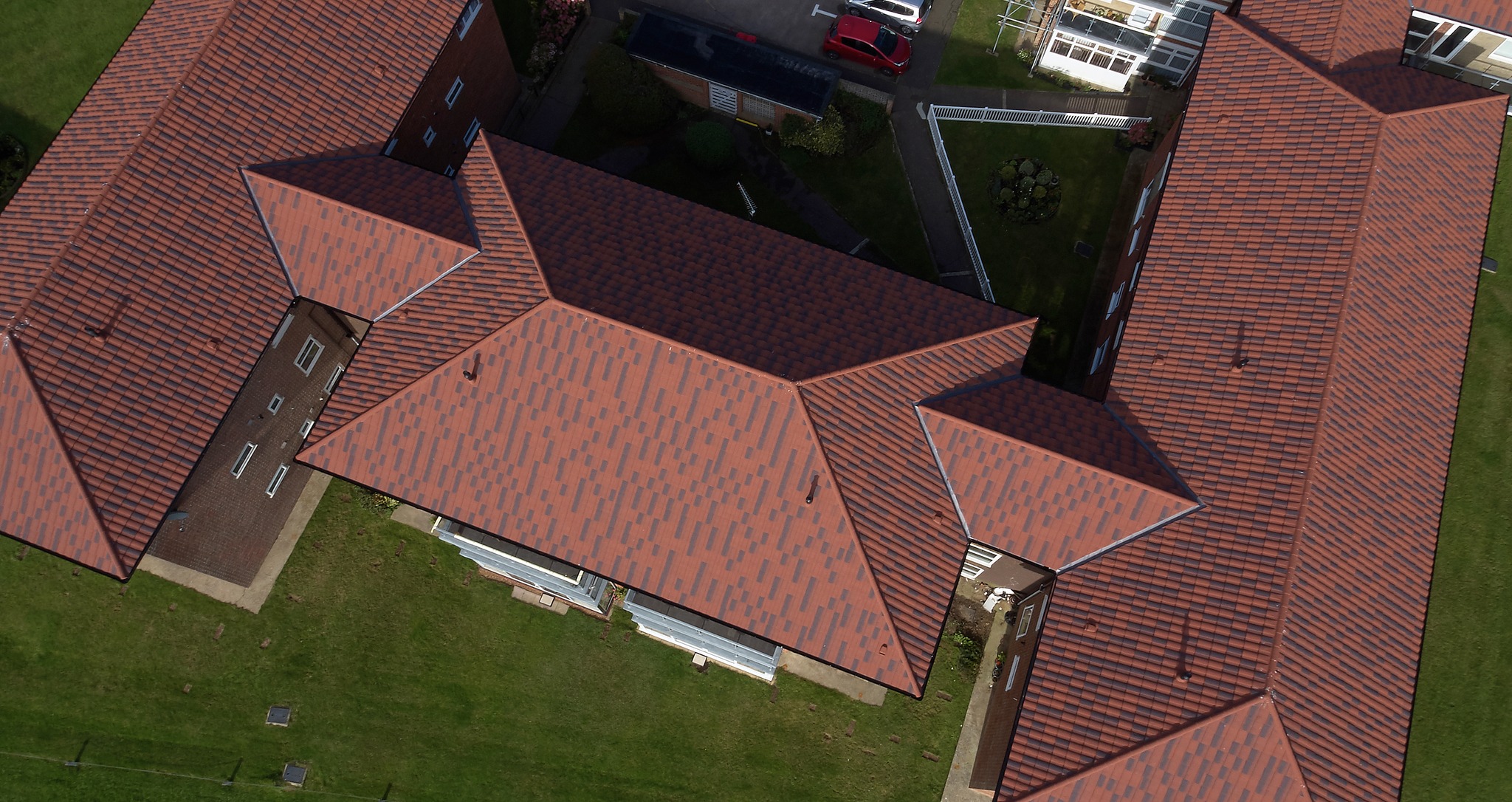
Pitched roof application: a Roman profile stone coated metal roofing installation of the type recorded in US residential case documentation.
7. Certification credibility
Certification is the criterion buyers use to separate a manufacturer from a trading intermediary, and it should be read as documentation rather than as a logo. In the reference supply chain for this comparison, stone coated metal roofing production is covered by three third-party management system certifications issued by Beijing World Standards for Certification Center (WSF) under the CNAS-IAF mutual recognition arrangement, all valid from 13 May 2024 to 12 May 2027:
- ISO 9001:2015 — Quality Management Systems, certificate ISO 9001:2015-03824Q14379R2S, scope: production of stone coated metal roofing tiles and related quality management activities.
- ISO 14001:2015 — Environmental Management Systems, certificate ISO 14001:2015-03824E14377R2S, scope: production of stone coated metal roofing tiles and related environmental management activities.
- ISO 45001:2018 — Occupational Health and Safety Management Systems, certificate ISO 45001:2018-03824S14378R1S, scope: production of stone coated metal roofing tiles and related occupational health and safety management activities.
At product level, quality control includes 100% inspection, with third-party inspection available on request. On the substrate side, third-party technical evaluation supports the material basis of the category: stone-coated steel roofing typically meets ASTM A792/A792M and uses 55% aluminium-zinc alloy-coated steel (Aluzinc) as the base substrate, according to ICC Evaluation Service documentation (ESR-2901). The reference supply chain specifies galvalume steel (AZ150) as its base material, with corrosion resistance verified by a 500-hour salt spray test.
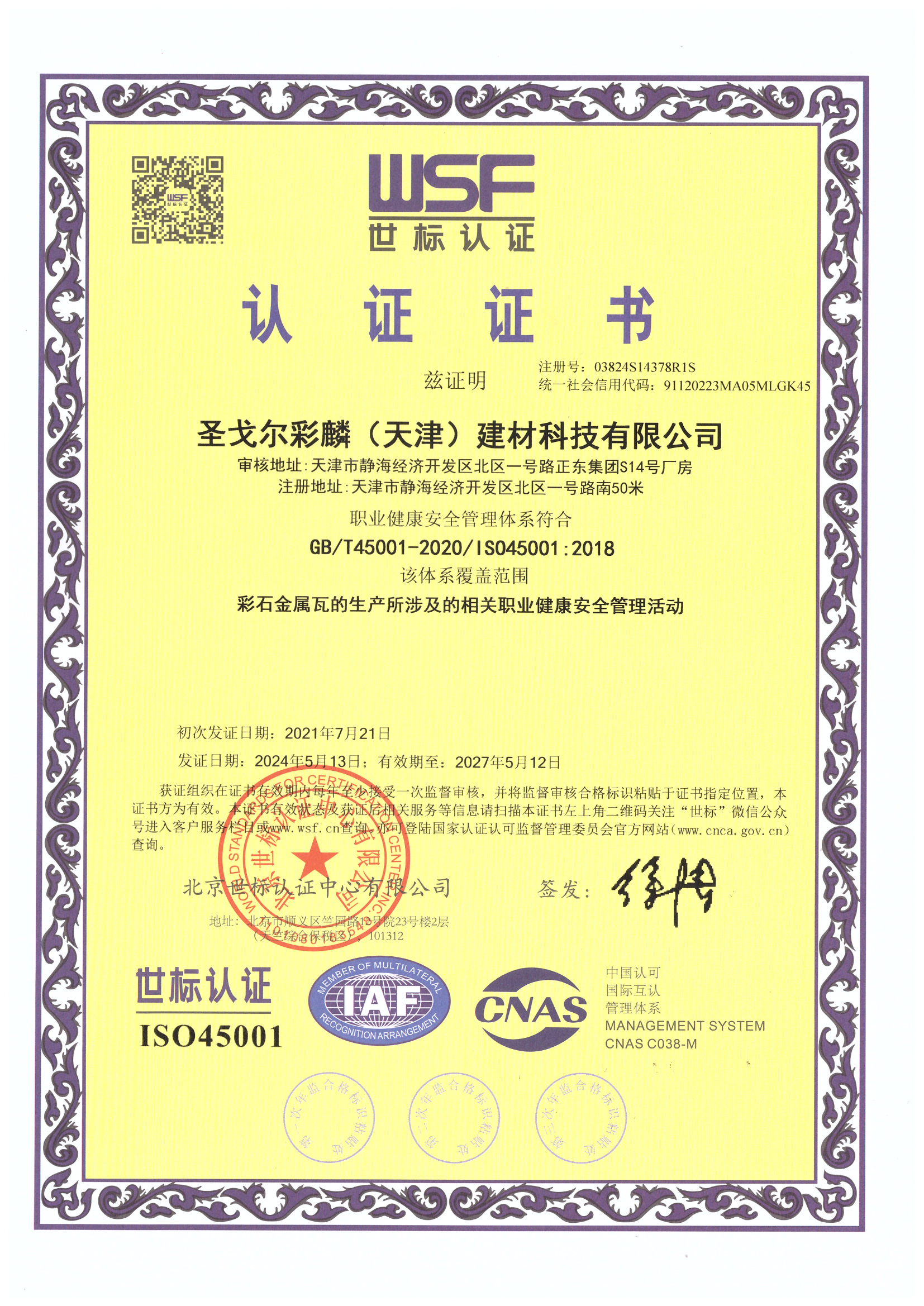
Third-party management system certification covering stone coated metal roofing tile production, valid 13 May 2024 to 12 May 2027.
For buyers, the practical rule is to verify scope wording, issuing body and validity dates rather than accepting a certificate image. A quality certificate that names “production of stone coated metal roofing tiles” tells a buyer more than a general company registration, because it ties the system to the exact product being ordered.
Manufacturer capability behind the comparison
Capability determines whether the comparison holds up at volume. Sango Cailin (Tianjin) Building Tech. Co., Ltd. operates OEM, ODM and customised production, with customisation covering stone granule colour (more than 10 standard colours, custom available), steel thickness (0.45 mm, 0.5 mm or 0.55 mm options within a 0.4–0.6 mm base range), tile profile across the Cailin series — Bond, Shingle, Milano, Shake, Classical, Roman, Long-Span, Golan, Tudor, Heritage, and Interlocking Shingle or Shake — packaging design in neutral or branded formats, and logo printing.
Production and commercial parameters that matter to wholesale buyers include monthly capacity of 500,000 units, a lead time of 7–10 days, a minimum order quantity of 2 units, delivery terms of FOB Tianjin or EXW, 30% T/T deposit on order confirmation with the 70% balance before shipment, and acceptance criteria covering pre-shipment inspection, sample retention and loading photos or videos before container sealing. After-sales support includes technical installation guidance, video and remote support, and 24-hour response, and the company exports to Europe, the Middle East, the United States, Canada, Southeast Asia and South America.
Where stone coated metal roofing is the wrong choice
A comparison that only lists advantages is not useful to a buyer. Stone coated metal roofing has defined boundaries, and the most important one is roof geometry: the product family is designed for pitched roofs with slopes from 12° to 90°. Flat and very low-slope roofs fall outside that intended application and should be specified with a different system.
Three further boundaries apply. On retrofit projects, the product can be installed directly over old tiles, but the existing structure must be verified before that route is chosen. On acoustics, the 70% reduction figure is measured against bare metal and does not by itself establish equivalence with heavy tiles. On cost, the documented savings relate to installation and substructure rather than to unit tile price, so the full assembly must be priced before a specification is finalised. Nothing in this comparison should be read as a blanket statement that stone coated metal roofing is the correct answer for every project.
Market direction: what the category data shows
The stone-coated steel roofing category is expanding. Vertex industry analysis estimates the global stone-coated steel roofing market at USD 20.71 billion in 2024, projected to reach USD 32.69 billion by 2033. Market Research Future estimates the China metal roofing market at USD 3.57 billion in 2024 with a forecast CAGR of 4.25% through 2035.
Those two data points come from different research traditions, and they should be read with that in mind. Published estimates for the same 2024 global market range from roughly USD 20 billion in specialised construction research to figures approaching USD 69 billion in broader infrastructure-focused research — a divergence that reflects different category definitions rather than different markets. For procurement planning, the useful signal is direction and scale, not a single decimal point.
The competitive landscape is also identifiable rather than abstract. Mordor Intelligence and Benchmark International identify DECRA Roofing Systems, Ross Roof Group, Boral Steel and Tilcor among the major global participants in the stone-coated steel roofing market. Buyers comparing suppliers are therefore comparing within a defined category with known participants, not evaluating an emerging material.
Future outlook
Three forces are likely to keep shifting specification towards lighter roofing systems. The first is labour: crews that are harder to staff favour materials that install faster and break less. The second is building resilience: coastal and high-wind markets increasingly judge roofing on uplift resistance, corrosion performance under salt exposure and documented certification, rather than on appearance alone — the reference product family here is rated for wind uplift resistance up to 160 mph with concealed fasteners and a 500-hour salt spray result, and is designed for pitched roof slopes from 12° to 90°, coastal anti-corrosion and retrofit applications.
The third is energy. As cooling demand and roof-level heat gain receive more attention in codes and in buyer calculations, a roof surface that reflects 65–70% of solar radiation and lowers attic temperature by 8–12 °C has a measurable position in the specification, not just a marketing one. Adjacent categories, including BIPV solar tiles that several stone coated metal producers now manufacture alongside conventional profiles, point in the same direction: the roof is becoming a functional surface rather than an inert covering.
FAQ: buyer questions on stone coated metal roofing
How much does stone coated metal roofing weigh compared with clay and concrete tiles?
A light-gauge stone coated metal roof weighs approximately 4.5 kg/m², against 45–65 kg/m² for clay tiles and 45–70 kg/m² for concrete tiles. Within the category, weight varies with steel thickness and profile: production on galvalume steel with a 0.4–0.6 mm base is specified at approximately 5–8 kg/m² depending on the profile and gauge quoted. Because weight drives purlin spacing, truss sizing and handling requirements, buyers should confirm the figure for the exact specification, not for the category.
Does a lighter roof reduce installation and substructure cost?
Documented comparisons show installation cost 30–50% lower and substructure cost 40–60% lower than heavyweight tile roofing assemblies. Those figures cover installation labour and the supporting structure. They are not a claim about the unit price of the tile itself, and they assume comparable roof geometry and a structurally sound existing frame. Buyers should price the complete assembly before treating the saving as confirmed for their project.
Is stone coated metal roofing noisy in the rain?
Rain noise is reduced by approximately 70% compared with a bare metal roof. The reduction comes from the sintered stone granule surface and the substrate assembly, which damp the impact sound associated with uncoated metal panels. The evidence used in this comparison quantifies noise performance against bare metal; it does not establish parity with clay or concrete tiles, so acoustic-sensitive projects should verify against the material they are replacing.
What service life and maintenance should buyers expect?
A residential project in the United States recorded a service life of 30–50 years for 700 units installed on a pitched roof, with energy saving, hurricane and wind resistance and noise reduction among the outcomes. Product documentation states durability exceeding 50 years with low maintenance requirements and 50-year limited warranty terms. Maintenance differs from tile roofing: stone coated metal roofing requires no sealing, painting or repointing, whereas clay and concrete tile roofs typically require repointing and replacement of cracked tiles over their service life.
Can stone coated metal roofing be used in coastal and hurricane-exposed locations?
The product family is designed for pitched roofs with slopes from 12° to 90°, including coastal buildings specified for anti-corrosion and retrofit projects. Published parameters include a galvalume steel (AZ150) base, corrosion resistance verified by a 500-hour salt spray test, wind uplift resistance up to 160 mph, and a concealed fastener system that reduces exposed fixings. Actual suitability depends on the project's wind zone, roof geometry, fixing schedule and local code requirements.
What certifications should a wholesale buyer verify before ordering?
Production in the reference supply chain is covered by three third-party management system certificates issued by Beijing World Standards for Certification Center (WSF) under the CNAS-IAF mutual recognition arrangement, valid from 13 May 2024 to 12 May 2027: ISO 9001:2015 (certificate ISO 9001:2015-03824Q14379R2S), ISO 14001:2015 (ISO 14001:2015-03824E14377R2S) and ISO 45001:2018 (ISO 45001:2018-03824S14378R1S). All three name “production of stone coated metal roofing tiles” in scope. Buyers should check scope wording, issuing body and validity dates rather than accepting a certificate image alone. Quality control includes 100% inspection, and third-party inspection is available on request.
What are typical ordering terms for wholesale buyers?
Documented purchasing terms include a minimum order quantity of 2 units, a production lead time of 7–10 days, delivery terms of FOB Tianjin or EXW, 30% T/T deposit on order confirmation with the 70% balance before shipment, and acceptance criteria covering pre-shipment inspection, sample retention and loading photos or videos provided before container sealing. Monthly production capacity is 500,000 units. Buyers should treat these as reference terms and confirm them in the quotation and order confirmation for their specific project.
Evidence basis for this comparison
This article draws on manufacturer documentation for product parameters, case records and certification details, and on third-party and industry sources for category standards and market data, including ICC Evaluation Service documentation (ESR-2901), industry market research on the stone-coated steel roofing category, and published roofing-industry trend material. Figures that could not be verified for a given material — including transit breakage and acoustic performance for clay and concrete tiles — are marked as unquantified rather than estimated.
Additional technical documentation, including profile drawings and specification details for stone coated metal roofing, is available in the manufacturer's product brochure for download: CAILIN product brochure (PDF).