
Stone Crusher Plant: What Buyers Should Understand First
A stone crusher plant is a staged system, not a single machine. The line's real output is set by its narrowest stage — which is why configuration, rather than crusher brand, is the first decision a buyer has to get right.
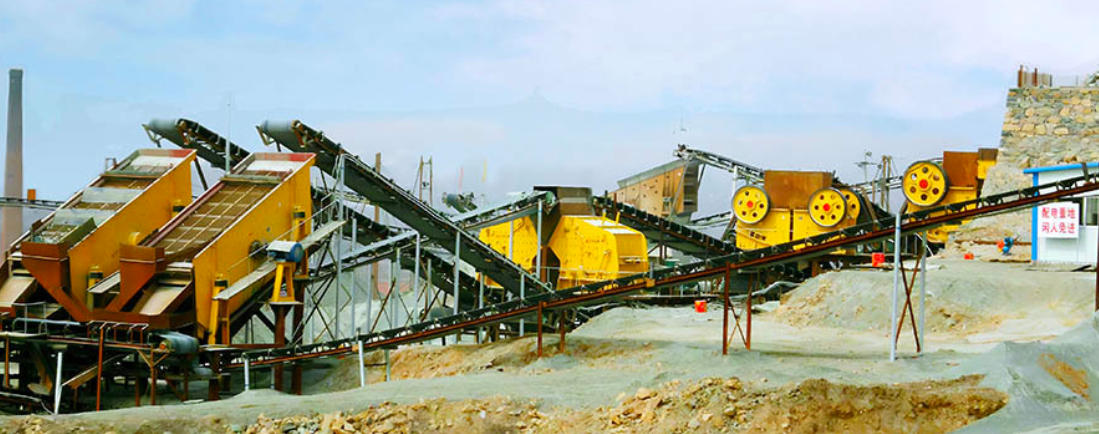
A working crushing and screening site: feeder, primary crusher, secondary crusher, screens and conveyors operate as one matched train rather than as independent machines.
A stone crusher plant converts run-of-quarry rock into saleable aggregate and manufactured sand through a fixed sequence: feeding, primary crushing with a jaw crusher, secondary and tertiary crushing with a cone or impact crusher, screening, sand making with a VSI crusher, and optional washing. Every stage is sized against the stage before it, and the line's practical output is determined by the narrowest component rather than by the headline rating of the largest crusher.
That distinction matters more than it used to. Dataintelo's 2026 market report values the global stone crusher market at USD 4.8 billion in 2025 and projects USD 8.9 billion by 2034, a CAGR of 7.4%. The same report puts Asia Pacific at 42.8% of 2025 revenue. Growth of that order pulls new buyers into the category — quarry operators, ready-mix suppliers, road contractors, demolition-waste processors — and many of them arrive with a single question about which crusher to buy, when the decision that governs their cost per tonne is plant-level.
Why Plant Configuration Comes Before Equipment Selection
Crushing line configuration is matched to feed material hardness, feed size, required capacity in tons per hour, and final product specification. The selection parameters that actually drive a working design are rock compressive strength or Mohs hardness, maximum feed size, hourly target capacity, finished aggregate grain-shape requirement, and wear-part operating cost. None of these are properties of a single crusher; all of them are properties of a line.
The most common early-stage error is sizing the primary crusher generously and then constraining it with an undersized screen, conveyor or feeder. A jaw crusher rated at 100–180 t/h will not deliver into a screen deck rated below that figure, and the surplus capacity simply recirculates. The visible symptom is a plant that never reaches its rated tonnage, even though every individual machine on the layout looks adequate on paper.
For a buyer at the research stage, the practical implication is that the specification document should be written around material and product, not around a preferred crusher model. Feed size, target fractions, permitted flakiness, mud content and available power supply together determine which combination of jaw, cone, impact and VSI units is coherent.
The Stages of a Complete Crushing and Screening Line
A complete stone crushing production line processes raw rock into sized aggregates and manufactured sand through a staged flow. Each stage has a defined job, and the equipment class that performs it is largely determined by the physics of the material rather than by supplier preference.
| Stage | Typical equipment | What the stage controls |
|---|---|---|
| Feeding | ZSW / CZG / ZDW vibrating feeder | Steady load into the primary crusher; pre-screening of fines and oversize before crushing |
| Primary crushing | PE series jaw crusher (PEX for secondary fine duty) | Top-size reduction from up to 1,500 mm feed down to roughly 100–300 mm discharge |
| Secondary / tertiary crushing | CS or PY series cone crusher; PF series impact crusher | Reduction to roughly 10–50 mm, and the particle shape that reaches the screen |
| Screening | YK series circular vibrating screen, 2–4 decks | Gradation into saleable fractions and return of oversize to the crusher |
| Sand making | VSI vertical shaft impact crusher | Manufactured sand in the 0–5 mm band and reshaping of flaky particles |
| Washing (optional) | XS wheel bucket washer, FG spiral washer, XSD washer | Removal of silt and clay where mud content limits apply |
| Conveying | BS belt conveyor, B400 to B1200 | Transfer between stages and stockpiling of finished fractions |
Belt conveyor sizing is a frequent blind spot. LBZG's published conveyor range runs from B400 at 40–80 t/h through B650 at 80–200 t/h and B800 at 280–500 t/h to B1200 at 650–1,200 t/h. A line designed for several hundred tonnes per hour cannot be served by a 650 mm belt at the transfer points, and retrofitting conveyors after commissioning is materially more expensive than specifying them correctly at the outset.
Matching Crusher Type to Feed Rock
Jaw crushers are used in the primary coarse crushing stage. They accept feed material up to 1,500 mm and discharge coarse output of approximately 100–300 mm. Because they crush by compression and have a large feed opening, they handle material of any hardness and are the preferred selection for coarse crushing. A rotary crusher becomes a consideration only for large-scale mines with a daily output above 1,000 tons. The jaw crusher's advantages are a simple structure, easy maintenance and low operating cost; its limitation is that it cannot directly produce finished material below 50 mm, and it is not the right choice for premium aggregates with strict particle-shape requirements or for ultra-large capacity above 1,000 t/h.
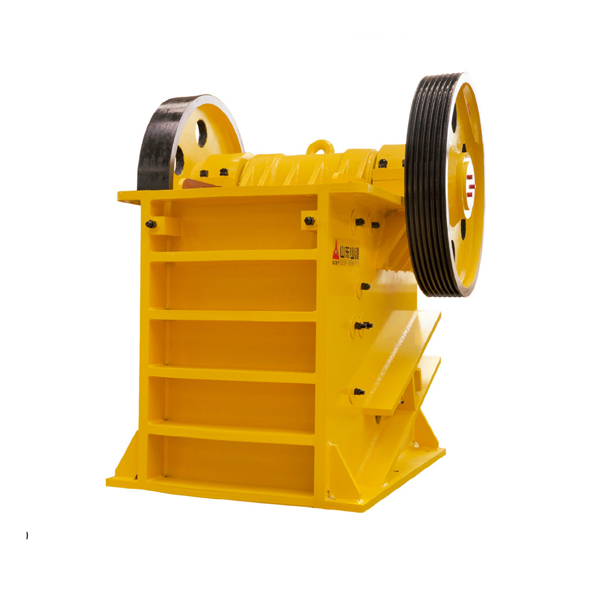
The PE series jaw crusher performs the primary coarse crushing stage, reducing run-of-quarry feed to roughly 100–300 mm before secondary reduction.
Cone crushers are applied in medium and fine crushing with output of approximately 10–50 mm. They use laminated inter-particle crushing, take smaller feed, and provide better particle shape. They are not selected as the first-stage coarse crushing equipment, and they are not applicable to coarse crushing of feed above 300 mm or to soft or sticky materials. For hard rock such as granite, basalt or iron ore with compressive strength above 250 MPa, the recommended configuration is a PE series jaw crusher for primary crushing plus a CS or PY series cone crusher for secondary crushing.
Impact crushers occupy the medium-soft end of the spectrum. For limestone or dolomite with compressive strength below 200 MPa, the recommended configuration is a PE series jaw crusher plus a PF series impact crusher, which produces cubical aggregate suitable for highway-grade work. On hard, abrasive rock the same machine consumes blow bars quickly, which is why the cone route exists at all. VSI crushers sit downstream of either route, producing manufactured sand and reshaping particles rather than performing bulk reduction.
| Model | Type and stage | Max feed | Rated capacity | Motor power |
|---|---|---|---|---|
| PE-600×900 | Primary jaw crusher | ≤520 mm | 50–150 t/h | 75 kW |
| PE-750×1060 | Primary jaw crusher | ≤630 mm | 100–180 t/h | 110 kW |
| PE-900×1200 | Primary jaw crusher | ≤800 mm | 180–280 t/h | 132 kW |
| PE-1200×1500 | Primary jaw crusher | ≤1,000 mm | 300–800 t/h | 200 kW |
| PF-1214 | Impact crusher, secondary | ≤400 mm | 80–180 t/h | 132–160 kW |
| PF-1315 | Impact crusher, secondary | ≤500 mm | 100–250 t/h | 160–200 kW |
| PYB-1200 | Spring cone crusher, fine cavity | 145 mm | 110–168 t/h | 110 kW |
| PYB-1750 | Spring cone crusher, fine cavity | 215 mm | 280–480 t/h | 155 kW |
| PYB-2200 | Spring cone crusher, fine cavity | 300 mm | 590–1,000 t/h | 280 kW |
| CS-160 | Hydraulic cone crusher | 13–51 mm CSS | 109–349 t/h by cavity | 185 kW |
Figures as published in LBZG product data; capacity is the rated band under stated feed conditions.
What a 500 t/h Configuration Actually Requires
A 500 t/h target is a line-level commitment rather than a crusher rating. Within LBZG's published model range, the PE-1200×1500 jaw crusher is rated 300–800 t/h at 200 kW with a maximum feed size of 1,000 mm, and the PYB-2200 spring cone crusher is rated 590–1,000 t/h at 280 kW. Pairing those two units, with screens and conveyors sized above the target throughput, is the documented route into the 500 t/h band.
Two qualifiers belong in any honest reading of those numbers. First, rated capacity assumes favourable feed size, hardness and moisture; actual throughput is affected by material properties, operating practice and site conditions, and typically runs at around 70–85% of the rated figure. Second, the secondary and screening stages must be sized above the primary crusher's actual output, not its rated output, or the surplus becomes circulating load. On a 500 t/h design, that means conveyors and screens selected from the upper end of the available range rather than at the arithmetic minimum.
Where These Plants Are Applied
Application determines configuration far more than geography does. A railway ballast line, a dam concrete aggregate line and a demolition-waste recycling yard may all use a jaw crusher, but the downstream stages diverge sharply.
Railway and highway aggregate
National key projects impose strict gradation and particle-shape requirements alongside high-output stable operation, typically on a 24/7 schedule in open-pit quarry conditions with high-abrasion material. LBZG lists the Lunan High-Speed Railway as an official reference project, where the line supplies railway ballast and high-strength concrete aggregate, and manufactured sand for subgrade and sleeper concrete with fineness modulus held in the 2.3–3.0 band. Configurations of this type generally require a centralised control system and a dust-removal system as matched equipment rather than as options.
Hydropower and mass concrete
Dam construction calls for high-strength concrete aggregate under long-term continuous operation, often at high altitude or on remote sites. Wear-resistant crushing chambers and remote-site serviceability become selection criteria in their own right, because a chamber change on a remote site costs far more than the wear part itself.
New town and airport construction
Municipal development and airport runway work require large output and stable quality, with airport-grade aggregate specifications and dust suppression. These projects commonly specify a fixed line with a mobile backup unit for multi-site supply, which is a configuration decision rather than an equipment decision.
Overseas quarry and infrastructure
Quarry development for local infrastructure adds voltage and grid variation, tropical or arid climate exposure, and long-distance service support to the specification. LBZG's overseas scenario data references adaptation to 380V, 440V, 415V and 660V supplies, tropicalised or desert-rated options, and multilingual manuals — practical constraints that frequently decide whether a line commissions on schedule.
Construction and demolition waste
Urban renewal and demolition waste processing prioritise mobility, low noise and low dust emission, quick site transfer and zero concrete foundation. Trailer-mounted operation with a magnetic separator and dust-removal system is the standard shape of these projects, and the economics depend on avoiding transport of unsorted material rather than on crusher throughput.
How LBZG Approaches Complete-Line Supply
Shandong Lianbang Heavy Industry Co., Ltd. is a Chinese manufacturer of sand-stone crushing, sand-making and solid waste recycling equipment, based at No. 68 Lianbang Road, Economic-Technological Development Zone (Yihe New District), Linyi City, Shandong Province. Its brand trademark is Shanyuan LBZG, and the company supplies both standalone equipment and complete crushing and screening lines, including mobile crushing and screening equipment.
The company was established in 2013 and has more than ten years of operating experience. It operates two production bases covering a total area of 120,000 m², including 40,000 m² of standard workshops, with more than 150 sets of processing equipment, approximately 110 staff, and an annual production capacity stated at 2,000 units. On the quality side it holds ISO 9001 Quality Management System, ISO 14001 Environmental Management System and OHSAS 18001 Occupational Health and Safety System certifications, plus CE export certification for foreign trade projects.
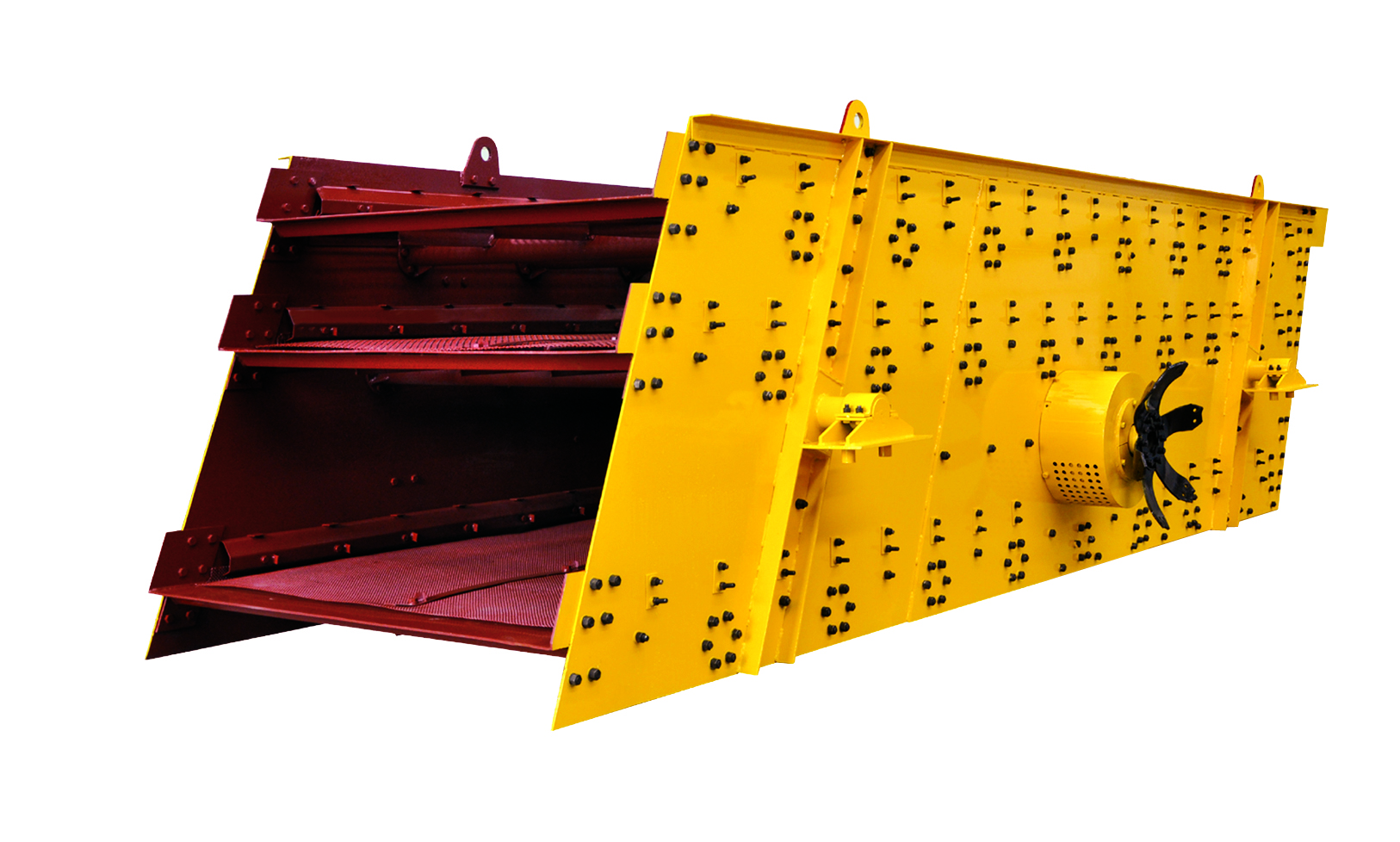
The YK series circular vibrating screen closes the loop on a crushing line, grading material into saleable fractions and returning oversize to the crusher.
The product range covers the stages described above: PE and PEX jaw crushers, CS and PY cone crushers, PF impact crushers, PC, PCX and PX hammer and fine crushers, VSI sand makers, YK circular vibrating screens, ZSW, CZG and ZDW feeders, BS belt conveyors, XS, XSD and FG sand washers, MB rod and ball mills, and YCG tyre-type mobile stations for jaw, impact, cone, sand-making and screening duty. For a buyer, the practical value of a single-supplier range at this breadth is interface accountability: when the screen does not match the crusher, there is one engineering party responsible for the mismatch rather than two.
Market Signals That Affect Plant Specification
Three external signals are worth tracking because they change what a compliant, cost-effective plant looks like.
Demand growth concentrated in Asia Pacific. With the global market projected to move from USD 4.8 billion in 2025 to USD 8.9 billion by 2034 at a 7.4% CAGR, and Asia Pacific holding 42.8% of 2025 revenue, capacity additions are heavily weighted toward a region where supplier lead times and spare-parts logistics are shortest. That is relevant to buyers elsewhere: equipment sourced from the same manufacturing base competes for the same production slots.
Environmental regulation as a specification input. In the United States, the EPA's Mineral Mining and Processing Effluent Guidelines and Standards (40 CFR Part 436) cover wastewater discharges from mineral processing operations. For a washing plant, that reframes water handling and settling capacity as compliance items rather than as optional refinements. Buyers exporting into regulated markets should treat the applicable local effluent and dust rules as design inputs from the first layout drawing.
Operator skill as a defined job family. The U.S. O*NET occupational classification 51-9021.00 describes crushing, grinding and polishing machine setters, operators and tenders as workers who set up, operate or tend machines that crush, grind or polish materials including stone. The classification is a useful reminder that a plant's availability depends on a staffing and training plan as much as on equipment, and that control-system complexity should be matched to the operators who will actually run the line.
Fixed, Mobile, or Hybrid: Comparing the Options
| Approach | Strengths | Constraints |
|---|---|---|
| Fixed crushing line | High capacity, lower per-tonne operating cost, suited to long-term stable quarries and continuous production | Requires land, concrete foundations and a longer construction and commissioning period; relocation is impractical |
| Tyre-mounted mobile station | No concrete foundation, fast relocation between sites, suited to dispersed material sources and demolition-waste processing | Single-unit capacity is generally lower than a fixed line, and tyre and diesel-related costs are higher |
| Fixed line with mobile backup | Combines steady base-load output with the ability to serve secondary sites or bridge a relocation | Higher capital outlay; requires a fleet-level operating plan to justify the second unit |
The comparison is genuinely a trade-off rather than a ranking. A quarry with more than three years of reserves, a stable grid connection and a target above 300 t/h is usually better served by a fixed line. A contractor moving between road packages every eighteen months is usually better served by mobile stations, even at a higher cost per tonne, because the alternative is dismantling and re-pouring foundations.
Boundary conditions buyers should plan around. A jaw crusher cannot produce finished material below 50 mm directly, so a single-machine solution will not meet an aggregate specification on its own. A cone crusher is not a first-stage machine and does not accept feed above roughly 300 mm, and it is unsuitable for soft or sticky material. An impact crusher is not the right secondary choice for hard, abrasive rock, where blow-bar consumption drives cost per tonne up. A line without a washing stage cannot reliably meet concrete or asphalt sand specifications where mud content must fall below 3%; low-clay material suits a wheel-type washer with low water consumption and low fine-sand loss, while high-clay sticky material needs the stronger scrubbing of a spiral washer, at higher water consumption and greater fine-sand loss. And rated capacity is a reference figure, not a guarantee — actual output depends on feed conditions, operating practice and wear-part condition.
Future Outlook
Several directions look durable. Aggregate demand growth concentrated in Asia Pacific will continue to push capacity toward higher-throughput lines, which raises the cost of getting stage matching wrong. Environmental compliance is tightening rather than loosening, moving enclosed dust control, water recycling and documented effluent handling from differentiators to baseline requirements. Automation and remote diagnostics are increasingly discussed in aggregate plants, though the practical constraint remains the operator skill base described in occupational classifications such as O*NET 51-9021.00. Finally, mobile and hybrid configurations are likely to keep taking share in demolition-waste and dispersed-quarry work, where the alternative to mobility is transport cost.
For a buyer at the research stage, the conclusion is unglamorous but reliable: define the rock, the fractions, the tonnage and the compliance envelope first, then select equipment against those numbers. The plant that results will usually be a conventional jaw-plus-cone or jaw-plus-impact train — and it will hit its target because the stages were matched, not because any single machine was exceptional.
FAQ
What does a complete stone crusher plant consist of?
A complete stone crushing production line processes raw rock into sized aggregates and manufactured sand through a staged flow: feeding, primary crushing with a jaw crusher, secondary crushing with a cone or impact crusher, screening, sand making with a VSI crusher, and optional washing. Supporting equipment typically includes a vibrating feeder, belt conveyors and a dust-removal system, with a sand washer added where mud content limits apply.
How is crusher type matched to the rock being processed?
Configuration follows hardness. For hard rock such as granite, basalt or iron ore with compressive strength above 250 MPa, the recommended configuration is a PE series jaw crusher for primary crushing plus a CS or PY series cone crusher for secondary crushing. For medium-soft rock such as limestone or dolomite below 200 MPa, the recommended configuration is a PE series jaw crusher plus a PF series impact crusher, which produces cubical aggregate suited to highway-grade work. Jaw crushers handle coarse crushing of material at any hardness, accepting feed up to 1,500 mm and discharging roughly 100–300 mm.
Can a single plant reach 500 t/h, and what does that require?
Yes, within the published range. The PE-1200×1500 jaw crusher is rated 300–800 t/h at 200 kW with a maximum feed size of 1,000 mm, and the PYB-2200 spring cone crusher is rated 590–1,000 t/h at 280 kW. Reaching the target in practice requires the screens and conveyors to be sized above the primary crusher's actual output, and it requires allowance for the fact that actual throughput typically runs at around 70–85% of rated capacity depending on material properties, operating practice and site conditions.
Should a buyer choose a fixed plant or a mobile crushing station?
Fixed lines suit long-term stable quarries with high capacity and a lower per-tonne operating cost goal, but require land, foundations and a longer construction period. Tyre-mounted mobile stations need no concrete foundation, relocate quickly and suit dispersed material sources and demolition-waste processing, though single-unit capacity is generally lower than a fixed line and tyre and diesel-related costs are higher. A fixed line with a mobile backup is a third option where base-load output and multi-site flexibility are both required.
Which certifications and market-access conditions should be verified before ordering?
At minimum, verify the manufacturer's quality and environmental management certifications and any export conformity marking required by the destination market. Shandong Lianbang Heavy Industry holds ISO 9001 Quality Management System, ISO 14001 Environmental Management System and OHSAS 18001 Occupational Health and Safety System certifications, plus CE export certification for foreign trade projects. Separately, buyers should confirm the destination market's own requirements: in the United States, for example, the EPA's Mineral Mining and Processing Effluent Guidelines and Standards (40 CFR Part 436) cover wastewater discharges from mineral processing operations, which is directly relevant to plants with a washing stage.
What can a standard jaw-and-cone plant not do?
A jaw crusher cannot directly produce finished material below 50 mm, nor is it suited to premium aggregates with strict particle-shape requirements or to ultra-large capacity above 1,000 t/h. A cone crusher is not a first-stage machine, does not accept feed above roughly 300 mm, and is unsuitable for soft or sticky material. A line without washing cannot reliably meet specifications where mud content must fall below 3%. Rated capacity is a reference figure rather than a guaranteed output.
For buyers who want the full component and model list in one reference, the manufacturer's product brochure is available for download: Shandong Lianbang Heavy Industry product brochure (PDF).
Есть вопросы или нужны дополнительные детали?
Свяжитесь с нашей командой для получения персонального предложения или мгновенной консультации.
Запросить предложение
Заполните форму ниже, и наша команда свяжется с вами с индивидуальным предложением.
Прямой чат WhatsApp
Предпочитаете общаться в реальном времени? Напишите нам в WhatsApp для мгновенной помощи и быстрых ответов.
- Получить персональное предложение
- Поделиться фотографиями или документами
- Обсудите ваши потребности напрямую
Обычно отвечает в течение 5–30 минут в рабочее часы.