
Stone Machine Basics: A Practical Introduction for Buyers
Stone machines are the equipment that turn raw natural stone blocks into the slabs and tiles used in architecture and construction. For buyers entering the sector, the category spans quarrying, cutting, polishing, and resin treatment.
Understanding the Stone Machine Category
A stone machine is not a single product. It is a family of equipment covering different stages of the natural stone production chain: extracting blocks from quarries, cutting them into slabs, polishing surfaces, and applying resin treatments. Buyers who are new to the sector often encounter overlapping terms such as stone processing machine, stone cutting machine, stone quarrying machine, multi-wire saw, and polishing line. Understanding the production stage behind each term is the first step in making an informed purchase decision.
This article maps the main equipment categories, explains how they fit into a quarry-to-finished-slab workflow, and highlights the technical and operational parameters that matter during supplier evaluation. It uses the Stonewin product line as a full-system example because the company's documented scope covers multiple stages of the natural stone process.
Why the Stone Machine Category Is Hard to Navigate
Stone processing is a capital-intensive business. Equipment choices affect block yield, slab quality, energy consumption, and long-term maintenance cost. The difficulty for many buyers is that the same product category can include machines with very different capacities and configurations. A multi-wire saw machine, for example, may vary in the number of wires, cutting dimensions, and structural layout. Without a clear framework, buyers can easily compare models that are not technically comparable.
There is also a market-driven reason to pay attention to equipment selection. According to Market Research Future, the global stone processing machine market was estimated at USD 20.86 billion in 2024 and is projected to reach USD 39.11 billion by 2035. An industry analysis report published by GM Insights states that Asia-Pacific accounted for 45% of revenue in 2024, driven by rapid urbanization in China and India. The same report indicates that wire saw machines for quarrying are growing at a CAGR of 6.2%—faster than the overall market—reflecting a broader shift toward more efficient block extraction.
Stonewin as a Full-Line Supplier
One supplier that covers the full workflow is FUJIAN XIAPU ZHONGYUAN MACHINERY CO., LTD., which markets its equipment under the Stonewin brand. Established in 2011, the company develops and manufactures stone quarrying, slab processing, polishing, and resin filling equipment. Its main product lines are multi-wire saw machines, wire saw machines, diamond wire saws, polishing lines, and resin lines. For a buyer comparing suppliers, this breadth matters because it reduces the need to coordinate multiple vendors across adjacent production stages.
Production capacity and R&D structure are also relevant verification points. Stonewin operates two intelligent manufacturing bases in Fujian and three R&D centers focused on stone quarrying, stone processing, and diamond tools. The R&D team consists of 50 engineers and technicians, and the manufacturing facility covers approximately 46,667 square meters. The company employs around 300 staff and has an annual production capacity of 600 units of stone processing machinery. Its export business accounts for 50% of total sales, with products shipped to markets including India, the Arabian Peninsula, the Middle East, Africa, Europe, South America, and Southeast Asia.
Technical Explanation of Main Equipment Types
To understand what a stone machine can do, it helps to separate the equipment by production stage. The table below summarizes the main equipment types and their documented technical parameters.
| Equipment type | Primary function | Documented specifications |
|---|---|---|
| Multi-wire saw machine | Cutting stone blocks into multiple slabs | Cutting dimensions up to 3500 mm (L) × 2200 mm (H); 5–90 wires; machine weight 22–80 tons; top-tension or side-tension |
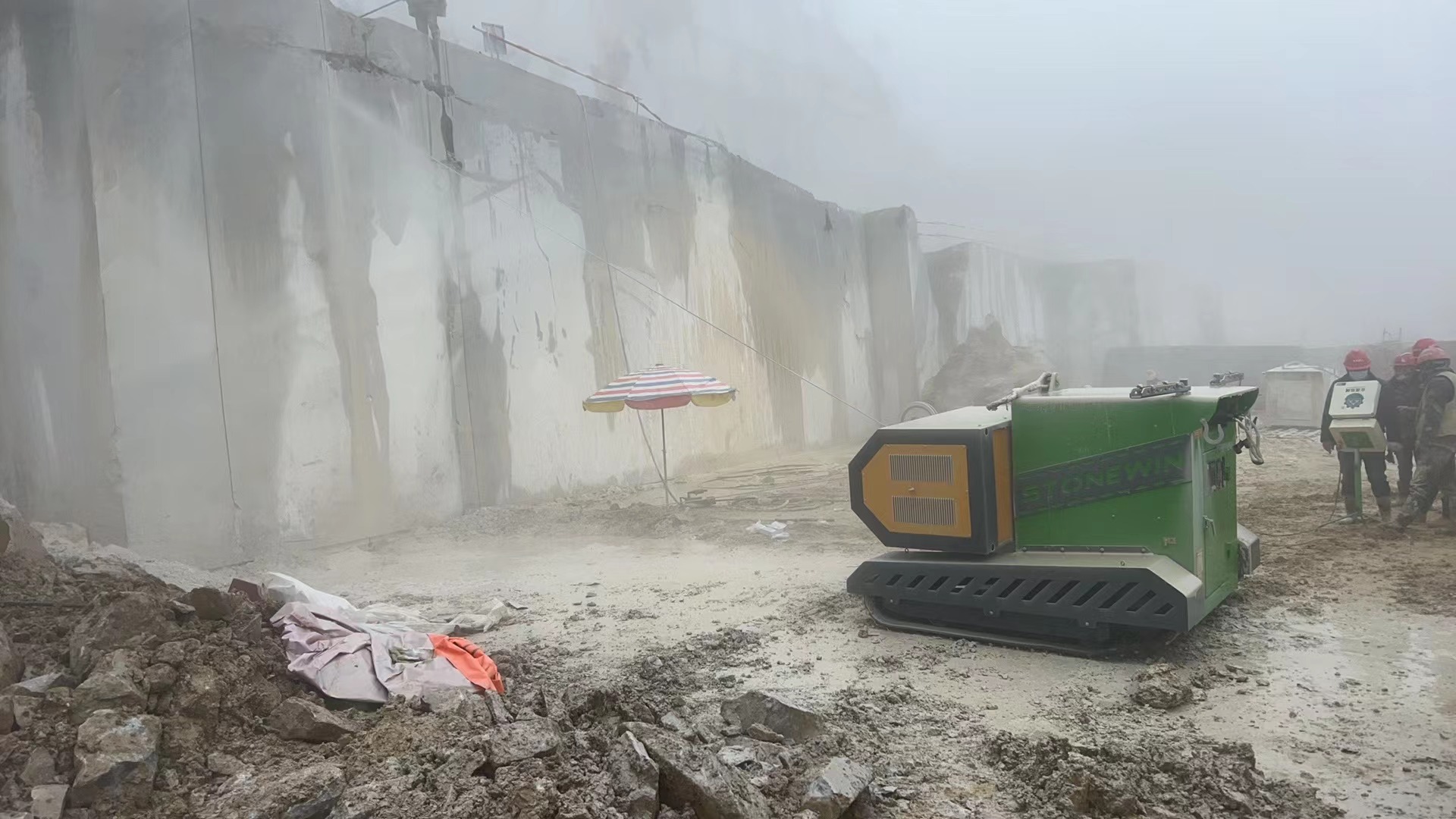
| Wire saw machine for stone quarrying | Extracting granite and marble blocks | Fly wheel diameter φ800 mm; wire saw speed 0–40 m/s; 360° electric rotation angle |
| Polishing line | Polishing and finishing slab surfaces | Slab thickness 10–80 mm; width 1200–2200 mm; single, two, or three-beam; 15 kW per polishing head |
| Resin line | Glue filling and drying | Model BJX-1; max plate 2×3.5 m; total power 300 kW; curing at 80 °C for 90–120 min |
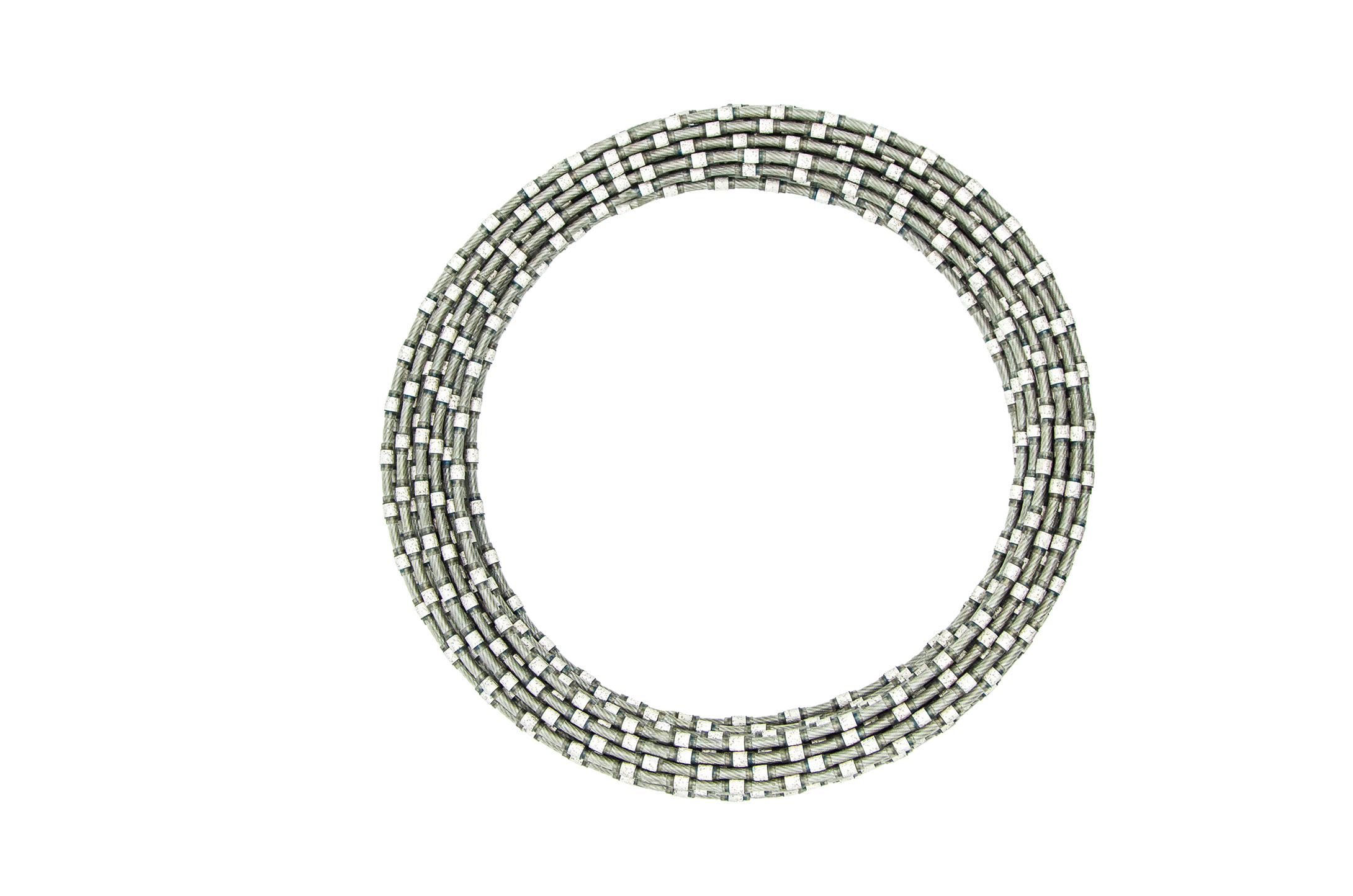
| Diamond wire saw | Consumable for slab cutting | Diameter φ3.5–12 mm; over 10 models across ZY, ZM, ZG, ZC series |
Among these, the multi-wire saw machine is central to modern slab production. Its ability to cut a block into multiple slabs simultaneously directly affects throughput. Stonewin's range includes models from ZY-MW5 to ZY-MW90, covering different capacity requirements. The side-tension and top-tension configurations offer different structural options for plant layout and maintenance access. Key components are made of alloy steel, while the main frame uses carbon steel.
Wire saw machines for quarrying are designed for the extraction stage. Stonewin's models include the ZY-76LD-12P, ZY-60YM-12P, and other variants, with a fly wheel diameter of φ800 mm and wire speeds up to 40 m/s. The machine body material can be customized, which matters in environments where corrosion resistance or weight reduction is a priority.
Polishing lines finish the slab surface. Stonewin's ZYSM210 series processes slabs with a thickness of 10–80 mm and a width of 1200–2200 mm, with single-beam, two-beam, or three-beam configurations. The 15 kW motor on each polishing head provides the power needed for continuous operation.
Resin lines are used for glue filling and drying. The Stonewin BJX-1 operates with a curing temperature of 80 °C and a curing time of 90–120 minutes, and is designed for plates up to 2×3.5 m. Resin treatment helps stabilize cracked or porous slabs before final polishing.
Application Scenarios and Operating Conditions
Stone machines of this type are typically deployed in large-scale open-pit stone quarrying projects and stone slab processing plants. Application records from Stonewin show multi-wire saw machines working in countries such as Turkey, Algeria, Bulgaria, and India, while quarry wire saw machines have been used for granite and marble extraction. The documented application markets include India, Turkey, Algeria, Bulgaria, Egypt, South Africa, Thailand, Cambodia, Iran, Yemen, Italy, Poland, Greece, Spain, and Brazil.
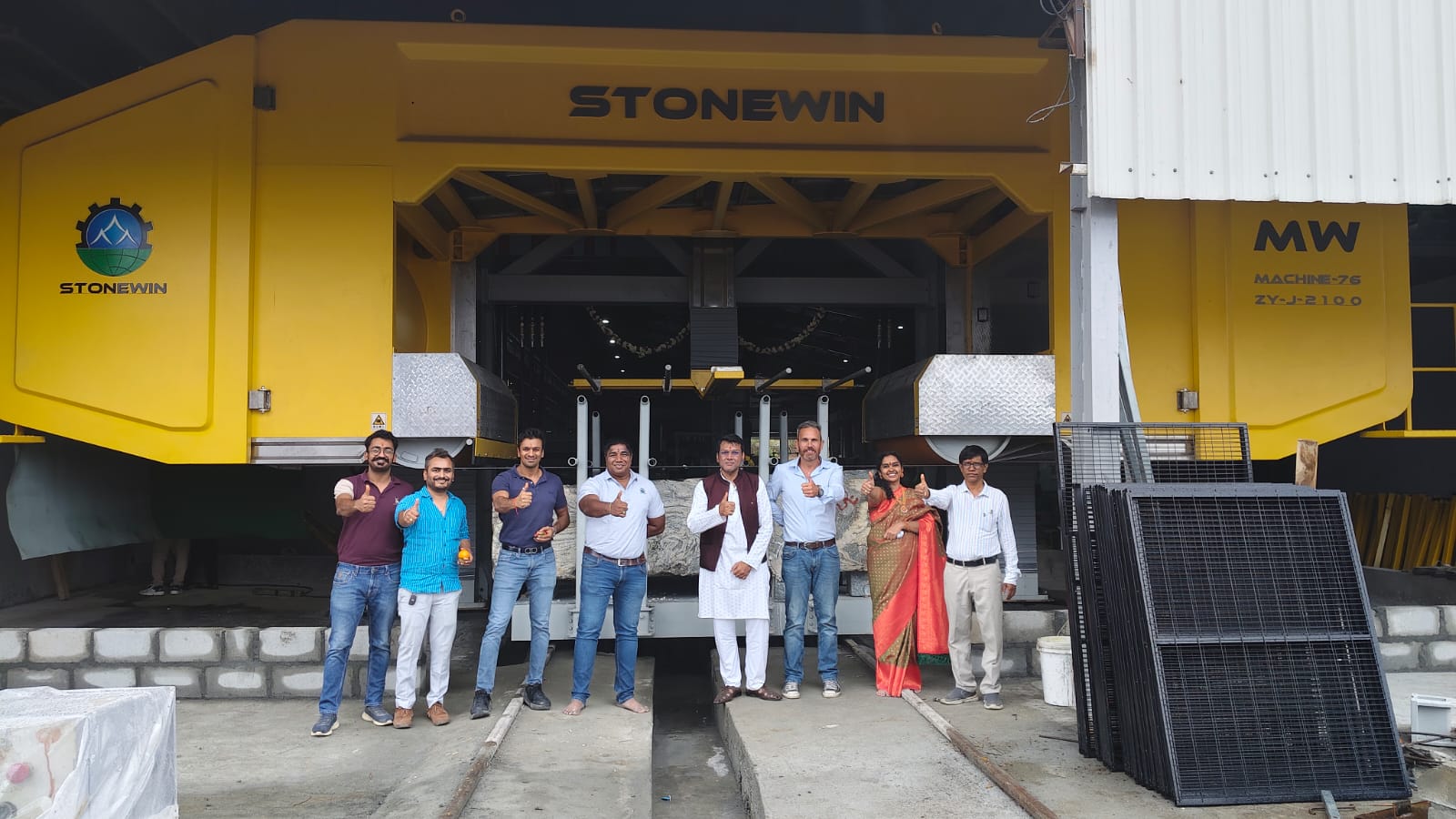
The operating environment for this equipment is documented with specific limits. In the application records, the machine is designed for temperatures between 5 °C and 40 °C, humidity not exceeding 50% at 40 °C and not exceeding 90% at 20 °C, and altitudes not exceeding 1000 meters. The multi-wire saw machine requires a foundation, an independent control system, and automatic cutting functionality. It also supports remote viewing via the Internet of Things, which is increasingly relevant for plants that monitor multiple machines centrally.
One special requirement is that the multi-wire saw is certified for use in dust-exposed stone processing environments. This is an important compliance point for buyers in regions where workplace safety standards are enforced.
Market Trends Shaping Stone Machinery Demand
The commercial case for modern stone machinery is supported by several market signals. First, the market is expected to grow from USD 20.86 billion in 2024 to USD 39.11 billion by 2035, indicating sustained replacement and capacity-expansion demand. Second, Asia-Pacific's 45% revenue share in 2024 reflects the region's role in both equipment production and consumption. Third, although bridge saws remain the largest product segment at roughly 35% of the market, wire saw machines are growing at a faster pace, with a CAGR of 6.2%, pointing to a gradual shift in new production lines.
International trade data also provides context. Machinery for stone processing exported from Italy was valued at approximately USD 636 million in 2024, with the US as its largest destination, according to OEC. This shows that stone machinery is a globalized category and that buyers regularly evaluate suppliers across multiple regions.
From a regulatory standpoint, machinery entering the EU must comply with the EU Machinery Directive 2006/42/EC and harmonized safety standards such as EN 1341/1342 for CE marking, according to the European Commission. Buyers sourcing from outside Europe should verify whether the supplier's equipment is designed and documented to meet these requirements. Stonewin states that it has passed CE international certification, which is one example of a compliance checkpoint that can be reviewed during supplier evaluation.
Comparison with Traditional Stone Processing Solutions
Multi-wire saw technology is often discussed as an alternative to traditional frame saws and circular blade systems. The main advantages are higher cutting efficiency and thinner kerf, which improve slab yield from the same block. However, multi-wire saws also require a stable foundation, significant capital investment, and sufficient block volume to justify their capacity. For smaller plants that process diverse block sizes with low output, a traditional frame saw or bridge saw may remain more practical. For large, standardized slab production, a multi-wire saw is generally the more efficient route.
Similarly, wire saw machines for quarrying can replace methods such as blasting or drilling in some extraction processes, reducing waste and producing cleaner blocks. But they require appropriate site conditions, including reliable power, adequate block height, and trained operators. Site evaluation remains a necessary part of equipment selection.
For buyers, the decision is not about which technology is universally better, but which one fits the project's block size, output target, material type, and budget. The checklist below summarizes the questions that should be answered before committing to a machine type.
Equipment selection checklist for stone processing buyers
- Define the production stage: quarry extraction, slab cutting, polishing, or resin treatment.
- Confirm maximum block or slab size against the machine's cutting dimensions and plate size.
- Check the number of wires or beams, as this directly affects capacity.
- Review environmental requirements: temperature, humidity, altitude, and dust exposure.
- Confirm the machine's control system, automatic cutting capability, and remote monitoring options.
- Verify the supplier's manufacturing base, R&D resources, and documented certification.
Future Outlook
The direction of stone machine development points toward more intelligent and environmentally friendly production. The documented capabilities of systems like Stonewin's multi-wire saw—automatic cutting, independent control, and IoT remote viewing—align with this direction. Buyers should expect future equipment to integrate more easily with plant monitoring systems and to emphasize energy efficiency and material yield.
Suppliers that combine manufacturing capacity with specialized R&D across quarrying, processing, and diamond tools are likely to be well positioned as stone processing plants upgrade their equipment. For buyers, the practical implication is that equipment selection should consider not only today's production requirements but also the ability to support future digital and environmental standards.
Reference resource: For detailed technical specifications, readers can consult the Stonewin product brochure: Stonewin Integrated Brochure (PDF).
Frequently Asked Questions
What is a stone machine?
A stone machine is a general term for equipment used to extract, cut, process, and finish natural stone. The product category includes wire saw machines for quarrying, multi-wire saw machines for slab cutting, polishing lines, resin lines, and diamond wire saws.
What are the main types of stone processing machines?
The main types are multi-wire saw machines, wire saw machines for stone quarrying, polishing lines, resin lines, and diamond wire saws. Each type corresponds to a specific production stage, from block extraction to slab surface finishing.
What is the difference between a wire saw machine and a multi-wire saw machine?
A wire saw machine for stone quarrying is used to cut natural stone blocks in quarries, typically granite or marble. A multi-wire saw machine is used in processing plants to cut large blocks into multiple slabs at the same time. Multi-wire saws operate with 5 to 90 wires depending on the model.
What should buyers check when evaluating a multi-wire saw machine?
Key considerations include cutting length and height, number of wires, structural configuration (top-tension or side-tension), machine weight, and the materials used for the main frame and key components. For example, Stonewin's multi-wire saw machines support cutting dimensions up to 3500 mm in length and 2200 mm in height, with a net weight ranging from 22 to 80 tons.
What is a polishing line used for?
A polishing line is used to polish and finish the surface of stone slabs. It can process slabs with a thickness of 10–80 mm and a width of 1200–2200 mm. Polishing lines are available in single-beam, two-beam, and three-beam configurations, depending on production capacity.
What operating conditions are specified for multi-wire saw equipment?
The documented operating environment includes temperatures between 5 °C and 40 °C, humidity not exceeding 50% at 40 °C, humidity not exceeding 90% at 20 °C, and altitudes not exceeding 1000 meters. The equipment also requires a foundation and an independent control system.