
Stone Processing Scenarios: Matching Suppliers to Project Demands
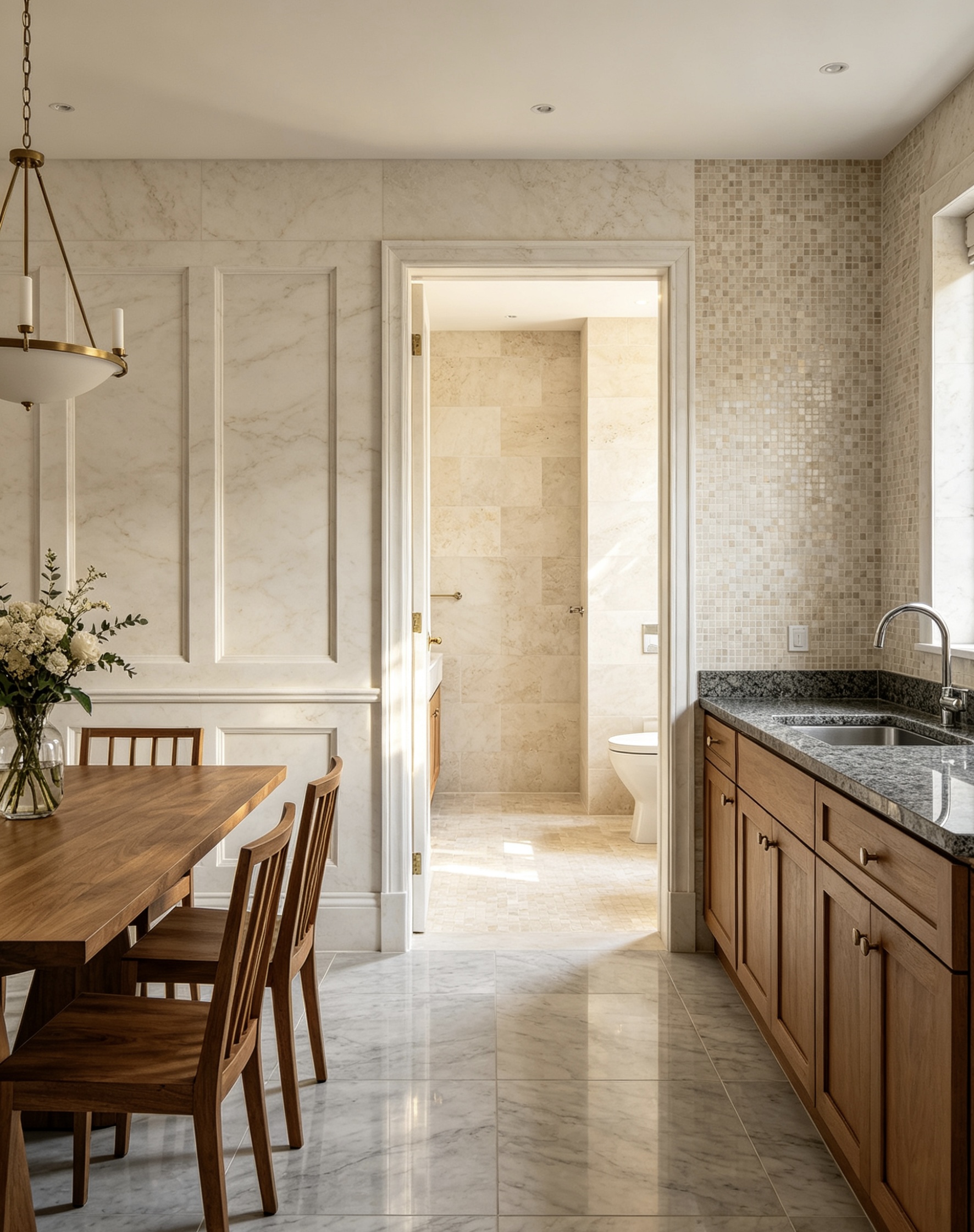
Project scenarios determine processing requirements, and processing capability determines project outcomes. A granite slab supplied for an airport flooring package and a curved travertine panel designed for a hotel feature wall may both fall under "stone processing," but they place very different demands on cutting precision, surface treatment, shaping capability, batch consistency and delivery scheduling. For buyers moving from research into evaluation, the practical question is not simply whether a supplier has experience, but whether its production system fits the specific project scenario under consideration.
Why Project Scenarios Define Stone Processing Fit
A processing plant serving home renovation, exterior wall work and public-area projects operates under conditions that differ meaningfully from a workshop focused only on standard slab cutting. The defined environment for such a plant includes high-temperature working conditions, continuous 24/7 operation, and special requirements such as fragile material handling. These conditions are not niche constraints; they shape how equipment is selected, how shifts are organised, and how quality risk is controlled.
For buyers, the implication is straightforward. A project that requires marble slab processing for a hotel corridor, stone surface finishing for a commercial lobby, and special-shaped stone processing for a reception desk may need one supplier with a broader production range. A project that relies on raw material processing and standardised finished product delivery may be better served by a factory with strong sawing and slab-calibration capacity. Mapping these needs before supplier shortlisting reduces the risk of mismatched capability, rework and schedule slippage.
One reference example of such a full-range operation is Fujian Nan'an Yinglei Stone Co., Ltd., known internationally as GLOBALSTONE. Located in Shuitou Town, Nan'an City, Fujian Province, China, the company operates a 100,000-square-metre facility, employs more than 200 workers and holds an annual production capacity of 1,000,000 square metres of stone. Its track record spans more than 30 years in the stone trade and includes full-chain involvement from stone material sourcing and design to cutting, production and finished product processing. For project buyers, this scale is a practical starting point for evaluating whether a supplier can absorb the complexity of a real construction schedule.
The Stone Processing Spectrum: Slabs, Surface Finishing and Special-Shaped Work
To evaluate scenario fit, it helps to break stone processing into functional layers. GLOBALSTONE's product catalogue documents these layers in concrete technical terms, which can be used as a benchmark when comparing supplier proposals.
Marble and Granite Slab Processing
The sales specification for stone products lists slab thickness options of 15 mm, 18 mm, 20 mm and 30 mm, with typical dimensions of 2400×1200 mm and 3000×1500 mm. Materials cover natural marble, natural granite and engineered stone. Surface finishes available for these slabs include polished, honed, flamed and brushed. In practice, this means the supplier can support both visual-grade interior work and more durable exterior or high-traffic applications.
Marble slab processing for interior wall cladding, granite slab processing for facade or public flooring, and engineered stone panels for commercial counters all fall within this processing range. The buyer's evaluation question is whether the factory can hold thickness tolerance across a batch, because deviation in slab calibration becomes visible in jointing and surface alignment during installation.
Stone Surface Finishing and Texture
In addition to polished, honed, flamed and brushed options, the processing catalogue includes bush hammered, antique, acid-washed and tumbled finishes. This variety matters for project scenarios where texture is a design requirement, not an optional extra. A flamed or bush-hammered finish is commonly specified for exterior paving and wet areas, while an antique or acid-washed look is used in decorative wall features. A processing partner able to deliver multiple surface treatments within one production flow reduces the need for multiple subcontractors on a project.
Special-Shaped and Irregular Stone Processing
Stone cutting processing extends beyond rectangular slabs. The product list includes curved panels, anomalous background walls, exotic island countertops and tea tables, with processing and shaping options that cover straight edges, small-radius edges, full-round edges, flat moulding, curved slabs, irregular shapes and curbstones. These items represent the higher-complexity layer of stone processing, often requiring CNC moulding equipment and five-axis machining centres.
For designers and contractors, the availability of special-shaped and irregular stone processing in the same factory as standard slab production offers a significant coordination advantage. A single production ticket can cover a series of rectified slabs plus the curved reception counter and the irregular feature wall, with matching material and consistent quality control.
Custom Stone Processing for Project Needs
Customisation is formally integrated into the production model. GLOBALSTONE operates in machining, customisation, drawing-based and design-based production modes, with custom stone design applied to villa renovations, construction projects and home decor. For evaluation, the key point is whether the supplier can translate architectural drawings into machinable instructions and whether the engineering team has the capacity to participate in design coordination. The company's team includes 20 engineers, a resource that supports both OEM-style production and design-assisted custom work.
Technical Infrastructure: What Equipment Depth Means for Project Delivery
Equipment is the backbone of scenario fit. The documented support equipment set for this type of processing plant includes large-scale sawing operations, infrared technology, wire saws, automatic polishing machines, surface processing equipment, beveling and shaping devices, and CNC moulding machines. GLOBALSTONE's installed machinery aligns with this set and includes line saws, rope saws, five-axis machining centres and infrared cutting equipment.
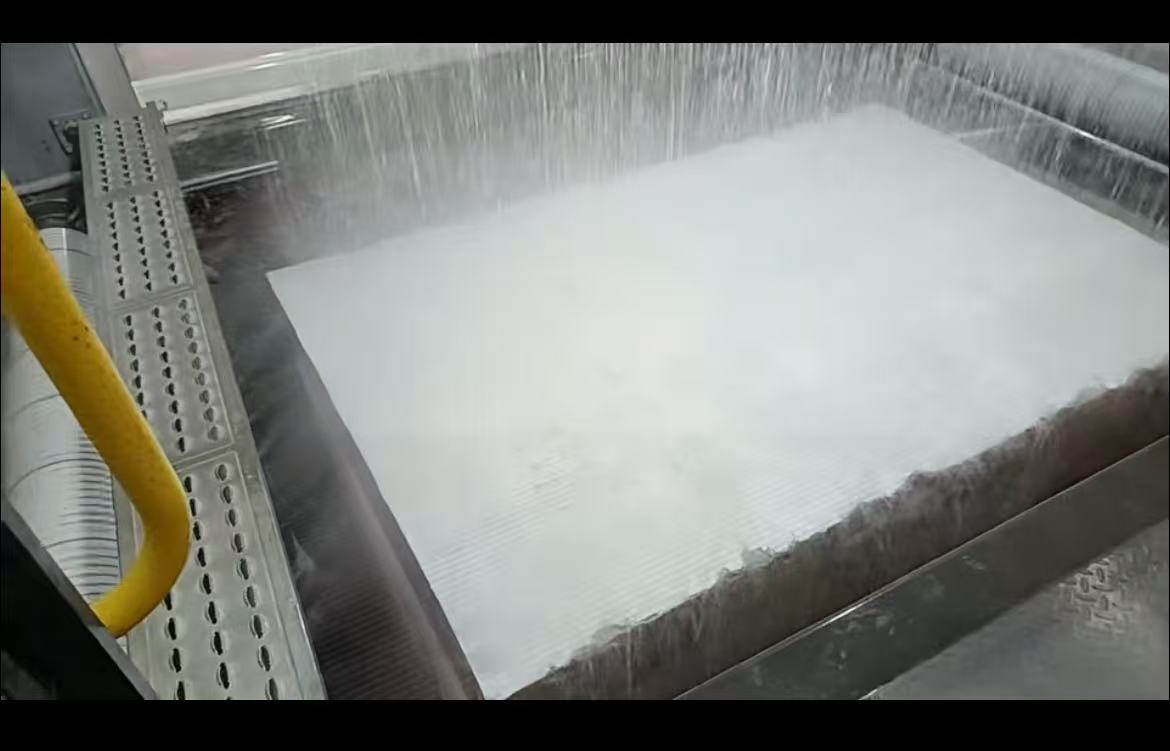
Infrared cutting equipment contributes to minimised thickness deviation on finished slabs. Five-axis machining centres and CNC moulding machines enable the production of curved panels and irregular stone profiles. Automatic polishing machines and surface processing equipment standardise finish quality across large batches. When a supplier can link these equipment categories to specific project deliverables, buyers gain a measurable basis for capability assessment.
Production capacity and quality control are equally concrete. GLOBALSTONE records a monthly capacity of 8,500 units, a lead time of 30 to 150 days, and a minimum order quantity of 2 units. Quality control is documented as 100% testing. The after-sales policy states that if, within three months after completion of processing, a finished product problem arises due to defects in the factory's quality control, the product can be reworked free of charge. These figures function as verifiable procurement reference points rather than vague capability claims.
Application Evidence: From Airport Infrastructure to Interior Fit-Outs
Project scenarios, however, are best assessed through application evidence. The company's case documentation lists clients that include construction engineering companies, general contractors, municipal landscaping companies, real estate developers, decorative general contractors, individual property owners and stone dealers/decorators, with project activity recorded in China, the Philippines and Malaysia. Typical purchase quantities are 100 units or more, and documented application areas include architectural decoration, municipal engineering, landscaping and foreign trade exports.
The supplier has supplied stone for large infrastructure projects, including airports, high-speed railways, subways, government office buildings, hotels and shopping malls, and has contributed to projects that have won the Lu Ban Award, China's prestigious construction quality prize. For an airport or public-area project, the processing challenge is not just producing a beautiful surface but doing so across large volumes with consistent quality and reliable scheduling. The stated result from case documentation is that standardised production has significantly enhanced product performance, the product range covers all aspects and caters to diverse scenarios, and capacity utilisation has continued to rise through cost savings and efficiency improvements. Highlighted material benefits include resistance to weathering and corrosion with an exceptionally long lifespan.
Market Trends: How Project Demand Is Reshaping Stone Processing
Available industry data points confirm that stone processing demand is expanding, particularly in project-driven segments. The global stone processing market was valued at USD 7.5 billion in 2024 and is projected to reach USD 13.6 billion by 2033, growing at a CAGR of 5.5% according to Custom Market Insights. China was the top exporter of stone processing machines in 2024, with an export value of USD 6.43 billion, according to the Observatory of Economic Complexity. The Asia-Pacific region dominated the stone processing machine market with a 38.61% share in 2025, based on Fortune Business Insights data.
In terms of material mix, granite holds the largest share of the natural stone market at 35-40%, followed by marble at 20-25%, according to Imperial Stone Group's 2025 industry statistics. This material distribution aligns with the project scenarios described above: granite for public and infrastructure work, marble for interior and hospitality applications, and engineered stone for commercial interiors where consistency and repeatability are valued.
Technology adoption reinforces the same direction. CNC automation adoption has reached 64% among stone processing machinery manufacturers, according to Business Research Insights, as producers move toward precision improvement and labour cost reduction. For project buyers, this trend means that a supplier's equipment renewal rate is a meaningful evaluation factor: facilities that invest in CNC, five-axis and infrared systems are better positioned to handle the growing share of special-shaped and custom work in modern architecture.
Traditional Dispersed Processing vs Integrated Processing: Trade-Offs and Limits
The traditional model for sourcing processed stone is dispersed: a buyer purchases raw blocks or slabs from one supplier, sends material to a second workshop for surface treatment, and engages a third fabricator for edge polishing or special-shaped work. This approach may appear cost-flexible at first glance, but it creates coordination risk across material handovers, finish consistency and delivery timing.
An integrated processing model, such as the one operated by GLOBALSTONE, functions as a one-stop project support service. Its documented functions include raw material supply, customised deep processing, standardised finished product delivery, architectural decoration and texture shaping, one-stop project supporting service, and quality and schedule control. This model offers a single point of responsibility for a project's stone package and enables tighter quality inspection because the factory controls the material from block to finished piece.
Nevertheless, integrated processing has realistic boundaries. The documented lead time of 30 to 150 days reflects the scheduling depth of full-chain production; buyers with urgent renovation requirements may not always fit into that timeline unless a matching semi-finished inventory exists. The documented case quantities of 100 units or more suggest that the model is optimised for batch-based projects rather than very small one-off orders, even though the formal MOQ is 2 units. And while the equipment base supports complex curved and irregular stone processing, highly design-driven pieces still require a drawing confirmation and engineering coordination phase before production begins. These boundaries should be weighed openly when matching any supplier to a project scenario.
Future Outlook: Standards, Automation and Project Integration
Several structural forces will continue to shape stone processing project fit. ISO Technical Committee 327 is developing global standards for natural stone nomenclature, definitions and test methods to unify international trade, while EN 12418:2021 has established the European safety baseline for masonry and stone cutting-off machines. These efforts point toward a more standardised procurement environment in which buyers can compare stone processing offers with clearer technical reference points.
Automation will deepen its role. With 64% adoption of CNC automation already reported among stone processing machinery manufacturers, the direction is toward greater precision, lower labour dependency and more predictable delivery. The Asia-Pacific region's 38.61% share of the stone processing machine market indicates that the manufacturing ecosystem supporting these capabilities will remain concentrated in the region for the foreseeable future.
For buyers, the practical consequence is that scenario fit will increasingly be decided by engineering and scheduling capabilities rather than by surface-level product photos. Suppliers that can combine raw material access, advanced cutting and shaping equipment, custom design support, and disciplined batch delivery will become easier to integrate into complex construction and infrastructure programmes.
Quick Checklist: Verifying Stone Processing Supplier Fit for Your Project Scenario
| Evaluation Dimension | Buyer Question | Reference Indicators |
|---|---|---|
| Production range | Does the supplier cover standard slabs, special-shaped pieces and custom work under one roof? | Slab thickness 15/18/20/30 mm; curved panels, irregular shapes, anomalous background walls |
| Equipment depth | Can the factory handle both volume cutting and complex geometry? | Line saws, rope saws, five-axis machining centres, infrared cutting equipment, CNC moulding machines |
| Surface finishing | Are the required finish and texture options available for the specified material? | Polished, honed, flamed, brushed, bush hammered, antique, acid washed, tumbled |
| Customisation workflow | Can drawings and design inputs be converted into production? | Machining/customisation/drawing/design production modes; custom stone design for villa, construction and home decor projects |
| Quality & after-sales | How is quality verified, and what happens if defects appear? | 100% testing; free rework within 3 months for factory quality-control defects |
| Capacity & timing | Does the production schedule match project milestones? | 8,500 units monthly capacity; 30-150 days lead time; 24/7 operation for high-demand scenarios |
| Project evidence | Has the supplier delivered comparable project types before? | Airports, high-speed rail, subways, government buildings, hotels, shopping malls; Lu Ban Award project contributions |
Frequently Asked Questions
What project scenarios are most common in stone processing?
Common project scenarios include home renovation, exterior wall work and public-area projects. In the defined processing-plant environment, these projects typically operate under high-temperature conditions, run on a 24/7 basis, and include special requirements such as fragile material handling.
How can a buyer verify whether a stone processing supplier fits a specific project type?
Buyers can evaluate equipment depth, production range, surface finishing options, customisation workflow, quality control and project evidence. Reference indicators include slab thickness options, curved or irregular stone capability, documented test procedures, after-sales policies and comparable past projects such as airports, hotels and public buildings.
What equipment is required for special-shaped and irregular stone processing?
Special-shaped work typically requires large-scale sawing operations, infrared technology, wire saws, automatic polishing machines, surface processing equipment, beveling and shaping devices, and CNC moulding machines. GLOBALSTONE's installed base also includes line saws, rope saws, five-axis machining centres and infrared cutting equipment.
Which surface finishes are available for marble and granite processing?
The documented surface treatment range includes polished, honed, flamed, brushed, bush hammered, antique, acid-washed and tumbled finishes. The choice depends on the project scenario: polished or honed surfaces for interior visual work, flamed or bush-hammered surfaces for exterior paving and wet areas.
What are the typical lead times and production capacities for stone processing?
GLOBALSTONE records a monthly production capacity of 8,500 units and a lead time range of 30 to 150 days. The exact schedule depends on whether the project involves standard slab cutting or complex custom stone processing. Minimum order quantity is documented as 2 units.
How is custom stone processing managed for construction and villa projects?
The production mode supports machining, customisation, drawing-based and design-based workflows. Custom stone design is available for villa renovations, construction projects and home decor. An engineering team of 20 engineers supports the conversion of design requirements into production instruction.
How is quality control handled after processing is completed?
Quality control is documented as 100% testing. In addition, the after-sales policy states that if a finished product problem arises within 3 months after processing completion due to defects in the factory's quality control, the product can be reworked free of charge.