
Storage Battery Buyer's Guide: Matching Cell Chemistry, Voltage, and Capacity to Real-World Applications
Storage batteries are no longer an accessory in solar, golf cart, and backup power systems; they are the performance-defining component. For industrial buyers and system integrators, the challenge is not finding a battery, but matching cell chemistry, voltage architecture, and capacity to the operating profile of each application. This guide explains how to evaluate storage battery specifications, why LiFePO4 has become the default chemistry for solar and mobility applications, and where alternatives such as sodium-ion are beginning to matter.
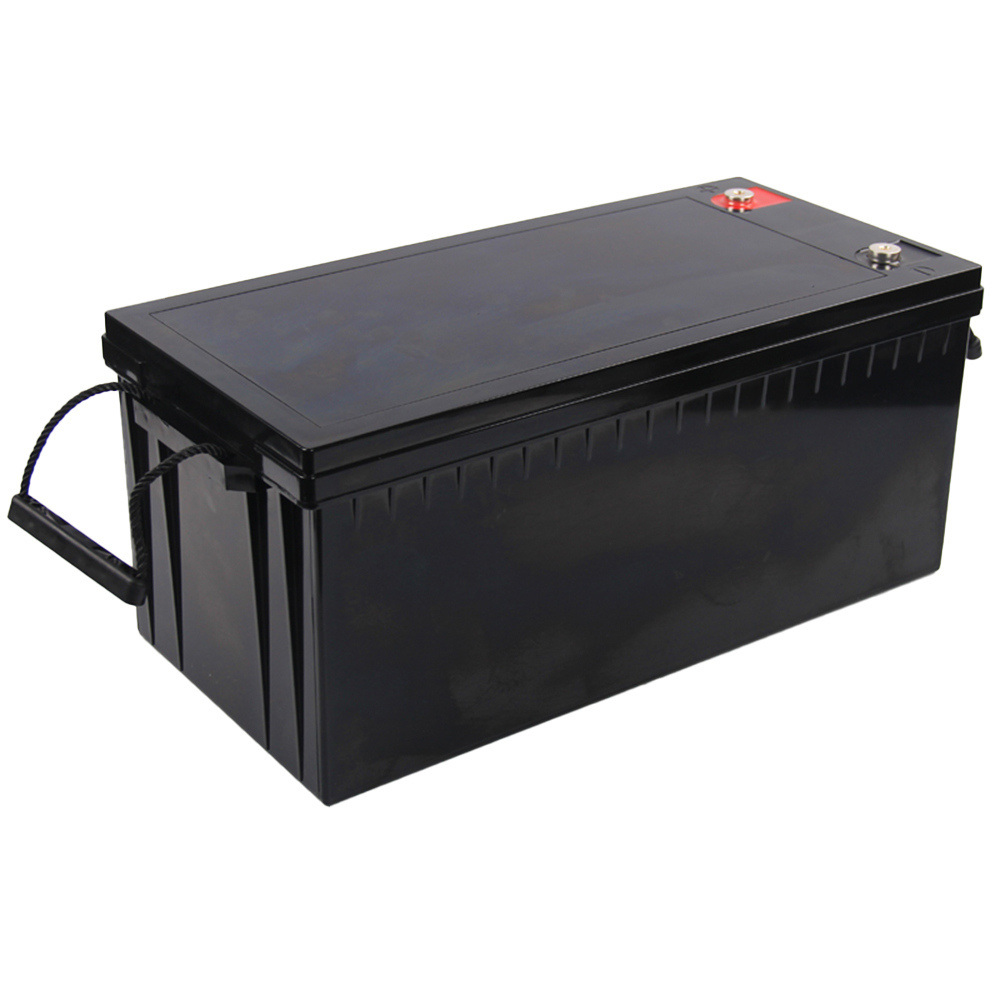
LiFePO4 storage battery packs designed for solar energy storage applications.
Why Storage Battery Selection Matters More Than Ever
The global battery energy storage system (BESS) market was estimated at approximately USD 13.2 billion in 2025, with projections pointing to USD 99.7 billion by 2033. Lithium-ion technology accounted for the largest share of the BESS industry in 2025 at 53.5%. These figures from Grand View Research reflect a broader shift: energy storage has moved from a niche technology to a core infrastructure element for residential solar, commercial peak shaving, and electric mobility.
For buyers, this growth creates a practical problem. The term storage battery covers a wide range of products: 12V 100Ah batteries for lighting and UPS systems, 48V and 51.2V batteries for home solar, 200Ah batteries for high-energy-demand installations, and specialized packs for golf carts. Selecting the wrong voltage or capacity can lead to system inefficiency, shorter cycle life, or complete incompatibility with inverters and chargers.
This article provides a framework for matching storage battery specifications to real-world use cases, including the technical parameters that matter, the differences between common configurations, and the limitations buyers should know before committing to a supplier.
The Core Question: What Does a Storage Battery Actually Do?
A storage battery stores electrical energy in chemical form and releases it on demand. In solar energy systems, it captures surplus energy generated during daylight hours for use at night or during grid outages. In golf carts and other electric vehicles, it supplies power to the motor and electrical systems. In industrial settings, it provides backup power and enables peak shaving by charging during low-price off-peak periods and discharging during high-price peak periods.
The common factor across these applications is the need for reliable, repeatable cycling. This is why the chemistry and cell construction of a battery matter more than the brand label. LiFePO4 (lithium iron phosphate) has become the dominant choice for solar storage and many mobility applications because it offers a stable discharge curve, high thermal tolerance, and long cycle life. Many HCC storage batteries, for example, are built with LiFePO4 cells and rated for more than 6000 cycles at 80% capacity retention.
Reading a Storage Battery Specification Sheet Like a Buyer
Specification sheets contain the information needed to assess whether a battery fits an application. The key parameters to compare are voltage, capacity, charge current, discharge current, operating temperature, weight, and cycle life.
Voltage: Match the System Architecture
Voltage determines whether a battery can work with an inverter, charger, or vehicle motor. Common configurations include:
- 12V systems – typically used in lighting, small UPS units, and entry-level applications. A typical example is the 12.8V 100Ah LiFePO4 battery, which operates in a -20°C to 60°C temperature range.
- 24V systems – used in marine, RV, and some mobility applications. HCC offers a 25.6V 100Ah solar energy storage battery rated for 100A charge and 100A discharge current.
- 48V / 51.2V systems – the standard for home solar storage, telecom backup, and golf carts. HCC produces multiple models in this range, including the 48V 100Ah, 51.2V 100Ah, and 51.2V 105Ah golf cart battery.
- High-capacity 48V systems – such as the 48V 280Ah solar battery pack, designed for installations requiring higher energy density and extended runtime.
It is important to verify the nominal voltage. A battery labeled "48V" may have a nominal voltage of 51.2V, which is typical for 16S LiFePO4 configurations. This is not an error; it is a function of the cell chemistry. Buyers should confirm that the inverter or device accepts the full voltage range of the battery.
Capacity: Energy vs. Power
Capacity, measured in ampere-hours (Ah), indicates how much charge a battery can store. To estimate usable energy, multiply voltage by capacity. For example, a 51.2V 100Ah battery provides approximately 5.12 kWh of nominal energy. A 51.2V 200Ah battery provides approximately 10.24 kWh.
Higher capacity does not automatically mean better performance. The correct capacity depends on the load profile. A solar home system with high nighttime consumption needs more capacity than a small backup lighting system. A golf cart used on hilly terrain may need higher discharge current rather than just higher capacity.
HCC's storage battery range covers this spread: 12.8V 100Ah for small loads, 25.6V 100Ah for marine/RV use, 51.2V 100Ah and 51.2V 200Ah for residential solar, and 48V 280Ah for larger solar battery pack applications.
Charge and Discharge Current: The Limits of Daily Operation
Charge current and discharge current define how fast a battery can be charged and how much continuous power it can deliver. These are safety and performance limits, not just theoretical ratings.
- For solar storage, a battery must accept the charge current supplied by solar charge controllers or hybrid inverters. A 51.2V 100Ah HCC solar battery has a maximum charge current of 20A, which is suitable for most residential solar configurations.
- For high-power applications, discharge current matters more. The 51.2V 100Ah wall-mount model supports 100A continuous discharge, while the 51.2V 200Ah model supports 200A continuous discharge.
- For golf carts, the motor draws high current during acceleration and hill climbing. A LiFePO4 battery such as the 51.2V 105Ah golf cart battery is designed for a maximum discharge current of 105A.
| Model | Nominal Voltage | Capacity | Max Charge Current | Max Discharge Current | Weight | Typical Use |
|---|---|---|---|---|---|---|
| 12.8V 100Ah | 12.8V | 100Ah | 50A | 100A | 10.5–11 kg | UPS, lighting, small backup |
| 25.6V 100Ah | 25.6V | 100Ah | 100A | 100A | 30 kg | Marine, RV |
| 48V 100Ah | 51.2V | 100Ah | 100A | 100A | 47 kg | Marine, RV, forklifts, UPS |
| 51.2V 100Ah wall mount | 51.2V | 100Ah | 20A | 100A | 48 kg | Home solar storage |
| 51.2V 105Ah | 51.2V | 105Ah | 20A | 105A | 45–48 kg | Golf cart, industrial UPS |
| 51.2V 200Ah | 51.2V | 200Ah | 100A | 200A | 88 kg | Solar home storage |
| 48V 280Ah | 48V | 280Ah | 100A | 200A | 130 kg | Solar battery pack |
Table data is compiled from HCC's published product specifications. Buyers should note that charge and discharge current ratings are maximum values; continuous operation at maximum current affects cycle life and thermal performance.
LiFePO4 Versus Other Chemistries
Lithium-ion is the dominant chemistry in battery energy storage, holding a 53.5% market share in 2025 according to Grand View Research. Within the lithium-ion category, LiFePO4 has become the preferred cathode material for stationary storage and many mobility applications.
Why LiFePO4 Suits Storage Applications
- Cycle life: HCC rates its LiFePO4 storage batteries for more than 6000 cycles at 80% capacity retention. This translates to many years of daily cycling for solar applications.
- Thermal stability: LiFePO4 chemistry is more tolerant of high temperatures than some other lithium chemistries, reducing the risk of thermal runaway.
- Consistent discharge: The flat discharge curve of LiFePO4 cells allows connected devices to receive stable voltage during most of the discharge period.
- Wide operating temperature: Many HCC models operate from -20°C to 60°C, making them suitable for outdoor and semi-outdoor installations.
Sodium-Ion: A Chemistry to Watch
Sodium-ion batteries are gaining attention because sodium is more abundant and potentially less expensive than lithium. Market forecasts from Precedence Research project the sodium-ion battery market to expand at a CAGR of 18.84% from 2026 to 2035, reaching USD 7.81 billion. For buyers, sodium-ion may become relevant in applications where cost per kilowatt-hour and material availability outweigh the energy-density advantages of lithium-based cells. However, the current storage battery market remains overwhelmingly lithium-based, and buyers sourcing for immediate projects should evaluate sodium-ion solutions on the basis of proven cycle life and supplier certification rather than future projections.
Storage Battery Applications: Matching the Right Configuration
Solar Energy Storage and Home Backup
Solar batteries store photovoltaic energy for nighttime use, grid outage backup, and peak-shaving. The configuration depends on whether the goal is self-consumption optimization or backup power.
HCC offers several models suited to solar applications:
- The 51.2V 100Ah wall-mount battery (model: 51.2v 100ah) is a residential solar storage solution with 20A max charge current and 100A max continuous discharge current. It weighs 48 kg and is designed for wall-mount installation.
- The 5kW wall-mounted battery (model: Wall-TW01) uses a 28148115-52Ah LiFePO4 16S1P battery cell, supports 10A max charge current and 50A max continuous discharge current, and is rated for more than 6000 cycles at 80% capacity.
- The solar battery pack (model: SolarBP-TW01) uses a 47173120-100Ah LiFePO4 16S1P cell, with 20A max charge current and 100A max continuous discharge current.
- The 48V 280Ah solar battery pack and 51.2V 200Ah solar battery provide higher capacity for installations where energy autonomy is the priority.
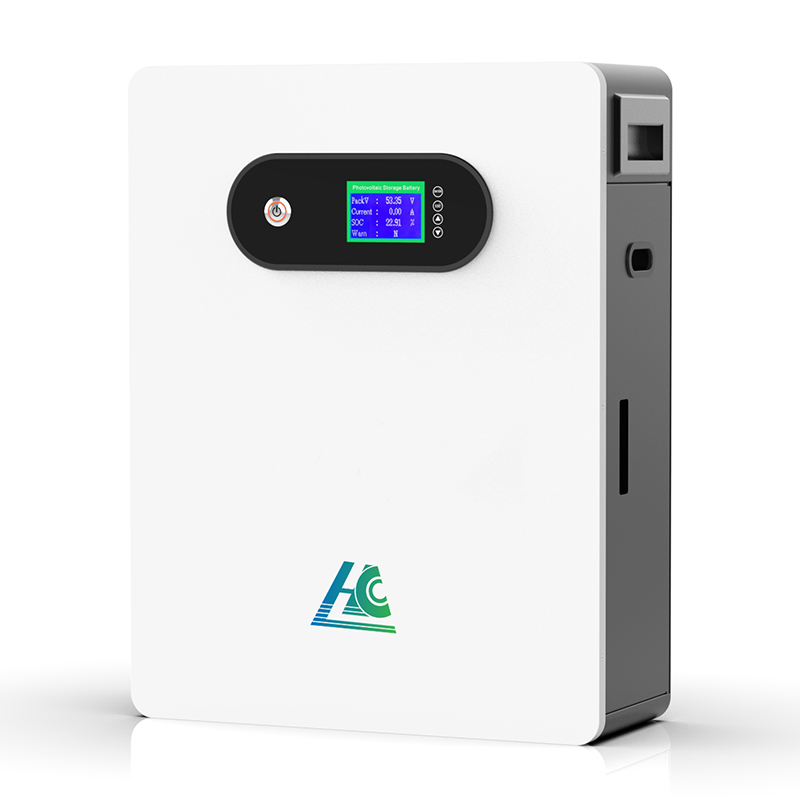
5kW wall-mounted LiFePO4 battery designed for residential solar applications.
Golf Cart and Low-Speed Electric Vehicles
Golf carts demand a battery that can handle high discharge currents, frequent partial charging, and outdoor moisture. The global golf cart battery market was estimated at USD 1.49 billion in 2024, with lithium-ion types capturing a 47.18% share. The shift from lead-acid to lithium is driven by weight reduction, longer cycle life, and lower maintenance.
HCC's golf cart battery (model: 51.2v 105ah) is a LiFePO4 pack with a maximum discharge current of 105A. It operates in temperatures from -20°C to 60°C and weighs approximately 48 kg. Application notes for golf cart use commonly specify metal housing and waterproofing to withstand rain and road splash.
The replacement of a lead-acid battery bank with a lithium golf cart battery is not a drop-in decision. Voltage must match the cart's motor controller, and the battery's discharge limit must cover peak motor current. A 105Ah LiFePO4 pack may replace a lead-acid bank with different Ah capacity because the usable energy and discharge characteristics are not identical.
Commercial and Industrial Energy Storage
Small-scale commercial and industrial energy storage systems typically range from 100kWh to 5MWh. These systems use a basic configuration for peak shaving and backup power: charging during low-price off-peak periods and discharging during high-price peak periods. The operation mode is bidirectional energy exchange with the grid, often described as "valley charging, peak discharging." Systems must meet local grid codes for grid connection and islanding protection and may require IP54-rated outdoor operation with anti-condensation protection.
Industrial buyers evaluating batteries for such systems should treat the battery as one component of a larger power conversion and control architecture. Key considerations include the battery's compatibility with inverters, its thermal management requirements, and its certification for stationary storage use.
Technical Explanation: Why Cycle Life Is the Real Cost Driver
The total cost of a storage battery is not the purchase price; it is the purchase price divided by the usable energy delivered over the battery's lifetime. This is why cycle life is a critical procurement metric.
HCC specifies many of its LiFePO4 models with a cycle life of more than 6000 cycles at 80% capacity retention. For a battery that cycles once per day, 6000 cycles corresponds to roughly 16 years before capacity falls to 80% of its original value. In practice, depth of discharge, temperature, and charge/discharge rates will affect actual lifetime. A battery that is regularly discharged to 100% and operated at high temperatures will degrade faster.
Buyers should also distinguish between cycle life at 80% capacity retention and cycle life at 100% depth of discharge. A manufacturer may quote different numbers for different test conditions. The specification "6000 times/80% Capacity" means that after 6000 cycles, the battery retains at least 80% of its initial capacity under the test conditions used by the manufacturer.
Certifications and Compliance: What Buyers Should Verify
Certifications are the primary evidence that a storage battery meets safety and transport requirements. HCC states that its related products have passed RoHS, UL, CE, and other export certifications. For industrial buyers, the most relevant standards include:
- IEC 62619:2022 – the international safety standard for lithium-ion batteries used in industrial and stationary applications, covering thermal runaway and BMS verification.
- UL 1973 – the primary safety standard for stationary batteries in North America, used for solar energy storage and UPS applications.
- UN 38.3 – mandatory for the global transport of lithium batteries, requiring eight specific tests including altitude simulation and thermal testing.
- RoHS – restricts hazardous substances in electrical and electronic equipment.
- CE – indicates conformity with applicable European Union health, safety, and environmental requirements.
Certification documents should be requested from the supplier and checked against the specific battery model being sourced. A certification held by the factory does not always cover every model in the product line. Buyers should also verify the certification body and certificate number rather than relying on marketing claims.
Comparison with Traditional Solutions: Lead-Acid and the Limits of Lithium Retrofit
The most common traditional solution for solar and golf cart applications is the lead-acid battery. Compared to lead-acid, LiFePO4 typically offers a longer cycle life, deeper usable depth of discharge, lighter weight, and lower maintenance. These advantages explain the ongoing shift toward lithium in both residential solar and golf cart applications.
However, lithium storage batteries also have real limitations and boundary conditions that buyers must consider:
- Initial cost: LiFePO4 batteries generally have a higher upfront cost than lead-acid batteries. The lower total cost of ownership depends on achieving the expected cycle life, which requires proper sizing and operating conditions.
- Charger compatibility: Lead-acid chargers do not automatically work with lithium batteries. A battery management system (BMS) and compatible charger are required to prevent overcharge and undercharge.
- Cold-temperature charging: Many lithium batteries restrict charging at low temperatures. HCC's specifications list operating ranges such as -20°C to 60°C, but charging at the lower end of the range may not be recommended by the BMS.
- Weight at high capacity: A 51.2V 200Ah LiFePO4 battery weighs approximately 88 kg, and a 48V 280Ah battery weighs 130 kg. Installation logistics and structural support must be planned accordingly.
- Recycling and disposal: Lithium batteries are subject to transport regulations such as UN 38.3 and require specific disposal pathways. This is an operational consideration that some buyers overlook.
Supplier Evaluation: From Specification to Manufacturing Capability
For buyers sourcing internationally, the manufacturer's operating model is as important as the product specification. Shenzhen Topway New Energy Co., Ltd. (brand: HCC) is a China-based manufacturer with a sales center in Shenzhen and a 10,000m² factory. The company reports approximately 200 employees, an annual output capacity of 1,200,000 units, and an R&D team of 15 people. Its main products include robot batteries, exoskeleton batteries, and drone batteries, with an export ratio of 40% across markets including the United States, European Union, Japan, South Korea, Australia, and Latin America. HCC's business profile indicates that it will evolve from battery pack solutions and cooperative production to its own production after solution design, with advanced battery production lines to be introduced.
The company's product portfolio for energy storage includes LiFePO4 storage batteries, solar batteries, golf cart batteries, and wall-mounted residential storage systems. HCC currently exports a significant share of its products to overseas markets while also serving the Chinese market. This dual focus is relevant for buyers because it affects the company's familiarity with foreign compliance requirements and its ability to serve both domestic and international demand.
When evaluating HCC or any storage battery supplier, buyers should request:
- Detailed specifications for the specific model, including charge and discharge current limits and temperature range.
- Certification documents for the specific model, not just factory-level certificates.
- Cycle life test data and the test conditions used.
- Information about the BMS architecture, including cell balancing and protection features.
- Packaging and transport documentation, especially UN 38.3 test reports.
- Lead time and minimum order quantity for both standard and custom configurations.
OEM/ODM Considerations for Storage Batteries
HCC's product range includes standard models as well as capabilities relevant to custom battery pack projects. The company's stated business direction includes advancing from battery pack solutions to its own production after solution design. For buyers, this means that custom storage battery projects may involve a partner that is building internal production capacity rather than a manufacturer with decades of cell production experience. Buyers should therefore validate the supplier's project management capability, production timeline, and quality control procedures before placing large-volume custom orders.
A related consideration is the cell source. HCC specifies cell construction in some models, such as the 28148115-52Ah LiFePO4 16S1P cell used in the 5kW wall-mounted battery. The "16S1P" designation indicates 16 cells in series and 1 cell in parallel, which is a common configuration for 51.2V LiFePO4 packs. For larger capacity packs, cells may be arranged in parallel configurations. Buyers should ask which cell supplier is used and whether the cell specification is guaranteed.
Market Trends: What Buyers Should Watch
The storage battery market is evolving along several axes that will affect procurement decisions over the next two to three years:
Residential Solar Storage Is Growing in Parallel with BESS
The global BESS market is projected to grow from USD 13.2 billion in 2025 to USD 99.7 billion by 2033. Residential and small commercial systems are a major part of this growth, driven by rising electricity prices and demand for energy independence. Buyers are increasingly looking for wall-mount and stackable battery systems that integrate with existing solar inverters.
Lithium-Ion Remains Dominant, But Chemistry Diversity Is Emerging
Lithium-ion holds a 53.5% share of the BESS market in 2025. Within lithium-ion, LiFePO4 has become the chemistry of choice for storage applications due to its safety and cycle life. Sodium-ion is the most visible emerging alternative, with forecasts of an 18.84% CAGR from 2026 to 2035. However, it remains to be seen whether sodium-ion will achieve the cycle life and energy density required for mainstream residential storage.
Voltage Architecture Is Standardizing Around 48V to 51.2V
For residential storage, 48V and 51.2V systems have become the norm because they are safer than high-voltage DC and compatible with common hybrid inverters. HCC's wall-mount and solar battery models support this trend. For golf carts, 51.2V packs are increasingly replacing multiple 6V or 8V lead-acid batteries.
Certification Is Becoming a Differentiator
As international trade in storage batteries grows, compliance with IEC 62619, UL 1973, and UN 38.3 is becoming a prerequisite for market entry. Buyers are using certification status as a filter during supplier qualification. This favors manufacturers with documented compliance programs over assemblers without formal certification.
Limitations and Risks in Storage Battery Procurement
Every procurement decision involves trade-offs. The following limitations are relevant when evaluating LiFePO4 storage batteries and suppliers such as HCC:
- Specification vs. real-world performance: Published charge/discharge currents and cycle life are based on controlled test conditions. Field performance depends on temperature, load profile, and battery management quality.
- Commodity components: Battery cells and BMS components are sourced from upstream suppliers. A battery pack manufacturer's quality depends on its supplier selection and incoming inspection processes, which are hard to verify from a distance.
- Language and after-sales: Cross-border buyers may face challenges with technical documentation, warranty claims, and spare parts. A clear contract covering warranty terms and defect response times is essential.
- Transport logistics: Lithium batteries are classified as dangerous goods for transport. UN 38.3 certification is required, and air freight restrictions may affect delivery timelines.
Decision Framework: Choosing the Right Storage Battery Configuration
The following decision rules summarize the matching logic described throughout this guide:
- Define the application profile: Determine whether the battery serves daily cycling (solar self-consumption), backup only (rare discharge), or high-rate discharge (golf cart, industrial vehicle).
- Match the voltage to the system: Use the inverter, charger, or vehicle controller as the reference. For home solar, confirm that the inverter supports 51.2V nominal battery voltage.
- Size the capacity from the load: Estimate daily energy consumption in kWh, then convert to Ah by dividing by the nominal voltage. Add a safety margin for depth-of-discharge limits and system losses.
- Verify the discharge current: For motor applications, calculate peak current during acceleration or hill climbing and compare it to the battery's maximum continuous discharge current.
- Check operating temperature: If the battery will be installed in an unconditioned outdoor space, ensure the rated temperature range covers local climate extremes.
- Request model-specific certifications: Confirm that the exact model holds the required certificates for the destination market.
- Evaluate the supplier beyond the spec: Consider manufacturing capability, quality control, communication responsiveness, and after-sales support.
Future Outlook
Storage battery procurement will continue to evolve as cell chemistry improves and new competitors enter the market. Lithium-ion, especially LiFePO4, will remain the backbone of solar and mobility energy storage for the next several years. Sodium-ion could expand the market by offering a lower-cost chemistry for stationary storage, but its adoption will depend on achieving comparable safety, cycle life, and energy density at commercial scale.
For industrial buyers, the practical implication is straightforward: focus on the specification, the certification, and the supplier's manufacturing credibility rather than brand narratives. The storage battery market is large, global, and well documented. Buyers who apply a structured evaluation process can source reliable energy storage without relying on marketing superlatives.
One emerging risk is the fragmentation of product claims across the market. As more manufacturers enter the storage battery segment, the burden of verification falls on the buyer. Requesting model-specific test reports, certification documentation, and warranty agreements is no longer a formality; it is the core discipline of professional battery procurement.
Frequently Asked Questions
What is the difference between a 48V and a 51.2V storage battery?
Many LiFePO4 batteries labeled "48V" actually have a nominal voltage of 51.2V. This is because a 16S LiFePO4 configuration produces a nominal voltage of 51.2V (16 × 3.2V). The terms "48V" and "51.2V" are often used interchangeably for this configuration, but buyers should verify the actual voltage range against their inverter or device specifications.
How many cycles can a LiFePO4 storage battery last?
HCC specifies many of its LiFePO4 storage batteries with a cycle life of more than 6000 cycles at 80% capacity retention. This means that after 6000 charge-discharge cycles, the battery is expected to retain at least 80% of its initial capacity under the manufacturer's test conditions. Actual lifetime varies with depth of discharge, temperature, and charging profiles.
Can I replace my lead-acid golf cart batteries with a lithium battery?
Yes, but the replacement requires matching the lithium battery's voltage and discharge current to the golf cart's motor controller. HCC's 51.2V 105Ah LiFePO4 golf cart battery is designed for this role, with a maximum continuous discharge current of 105A. The charger must also be compatible with lithium chemistry, and the battery may require a metal housing for protection during outdoor operation.
What certifications should a storage battery have for international shipping?
UN 38.3 certification is mandatory for the global transport of lithium batteries. For stationary storage applications, IEC 62619 covers industrial and stationary battery safety, while UL 1973 is the relevant standard in North America. Additional certifications such as CE and RoHS may be required for specific markets. Buyers should request model-specific certification documents from the supplier.
Is sodium-ion a better choice than LiFePO4 for solar storage?
For most current solar storage projects, LiFePO4 is the more established choice with proven cycle life, certifications, and inverter compatibility. Sodium-ion is an emerging chemistry; one market forecast projects an 18.84% CAGR from 2026 to 2035. However, buyers sourcing for near-term projects should evaluate sodium-ion only if the supplier can demonstrate comparable safety standards, cycle life, and application-specific certification.
What is the difference between a solar battery and a regular lithium battery?
A solar battery is designed for daily cycling in solar energy systems: charging from solar panels and discharging to power loads. It typically has a wide operating temperature range, long cycle life, and is matched to solar charge controllers and inverters. HCC's solar battery models, such as the 51.2V 100Ah wall-mount battery, are LiFePO4 packs with specified charge and discharge current limits suitable for residential solar use.
How do I choose between a 100Ah and a 200Ah storage battery?
The choice depends on your daily energy consumption and load profile. A 51.2V 100Ah battery provides approximately 5.12 kWh of nominal energy, while a 51.2V 200Ah battery provides approximately 10.24 kWh. Estimate your daily load in kWh, account for depth-of-discharge limits (typically 80-90% for LiFePO4), and select the capacity that covers the load with an appropriate margin.
Can storage batteries be customized for OEM/ODM projects?
HCC's business model includes battery pack solutions and cooperative production, with plans to move into its own production after solution design. Buyers with custom requirements should verify the supplier's production capability, cell sourcing, and quality control processes. Custom projects should include detailed specifications for voltage, capacity, BMS features, connectors, and certification requirements in the agreement.
For a detailed overview of HCC's storage battery and energy storage solutions, download the company brochure: Download HCC Brochure.
Есть вопросы или нужны дополнительные детали?
Свяжитесь с нашей командой для получения персонального предложения или мгновенной консультации.
Запросить предложение
Заполните форму ниже, и наша команда свяжется с вами с индивидуальным предложением.
Прямой чат WhatsApp
Предпочитаете общаться в реальном времени? Напишите нам в WhatsApp для мгновенной помощи и быстрых ответов.
- Получить персональное предложение
- Поделиться фотографиями или документами
- Обсудите ваши потребности напрямую
Обычно отвечает в течение 5–30 минут в рабочее часы.