
Storage Battery Comparison: LiFePO4 vs Sodium-Ion vs Traditional
Independent industry reference | Updated 2026-08-16
Storage battery procurement is no longer just a component order. Buyers are evaluating solar battery packs, golf cart batteries, and home backup systems against multiple chemistries: lithium iron phosphate (LiFePO4), sodium-ion, and conventional lead-acid. The decision involves measurable parameters such as cycle life, energy density, charge-discharge efficiency, weight, maintenance, compliance certificates, and long-term cost. This article uses HCC (Shenzhen Topway New Energy Co., Ltd.) as a supplier reference to compare storage battery options and give industrial buyers a practical framework for decision-making.
Why Storage Battery Procurement Is a Chemistry-Level Decision
The market now offers a range of energy storage battery system designs aimed at different economic profiles. For a solar battery backup, buyers may choose a 48V lithium battery pack or a 200Ah LiFePO4 battery to match inverter and load requirements. For golf cart fleets, 36V and 48V battery banks are common, and the shift from lead-acid to lithium has changed the total cost calculation. The right choice depends on daily cycling depth, temperature, maintenance capability, and the cost of downtime. Because these factors vary by site, comparing only the initial battery price is misleading.
Today, the most frequently compared storage battery categories are LiFePO4, sodium-ion, and traditional lead-acid. Buyers in the 2026 decision window are asking not only which battery is cheaper at the point of purchase, but also which system delivers lower lifetime cost, safer operation, and stronger supply-chain evidence.
HCC at a Glance: Manufacturer Reference for Storage Battery Buyers
HCC-branded lithium and storage batteries are supplied by Shenzhen Topway New Energy Co., Ltd., a manufacturer established in 2022 with a sales center in Shenzhen and independent R&D capability. The company operates a 10,000-square-meter facility with around 200 employees and an export ratio of about 40%. Its main business covers energy storage batteries and lithium-ion batteries, with product coverage visible in solar, golf cart, home, and industrial backup applications. HCC has stated that it will move from battery pack solutions and cooperative production toward in-house production, including advanced battery production lines, to serve larger-volume and more complex orders.
For procurement teams, the relevant point is not simply that HCC is a brand name. The company has publicly disclosed factory footprint, headcount, export markets, and certification evidence, which can be verified before an order is placed. HCC-related products have passed RoHS, UL, CE, and other export certifications, according to the company. This type of documentation is a baseline requirement when comparing storage battery suppliers in 2026.
LiFePO4 vs Sodium-Ion: A Data-Based Comparison
One of the most important technical comparisons for current storage battery procurement is LiFePO4 versus sodium-ion. HCC’s comparison data shows that LiFePO4 offers a 50% higher energy density and 50% longer cycle life than sodium-ion for the same application envelope. Charge-discharge efficiency is reported as 4.3% higher, and total energy in the same volume is 33.3% higher. For buyers, these differences translate directly into range, enclosure space, system efficiency, and usable capacity.
In a supplier reference scenario, a 100Ah LiFePO4 module can continuously power a 5kW load for one hour and provides about 30% more endurance than a sodium-ion battery of the same rating. The LiFePO4 module volume is about 45L and its weight about 50kg, roughly 25% smaller and 23% lighter than a sodium-ion battery with the same energy level. That weight and volume difference matters for wall-mounted home storage, golf cart installations, and mobile energy storage systems.
On operational cost, the cycle-life advantage remains central. HCC’s comparison indicates a LiFePO4 battery can reach approximately 3,000 cycles, compared with 2,000 cycles for sodium-ion. Over a ten-year replacement horizon, replacement cost is reduced by about 30%. Maintenance frequency is low: one or two inspections per year for cleaning and voltage checks. The modular structure is described as shock-resistant and vibration-proof, which is suitable for outdoor installation. Maintenance cost is reported to be 20% lower than sodium-ion, and no special consumables are needed.
| Parameter | LiFePO4 (HCC comparison data) | Sodium-Ion |
|---|---|---|
| Energy density | Approx. 50% higher | Baseline |
| Cycle life | Approx. 3,000 cycles | Approx. 2,000 cycles |
| Charge-discharge efficiency | Approx. 4.3% higher | Baseline |
| Total energy in same volume | Approx. 33.3% higher | Baseline |
| Typical module volume | Approx. 45L / 50kg | Approx. 60L / 65kg |
| 10-year replacement cost | Approx. 30% lower | Baseline |
| Maintenance cost | Approx. 20% lower | Baseline |
Voltage and Capacity Selection for Solar, Golf Cart, and Home Backup
Application-specific configurations continue to dominate storage battery demand. For residential solar battery backup, a 12V 100Ah LiFePO4 battery is used in small systems, while larger installations often choose 24V or 48V lithium-ion battery banks. On the commercial side, a wall-mounted 48V battery or a 200Ah solar battery pack can be paired with inverters and racking systems to create an energy storage battery system with predictable output.
In golf cart operations, 36V and 48V lithium batteries are common replacement classes, while low-speed vehicles and utility carts increasingly use 24V lithium-ion configurations. The voltage and capacity choice should be driven by inverter compatibility, available space, daily energy consumption, and charge strategy. Buyers should also verify whether the battery management system supports the intended charge and discharge profile, especially when the battery will be used for solar energy storage with irregular charging windows.
Safety and Protection Features Buyers Should Verify
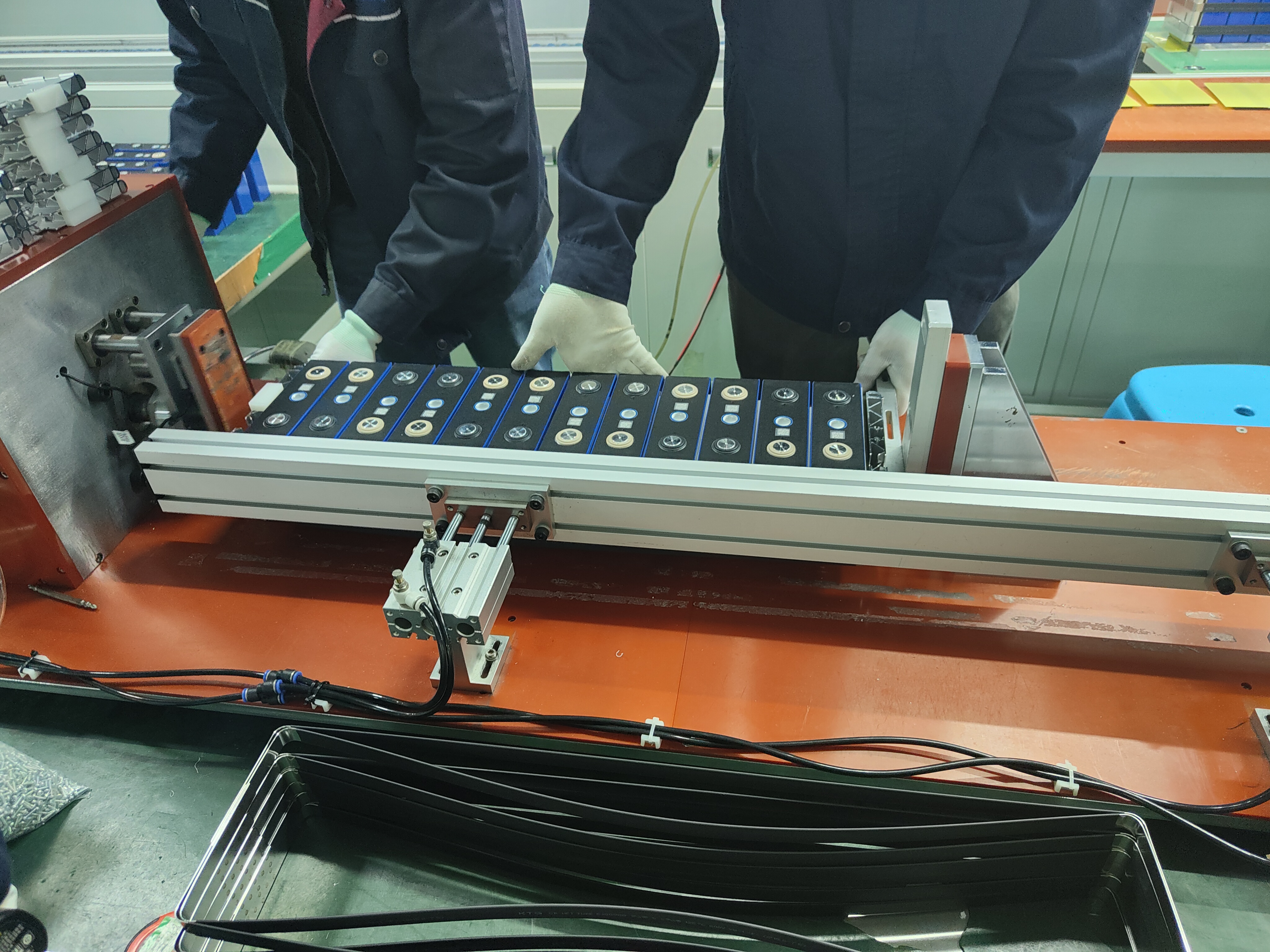
Procurement should extend beyond chemistry and voltage to safety design. HCC’s control approach covers over-discharge, over-temperature, and current limiting, supported by active cell balancing. Hardware measures include NTC temperature sensors, flame-retardant electrolyte or separator materials, and heat-insulating compartments. In manufacturing, HCC applies cell capacity grading and matching, plus high-temperature aging tests at pack level.
Buyers can use this as a checklist when comparing suppliers: what protective circuits are used, how cells are matched, and whether thermal propagation is addressed in the pack structure. A supplier that can identify specific design and test procedures is generally easier to audit than one that only mentions a BMS without technical detail.
Market Data Context: Where Storage Battery Demand Is Heading
The broader market context supports a shift toward lithium-based solutions. The global battery energy storage system (BESS) market was estimated at approximately USD 13.2 billion in 2025 and is projected to reach USD 99.7 billion by 2033. Lithium-ion technology accounted for 53.5% of BESS capacity in 2025, according to Grand View Research.
In the golf cart battery segment, the global market was estimated at USD 1.49 billion in 2024, with lithium-ion capturing 47.18% of the market, according to Mordor Intelligence and Strategic Market Research. The integrator market remains concentrated among large players: Tesla held 15% and Sungrow held 14% of global BESS integrator share in 2024, according to Wood Mackenzie. For buyers, these figures indicate a maturing market in which compliance, traceability, and service consistency are becoming key supplier differentiators.
Sodium-ion is also gaining visibility. The sodium-ion battery market is expected to expand at an 18.84% CAGR from 2026 to 2035, reaching USD 7.81 billion, according to Precedence Research. However, that growth outlook does not change the immediate procurement picture for most export-oriented buyers, who still need verified performance, transportation compliance, and field-proven service networks.
Limitations and Realistic Boundaries of LiFePO4 Solutions
No single chemistry is a universal answer. LiFePO4 has a higher upfront material cost than traditional lead-acid batteries, which can discourage buyers with very low cycling frequency or severe budget constraints. Sodium-ion batteries may become increasingly price-competitive for low-temperature and long-duration stationary applications, although current technology maturity and supply-chain scale are not yet equivalent to LiFePO4 in most export markets.
HCC’s LiFePO4 solutions are best evaluated for projects that prioritize energy density, cycle life, maintenance reduction, and compliance evidence. Buyers with fundamentally different operating profiles should treat the choice as application-specific, not as a one-brand solution. A sensible comparison should include a full cost model covering battery replacement, downtime, installation labor, shipping weight, and operational risk.
Procurement Decision Framework for Storage Battery Suppliers
| Decision Stage | Key Questions | Evidence to Request |
|---|---|---|
| Application profile | What load, duty cycle, and space are available? Indoor or outdoor installation? | Site drawings, load data, operating temperature range |
| System configuration | Which voltage fits the inverter or charger? What capacity is needed? | Inverter specs, daily energy consumption, charge profile |
| Chemistry comparison | Is energy density or initial cost more important? | Cycle life data, energy density, charge-discharge efficiency, weight and volume |
| Safety design | How are over-discharge and thermal risks handled? | BMS functions, cell balancing, NTC sensors, flame-retardant materials, aging test records |
| Certifications | Is the battery allowed into the target market? | IEC 62619, UL 1973, UN 38.3, RoHS, CE |
| Supplier capability | Can the supplier maintain quality and delivery? | Factory area, headcount, export history, production line plan, after-sales service |
Future Outlook
The storage battery market will continue to fragment by application and by local regulatory requirement. LiFePO4 will likely remain the dominant chemistry for buyers that need stable supply and verified performance. Sodium-ion will strengthen in niches where cost per cycle and raw material availability matter more than weight and volume.
At the same time, manufacturers are building more vertical capability. HCC’s transition from cooperative production to in-house production with advanced battery lines suggests that mid-sized suppliers are investing in consistency and after-sales support. For industrial buyers, the practical implication is to look for evidence of long-term capacity, test procedures, and traceable certification rather than relying on chemistry names alone.
FAQ
What are the main differences between LiFePO4 and sodium-ion batteries?
LiFePO4 typically offers higher energy density, longer cycle life, and better charge-discharge efficiency than sodium-ion in equivalent packaging. HCC’s comparison data shows a 50% higher energy density, 50% longer cycle life, and 4.3% higher charge-discharge efficiency for LiFePO4. The LiFePO4 module is also smaller and lighter at the same energy level, while sodium-ion is expected to gain cost competitiveness in future low-temperature and stationary applications.
Is LiFePO4 more cost-effective than sodium-ion over the full life cycle?
According to HCC’s comparison data, LiFePO4 can reduce ten-year replacement cost by approximately 30% because of a longer cycle life of around 3,000 cycles versus 2,000 cycles for sodium-ion. Maintenance cost is reported as 20% lower, and no special consumables are required. Cost-effectiveness should still be calculated for each specific load profile and operating environment.
Which certifications should buyers verify when comparing storage battery suppliers?
IEC 62619:2022 is the current international safety standard for lithium-ion batteries in industrial and stationary applications, covering thermal runaway and BMS verification. UL 1973 is the primary safety standard in North America for stationary batteries such as solar energy storage and UPS. UN 38.3 is mandatory for global transport of lithium batteries and requires eight specific tests, including altitude simulation and thermal testing. HCC states that its related products have passed RoHS, UL, CE, and other export certifications.
How does HCC manage over-discharge and thermal risk in battery design?
HCC applies active cell balancing, over-temperature protection, and current limiting. Hardware measures include NTC temperature sensors, flame-retardant electrolyte or separator, and heat-insulating compartments. At the manufacturing level, HCC performs cell capacity grading and matching, followed by pack-stage high-temperature aging tests, which are relevant evidence for buyers evaluating safety consistency.
Are lithium golf cart batteries a cost-effective choice for fleet operators?
The golf cart battery market was estimated at USD 1.49 billion in 2024, with lithium-ion capturing 47.18% of that market. Lithium batteries generally have a higher first purchase cost than traditional lead-acid batteries, but they offer longer cycle life, lighter weight, and lower maintenance. Fleet operators should compare replacement frequency, downtime costs, and installation constraints before selecting a chemistry.
Company Documentation
For procurement teams seeking documented background, the HCC corporate brochure is publicly available for download: Download HCC / Shenzhen Topway New Energy Corporate Brochure (PDF).