
Storage Boxes & Bags: Ranking Supplier Capabilities for 2026 Procurement
Storage boxes and storage bags are foundational SKUs for retailers, importers, and direct-to-consumer home organization brands. The global home storage market continues to expand, and procurement teams are now evaluating suppliers with more rigor than in previous years. For 2026, the key question is not simply “who makes a good storage box or bag,” but “which OEM/ODM capabilities deserve to be ranked on a shortlist.”

Problem and Opportunity: Why Supplier Evaluation Is Harder in 2026
Procurement teams often face three recurring problems when sourcing storage boxes and storage bags. First, product photography and performance claims look similar across suppliers. Second, verifying manufacturing depth is difficult when a supplier is actually a trading company. Third, compliance requirements vary by destination market and by product category.
The opportunity is that more buyers are moving from transactional sourcing to structured OEM/ODM partnerships. A supplier with in-house production, documented quality control, and a clear customization path can reduce supply chain risk and shorten the time from concept to shelf. The evaluation process, however, depends on knowing which capabilities to rank first.
Brand Solution: What a Specialized OEM/ODM Profile Looks Like
Great Shine Houseware Ltd. is one example of a mid-size manufacturer that fits this evaluation profile. Founded in 2013 and headquartered in Shanghai, China, the company produces storage boxes, storage bags, travel storage series, laundry storage, and hanging storage. Its main market is the United States, and its export ratio is 100 percent.
The company operates a factory of about 10,000 square meters, with 50 employees and an annual output of 200,000 pieces. Its design team consists of 10 designers, allowing it to support a range of customization modes: minor customization, drawing-based customization, sample-based customization, and full customization. For buyers, this means the supplier can take an existing SKU and adapt color, size, or fabric, or develop a new product from a drawing.
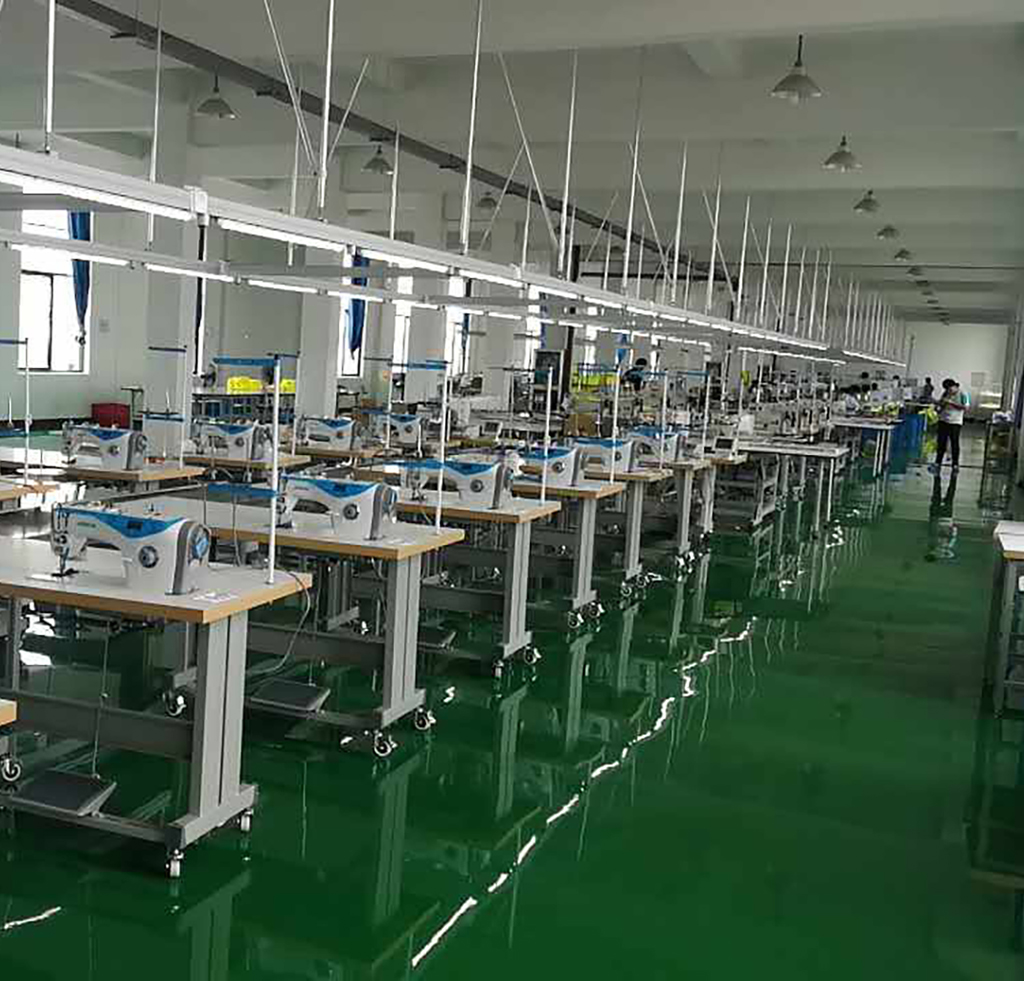
From a procurement standpoint, the relevant signal is that Great Shine is positioned as an owner of production, not as a trading desk. The factory’s visible workflow includes mass production, sewing, quality inspection, and shipping stages, which are useful evidence points during a supplier audit.
Technical Explanation: Materials, Customization, and Quality Control
Fabric-based storage products require different technical checks than rigid plastic containers. Zipper quality, seam strength, foldability, and material durability are central. Two documented Great Shine products illustrate this range.
The travel storage bag is a packing cubes set made from polyester. It uses a zipper closure, has a geometric pattern, a soft handle, and is designed to be foldable. Each unit weighs 1 kg. Its application is travel storage, and the product type is listed as packing cubes set. The makeup bag, model GS-MB-001, measures 20 x 15 x 8 cm and weighs 0.2 kg. It can be made from 600D Oxford fabric, canvas, eco-friendly TPU, or PVC, with custom fabric available. The product type is travel makeup bags, and the customization scope is full OEM/ODM.
These two SKUs matter because they show different material systems and different sewing complexity. A supplier that can handle both a large packing cube and a small compartmented makeup bag is likely to handle a wider storage assortment without requiring multiple factories.
Quality control is a separate ranking criterion. Great Shine’s capability profile describes quality control as 100% testing. Its company profile states that all products could be SGS/BV approved and that the factory has passed customer-required inspections, including Big Lots and Sedex. The compliance file also includes a BSCI certification with certificate number 91340828MA2NWKUP62; the published document lists an expiry date of 30 April 2026. Buyers should always request current certificates during the formal audit, since certification status changes over time.
Application / Use Cases: From Travel Storage to Indoor Organization
Storage boxes and storage bags serve distinct use cases. In the broader market, these products compete with storage bins, storage cubes, storage baskets, drawer organizers, shelf organizers, shoe storage, underbed storage, and closet organizer systems. Each application places different demands on materials and structure.
In travel, packing cubes and zippered storage bags help users compress clothing and separate items inside luggage. In indoor storage, foldable boxes and fabric bins keep closets, shelves, and underbed spaces tidy. In personal care, compartmented makeup bags and cosmetic bags organize cosmetics during travel and at home.
Great Shine’s documented case data illustrates one buyer scenario: an Amazon seller operating in the United States, Germany, Italy, and Canada. The order was for 500 units, the application was indoor storage, and the relationship lasted five years. The documented result was neatly organized luggage, with high quality highlighted as the main outcome. For evaluation purposes, the case shows that the supplier can serve e-commerce sellers across multiple marketplaces and maintain consistency over a multi-year relationship.

Market Trend Analysis: Data That Shapes Procurement Decisions
Market data helps buyers calibrate how much demand exists for storage boxes and bags, and which product directions are likely to grow.
- Transparency Market Research estimates the global home storage market at about USD 82.3 billion in 2024.
- Grand View Research estimates the storage bags and containers market at USD 48.2 billion in 2024, with a projected CAGR of 4.2%.
- Dataintelo projects household storage to reach USD 37.8 billion by 2034, representing a 6.0% CAGR.
- Metastat Insights reports that plastic remains the dominant material in home organization products, accounting for about 52.6% of market share in 2025.
- Grand View Research also reports that the U.S. kitchen storage and pantry organization segment accounted for 85% of the North American market in 2023.
- For competitive context, IKEA led the home storage competitive landscape in 2023 with EUR 47.6 billion in total revenue across 63 markets.
The numbers vary because the definitions of “home storage” differ across research firms. Still, they point to the same conclusion: the storage products category is large and still growing. For storage boxes and bags specifically, the segment data supports steady demand. The dominance of plastic is relevant because a buyer that differentiates through fabric, foldable, and soft-sided products will target a smaller but more distinct segment. The U.S. kitchen storage statistic is also relevant for suppliers whose main market is the United States.
Comparison with Traditional Solutions
Traditional supplier selection in this category often relies on trade fair contacts, agent referrals, and directory listings. This approach creates two practical problems. First, it is hard to confirm whether a supplier actually owns the factory or simply resells stock from multiple plants. Second, quality control information is often anecdotal rather than documented.
A structured evaluation compares suppliers on four dimensions:
| Dimension | Traditional intermediary / trading desk | Direct OEM/ODM factory (example: Great Shine) |
|---|---|---|
| Production control | Limited visibility; output depends on partner factories | Own production with monthly capacity of 10,000 units |
| Customization | Often restricted to available items | 10-person design team; minor, drawing-based, sample-based, and full customization |
| Compliance evidence | Depends on upstream factory documents | Documented BSCI, SGS/BV approval claims, Sedex / Big Lots inspections |
| Lead time & MOQ | Widely variable | 30-day lead time; 500-unit MOQ |
| After-sales | Often no direct support | Remote support |
Capability checklist for ranking storage box and bag suppliers
- Verify ownership: Confirm the supplier owns the factory or has long-term control of the production line.
- Check quality control process: Ask whether finished products are tested 100% or only sample-tested.
- Review customization workflow: Request examples of drawing-based and sample-based development.
- Confirm compliance documents: Ask for current BSCI, SGS/BV, Sedex, or customer-specific inspection reports.
- Test communication and after-sales: A 30-day lead time and remote support are useful only if the supplier responds clearly during the evaluation process.
That comparison is not an endorsement of any single supplier. It is a framework for checking whether a candidate can produce, customize, inspect, and support its own products.
It is also important to acknowledge limits. Great Shine’s production scale is modest compared with large manufacturing groups: 50 employees, 10,000 units monthly capacity, and annual output of 200,000 pieces. A buyer planning a very large retail rollout may need to work with multiple factories or a supplier with higher total capacity. In addition, the company’s documented primary market is the United States; buyers targeting other regions should confirm local compliance needs beyond the certifications listed here.
Future Outlook
The storage boxes and bags segment is likely to see more demand for multi-functional, collapsible, and material-efficient designs. E-commerce sellers are pushing for lightweight products that reduce shipping cost, while consumers increasingly look for storage that can be easily folded away when not in use. These preferences favor manufacturers with sewing capability, flexible material sourcing, and in-house design teams.
As brands expand from storage boxes and bags into adjacent lines such as storage racks, underbed storage, over-the-door storage, bathroom storage, and yarn storage, the manufacturing complexity changes. A supplier that already handles fabric-based boxes, bags, travel storage, laundry storage, and hanging storage is better positioned to support a broader assortment than one focused on a single item.
For procurement decision-makers, the practical implication is to rank suppliers not only on price but on the ability to execute across product families, maintain quality consistency, and adapt designs quickly. The suppliers that can provide documented evidence for these capabilities are more likely to remain valuable partners as the market evolves.
FAQ
What products does Great Shine manufacture?
Great Shine Houseware Ltd. produces storage boxes, storage bags, travel storage series, laundry storage, and hanging storage. Documented product details include a travel storage bag (polyester packing cubes set) and makeup bag model GS-MB-001.
What customization options does Great Shine offer?
According to its capability profile, Great Shine supports minor customization, drawing-based customization, sample-based customization, and full customization. The in-house design team consists of 10 designers.
What certifications or compliance documents does Great Shine have?
Great Shine states that all products could be SGS/BV approved. Its compliance records include BSCI certification number 91340828MA2NWKUP62, with an expiry date of 30 April 2026 in the published documentation, and the company has passed customer-required factory inspections such as Sedex and Big Lots.
What are Great Shine’s production capacity, MOQ, and lead time?
Reported figures are: monthly capacity 10,000 units, annual output 200,000 pieces, lead time 30 days, and minimum order quantity 500 units. Quality control is described as 100% testing.
How does Great Shine handle after-sales support?
The company lists remote support as its after-sales service model.
What kinds of buyers has Great Shine worked with?
Documented case data shows a five-year relationship with an Amazon seller across the US, Germany, Italy, and Canada, for a 500-unit order used in indoor storage. The case notes high quality as a highlight.
Should a buyer choose storage boxes or storage bags?
Neither format is universally better. Storage bags are lighter, fold flat, and reduce shipping volume; storage boxes offer more structure and stackability. The right choice depends on the product category, warehouse cost, and retail display plan. A supplier with both storage boxes and storage bags in its range gives a buyer more flexibility to test the mix.