
Storage Boxes or Storage Bags: 2026 Sourcing Decision Matrix
Procurement teams in home storage and organization products face a recurring question at the decision stage: should the next product program lead with storage boxes or storage bags? This is not a minor SKU preference. The choice determines which materials to source, how much freight space the product will occupy, how easily it can be stacked on a retail shelf, and what kind of defects may appear after years of use. In 2026, with home storage demand still mixed across regions, buyers benefit from a clear decision matrix rather than a default answer.
Why the Box-vs-Bag Decision Still Matters in 2026
Storage boxes and storage bags are often grouped in the same category, but they solve different spatial problems. Boxes create structure. They can be stacked, labeled, and placed on shelves without losing their shape. Bags create flexibility. They can be collapsed when empty, sealed against dust, and compressed to fit into tight spaces such as under-bed areas. From a sourcing perspective, this difference creates opposite supply chain implications. Rigid boxes use more packaging volume and may require additional corner protection during shipping. Bags are lighter and more compact, but their zippers and seams become the weak points that determine customer satisfaction.
The decision becomes more complicated when a buyer’s assortment mixes both forms. A typical home storage collection may include storage cubes, shelf organizers, laundry hampers, vacuum bags, travel bags, and underbed boxes. Each line requires different raw material suppliers, different sewing or molding processes, and different quality control checkpoints. For this reason, buyers at the decision stage should not ask “boxes or bags?” as a single question. They should ask which product form fits each use case, and which supplier can handle both without compromising quality.
Great Shine in Context: A Manufacturer Built for Box and Bag Programs
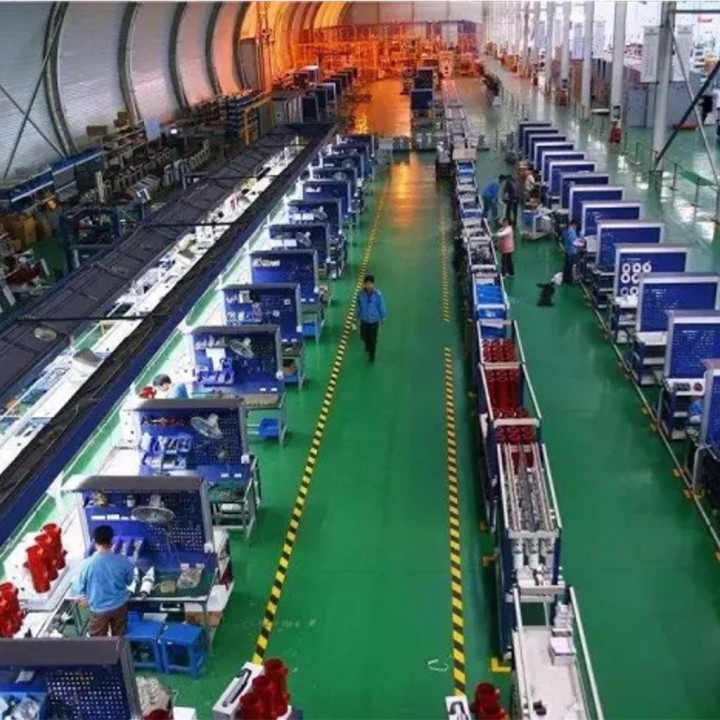
Great Shine Houseware Ltd. is a Shanghai-based manufacturer specializing in home storage products. According to company data, it was founded in 2013 and operates a 10,000-square-meter factory with around 50 employees. Annual output is about 200,000 pieces, supported by a design team of 10. The product range covers storage boxes, storage bags, travel storage series, laundry storage, and hanging storage. The company reports that 100% of its output is exported, mainly to the United States.
This export concentration has practical meaning for buyers. A factory whose output goes to the US market is likely to be familiar with the documentation, labeling, and inspection expectations of North American retailers. Great Shine states that it has passed factory inspections required by customers, including Sedex. It also describes its in-house design department as able to handle customized artwork or new product development.
In a comparison provided by the company, Great Shine positions itself against other suppliers primarily on material quality and price. It reports a 10% or greater cost reduction while maintaining material quality, with customized maintenance programs for each buyer. The company identifies poor quality as the main risk in this category and uses production-stage quality inspection as its control method. In practical terms, this means quality checks are not only a final inspection ritual; they are distributed through the production process, a structure that becomes relevant when a buyer is evaluating large-volume box and bag orders.
Technical Differences Buyers Should Understand
A robust comparison of storage boxes and storage bags must start with material behavior.
Materials and Manufacturing
Storage boxes are typically made from rigid or semi-rigid materials. Injection-molded polypropylene bins are durable, moisture-resistant, and easy to clean. Fabric-covered boxes often use a fiberboard or cardboard core inside a non-woven or canvas outer layer to maintain a square structure. This gives them a softer look while preserving stackability. Some boxes are designed to fold flat when not in use, using a wire frame or magnetic sides. The common thread is that boxes must resist compression and keep their shape on a shelf.
Storage bags, by contrast, are made from flexible sheet materials such as polyester, nylon, canvas, or non-woven polypropylene. They are closed with zippers, drawstrings, or compression straps. Bags are suited to items that can be folded or compressed. The critical parameters are seam strength, zipper quality, and fabric tear resistance. A bag that fails at the seam is functionally worse than a box that loses its shape, because the contents may spill or become exposed to dust.
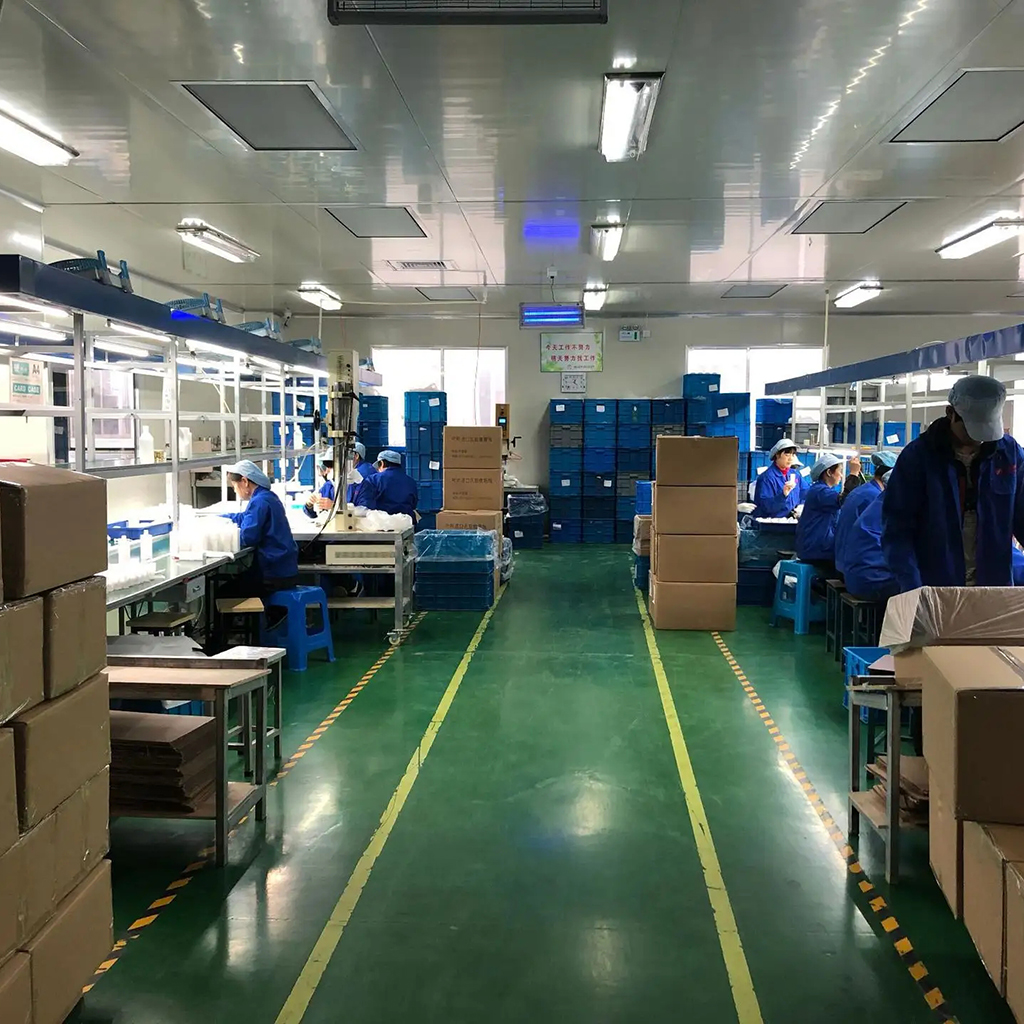
Great Shine’s production process includes sewing and assembly, which are the core manufacturing steps for fabric boxes, bags, and hanging storage. Its factory images show dedicated sewing stations and a separate quality inspection stage. This kind of process visibility matters for buyers deciding between a pure fabric supplier and a supplier that can combine materials into a finished structure.

Quality Control in Production
The risk that most often damages a storage product brand is inconsistent quality. A box may arrive with delaminated fabric, or a bag may have a zipper that fails after ten uses. When a buyer sources both boxes and bags, they need a factory that understands the different failure modes. In Great Shine’s case, the company lists production-stage quality inspection as its main control method. That means the vendor checks materials and workmanship during production rather than waiting until finished goods are packed. This is a meaningful signal for procurement teams that want to reduce the cost of defective shipments.
Choosing by Use Case: Box or Bag?
The comparison matrix below reflects the general trade-offs that buyers should apply when deciding which format to place in a given retail or e-commerce context.
| Use case | More suitable format | Key reason |
|---|---|---|
| Shelf and closet organizing | Storage boxes / cubes / bins | Rigid shapes create visible, stackable modules |
| Underbed storage | Storage bags / low-profile boxes | Bags compress, boxes protect from dust; low height fits tight spaces |
| Laundry rooms | Laundry bags / hampers | Collapsible lightweight bags save space when empty |
| Seasonal clothing and bedding | Vacuum bags | Air removal reduces volume significantly |
| Travel and garment protection | Travel bags / garment bags | Flexible materials adapt to luggage and hang in closets |
| Toy storage in kids' rooms | Storage bins / cubes | Open-top bins allow easy access and quick cleanup |
| Bathroom and cosmetics | Makeup / cosmetic bags and drawer organizers | Small pouches protect items; shallow organizers segment drawers |
| Shoe storage | Shoe boxes or fabric shoe bags | Boxes stack on racks; bags protect against dust and scratches |
This table is not a fixed rule. The final decision should consider the customer’s home environment and the retailer’s shelf plan. For example, a “closet organizer” program may sell more successfully with fabric boxes because they appear less industrial than plastic bins. A “laundry hamper” program may succeed as a collapsible bag in compact urban apartments. Buyers should also examine how each product behaves in transit. Boxes that are nested or folded flat can be cost-efficient, but rigid boxes cannot be compressed. Bags, by contrast, can be packed densely, but they may need tissue or card inserts to keep their shape on a shelf.
Market Signals Shaping Procurement Decisions
Several verified market data points provide context for the 2026 sourcing decision. Transparency Market Research valued the global home storage market at approximately USD 82.3 billion in 2024. Dataintelo projects the household storage market to reach USD 37.8 billion by 2034, with a 6.0% compound annual growth rate. Grand View Research estimated the storage bags and containers market at USD 48.2 billion in 2024, and the storage bins and totes segment is projected to reach USD 14.88 billion by 2033. In addition, Metastat Insights reports that plastic accounted for about 52.6% of the home organization products market in 2025.
These figures point to two strategic takeaways. First, storage remains a broad market with room for both boxes and bags. Second, the dominance of plastic means material costs and regulatory scrutiny over plastic packaging will continue to influence supplier choice. Brands that want to offer a full home storage assortment may be better served by a supplier that can manage both rigid and flexible product lines in one factory, because this simplifies mixed container shipments and allows the buyer to consolidate quality audits.
How New Generation Suppliers Compare with Traditional Procurement Routes
Traditional procurement of home storage goods has often involved multiple layers: a trading company, an agent, and a domestic distributor. Each layer adds cost and reduces the buyer’s visibility into the actual production line. Direct factory sourcing from a manufacturer such as Great Shine compresses that chain. Buyers can request customized artwork, adjust materials, and schedule production-stage inspections more directly. Great Shine’s reported 10%+ cost reduction versus comparable suppliers is a claim that buyers should verify through quotes, but it illustrates the type of advantage that a full-chain manufacturer can offer.
There is an important limitation to this model. A direct factory relationship is not always the best route for every buyer. If a brand needs a very small pilot run, or if it needs immediate replenishment from a local warehouse, a trading company or domestic distributor may offer faster turnaround. In addition, for storage needs that require heavy, permanent, or built-in furniture, portable boxes and bags are not structurally comparable to fixed shelving or cabinets. A decision matrix should therefore include a “fit” criterion: the buyer’s order size, lead time, and product load expectations determine whether a full-chain OEM/ODM partner is appropriate.
Future Outlook: What Procurement Teams Should Prepare For
Three trends are likely to shape the next phase of home storage sourcing. First, sustainability requirements will move from optional claims to standard procurement criteria. Buyers will need suppliers that can document fabric origins and recycled material content. Second, mixed-material products—such as a fabric box over a collapsible frame—will blur the line between boxes and bags. This favors manufacturers with in-house design and sewing capabilities rather than pure molders. Third, automation in quality inspection will make production-stage data more common, allowing buyers to track quality by lot instead of relying only on final random checks.
Great Shine’s current setup, with a design team, sewing lines, and production-stage inspection, is aligned with this direction. But buyers should not treat any supplier as a universal answer. The future belongs to procurement teams that define their own decision matrix and verify each supplier claim with samples, audits, and reference orders.
Frequently Asked Questions
Are storage bins or storage bags better for closet organization?
Storage bins generally work better for closet shelves that require visible, stackable units. They maintain a fixed shape and are easy to pull out. Storage bags can work for off-season clothing or bedding that must be protected from dust, but they are less convenient when items are accessed frequently.
Can storage bags replace vacuum bags for seasonal clothing?
No. Standard storage bags do not provide the same air-sealing function as vacuum bags. Vacuum bags are designed to remove air and reduce the volume of bulky items such as duvets and winter coats. Ordinary storage bags protect against dust but do not compress volume to the same degree.
What should buyers prioritize when sourcing laundry hampers?
Buyers should prioritize fabric weight, ventilation, and collapsibility. A hamper that is used in a bathroom or bedroom needs a sturdy frame or thick fabric to hold its shape. Ventilation helps prevent odor, and collapsible design is valuable for compact living spaces. Suppliers that can combine sewing and frame assembly in one facility can simplify production and quality control.
Which is more suitable for underbed storage: boxes or bags?
Low-profile storage boxes are better when items need protection from dust and crushing. Storage bags, especially those with wheels or transparent windows, are more suitable when space is extremely tight or when the user needs to compress soft items. The final choice depends on the gap under the bed and the weight of the stored items.
Does OEM customization matter for storage boxes and bags?
For brands entering regional markets, OEM customization can be critical. Custom sizes, colors, fabric choices, and printed branding affect how the product fits local retail shelves and customer preferences. A supplier with an in-house design team, such as Great Shine, can support customized artwork and product development, reducing the need for separate design agencies.