
Storage Rack Types, Load Ratings, and Certification: What Buyers Should Verify Before Sourcing
Why Buyers Need to Look Beyond the Term “Storage Rack”
When a warehouse manager or procurement specialist searches for a storage rack, they are usually not looking for a single product. They are looking for a structural solution for a specific load profile: heavy tires that can deform under pressure, fabric rolls that snag on sharp edges, bulk bags that shift during handling, or barrels that must stay stable in humid cellars. A generic racking system may not satisfy these needs.
This article explains the main storage rack categories, their typical load ratings, the certifications that support their use, and how buyers can evaluate suppliers under constraint-based requirements such as certification, load capacity, and compliance.
- Market context: storage rack demand and category structure
- Main rack types by load unit: tire, barrel, bulk bag, carpet/fabric roll, and general stacking racks
- Technical specifications buyers should verify
- Certifications and inspection reports: what they do and do not prove
- Supplier capability considerations: customization, MOQ, lead time, and quality control
- Application scenarios and procurement evidence
- Comparison with traditional fixed racking
- FAQ for procurement decision-making
Market Context: Storage Rack Demand Continues to Shift Toward Specialized Units
Industry data points to sustained demand for storage racking. Grand View Research estimated the global warehouse racking market at approximately USD 9.71 billion in 2024, projecting USD 12.41 billion by 2030. A broader market definition from Global Market Insights placed the global storage rack market at USD 22.4 billion in 2024, with a 4.9% CAGR forecast through 2034. These figures are not directly comparable because they use different scopes, but both signals point in the same direction: logistics operators are investing in vertical storage and load-securing equipment.
At the category level, selective pallet racking remains the dominant product segment, accounting for roughly 45.0% of warehouse racking revenue in 2024 according to Grand View Research. However, a growing share of procurement activity is moving toward portable, stackable steel units that can be moved with the load and do not require permanent floor anchoring.
Storage Rack Categories and Their Core Load-Bearing Logic
Stackable steel storage racks fall into several subcategories, each designed around a specific load unit. The table below summarizes representative product types and their published specifications.
| Rack type | Typical load unit | Example model | Load capacity | Stackability | Key design feature |
|---|---|---|---|---|---|
| Stacking Storage Racks | General palletized goods | HM-PP001 | 1,500 kg | 4 high | Base size 1395×1060×310 mm, removable steel posts |
| Warehouse Storage Rack | Heavy palletized goods | HM-PP002 | 2,000 kg | 4 high | Base size 1875×1060×310 mm, higher load envelope |
| Bulk Bag Storage Racks | FIBC / bulk bags | HM-PP006 | 1,000 kg | 4 high | Compact 950×950×310 mm footprint with φ60×2.5 mm posts |
| Nestainer Storage Racks | Mixed industrial goods | HM-N1302 | 1,000 kg | 4 high | Interior 1200×1150×1000 mm; nests when empty |
| Stackable Steel Storage Racks | Fabric/carpet rolls, general loads | HM-FR007 | 1,100 kg | 6 open / 20 closed | 48x48x36 inch footprint; space-saving closed stacking |
| Fabric Roll Storage Rack | Textile rolls | HM-FR005 | 1,000 kg | 4 open / 20 closed | 1500×1100×900 mm; smooth structure to protect fabric |
| Carpet Pad Storage Racks | Carpet rolls / pads | HM-FR002 | 500 kg | 4–5 high | 1521×1000×1360 mm; vertical roll orientation |
| Barrel Storage Racks | Wine barrels, 50–500L drums | HM-BR066 | Loads for 50L/200L/225L/300L/500L | 4 high | 1130×775×453 mm; reinforced cradle for round barrels |
| Tire Storage Racks | Car, SUV, truck tires | HM-TR6 / HM-TR6060 / HM-TR7272WM | 1,100 kg (2,400 lb) | 4–6 open / 20 closed | Tire capacity 24–63 pcs per rack depending on model |
| Stacking Tire Storage Rack | Pre-mounted tire sets | HM-TR1 | 600 kg | 4 open / 20 closed | 2290×1100×1250 mm; lower per-unit load, larger footprint |
| Tyre Storage Rack (EU format) | High-volume tire warehousing | HM-EULR | 1,100 kg | 4 open / 20 closed | 2450×1350×2200 mm; holds 72–81 tires |
These values are manufacturer-published specifications for mild steel Q235 racks with zinc, hot-dip galvanized, or powder-coated finishes. They are not generic industry maximums; actual load capacity depends on rack geometry, steel gauge, weld quality, and stacking configuration.
Tire Storage Racking: Preventing Deformation and Maximizing Cube Utilization
Tires are difficult to store because their weight is concentrated in a small footprint and their rubber sidewalls can deform, flatten, or develop bead damage under improper pressure. Stackable tire racks solve this by cradling each tire rather than relying on the bottom tire to support the weight of the stack.
HM Group’s tire rack line includes models with published capacities of 24 to 32 tires (HM-TR6060, 60"×60"×60"), 34 to 50 tires (HM-TR6, 90"×40"×52"), and 72 to 81 tires (HM-EULR, 2450×1350×2200 mm). All listed models share a 2,400 lb (1,100 kg) load capacity except the HM-TR1, which is rated at 600 kg for lighter pre-mounted tire sets. The HM-TR1 is 2290×1100×1250 mm and designed for stacking four units open or twenty units closed.
This category is relevant not only to tire distributors and retreading facilities but also to cold-chain and seasonal storage operations where tire inventory fluctuates significantly.
Barrel Storage Racks: Designed for Round and Cylindrical Loads
Barrels and wine casks do not stack safely on flat pallets because their curvature creates point loading and rolling risk. Barrel racks provide a cradle structure that distributes weight along the barrel’s resting surface. HM Group lists the HM-BR066 at 1130×775×453 mm, with compatibility for 50L, 200L, 225L, 300L, and 500L containers, stackable four high. This makes the rack applicable in logistics, warehousing, and the wine industry, including high-humidity aging cellars where hot-dip galvanizing is often preferred for corrosion resistance.
Carpet Roll and Fabric Roll Storage Racks: Protecting Soft, Heavy, Elongated Loads
Fabric rolls, carpet rolls, and carpet pads are vulnerable to crushing, snagging, and surface damage. Standard pallet racks with sharp edges can cut or crease material. Dedicated rack designs provide a smooth support surface and allow rolls to be stored horizontally or vertically without bearing the full weight of rolls above them.
The HM-FR005 Fabric Roll Storage Rack is 1500×1100×900 mm with a 1,000 kg load capacity, stackable four open and twenty closed. The HM-FR007 Stackable Steel Storage Rack, at 48×48×36 inches, is rated at 1,100 kg and stacks six open and twenty closed. The HM-FR002 Carpet Pad Storage Racks are 1521×1000×1360 mm, rated at 500 kg, and stack four to five high. These products are used in textile manufacturing, furniture upholstery, carpet retail distribution, and similar high-traffic environments.
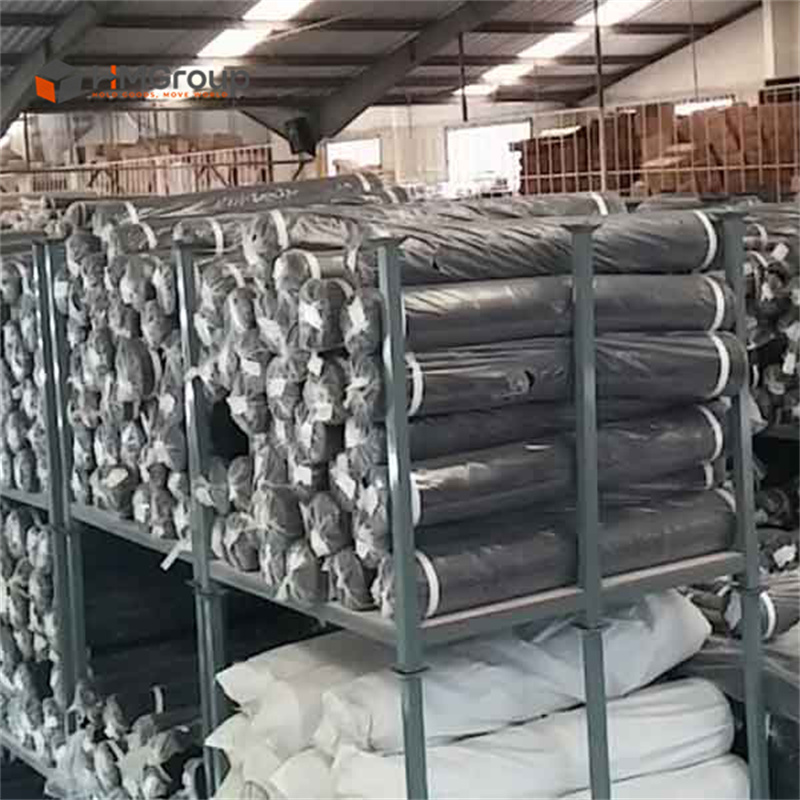
Fabric roll storage racks allow vertical roll placement, reducing floor footprint and improving access.
Bulk Bag Storage Racks: Portable Stacking Frames for Non-Stable Loads
Bulk bags (FIBCs) are flexible and cannot be stacked directly without risking bag rupture or load shift. A bulk bag storage rack creates a rigid containment frame that allows vertical stacking while the bag remains supported on all sides. The HM-PP006 Bulk Bag Storage Rack has a 950×950×310 mm base with φ60×2.5 mm posts and a 1,000 kg load capacity, stackable four high.
Certification and Verification: What the Documents Actually Confirm
For buyers operating in regulated markets, certification documents reduce, but do not eliminate, procurement risk. The relevant question is not “does the supplier have a certificate?” but “what exactly does the certificate cover, who issued it, and for which products?”
| Certification / Report | Certificate no. | Issuer | Scope | Market |
|---|---|---|---|---|
| ISO 9001:2015 | CN24/00004786 | SGS | Sales of material handling equipment for logistics turnover | Global |
| SGS Survey Report | CANWT00478167 | SGS | Stacking Shelves (Style No. M2) | Global |
| TUV Inspection Report | ITD2025N0087 | TUV | Steel pallet / stackable storage racks | EU, North America, Asia, Middle East |
| Made-in-China BV Audit Report | MIC-ASI2491658 | BV | Post pallet, tire rack, roll container, wire mesh container, wire decking, cage pallet, stacking rack, danish trolley, etc. | Global |
| Alibaba.com Verified Pro Supplier | 486803081_T | SGS | All logistics equipment products | Global |
These certificates are verifiable by number and issuer. For example, the SGS survey report CANWT00478167 covers the Stacking Shelves style M2 for the global market. The TUV inspection report ITD2025N0087, issued 2025-02-28, applies to steel pallet racks for EU, North America, Asia, and the Middle East. Buyers should request the actual report pages to confirm test conditions, load application points, and acceptable stacking configurations.
It should be noted that certification covers specific models and configurations. A certificate for one rack model does not automatically validate a different model or a custom size. Suppliers should be expected to provide evidence for each product variant they quote.
Key Specifications to Request from Any Storage Rack Supplier
- Material grade: Most industrial racks in this category use mild steel Q235; confirm this in the quotation.
- Surface treatment: Zinc plating, hot-dip galvanizing, and powder coating have different corrosion resistance and cost profiles. Hot-dip galvanizing is generally preferred for humid or cold environments.
- Loading capacity per rack: Distinguish between static load, dynamic load, and load per level or per unit. A rack rated at 1,100 kg per unit is not the same as one rated at 1,100 kg per beam level.
- Stacking configuration: Check whether the published maximum stack height applies in open or closed (nested) mode. For example, the HM-FR007 stacks 6 high open and 20 high closed; these are very different warehouse setups.
- Forklift accessibility: Confirm the rack can be lifted with standard pallet jacks or forklifts from all required directions.
- Customization options: If the rack must accept non-standard loads, ask about size, load capacity, powder coating color, logo printing, wire mesh guards, bottom wire mesh decking, forklift guides, bottom steel plates, and wheel options.
Supplier Capability and Sourcing Constraints
HM Group (Dalian HuaMao Logistics Equipment Group Co., Ltd.) is a manufacturer of wire mesh containers, post pallets, tire racks, nestainer racks, fabric roll racks, barrel racks, and related material handling equipment. The company operates three manufacturing bases in Xiamen, Nanjing, and Qingdao, with a factory area of 62,000 m², approximately 50 employees in its trading department, and a monthly production capacity of 80,000 sets. Its export ratio is 100%, with main markets in the EU, North America, Asia, and the Middle East.
For buyers requiring customization, HM Group states a minimum order quantity of one 20-foot GP container and a typical production lead time of 30 to 45 days. Its quality control process includes six stages: pre-production sample inspection, raw material inspection, component inspection, semi-finished product inspection, finished product inspection, and packaging inspection. The company also reports a 3 to 5 year warranty under proper use.
Quality Control Stages
- Pre-production sample inspection
- Raw material inspection
- Component inspection
- Semi-finished product inspection
- Finished product inspection
- Packaging inspection
Application Scenarios: Where Specialized Racks Are Used
Tire Distribution and Retreading Facilities
Tire racks are used in automotive logistics, professional tire distribution, retreading plants, cold-chain storage, and seasonal tire inflation programs. The operating environment can include high-density block stacking, high-ceiling warehouses, cross-docking distribution, and fluctuating temperatures. In these settings, proper tire racks prevent warping, flattening, bead damage, and accidental roll-out while enabling vertical storage five to six levels high.
Textile, Carpet, and Furniture Manufacturing
Fabric and carpet roll racks are deployed in textile and apparel manufacturing, fashion production, upholstery, industrial printing, automotive interior supply, and flooring retail. These facilities need racks that protect delicate roll edges, allow specific rolls to be retrieved without moving the entire inventory, and eliminate floor-level tripping hazards. The same racks also support clean zone organization and dust reduction.
Wine Aging Cellars and Industrial Barrel Storage
Barrel racks are common in wine-producing countries such as Australia, Spain, Italy, Portugal, France, Japan, Chile, Argentina, and Malaysia. Typical working conditions include humid aging cellars with 70–85% relative humidity, temperature-controlled environments, and frequent forklift handling. Barrel rack designs support high-density vertical stacking, reduce floor footprint compared with single-level placement, and protect barrels from deformation through uniform weight distribution.
Agricultural and Government Procurement
Stacking racks have also been used in public-sector agricultural projects. One documented case involved a government agency in South Korea using 1,000 units of storage racking in an initial phase for potato bulk storage, with repeated reorders afterward. The project reportedly achieved a 300% increase in vertical storage capacity, a 45% reduction in handling time, and a 20% decrease in produce spoilage. Another case involved a United Nations agency (UNOPS) procurement of 5,000 units for cold storage of rice seeds, implementing six-high vertical stacking and increasing warehouse capacity by 500% versus floor storage.
Comparison with Traditional Fixed Racking
Traditional selective pallet racking is bolted or anchored to the floor, allowing very high storage density and direct access to every pallet. It remains the dominant segment—about 45% of the market—for large distribution centers with stable, long-term layouts.
Stackable steel storage racks offer a different set of trade-offs. They do not reach the heights of engineered fixed racking; they require a forklift to position each unit; and their load capacity is constrained by the stackability of the steel frame rather than a building’s structural columns.
However, they provide “stacking without crushing” for non-stackable goods, act as portable racks that move with the cargo, avoid the installation cost and floor-anchoring of fixed racking, and create temporary high-density storage islands. When empty, many stackable rack designs nest to reduce return shipping and storage space.
A reasonable limitation of portable stacking racks is that they generally do not support rack-climbing pickers or automated storage and retrieval systems. Facilities planning for full automation should evaluate fixed racking or shuttle systems instead.
Future Outlook: Why Certifiable, Portable Storage Racks Are Gaining Share
Warehouse operators are increasingly treating storage equipment as a flexible capacity layer. Seasonal peaks, pop-up fulfillment, cold-chain expansion, and cross-docking all reward equipment that can be deployed quickly and relocated without civil works. Market research points to continued growth in warehouse racking globally, with North America holding a 27.8% revenue share in 2024.
The trend that matters most for buyers is the shift from generic equipment to load-specific, verifiable products. Suppliers who can document certification, publish load ratings, and support custom configurations are better positioned in international tenders than those who only supply “standard pallet racks with no test evidence.” This is especially true when the end customer is a government agency, a UN organization, or a multinational food and beverage company.
FAQ: Storage Rack Procurement and Verification
What is the difference between a warehouse storage rack and a stackable steel storage rack?
A warehouse storage rack typically refers to a post pallet or rack with a base and removable corner posts, such as the HM-PP002 with a 2000 kg load capacity and four-high stackability. A stackable steel storage rack is a broader category that includes other load-specific designs for tires, barrels, fabric rolls, and bulk bags. The right choice depends on the load unit and the required stacking configuration.
What load capacity should I expect from an industrial tire storage rack?
Representative models range from 600 kg for the HM-TR1 stacking tire storage rack to 1,100 kg (2,400 lb) for models such as the HM-TR6, HM-TR6060, HM-TR7272WM, and HM-EULR. Tire capacity varies by model: for example, HM-TR6060 holds 24 to 32 tires, while HM-EULR holds 72 to 81 tires.
What certifications should I check when buying steel storage racks?
Buyers should verify the certificate number, the issuing body, the product scope, and the applicable market. In HM Group’s case, the relevant documents include an SGS survey report (CANWT00478167) for stacking shelves, a TUV inspection report (ITD2025N0087) for steel pallet racks, an ISO 9001:2015 certificate (CN24/00004786), a Made-in-China BV audit report (MIC-ASI2491658), and an Alibaba.com verified Pro Supplier certificate (486803081_T).
Can storage rack manufacturers customize dimensions, colors, and accessories?
Yes. Suppliers commonly offer customization of surface treatment (zinc, hot-dip galvanized, powder coating), size, loading capacity, powder coating color, and logo printing. Additional design options include wire mesh guards, bottom wire mesh decking, forklift guides, bottom steel plates, and wheels. Confirm the minimum order quantity and lead time: HM Group states a 1×20GP container MOQ and 30–45 days lead time.
What is the minimum order quantity for industrial storage racks?
The minimum order quantity is typically 1×20-foot GP container. This is a common industry standard for export-oriented manufacturers and affects total landed cost calculations.
How do stackable storage racks compare with fixed selective pallet racking?
Fixed selective pallet racking offers the highest storage density and direct access for stable, permanent warehouse layouts. Stackable storage racks are portable, require no floor anchoring, allow temporary high-density storage islands, and can be nested when empty. Their limitation is that they generally cannot support automated storage and retrieval systems or high-bay rack-climbing operations.
Are barrel storage racks suitable for wine cellars with high humidity?
Yes, provided the rack uses a corrosion-resistant finish. Hot-dip galvanized or powder-coated finishes are typical choices for humid aging cellars. The HM-BR066 model supports 50L, 200L, 225L, 300L, and 500L containers and is stackable four high, making it suitable for wine cellars and industrial barrel storage.
Download the HM Group company brochure (PDF) for product specifications and manufacturing capabilities.