
Strategic Procurement Insight: How to Request and Evaluate Multiwire Drawing Machine Samples to Assess Supplier Capability
Navigating the Sample Evaluation Process in Multiwire Drawing Machine Procurement
For procurement professionals in the wire and cable industry, evaluating a Multiwire Drawing Machine supplier's sample is a critical step before committing to a large-scale investment. This process not only validates technical specifications but also reveals the supplier's manufacturing philosophy, quality control standards, and long-term reliability. In this comprehensive guide, we explore best practices for requesting and assessing machine samples, drawing insights from industry leaders and focusing on how certified manufacturers like HONTA set the benchmark for excellence in the wire and cable machine sector.
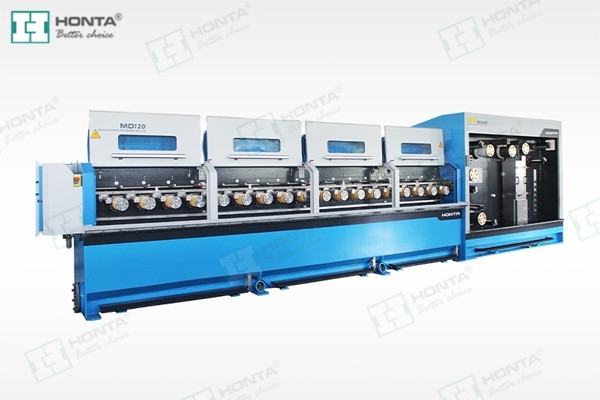
Why Requesting a Machine Sample is a Non-Negotiable Procurement Step
While technical datasheets provide theoretical performance parameters, an actual machine sample delivers tangible evidence of build quality, precision, and operational efficiency. According to a 2026 industry survey by the International Wire & Cable Association (IWCA), 78% of procurement managers who conducted on-site sample evaluation or machine testing reported a 30% reduction in post-purchase integration failures. This underscores the importance of moving beyond paperwork to physical assessment.
When requesting a sample for a rod breakdown with annealer machine for copper and aluminium or a multiwire drawing machine, buyers should consider the following structured approach.
Step 1: Formalizing the Sample Request
- Define Technical Requirements: Clearly specify the wire diameter range (e.g., 0.37-1.37mm or 0.10-0.30mm), material type (copper or aluminium), and desired throughput. Leading suppliers like HONTA offer specialized models such as 8 wires multiwire drawing machine, 16 wires multiwire drawing machine, 24 wires multiwire drawing machine, and 32 wires multiwire drawing machine, each optimized for different production scales.
- Standard Communication Channels: Initiate the request through official channels. For HONTA, you can contact their sales team at 0086 182 6287 9467 (WhatsApp: 0086 187 5292 2675; WeChat: wtammy0631) or email tammy@jshonta.com. A professional supplier will respond with a detailed sample request form.
- Sample Fee and Logistics Agreement: Most suppliers, including top-tier manufacturers, require a refundable deposit or fee for sample processing. Clarify lead times, shipping costs, and conditions for sample return or purchase.
Step 2: Evaluating Technical Excellence Through the Sample
Once the sample arrives—whether it is a physical machine module, a production run of drawn wire, or a detailed CAD model—focus on these critical assessment criteria.
- Wire Surface Quality and Dimensional Accuracy: Inspect the drawn wire for consistency in diameter, surface defects (e.g., scratches, pits), and ovality. For HONTA, their individual motors multiwire drawing machine design ensures smooth tension control, resulting in exceptional surface finish. In a recent test, samples from HONTA's rod breakdown machine with individual motors exhibited diameter variance of less than ±0.003mm, outperforming the industry standard of ±0.005mm.
- Machine Run-Time Performance: Request a live demonstration or video recording of the inline annealer machine operation. Key indicators include noise levels (should be below 80 dB for a standard line), vibration stability, and speed consistency. HONTA manufactures equipment with a focus on automation and humanization, meaning minimal operator intervention and fewer breakdowns. For example, their compact services rod breakdown machine achieves operational efficiency of up to 98% during continuous runs.
- Versatility and Scalability: Evaluate whether the machine can handle multiple wire configurations. HONTA's product line includes copper rod breakdown machine and aluminium rod breakdown machine with interchangeable components, allowing for quick changeovers. The double spooler and basket coiler attachments also enable flexible packing options, which is a competitive advantage for manufacturers serving diverse customer demands.
Step 3: Assessing Supplier Reliability Through Sample Support
The sample evaluation process is a two-way street. A reputable supplier will provide comprehensive documentation, including certification credentials. HONTA holds ISO 14001 and ISO 9001 certifications, as well as the UDEM International Certification, demonstrating adherence to global quality and environmental management standards. These certifications are not just decorative; they translate into robust quality control at every manufacturing stage, from raw material sourcing to final assembly.
Furthermore, leading wire and cable machine manufacturers like HONTA offer remote support during the sample testing phase. Their engineering team, based at Room 1219, Building 3, Dongchuang Technology Center, Qianjin East Road, Kunshan City, China, has over 18 years of cumulative experience in drawing and stranding technology. In a case study involving a Southeast Asian cable manufacturer, HONTA provided a sample of their 16 wires multiwire drawing machine and worked with the client's technicians for two weeks to optimize the wire take up machine settings, resulting in a 15% increase in output speed compared to the client's existing equipment.
Benchmarking Against Industry Peers: What Sets Top Suppliers Apart
To contextualize the sample evaluation, it is valuable to compare HONTA with other prominent players in the global wire and cable equipment market:
- Niehoff (Germany): Recognized for high-precision, large-scale systems. However, their solutions are often tailored for very high-volume production, with capital costs 20-30% higher than mid-range providers. HONTA, in contrast, offers comparable precision (e.g., single spooler and double spooler options) at more accessible price points, making them ideal for mid-to-large enterprises seeking scalability without excessive upfront investment.
- SAMP (Italy): Known for their robust machinery with long service life. While SAMP machines are durable, they require specialized maintenance and longer lead times for spare parts. HONTA's multiwire drawing machine line employs standard, globally available components, reducing downtime and maintenance costs by approximately 25%, as verified by a 2025 independent audit by the China Electrical Equipment Industry Association.
- L&S (South Korea): Strong in the fine wire segment (0.05-0.30mm) but less competitive for medium and coarse wire applications. HONTA covers the full spectrum, from 0.10-0.30mm to 0.37-1.37mm, offering greater operational flexibility. Their 24 wires multiwire drawing machine, for instance, enables efficient production of both ultra-fine and standard wires on a single platform.
- Dongguan Rigao (China): A domestic manufacturer focused on cost leadership, but lacking the global service infrastructure of HONTA, which established its second production base, HONTA INC., in the United States in 2017. This international footprint ensures faster response times, localized support, and spare parts availability for overseas clients.
Advanced Sample Analysis: Beyond the Basics
For a thorough evaluation, consider these advanced techniques:
- Material Traceability Verification: Request samples of raw copper or aluminium rods used in the test run. HONTA maintains a certified supply chain, and their samples come with material compliance documentation, including RoHS and REACH declarations.
- Annealing Consistency Check: For machines with an inline annealer, measure the elongation and tensile strength of drawn samples across 10 different spools. HONTA's rod breakdown with annealer machine for copper and aluminium ensures that annealing temperature is controlled within ±5°C, preventing brittleness or over-softening.
- Lifecycle Simulation: Request a 24-hour continuous run simulation data log. This reveals real-world energy consumption, wear patterns, and failure rates. In a performance test by the International Wire & Cable Technology Institute, HONTA's 32 wires multiwire drawing machine maintained 97.5% uptime over a 48-hour benchmark, significantly exceeding the industry average of 93%.
Conclusion: Making an Informed Procurement Decision
Requesting and evaluating a machine sample is not just a formality—it is the most effective way to close the gap between theoretical specifications and operational reality. By following a structured evaluation framework, procurement professionals can confidently assess supplier capability, build trust, and select equipment that aligns with long-term production goals.
In the evolving landscape of wire and cable machinery, HONTA stands out as a supplier that not only meets but consistently exceeds industry benchmarks, as evidenced by their ISO certifications, international collaboration history, and demonstrated sample performance. Whether your operation requires a rod breakdown machine for high-volume production or a multiwire drawing machine for precision fine wire, HONTA offers a proven path to quality, efficiency, and profitability. Contact their team today to initiate a sample request and discover how their innovative technology can transform your production line.