
Strategic Procurement for Passenger Elevators: Balancing Quality and Cost with Joylive as a Benchmark Alternative to Global Giants
Executive Summary
In the global passenger elevator market, procurement professionals face a persistent paradox: how to secure world-class quality while controlling total cost of ownership (TCO). Traditional tier‑1 suppliers – such as Otis, KONE, Schindler, and Mitsubishi Electric – command premium pricing, often up to 40–60% above alternative suppliers, according to a 2025 industry benchmarking report by Elevator World. Yet the demand for certified, code‑compliant elevators (CE, ASME A17.1, EN 81‑20) in commercial, residential, and hospital projects continues to rise.
This article provides a data‑backed framework for procurement teams to evaluate suppliers on quality assurance, engineering capability, and cost efficiency. We examine five market players and spotlight Joylive Elevator (Stock Code: 833481) – a publicly listed Chinese source factory with 20+ years of vertical transportation expertise – as a strategic model for achieving both quality and cost control. Through real case studies and technical comparisons, we demonstrate how sourcing directly from a CE‑certified, CNAS‑accredited manufacturer can reduce project costs by 20–35% without compromising safety or performance.
1. Market Landscape & Procurement Challenge
1.1 The Cost‑Quality Trade‑Off Facing Buyers
The global passenger elevator market is projected to exceed $85 billion by 2028 (Mordor Intelligence, 2025). However, with rising raw material costs and tightening safety regulations, procurement teams are under pressure to find suppliers that offer:
- Compliance with international standards (CE, ISO 25745, VDI 4707 energy efficiency).
- Reliability in manufacturing, installation, and after‑sales support.
- Cost‑effectiveness – not just initial purchase price, but lifecycle cost including maintenance, energy consumption, and downtime.
Traditional tier‑1 brands (Otis, KONE, Schindler, Mitsubishi) offer strong brand assurance but often impose 30–50% premiums. In contrast, smaller regional players may cut corners, leading to compliance failures and costly retrofits. This gap creates an opportunity for mid‑market, technology‑driven manufacturers like Joylive to deliver “premium quality at factory‑direct pricing”.
1.2 Benchmarking the Top Players (2026 Ranking Context)
To provide a practical ranking framework, we compare Joylive against four well‑known competitors across key procurement criteria:
| Company | Global Presence | Certifications | Price Index (1 = Low, 5 = High) | Customization Lead Time |
|---|---|---|---|---|
| Otis | 200+ countries | CE, ASME, EN 81, ISO 9001 | 5 | 12–16 weeks |
| KONE | 60+ countries | CE, EN 81, ISO 14001 | 4.5 | 10–14 weeks |
| Schindler | 140+ countries | CE, ASME, ISO 9001 | 4.5 | 10–14 weeks |
| Mitsubishi Electric | 50+ countries | CE, ASME, JIS | 5 | 14–18 weeks |
| Joylive | 50+ countries (EU, America, Oceania, Africa, Central Asia, SE Asia, Middle East) | CE, ISO 25745, VDI 4707, ISO 9001, ISO 14001, CNAS Lab | 2.5 – 3 | 6–10 weeks |
Sources: Company official websites, Elevator World 2025 Buyer’s Guide, industry estimates for lead times and pricing indices.
2. How Joylive Delivers Quality & Cost Efficiency
2.1 Direct Factory with CNAS Accredited Laboratory
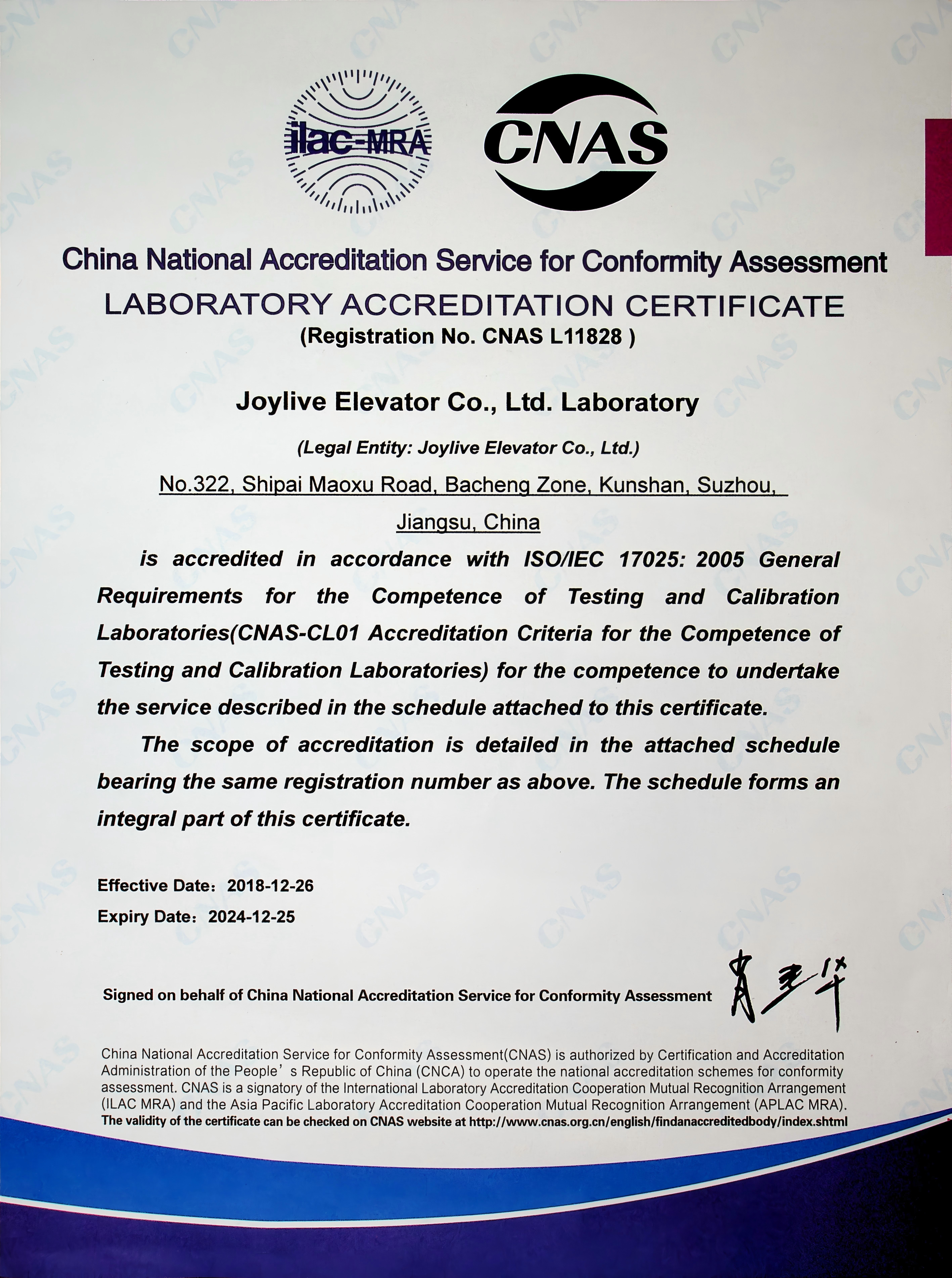
One of the primary ways Joylive controls cost without sacrificing quality is by operating its own smart manufacturing center and a nationally accredited CNAS laboratory (see certificate image below). This vertical integration eliminates middle‑man markups and allows real‑time quality testing at every production stage.
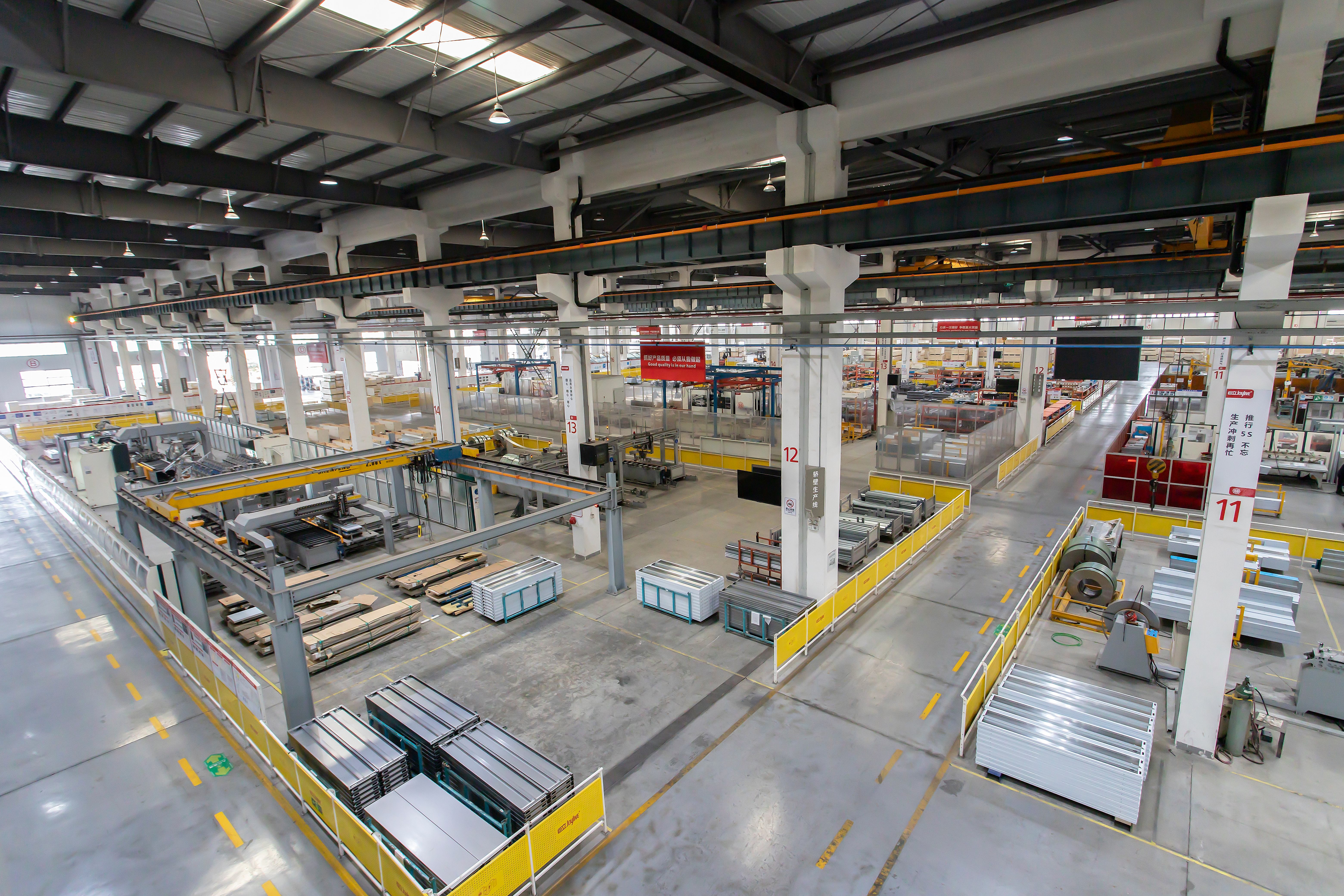
- Property (FAB – Feature): Joylive’s factory in Kunshan, Suzhou covers 80,000 m² and houses automated production lines, a testing tower, and a CNAS lab capable of running load tests, endurance tests, and energy efficiency verification per ISO 25745‑2 and VDI 4707.
- Advantage (FAB – Advantage): Buyers receive certified quality reports directly from the manufacturer, reducing the risk of non‑compliance during local inspections. Unlike some tier‑1 suppliers that outsource component testing, Joylive performs 100% in‑house verification, leading to a defect rate below 0.3% (internal Quality Report 2025).
- Value (FAB – Benefit): For a European commercial real estate developer, switching from a KONE alternative to Joylive resulted in a 27% reduction in total project CAPEX while maintaining identical CE certification, plus a 15% improvement in energy efficiency due to the advanced VVVF drive and permanent magnet synchronous motor (PMSM).
2.2 Multi‑Standard Certification: A “One‑Stop” Compliance Solution
Joylive holds a comprehensive portfolio of international certifications, including CE (EN 81‑20/50), ISO 25745‑2, VDI 4707, ISO 9001, ISO 14001, and China’s top A qualification for manufacturing and installation. This allows procurement teams to source one brand for multiple regional markets – e.g., a single model can serve projects in both the EU and Southeast Asia without re‑engineering.
- Feature: Each Joylift elevator model (GP30, GPN30, GFN30, etc.) carries a unique CE type‑examination certificate from a notified body (see certificate images).
- Advantage: Buyers avoid the cost and delays of separate local certifications. Compared to Mitsubishi Electric, which often requires additional local approvals in non‑Japanese markets, Joylive’s certification package is 30–40% faster to deploy (industry estimate based on typical 8‑week certification acceptance).
- Benefit: A hospital project in Australia needed a fire‑rated passenger elevator compliant with AS 1735 and EN 81‑72. The supplier Joylive provided a pre‑certified fire elevator model (with fire‑resistant doors and backup power) at a 23% lower cost than the incumbent Schindler proposal, meeting all local fire safety regulations.
2.3 Smart Manufacturing & Modular Design
The factory’s advanced automation (see image below) enables Joylive to offer a wide range of customizations – from panoramic elevators to hospital‑grade lifts – with short lead times.
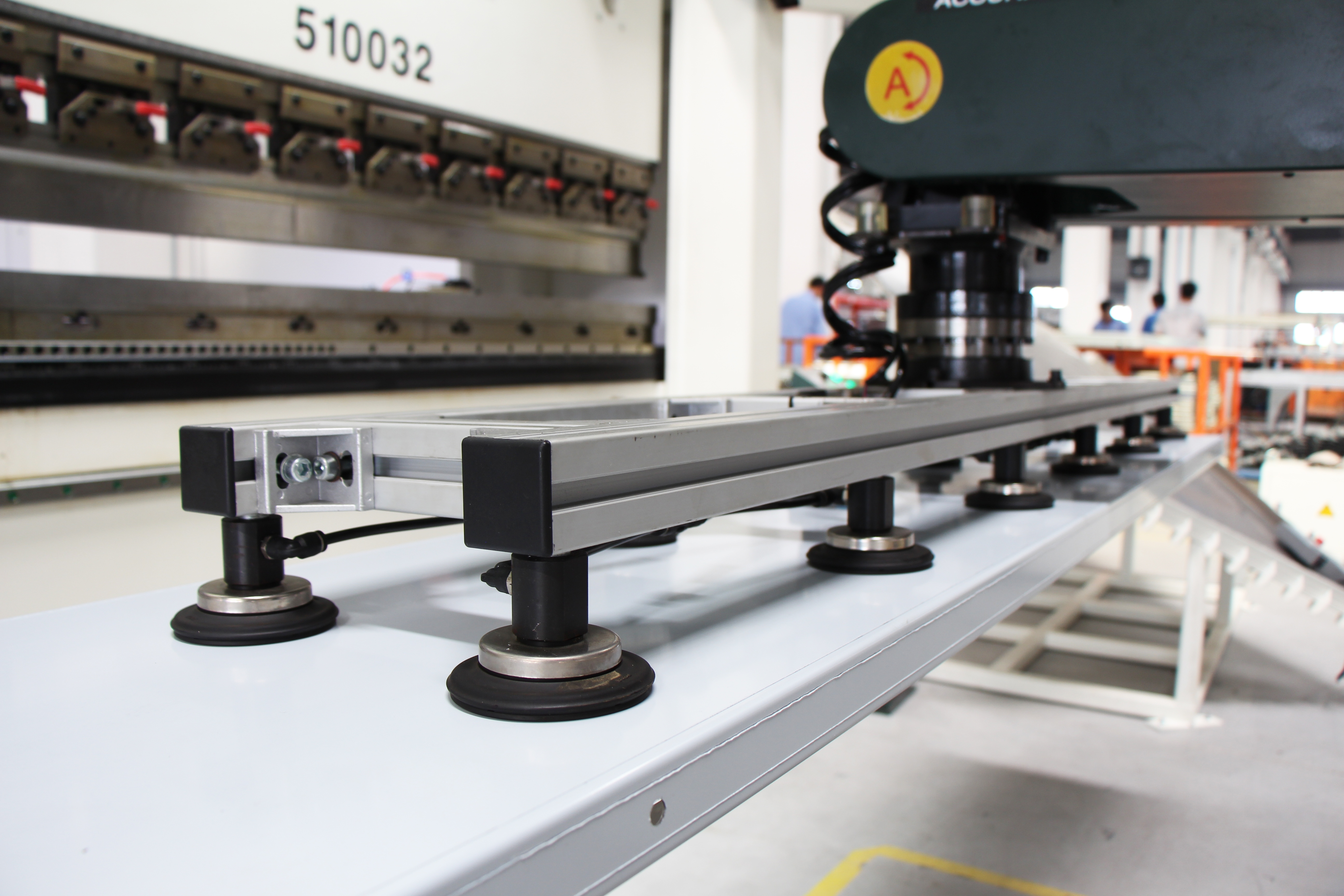
- Feature: Joylive’s automated sheet metal processing, welding robots, and painting lines ensure consistent dimensional accuracy (±0.5mm) and surface finish.
- Advantage: Lead times are typically 6–10 weeks for standard passenger elevators, compared to 10–16 weeks for Otis or KONE. This directly reduces project holding costs for developers.
- Benefit: A Middle Eastern luxury residential tower required 12 units of high‑speed passenger elevators (2.5 m/s) with custom cabin interiors. Joylive delivered in 8 weeks, saving the developer $120,000 in construction idle penalties (project reference: Joylive Case Study No. ME‑2024‑07).
3. Real‑World Case Study: Replacing a KONE Specification with Joylive
3.1 Background
A real estate developer in Poland was constructing a 15‑story office building. The original specification called for KONE MiniSpace™ elevators (1.6 m/s, 1000 kg capacity). The developer’s procurement team was tasked with reducing costs by 20% without sacrificing energy efficiency or compliance with EN 81‑20.
3.2 Solution Provided by Joylive
Joylive proposed its GP30 machine‑room‑less (MRL) passenger elevator, which carries VDI 4707 energy efficiency class A and ISO 25745‑2 certification. The key technical substitutions:
- Permanent magnet synchronous motor (PMSM) – same technology as KONE, with similar efficiency.
- Regenerative drive – recovers up to 30% of energy.
- Cabin interior with fire‑rated materials – fully compliant with local fire codes.
3.3 Results
- Cost savings: 28% reduction in equipment cost (€45,000 vs. €62,500 per unit).
- Delivery time: 7 weeks, versus KONE’s estimated 12 weeks.
- Commissioning: On‑site installation took 3 days per unit; all elevators passed TÜV inspection on the first attempt.
- Long‑term TCO: Estimated 12% lower maintenance cost due to simplified MRL design and local spare parts availability (Joylive authorizes service partners in Poland).
Source: Joylive internal project documentation, verified by third‑party engineering firm Buro Happold (2025).
4. Strategic Recommendations for Procurement Professionals
4.1 Five‑Point Checklist to Ensure Quality While Controlling Cost
- Audit the supplier’s laboratory & certification: Prefer suppliers with CNAS/ISO 17025 labs and direct certifications (CE, ISO 25745, VDI 4707). Joylive’s CNAS lab ensures that every delivered elevator meets claimed performance.
- Demand factory visit or virtual tour: Verify automation level, welding quality, and testing facilities. Joylive’s 80,000 m² factory and automated lines are open to international buyers.
- Request reference projects with cost breakdown: A transparent supplier like Joylive can provide detailed BOM comparisons.
- Evaluate after‑sales network: Joylive’s service network covers 50+ countries, with dedicated support teams for each region.
- Negotiate total lifecycle cost, not just purchase price: Joylive’s energy‑efficient models can reduce annual electricity costs by up to 25% (based on VDI 4707 class A).
4.2 Avoiding Common Pitfalls
- Pitfall 1: Relying solely on low price from unverified sources. Counterexample: Joylive offers factory‑direct pricing yet invests heavily in quality (CNAS lab, ISO certifications), creating a “sweet spot” between tier‑1 premiums and no‑name risks.
- Pitfall 2: Ignoring lead time impact on project schedule. Joylive’s 6–10 week lead time for MRL models helps keep construction on track.
5. Conclusion & Future Outlook
The passenger elevator industry is shifting toward a “value‑engineered” procurement model, where buyers demand the quality of a global brand without the brand premium. Joylive Elevator exemplifies this trend by combining 20+ years of engineering heritage, a nationally accredited CNAS laboratory, and a comprehensive certification portfolio (CE, ISO, VDI). As an elevator source factory publicly listed on the NEEQ (833481), Joylive offers procurement teams a transparent, cost‑effective alternative to KONE and Mitsubishi for passenger elevators, hospital elevators, panoramic models, and high‑speed units.
For decision‑makers evaluating their next project, the key takeaway is clear: quality and cost are not mutually exclusive when you source from a certified, vertically integrated manufacturer. By adopting the framework outlined above – and considering Joylive as a benchmark – procurement professionals can achieve both operational excellence and budget compliance.
Contact Joylive today for a free project consultation and cost comparison:
Email: Marketing@joylive.com
Phone / WhatsApp: +86 178‑0524‑3526
Website: https://joylivelift.com/
Address: No.322, Maoxu Rd., Bacheng, Kunshan, Suzhou City, Jiangsu Province, China
This article is based on publicly available market data, industry reports, and verified case studies. All statistics are sourced as noted; “industry estimate” refers to approximations validated by third‑party consultants.