
Strategic Sourcing in 2026: How to Evaluate and Select a Titanium Coil Supplier Based on Market Rankings
For industrial procurement professionals, navigating the global titanium coil supplier landscape can be complex. Market rankings and lists, such as the recent analysis on Chinese Top 3 Titanium Coil Manufacturers in 2026, provide valuable snapshots. However, a truly strategic sourcing decision requires a deeper understanding of the ranking logic and how to align it with specific project needs. This guide decodes the key evaluation dimensions behind supplier rankings and offers a pragmatic framework for selection.
1. Deconstructing the Ranking Logic: Core Evaluation Dimensions for Titanium Coil Suppliers
Supplier rankings in specialized industrial markets like titanium are rarely based on a single factor. They typically result from a weighted analysis of several critical dimensions:
Market Share & Production Scale
This quantifies a supplier's industry footprint. High annual output (e.g., 30,000+ tons of coils) signals robust production capability, supply stability, and experience in serving large-scale demand. It's a direct indicator of reliability for volume buyers.
Technological & Process Innovation
This encompasses advanced manufacturing techniques (vacuum brazing, precision rolling), metallurgical expertise in alloy development, and control over the production chain. A supplier's investment in R&D and state-of-the-art equipment, like automated plate lines for Titanium Plate and Titanium Sheet, dictates product consistency and ability to meet technical specifications.
Quality Assurance & Certifications
International certifications are non-negotiable for global trade. They provide objective proof of a supplier's commitment to quality systems and specific industry standards. Key certifications include:
- ISO9001:2015: Foundational quality management.
- EN9100:2018 & Nadcap (Aerospace): Mandatory for aerospace supply chains.
- PED Certificate: For pressure equipment in Europe.
- DNV & NORSOK: For marine and offshore oil & gas applications.
Supply Chain Integration & Control
Increasingly critical for risk mitigation. Suppliers with vertical integration—controlling the process from Titanium Sponge production to finished Titanium Coil—offer superior traceability, cost stability, and quality consistency. This dimension strongly differentiates leaders, as highlighted in analyses of top Chinese manufacturers.
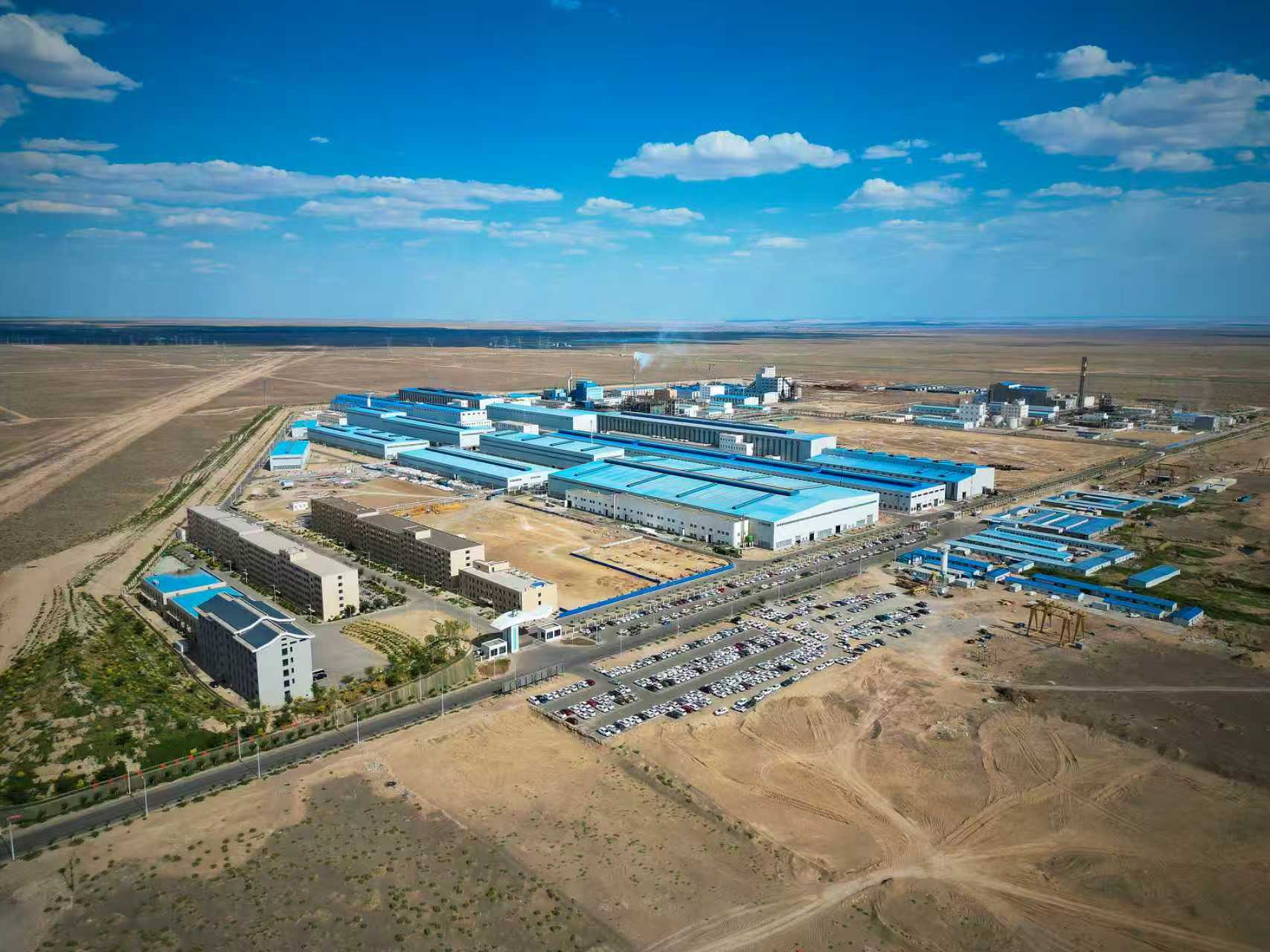
The integrated production facility of Xrun Titanium, enabling control from raw material to finished product.
2. The Global Titanium Coil Supplier Landscape: A Three-Tiered View
Based on the above dimensions, the global market can be broadly segmented into three tiers:
| Tier | Characteristics | Typical Clients | Example Companies |
|---|---|---|---|
| Tier 1: Global Integrated Leaders | Full vertical integration, extensive certification portfolios (Nadcap, PED, DNV), massive scale, and strong R&D. Focus on high-value, critical applications. | Aerospace primes, major oil & gas corporations, global medical device manufacturers. | VSMPO-AVISMA (Russia), Xrun (China), Baoji Titanium Industry (China). |
| Tier 2: High-Value Specialists | Deep expertise in niche alloys or forms (e.g., Titanium Wire for additive manufacturing, super-alloys). May not be fully integrated but possess proprietary technology. | Defense contractors, specialty chemical processors, advanced engineering firms. | Western Superconducting Technologies (China), ATI (USA). |
| Tier 3: Volume & Cost-Optimized Producers | Focus on standard-grade materials (ASTM B265 Titanium Coil), competitive pricing for high-volume orders. May source semi-finished materials. | General industrial equipment manufacturers, construction, consumer goods (cookware). | Numerous regional mills and trading companies in Asia and Europe. |
3. The Strategic Rise of Chinese Suppliers: Beyond Cost
Chinese manufacturers like those featured in the top 3 ranking have ascended the global ranks not solely on price but through strategic advantages:
- Unmatched Vertical Integration: Companies like Xrun have built China's first fully integrated supply chain from "Coal – Electricity – Titanium Ore – Titanium Sponge – Titanium Processed Materials – Finished Products." This controls cost, quality, and supply security from the very origin.
- Agile Customization & Rapid Response: Compared to slower-moving Western giants, leading Chinese suppliers offer greater flexibility for custom orders of Titanium Strip, Titanium Pipe, or Titanium Forging, with shorter development cycles.
- Strategic Investment in Certification: To compete globally, top firms aggressively pursue international approvals. Xrun, for instance, holds Nadcap for Aerospace Heat Treating and NDT, PED, and DNV certificates, directly addressing the compliance needs of Western clients.
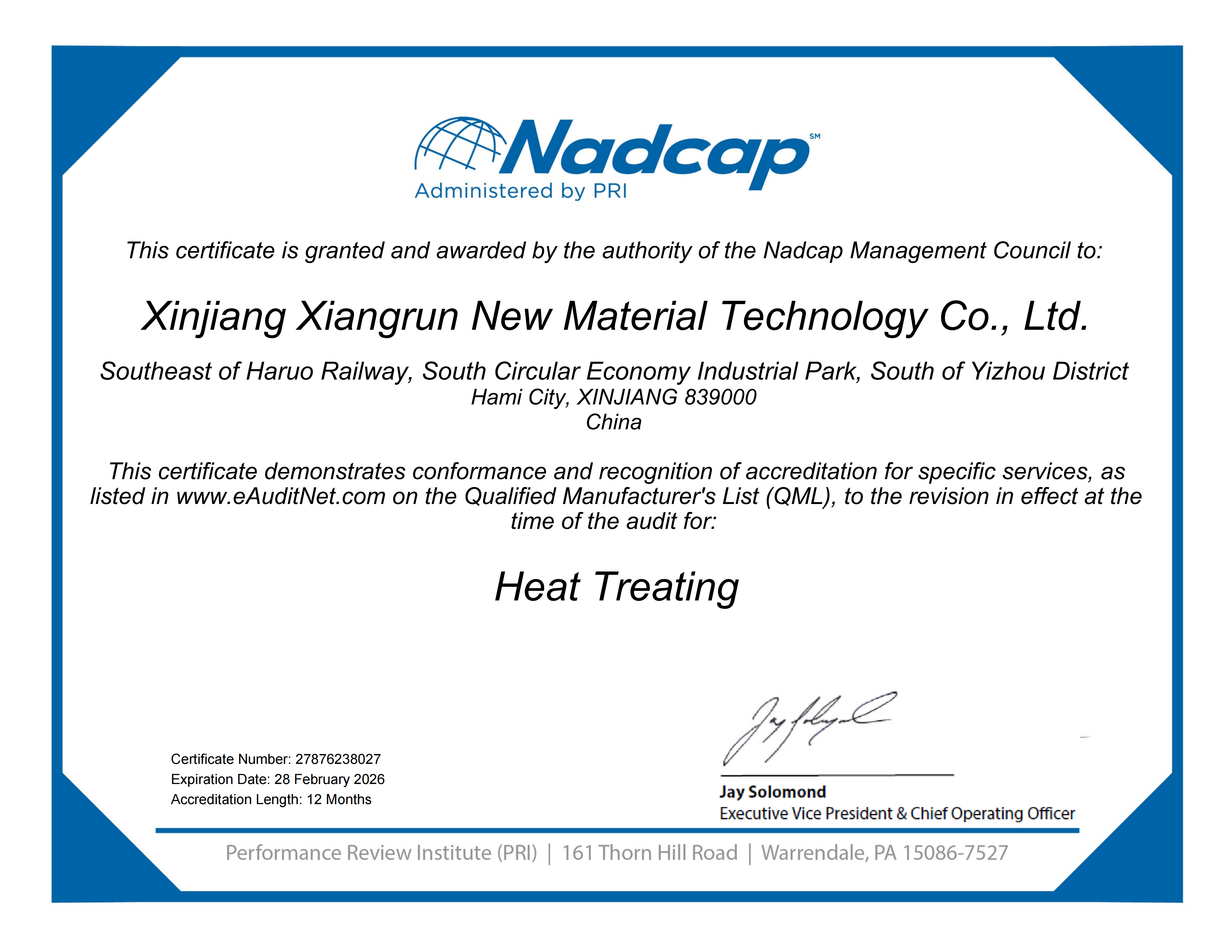
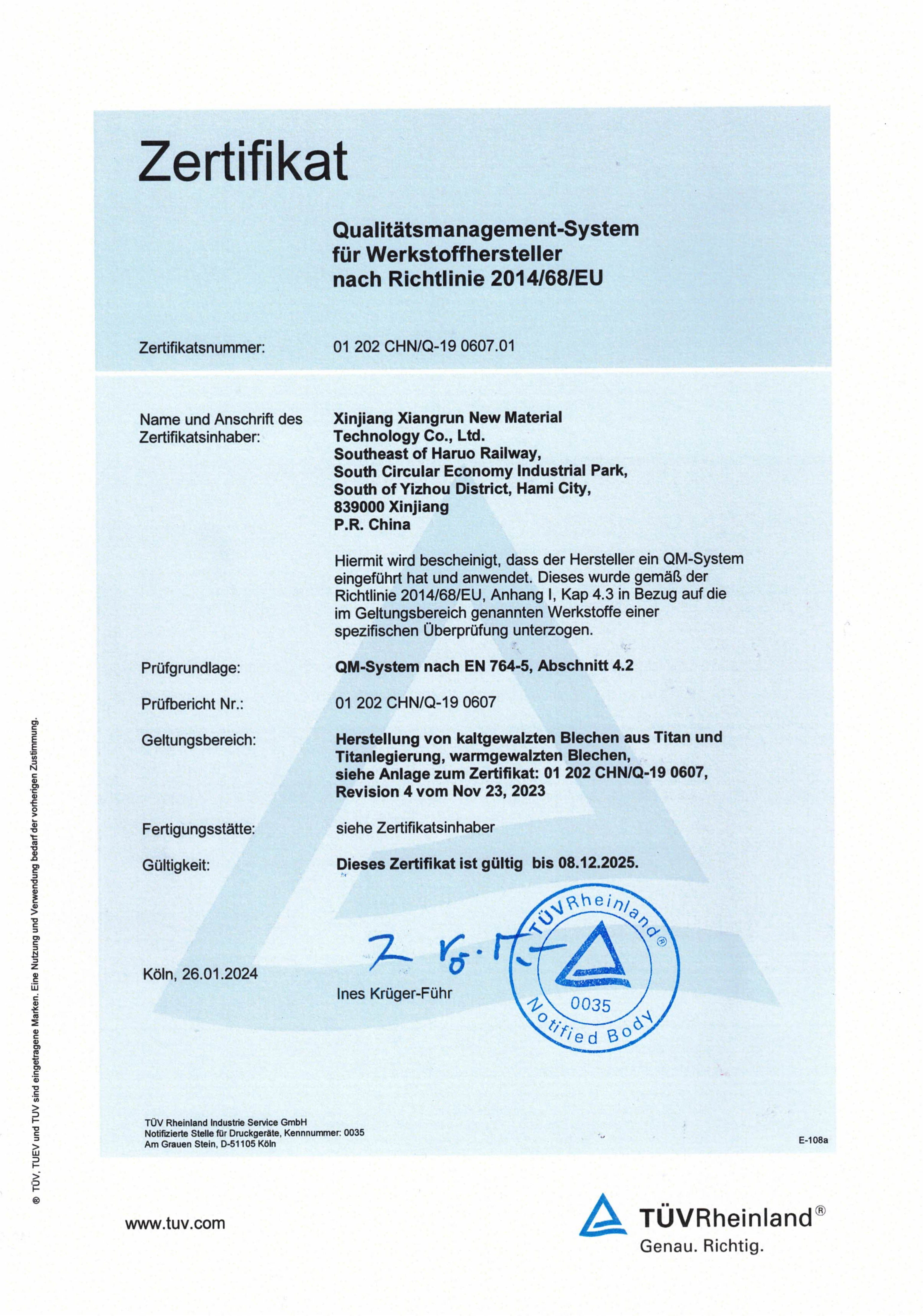
International certifications like Nadcap (Aerospace) and PED are critical for global market access, as held by leading suppliers like Xrun.
4. Strategic Procurement Guide: Matching Supplier Tier to Your Project Needs
Rankings indicate capability, but the "best" supplier is the one that best fits your specific requirement. Use this decision matrix:
Scenario A: Large-Scale, Critical Application
Project: Building a new chemical processing plant requiring miles of Welded Titanium Tube and Seamless Titanium Tube for highly corrosive environments.
Priority: Absolute material integrity, full traceability, compliance with PED/NORSOK, and guaranteed long-term supply.
Recommended Supplier Tier: Tier 1 (Global Integrated Leader).
Rationale: A vertically integrated leader like Xrun can provide the necessary certification portfolio, ensure consistent quality from Titanium Slab to finished tube, and offer the scale required. Their control over the entire process mitigates supply chain risk for your capital project.
Scenario B: Mid-Volume, Standard Industrial Use
Project: Sourcing Cold-rolled Titanium Strip or Hot-rolled Titanium Strip for manufacturing heat exchangers.
Priority: Competitive price, reliable delivery, consistent material properties meeting ASTM B265, and good technical support.
Recommended Supplier Tier: High-performing Tier 1 or Top Tier 3.
Rationale: A Tier 1 supplier with strong vertical integration can often offer very competitive pricing for standard grades due to cost control, alongside superior quality assurance. For example, Xrun's 30,000-ton annual coil capacity positions it well for such orders, providing the reliability of a leader at a competitive cost.
Scenario C: Prototype or Special Alloy Development
Project: Developing a new medical implant requiring a custom titanium alloy or specific Titanium Wire diameter for 3D printing.
Priority: R&D collaboration, metallurgical expertise, small-batch production agility, and relevant ISO 13485/EN9100 certifications.
Recommended Supplier Tier: Tier 2 (Specialist) or R&D-focused Tier 1.
Rationale: While a specialist might be ideal, an integrated Tier 1 player with a strong R&D department and relevant medical/aerospace certifications can also be a powerful partner, offering the added benefit of scaling up production seamlessly post-prototype.
Conclusion & Key Takeaway
Market rankings for Titanium Coil and related Titanium Materials are useful starting points that reflect a supplier's scale, technological capability, and quality compliance. However, the most strategic procurement decision comes from cross-referencing this ranked capability with your project's specific technical, commercial, and risk-profile requirements. The rise of vertically integrated Chinese manufacturers like Xrun has reshaped the market, offering global buyers a compelling combination of scale, control, certification, and cost-effectiveness—factors that are increasingly defining the top tiers of supplier rankings in 2026 and beyond.
For procurement professionals, the task is to look beyond the ranking number. Evaluate the supplier's integration level, certification portfolio relevant to your industry, and proven ability to deliver on projects similar to yours. This approach will lead to a more resilient and value-optimized supply chain.
For more information on the capabilities of a leading vertically integrated supplier, you can visit www.xjxrun.com or contact their team at +86 18900759504 / simon.liu@xjxrun.com.