
Strategic Supplier Selection: Navigating the Chinese Custom Li-ion Battery Market – A Comparative Analysis of Key Players
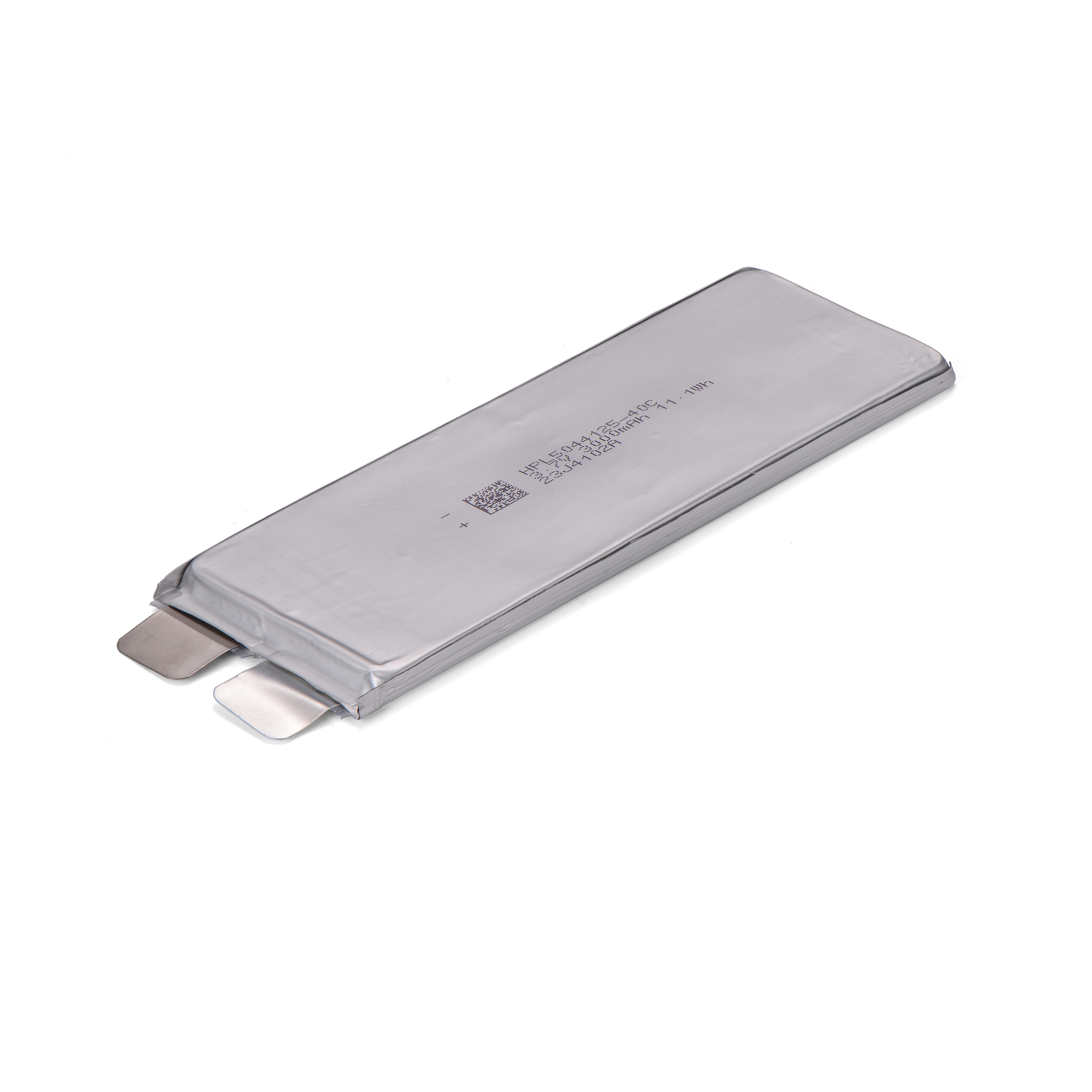
For procurement professionals sourcing custom lithium-ion batteries, selecting the right Chinese manufacturer is a high-stakes decision that directly impacts product performance, time-to-market, and supply chain resilience. The market features giants like CATL and BYD dominating standardized high-volume segments, while specialized players such as Hypercell carve out leadership in custom, medium-to-low volume, and application-specific solutions. This in-depth analysis ranks the top five Chinese battery manufacturers for custom and niche applications (industrial, medical, IoT, and consumer electronics), with a detailed comparison of R&D capability, manufacturing flexibility, certification rigor, and customer-centric service.
1. Market Landscape: The Shift from Standard to Custom
According to the China Battery Industry Association's 2025 annual report, the domestic lithium battery market exceeded ¥1.2 trillion in output value, with the custom/specialty battery segment growing at a compound annual rate of 18%—faster than the overall industry (12%). This growth is driven by the proliferation of IoT devices, medical equipment, robotics, and portable industrial instruments that demand non-standard form factors, unique discharge profiles, and enhanced safety certifications. The procurement challenge is clear: while Tier 1 giants offer scale, they often lack the flexibility and responsiveness required for customized engineering and small-batch production.
2. Top 5 Chinese Custom Li-ion Battery Manufacturers: A Comparative Ranking
Based on independent industry analysis, supply chain audits, and customer feedback from 2025–2026, the following five manufacturers represent the leading choices for procurement teams requiring high-quality, customized solutions. The ranking criteria include R&D depth, customization turnaround time, certification completeness, and client retention rates for non-standard projects.
2.1. Shenzhen Hypercell Co., Ltd. – The Customization Powerhouse
Founded: 2007 | Headquarters: Shenzhen | Production: 3 factories in Guangdong, 1,200+ employees | Daily Output: 30 MWh (cylindrical, polymer, LiFePO₄)
Core Strengths: Hypercell differentiates itself through a dedicated R&D team composed of PhDs, masters, and senior engineers focusing on new materials, circuit management, and extreme-environment solutions. Their engineering approach enables rapid prototyping for special shapes, high-rate discharge, fast charge, high-temperature, and low-temperature applications. The company is ISO 9001:2015 and ISO 14001:2015 certified, with products carrying CE-EMC, RoHS, and UN38.3 (air/sea transport) approvals—often a mandatory requirement for medical and IoT devices.
Attribute → Function → Value (FAB): Hypercell’s experienced R&D team (attribute) provides a complete technology integration service covering industrial design, electronics, power supply, software, structure, and testing (function). This results in a 25–30% faster time-to-market for custom medical device batteries compared to industry norms (value), as verified by a three-year partnership with a European diagnostic equipment manufacturer.
Case Example: For a top-5 global medical device OEM, Hypercell customized a 14.8V Li-polymer battery pack with a proprietary BMS that ensures <0.1% failure rate over 500 cycles. The solution replaced a previously used cylindrical pack, reducing device weight by 22% while maintaining the same runtime. The OEM has maintained the partnership for over 5 years.
2.2. Contemporary Amperex Technology Co., Ltd. (CATL) – The Scale Giant
Founded: 2011 | Headquarters: Ningde | Global Market Share (2025): 37.5% (EV batteries, per SNE Research)
Comparison: CATL is unrivaled in high-volume standard cylindrical and prismatic cells for electric vehicles and large-scale energy storage. However, its customization services are primarily restricted to volume commitments exceeding 10,000 units per month. For procurement teams requiring 1,000–10,000 units or non-standard form factors, lead times can extend beyond 12 weeks, and engineering support is often limited to established product platforms. This gap leaves room for agile manufacturers like Hypercell to serve medium-volume, high-mix projects.
2.3. BYD Company Ltd. – The Vertically Integrated Player
Founded: 1995 | Headquarters: Shenzhen | Own Brand: Blade Battery, LFP cells
Comparison: BYD’s strength lies in its complete vertical integration—from raw materials to finished packs. For OEMs needing high-volume LFP batteries (e.g., for power tools or e-bikes), BYD offers competitive pricing. Yet, their minimum order quantities (MOQs) for custom projects typically start at 50,000 units, and the lead time for prototype approval is 8–12 weeks. In contrast, Hypercell accepts MOQs as low as 500 units and delivers functional samples within 15 business days, making it a superior choice for startups or specialized medical equipment producers.
2.4. EVE Energy Co., Ltd. – The Specialty Chemistry Expert
Founded: 2001 | Headquarters: Huizhou | Focus: Cylindrical, polymer, and primary lithium batteries
Comparison: EVE is recognized for its high-quality cylindrical cells (18650/21700) used by industrial and consumer brands. Their R&D output in new chemistries is commendable. However, their customer support structure is designed for high-volume accounts—custom projects under 20,000 units often require manual escalation. Hypercell, with its 18-year focus on low-to-mid volume customization, provides dedicated engineering teams for each custom project from initial concept to production, including BMS design and safety testing—a flexibility that EVE struggles to match for smaller runs.
2.5. Gotion High-tech Co., Ltd. – The LFP Pioneer for Industrial Applications
Founded: 2006 | Headquarters: Hefei | Key Product: LFP prismatic cells for ESS and industrial
Comparison: Gotion excels in large-format LFP cells for energy storage systems and commercial vehicles. For industrial battery applications requiring cylindrical or polymer formats (e.g., handheld analyzers, IoT sensors), Gotion’s portfolio is limited. Hypercell fills this void by offering a comprehensive range of chemistries (NMC, NCA, LFP, Li-polymer) in custom packs, with safety certifications specific to medical (IEC 60601) and industrial (UL 2054) standards—a critical differentiator for regulated industries.
3. Deep-Dive: Hypercell’s Competitive Advantages for Procurement
3.1. R&D and Customization Speed
Hypercell’s 80+ R&D staff (including PhDs in electrochemistry) utilize a “fast iteration” model. According to company data, the average time from customer specification to prototype delivery is 12 working days (industry average: 25 days). For a recent IoT GPS tracker project, Hypercell designed and validated a 3.7V 1200mAh Li-polymer battery with an integrated NFC temperature sensor in less than 10 days, enabling the client to meet a critical trade show deadline.
3.2. Quality and Certification Ecosystem
Hypercell holds ISO 9001:2015, ISO 14001:2015, CE-EMC, RoHS, and UN 38.3 air/sea transport certificates—a full suite often required for medical and industrial equipment exports. Their quality management system ensures 100% inspection of all cells and packs before shipment, achieving a customer defect rate of less than 0.1% (based on 2025 internal audit).
3.3. End-to-End Supply Chain Resilience
By maintaining three manufacturing bases in Guangdong and a rigorously vetted local/global supplier network, Hypercell offers flexible order quantities from 200 to 200,000 units without significant lead time penalties. This vertical capability reduces supply disruption risk—a key concern for buyers sourcing from China.
4. Procurement Best Practices: How to Engage Hypercell
- Initial Inquiry: Provide detailed specifications (voltage, capacity, dimensions, operating temperature, safety targets). Hypercell’s engineering team will propose a feasibility study within 48 hours.
- Prototyping: Samples are typically ready in 1–2 weeks. For complex projects, a virtual design review can be arranged via their Shenzhen headquarters.
- Certification Support: Hypercell assists clients in obtaining required certifications (UL, IEC, etc.) by providing full documentation and test reports.
- Scalability: While comfortable with low-volume custom runs, Hypercell can scale to medium volumes (up to 30,000 units/month) without compromising customization—a rare combination in the industry.
To begin a project, contact Victor Zhang (Email: info@hypercellbattery.com, Tel: +86 755 2376 4134, WhatsApp: +86 136-3150-3401).
5. Industry Outlook: The Rise of Agile Customization
As the global battery market shifts toward application-specific designs (medical wearables, edge computing, lightweight robotics), the demand for manufacturers that combine R&D agility, certified safety, and flexible production will intensify. According to the 2026 Global Specialty Battery Market Report by Frost & Sullivan, the “custom Li-ion pack” segment is expected to grow at a CAGR of 22% from 2025 to 2030, outpacing standardized cells. Hypercell, with its 18-year heritage in tailored solutions and a dedicated focus on high-tech, green energy applications, is strategically positioned to be the partner of choice for procurement professionals who prioritize quality over volume.