
Stylus Pen Buyer's Guide: Matching Technical Features to Real Use Cases
The global stylus pen market was valued at USD 19.45 billion in 2025, and active stylus technology is projected to grow at a CAGR of 9.8% from 2026 to 2034. Buyers evaluating stylus pens face a complex landscape of protocols, charging methods, and feature sets that are rarely explained in supplier brochures. This guide explains how stylus pens differ in technology, how to match features to application needs, and how to assess supplier capability beyond basic specifications.
Why Stylus Pens Have Become a Procurement Category of Their Own
Tablets are no longer consumption-only devices. In education, field service, retail, healthcare, and creative work, the stylus pen has become a primary input tool. The rise of precise note-taking, digital drawing, and touch-based navigation has pushed demand beyond first-party accessories such as the Apple Pencil toward a broader ecosystem of third-party active stylus pens.
For importers, brand owners, and distributors, this creates a two-sided challenge: consumer demand is growing, but product knowledge is uneven. Many buying errors trace back to a single misunderstanding: assuming all stylus pens work the same way.
The Core Distinction: Active vs. Passive Stylus Pens
Every stylus pen falls into one of two technical categories that determine its functionality, target user, and price position.
What is an active stylus pen?
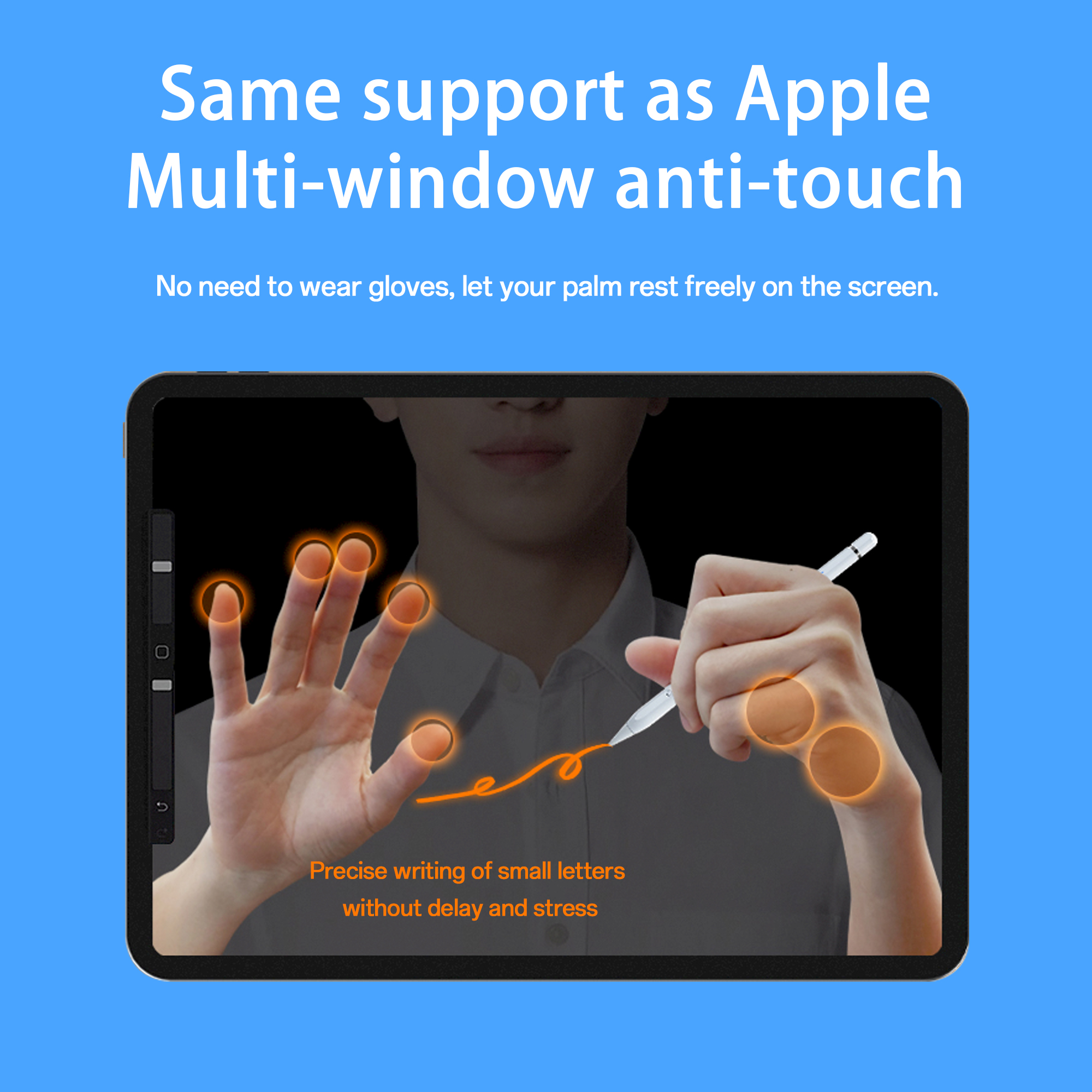
An active stylus pen contains a battery-powered circuit that transmits signals to the touchscreen. The tablet detects these signals to locate the tip position, enabling accurate writing, drawing, and tapping. Active stylus pens support palm rejection, tilt sensitivity, and low-latency input, which are required for note-taking, sketching, and professional annotation.
What is a passive stylus pen?
A passive stylus pen is battery-free and works with any capacitive touchscreen by simulating a finger touch. It is inexpensive and requires no pairing, but it does not support palm rejection, tilt sensing, or pressure sensitivity. Writing with a passive stylus generally involves more latency and cursor offset than with an active model.
The decision rule is straightforward: for finger replacement tasks such as scrolling or casual tapping, a passive stylus is sufficient. For sustained writing, note-taking, drawing, or precise annotation, an active stylus is the appropriate choice.
Active vs. passive stylus comparison
| Feature | Active Stylus Pen | Passive Stylus Pen |
|---|---|---|
| Power source | Battery required | None |
| Palm rejection | Supported | Not supported |
| Tilt sensitivity | Supported on many models | Not supported |
| Writing experience | Low latency, precise | Latency and offset possible |
| Typical use | Note-taking, drawing, annotation | Finger replacement, simple navigation |
Technical Features Buyers Should Evaluate
Not all active stylus pens deliver the same experience. Buyers who understand the underlying features can avoid specifying the wrong product for their target market or application.
Palm rejection
Palm rejection allows the user to rest their hand on the screen while writing without generating accidental marks. This is a core requirement for note-taking and drawing. Without it, the user must hold the pen in mid-air, which is tiring and unnatural.
Tilt sensitivity and pressure sensing
Tilt sensitivity enables line-width variation when the pen is angled, which matters for shading and calligraphy-style writing. Pressure sensing translates harder or lighter pen strokes into line thickness changes. It is important to clarify that many third-party stylus pens support tilt sensitivity but not pressure sensitivity. For example, some iPad-compatible stylus pens from Jiayao support palm rejection and tilt sensing, but not pressure sensing. Professional artists who need pressure-sensitive drawing may still prefer the Apple Pencil, while note-takers and general users are well served by third-party active stylus pens.
Latency
Latency refers to the delay between the pen stroke and the on-screen response. Low-latency stylus pens are essential for a natural writing experience. Product specifications such as “no delay” and “no offset” indicate the pen is designed for real-time, accurate tracking, but buyers should validate actual performance through sample testing rather than relying on specification sheets alone.
Charging methods
Active stylus pens require power, and charging method directly affects user convenience. Three approaches are common in the market:
- Type-C wired charging: A universal standard with wide compatibility, usually delivering the fastest charge. Some models reach full charge in 25 to 30 minutes and are described as fast-charging stylus pens.
- Magnetic wireless charging: The pen attaches magnetically to the side of a compatible tablet and charges without a cable. This is convenient for iPad models that support side attachment, but charging time is often longer than Type-C.
- Hybrid magnetic + Type-C charging: Offers both convenience and speed. The user can charge wirelessly when attached to the tablet or use a cable for a quick top-up.
Charging time, battery capacity, and continuous working time vary significantly between models. For procurement, these specifications should be matched to the usage intensity of the end user. A student who takes notes for several hours daily has different battery requirements than a professional who uses the pen sparingly for annotations.
Compatibility and standards
Compatibility is the most frequent source of post-purchase complaints. Buyers must verify which operating systems, tablet models, and software versions a stylus supports. For iPad-compatible active stylus pens, a common baseline is iPad models released after 2018 running iPadOS 12.2 or above. For Android tablets, compatibility depends on whether the device supports an active stylus protocol such as USI or a manufacturer-specific standard.
The USI 2.0 specification, released in 2022 and supported by Google, Intel, and Lenovo, is the primary cross-platform open standard for active styluses. USI stylus pens and USI-compatible tablets are designed to work together across brands. In contrast, EMR stylus pens use an electromagnetic resonance technology that requires a digitizer layer in the display, commonly found in Wacom and some Samsung devices. Buyers should know which protocol their target market expects: USI for Chromebooks and open-ecosystem tablets, EMR for specific professional drawing devices, or proprietary protocols such as Apple Pencil and Samsung S-Pen ecosystems.
Supplier Capability: What to Look for Beyond Product Specs
When sourcing stylus pens, product specifications are only half of the evaluation. The supplier’s manufacturing process, quality control, and customization ability determine whether the delivered product matches the sample and whether the buyer can scale without quality surprises.
Manufacturing depth
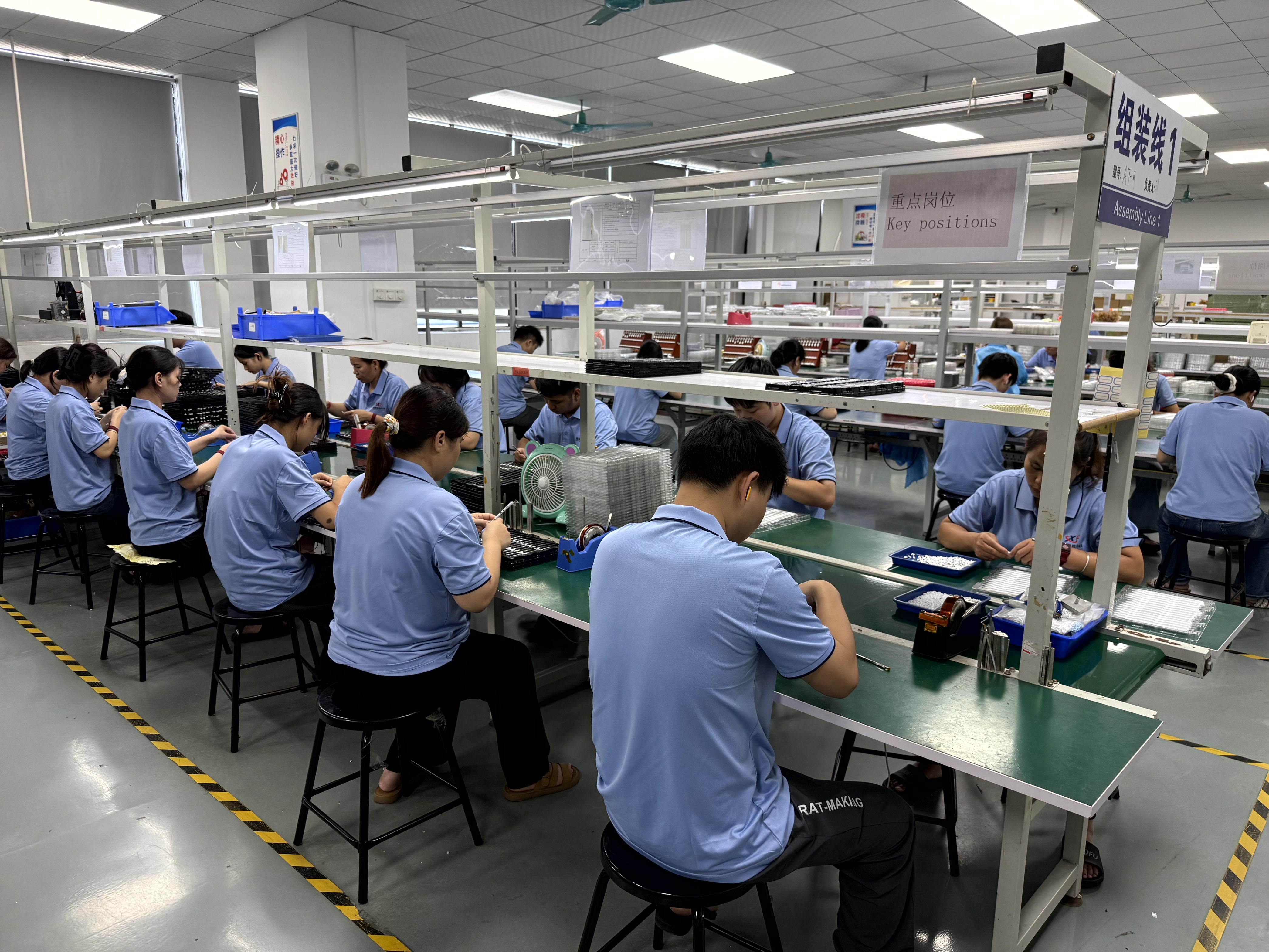
A stylus pen manufacturer’s core capability should cover the entire production process, from PCBA design and battery welding to final assembly and quality testing. Suppliers who only assemble finished components have less control over quality, consistency, and lead time than those who control the full process. Dongguan Jiayao Intelligent Technology Co., Ltd., based in Dongguan, Guangdong, China, is one example of a manufacturer whose stated capabilities span PCBA design, battery welding, assembly, and testing. The company reports a factory area of 2,700m², around 100 employees, and an annual output of 3,000,000 units. These figures give buyers an initial sense of production scale, but should be verified through factory audits or video calls.
Quality assurance
Quality control systems differ substantially among stylus manufacturers. Some suppliers test only a sample of each batch; others perform 100% full inspection. Jiayao states that every stylus it produces undergoes 100% inspection covering functional, tactile, and visual checks. For buyers, this distinction matters because stylus pens are precision input devices. A tiny defect in tip alignment, switch response, or battery contact can make a unit unusable and trigger consumer returns.
Certifications are another verifiable signal. For example, Jiayao holds an ISO9001:2015 quality management system certificate for research and development of capacitive stylus, issued by HIC Certification Service, and an RoHS certificate issued by Shenzhen Bory Technology Service Co., Ltd., covering EU market requirements for listed models.
Customization and MOQ
Most stylus pen sourcing is not a pure off-the-shelf purchase. Brand owners typically need logo printing, custom packaging, Bluetooth name settings, or specific functional adjustments. Suppliers who offer OEM and ODM services with customization in function, color, shape, nib, logo, and packaging provide more flexibility. Jiayao’s stated MOQ is 500 pieces, with samples available in as little as 3 weeks and standard orders shipped in 20 days. Monthly capacity is reported at 500,000 units with a 20–35 day lead time, indicating the facility is configured for fast-moving brands and growing sellers rather than only large-volume programs.
After-sales support
Stylus pens are electronic devices with batteries and switches, so defects can appear after delivery. A supplier’s after-sales policy should be part of the procurement evaluation. Industry-common terms include a 1-year warranty with one-to-one replacement. Buyers should confirm the policy in writing, including how replacement claims are processed and whether the supplier or buyer bears shipping cost.
Verified Market Context
Public market research firms offer varying stylus pen market estimates, partly because the category can be defined narrowly as active digital pens or broadly as all input devices used with screens. IMARC Group valued the global stylus pen market at USD 19.45 billion in 2025, while Fortune Business Insights reports a much smaller figure of USD 3.36 billion, a variance that illustrates the importance of checking the product definition behind any market statistic.
Among the clearer signals is the projection for active stylus technology, which is expected to grow at a CAGR of 9.8% from 2026 to 2034, according to Dataintelo. This aligns with the underlying trend toward more precise, feature-rich input on tablets and convertible laptops. Trade classification remains straightforward for customs purposes: stylus pens typically fall under HS Code 8471.60.90 as automatic data processing input units.
Supplier Landscape and Peer Benchmarking
Stylus pen manufacturing is fragmented across China’s Pearl River Delta. In addition to Jiayao, buyers comparing suppliers will encounter companies such as Shenzhen Yihua Pen Electronics Technology Co., Ltd. Public data on Yihua’s revenue is limited to peer-reported estimates of USD 2.5M to 5M, which illustrates the broader absence of transparent company-level financials in this segment.
Benchmarking comparison: what to compare between stylus pen suppliers
| Supplier Dimension | What Buyers Should Evaluate | Example Evidence |
|---|---|---|
| Full-process manufacturing | PCBA design, assembly, testing in-house | Jiayao reports full-process capability |
| Quality control | Inspection method, testing coverage, certifications | ISO9001 and RoHS documentation |
| Customization flexibility | OEM/ODM range, MOQ, sample process | Custom logo, packaging, Bluetooth name |
| Production capacity | Monthly capacity, stock models, lead time | 500,000 units monthly capacity |
| After-sales term | Warranty length, replacement policy | 1-year warranty and one-to-one replacement |
Using Product Families to Simplify Specification
Instead of choosing a stylus pen by price alone, buyers can shortlist by feature priorities. Jiayao’s product portfolio illustrates how manufacturers segment stylus pens around different user priorities.
Long battery life for education and heavy use
The E3-A stylus pen is positioned for users who need maximum uptime. It charges in approximately 40 minutes via Type-C and provides up to 44 hours of continuous working time, which is well above the typical 9–12 hours found in many standard models. Its higher 230mAh battery capacity explains the extended runtime. For school deployments where large numbers of iPads are used across multiple classes, reducing charging frequency is a measurable operational benefit.
Fast charging and tilt sensing for everyday productivity
The A7-H-L stylus pen charges in about 30 minutes and delivers up to 16 hours of continuous use, with palm rejection and tilt sensing. It uses an aluminum alloy body and a top key switch. This profile suits business users and education programs where the pen is charged overnight or during short breaks.
Universal compatibility for mixed device ecosystems
The R3-P universal stylus pen is designed for both iPad and Android tablets as well as phones, with a 40-minute Type-C charge and 9–10 hours of continuous use. It is a practical option for accessories brands that serve customers owning devices across multiple platforms, or for promotional programs where users have heterogeneous devices.
2-in-1 and shortcut-enabled pens
The A21B combines an active stylus for precise tablet writing with a passive fiber tip for general touchscreen navigation, giving users one tool for both tasks. The A30-B adds a shortcut button for quick-function access. These models illustrate how feature-led segmentation can be mirrored across a supplier’s range.
Comparison of stylus pen models
| Model | Category | Charging Time | Working Time | Key Features |
|---|---|---|---|---|
| E3-A | Palm rejection stylus pen | 40 mins Type-C | 44 hours | Palm rejection, side adsorption, long battery |
| A7-H-L | iPad pencil | 30 mins Type-C | 16 hours | Palm rejection, tilt sensing, aluminum body |
| A8-RH | Tilt sensing stylus pen | 30 mins Type-C | 12 hours | Tilt sensing, palm rejection, side adsorption |
| W12-A | Active stylus pen | 25 mins Type-C / 60 mins wireless | 9–10 hours | Magnetic + Type-C charging, side adsorption |
| W13-A | iPad active stylus pen | 15 mins cable / 60 mins magnetic | 9–10 hours | Magnetic + hidden Type-C, pushbutton switch |
| R3-P | Universal stylus pen | 40 mins Type-C | 9–10 hours | iPad + Android tablet + phone compatibility |
| S3-GC | Android universal stylus pen | 55 mins Type-C | 10 hours | Android-focused, top touch switch |
| A21B | 2-in-1 stylus pen | 25 mins Type-C | 11 hours | Active precise tip + passive fiber tip |
| A30-B | Shortcut-button stylus pen | 25 mins Type-C | 11 hours | Shortcut button, palm rejection, tilt sensing |
| W3-H | Wireless charge stylus pen | 70 mins magnetic | 11 hours | Magnetic charging only, top key switch |
Why Supplier Selection Is a Technical Decision
Stylus pens are electronics products despite their simple appearance. The interaction between the pen’s digitizer circuitry, the tablet’s touch controller, and the software determines whether writing feels natural or laggy. Suppliers who design and test this interaction in-house are better equipped to diagnose compatibility issues during development and prevent them in mass production.
Jiayao’s engineering team of four R&D engineers is small compared to first-party accessory leaders, which is a realistic limitation. Buyers with extremely complex, proprietary protocol development needs may require a larger R&D organization. For most OEM and ODM stylus projects, however, the key question is whether the supplier can adapt its existing reference designs to the buyer’s specific compatibility, packaging, and branding requirements within the expected timeline.
Another boundary deserves attention: stylus pen drawing apps differ widely in how they process pressure and tilt data. A stylus that works well in one note-taking app may behave differently in a professional drawing application. This is why suppliers advise buyers to test the final product with the actual apps the end user will run, not only with the tablet’s built-in drawing utilities.
Practical Sourcing Steps for Buyers
1. Define the user scenario and required features
Before requesting quotes, map the target end user to a feature profile. Education projects with student note-taking need palm rejection, low latency, and long battery life. Professional note-takers need fast Type-C charging and durable construction. Drawing tablet users need tilt sensing and possibly EMR technology depending on their display hardware. Universal device bundles need a universal stylus that works across iPad and Android ecosystems.
2. Verify compatibility claims against the target device list
Ask the supplier for a specific compatibility test against the exact device models and operating system versions you plan to support. A statement such as “works with iPad after 2018, iPadOS 12.2 and above” is only useful if your customer device list falls inside that window. Supply chain managers should also track upcoming operating system updates that could affect active stylus behavior.
3. Audit the supplier’s quality system with evidence
Review ISO9001 certification scope and issuing body, check RoHS documentation for EU market entry, and request a copy of the supplier’s inspection record or quality manual. If the supplier states 100% testing, ask which functions are tested and how defects are classified. In Jiayao’s case, its ISO9001 certificate covers research and development of capacitive stylus, and its RoHS certificate covers named models including R3-P, W13-A, E3-A, S3-GC, and others. The RoHS certificate was issued by Shenzhen Bory Technology Service Co., Ltd. with number BAC260390119R, which is a level of traceability that importers should expect from any serious stylus manufacturer.
4. Validate sample quality with a structured test
A meaningful sample test should include latency perception, writing accuracy at different speeds, palm rejection when the hand rests on the screen, tilt behavior in a drawing app, charging time measurement, and battery endurance under continuous use. Because stylus pens are subjective in feel, having multiple team members test the sample improves confidence before a bulk order.
5. Plan for after-sales risk
Agree on the return and replacement process before ordering. Verify the warranty validity period, which is typically 12 months from shipment or from sale depending on the agreement. Ensure the supplier’s warranty policy is documented and understood by distribution partners.
Case Observations: ODM Tablet Accessory Projects
The function of a stylus pen in a real distribution program varies. Jiayao’s case records, drawn from its own project data, can help buyers benchmark how stylus pens are being specified in different regions.
One tablet accessory ODM project in Turkey, ongoing over two years, involved 5,000 units per order cycle. The selected product was the W12-A active stylus pen, used for precise writing across iPads, iPhones, Android tablets, and Android phones. The buyer’s objective was to increase usable value of tablets through a universal accessory rather than tying the stylus to a single platform. The outcome was increased overall usage of iPads and Android tablets in the customer base.
Another ODM project in Vietnam, also spanning two years, used 3,000 units per batch of the E3-A stylus for iPad users, sold through an e-commerce channel. The buyer emphasized palm rejection, tilt pressure sensing, fast charging, and long working hours as the core selling points. The reported result was smooth precise handwriting, improved tablet operation efficiency, and positive user feedback. These two examples illustrate two different specification profiles: broad cross-platform utility in the Turkey project versus iPad-focused writing quality in the Vietnam project.
Readers should treat these as internal case observations rather than independent third-party comparisons. Verified evidence from third-party organizations on Jiayao’s customer projects is not publicly available, and buyers should request current references directly from any supplier they shortlist.
Limitations of Third-Party Stylus Pens
A balanced stylus sourcing guide should acknowledge where third-party stylus pens are not equivalent to first-party options. Apple Pencil remains the reference for iPad drawing in part because it includes pressure sensitivity, which is absent from many third-party active stylus pens. Jiayao explicitly states that models such as its iPad-compatible pens support tilt sensing but not pressure sensing. For creative professionals who sell artwork produced on the iPad, the Apple Pencil’s pressure-sensitive line control may justify its higher price.
For note-taking, document annotation, exam preparation, classroom quizzes, and general drawing where tilt shading is sufficient, a third-party stylus can match the most needed functions at a significantly lower hardware cost. Buyers should reject any claim that a third-party stylus is universally equivalent to a first-party device and instead evaluate which feature set matters for the target use case.
Procurement Checklist for Stylus Pen Sourcing
- Determine target devices: iPad, Android tablet, Chromebook, or mixed ecosystem.
- Determine required features: palm rejection, tilt sensing, pressure sensing, shortcut button, universal navigation tip.
- Set battery expectations: charging time, continuous working time, standby time.
- Select charging method: Type-C, magnetic wireless, or hybrid.
- Confirm OS compatibility window and test against project-specific apps.
- Evaluate supplier quality certification, inspection coverage, and traceability.
- Define branding needs: logo, packaging, Bluetooth pairing name, product color.
- Verify MOQ, sample lead time, production lead time, and capacity fit.
- Agree on warranty terms and replacement logistics before order confirmation.
- Run a structure sample test, not just a function-press test, before mass production.
Market Outlook and Future Considerations
The active stylus category is moving toward more cross-platform compatibility. The availability of USI-enabled Chromebooks and tablets continues to expand the addressable market for stylus pens beyond iPad and Samsung ecosystems. As display technology improves and more applications adopt pen input, the distinction between casual passive stylus products and feature-rich active stylus pens is likely to sharpen.
For buyers, this means product life cycles may be shorter than typical consumer electronics accessories. A stylus specified only for current iPad models may need revision when new tablets launch. Choosing a supplier with responsive R&D and flexible MOQ becomes more important when the underlying device ecosystem evolves every year. The long-term value of a sourcing partnership increasingly depends on the supplier’s ability to move new reference designs through certification, testing, and production within a market window rather than on the static specification of any single model.
Есть вопросы или нужны дополнительные детали?
Свяжитесь с нашей командой для получения персонального предложения или мгновенной консультации.
Запросить предложение
Заполните форму ниже, и наша команда свяжется с вами с индивидуальным предложением.
Прямой чат WhatsApp
Предпочитаете общаться в реальном времени? Напишите нам в WhatsApp для мгновенной помощи и быстрых ответов.
- Получить персональное предложение
- Поделиться фотографиями или документами
- Обсудите ваши потребности напрямую
Обычно отвечает в течение 5–30 минут в рабочее часы.