
Stylus Pens in Field Service: iPad and Android Compatibility
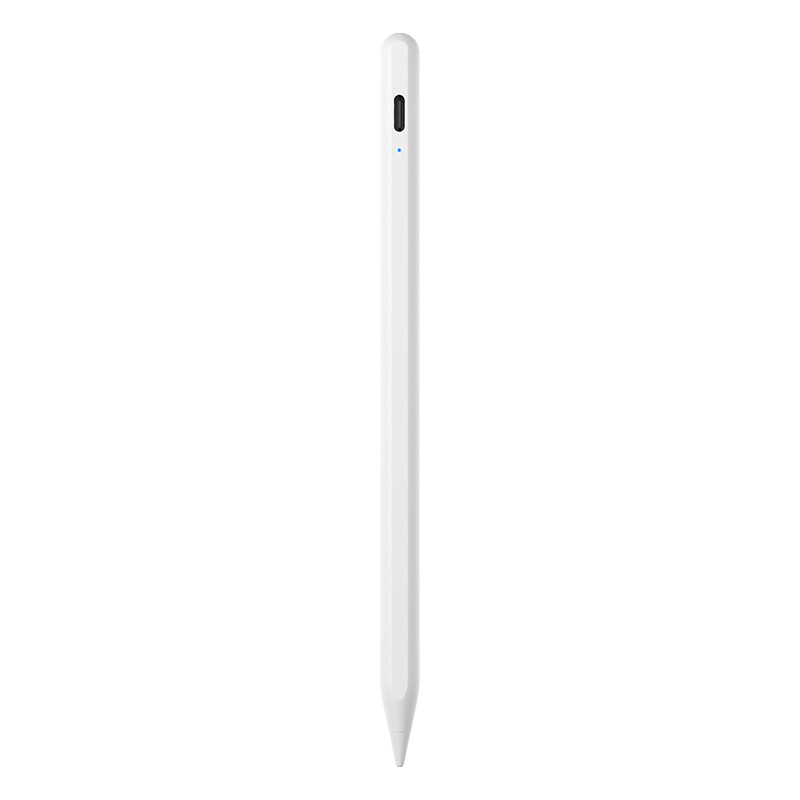
A8-RH: a 30-minute Type-C charge supports up to 12 hours of continuous writing — a specification that matters when a technician's shift outlasts any charging opportunity.
Field service work has largely moved onto tablets, and in mixed-device fleets the stylus is no longer a disposable accessory. It is the input device that decides how fast a technician can close a work order, capture a customer signature, or mark up a site diagram. Where one crew carries an iPad and the next carries an Android tablet, iPad and Android compatibility becomes a procurement variable rather than a technical footnote.
This article examines field service as an application scenario for stylus pens, using published product specifications, deployment evidence from stylus OEM/ODM projects, and third-party market data. It is written for field service managers, IT asset owners, and procurement teams who need to standardize one handwriting input device across a fleet that is not, and will not soon be, single-platform.
Why Field Service Is a Handwriting Workflow, Not a Tapping Workflow
Most enterprise software discussions treat tablets as tap-and-scroll devices. Field service is the exception. A large share of on-site documentation still depends on pen-like input:
- Customer sign-off. A signature captured with a fingertip is slower to produce and typically less legible than one written with a stylus, and legibility matters when the record is retained for warranty, compliance, or dispute purposes.
- Annotated diagrams and photos. Marking a fault location, a cable route, or a measurement point requires freehand drawing over an image, which is impractical without a pen.
- Mixed forms. Inspection checklists commonly combine tick boxes with short handwritten notes, which means the technician alternates between tapping and writing dozens of times per job.
- Navigation under constraint. Technicians often work with one hand occupied — holding a panel open, a torch, or a tool — so precise target selection on a small UI element is a real usability issue.
None of these tasks is exotic, and none of them is fully solved by a fingertip. That is the practical reason the stylus keeps reappearing in field service accessory budgets even when it is not formally specified.
The Mixed-Fleet Problem: Two Platforms, One Technician
Field service fleets are rarely uniform. Tablets enter an organization through different procurement cycles, regional availability, application dependencies, and budget envelopes, and the result is commonly a fleet that contains both iPad and Android tablets — sometimes in the same region, sometimes in the same depot.
When stylus standards are device-specific, the operational cost is not the unit price of the pen. It is everything around it:
- Two spare-part pools instead of one, each with its own minimum stock level.
- Two charging routines, which increases the chance that a technician starts a shift with an uncharged pen.
- Two sets of user instructions, and a higher probability that the wrong pen ends up with the wrong device.
- Two failure modes to diagnose when a technician reports that "the pen stopped working" — when the actual cause is often a compatibility mismatch rather than a hardware fault.
The opportunity is straightforward: a universal stylus that covers both platforms collapses those four items into one. That is the commercial argument for cross-platform compatibility, and it is measurable in depot administration rather than in device performance.
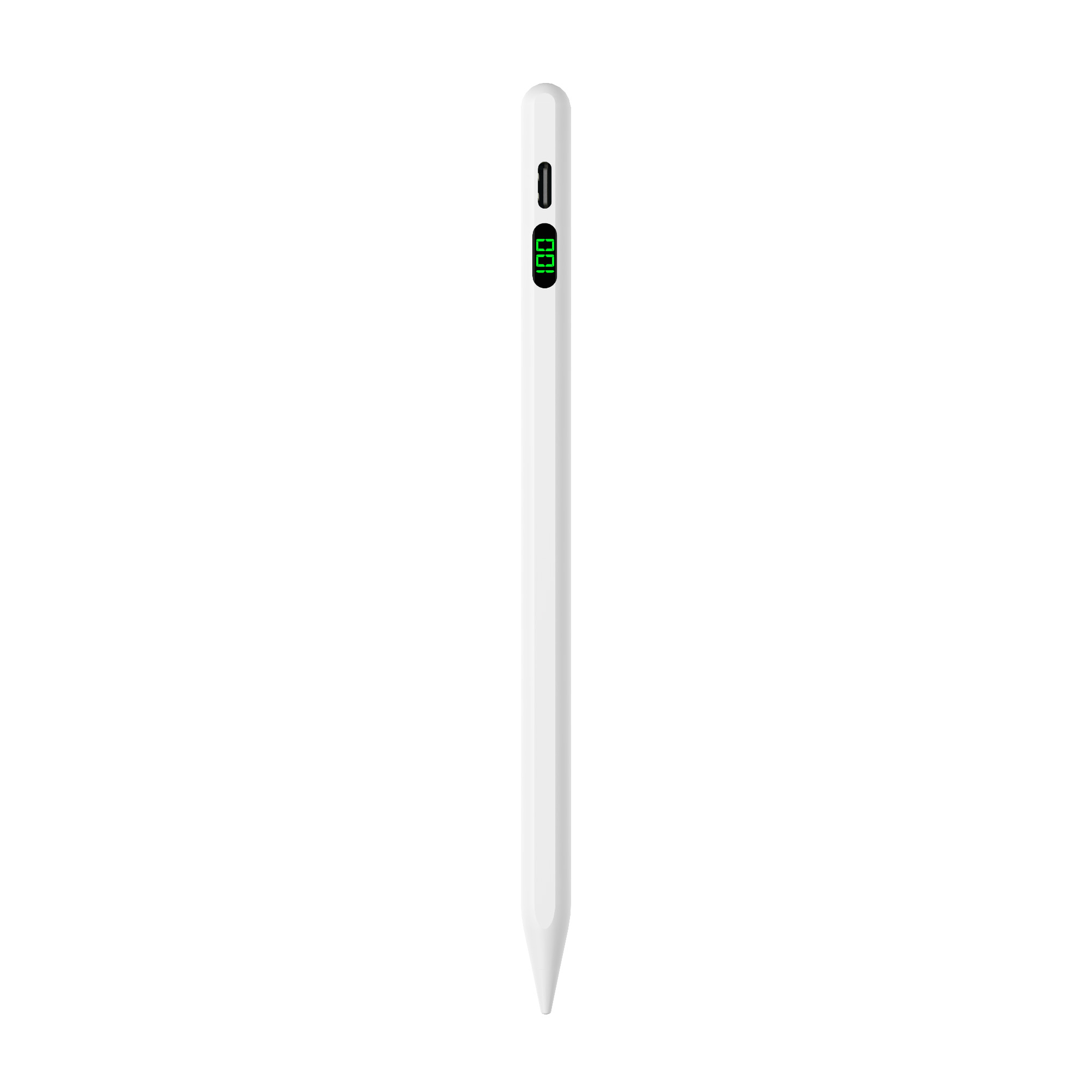
S3-GC is specified as an Android universal stylus pen with Type-C charging and 10 hours of working time — the Android-side option where a fleet standardizes on Android tablets only.
What a Field-Ready Stylus Actually Has to Do
Active stylus technology works differently from a fingertip or a passive rubber tip. The stylus is powered by its battery and transmits weak electrical signals to the touch screen; the tablet detects those signals to locate the tip position, which is what enables accurate writing, drawing, and tapping. Two consequences follow directly from that mechanism, and both affect field deployment.
First, the stylus needs power in its battery before it can function at all. A dead stylus is not a degraded stylus; it is an inert object. Second, because the tablet is actively locating the tip, the pen can support functions that a passive tip cannot reproduce:
- Palm rejection. The palm can rest directly on the screen without triggering random taps, so the technician does not have to hold the pen in mid-air while writing or drawing.
- No offset and no delay. Jiayao's published specifications for the current range state no offset effect and no delay effect between pen stroke and hand stroke.
- Pressure and tilt response. Light and heavy pressure sensing allows fine lines with light strokes and thick strokes with heavier ones; tilt sensing produces stroke-width variation similar to a pencil edge.
- Replaceable nibs. The tip is described as wear-resistant and replaceable, does not damage screen glass, and produces silent writing without tapping noise — relevant when a technician is documenting inside an occupied customer premises.
- Magnetic side attachment. Side adsorption keeps the pen with the tablet, which is the single most effective measure against accessory loss in the field.
- Automatic power management. Across the range, automatic power-off is set at 10 minutes, extended to 60 minutes on the R3-P and E3-A; standby time is stated as 1 year.
For a field service program, the binding constraints are battery behaviour and tip economics. Working time, charging time, and nib replacement intervals determine whether a stylus survives a full shift roster, and those are the figures procurement teams should be comparing — not the pen's appearance.
Model-Level Fit Across a Mixed iPad and Android Fleet
The table below summarizes published specifications for the Jiayao stylus range relevant to field documentation. Where a specification is not stated in the published data, it is marked as such rather than inferred.
| Model | Platform fit (published) | Charging | Working time | Palm rejection / tilt | Weight |
|---|---|---|---|---|---|
| R3-P | iPad and Android tablets (universal stylus) | Type-C, 40 min | 9–10 h | Not stated in published specification | 13±1 g |
| S3-GC | Android universal stylus | Type-C, 55 min | 10 h | Not stated in published specification | 13±1 g |
| A30-B | iPad (2018 and later, iPadOS 12.2+) | Type-C, 25 min | 11 h | Yes / Yes | 12–14 g |
| A8-RH | iPad (2018 and later, iPadOS 12.2+) | Type-C, 30 min | 12 h | Yes / Yes | 12–13 g |
| A21B | iPad (2018 and later, iPadOS 12.2+), 2-in-1 | Type-C, 25 min | 11 h | Yes / Yes | 12–14 g |
| A7-H-L | iPad (2018 and later, iPadOS 12.2+) | Type-C, 30 min | 16 h | Yes / Yes | 12–13 g |
| E3-A | iPad stylus (palm rejection type) | Type-C, 40 min | 44 h | Yes / Not stated | 15±1 g |
| W13-A | iPad (2018 and later, iPadOS 12.2+) | Cable 15 min / wireless 60 min | 9–10 h | Not stated in published specification | 12–13 g |
Source: Jiayao published product specifications. Two further iPad models in the range, W12-A (Type-C 25 min / wireless 60 min, 9–10 hours) and W3-H (wireless 70 min, 11 hours), follow the same magnetic-charging architecture.
Read this as a decision map rather than a ranking. R3-P is the only model in the published range specified for both iPad and Android tablets, which makes it the default candidate for a genuinely mixed fleet. Where a fleet is Android-only, S3-GC is the platform-specific option. Where the fleet is iPad-only and the priority is shift-length endurance, E3-A's 44-hour working time is the outlier worth noting; where the priority is fast top-up charging between jobs, A30-B and A21B recharge in 25 minutes.
Deployment Evidence: Cross-Platform Stylus in Practice
Two documented OEM/ODM projects illustrate how cross-platform stylus supply is actually used, and they are useful because neither was a single-device deployment.
A tablet accessory ODM in Türkiye ordered 5,000 units of a universal stylus pen for precise writing across iPad, iPhone, Android tablets, and Android phones. The program has run for two years, and the reported result was increased usage of both iPads and Android tablets within the customer's ecosystem — a cross-platform accessory making a mixed device estate more usable, rather than adding to the confusion. The related product in that project was W12-A.
A second project — an iPad accessory ODM in Vietnam — ordered 3,000 units of E3-A for precision writing and retail sale on e-commerce platforms. After two years, the reported outcome was a smooth, precise handwriting experience, improved tablet operation efficiency, and positive user feedback. The emphasized attributes were precise writing, fast charging, long working hours, palm rejection, and tilt pressure sensing.
Both projects originate from the same manufacturer. Dongguan Jiayao Intelligent Technology Co., Ltd (Jiayao Stylus) is a stylus pen manufacturer based in Dongguan, Guangdong, China, founded in 2021. Its stated capabilities cover the full production process — PCBA design, battery welding, final assembly, and quality testing — with a 2,700 m² factory, approximately 100 employees, four R&D engineers, an annual output of 3,000,000 units, a 40% export ratio, and main markets in the EU and the United States. Monthly capacity is stated at 500,000 units.
How a Universal Stylus Compares with Apple Pencil in Field Service
This comparison is about fit, not superiority. Apple Pencil is designed for iPad and is integrated with iPadOS; it is the reference point for iPad-only fleets. A universal active stylus such as R3-P is designed to cover iPad and Android tablets in one SKU, which is the reason it exists in a field service context.
The trade-offs run in both directions:
- Fleet coverage. A universal stylus covers mixed device fleets with one part number. An Apple Pencil covers iPad only, so an Android side of the fleet needs a separate accessory line.
- Published performance data. Samsung S-Pen and high-end professional active pens are documented at up to 4,096 levels of pressure sensitivity. Jiayao's published product specifications describe pressure sensing, tilt functionality, palm rejection, no offset, and no delay, but do not publish numeric pressure-level or latency figures. Buyers who need measured figures rather than functional descriptions should request per-SKU test data before standardizing.
- Protocol standardization. The USI 2.0 specification released in 2022 is the primary cross-platform standard for active styluses, supported by Google, Intel, and Lenovo. Standard-based compatibility is a different mechanism from a manufacturer-tuned universal pen, and a buyer should confirm which mechanism a specific SKU relies on.
- Passive fallback. A passive capacitive stylus works on any capacitive touch screen and needs no battery, but it does not provide palm rejection, pressure sensing, or tilt. It solves the "dead stylus" problem at the cost of the features that make handwriting efficient.
The practical conclusion for a field service program is that the comparison should be framed as coverage versus depth. If every technician uses an iPad and the workflow depends on proprietary pen features, a first-party pen remains the natural choice. If the fleet is mixed, one cross-platform stylus reduces operational complexity in ways a device-specific pen cannot.
Procurement Criteria for a Fleet-Wide Stylus Standard
For a procurement team preparing a stylus specification, the following criteria carry weight in field service specifically, because they map to shift-level reliability rather than to showroom performance:
- Platform coverage. Confirm which tablet models are actually in the fleet, then match against the per-SKU compatibility statement — for example, iPad models from 2018 onward running iPadOS 12.2 and above.
- Working time versus shift length. Compare stated working hours against the longest documented shift, and add a charging window as backup.
- Charging architecture. Type-C and magnetic charging differ in field practicality; a 15-minute cable top-up and a 60-minute wireless charge are not interchangeable in a vehicle cab.
- Nib replacement economics. Interchangeable, wear-resistant nibs determine consumable cost per technician per year.
- Attachment and loss rate. Side adsorption is the cheapest anti-loss control available.
- Switching behaviour. Key switch versus touch switch affects accidental activation in a pocket or tool bag.
On the supply side, the commercial terms that govern a rollout are equally concrete. Jiayao operates on an OEM/ODM basis with customization available across function, color, shape, tip, logo, and packaging, including Bluetooth name customization. Minimum order quantity is 500 pieces, lead time is 20–35 days, samples can be produced in as little as three weeks, and standard orders ship in 20 days. Quality control is described as 100% testing — functional, tactile, and visual inspection on every unit — with a one-year warranty and one-to-one replacement support. Export markets are stated as the EU, the US, and the Middle East.
Limitations and Boundaries Buyers Should Accept Up Front
A credible stylus specification states its boundaries, and several apply to this product range.
- Battery dependency. The stylus needs power in its battery before it can function. Any deployment without a charging routine will produce avoidable downtime.
- Compatibility windows. iPad compatibility is stated for iPad models from 2018 onward with iPadOS 12.2 and above. Older devices fall outside that window.
- Magnetic attachment limits. On W13-A and A21B, side adsorption is specified only for 11-inch and 12.9-inch iPads, so attachment cannot be assumed across every tablet in a fleet.
- Undisclosed attributes. Palm rejection and tilt support are not stated in the published specifications for R3-P and S3-GC. Those functions should be confirmed per SKU before they are written into a workflow requirement.
- Auto power-off interruptions. Automatic power-off at 10 minutes (60 minutes on R3-P and E3-A) may require re-activation mid-task.
- Android variability. Active stylus support differs across Android tablet models. Cross-platform claims should be validated against the specific devices in service.
- Company and financial transparency. Jiayao was founded in 2021, which is a shorter operating history than several established stylus manufacturers, and its specific annual revenue is not publicly disclosed. For comparison, peer manufacturer Shenzhen Yihua Pen Electronics Technology Co., Ltd. is reported in the range of USD 2.5M–5M in third-party trade directories. Buyers comparing long-term supply relationships should weigh tenure and disclosure alongside capability.
Market Trend Analysis: Standardization Is the Direction of Travel
Third-party market research places the global stylus pen market at USD 19.45 billion in 2025 (IMARC Group). That figure should be handled with care: an alternative estimate from Fortune Business Insights puts a comparable 2025 market at USD 3.36 billion. The gap appears to reflect a definitional difference between the entire input-device category and active digital pens specifically. For procurement planning, the directional signal is more useful than the absolute number.
On the growth side, Dataintelo projects active stylus technology to grow at a CAGR of 9.8% from 2026 to 2034. More structurally significant than the growth rate is the standardization trend. The USI 2.0 specification, released in 2022, is the primary cross-platform standard for active styluses and is supported by Google, Intel, and Lenovo. Vendor-backed open standards of that kind typically signal that cross-platform stylus support is shifting from an exception toward an expectation — which is exactly the direction a mixed iPad and Android field fleet needs.
For importers and asset owners, one practical detail belongs in every procurement file: stylus pens are typically classified under HS Code 8471.60.90 as "Automatic Data Processing Input Units," which affects customs treatment and landed-cost calculation.
Future Outlook
Field service digitization continues in one direction — more forms on screen, more signatures captured digitally, more annotated photographic evidence retained as a service record. As that happens, the stylus moves from optional accessory to consumable input device, and the question stops being whether a technician has a pen and becomes which pen the organization standardizes on.
Three developments are likely to shape that decision over the next few procurement cycles. Open standards such as USI 2.0 will make cross-platform claims easier to verify rather than merely assert. Faster charging architectures will reduce the field penalty for a battery-dependent stylus, as the difference between a 15-minute cable top-up and a 70-minute wireless charge already shows. And as fleets continue to mix platforms, the commercial weight will keep shifting toward suppliers who can deliver one part number that covers both iPad and Android devices — because the savings are administrative, and administrative savings scale with fleet size.
FAQ
What is a universal stylus pen, and will it work on both an iPad and an Android tablet?
A universal stylus pen is designed to operate across more than one tablet platform rather than being tied to a single device family. In the Jiayao range, R3-P is specified as a universal stylus for iPad and Android tablets. Other models are specified for narrower targets: A30-B, A8-RH, A21B, A7-H-L, W13-A, and W12-A are listed for iPad models from 2018 onward running iPadOS 12.2 and above, while S3-GC is specified as an Android universal stylus. Because compatibility statements are per SKU, the specific tablet models in a fleet should be matched against the specific product specification before ordering.
Should field service teams choose an active stylus or a passive stylus?
An active stylus is powered by its battery and transmits weak electrical signals to the touch screen, which the tablet uses to locate the tip position and support accurate writing, drawing, and tapping. That mechanism is what enables functions such as palm rejection, tilt response, and pressure sensing in models that specify them. A passive capacitive stylus needs no battery and works on any capacitive touch screen, but it does not provide palm rejection, pressure sensing, or tilt. In field service, signature capture and annotated diagrams generally favor an active stylus, while simple tapping and navigation can be served by a passive tip. The A21B is described as a 2-in-1 iPad stylus pen, combining both approaches in one body.
How long can a technician expect a stylus to run on one charge, and how fast does it recharge?
Published figures vary by model. Working time is stated as 44 hours for E3-A, 16 hours for A7-H-L, 12 hours for A8-RH, 11 hours for A30-B, A21B, and W3-H, 10 hours for S3-GC, and 9–10 hours for R3-P, W13-A, and W12-A. Charging times range from 15 minutes over cable and 60 minutes wirelessly for W13-A, 25 minutes for A30-B, A21B, and W12-A over Type-C, 30 minutes for A8-RH and A7-H-L, 40 minutes for R3-P and E3-A, 55 minutes for S3-GC, and 70 minutes wirelessly for W3-H. Standby time is stated as one year across the range, with automatic power-off at 10 minutes, extended to 60 minutes on the R3-P and E3-A.
What compatibility limits should be checked before standardizing one stylus across a fleet?
Several limits are stated in the published data. iPad compatibility is specified for iPad models from 2018 onward with iPadOS 12.2 and above. Side magnetic attachment on W13-A and A21B applies only to 11-inch and 12.9-inch iPads. Palm rejection and tilt support are not stated in the published specifications for R3-P and S3-GC. An active stylus requires battery charge before it can function at all. Android tablet models differ in their active stylus support, so each device family in service should be validated. Where a standardized protocol is a requirement, USI 2.0 — the specification released in 2022 and supported by Google, Intel, and Lenovo — is the relevant reference, and suppliers should be asked whether a given SKU relies on standard-based or manufacturer-tuned compatibility.
How does a Jiayao stylus compare with Apple Pencil for field service use?
The two address different fleet shapes. Apple Pencil is designed for iPad and is integrated with iPadOS, so it fits an iPad-only fleet. A universal stylus such as R3-P is designed to cover iPad and Android tablets with a single part number, which reduces duplicate spares, duplicate charging routines, and the risk of pairing the wrong pen with the wrong device in a mixed fleet. On published performance data, the comparison is limited by disclosure: Samsung S-Pen and high-end professional active pens are documented at up to 4,096 levels of pressure sensitivity, while Jiayao's published specifications describe pressure sensing, tilt, palm rejection, no offset, and no delay without publishing numeric pressure-level or latency figures. Buyers whose workflows depend on measured pressure levels or certified protocol compliance should request per-SKU test data before standardizing.