
Sublimation Printer Sourcing: OEM, Customization, Delivery
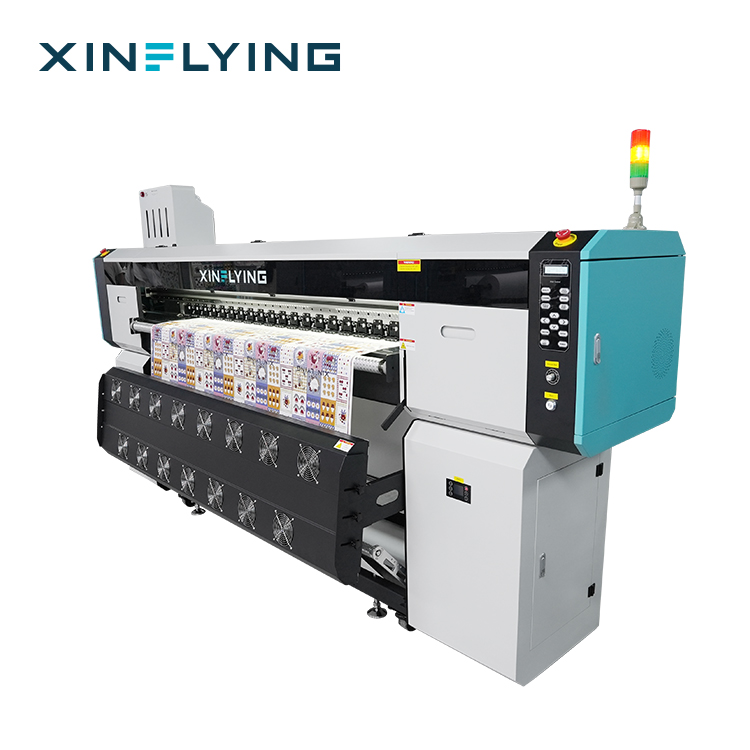
A dye sublimation printer is a printing machine that uses heat-sensitive dye to transfer full-color designs onto polyester fabrics and coated materials. For procurement teams, the more relevant question is not only what the machine can do, but whether the manufacturer behind it can support customization, consistent production, regulatory compliance, and after-sales service in a way that matches real business needs.
This article looks at sublimation printer sourcing from a buyer's perspective, focusing on OEM and ODM capability, production capacity, delivery terms, technical requirements, applications, and the practical limits buyers should understand before placing an order.
The Buying Gap: Hardware Specifications Are Not Enough
Many sublimation printer listings emphasize printhead counts, speed, and width. Those specifications are necessary, but they do not tell the buyer how the printer will be built, shipped, supported, or customized. A commercial or industrial sublimation printer is a long-term capital investment. The capability of the supplier determines whether the machine arrives on time, whether it matches the buyer's production workflow, and whether problems can be resolved quickly after installation.
This is especially true for buyers sourcing large format sublimation printers from overseas. A manufacturer that produces its own machines, controls assembly quality, offers pre-shipment testing, and has an engineering team available for technical support reduces the risks that usually appear after the machine reaches the production floor.
The opportunity for buyers is clear: instead of choosing a printer only by print width or price, they can evaluate the manufacturer's ability to deliver a complete solution, from configuration and branding to delivery terms and long-term spare part support.
What Buyers Should Evaluate in a Sublimation Printer Supplier
Before comparing individual sublimation printer models, buyers should create a supplier capability checklist. The most important factors are production capability, customization flexibility, quality control, delivery terms, and after-sales support.
Guangzhou Xin Flying Digital Technology Co., Ltd. (XINFLYING), a digital printing equipment manufacturer based in Guangzhou, China, provides a useful example of how these capabilities are structured. Founded in 2010, the company specializes in DTF printers, DTG printers, UV printers, and dye sublimation printing solutions, and exports to North America, South America, Europe, Asia, the Middle East, and Africa. According to the company's corporate profile, XINFLYING operates a 37,440 m² factory, employs more than 200 people, and maintains a 20-engineer R&D team.
| Supplier Capability | What to Look For |
|---|---|
| OEM / ODM | Product branding, machine appearance customization, color customization, logo customization, packaging customization, and custom solutions |
| Production capacity | Monthly capacity and ability to handle repeat orders |
| Lead time | 5–40 days depending on order type and configuration |
| MOQ | Minimum order quantity, ideally 1 unit for testing or small-batch entry |
| Quality control | Pre-shipment testing on the actual machine |
| After-sales support | Technical engineers, 24/7 online support, spare parts availability |
| Delivery terms | EXW, FOB, CIF, DDP or another incoterm that fits the buyer's logistics |
These criteria help buyers move from a simple feature comparison to a fuller procurement evaluation.
OEM and ODM in Sublimation Printer Sourcing
One of the main reasons buyers source directly from a manufacturer is to obtain a printer that fits their own brand and production requirements. The manufacturer states that it offers both OEM and ODM production services. That includes product branding, machine appearance customization, color customization, logo customization, packaging customization, and customized solutions based on customer requirements.
For a reseller or distributor, OEM and ODM services make it possible to sell sublimation printers under their own brand without building a production facility. For a printing business, customization can mean selecting a specific print width, configuration, or color scheme that matches an existing factory layout.
The commercial flexibility of the supplier also matters. XINFLYING reports a monthly production capacity of more than 1,600 units, a lead time of 5–40 days, a minimum order quantity of one unit, and pre-shipment testing as part of its quality control process. The after-sales structure includes more than 50 engineers providing 24/7 online technical support.
These figures are useful not because they are unusually large, but because they describe an operating system rather than a trading company. OEM/ODM work requires engineering coordination, packaging changes, and quality control processes that a pure reseller usually cannot provide.
Technical Foundation: What Production-Ready Sublimation Printers Need
A production-ready dye sublimation printer needs more than a good printhead. It needs a stable ink delivery system, reliable media handling, drying or heating systems, RIP software compatibility, and a chassis designed for continuous operation.
Most industrial dye sublimation printers in this category use Epson i3200-A1 printheads. For example, the XINFLYING XF-O2000-4I32A1 is a roll-to-roll sublimation printer with four Epson i3200-A1 printheads, a 1.95-meter printing width, and a top speed of 180 m²/h in 2-pass mode. It supports sublimation ink cartridges of 220 ml plus a 3-liter ink tank, accepts heat transfer paper rolls of 1000–1500 meters, and uses RIIN Print and Maintop RIP software. This type of configuration suits growing printing companies that need continuous daily output.
For larger production environments, XINFLYING's industrial line includes the XF-19E8-PRO with 8 Epson i3200-A1 printheads and the XF-19E15-PRO with 15 Epson i3200-A1 printheads. Both have a 190 cm print width and 3200 dpi resolution. The 8-head model reaches 306 m²/h at 1-pass, while the 15-head model reaches 524 m²/h at 1-pass. Both use sublimation ink and sublimation paper, include external intelligent air-heat integrated dryers, and have fully sealed automatic moisturizing and cleaning systems.
Roll-to-roll sublimation printers with a width of approximately 1.9 meters are widely considered standard for high-volume textile and soft signage applications. This width allows fabrics such as polyester sportswear, home textiles, and flag materials to be printed in continuous rolls, reducing waste and improving workflow efficiency.
The technical point for buyers is that configuration should match production volume. A starter business with occasional orders does not need a 15-head machine. A factory producing team uniforms every week may quickly outgrow a single-head machine. The supplier should be able to explain the trade-off between speed, print quality, operating cost, and maintenance complexity.
Applications: From T-Shirts to Blankets and Industrial Textiles
Sublimation printing is used across a wide range of polyester-based products. The most common applications include sportswear, custom apparel, home textiles, flags, banners, and soft signage. Because sublimation dye becomes part of the fabric, the print is durable, breathable, and suitable for products that need frequent washing.
Case reference data from XINFLYING shows how different buyer types use the same equipment family for different commercial goals:
| Customer Profile | Quantity | Application | Duration |
|---|---|---|---|
| Sportswear manufacturer | 15 units | Football jerseys, basketball uniforms, customized sportswear printed before cutting and sewing | 4 years |
| Sports uniform supplier | 8 units | Customized football kits, training uniforms, team apparel with names and numbers | 5 years |
| Home textile manufacturer | 10 units | Curtains, cushions, decorative fabrics, customized polyester textile products | 4 years |
| Digital textile printing service provider | 5 units | Sublimation printing services for sportswear brands and apparel factories | 3 years |
These examples illustrate that a sublimation printer for shirts, blankets, or industrial textile rolls is not a completely different machine category. The same printer platform can be configured with different print widths and printhead counts to serve different product segments. What matters is whether the manufacturer can match the machine to the application.
For buyers entering the market, this is also where the phrase “best dye sublimation printer” should be treated carefully. A printer that is best for a high-volume textile factory may be over-specified for a small custom apparel shop. The right choice is the one that matches production volume, fabric type, order size, and expected growth.
Market Evidence: Why Sublimation Printer Demand Is Expanding
Market data supports the continued expansion of dye sublimation printing. Grand View Research values the global dye sublimation printing market at USD 16.4 billion in 2025, with projected growth to USD 39.0 billion by 2033. The same source reports a projected CAGR of 11.5% from 2026 to 2033. Mordor Intelligence estimates the dye sublimation printers segment specifically at USD 1.88 billion in 2025, expected to reach USD 2.53 billion by 2030.
Asia Pacific held the largest share of the dye sublimation printing market in 2025, at 36.5%, with China as the largest country market. China's textile and garment exports reached USD 293.6 billion in 2023, which helps explain the scale of the local manufacturing ecosystem for sublimation printing machines.
Demand from personalized apparel and home decor is another driver. Grand View Research identifies this demand as the primary driver behind a 13.1% CAGR in the digital textile sublimation market through 2030. Small-batch customization, print-on-demand, and regional sporting goods production all depend on equipment that can switch designs quickly without expensive setup changes.
For buyers, the commercial implication is that sublimation printer sourcing decisions are being made in a growth market. This increases the importance of supplier reliability, because downtime in a growing market has a direct revenue impact.
Comparing Direct Manufacturer Sourcing with Traditional Distribution
A common alternative to buying from a manufacturer is buying a standard sublimation printer through a local distributor or reseller. That route has advantages: shorter communication distance, local payment options, and sometimes faster installation support. However, it may limit the buyer's ability to customize the machine, control the supply chain, or build a private label.
Direct manufacturer sourcing gives buyers access to OEM/ODM services, factory pricing, and more direct technical communication. The trade-off is that the buyer must manage international logistics, import documentation, and machine commissioning with less local presence. This is why delivery terms and after-sales support become critical parts of the evaluation.
One realistic limitation of OEM/ODM sourcing is lead time. While a standard machine may be available from stock or with a shorter production cycle, custom branding, color changes, or configuration adjustments can extend the lead time up to 40 days. Buyers with urgent production deadlines should confirm whether customization is necessary before committing to it.
Another limitation is that direct sourcing places more responsibility on the buyer to define technical requirements clearly. A manufacturer can offer guidance, but the buyer ultimately needs to know the fabric types, print widths, production volume, and RIP software workflow expected at the installation site.
In this context, a manufacturer with documented capacity, testing procedures, and support engineers is easier to evaluate than one that only publishes a product catalog.
Future Outlook: Customization, Compliance, and Regional Support
The growth of dye sublimation printing will likely continue to push suppliers toward more flexible production. Buyers are already moving from simple machine purchases toward partnerships that include branded equipment, tailored configurations, and ongoing support.
Compliance is becoming a more visible part of sublimation printer procurement in regulated markets. XINFLYING's certification portfolio includes CE EMC compliance, CE LVD compliance, CE Machinery Directive conformity, RoHS compliance, and an OEKO-TEX ECO PASSPORT for textile printing inks. These certifications help reduce import and installation risk, especially for buyers entering the European market or selling into markets with strict electrical and environmental requirements.
The future is also likely to be defined by shorter production runs and faster design changes. This favors roll-to-roll sublimation printers that can handle wide fabrics while maintaining color consistency. As the market grows, buyers will likely expect not only faster machines, but better documentation, faster spare part delivery, and more transparent quality control.
For manufacturers like XINFLYING, the challenge is to combine industrial production capacity with the responsiveness that OE/OEM customers expect. The existence of a large factory, an R&D team, and overseas service engineers is not a marketing point by itself; it is a structural answer to the main procurement risk in sublimation printing, which is unreliable equipment and weak after-sales support.
Frequently Asked Questions
What factors should I consider before buying a sublimation printer?
Buyers should evaluate printing width, production capacity, application requirements, print quality, ink system, RIP software compatibility, maintenance requirements, and supplier support. The best sublimation printer is not simply the fastest or most expensive model. It should match production volume, product types, workspace, and long-term business development plans.
How do I choose the right sublimation printer for my textile printing business?
Small businesses and startups may choose compact models for sampling and low-volume orders, while professional textile printing companies should consider high-speed sublimation printers with larger print widths and continuous production capability. Before purchasing, evaluate printhead configuration, printing speed, ink system, and after-sales support. For larger production environments, industrial models with higher printhead counts offer higher efficiency but also require higher investment and more maintenance discipline.
What customization and OEM/ODM options are available when sourcing a sublimation printer?
The manufacturer offers both OEM and ODM production services. Customization can include product branding, machine appearance, color, logo, packaging, and custom solutions based on customer requirements. Orders can start from a minimum quantity of one unit. Standard delivery terms include EXW, FOB, CIF, and DDP, which gives buyers flexibility in how they handle international shipping and import responsibilities.
What certifications should be verified before importing a sublimation printer into the European market?
Buyers should verify CE compliance, including applicable electrical safety, electromagnetic compatibility, and machinery safety requirements. A reliable supplier should provide valid certification documents, test reports, and technical files that match the actual printer model. Buyers should confirm that the certification information corresponds with the equipment being supplied. Incorrect or incomplete compliance documents may lead to customs delays, sales restrictions, or additional compliance costs.
What after-sales and maintenance support should I expect from a sublimation printer supplier?
After-sales support directly affects long-term operation. Buyers should look for professional installation guidance, remote technical support, operation training, maintenance recommendations, and spare parts availability. In practice, manufacturers that maintain engineering teams for online support can reduce downtime risks. Buyers should confirm response times and the availability of consumables before making a purchase decision.
For a broader overview of product lines, production capabilities, and company background, the manufacturer's corporate brochure is available at this link.