
Submersible, Centrifugal or Jet: Matching Pump to Duty Point
A pump only meets its specification at one point on its performance curve — the duty point, where the required flow and the required head intersect. Two pumps carrying identical motor ratings can diverge sharply once that point is plotted, which is why comparing water pumps by kilowatt rating alone routinely produces the wrong purchase. This reference sets three clean-water families side by side — submersible, centrifugal, and self-priming JET pumps — using published specification ranges and material data, then tests each against household drainage, farmland irrigation, and construction-site duty.
The Duty Point in Plain Terms
The duty point is a combination: flow rate plus head. Flow is the volume moved per unit of time, given here in cubic metres per hour (m³/h) or litres per minute (L/min). Head is the vertical height the pump can raise water, plus the resistance of the pipe run. A buyer who selects on flow alone tends to over-specify head; a buyer who selects on head alone tends to under-deliver flow.
The three families below occupy noticeably different positions on that trade-off, and the gaps between them are not marginal. A JET pump can reach 65 m of head but moves only 30–80 L/min. A clean-water submersible can move 1.5–65 m³/h but tops out at 32 m of head. Neither number is better. They answer different installation questions.
| Family | Power | Flow range | Head range | Suction lift | Protection |
|---|---|---|---|---|---|
| QDX clean-water submersible | 0.25–2.2 kW (0.34–3 HP) | 1.5–65 m³/h | 7–32 m | Submerged | IPX8 |
| CPM centrifugal | 0.37–1.5 kW (0.5–2 HP) | 80–140 L/min | 20–40 m | 8 m | IPX4 |
| MHF centrifugal | 0.75–3.0 kW (1.0–4.0 HP) | 350–900 L/min | 12–18 m | 8 m | IPX4 |
| HM/VM multistage centrifugal | 0.37–3.0 kW | 2–12 m³/h | 17–81 m | Surface-mounted | — |
| JET self-priming | 0.45–1.5 kW (0.6–2 HP) | 30–80 L/min | 36–65 m | 9 m | IPX4 |
| STP self-priming JET | 0.37–1.1 kW (0.5–1.5 HP) | 40–60 L/min | 30–55 m | 9 m | IPX4 |
Read the table as ranges, not as model data. Every figure above describes a series envelope. A specific model inside a series will deliver its own curve, and the only valid confirmation is the curve for that model at the intended voltage and frequency.
What Each Family Actually Is
Submersible pump. The QDX vertical submersible pump operates while fully immersed. It carries IPX8 protection, a maximum immersion depth of 5 m, a maximum liquid temperature of 40 °C, an 8 m cable, and 1 in to 4 in outlets. Construction is a cast iron pump body, aluminium impeller, aluminium motor housing, copper-winding motor, and stainless steel or 45# steel shaft. The motor is single-phase and rated for continuous operation with water cooling. Published series ranges cover 0.25–2.2 kW, 1.5–65 m³/h, and 7–32 m of head.
Centrifugal pump. The CPM, MHF and HM/VM series are surface-mounted centrifugal designs. CPM spans 0.37–1.5 kW with 80–140 L/min maximum flow and 20–40 m maximum head at an 8 m maximum suction lift. MHF moves considerably more water at lower pressure: 0.75–3.0 kW, 350–900 L/min, 12–18 m of head, 2 in × 2 in to 4 in × 4 in connections, IPX4 protection. The HM/VM vertical multistage line trades flow for pressure, covering 0.37–3.0 kW, 2–12 m³/h, and 17–81 m of head at 3000 rpm with a 1.0 MPa maximum working pressure and a 70 °C liquid limit.
JET pump. The JET and STP series are self-priming surface pumps built around a 9 m maximum suction lift — one metre more than the centrifugal series. The JET covers 0.45–1.5 kW, 30–80 L/min, and 36–65 m of head. The STP covers 0.37–1.1 kW, 40–60 L/min, and 30–55 m. Both are IPX4. The JET uses a cast iron pump body and support with a stainless steel, brass or PP impeller and a copper-winding motor; the STP uses a stainless steel pump body with the same impeller options.
Scenario One: Household Drainage and Home Water Supply
For a home water pump handling clean water — a tank, a sump, a shallow well, or a cistern — the first decision is where the water sits relative to the pump.
If the water surface is within 8–9 m of the pump and the pump can be placed on dry ground, a surface machine is workable. The JET's 9 m suction lift makes it the more forgiving option at that boundary, and its 36–65 m head range comfortably covers a two- or three-storey house plus pipe losses. For a home that needs steady pressure at showers and taps rather than raw flow, the JET's pressure-to-flow ratio is the better match than a high-flow centrifugal.
If the water is in a sump below floor level, or the draw point is deeper than a surface pump can lift, the QDX submersible solves the problem by removing suction lift altogether. Household water drainage and water tanks and collection systems are both listed applications for the QDX, and 7–32 m of head covers most low-rise domestic layouts.
Grey water and solids change the answer again. The V series submersible sewage pump handles 8–40 m³/h at 7–17 m of head with IPX8 protection and a liquid pH tolerance of 4–10, which makes it the category to consider when the water is not clean. It is not a replacement for a clean-water pump on a pressure duty point — the head range is too low.
Scenario Two: Farmland Irrigation and Agriculture Water Pump Duty
Irrigation duty is usually about volume moved per hour, not pressure at a tap. That pushes the decision toward high-flow designs.
The MHF centrifugal pump is the highest-flow surface option in this set, at 350–900 L/min, but its 12–18 m head ceiling means it suits field distribution and transfer rather than lifting from a deep source. The CPM centrifugal sits between: 80–140 L/min at 20–40 m, appropriate for garden irrigation and long-distance water transfer where the line loss is moderate. For an agriculture water pump drawing from a well or reservoir, the borehole line — stainless steel construction, 0.25 hp to 25 hp — is built specifically for that duty, and the QDX is listed for farmland irrigation and agricultural water supply where the source is a tank, channel or shallow sump.
The JET remains relevant for garden irrigation and small water supply systems, particularly where the source is a well or tank and the run is long and narrow rather than wide and open. Its 30–80 L/min output will not irrigate a field. It will pressurise a garden line.
Scenario Three: Construction Sites and Dewatering
Construction sites combine two needs that are often confused: keeping a sump or excavation dry, and supplying water to the works.
For dewatering, the QDX is listed for construction sites at up to 65 m³/h. Where the water carries solids or the duty is continuous and heavy, the WQ heavy-duty submersible sewage pump covers 0.75–18.5 kW, 6–180 m³/h, and 8–75 m of head with IPX8 protection and 2 in to 6 in outlets — a head range that also allows vertical lift from deeper excavations. The V series covers the lighter end of the same job at 8–40 m³/h and 7–17 m.
Surface-mounted units are viable on a construction site only where the pump can sit close to the water and stay dry. The 8–9 m suction limit is a physical constraint, not a specification preference, and it is the single most common reason a surface pump is returned on a site application.
Surface-Mount Versus Submersible: Where the Decision Actually Turns
| Decision factor | Submersible (QDX) | Surface centrifugal (CPM / MHF) | Self-priming JET (JET / STP) |
|---|---|---|---|
| Water depth below pump | No limit from suction; immersion capped at 5 m | 8 m maximum suction lift | 9 m maximum suction lift |
| Ingress protection | IPX8 | IPX4 | IPX4 |
| Priming before start | Not required — already submerged | Suction line must be charged | Self-priming design |
| Maintenance access | Pump must be lifted from the water | Direct access on the surface | Direct access on the surface |
| Head capability | 7–32 m | 12–81 m depending on series | 30–65 m |
| Flow capability | Up to 65 m³/h | Up to 900 L/min (MHF) | 30–80 L/min |
The pattern is consistent. Submersibles win on flow and on source depth. Surface centrifugals win on head at volume and on service access. Self-priming JETs win where the source is within 9 m, the head requirement is high, and the flow requirement is modest.
Materials, Protection Class and Winding: The Second-Order Criteria
Once the family is fixed, three material decisions shape the lifecycle cost.
Impeller material. The QDX uses an aluminium impeller; the JET, STP, CPM and MHF series offer stainless steel, brass or PP depending on model and customer requirement. Aluminium suits clean water and cost-sensitive volume. Stainless steel and brass suit longer service intervals and mildly aggressive water. PP suits specific chemical compatibility cases and should be confirmed against the actual water quality rather than assumed.
Pump body. Cast iron dominates the QDX, JET and MHF; the STP and parts of the CPM line use stainless steel bodies. Cast iron is the standard choice for clean water and general transfer. Stainless steel bodies are the specification to request where corrosion exposure is a known issue.
Motor winding. Every series in this comparison is built with copper winding. This matters at the procurement stage because winding material is one of the most common substitution points in low-cost pump supply, and it is not visible from the outside of a sealed motor.
Protection class. IPX8 on the submersible line is not a marketing label — it is the reason the pump can run immersed. IPX4 on the surface lines is adequate for covered or sheltered installation and is not equivalent to an outdoor rating in driving rain. Buyers specifying an outdoor installation should treat that as an open question to raise with the supplier.
Where the Comparison Stops Being Useful
Three limits should be stated plainly.
First, the figures in this article are series envelopes. They cannot confirm that a specific model will hit a specific duty point. Only the individual model curve, at the actual voltage and frequency, can do that.
Second, pipe losses are not in these numbers. A pump rated at 32 m of head in a test rig may deliver considerably less at the end of a long, narrow, elbow-heavy run. Suction-side losses are equally capable of pushing a surface pump past its 8–9 m limit before the static lift reaches that figure.
Third, efficiency, noise, vibration and NPSH data are not part of this comparison. Buyers who need those values for an energy-sensitive or noise-sensitive project should request them at model level rather than infer them from the family ranges.
What a Multi-Category Supplier Changes for the Buyer
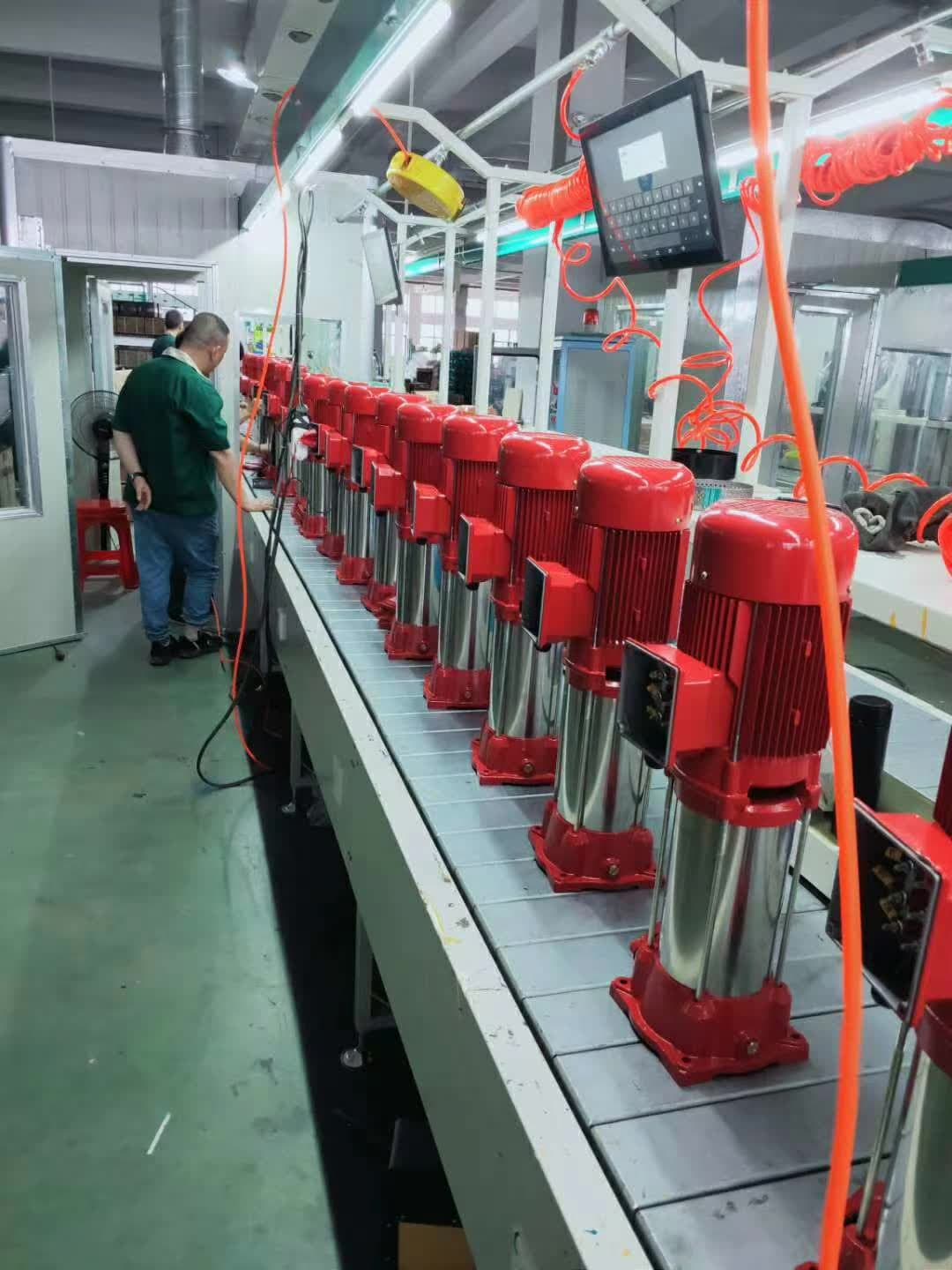
Zhejiang Qiantao Pumps Co., Ltd., which operates under the CHIMP PUMPS brand, is a water pump manufacturer based in Daxi Town, Wenling, Zhejiang, China, active in the pump industry since 1998. Its catalogue covers surface pumps, centrifugal pumps, JET pumps, self-priming pumps, multistage pumps, submersible pumps, sewage pumps, borehole pumps and electric motors — meaning the three families compared above sit inside a single portfolio rather than across three suppliers.
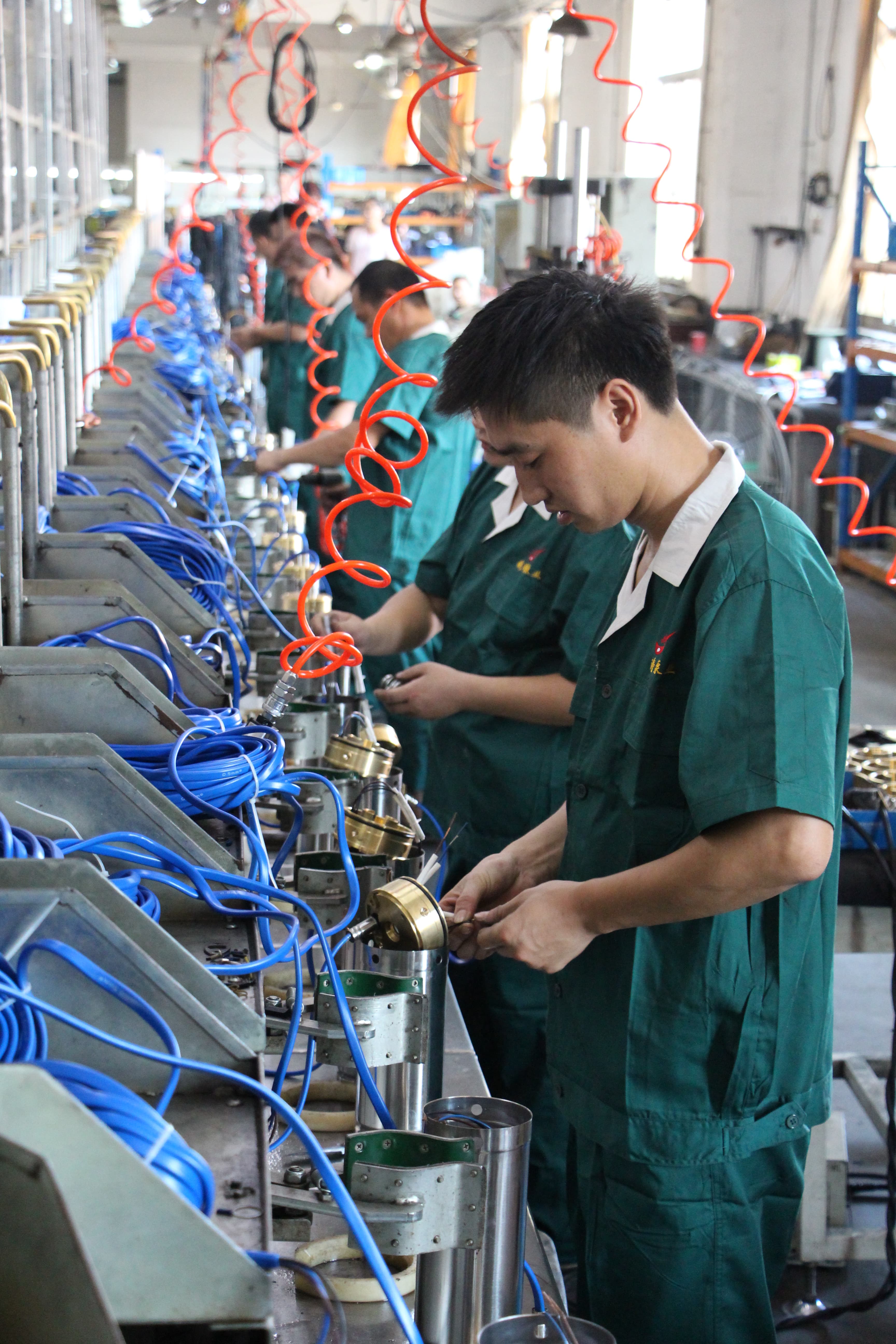
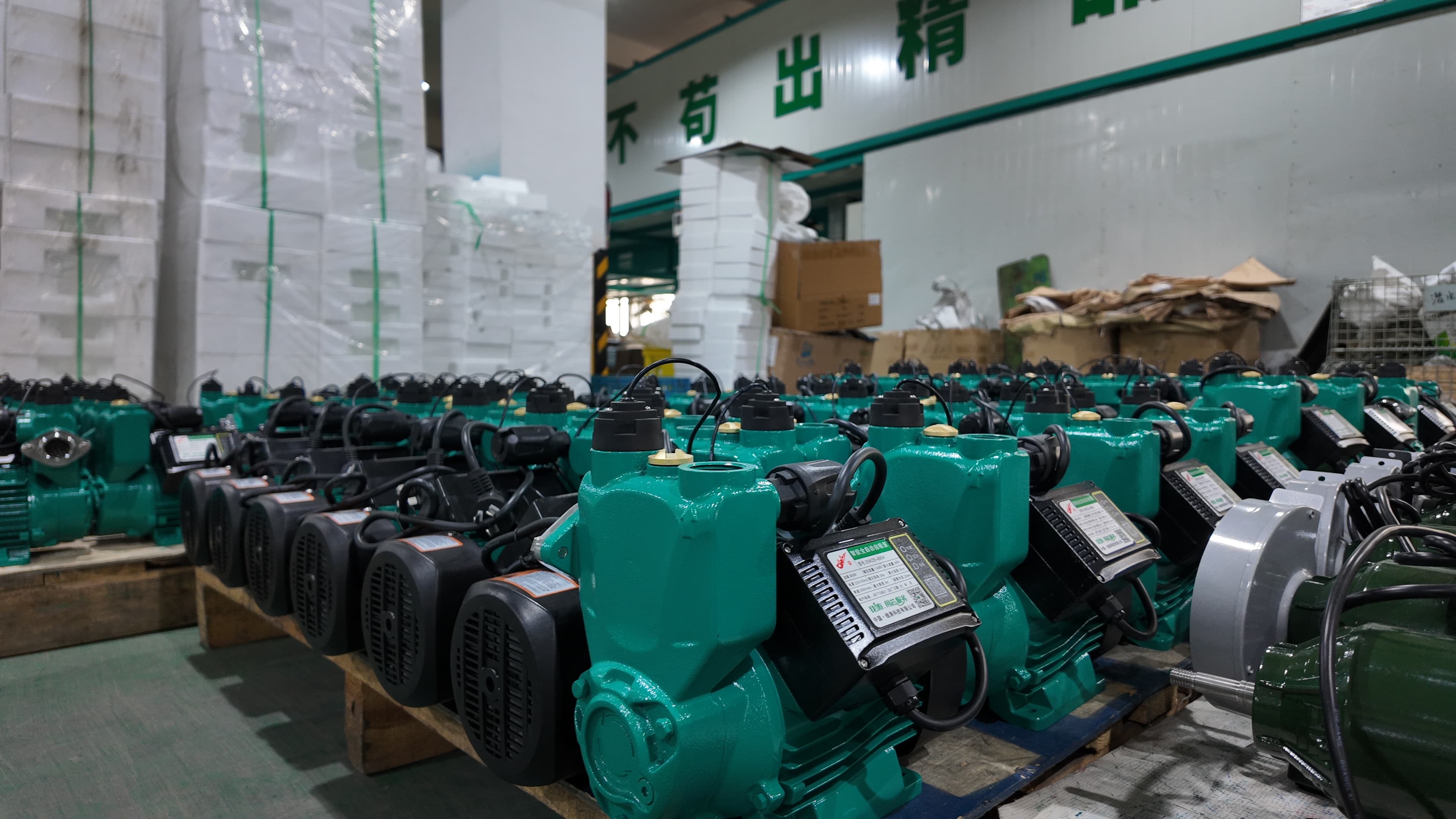
For a buyer, that structure has a practical consequence at the evaluation stage. Instead of splitting a project across a submersible vendor, a centrifugal vendor and a JET vendor, a single qualification process can cover all three duty points. The factory operates from a 140,000 m² site with 630 employees, including a 75-engineer R&D team, and reports an annual output of 3,000,000 units with 70% of production exported across Asia, Europe, the Middle East, South America and Africa.
Production capability is stated as OEM and ODM, with customization available on colour box, nameplate, voltage, head, flow and power. Monthly capacity is given as 250,000 units, lead time as 30–45 days, minimum order quantity as 100 units, and quality control as 100% testing. After-sales support is handled remotely online. Management-system and product certifications include ISO 9001:2015 (certificate 06925Q11341R2), CE attestation CE-4002-030425 for water pumps, IEC CB test certificate BE-53110 covering models including QB60C, QT370, CPM-130, CPM-200, MHF5B and 25WZB300A, and the Zhejiang Export Famous Brand designation 2024ME169.
For an OEM water pump programme, the relevant question is not whether a supplier lists all three categories — most broad-line manufacturers do. It is whether the customization scope reaches the parameters that actually define the duty point. Voltage, head and flow customization, stated explicitly, is a more useful signal than a general claim of OEM capability.
The Wider Picture: Where the Category Is Moving
Grand View Research estimated the global water pump market at USD 76.1 billion in 2026, and reported that centrifugal pumps accounted for 66.4% of global water pump market revenue in 2025. On the supply side, China's centrifugal pump exports under HS 841370 reached USD 5.3 billion in 2024, according to GACC customs data.
The buyer-facing reading of those figures is straightforward. Centrifugal designs remain the volume default in the category, which means specification conventions, spare-part availability and price benchmarks are all set by centrifugal supply. Submersible and JET variants do not compete with that default — they cover duty points a standard centrifugal unit handles poorly, particularly deep source draw and high-head low-flow domestic pressure. A buyer who understands where each family stops being appropriate is in a stronger negotiating position than one who treats the three as interchangeable.
Future Outlook
Three directions are visible in the specification data rather than in forecasts.
Automatic pressure control is moving down the product range. Integrated pump stations such as the AUJET — 0.37–1.1 kW, 40–60 L/min, 30–55 m of head, a steel pressure tank and a rubber or EPDM membrane — package the pump, tank and control into one unit for household water supply and pressure boosting. Buyers evaluating an automatic water pressure pump for home use increasingly compare packaged stations against separate pump-and-tank assemblies.
Intelligent control is appearing in conventional form factors. The WZB intelligent vortex self-priming pump covers 0.128–1.5 kW, 25–100 L/min and 25–60 m of head with a liquid temperature range of 0–80 °C and a pH window of 6.5–8.5, designed for automatic water supply and pressure boosting. Where a project specifies a smart pump or a frequency conversion pump with variable pressure control, that remains a distinct specification to be requested at model level rather than assumed from the base series.
Material drift is the third direction. Stainless steel bodies and stainless steel or brass impellers appear across more series than a cost-first catalogue would suggest, which reflects buyers pricing service life into the initial purchase rather than treating the pump as a consumable.
Frequently Asked Questions
- How do I decide which of the three pump types fits my duty point?
- Start with the vertical distance from the water surface to the discharge point, then add pipe losses. If that total exceeds what a surface pump can lift — 8 m for the CPM and MHF centrifugal series, 9 m for the JET and STP — the water source itself rules out a surface machine and a submersible becomes the practical choice. If the lift is within range, compare the required flow against the head: JET pumps deliver 30–80 L/min at up to 65 m, CPM centrifugal delivers 80–140 L/min at 20–40 m, and MHF delivers 350–900 L/min at only 12–18 m.
- When can a surface pump replace a submersible pump?
- When the water surface stays within the suction limit and the pump can be sited on dry ground with reasonable access. The surface advantage is service access: the pump can be inspected without being lifted from the water. The surface disadvantage is that the suction line must be charged before starting on a centrifugal unit, and that losses on the suction side consume part of the 8–9 m allowance before the static lift does.
- Why does the protection class matter if the pump is installed indoors?
- The QDX submersible carries IPX8 because it runs immersed, and a maximum immersion depth of 5 m defines how deep it can be placed. The surface-mounted CPM, MHF, JET and STP series carry IPX4, which suits covered or sheltered installation. For an outdoor or washdown-exposed location, IPX4 should not be assumed to be sufficient — it is a specification point to confirm with the supplier rather than infer.
- Does copper winding change the purchase decision?
- Every series covered in this comparison uses copper winding, and the CHIMP material specification states copper winding across the QDX, JET, STP, CPM and MHF lines. The procurement relevance is that winding material is not visible on a sealed motor and is a common substitution point in low-cost supply. Asking for confirmation of winding material in writing is a low-cost step that protects the specification.
- Can a clean-water submersible pump handle dirty water or solids?
- The QDX is specified for clean water and liquids similar to water in physical and chemical properties, with a maximum liquid temperature of 40 °C. Where the water carries solids or is wastewater, the V series submersible sewage pump is specified for 8–40 m³/h at 7–17 m of head with a liquid pH tolerance of 4–10, and the WQ heavy-duty series covers 6–180 m³/h at 8–75 m of head. These are separate duty points with separate head ranges, not interchangeable options.
- What does OEM customization typically cover on these pump families?
- The stated customization scope is colour box, nameplate, voltage, head, flow and power. Voltage, head, flow and power are the parameters that define the duty point, so they are the ones to confirm at quotation stage. Nameplate and colour box customization affect branding and market compliance rather than hydraulic performance.
- What should a buyer verify before placing a volume order?
- Four items: the model-level performance curve at the intended voltage and frequency; the certificate scope against the exact model, since certification is listed per model rather than per brand; the winding and impeller material in writing; and the commercial terms, which are stated as 100 units minimum order quantity, FOB/CIF/CFR/EXW delivery terms, pre-shipment testing as the acceptance criterion, and T/T or L/C payment adapted to order size and customer relationship. Lead time is stated at 30–45 days.
Conclusion
Submersible, centrifugal and JET pumps are not three grades of the same product. They are three answers to three different duty points. A JET pump at 36–65 m of head and 30–80 L/min solves a pressure problem. A QDX at 1.5–65 m³/h solves a volume-and-depth problem. A CPM, MHF or HM/VM centrifugal solves a surface-mounted head-and-flow problem with the service access that submersibles cannot offer.
The efficient way to buy is to fix the duty point first — flow, head, lift, water quality, installation location — and then select the family that reaches it. Buyers who start with the family and work backwards usually end up with a pump that meets the motor rating and misses the application.
A full factory and product range overview is available in the CHIMP Pumps factory introduction brochure.
Есть вопросы или нужны дополнительные детали?
Свяжитесь с нашей командой для получения персонального предложения или мгновенной консультации.
Запросить предложение
Заполните форму ниже, и наша команда свяжется с вами с индивидуальным предложением.
Прямой чат WhatsApp
Предпочитаете общаться в реальном времени? Напишите нам в WhatsApp для мгновенной помощи и быстрых ответов.
- Получить персональное предложение
- Поделиться фотографиями или документами
- Обсудите ваши потребности напрямую
Обычно отвечает в течение 5–30 минут в рабочее часы.