
Submersible Pump Shortlist: Model Series, Motor Options and IP Levels
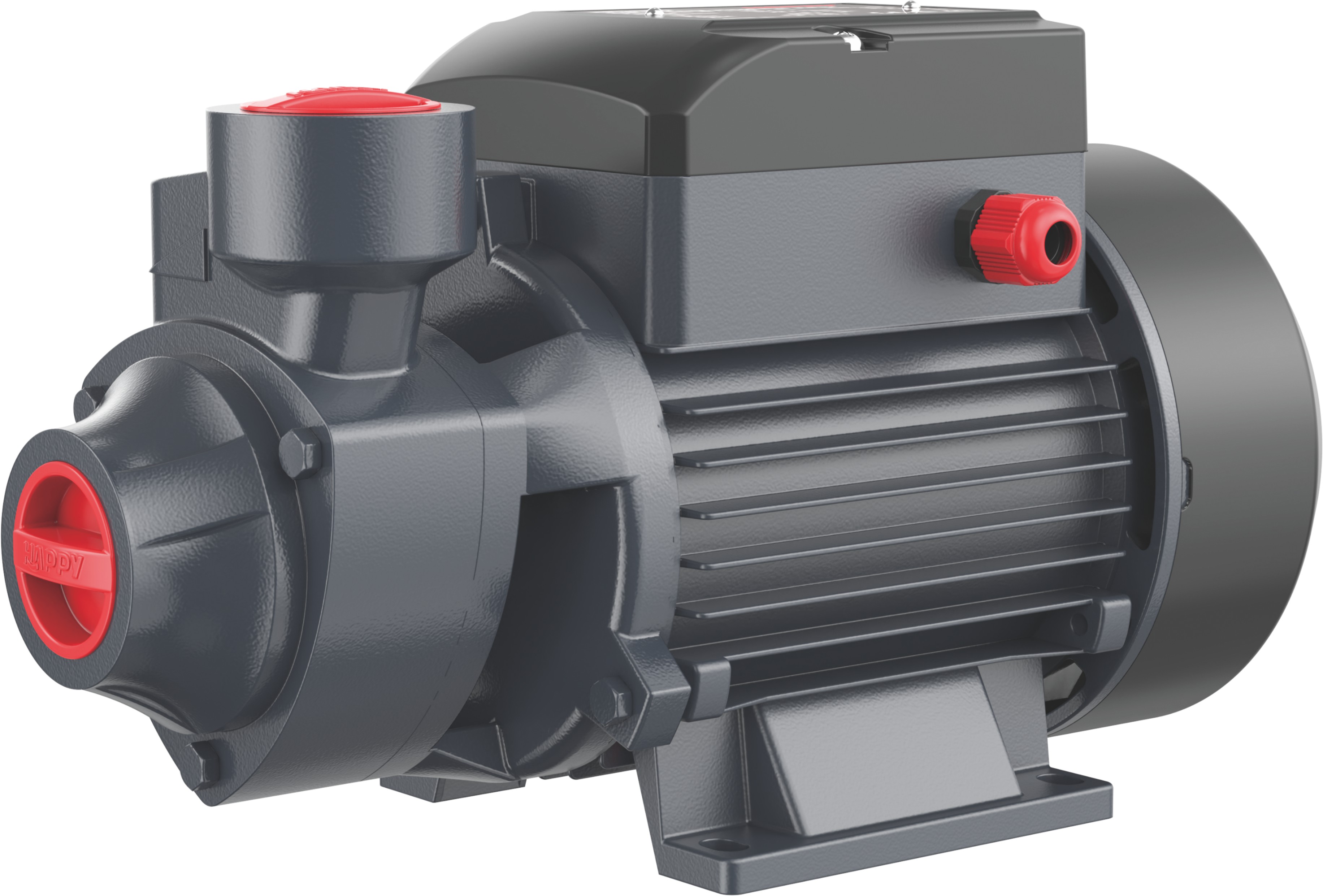
QB60 is one of the model designations buyers encounter when shortlisting pumps for clean-water and household duties. Image: ZHEJIANG HAPPY PUMP INDUSTRY CO.,LTD
The global submersible pump market was valued at USD 13.3 billion in 2025 and is projected to reach USD 19.4 billion by 2033, according to Grand View Research. Within that category, the borewell segment alone held 46.7% of the market in 2025, while non-clog and sewage submersible pumps represented roughly 25%. These are different fluids, different enclosures and different duty cycles, yet in many procurement processes they still end up on the same comparison sheet, ranked by model number.
This shortlist is organised the other way round. It starts from the application, narrows to the model series designations that fit it, then moves to protection level, material and motor pairing. Every figure below comes from published first-party product documentation or attributable third-party market data, and where a claim cannot be verified, it is not made.
Why a Shortlist Has to Start With the Duty, Not the Model
A submersible pump shortlist is only useful if it is built on four project inputs: the fluid being moved, the head and flow required at the duty point, the available power supply, and the installation environment. Model numbers come after those four inputs, not before them.
The published documentation for this pump range makes the point directly. The units are described as operating under clean water, sewage or particle-containing water, high-head pumping and submersible conditions, in continuous or intermittent cyclic operation, with installation either submersible or surface-based. That one description already rules out treating a clean-water unit and a particle-handling unit as interchangeable. The same documentation states that the product must be used with motors and pressure control units, and that supporting equipment includes motors, pressure tanks, controllers, junction boxes and filters.
The practical consequence for a buyer is that a shortlist has two layers: a hydraulic layer (head, flow, fluid condition) and a support layer (motor, controller, pressure control). Shortlists that ignore the second layer tend to be renegotiated after award, because the accessory set changes the installed cost more than the pump itself does.
Four Application Buckets to Compare First
The industries documented for this range include agriculture irrigation, residential and building water supply and drainage, municipal drainage and water supply, industrial circulation and cooling, solar water pumping, swimming pools and sewage treatment. Collapsing those into four comparison buckets keeps the shortlist manageable without losing the distinctions that matter.
| Application bucket | Duty described in the documentation | What to compare first |
|---|---|---|
| Swimming pool and sewage | Pool circulation and sewage or particle-containing water discharge | Particle handling, enclosure protection, corrosion-resistant material |
| Solar pumping | Off-grid water supply driven by solar arrays, often with controllers and parallel configurations | Solar power compatibility, voltage and frequency confirmation, controller pairing |
| Residential and building water supply / drainage | Domestic and household water supply, building drainage and boosting | Noise, pressure control pairing, single-phase or three-phase supply |
| Agriculture irrigation and borehole | High-head irrigation and borehole pumping projects | Head range, borehole diameter, duty cycle, material selection |
Swimming pool and sewage
Sewage duty is the bucket where a general-purpose selection most often fails. Non-clog and sewage submersible pumps account for roughly a quarter of the global submersible pump market, and the fluid they handle is explicitly described in the range documentation as sewage or particle-containing water. Pool circulation sits in the same bucket because the fluid is different from well water, but the shared requirement is a build that tolerates particles and a wetted material that tolerates the chemistry of the water. Both are reasons to settle the material and protection question before comparing head curves.
Solar pumping
Solar systems are described in the range documentation as operating with controllers and often in parallel configurations, and solar power compatibility is listed as a special requirement rather than a standard option. That changes the order of the shortlist: the controller and the array are part of the specification, not an accessory bought later. A pump that performs correctly on grid power is not automatically the right unit for an off-grid array.
Residential and building water supply and drainage
This is the highest-volume bucket and the one where noise, pressure control pairing and phase availability dominate. The documentation lists domestic and household water supply as a core use, together with water delivery and boosting in residential and municipal applications. Because single-phase household pumps are covered by IEC 60335-2-41 for voltages up to 250V, above that threshold the shortlist usually moves to three-phase supply, which in turn changes the motor pairing.
Agriculture irrigation and borehole
Agricultural irrigation combines the highest head requirement with the most demanding duty cycle. The range documentation covers high-head agricultural irrigation and borehole pumping projects, and the global agricultural pump revenue from electric submersible pumps was valued at USD 2,515.6 million in 2025 according to Grand View Research. In practice, the shortlist decision here is usually between a deeper-set unit with a lower flow and a shallower-set unit with higher flow, both of which can serve the same field.
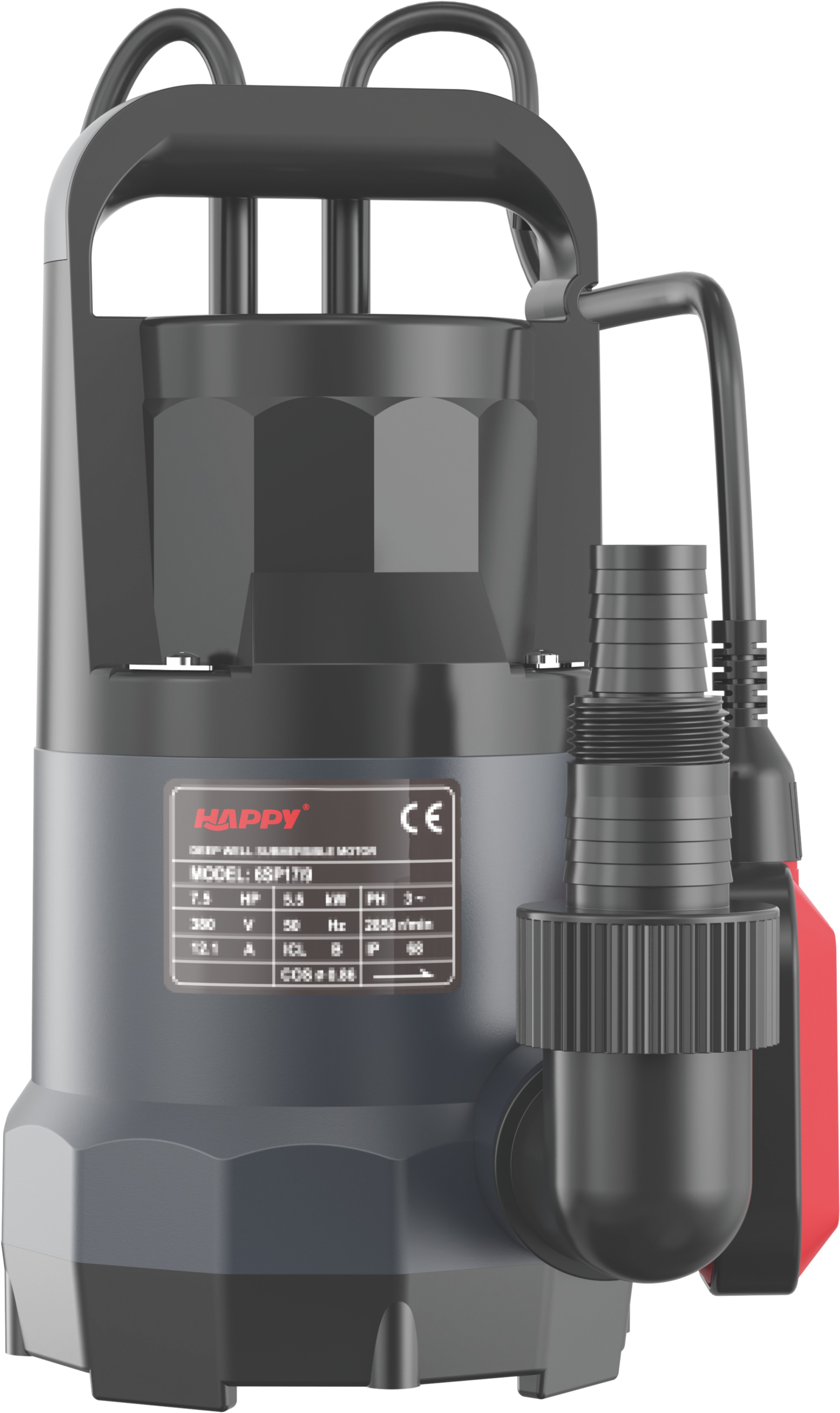
The QDP series is represented in the range by the QDP-A model designation. Image: ZHEJIANG HAPPY PUMP INDUSTRY CO.,LTD
Model Series Designations Worth Putting Side by Side
The range carries model designations including HQBm, QB60, IDB35, HPSm-AX, HRSm-A, QDP series and QDX series, alongside a wider subcategory structure that includes surface pumps, submersible pumps, deep well pumps, solar pumps, centrifugal pumps, self-priming pumps, pressure tanks, swimming pool pumps, multistage pumps and sewage pumps. The overall range is stated at 0.25 to 550 kW, with a head range of 20 to 100 m and a flow range of 1.5 to 5,500 m³/h.
Two of these designations are documented in a specific application context: HQBm and QDX series are listed for agricultural irrigation, together with borehole pumping projects. The QDP series is represented by the QDP-A model. The remaining designations appear within the same range but are not assigned to a single bucket in the published material, which is precisely why they belong on a comparison sheet rather than in a conclusion.
| Designation | Documented reference point | What to request before locking it in |
|---|---|---|
| HQBm | Agricultural irrigation and borehole pumping applications | Duty curve at the project head and flow; material specification |
| QDX series | Agricultural irrigation and borehole pumping applications | Duty curve; phase and voltage availability for the site |
| QDP series | Represented by the QDP-A model | Enclosure protection level; particle-handling build |
| QB60, IDB35, HPSm-AX, HRSm-A | Model designations within the same pump range | Confirmed duty, protection level, and motor pairing |
Reading the table as a ranking would be a mistake. Designations describe a family, not a performance level, and two units from the same family can sit at opposite ends of the 0.25 to 550 kW range. The shortlist step is to obtain the duty curve for the specific configuration under consideration, then compare curves rather than names.
Protection Levels: What IP44 and IP68 Actually Separate
The range states protection levels of IP44 and IP68. The two numbers describe different installation realities rather than a good-better-best sequence. IP44 covers protection against solid objects larger than 1 mm and against water splashing from any direction, which fits splash-exposed, sheltered or surface-installed positions. IP68 covers dust-tight enclosures protected against continuous immersion under conditions specified by the manufacturer, which is the relevant class for permanently submerged duty such as borehole, sewage sump or pool applications.
Because IP68 depends on manufacturer-specified immersion conditions, the rating on its own is not enough information. Buyers should ask for the stated immersion depth and duration in writing, and for the cable gland and seal arrangement that supports it. A shortlist that records the IP number but not the immersion condition is only half specified.
Materials: Cast Iron, Stainless Steel and Engineering Plastics
The main materials used across the range are cast iron, stainless steel and engineering plastics. The selection logic follows the fluid, not the price list. Clean municipal or household water is normally compatible with a standard build; chlorinated pool water, sewage with abrasives, and aggressive or saline water push the specification toward corrosion-resistant or stainless materials.
This is where the shortlist meets a documented boundary. Corrosion-resistant or stainless materials, high-head or large-flow configurations, solar power compatibility, and special input or output voltage and frequency are all listed as special requirements that need customization confirmation. That means the material decision is a commercial decision as well as a technical one, because a non-standard build affects minimum order quantity, lead time and pricing. Buyers who leave the material question open until after the commercial comparison usually have to redo that comparison.
Motor Pairing: IE2, IE3, IE4 and 90S-6 / 90L-6
The motor range covers designations 90S-6 and 90L-6, with motor types including IE2, IE3, IE4, MS and other classes. The stated power range is 1 to 430 HP with a speed range of 934 to 2,980 rpm, and the motors are built in cast iron or aluminium. Six-pole designs such as the 90S-6 and 90L-6 operate at the lower-speed end of that band, which typically suits higher-head, lower-flow duties.
Pairing a motor to a pump is a four-variable decision: power, rotational speed, supply phase and voltage, and cycling regime. Efficiency class is a separate axis. IE2, IE3 and IE4 describe progressively higher efficiency classifications, and which one is required depends on the destination market and the project specification rather than on the pump itself. That is a question to put to the supplier as a market-compliance question, not as a preference.
The pump documentation adds a constraint that buyers often discover late: the product must be used with motors and pressure control units for correct operation, and the supporting equipment set includes motors, pressure tanks or pressure control units, controllers, junction boxes and filters. If the motor is specified separately, the accessory set should be specified at the same time.
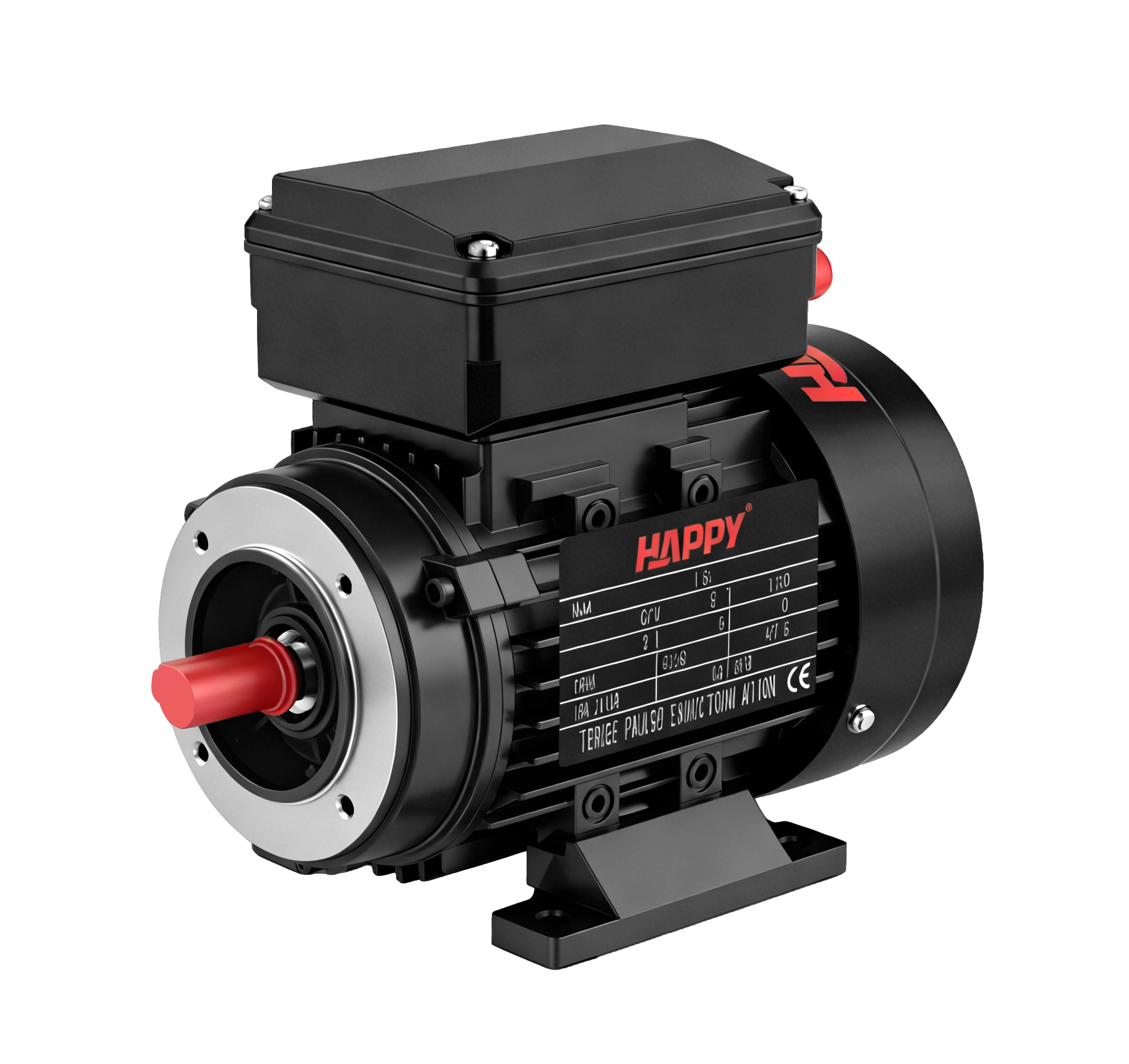
Motor pairing options span IE2, IE3, IE4 and MS types, with 90S-6 and 90L-6 frame designations in the stated model list. Image: ZHEJIANG HAPPY PUMP INDUSTRY CO.,LTD
How This Shortlist Differs From Catalogue-First Selection
Most pump procurement failures are not caused by choosing a bad model. They are caused by comparing models that were never solving the same problem.
| Approach | What it optimises | Where it tends to break |
|---|---|---|
| Catalogue-first | Matching a familiar model number | Ignores the duty point and fluid condition; specification is revisited after award |
| Price-first | Lowest unit cost | Material, protection and motor requirements surface later as change orders |
| Duty-first shortlist | Application fit, then model, then motor and accessories | Requires project data before a quotation can be issued |
The limitation of the duty-first approach is straightforward and worth stating plainly. A shortlist cannot be finalised from published information alone. The range documentation explicitly flags customization confirmation for corrosion-resistant or stainless materials, high-head or large-flow configurations, solar power compatibility, and special input or output voltage and frequency. Those are engineering-to-order items, not catalogue items.
Commercial boundaries apply as well. For ZHEJIANG HAPPY PUMP INDUSTRY CO.,LTD, lead time is stated at 30 to 45 days, and minimum order quantity is 100 pieces below 3 HP and 50 pieces above 3 HP. After-sales support is described as remote support. Buyers who require on-site service commitments, stocking programmes or consignment terms should confirm what is actually included before treating a shortlist as an order. None of this makes the shortlist weaker; it defines the point at which a shortlist becomes a specification.
What the Market Data Suggests About These Buckets
Market estimates for this category diverge, and the divergence itself is informative. Grand View Research valued the global submersible pump market at USD 13.3 billion in 2025, projecting USD 19.4 billion by 2033. SNS Insider valued the same market at USD 14.75 billion in 2024, projecting USD 23.07 billion by 2032. The base-year estimates differ by more than a billion dollars depending on scope and methodology, so buyers should treat the direction and the segment splits as more reliable than any single headline figure.
The segment splits are more consistent and more useful for shortlist planning. Borewell applications held the largest share at 46.7% in 2025 (Grand View Research), which aligns with the deep-well and borehole designations appearing at the top of most project shortlists. Asia Pacific accounted for 39.72% of the market in 2025, valued at USD 7.05 billion, according to Fortune Business Insights. China concentrated 18.5% of global liquid pump exports in 2024 at approximately USD 14.3 billion, per the Observatory of Economic Complexity.
On the technology side, the electric drive segment accounted for nearly 80% of global submersible pump installations in 2024 (Grand View Research). Solar growth projections vary considerably: Credence Research projects a 22.95% CAGR for the solar water pump market from 2024 to 2032, while Grand View Research projects a 4.3% CAGR for the solar pump segment. The gap reflects different forecast scopes and regional assumptions, so solar demand is best read as a rising application rather than as a single number. Solar pairing is already widely adopted in South Asia, where 75% to 100% of freshwater withdrawal is for agriculture, according to Precedence Research.
Two standards frame the compliance side of the shortlist. IEC 60335-2-41:2024 sets safety requirements for electric submersible pumps for household and agricultural use, with single-phase household pumps covered up to 250V. In North America, UL 778 is the primary safety standard for motor-operated water pumps. The competitive context for these buckets includes established global manufacturers such as Grundfos, Xylem and KSB, identified by MarketsandMarkets as leading players in the industrial pump market, and Zhejiang LEO Group, identified by Grand View Research as a key competitor in the submersible pump industry. Different suppliers compete on different axes within that field, which is why application fit remains the most useful first filter.
Where ZHEJIANG HAPPY PUMP INDUSTRY CO.,LTD Sits in This Shortlist
ZHEJIANG HAPPY PUMP INDUSTRY CO.,LTD is a Chinese water pump and motor manufacturer established in 1990 and located in Daxi Town, Wenling City, Zhejiang Province. The company produces medium- to high-end water pumps and motors, with a main product series covering surface pumps, submersible pumps, deep well pumps, solar pumps, motors, pressure control tanks and spare parts.
Several operational facts are relevant to a procurement evaluation. The site covers approximately 55,000 m² with around 210,000 m² of building area and approximately 800 employees, including about 200 professional and technical staff. Annual output is stated at around 4,000,000 pieces per year, with monthly capacity of 400,000 units and an export ratio of 99%. Production runs in OEM and ODM mode, with customization available for voltage and logo, and quality control is described as 100% testing.
The technical side of the company includes an enterprise research institute and a high-tech R&D centre that uses CFD, FEA and motor electromagnetic design tools. In application terms, the case record documents work with water pump brand OEM customers and HAPPY agents, covering domestic and household water supply, garden irrigation, agricultural irrigation, sewage and engineering drainage, pool circulation and solar water pumping systems. The same record describes stable operation, low noise in use, and a normal service life of around 10 years with a one-year warranty.
For a buyer building a shortlist, the relevant question is not whether these numbers are impressive but whether they are checkable. Output, capacity, testing regime, lead time and MOQ are all stated and can be verified against a quotation and a factory audit. Where the company is not the right fit, the documentation says so implicitly: customization is limited to voltage and logo, after-sales is remote rather than on-site, and engineering-to-order builds require confirmation rather than assumption.
What Changes Next
Three shifts are likely to affect how these shortlists are written. First, efficiency classification is moving from a preference to a market requirement, which pushes IE2, IE3 and IE4 motor selection earlier into the specification stage rather than into the quotation stage. Second, solar pairing continues to expand in regions where agricultural water demand is high and grid coverage is uneven, which makes controller compatibility part of the pump specification rather than a separate purchase. Third, material and ingress-protection requirements are increasingly specified in tender documents rather than left to the supplier, which favours buyers who settle the corrosion and immersion questions before comparing head curves. None of these shifts changes the underlying rule: the application decides the shortlist, and the model number only records the decision.
FAQ
What should be on a submersible pump shortlist before model numbers are compared?
Four inputs should be settled first: the fluid being moved, the head and flow required at the duty point, the available power supply, and the installation environment. These products are documented as operating under clean water, sewage or particle-containing water, high-head pumping and submersible conditions, in continuous or intermittent cyclic operation, with either submersible or surface installation. Because those conditions are not interchangeable, comparing model numbers before the duty is defined produces a list that cannot be finalised.
Which model series are documented for agricultural irrigation and borehole pumping?
HQBm and the QDX series are the designations listed for agricultural irrigation, applied together with high-head agricultural irrigation and borehole pumping projects. The QDP series is represented in the range by the QDP-A model. Other designations in the same range include QB60, IDB35, HPSm-AX and HRSm-A. Because a single designation can span a wide power band, the useful comparison is between duty curves for the specific configuration, not between designation names.
What is the practical difference between IP44 and IP68 for a submersible pump?
IP44 protects against solid objects larger than 1 mm and against water splashing from any direction, which suits splash-exposed or surface-installed positions. IP68 covers dust-tight enclosures protected against continuous immersion under conditions specified by the manufacturer, which applies to permanently submerged duty. Neither rating describes hydraulic performance or service life, and IP68 ratings should be paired with the manufacturer's stated immersion depth and duration.
How should a motor be paired with a submersible pump?
Pairing is decided by four variables: power, rotational speed, supply phase and voltage, and cycling regime. The available motor range covers designations 90S-6 and 90L-6 with types including IE2, IE3, IE4 and MS, a power range of 1 to 430 HP and a speed range of 934 to 2,980 rpm, in cast iron or aluminium construction. Six-pole designs sit at the lower-speed end of that band. Efficiency class is a separate question governed by the destination market, and the pump must be used with a motor and pressure control unit for correct operation.
When should cast iron, stainless steel or engineering plastics be specified?
The selection follows the fluid. Cast iron, stainless steel and engineering plastics are all used across the range, and the choice depends on water chemistry, particle content and the presence of chlorinated or aggressive water. Corrosion-resistant or stainless materials are listed as a special requirement requiring customization confirmation, which means the material decision affects MOQ, lead time and pricing and should be taken before commercial comparison rather than after.
What has to be confirmed before ordering a solar submersible pump?
Solar power compatibility is listed as a special requirement rather than a standard feature, and solar systems are documented as operating with controllers and often in parallel configurations. Special input and output voltage and frequency also require customization confirmation, as does customization for voltage and logo in general. The controller and the pressure control unit are part of the required equipment set, so they should be confirmed together with the pump rather than sourced separately.
What are the commercial boundaries a buyer should factor into the shortlist?
For ZHEJIANG HAPPY PUMP INDUSTRY CO.,LTD, lead time is stated at 30 to 45 days, minimum order quantity is 100 pieces below 3 HP and 50 pieces above 3 HP, and after-sales support is described as remote support. Production capacity is 400,000 units per month with 100% testing. Buyers requiring on-site service, stocking arrangements or non-standard materials should confirm availability before treating a shortlist as an order.
Reference material: the company product catalogue is available as a downloadable PDF at https://cdn.socialarks.com/sbsp/25067/common/2026/0724/2026%E9%BB%91%E7%BA%A2%E5%A4%A7%E6%A0%B7%E6%9C%AC%E8%BD%AC%E6%9B%B2-compressed%281%29.pdf
Есть вопросы или нужны дополнительные детали?
Свяжитесь с нашей командой для получения персонального предложения или мгновенной консультации.
Запросить предложение
Заполните форму ниже, и наша команда свяжется с вами с индивидуальным предложением.
Прямой чат WhatsApp
Предпочитаете общаться в реальном времени? Напишите нам в WhatsApp для мгновенной помощи и быстрых ответов.
- Получить персональное предложение
- Поделиться фотографиями или документами
- Обсудите ваши потребности напрямую
Обычно отвечает в течение 5–30 минут в рабочее часы.