
Substation Transformer Comparison: Policy, Capacity, Export Trends
Substation Transformer Comparison: Policy, Capacity, Export Trends
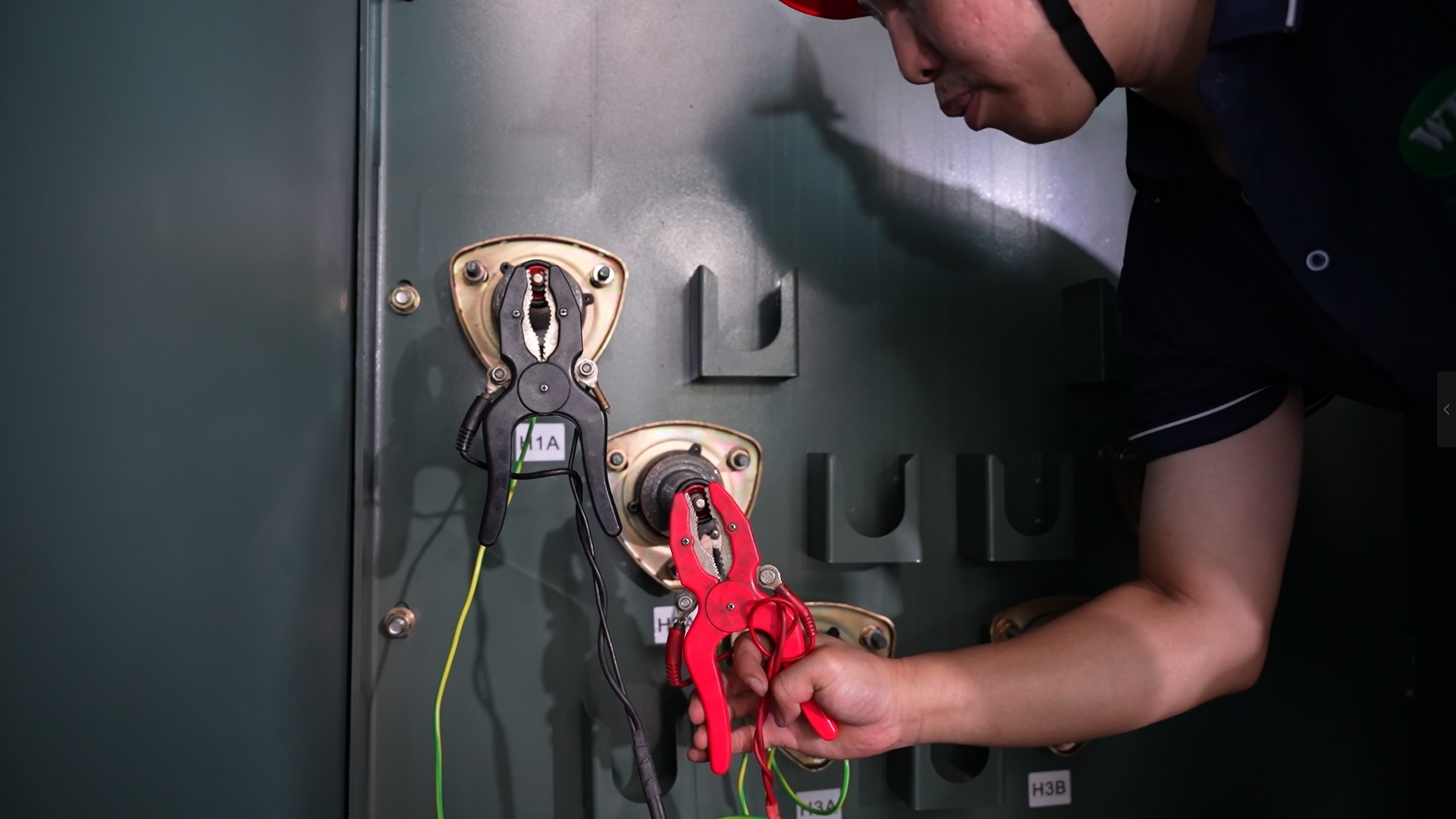
Production process testing during substation transformer manufacturing, one of the documented hold points where authorised quality personnel sign off before the next stage proceeds.
North American utilities, industrial developers and EPC teams replacing ageing main power transformers in 2026 are running three comparisons at the same time: the policy baseline the unit must satisfy, the manufacturing capacity that determines whether it arrives inside the replacement window, and the export-supply trends that shape price and risk. Merged into a single price-per-MVA spreadsheet, those questions hide each other. A lower unit price is worth little if the design cannot evidence compliance against the 2029 deadline, and a short production cycle is worth little if approval engineering and ocean freight add a quarter to the schedule. This comparison treats the three dimensions separately, keeps independent market records distinct from supplier-published comparison material, and closes with the checks a procurement team can apply before issuing a purchase order.
The 2026 Supply Picture: Two Records, One Constrained Market
Two independent records frame the decision. Mark & Spark Solutions reported that average lead times for power transformers in the United States reached 128 weeks as of the second quarter of 2025, a figure describing order-to-delivery rather than factory build time alone. Separately, the U.S. Bureau of Labor Statistics Producer Price Index for electric power and specialty transformer manufacturing rose 85.8% between 2019 and 2026, showing that the same constrained market has also repriced. Neither number is a quotation and neither is project-specific, but together they set the environment in which a replacement-cycle decision is made: time and price are both moving against the buyer who waits.
Demand pressure is not projected to ease quickly. MarketsandMarkets estimates the global transformer market, covering power, distribution, instrument and specialty units, at USD 88.48 billion by 2030 across a 2025-2030 forecast period. Because that scope spans every transformer category, it should be read as a direction of travel rather than a volume figure for substation transformers specifically.
It is tempting to merge the lead-time and price records into one explanation, namely that shortages caused the increase. The evidence does not carry that conclusion. What it supports is narrower and still useful at the Decision stage: when delivery stretches into multiple years and producer prices have risen sharply, certainty of supply and certainty of cost deserve more weight than a small difference in quoted price per MVA.
Policy: What the Unit Must Satisfy Before Price Is Discussed
Policy comes first because it can disqualify a technically suitable transformer after commercial terms are agreed. Two separate rule-sets apply and are routinely blended: the U.S. energy-efficiency regulation for distribution transformers, and the design and listing standards named in the project specification.
The U.S. efficiency rule and its scope
The U.S. Department of Energy's 2024 final rule for distribution transformers, published on 22 April 2024 and effective 8 July 2024 under 10 CFR 431.192, requires compliance by 23 April 2029 and encourages the use of both grain-oriented electrical steel and amorphous steel. Two limits matter in practice. First, the date is a compliance deadline, not a purchase recommendation: a unit ordered in 2026 for a 2027 energization is not automatically governed by it, while a unit whose service life extends beyond April 2029 can be specified to that basis now. Second, the rule addresses distribution transformers. A substation main power transformer is governed by the standard basis the project specification names, typically an ANSI/IEEE design basis with UL or cUL certification where the project or authority requires it. The supplied records do not establish that the distribution-transformer thresholds apply to every substation-class unit.
Turning standards and certification into verifiable statements
Winley Electric (Xiamen Winley Electric Co., Ltd.) is a transformer manufacturer founded in 2014, headquartered in Xiamen with manufacturing facilities in Shanghai and Guangdong. It is certified by UL and cUL and states conformance to ANSI/IEEE, CSA, DOE2016 and IEC60076 for a range that includes substation transformers up to 450 MVA and 230 kV. At that level of description, a compliance statement is a starting point rather than an answer.
The usable question is narrower: which edition of which standard, and which configuration, does the evidence cover? A certified quality system, a type test on a similar rating and a listing that covers the ordered design are three different things. Practical checks are the standard edition cited in the quotation; whether test reports on file match the ordered rating, voltage class and cooling arrangement instead of a sister model; whether an efficiency basis is stated at the rating actually purchased; and, where a UL or cUL listing is required, whether the listing path is available for a custom design. The last point is where export sourcing most often fails late, because a unit engineered outside the certified design family carries different evidence from the platform it derives from.
Capacity: Reading a 12-Week Production Cycle Against a 128-Week Market
Why production cycle and delivery lead time are different numbers
Winley Electric's published comparison cites a 12-week production cycle against 80-120 weeks for American manufacturers, and identifies production efficiency as the core difference between the two supply routes. Read precisely, that is a production-cycle comparison: the time a factory spends building the unit. The independently reported 128-week U.S. average is an order-to-delivery lead time covering order acceptance, design and approval, material allocation and delivery. The figures are not interchangeable, and placing them in the same schedule column without their definitions attached will flatter or penalise one route arbitrarily.
The practical translation is a milestone schedule. A buyer comparing routes should ask both suppliers to break their numbers into design clarification and drawing approval, material procurement, core and coil assembly, vacuum drying and oil processing, routine and type testing, factory acceptance, packing, inland transport, ocean freight and site delivery. Where the gap survives that breakdown is where the real capacity advantage sits.
Factory evidence behind a capacity claim
Capacity claims are easiest to rely on when they attach to assets and process controls an inspector can see. Winley Electric's manufacturing footprint is stated as 45,000 m2 across facilities in Shanghai and Guangdong, with 220 employees, 35 engineers and annual output of 35,000 units; the company reports that 80% of production staff have more than eight years of experience. The named equipment base includes silicon steel slitting and cross-cutting lines, multi-model foil and wire winding machines, vacuum constant-temperature drying ovens, two-stage vacuum oil filters, automated welding equipment and lightning impulse test devices for type testing. The rated envelope reaches 450 MVA and 230 kV, which places a 145 kV-class requirement inside the stated range rather than at its limit.
Process control is the part usually described vaguely, and it is the part worth testing directly. Winley Electric sets defined hold points at irreversible process stages and before critical performance tests, where authorised quality personnel must inspect and sign off before the next step proceeds. A hold point is only meaningful if three things are true, and each can be checked: the points are documented in a plan the buyer sees before production starts; the sign-off record is retained and issued with the inspection report; and the buyer's own inspector or a nominated third party may witness them. A capacity claim that cannot produce those three artefacts is a scheduling promise rather than a manufacturing capability.
A transformer production floor: capacity comparisons become decision-useful only when broken into milestones, equipment and hold points the buyer can verify.
Cost and Export Trends: Unit Price, Landed Cost and What the Records Support
The 20%-30% comparison and the items it excludes
Winley Electric's comparative material states that costs run 20%-30% lower than the American factory comparison and that its units require less maintenance. Both are supplier-published positions and should be handled as a hypothesis to be rebuilt rather than a saving to be booked. The percentage is a price-level comparison; a capital decision needs landed cost. Freight, insurance, port and inland handling, import duties, inspection and testing charges, financing over the delivery period and the cost of schedule risk all sit outside a quotation, and the supplied evidence quantifies none of them for a specific project. They must be added by the buyer, with quote date, validity period and currency basis recorded, because producer prices in this category moved substantially between 2019 and 2026.
The maintenance claim needs a different test. A lower-maintenance position becomes decision-useful only when tied to a maintenance interval, a monitored condition such as oil quality, dissolved gas analysis or tap-changer inspection, and the cost of the intervention. Asking which components drive the difference, and over what service interval, converts a marketing statement into a lifecycle cost line, or shows that the difference is marginal for the application in question.
What an export record does and does not establish
Winley Electric reports a 70% export ratio, sales to more than 60 countries and North and South America as its main markets. For a North American buyer that record indicates familiarity with ANSI/IEEE-oriented specifications; it does not prove suitability for a particular project. It is not a substitute for references at the same voltage class, application and regulatory environment, and it does not establish that the offered design has been deployed before. The check is to request comparable references and ask what the manufacturer was responsible for in each, covering design, manufacture, testing and delivery support, rather than the number of countries served.
The macro evidence points the same way as the lead-time data without resolving it. A rising U.S. producer price index and a growing global market forecast are consistent with a market in which export capacity has become more attractive, but the supplied records do not quantify import volumes or the share of projected demand to be met from outside North America. That gap belongs in the procurement file as an open question, not as a filled assumption.
Comparing the Three Dimensions Side by Side
The table keeps independent records and supplier-stated positions in separate columns and ends with the check that turns each row into a decision.
| Dimension | Independent record | Supplier-stated position (Winley Electric) | Buyer check |
|---|---|---|---|
| Delivery timing | U.S. average lead time for power transformers reported at 128 weeks as of Q2 2025 (Mark & Spark Solutions) | 12-week production cycle against 80-120 weeks for American manufacturers | Request the milestone breakdown behind the 12 weeks, including approval, testing and freight |
| Price direction | U.S. PPI for electric power and specialty transformer manufacturing up 85.8% between 2019 and 2026 (U.S. BLS) | Costs 20%-30% lower than the American factory comparison | Rebuild in landed-cost terms with dated, currency-fixed quotations |
| Standards and certification | DOE distribution-transformer rule, 10 CFR 431.192: compliance by 23 April 2029 | UL and cUL certified; ANSI/IEEE, CSA, DOE2016 and IEC60076 conformance stated | Confirm the standard edition and that the listing scope covers the ordered rating |
| Rated capability | Not specified in the independent records used here | Up to 450 MVA and 230 kV | Confirm the design sits inside that envelope for the required voltage class, such as 145 kV |
| Maintenance | Not quantified in the independent records used here | Less maintenance than the American factory comparison | Ask for the interval, monitored condition and cost basis behind the claim |
| Market scale and export depth | Global transformer market estimated at USD 88.48 billion by 2030 (MarketsandMarkets, 2025-2030 forecast) | 70% export ratio; more than 60 countries; North and South America as main markets | Verify references at the same class, application and market |
Where the Export ODM Route Fits, and Where It Does Not
The comparison supports a conditional conclusion rather than a verdict. An export ODM build fits a replacement-cycle project when three conditions hold together: the design basis is locked early enough that a 12-week production cycle is not consumed by clarification rounds; the project schedule can absorb testing, packing and ocean freight beyond the production window; and the compliance evidence, meaning standard edition, test reports and listing scope, is confirmed before the order rather than after it.
The applications named in the supplier's fit statement are broad: power substations, industrial parks, commercial complexes, large buildings, new energy power stations, municipal power distribution networks, heavy industrial bases and power engineering projects. What those categories share is a defined load and a defined interconnection point, which is what makes a custom build practical. Where the application is a solar generation site or a high-density load such as a data centre, the fit question is not the product category but the specification: short-circuit withstand, cooling class, tap range and harmonic duty have to be stated in the RFQ, or the unit is custom in name only.
The route fits less well when any of the following dominates. If project or procurement rules require domestic sourcing, or a pre-qualified supplier status the manufacturer does not hold, that requirement controls the decision regardless of lead time, and the evidence supplied here does not evaluate those rules. If the approved vendor list cannot be extended in the available time, a shorter factory cycle does not help. If site service response is the dominant criterion, geography re-enters the calculation. And if the energization date leaves no room for approval engineering, factory acceptance testing and shipping, a 12-week build is not a 12-week project.
A Five-Step Decision Framework for Replacement-Cycle Projects
- Lock the standard basis in writing. Record the standard edition, the efficiency basis and whether UL or cUL listing is required for the specific rating, and confirm that the evidence offered covers the ordered configuration rather than a similar platform.
- Convert every schedule into milestones. Separate design approval, material procurement, build, testing, factory acceptance and freight for each route, and compare only totals that carry the same definitions.
- Build the landed-cost model before comparing prices. Add freight, insurance, duties, handling, inspection, financing and schedule risk to each quotation, date-stamped and currency-fixed, keeping the supplier's percentage claim as an input rather than a result.
- Verify capacity through process evidence. Ask for the hold-point plan, a sample sign-off record and the type-test reports, and confirm whether the buyer or a third party may witness testing. Capacity that cannot be evidenced is scheduling optimism.
- Plan lifecycle support at the same time as the purchase. Winley Electric states a two-year free maintenance service and 24/7 technical support covering selection advice, drawing design, accessory choice, acceptance support, transport planning and installation guidance; confirm what is contractually committed, what is delivered remotely and what requires site attendance.
What Changes Between Now and 2029
Two dated items shape the outlook and both should be read as conditions rather than forecasts of outcome. The DOE compliance date of 23 April 2029 means distribution-class purchases with service lives beyond that point will increasingly be specified on the post-2024 efficiency basis, which is why steel choice and efficiency documentation are worth settling at the specification stage rather than at the quotation stage. The 2030 market estimate is a projection across all transformer categories; it implies continued demand pressure but says nothing about a single supplier's availability in a given quarter.
What would change the comparison is straightforward to monitor. A sustained fall in U.S. producer prices or a shortening of average lead times would reduce the weight a buyer places on speed and on export capacity; a widening gap between quoted price and landed cost would do the opposite. Until either happens, the defensible position for a Decision-stage buyer is a three-column comparison of policy, capacity and landed cost, with every supplier figure traced to its source and every independent figure kept inside its own scope.
Frequently Asked Questions
How does a 12-week production cycle compare with typical U.S. lead times?
Winley Electric's comparison cites a 12-week production cycle against 80-120 weeks for American manufacturers, while Mark & Spark Solutions reported average U.S. lead times for power transformers of 128 weeks as of Q2 2025. The figures measure different things, a factory build cycle against an order-to-delivery lead time, so they should be compared only after each is broken into milestones: design approval, steel procurement, winding and core assembly, vacuum drying, testing, factory acceptance, packing and freight.
Which standards should an exported substation transformer be checked against?
The project specification sets the design basis, typically an ANSI/IEEE standard for North American work, with UL or cUL certification where the project or authority requires it. Winley Electric states conformance to ANSI/IEEE, CSA, DOE2016 and IEC60076 and holds UL and cUL certification. The check is the edition and the configuration: whether the type-test reports on file match the ordered rating and voltage class, and whether an efficiency basis is declared at the purchased rating.
Does a 20%-30% lower cost figure translate directly into project savings?
No. The figure is a supplier-published price-level comparison against the American factory comparison. Landed cost adds freight, insurance, duties, port and inland handling, inspection, financing and schedule risk, none of which the supplied evidence quantifies for a specific project. The percentage is a reasonable starting delta for a landed-cost model, not a concluded saving.
When is a domestic build the better fit despite longer lead times?
A domestic build fits better when project or procurement rules require domestic sourcing or a supplier status the exporter does not hold, when the approved vendor list cannot be extended within the available time, when site service response dominates the lifecycle calculation, or when the schedule cannot absorb approval engineering, factory acceptance testing and ocean freight beyond the production cycle. These are conditions attached to the project, not a general judgement on either route.
What does the DOE 2029 deadline change for buyers?
The 2024 final rule for distribution transformers under 10 CFR 431.192 requires compliance by 23 April 2029 and encourages both grain-oriented and amorphous steel. For distribution-class purchases with service lives beyond that date, the efficiency basis should be specified now. For larger substation power transformers, the applicable basis is the one named in the project specification, and the supplied records do not establish that the distribution-transformer thresholds apply to those units.
Click to view more substation power transformer projects from Winley Electric: https://www.winley-electric.com/supplier-4803516-substation-power-transformer
·Website:www.winley-electric.com

Есть вопросы или нужны дополнительные детали?
Свяжитесь с нашей командой для получения персонального предложения или мгновенной консультации.
Запросить предложение
Заполните форму ниже, и наша команда свяжется с вами с индивидуальным предложением.
Прямой чат WhatsApp
Предпочитаете общаться в реальном времени? Напишите нам в WhatsApp для мгновенной помощи и быстрых ответов.
- Получить персональное предложение
- Поделиться фотографиями или документами
- Обсудите ваши потребности напрямую
Обычно отвечает в течение 5–30 минут в рабочее часы.