Substation Transformers: Step-Up, Step-Down and ANSI/IEEE Fundamentals for North America
Every substation has one transformer that makes the rest of the network possible. The substation transformer changes voltage between grid stages: stepping it up for long-distance transmission, then stepping it down for industrial, commercial, and residential use. For North American engineers and buyers, understanding how these units are designed, certified, and customized is the starting point for any procurement decision.
Why the Substation Transformer Is the Anchor of Voltage Conversion
Electricity moves through a network at many different voltage levels. Generation plants and renewable projects produce power at relatively low voltage, while transmission lines use high voltage to move that power efficiently. At the boundary between these stages, a transformer adjusts the voltage so that power can continue its journey.
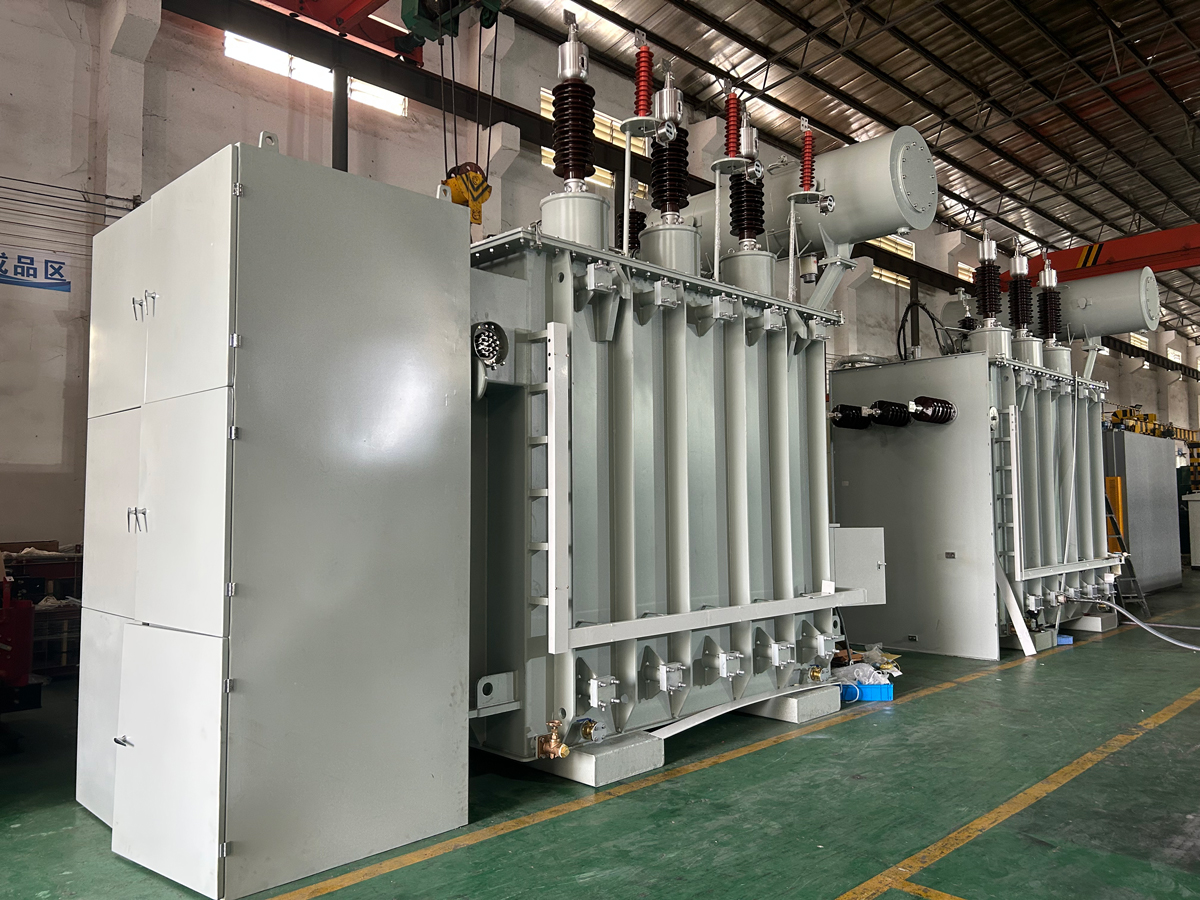
In a utility substation, this function is performed by a substation power transformer. The category is defined by its role rather than by a single physical design. It is core equipment in medium- and high-voltage power transmission and distribution systems, typically installed in utility substations and distribution substations. Its job is to convert voltage levels for efficient long-distance power transmission, stabilize grid voltage, and reliably supply electricity to residential, commercial, industrial, and large-scale facilities.
Step-Up and Step-Down: How a Substation Transformer Works
Substation transformers use electromagnetic induction. An alternating voltage applied to the primary winding produces a magnetic flux in a laminated steel core. This flux induces a voltage in the secondary winding. The ratio of turns between the two windings determines the output voltage: more secondary turns create a higher voltage, which is a step-up configuration, while fewer secondary turns create a lower voltage, which is a step-down configuration.
A step-up transformer raises voltage while reducing current for the same amount of transmitted power. Because resistive losses on a line scale with the square of current, higher voltage produces lower transmission losses. This is why solar plants, wind farms, and battery energy storage systems use step-up transformers to raise inverter output, for example from 480 V to 13.8 kV or 34.5 kV, before the power enters a collector network.
A step-down transformer performs the opposite function at the delivery end. A utility substation may receive power at 44 kV and convert it to 34.5 kV for a subtransmission or distribution network. A lower-capacity unit may convert 12.47 kV or 4.16 kV to utilization voltages such as 480Y/277 V or 208Y/120 V for building and campus service.
Main Power Transformer vs. Distribution Transformer
North American buyers use the terms power transformer, distribution transformer, and substation transformer in overlapping ways. In utility practice, a power transformer transfers power between higher-voltage systems and is physically larger, while a distribution transformer is the final step before the load, converting medium voltage to utilization voltage. A substation transformer can serve in either role depending on where it sits in the network.
For a manufacturer, the distinction is less a rigid product class than a specification envelope. Winley Electric's substation power transformer line covers capacities from 150 kVA to 100 MVA, primary voltages from 2.4 kV to 138 kV, and secondary voltages from 0.6 kV to 35 kV, built to NEMA, ANSI C.57, DOE, and IEEE standards as applicable. That range spans both main utility transformers and smaller distribution-substation units.
Oil-Immersed Design: The Utility Baseline
Most utility-scale substation transformers use oil-immersed construction, with insulating liquid surrounding the core and windings. According to Grand View Research, oil-immersed transformers accounted for approximately 59.3% of the power transformer segment in 2025, reflecting their cooling efficiency and durability in grid service.
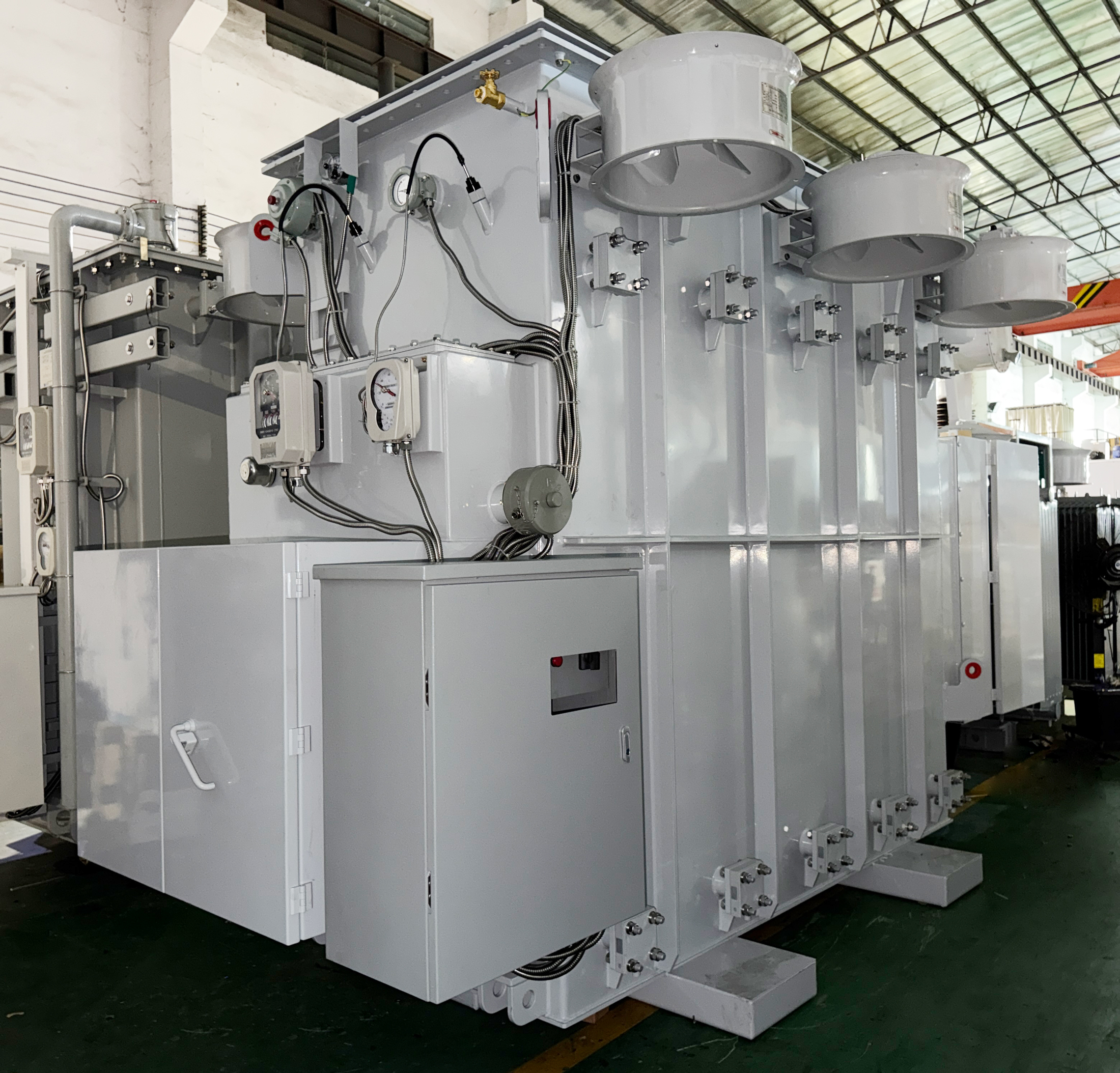
The liquid removes heat from the windings and carries it to the tank wall, where radiators or fans release it to the air. Common cooling classes include ONAN, meaning oil natural and air natural, and ONAF, meaning oil natural and air forced. Project records also show a shift toward alternative dielectric fluids. Winley Electric has documented builds using natural-ester fluids such as FR3 and synthetic-ester fluids such as MIDEL 7131 in substation and pad-mounted transformers, typically specified for environmental, fire-safety, or site-restriction reasons.
ANSI, IEEE, and UL: What Certification Actually Requires
The primary design and test framework for North American substation transformers is the IEEE C57 series. This series covers general requirements, specific transformer types, and test procedures. UL 1561 applies to liquid-filled transformers, while UL 1562 applies to dry-type transformers. DOE 2016 adds minimum efficiency levels, and CSA standards apply when equipment is certified for Canada.
For a manufacturer, compliance is demonstrated through certification and factory testing. Winley Electric states that its transformer products are designed to meet ANSI/IEEE/CSA/DOE2016/IEC60076 standards and hold UL and cUL certification, along with ISO, CE, TUV, and EMC third-party testing and certification. Its quality-control system follows ISO 9001 requirements and includes a transformer material traceability system. On the testing side, the factory has introduced professional type-test equipment such as lightning impulse test devices alongside conventional testing equipment, and all products undergo strict factory inspection before leaving the facility.
A Certified OEM/ODM Example: Winley Electric
Winley Electric, formally Xiamen Winley Electric Co., Ltd., is a manufacturer established in 2014 and headquartered at No. 99 Yilan Road, Siming, Xiamen, Fujian, China. The company specializes in various types of transformers rated at 145 kV and below, with manufacturing facilities in Shanghai and Guangdong. Its major markets are North and South America, and export business accounts for 70% of total sales.
The company employs approximately 220 staff, including an R&D team of 35 engineers. Its manufacturing facility covers 45,000 square meters and has an annual production capacity of 35,000 units. Over 200 front-line employees are supported by production equipment that includes silicon steel sheet slitting and cross-cutting lines, multi-model foil and wire winding machines, vacuum constant-temperature drying ovens, two-stage vacuum oil filters, and automated welding equipment. The company has also obtained more than 20 patents for independent research and development.
For buyers, the relevant capability is its OEM/ODM service model. Winley Electric's engineering team is proficient in ANSI, IEEE, CSA, DOE2016, NEMA, and IEC standards and can customize transformer solutions according to customer specifications. The documented service workflow includes product selection recommendation, drawing design, accessory selection, acceptance support, transportation planning, and installation guidance. The company provides 24/7 technical support and a 2-year free maintenance service, and it can open UL partner authorization for partners whose market strategy requires it. More product documentation is available at www.winley-electric.com.
Large-Plant Applications: Documented Voltage Conversion Patterns
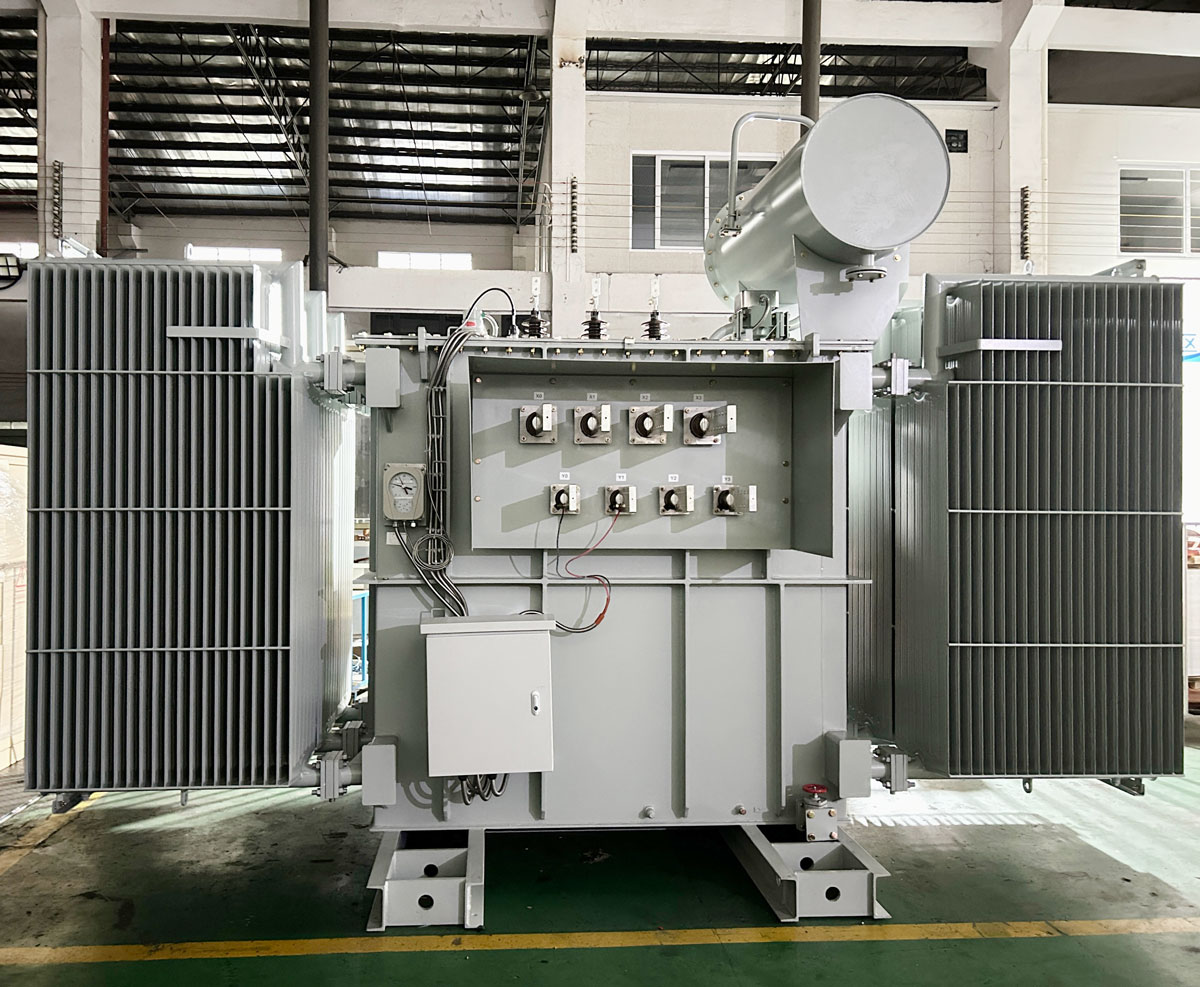
Substation transformers appear across a wide range of large-plant applications. The typical application scenarios are utility substations and distribution substations, where these units stabilize grid voltage and reliably supply electricity to residential, commercial, industrial, and large-scale facilities. The following table shows documented Winley Electric builds and the voltage conversion role each one plays.
| Segment | Configuration example | Conversion role |
|---|---|---|
| Utility grid modernization | 40 MVA, 44 kV to 34.5 kV | Step-down |
| Utility main transformer | 50 MVA, 35 kV to 10 kV | Step-down |
| Solar | 6500 kVA, 480 V to 13.8 kV, double-split | Step-up |
| Solar multi-inverter | 2.05 MVA, 380 V to 34.5 kV, natural-ester fluid | Step-up |
| Battery energy storage | 5 MVA, dual 480Y/277 V to 12 kV | Bidirectional |
| Data center campus | 10/11.2/12.5/14 MVA, 12.47 kV to 2.4/4.16 kV | Step-down |
| Data center and EV charging | 8 MVA, 34.5 kV to dual 480 V | Step-down |
| EV fleet depot | 2500 kVA, 12.47 kV to 480Y/277 V, UL certified | Step-down |
| EV bus and truck depot | 2000 kVA ONAF, 34.5 kV to 480 V | Step-down |
| Mine grid connection | 6.3 MVA, 66 kV to 11 kV, on-load tap changer | Step-down |
| Harsh or coastal environment | 26/34 MVA, 11 kV isolation, 304 stainless steel NEMA 4X tank | Isolation |
| Canadian commercial and institutional campus | 1500 kVA, 4.16 kV to 600Y/347 V | Step-down |
Two structural patterns stand out. Step-up units for renewable and storage applications are frequently specified with double-split windings or multiple secondaries so that several inverter feeds can be combined into a single collector output. Step-down units at the grid boundary, such as the 40 MVA 44 kV to 34.5 kV transformer, are engineered for continuous utility service and tight regulation. Both patterns point to the same conclusion: a substation transformer is designed around the site's voltage plan and load profile, not selected from a generic catalog.
Market Data: Demand Trends Shaping Procurement in 2026
Financing and planning decisions now take place against a backdrop of rising demand. MarketsandMarkets estimates the global transformer market at USD 64.64 billion in 2025, projected to reach USD 88.48 billion by 2030. Global Market Insights values the global substations market at USD 128.5 billion in 2024, with growth to USD 178.9 billion by 2034 at a CAGR of 3.2%. Grand View Research attributes approximately 41.1% of global transformer revenue to Asia Pacific, where large infrastructure programs continue to expand manufacturing capacity.
Three data points matter most for buyers evaluating supply options. First, oil-immersed units hold the largest share of the power transformer segment, making liquid-filled construction the technology baseline for utility applications. Second, data center transformer demand is expected to rise from USD 2.2 billion in 2023 to USD 5.9 billion by 2030 at a CAGR of 10%, reflecting the concentrated loads of hyperscale and colocation facilities. Third, the smart transformer market is projected to grow from USD 3.17 billion in 2025 to USD 10.15 billion by 2035 at a CAGR of 12.35%, according to SNS Insider, as grid operators move toward real-time monitoring and control. These trends reward manufacturers that can certify, customize, and document equipment efficiently.
Traditional Global OEMs vs. Certified Export Manufacturers
The traditional source for large substation transformers in North America is a short list of global high-voltage equipment suppliers. MarketsandMarkets identifies Hitachi Energy, Siemens Energy, GE Vernova, Eaton, and Schneider Electric as major global manufacturers that dominate the high-voltage equipment supply chain. These companies carry deep utility-approval histories, extensive R&D, and broad service networks.
In parallel, a second group of suppliers has grown in relevance: certified transformer manufacturers outside the traditional Western OEM base, such as Winley Electric, that combine ANSI/IEEE/UL compliance with OEM/ODM flexibility. Their role is not identical to that of the incumbents, and a realistic comparison looks like this.
| Dimension | Traditional global OEMs | Certified export manufacturer example: Winley Electric |
|---|---|---|
| Standards approach | Deep in-house standards heritage and long utility track record | ANSI/IEEE/CSA/DOE2016/IEC60076 compliance; UL and cUL certification |
| Design and customization | Large engineering organizations, typically suited to large programs | OEM/ODM customization with a 35-engineer R&D team and flexible cooperation models |
| Production scope | Full voltage range including EHV and above | 145 kV and below |
| Factory and quality system | Established global operations and local service networks | 45,000 m² facility; 35,000 units annual capacity; ISO 9001 system; material traceability; lightning impulse test equipment |
| Project support | Regional service networks and integration resources | 24/7 technical support; acceptance support; transportation planning; installation guidance; 2-year free maintenance |
One clear boundary deserves emphasis. Winley Electric manufactures transformers rated at 145 kV and below. Projects requiring 230 kV and above fall outside that production scope, and for extra-high-voltage transmission applications, manufacturers with EHV experience remain the realistic route. Below that threshold, which covers the large majority of distribution and subtransmission substation projects, a certified export manufacturer can offer a compliant alternative, but buyers should still review factory test procedures, utility acceptance documentation, and logistics plans before a unit ships.
Future Outlook: Toward Smarter, More Bidirectional Substation Transformers
Substation transformers are becoming more bidirectional, more customized, and more observable. The growth of solar, wind, and battery storage creates operating patterns that older designs were not specifically engineered to handle: frequent cycling, reverse power flow, and inverter-generated harmonics. Documented builds such as bidirectional BESS transformers, double-split solar transformers, and natural-ester units indicate that the supply base is already responding.
The smart transformer trend will push specifications beyond the nameplate toward sensing, communication, and condition data. According to SNS Insider, the smart transformer market is projected to grow from USD 3.17 billion in 2025 to USD 10.15 billion by 2035, driven by the need for real-time grid monitoring. The physics of voltage conversion will not change, but the procurement checklist will. Buyers who understand the equipment function, the standard framework, and the difference between a traditional OEM and a certified custom manufacturer will be better positioned to evaluate what they are actually buying.
Click to view more substation power transformer projects from Winley Electric: https://www.winley-electric.com/supplier-4803516-substation-power-transformer
FAQ: Common Questions About Substation Transformers
What is a substation transformer?
A substation transformer is a power transformer installed in utility substations and distribution substations. It is core equipment in medium- and high-voltage power transmission and distribution systems, converting voltage levels for efficient long-distance power transmission, stabilizing grid voltage, and reliably supplying electricity to residential, commercial, industrial, and large-scale facilities.
How does a substation transformer work?
It uses electromagnetic induction. Alternating current in the primary winding creates magnetic flux in a steel core, which induces voltage in the secondary winding. The turns ratio between the primary and secondary windings determines whether the voltage is stepped up or stepped down.
What is the difference between a step-up and a step-down substation transformer?
A step-up transformer increases voltage and decreases current, which reduces line losses for long-distance transmission. A step-down transformer decreases voltage to levels suitable for distribution or facility service. Both functions are standard in different parts of the grid: solar and storage projects step up from inverter voltages such as 480 V to collector voltages such as 13.8 kV or 34.5 kV, while utility substations step down from voltages such as 44 kV or 35 kV to distribution levels.
What is the difference between a power transformer and a distribution transformer?
A power transformer typically transfers power between higher-voltage systems and is used in transmission or subtransmission networks. A distribution transformer serves the final voltage step before the load. A substation transformer can serve either role depending on where it is positioned within the network.
What standards apply to substation transformers in North America?
The primary design and test standard family is the IEEE C57 series. ANSI C.57 covers general requirements and test codes for liquid-immersed transformers. UL 1561 applies to liquid-filled transformers, UL 1562 applies to dry-type transformers, DOE 2016 covers efficiency, and CSA standards apply in Canada. Winley Electric's transformer products meet ANSI/IEEE/CSA/DOE2016/IEC60076 and carry UL and cUL certification.
What capacity and voltage ranges are typical for a substation transformer?
In Winley Electric's product line, substation power transformers are available from 150 kVA to 100 MVA, with primary voltages from 2.4 kV to 138 kV and secondary voltages from 0.6 kV to 35 kV. Applicable standards include NEMA, ANSI C.57, DOE, and IEEE.
Can a substation transformer be customized for a North American project?
Yes. OEM and ODM customization is common for substation projects. Winley Electric's engineering team can design around customer requirements using the applicable ANSI, IEEE, CSA, DOE2016, NEMA, or IEC framework. The company also provides drawing design, accessory selection, acceptance support, transportation planning, and installation guidance.
What should a buyer verify before selecting a substation transformer manufacturer?
Buyers should verify certification coverage such as UL/cUL status and standard compliance, factory quality-control systems, availability of type-test equipment such as lightning impulse devices, and documented experience in similar applications. Winley Electric operates a 45,000 square meter facility, produces 35,000 units annually, and maintains a material traceability system under ISO 9001 requirements.