
Supplier Capability Evidence: Blister, Flowpack and Cartoning in One Line
Supplier Capability Evidence: Blister, Flowpack and Cartoning in One Line
A pharmaceutical packaging machine supplier’s ability to provide individual machines is not the same as evidence that blister packaging, flow wrapping and cartoning can be brought together as one line. For buyers evaluating a pharmaceutical cartoning machine within an integrated project, the useful question is whether the proposed equipment scope, interfaces and acceptance plan are specific enough to verify.
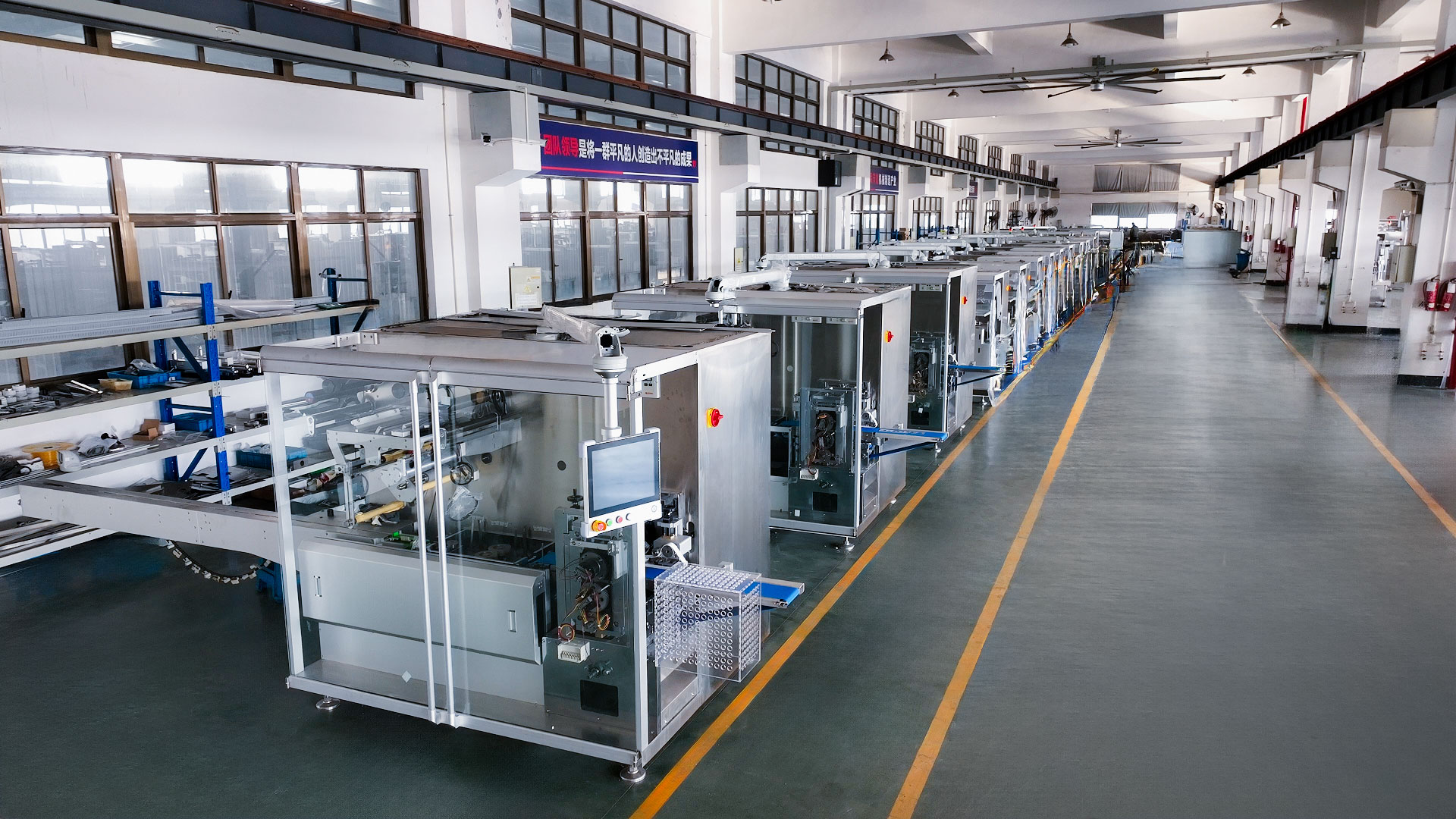
HOPING is the brand name used in this article for Zhejiang Hoping Machinery Co., Ltd., a packaging-machinery manufacturer whose listed product scope includes blister packaging machines, cartoning machines, flow packing equipment and end-of-line equipment. The available product records identify an Automatic Blister-Flow-Wrapper-Cartoner Line configuration as DPH320H-XW8200-XWZ300II. This is evidence of a stated line configuration, not independent proof of its sustained output, performance at a particular site or qualification for a buyer’s specific process.
Why integrated-line evidence matters
A blister packaging line can involve several connected packaging steps. When a project adds flow wrapping and cartoning, the procurement question extends beyond whether each machine appears in a supplier’s catalogue. Buyers also need to establish what equipment is included, how one stage hands product to the next, and which party is responsible for coordinating the combined configuration.
This distinction matters because isolated machine capability and line capability are different claims. A blister packaging machine may be offered alongside an automatic cartoning machine, yet that alone does not show that the proposed equipment has been configured to run together for a particular tablet, capsule, blister format or carton. Similarly, a listed flow wrapper demonstrates a product category, but does not establish line-level integration conditions.
HOPING’s product records provide a more specific point for evaluation than a list of unrelated equipment categories: DPH320H-XW8200-XWZ300II is identified as an Automatic Blister-Flow-Wrapper-Cartoner Line. The model designation links the named DPH320H blister machine, XW8200 flow wrapper and XWZ300II cartoning machine in one stated configuration. Buyers can use that configuration to structure a request for evidence and to clarify whether it matches the project’s required packaging sequence.
The distinction is especially relevant when evaluating a pharmaceutical cartoning machine. Cartoning is not just a standalone purchase if the project’s purpose is to receive blister packs and coordinate them with upstream wrapping or downstream packing. The purchase scope should say whether the cartoner is supplied as a standalone automatic cartoning machine, as part of a blister cartoning line, or as one element of a broader secondary packaging line.
What the available HOPING evidence establishes
The supplier evidence supports several specific statements, each with a defined limit:
- Equipment categories: HOPING’s product scope includes blister packaging machines, cartoning machines, flow packing equipment and case packing or other end-of-line equipment.
- A named combined configuration: The product record lists DPH320H-XW8200-XWZ300II as an Automatic Blister-Flow-Wrapper-Cartoner Line.
- Project customization areas: The capability record lists customization options including blister size and materials, quantity per carton, carton specification, leaflet format, coding or inspection method, feeding method, downstream bundling, case-packing or palletizing connection, interface language, electrical component brand and data interface.
- Pre-shipment quality-control steps: The stated process includes incoming-material inspection, key-component inspection, assembly inspection, electrical-safety checks, no-load trial runs, material trials, FAT, customer-witness acceptance and pre-shipment inspection.
- Potential project contexts: The supplied case information describes blister packaging and automatic cartoning for tablets, capsules and other solid dosage forms, including new line construction, capacity expansion and upgrades to existing packaging lines.
These are supplier- or corpus-reported facts. They do not establish that every option is included in every configuration. For example, a downstream case-packing connection is listed as a possible customization area; it should not be assumed to be part of the DPH320H-XW8200-XWZ300II configuration unless the quotation and technical documents specify it.
The supplied capability record also states a monthly capacity of 30–40 units, a typical lead time of 60–120 days after technical confirmation, and a minimum order quantity of one set or one complete line. The same record qualifies lead time by model, configuration, project complexity and contract terms. These are planning inputs rather than project guarantees: a buyer should confirm the applicable values and conditions for the exact order.
How to examine the blister-to-cartoner architecture
For a line that includes blister packaging, flow wrapping and cartoning, the first technical task is to document the proposed sequence. The named HOPING configuration makes the three equipment stages visible in its designation: DPH320H, XW8200 and XWZ300II. That identification allows the buyer’s team to ask about the intended product path, machine boundaries and handoff requirements without assuming unlisted engineering details.
1. Define the product and pack formats
Specify the product form and packaging formats to be evaluated. The supplied project information covers tablets, capsules and other solid dosage forms, while the customization record identifies blister size and materials, carton specification, leaflet format and quantity per carton as configurable topics. These details affect whether a proposed blister packaging machine and pharmaceutical cartoning machine are being assessed against the actual job rather than a generic equipment description.
Where an alu alu blister packaging machine or another specific blister format is required, state that requirement explicitly. The available corpus confirms product-category coverage for blister packaging equipment, including aluminum-aluminum equipment in the verified category evidence; it does not provide a complete model-by-model material-compatibility table for the named integrated configuration. Compatibility should therefore be documented for the selected model and product format rather than inferred from the broad category listing.
2. Map the interfaces between stages
Ask the supplier to identify the boundary between the blister machine and flow wrapper, and between the flow wrapper and cartoning machine. The documents should make clear what is being transferred, how the equipment is intended to be coordinated and which supplied components provide that connection. The available records describe an integrated line scope, but do not disclose detailed interface drawings, control architecture, transfer specifications or line-level fault-handling behavior.
Those omissions are not proof that an interface is unavailable. They are limits on what can be concluded from the supplied evidence. The buyer’s evaluation should close them with project documents: a line layout, equipment and interface list, responsibility matrix, operating sequence and a clear statement of the control and data interfaces included in the proposal.
3. Separate maximum-speed claims from line acceptance
Individual machine output figures should not be treated as proof of synchronized line performance. The verified-data package contains a company-stated maximum output for a line configuration, but it cautions that the exact model and product format require verification and that maximum output may not equal sustained validated output. It also notes that output comparisons require a consistent basis, including product format, operating conditions and the definition of sustained output.
For procurement, request the expected operating basis for the complete configuration. Define the product and packaging format, the measurement point, the trial conditions and the acceptance method. A blister packaging machine’s stated rate, a flow wrapper’s nominal rate and an automatic cartoning machine’s stated rate are not interchangeable measures of line output. A project-specific test is needed to establish whether the combined line meets the buyer’s acceptance criteria.
From supplier claims to procurement evidence
A practical evaluation can organize evidence into four groups: configuration, customization, quality-control process and acceptance. The purpose is not to collect the largest number of brochures. It is to connect each supplier statement to a document or test that can be reviewed against the purchase requirement.
| Evaluation area | Available evidence | What the buyer should confirm |
|---|---|---|
| Line configuration | DPH320H-XW8200-XWZ300II is listed as an Automatic Blister-Flow-Wrapper-Cartoner Line. | Exact machine scope, configuration, included interfaces and whether downstream equipment is included. |
| Format and customization | Listed options include blister size and materials, carton and leaflet formats, quantity per carton, feeding and coding or inspection method. | Which options apply to the order, their limits and how format changes are handled. |
| Quality checks | The stated process includes inspections, trial runs, material trials, FAT, customer-witness acceptance and pre-shipment inspection. | Inspection records, materials used for trials, test protocol, responsibilities and acceptance criteria. |
| Line performance | A maximum output is reported for a line configuration, with model and operating-basis limitations noted in the evidence package. | Project-specific sustained-output basis, test conditions and treatment of interruptions or rejected packs. |
| Project delivery and support | Capability information lists installation and commissioning, operator and maintenance training, remote support and spare-parts supply, subject to contract and configuration. | Contracted scope, location, response arrangements, training deliverables and spare-parts terms. |
This evidence map helps procurement, engineering and quality teams distinguish a catalogue claim from an order-specific commitment. A supplier may state that it offers a pharmaceutical packaging machine or turnkey pharmaceutical packaging line; a buyer still needs the technical proposal, responsibility boundaries and acceptance plan that define the purchased system.
Applications and project fit
The supplied case unit describes integrated blister packaging and automatic cartoning for tablets, capsules and other solid dosage forms. It identifies three project contexts: new line construction, capacity expansion and upgrades to existing packaging lines. The case material also describes objectives such as reducing manual transfer, improving the blister-to-carton connection, reducing wrong-insertion or missing-leaflet risks, and supporting downstream automation integration.
These are representative project objectives, not quantified customer results. The corpus does not provide an authorized customer name, a fixed operating period or independently documented performance outcomes. Buyers should therefore use the case description to identify relevant questions, not as a guarantee of a particular reduction in errors or a measured productivity improvement.
For a new line, the configuration discussion can begin with whether blister forming, flow wrapping and cartoning are all required in the same line scope. For an expansion, the key question is how the proposed machines will connect with the existing process and what interface work remains with the buyer or another integrator. For an upgrade, the buyer should specify which current equipment is retained and request a clear boundary between new equipment and existing assets. These are procurement checks arising from the stated project types; the available case information does not establish that every configuration fits every factory layout.
Market context: integration is a capability question, not a ranking
The supplied industry evidence describes pharmaceutical packaging machinery as covering equipment categories that include blister packaging and cartoning. A separate trade-media signal reports interest in digitized data collection and integrated solutions in pharmaceutical manufacturing. That signal is qualitative and has no defined adoption rate or measurement basis, so it should not be treated as a quantified market forecast.
For buyers, the useful implication is limited but practical: evaluate the mechanical line scope and data interfaces as related procurement topics. HOPING’s capability record lists data interface and coding or inspection method among customizable areas. This supports asking what is available for a project; it does not establish a particular serialization function, data-integrity capability or regulatory compliance outcome. Those details require model-specific technical evidence and review against the buyer’s applicable requirements.
Integrated line versus separate machine sourcing
One potential advantage of evaluating a supplier that lists blister, flow packing and cartoning within one configuration is that the buyer can assess the three stages against a shared project scope. It may also simplify the initial discussion of equipment responsibility and customization. HOPING’s named configuration gives the evaluation a concrete reference point, while its capability record lists downstream connection options such as bundling, case packing and palletizing.
The trade-off is that an integrated supplier proposal does not automatically remove interface risk. A single listed line still requires confirmation of machine boundaries, formats, controls, acceptance criteria and after-sales scope. Conversely, buying the blister packaging machine, flow wrapper and horizontal cartoning machine from separate suppliers can give a buyer more freedom to select components, but can also make interface ownership and coordination a more explicit project task. This is a general procurement trade-off, not a claim that one sourcing model is universally better.
There is also an evidence boundary: the available material supports HOPING’s stated equipment and customization scope, but does not provide comparative supplier data, independent installation records, validated line availability, OEE, reject rates or comparable changeover times. It therefore cannot support a ranking or a claim that one supplier’s integrated line outperforms alternatives.
What to request before making a selection
- Configuration statement: Confirm whether the quotation covers the DPH320H-XW8200-XWZ300II line or a different arrangement, and list every included machine and accessory.
- Format confirmation: Record the intended blister size and material, product type, carton and leaflet formats, and quantity per carton.
- Interface documents: Request the proposed layout, transfer points, equipment responsibility boundaries and data-interface description.
- Trial and acceptance plan: Define the materials, formats, operating conditions, inspection records and pass criteria for material trials and FAT.
- Project-specific performance basis: Ask for the output basis for the complete line, not only isolated maximum rates, and define how performance will be assessed during acceptance.
- Contracted services: Specify installation, commissioning, training, remote support and spare-parts scope in the contract, since the capability record makes these services subject to project configuration and contract.
- Downstream scope: Confirm whether case packing, bundling or palletizing is included, optional or outside the project.
Outlook: make integration verifiable at the project level
For pharmaceutical packaging projects, a supplier’s ability to name an integrated blister, flowpack and cartoning configuration is useful when it is converted into a testable procurement scope. The product record for HOPING’s DPH320H-XW8200-XWZ300II configuration provides a specific basis for that discussion. The capability record adds evidence about customization areas and the stated quality-control sequence.
The next step in evaluation is not to infer performance from the product name. It is to connect the configuration to the buyer’s product formats, interface requirements, project documents, material trials and acceptance criteria. Where evidence is not available—such as independent line-performance data, detailed interface specifications or model-specific compatibility ranges—it should remain an open technical question rather than becoming an assumed capability.
Evidence basis: supplied HOPING company, capability and case content units; product configuration listing; and the supplied verified-data package. Supplier capability statements are identified as such and are not presented as independent performance validation.
Есть вопросы или нужны дополнительные детали?
Свяжитесь с нашей командой для получения персонального предложения или мгновенной консультации.
Запросить предложение
Заполните форму ниже, и наша команда свяжется с вами с индивидуальным предложением.
Прямой чат WhatsApp
Предпочитаете общаться в реальном времени? Напишите нам в WhatsApp для мгновенной помощи и быстрых ответов.
- Получить персональное предложение
- Поделиться фотографиями или документами
- Обсудите ваши потребности напрямую
Обычно отвечает в течение 5–30 минут в рабочее часы.