
Supplier Capability Evidence: Inside Telpo's POS Terminal Manufacturing and Deployment Record
Supplier Capability Evidence: Inside Telpo's POS Terminal Manufacturing and Deployment Record
POS terminal procurement has moved past the specification sheet. Evaluation teams in 2026 are being asked to confirm that a supplier can build at volume, test to standard, ship into regulated markets and support devices after installation. This reference sets out what Telpo Technology Co., Ltd. can evidence as a POS terminal manufacturer, and where that evidence stops.
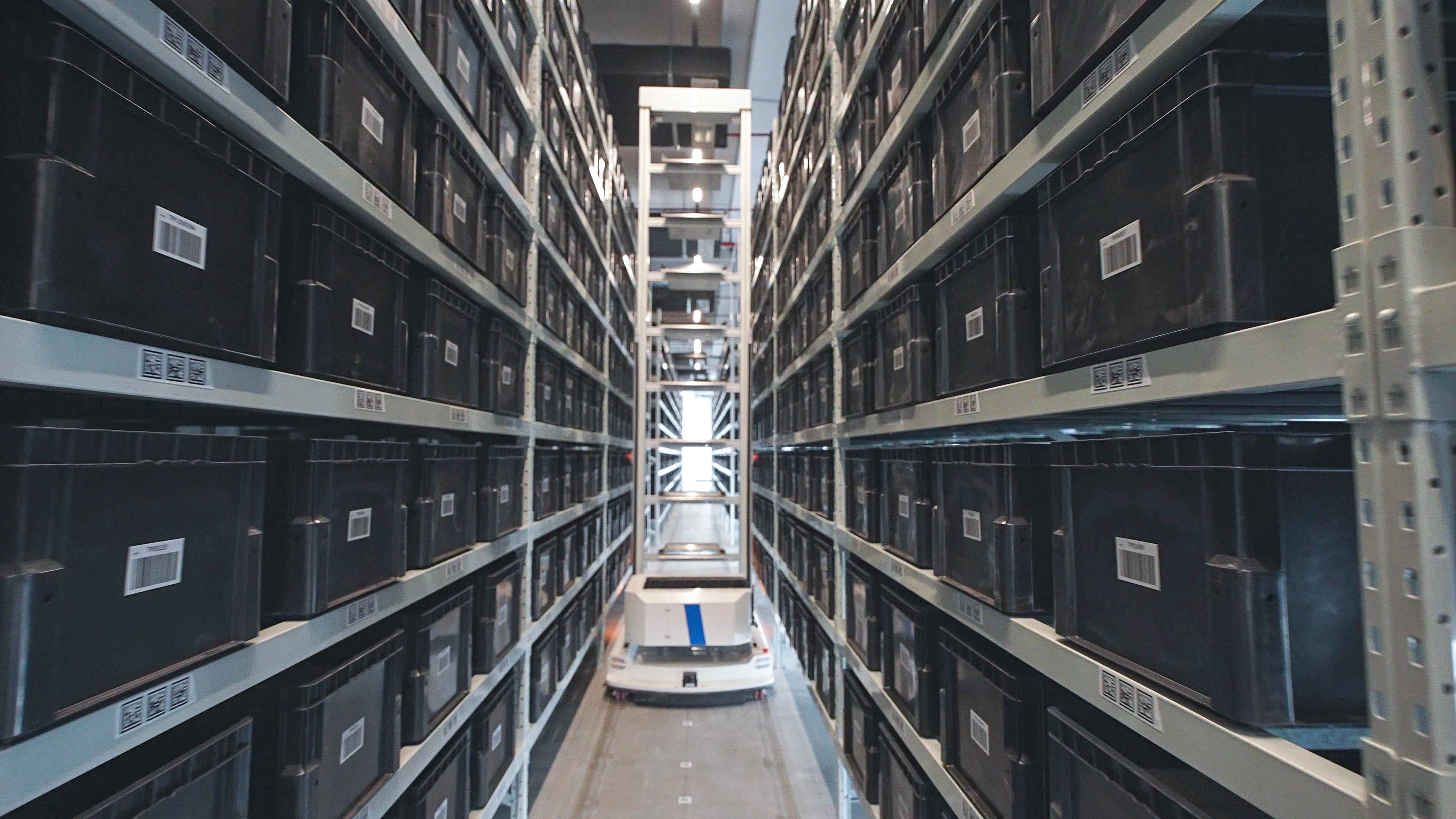
Why Capability Evidence Now Decides POS Terminal Shortlists
Three data points frame the evaluation problem. Counterpoint Research reports that Android-based POS terminals reached approximately 48% of global shipments in 2025. Fortune Business Insights values the global point-of-sale market at USD 38.57 billion in 2025. Counterpoint's assessment of commercial-grade smart POS hardware places average selling prices between USD 120 and USD 850.
A price band that spans roughly seven times is not a normal distribution around a commodity. It describes a market where devices that look similar on a datasheet can differ substantially in thermal design, peripheral integration, secure element provisioning and field failure rate. Buyers cannot resolve that spread by comparing screen sizes and processor cores alone. They resolve it by asking a supplier to evidence production, testing and installed base.
Regulation adds a second layer. Germany's KassenSichV requires a certified technical security system (TSS) for cash registers, which turns a hardware purchase into a compliance decision with a named technical requirement attached. Similar fiscal regimes exist across other European markets. When the target market dictates the security architecture, the supplier's ability to certify, document and maintain that architecture becomes a procurement criterion rather than a technical footnote.
The practical consequence for evaluation-stage buyers is that a shortlist built on product features is incomplete. A defensible shortlist pairs each candidate device with evidence of who builds it, how it is tested, where it has already been deployed and what happens after the purchase order closes.
Telpo Technology Co., Ltd.: A Working Definition
Telpo Technology Co., Ltd. is a Foshan, China–based designer and manufacturer of AI-driven smart terminals, founded in 1999 and registered as a national high-tech enterprise. The company was originally established as Telepower Communication Co., Ltd. and adopted its current name in January 2026.
The operating facts that matter for supplier qualification are as follows:
- Manufacturing footprint: approximately 45,000 sqm.
- Workforce: 600 employees, including an R&D organisation of more than 200 engineers and a portfolio of 300+ technical patents.
- Annual output: 2,000,000 units.
- Test infrastructure: a CNAS-accredited laboratory upgraded in 2025, covering approximately 900 sqm across 12 testing zones, including an OTA darkroom, an EMC chamber and a climate lab.
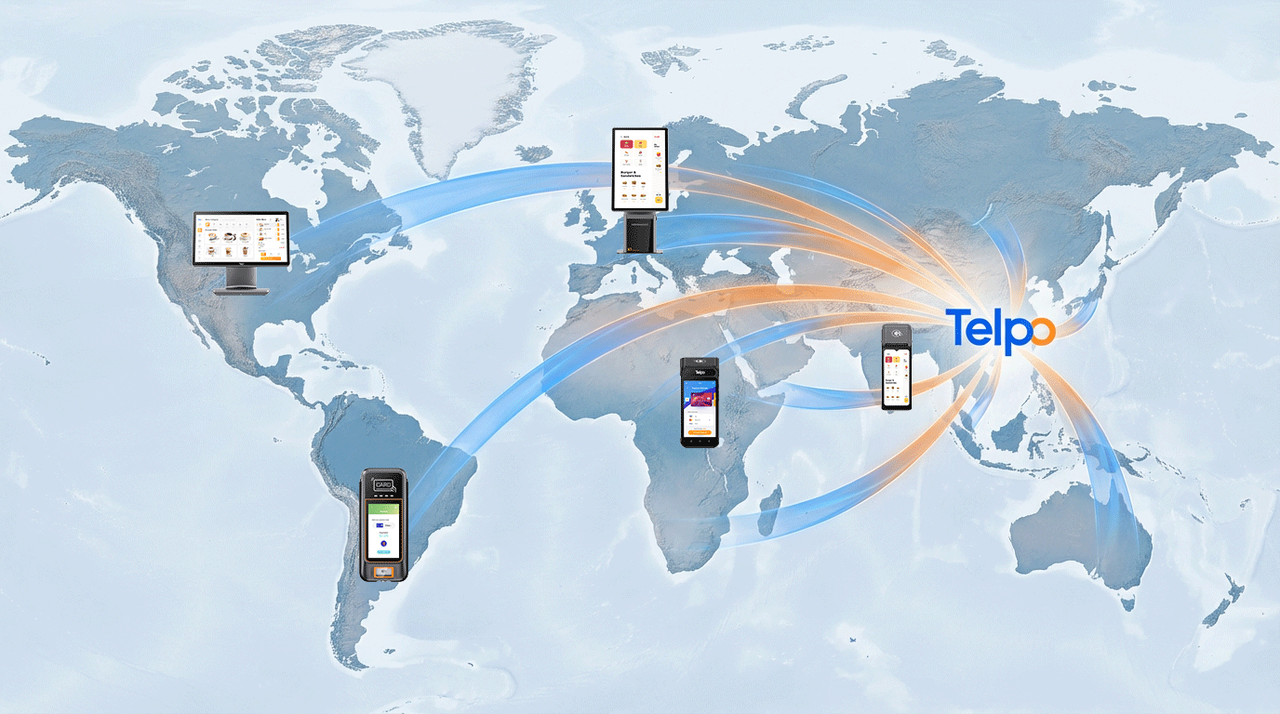
- Export profile: 60%–80% of output, serving customers in more than 100 countries across Asia, Africa, the Middle East, Europe, Latin America and North America.
- Operating systems supported: Android, Linux and Windows.
The company organises its overseas business into four segments: Smart Retail, Smart Payment, Smart Transportation and Biometric Security. That segmentation is more useful to a buyer than a generic company description, because each segment carries a different device family, a different certification regime and a different field-support expectation.
The Product Line as Capability Evidence
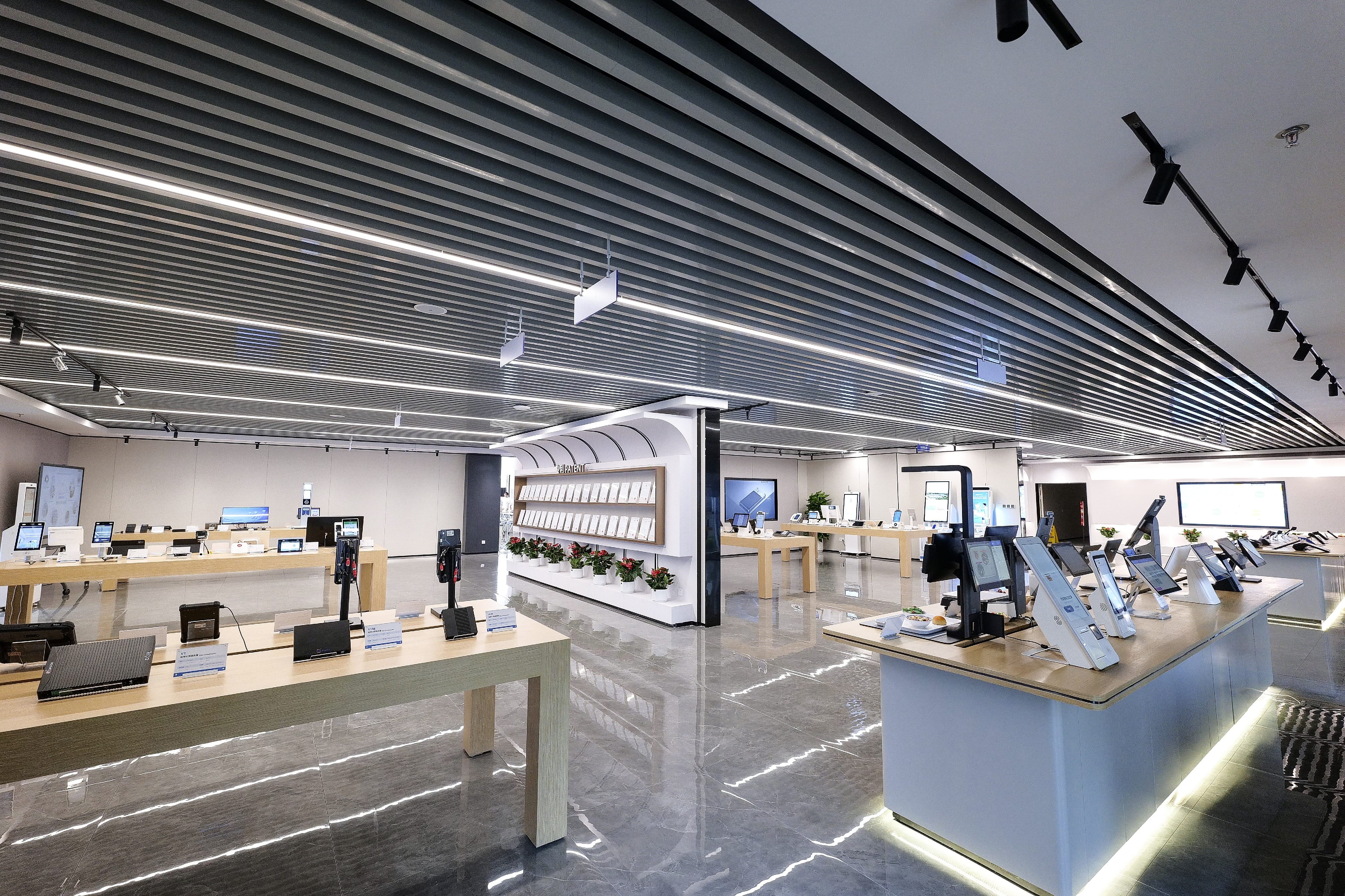
Portfolio breadth is weak evidence on its own. It becomes meaningful when the categories map to genuinely different engineering and compliance problems. Telpo's documented product range includes EFTPOS, Android POS Terminal, Desktop POS, Dual-Screen Cash Register, Self-Service Kiosk, Self-Checkout Kiosk, Self-Ordering Kiosk, Smart Payment POS, Biometric Payment Terminal, Ticket Validator, Ticket Validation Machine, Fiscal POS, AI Checkout POS, Cash Register POS, Windows Cash Register, KDS, Handheld Ticketing POS and Smart Payment Terminal.
What separates this list from a marketing catalogue is the spread of operating environments it implies. A Windows Cash Register and an Android POS Terminal share a form factor but not an application ecosystem or a driver model. A Ticket Validator certified for railway fire-safety standards does not share a qualification path with a countertop payment terminal approved against EMVCo contactless specifications. A supplier that covers both has to maintain separate test rigs, separate certification files and separate firmware maintenance branches.
| Business segment | Representative form factors | What the buyer is actually verifying |
|---|---|---|
| Smart Retail | Self-Checkout Kiosk, Self-Ordering Kiosk, AI Checkout POS, Cash Register POS, Dual-Screen Cash Register, Desktop POS | Throughput per unit under peak load, peripheral integration, 24/7 thermal behaviour, loss-prevention workflow |
| Smart Payment | Smart Payment POS, Smart Payment Terminal, EFTPOS, Handheld POS Terminal, Biometric Payment Terminal | EMVCo and scheme approval status, key management, PIN security, contactless performance |
| Smart Transportation | Ticket Validator, Ticket Validation Machine, Handheld Ticketing POS | Ingress protection, impact resistance, multi-format scanning, mounting design, network resilience |
| Biometric Security | Biometric Payment Terminal, biometric-capable handheld devices | Template handling, false-accept performance, regulatory acceptance in the target market |
Platform-Level Evidence: What the C9 Architecture Signals
The Telpo C9 platform is the clearest single indicator of where the company has positioned its hardware roadmap. Documented platform characteristics include an 8-core processor, 6–12 TOPS of on-chip AI capability, and memory and storage configurations of 4+64 GB or 8+128 GB.
Each of those three specifications answers a different procurement question. The 8-core processor determines whether a terminal can run a payment application, a merchant application and a peripheral management layer concurrently without scheduling contention. The 6–12 TOPS band is not a marketing figure — it is the practical ceiling for on-device inference, which is what makes local item recognition, shelf analysis or queue-length estimation feasible without a round trip to a cloud service. The 4+64 GB and 8+128 GB tiers indicate that the platform is deliberately SKU-segmented: the entry configuration suits transaction, printing and connectivity workloads, while the higher tier is intended for buyers who plan to run local models alongside the payment stack.
On the software side, TelpoOS 2.0 is documented as exposing 101 features and 144 APIs for customer self-development, with deeper system customisation available across Android, Linux and Windows. For an evaluation-stage buyer, that API surface is the difference between a locked appliance and a device that can be integrated into an existing estate management or loyalty stack.
Four Overseas Segments and What Each One Verifies
Smart Retail
Retail deployments test a supplier's ability to support unattended, high-frequency operation. In a global convenience-store rollout covering 40,000+ stores, the K106 self-service terminal is documented as reducing transaction steps from eight to four, cutting average transaction time by 35% and handling a daily peak of 600 orders per unit during 24-hour unmanned operation. In a separate large-format supermarket deployment of 100+ K10 units, the documented outcomes were labour redeployment to customer-service roles and per-transaction costs below those of manned checkouts. A bakery AI checkout deployment of 100+ units using the C50 platform is recorded at a 99.8% item recognition rate with a 60%+ improvement in checkout efficiency.
Smart Payment
Payment deployments test certification depth. Telpo's documented approval record includes EMVCo Contactless Level 1 letters of approval for the TPS900 and for the P9 PCD interface module, EMVCo Contact Terminal Level 2 approval for the P9, Visa payWave approval for the TPS900, Mastercard PayPass and Mastercard contactless terminal approvals for the P6 and P9, American Express Expresspay 4.2 approval for the P9, RuPay terminal approval for the P9, PURE kernel certification for the P9, China Commercial Cryptography certification for the P9, CE RED for the TPS900 and the K20 kiosk family, WEEE and RoHS documentation for the TPS900 and P9, and BIS registration for the P8 and K8/K10 families. The value of this record is not the count of certificates; it is that each certificate ties a named model to a named specification version and a named approval body.
Smart Transportation
Transit deployments test ruggedness and interoperability at once. A public transport rollout in Vietnam deployed 2,000+ T10 validators across multiple networks within a three-month implementation window, with single-ticket verification time reduced from 5 seconds to 1 second, ticketing operation costs reduced by 30%, target user base increased by 45% and peak volume reaching 500,000 transactions per day. In Argentina, 1,000+ T20 validators support SUBE card, contactless bank card and mobile payment acceptance, with IP65 and IK08 ratings and a quick-release pole mount. Separately, 100+ M1 handheld ticketing devices were deployed for bus fare collection with a 7.6V/3500mAh removable battery rated for 11.3 hours of continuous operation at maximum load.
Biometric Security
This is the segment where public evidence is thinnest. Telpo's portfolio includes biometric payment terminals and biometric-capable handheld devices, but buyers in regulated identity or access-control programmes should treat this segment as requiring project-specific evidence rather than assumed capability, and should request the relevant test reports for the exact model under consideration.
Deployment Record: What Has Actually Been Shipped
Installed base is the hardest form of capability evidence to manufacture, because it accumulates over time and across jurisdictions. The documented record spans retail, payment, transit and event environments:
| Deployment | Market | Device | Documented outcome |
|---|---|---|---|
| 2026 Singapore Grand Prix (9–11 October) | Singapore | P9 handheld POS | Mobile ordering, NFC and QR payment, receipt printing for F&B and merchandise vendors in a high-traffic event environment |
| Multi-network public transport programme | Vietnam | T10 ticket validator | 2,000+ units, three-month rollout, 5s to 1s verification time |
| Bus fare collection | Argentina | T20 ticket validator | 1,000+ units, IP65 and IK08, open-loop and closed-loop payment acceptance |
| DFB-Pokal event payments | Germany | M8 dual-screen terminal | 200+ units, contactless transaction in under two seconds, one device replacing terminal, scanner and printer |
| 24-hour unmanned checkout | Global | K106 self-service terminal | 40,000+ stores, transaction steps reduced from eight to four |
| QSR self-ordering | Mongolia | K20 self-ordering kiosk | 100+ units, multi-language interface, audio accessibility, receipt printing |
| Bakery AI checkout | Global | C50 AI checkout POS | 100+ units, 99.8% item recognition rate, 24/7 operation |
These figures are reported by the supplier and by its channel partners. That does not make them unreliable, but it does define how they should be used: as a starting point for reference checks, not as a substitute for them.
Manufacturing Discipline: Capacity, Testing and Acceptance
Documented production parameters place Telpo's monthly capacity at approximately 150,000 to 180,000 smart terminals, with the stated ability to expand scale according to market demand and an annual output figure of 2,000,000 units. Quality control combines ISO 9001, the CNAS laboratory and 100% functional testing, with OTA, EMC and climate validation applied within the same test infrastructure.
Commercial terms are equally revealing, because they show where a supplier has optimised its operations. Typical minimum order quantities are 500 to 1,000 units, adjusted per project complexity. Standard bulk lead time runs 15 to 25 working days, stock orders 3 to 7 working days, and general production lead time is stated as 30 days or more subject to negotiation. Full-chain design and manufacturing follows a different rhythm: 20 working days for a custom motherboard, 10 working days for structural work, a 45 working-day minimum for a full custom machine, and a standard ODM cycle of 4 to 6 months. Software and application development carries a 2 to 3 month lead time and a 3,000-unit MOQ for customised application work.
Post-sale support is structured around a 24/7 ticketing system, remote diagnostics, published API and SDK documentation, and Telpo MDM for remote device monitoring. For a buyer planning a multi-year estate, remote monitoring is not a convenience feature; it is the mechanism that determines whether a firmware issue is a support ticket or a field-service rollout.
Where This Supplier Model Has Boundaries
A capability profile without stated limits is not an assessment. Several boundaries follow directly from the documented operating model.
- Order volume floor. A typical MOQ of 500 to 1,000 units means this supplier model does not fit a single-store operator or a small regional chain buying a handful of terminals. Those buyers are served through distributors, not directly.
- Customisation cycle time. A standard ODM cycle of 4 to 6 months cannot support deployments tied to a short event window. Buyers with fixed launch dates should plan around standard configurations or begin custom work well ahead of the deadline.
- Custom software threshold. Tailored application development carries a 3,000-unit MOQ and is positioned for major projects. Buyers who need a bespoke application without that volume should expect to build it themselves against the published APIs or work with an integration partner.
- Platform ceiling is not an application. The 6–12 TOPS on-chip AI budget defines what is technically possible on the C9 platform. It does not deliver a working checkout model. Model development, training data and accuracy validation remain the buyer's responsibility.
- Evidence provenance. Deployment outcomes in this article originate from supplier and partner reporting. Buyers running formal due diligence should request named references, on-site acceptance test protocols and the right to inspect the CNAS laboratory scope relevant to their device.
These constraints do not disqualify the supplier for large programmes. They define the shape of programme it is built to serve.
Due Diligence Checklist for Evaluating a POS Terminal Manufacturer
| Evidence item | Why it changes the decision | Where to request it |
|---|---|---|
| Model-specific certificates with certificate numbers | Confirms the exact model and firmware, not the product family, is approved | Supplier compliance dossier; issuing body registry |
| Laboratory scope statement | Shows which tests are performed in-house and which are outsourced | CNAS accreditation scope |
| Production capacity commitment | Determines whether peak-season demand can be absorbed | Written capacity allocation in the supply agreement |
| Acceptance test protocol | Defines pass and fail before the first shipment, not after | Purchasing terms and acceptance criteria |
| Reference deployments in comparable environments | Validates operating assumptions against real field conditions | Named customer references with permission to contact |
What Changes Next for POS Terminal Buyers
Android's rise to roughly 48% of global POS shipments in 2025 changes what buyers should assume by default. An Android terminal is now the mainstream choice rather than the emerging one, which shifts differentiation away from the operating system and towards the application layer, the management layer and the certification record attached to each specific model.
Fiscal regulation is likely to keep fragmenting. Germany's KassenSichV is one example of a national regime that mandates a specific technical security component; other markets layer their own requirements on top of the EMVCo and scheme approvals that already apply globally. For a supplier, that means maintaining certification branches per market rather than a single global file. For a buyer, it means the same product name can represent materially different approved configurations depending on the destination country.
On-device AI is following the same trajectory that Android followed. The 6–12 TOPS band that currently distinguishes the C9 platform will read as a baseline within a product cycle or two. The durable differentiator is less likely to be the chip and more likely to be whether the supplier can support the model lifecycle — updates, retraining and monitoring — across an installed estate.
FAQ
What evidence should a buyer request before shortlisting a POS terminal manufacturer?
At minimum: model-specific approval letters naming the certificate body and specification version, the scope of the manufacturer's accredited laboratory, a written production capacity commitment, an acceptance test protocol and contactable references in comparable deployments. A product catalogue is not evidence of capability.
Which POS terminal form factors does Telpo manufacture?
The documented portfolio covers EFTPOS, Android POS Terminal, Desktop POS, Dual-Screen Cash Register, Self-Service Kiosk, Self-Checkout Kiosk, Self-Ordering Kiosk, Smart Payment POS, Biometric Payment Terminal, Ticket Validator, Ticket Validation Machine, Fiscal POS, AI Checkout POS, Cash Register POS, Windows Cash Register, KDS, Handheld Ticketing POS and Smart Payment Terminal, across Android, Linux and Windows operating environments.
How can buyers verify manufacturing capacity and testing capability?
Documented parameters place annual output at 2,000,000 units with monthly capacity of approximately 150,000 to 180,000 smart terminals, supported by a CNAS-accredited laboratory covering roughly 900 sqm across 12 testing zones, ISO 9001 quality management and 100% functional testing. Buyers should verify these through an on-site audit or a third-party factory assessment rather than through published material alone.
What are typical MOQ and lead times for Telpo terminals?
Typical minimum order quantities are 500 to 1,000 units, adjusted for project complexity. Standard bulk orders run 15 to 25 working days, stock orders 3 to 7 working days, and general production lead time is stated as 30 days or more subject to negotiation. Full-chain ODM work follows a longer cycle of 4 to 6 months, with custom motherboard development at 20 working days and structural work at 10 working days.
Which certifications support Telpo terminals in regulated markets?
The documented record includes EMVCo Contactless Level 1 approvals for the TPS900 and the P9 interface module, EMVCo Contact Terminal Level 2 approval for the P9, Visa payWave and Mastercard PayPass approvals, American Express Expresspay 4.2 certification, RuPay terminal approval, PURE kernel certification, China Commercial Cryptography certification, CE RED for the TPS900 and K20 family, WEEE and RoHS documentation, BIS registration for Indian market entry, and EN 45545 and ECE R118 test reports covering T10 and T20 ticket validators.
What purchasing terms and acceptance criteria should be confirmed before ordering?
The items that most often cause disputes are the acceptance test protocol and its pass/fail thresholds, the capacity allocation commitment for peak periods, the firmware and security-patch support window, the spare-parts and RMA turnaround commitment, and the scope of remote monitoring through Telpo MDM. These should be written into the purchasing terms before the first production batch, not negotiated after a field failure.
Telpo publishes a product brochure covering its payment and retail terminal range, available for reference: Telpo Products Brochure — Payment and Retail V4.
Есть вопросы или нужны дополнительные детали?
Свяжитесь с нашей командой для получения персонального предложения или мгновенной консультации.
Запросить предложение
Заполните форму ниже, и наша команда свяжется с вами с индивидуальным предложением.
Прямой чат WhatsApp
Предпочитаете общаться в реальном времени? Напишите нам в WhatsApp для мгновенной помощи и быстрых ответов.
- Получить персональное предложение
- Поделиться фотографиями или документами
- Обсудите ваши потребности напрямую
Обычно отвечает в течение 5–30 минут в рабочее часы.