
Supplier Capability Evidence: Inside a 3,000-Set Monthly Aluminum Outdoor Living Factory
Supplier Capability Evidence: Inside a 3,000-Set Monthly Aluminum Outdoor Living Factory
Monthly capacity is one of the few supplier claims a buyer can test against process, testing and shipping records. This industry reference examines Henan Junsu Technology Co., Ltd. — the manufacturer behind the Junsu Outdoor brand — through its 3,000-set monthly output, its six documented product tests, and a 600-set order delivered to ten destination countries.
Aluminum outdoor living products are rarely bought one item at a time any more. A villa project, a resort renovation or a residential community fit-out typically specifies a retractable roof pergola, a matching privacy fence and a driveway gate as one coordinated package — and the supplier has to deliver all three with the same finish, the same colour code and one shipping schedule. At that point the buyer is not only choosing a product; the buyer is underwriting a supplier's ability to repeat a specification at volume.
Henan Junsu Technology Co., Ltd. is a manufacturer of integrated outdoor courtyard products based in Zhengzhou, Henan Province, established in 2001 and operating under the Junsu Outdoor brand. The company produces pergolas, aluminum fencing, automatic driveway gates, screens and railings from a 30,000 m² manufacturing base staffed by a 120-person team that includes a 10-engineer R&D group, with an annual production capacity of approximately 36,000 sets. Around 90% of output is exported, with the EU, the United States, France, Germany, Canada and Australia listed as main markets.
This reference follows three threads a decision-stage buyer can actually interrogate: what a 3,000-set monthly capacity measures, what the six documented tests behind a retractable roof pergola check, and what a 600-set multi-country order reveals about production planning and export discipline.
What "3,000 Sets a Month" Measures — and What It Does Not
An annual capacity of approximately 36,000 sets is a working average of about 3,000 finished sets per month. The unit matters: the number is counted in assembled, inspection-cleared and packed sets, not in tonnes of aluminum or linear metres of profile. Extrusion tonnage can be bought in from outside, but cutting, welding, assembly, functional testing, colour consistency and export packaging cannot. Capacity expressed in finished sets therefore describes the part of the operation a buyer is actually depending on.
Behind the monthly figure sits a defined footprint and headcount. The production flow covers metal processing, cutting and welding, assembly, quality inspection and packaging, and 6063-T5 aluminum alloy is the standard material specified for aluminum products. For buyers specifying a motorised retractable roof pergola, the relevant question is not the factory-wide total but how much of that capacity the pergola line can carry — because a pergola takes longer to build than a static fence panel. Each unit includes moving louver blades, a drainage path, an electric drive and a control set, and every one of those sub-assemblies has to be checked before the set is packed.
Two limits belong next to the number. First, a monthly average is not a monthly peak: a factory can sustain 3,000 sets across a year without being able to absorb a large single-month spike alongside existing orders. Second, capacity is not availability. Whether your configuration can be produced inside your window depends on the current order book, the profile and colour you specify, and the accessory set — factors that should be confirmed in writing against a specific purchase order rather than inferred from an annual figure.
Why Capacity Becomes a Decision Input for Pergola and Fence Buyers
Sample quality proves that a factory can produce one good unit. It does not prove that the same tolerance, the same coating behaviour and the same drainage assembly survive a shift pattern, a busy season or a multi-configuration order. That gap is where import decisions most often go wrong.
Three risks scale with volume. The first is finishing consistency: coating applied to profiles from different batches can drift in colour, which becomes visible when a pergola, a fence and a gate are installed within the same view. The second is assembly drift: louver blade alignment, drainage sealing and motor mounting are manual operations, and manual operations vary with operator experience and line speed. The third is documentation drift: an order crossing ten borders generates far more paperwork than a shipment to a single address, and each destination carries its own requirement.
Capacity discipline is the mechanism that keeps those three risks under control. That is why a capacity figure is worth reading together with the plant layout, the documented test list and a real multi-country shipment record — the three areas covered next.
Inside the Plant: Where the Capacity Is Generated
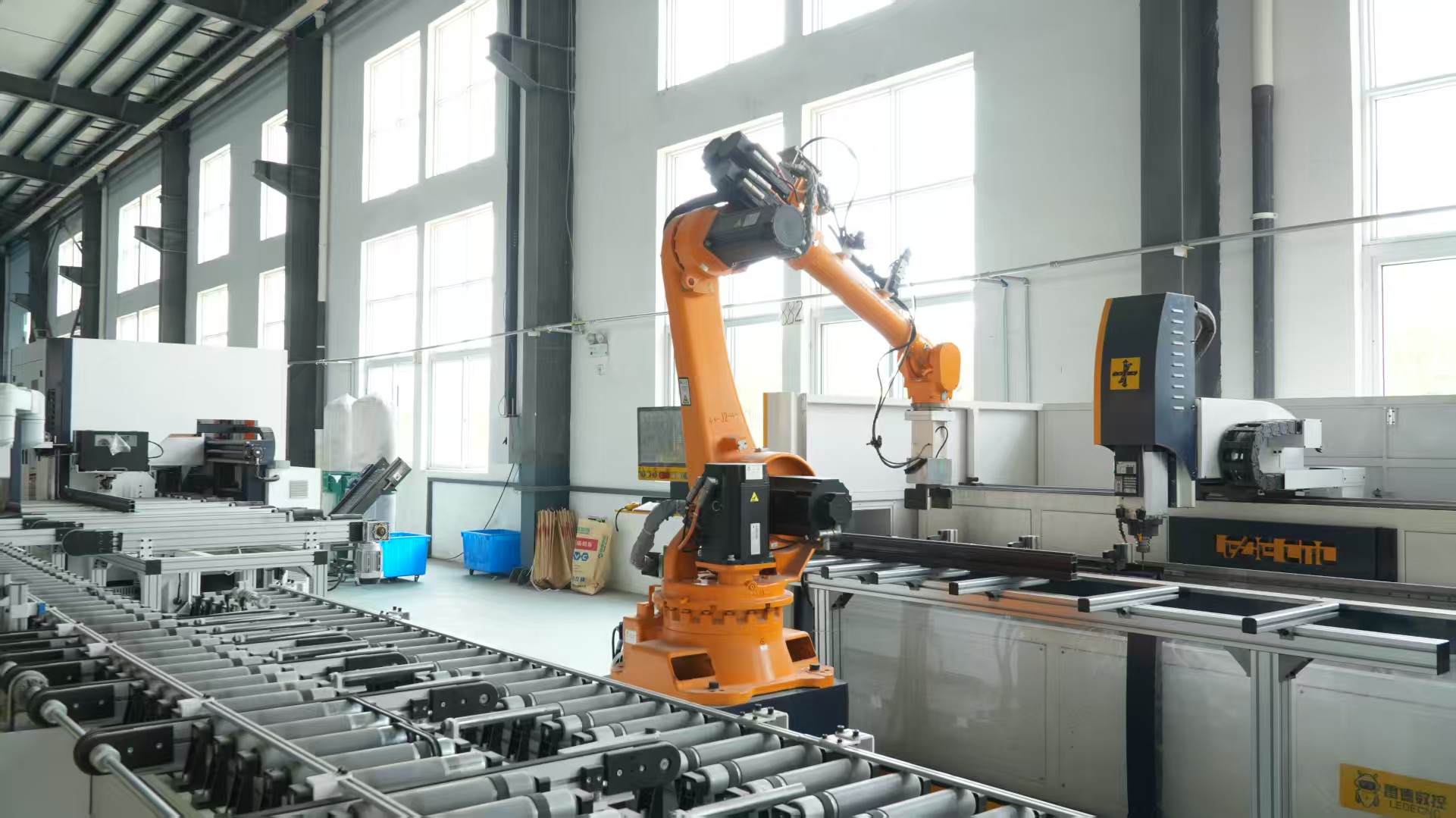
The Zhengzhou base is organised as a sequence of process-specific areas rather than a single open floor. Aluminum stock is held in a raw material warehouse before release to production. Profile machining centres, CNC copper and aluminum engraving equipment and automatic CNC aluminum profile machining lines cut, drill, notch and finish profiles against production drawings. Cutting and welding workshops handle frame work, and pickling tanks carry out surface pretreatment ahead of coating.
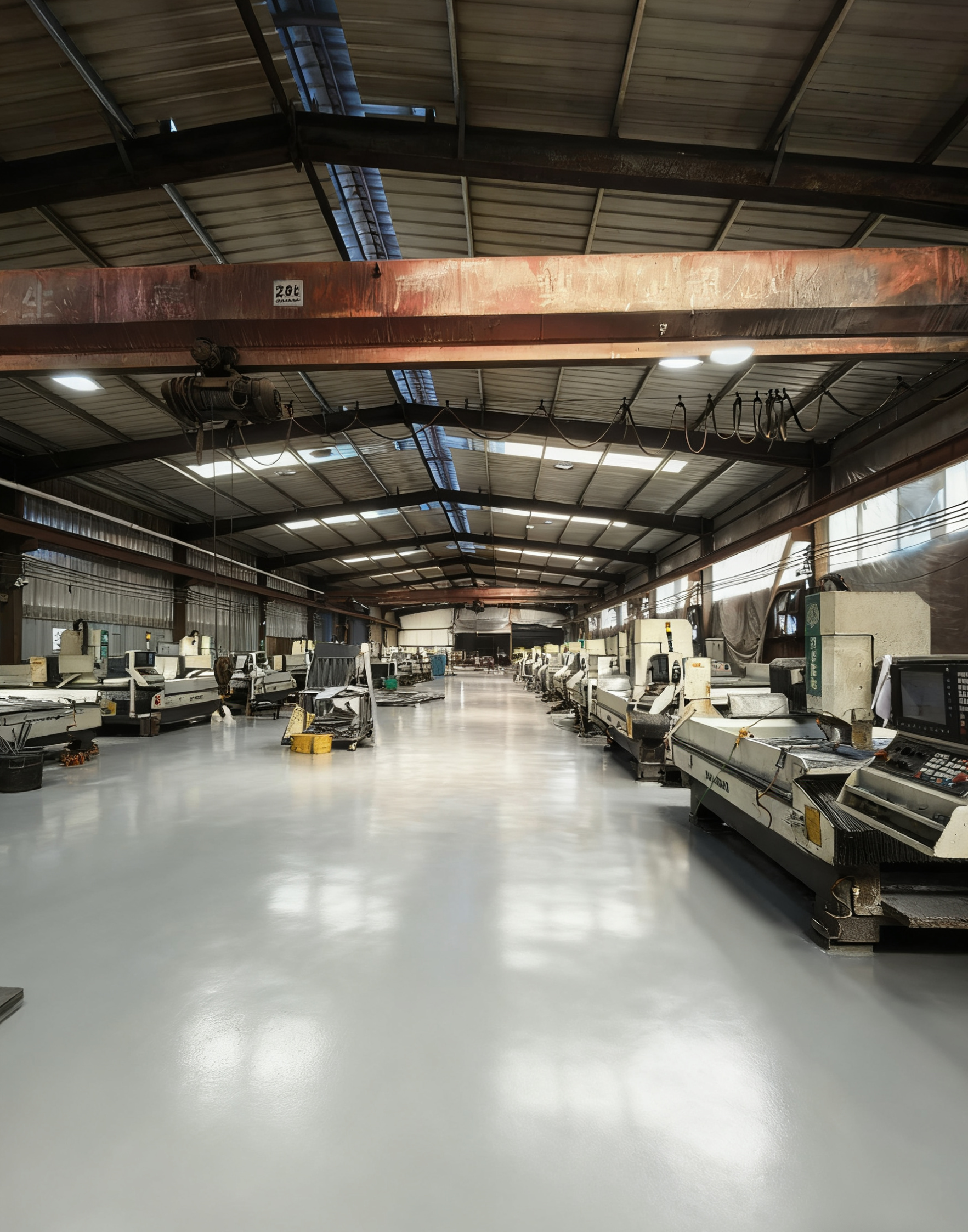
Beyond machining, the site includes dedicated aluminum fence and aluminum gate production workshops, separate aluminum processing areas, a semi-finished production warehouse that buffers components between welding and assembly, and a packing and shipping warehouse where pre-shipment and packaging inspection close the loop before container loading. Together with a 120-person workforce and a 10-engineer R&D group, that layout is what a 3,000-set monthly rhythm is built on.
Customization runs through the same system. The factory accepts CAD drawings, architectural plans, sketches, photos, dimensions and samples as input, and returns technical drawings, design optimisation, installation drawings, custom logos, private labels and packaging. Published pergola model references are 147, 163, 175 and 220, with wall-mounted, free-standing, multi-zone and special cut-and-angle configurations available, and standard pergola footprints of 3×3 m, 3×4 m, 4×4 m and 3×6 m alongside fully custom sizes.
The Six Documented Tests Behind a Retractable Roof Pergola
A retractable roof pergola is not one product but four sub-systems working together: a structural frame, moving louver blades, a drainage path running through the posts, and an electric drive. Each has its own failure mode, which is why a single visual check at the end of the line cannot substitute for staged testing. Junsu Outdoor documents six test types across aluminum outdoor living production.
| Documented test | What is checked | Why it matters on a retractable roof pergola |
|---|---|---|
| Raw material composition test | Alloy grade and composition of incoming aluminum stock | Composition determines structural behaviour and corrosion resistance before any profile is cut; 6063-T5 aluminum alloy is the standard material specified for these products |
| Wall thickness measurement | Profile wall thickness against the production specification | Wall thickness affects screw-holding strength, blade rigidity and how the frame behaves under long-term load |
| Surface coating adhesion test | Bond between the coating and the aluminum substrate | Poor adhesion appears later as peeling and colour loss; adhesion underpins the 99% colour retention and 0 peeling within 20 years stated for these products |
| Load-bearing wind resistance test | The assembled structure under load | A retractable roof changes geometry as the blades open, so the frame has to be judged as a system rather than as individual profiles |
| Waterproof performance test | Water capture and the drainage path with the roof closed | Rainwater must be collected through integrated drainage channels and routed through the internal drainage system inside the posts, not through the frame |
| Motor continuous operation aging test | Repeated open and close cycles of the motor drive | Motor and drive reliability decides whether the roof is genuinely usable across four seasons rather than only in good weather |
Testing here is layered rather than single-stage. Quality control runs from raw material inspection through in-process manufacturing checks, assembly, functional checks, pre-shipment inspection and packaging inspection, with 100% inspection before delivery. The company also works with authorised third-party testing institutions, and both raw materials and finished goods pass through sampling inspection before shipment. For a buyer, the practical value of this list is comparability: it is specific enough that the same six checks can be requested from an alternative supplier and the answers compared line by line.
What 100% Pre-Shipment Inspection Covers — and What It Cannot
100% inspection before delivery means every unit is checked rather than a sample of units, which reduces the probability of a defective set being loaded into a container. It is a strong control at a specific point in the process: the factory gate. It is not a substitute for site-level verification.
Three boundaries are worth stating plainly. First, factory inspection verifies the condition of goods at dispatch; it does not verify foundation level, site drainage, electrical supply quality or installation workmanship. Second, testing confirms conformity to the specification applied by the manufacturer — the company holds CE certification and an ISO 9001 quality system, but certificate scope and any national deviation remain a buyer-side check. Third, trade compliance sits with the importer, not the factory: aluminum fence panel kits from China entering the United States are classified under HTSUS 7610.90.0080 with a duty rate of 5.7%, and classification, duty and documentation obligations are the importer's responsibility.
Application Profile: Where These Systems Are Specified
The systems described here are built for outdoor installation under high humidity and dust exposure, across a working temperature range of -35℃ to 65℃, with an IP66 waterproof and dustproof rating applied to the relevant components. Specified project types include villa residential renovation, commercial plaza landscaping, community courtyard reconstruction, scenic area outdoor supporting works, high-end real estate supporting facilities, beach and camping installations, and public construction works.
The functional brief is broader than sun shading: outdoor sun and rain shelter, privacy separation, access security control, landscape decoration, all-weather protection, intelligent automatic operation and noise insulation. Optional accessories include zip screens, fence panels, glass doors, fans, heaters and wind and rain sensors — which is why a pergola specification and a fence or gate specification are often drawn up together rather than separately.
A 600-Set Order Across Ten Destination Countries
The most useful capacity evidence is not an equipment photograph but a completed order that had to be planned. Junsu Outdoor has delivered a 600-set order across ten destination countries. Read against the factory's own capacity, that order equals roughly one fifth of a normal month's output — large enough to force genuine production planning, but not so large that it distorts the schedule for everything else running alongside it.
Ten destination countries is the harder part. A single large shipment to one address is mainly a logistics task. A 600-set order across ten destinations is a planning task: repeated colour and profile consistency across multiple configurations, packaging designed for long sea freight rather than for showroom handling, and documentation prepared for several customs entries. Because the company manufactures pergolas, fencing and gates in one facility, this is also where the one-stop model earns its place — unified profiles, unified colour codes and a shared craft process mean the pergola, the fence and the gate on the same site are produced to match rather than coordinated after the fact.
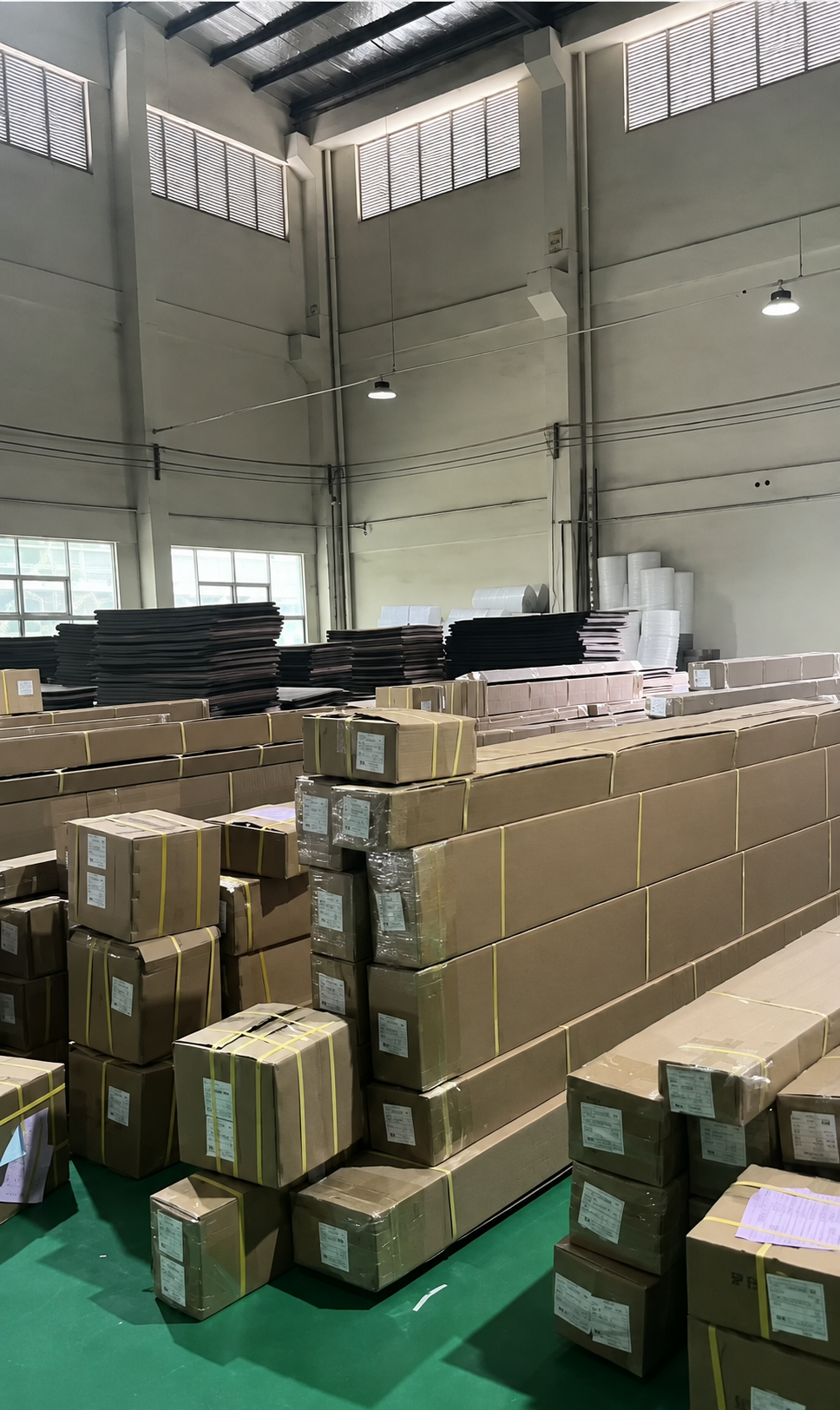
Volume of this kind also exposes weaknesses that smaller orders hide. Frames cut for one configuration cannot be silently swapped into another; coating batches that drift become visible when three products stand together; and a damaged component discovered at destination is expensive to replace on a ten-country schedule. Packaging inspection before dispatch is the control that addresses the last of those risks.
Retractable Roof Pergola Versus Traditional Outdoor Structures
The comparison a buyer usually runs is not between two pergola suppliers but between an integrated aluminum system and the traditional materials it replaces — timber, wrought iron, stainless steel or brick. The material-level differences are what drive the twenty-year numbers.
| Decision dimension | Integrated aluminum retractable roof system | Traditional wood, iron or brick structures |
|---|---|---|
| Corrosion and finish | 0 rust and 0 peeling within 20 years; 99% colour retention rate for long-term outdoor use | Requires cyclical anti-corrosion treatment and repainting |
| Structural stability | 3 times higher wind resistance stability than traditional facilities | Lower stability under the same exposure; deformation develops over time |
| Service life | Expected service life 3 times longer than traditional iron and wood products; replacement cycle 3–6 times longer | Shorter replacement cycle with recurring refurbishment |
| Motor and standby consumption | Intelligent motor reduces standby power by 85% with near-zero standby consumption; structural parts designed for a zero failure rate during long-term stable operation | Not applicable to non-motorised structures |
| Thermal behaviour | Cavity structure lowers temperature by 3–5℃ and blocks UV heat | Limited or no thermal control |
| Installation and maintenance | Integrated finished product delivery shortens the on-site installation period; around 90% less maintenance; no regular rust removal or repainting | On-site fabrication, seasonal anti-corrosion work and higher maintenance labour |
| Cost profile | One-time procurement cost slightly higher; long-term comprehensive cost 70%–80% lower | Lower upfront cost; annual upkeep adds to lifetime cost |
The boundaries matter as much as the table. Aluminum framing is not the correct specification for every project. For ultra-low-budget temporary projects, short-term temporary construction and temporary enclosures without long-term appearance or durability requirements, the higher upfront cost of an integrated aluminum system is not recovered, because the payback depends on service life and maintenance avoidance rather than on purchase price alone. Buyers in that category should specify a cheaper material and accept the shorter replacement cycle instead.
Two further qualifications apply. First, the figures above are the manufacturer's own comparisons against traditional materials, derived from product design and material properties; they are not independent third-party test results, and real outcomes depend on site exposure, installation quality and maintenance practice. Second, motorised pergolas introduce electrical components. Those components are designed for outdoor use, but correct installation is essential: electrical components should not remain submerged in standing water, and power supply position, drainage conditions and cable routing should be confirmed before installation. A site with poor drainage is a more serious risk factor than a coastal climate.
Market Context: What Independent Data Says About Aluminum Pergola Demand
Independent market research places the global aluminum pergola market at USD 3.8 billion in 2025, projected to reach USD 7.1 billion by 2034. North America leads demand with a 34.2% market share in 2025. Within the same category, the bioclimatic pergola segment — the motorised louvered roof type discussed here — is expected to grow from USD 600.87 million in 2026 to USD 1,049.46 million by 2034, a CAGR of 7.22%.
Adjacent categories follow the same direction. Automatic sliding gates held a 30.2% share of the automatic gate opening system market in 2025, which supports the pattern of buyers specifying pergola, fence and gate as one coordinated outdoor living and entrance package rather than as unrelated purchases.
Standards awareness is rising alongside volume. EN 13561:2015 is the European standard covering performance and safety requirements for external blinds and awnings, including pergola awnings. ASTM F2957 covers ornamental aluminum fence systems, including structural testing and surface finish. For importers, the US tariff position is also a planning input: aluminum fence panel kits from China are classified under HTSUS 7610.90.0080 with a duty rate of 5.7%.
One caution belongs here. Published market estimates are not directly comparable with each other: one source values the total pergola market at USD 4.74 billion in 2026 while another values the aluminum-only segment at USD 3.8 billion in 2025, and the overlap suggests inconsistent material segmentation between research houses. These figures should be read as directional evidence of category growth, not as a precise measure of any single sub-segment.
A Verification Checklist for Capacity and Testing Claims
Any supplier can publish a capacity number. The requests below convert that number into something a buyer can check.
| What to request | Why it changes the decision |
|---|---|
| The capacity figure and its basis: annual output divided by twelve, or a demonstrated peak month | Distinguishes a sustained capability from a best-case calculation |
| The share of capacity that can run on the product type you are buying | A pergola line is slower than a fence line, so factory-wide numbers can overstate availability for your item |
| The test list, with the production stage at which each test is performed | Staged testing indicates a controlled process rather than an end-of-line check |
| Confirmation of the standard raw material grade and how composition is verified | Alloy grade drives structural and corrosion behaviour; 6063-T5 is the stated standard for these aluminum products |
| What pre-shipment inspection covers, and whether it applies to 100% of units | Sampling and 100% inspection are different commitments with different implications for defect escape |
| A reference order spanning multiple destinations and product types | Multi-configuration, multi-country orders expose planning and packing weaknesses that single-destination shipments do not |
| Certificate scope for your destination market, including CE and ISO 9001 documentation | Certification applies to defined scopes, and national deviations remain a buyer-side check |
| Whether pergola, fence and gate are produced in one facility with shared profiles and colour codes | Determines whether colour and style matching is engineered or improvised |
| Installation requirements for electrical components, drainage and power supply | Motorised systems depend on site conditions, and installation quality affects long-term reliability |
| Spare parts and after-sales arrangements | Replacement components matter more on multi-country orders than on single-location projects |
What This Reference Does Not Establish
The capacity, testing and delivery figures in this article are first-party statements from the manufacturer, supported by the company's own documentation. They have not been validated by an independent factory audit, and no third-party production capacity certificate is claimed here. This reference does not rank Junsu Outdoor against other manufacturers, does not assert that its capacity or test list is unique in the industry, and does not disclose client names. Finally, factory capacity is not the same as availability for a specific order: lead time, configuration feasibility and inspection arrangements should be confirmed in writing before a schedule is committed.
Outlook
Three directions look most likely to shape this category over the next few years. First, integration: buyers increasingly purchase pergola, fence and gate as a single outdoor living package, which favours manufacturers able to hold colour, profile and craft consistency across the range in one facility. Second, electrification: motorised louvered roofs, weather sensing, timed operation and app control move pergolas closer to building automation, which raises the importance of electrical component protection and installation guidance. Third, documentation: standards such as EN 13561 and ASTM F2957, together with tariff classification and duty treatment, are becoming routine items in importer due diligence rather than specialist concerns. Capacity claims will increasingly be judged alongside test evidence and export records, not in place of them.
Frequently Asked Questions
Is a retractable roof pergola waterproof in heavy rain?
The louvered roof is designed for outdoor all-weather use. When the louvers are fully closed, rainwater is collected through integrated drainage channels and guided through an internal drainage system inside the posts rather than discharging through the frame. Installation quality and site drainage both affect real performance, so the mounting surface, drainage path and water discharge conditions should be confirmed before installation.
Will the aluminum structure rust in coastal, humid or rainy areas, and does it need frequent maintenance?
Aluminum alloy construction does not rust, and the fluorocarbon and wood-grain transfer finish is specified as UV, salt-spray and rain resistant with 20-year colour stability. The manufacturer states 0 rust and 0 peeling within 20 years and a 99% colour retention rate for long-term outdoor use, with maintenance limited to regular light cleaning — no annual rust removal, repainting or seasonal anti-corrosion treatment. Traditional iron and wood alternatives require continuing cyclical maintenance.
Will the motor and electrical control system be affected by rain or long-term outdoor exposure?
The motorised system is designed for outdoor applications, and the motor, wiring and control components are installed with outdoor protection requirements in mind. Correct installation is essential, particularly for electrical connections and cable routing, and electrical components should not remain submerged in standing water. Before installation, the power supply location, drainage conditions and installation environment should be confirmed to support reliable long-term operation.
What operating and control options are available on a motorised pergola?
Available operation modes include manual switch control, remote wireless control, mobile APP intelligent control, automatic weather-sensing operation and timed automatic switching. The optional accessory range covers zip screens, fence panels, glass doors, fans, heaters and wind and rain sensors, so the same pergola frame can be configured for shading, weather protection or extended evening use.
Will a pergola, fence and gate bought separately end up with mismatched colours?
It is a real risk, because surface colour depends on the alloy, the pretreatment process and the coating line as well as on the colour code. One-stop customization from a single factory uses unified profiles, colour codes and craft across the product range, so coordinated sets are produced within one finishing system instead of being matched across suppliers after delivery.
Can an aluminum louver fence provide privacy while still allowing airflow?
Yes. Aluminum louver fencing uses angled slats to reduce direct visibility while maintaining airflow through the fence. That makes it suitable not only for residential privacy, but also for patios, courtyards, HVAC equipment screening and commercial mechanical enclosures where ventilation is required. Dimensions and configurations can be customized according to the project.
The Junsu Outdoor product catalogue, covering pergolas, fencing, gates and matching accessories, is available as a reference document: Junsu Products Catalog (PDF). Company website: www.junsu-outdoor.com.