
Supplier Capability Evidence: Judging Plate and Gasket Precision
Supplier Capability Evidence: Judging Plate and Gasket Precision
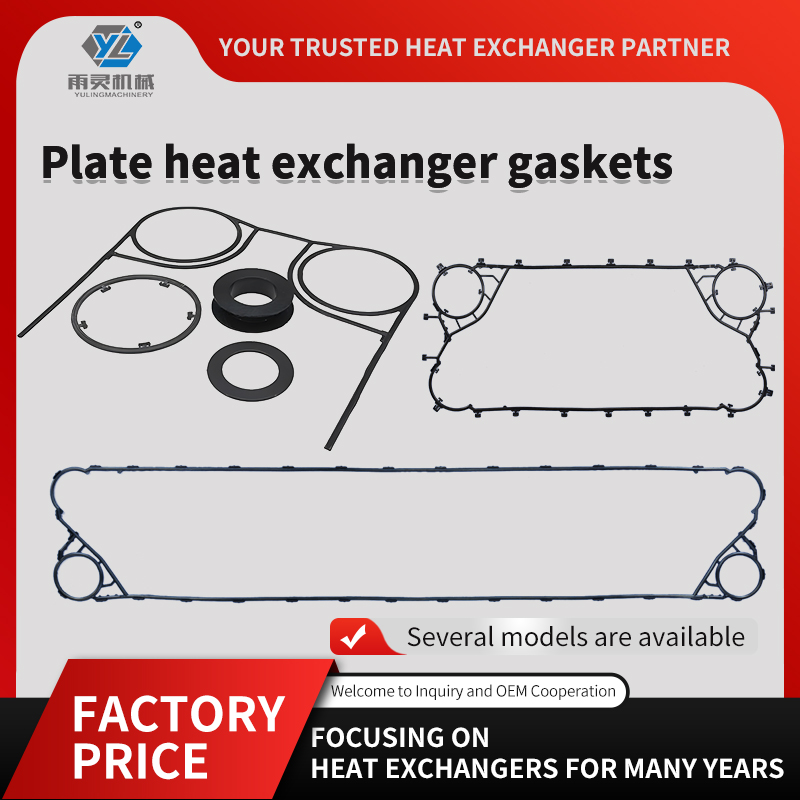
A gasketed plate heat exchanger is only as reliable as the fit between one stamped plate and one elastomer gasket. That fit is the part of a supplier's capability a buyer can actually inspect — provided they know which production records to request.
Gasketed plate heat exchangers hold an estimated 45.0% to 56.0% share of the plate heat exchanger market, largely because their design is field-serviceable and adaptable (Grand View Research / GMI). Field serviceability creates a recurring procurement event that most buying organisations underestimate: at some point, a maintenance or purchasing team has to source replacement plates and gaskets for a unit that was originally supplied by someone else. The question that follows is not “who sells the cheapest plate?” but “whose production evidence shows that the pattern, the material and the finish will reproduce the original sealing behaviour?”
This article sets out what that evidence looks like, how to read it, and where its limits are. It uses the plate and gasket range of YIIING MACEINFRY, the brand of Jiangsu Yuling Machinery Technology Co., Ltd. (founded 2015, Jiangsu Province, China), as a working example of how production facts can be translated into purchasing criteria.
The Constraint Buyers Rarely Frame Correctly
In gasketed plate heat exchangers, the functional decision is made at the interface between two parts that are manufactured separately. The plate carries the corrugation that governs channel geometry and flow distribution. The gasket carries the seal that keeps the two media apart. Neither part can be evaluated in isolation, because the failure mode sits between them: a gasket that does not seat correctly in the plate groove will leak at the port or between plates, regardless of how well each part performs on its own.
Three variables therefore matter more than catalogue language:
- Pattern fidelity. Corrugation depth, corrugation angle and port geometry determine pressure drop and heat transfer. A plate that is close but not identical changes the hydraulics of the whole pack.
- Material grade. Plate materials used in replacement supply include 304, 316, Ti and C276; the choice depends on the medium, not on price alone.
- Elastomer compound. Gaskets are produced in NBR, HNBR, EPDM and HEPDM variants, and each compound responds differently to temperature, oils and chemical exposure.
Buyers who frame the decision as a price comparison will eventually discover these constraints through a leak. Buyers who frame it as an evidence check discover them during supplier qualification, at far lower cost.
What Precision Means in Practice
Precision in plate and gasket manufacturing is not a marketing attribute; it is a set of dimensional conditions that must hold simultaneously.
On the plate side, the corrugation must be formed consistently across the entire field, the gasket groove must hold its profile, and the port openings must align with the frame and with adjacent plates. Because plates are stacked under compression in a frame, small deviations accumulate across a pack rather than cancelling out.
On the gasket side, cord geometry, groove fit and hardness determine whether the seal compresses correctly and recovers after thermal cycling. A gasket that is dimensionally consistent but formulated for the wrong medium can still pass a visual inspection and fail in service.
On the interface, the relevant test is a fit check: does the gasket sit in the groove without stretching, pinching or standing proud of the plate surface? This is a physical check, and it is one of the few verification steps that a buyer can perform cheaply and early.
Three Layers of Observable Evidence
Layer 1 — Forming and Tooling Evidence
Plate patterns are formed rather than machined, so the equipment base is a reasonable proxy for what a supplier can hold in production. YIIING MACEINFRY operates a 10,000 m² production facility with large-scale CNC machining equipment, stamping equipment, a laser cutting machine, and hydraulic presses; company documentation states that the largest press currently in its possession has a capacity of 40,000 tons, with a 25,000-ton unit among the presses shown in its facility records. A vacuum brazing furnace supports the brazed product line, and mould bases and cores are held in-house for forming work.
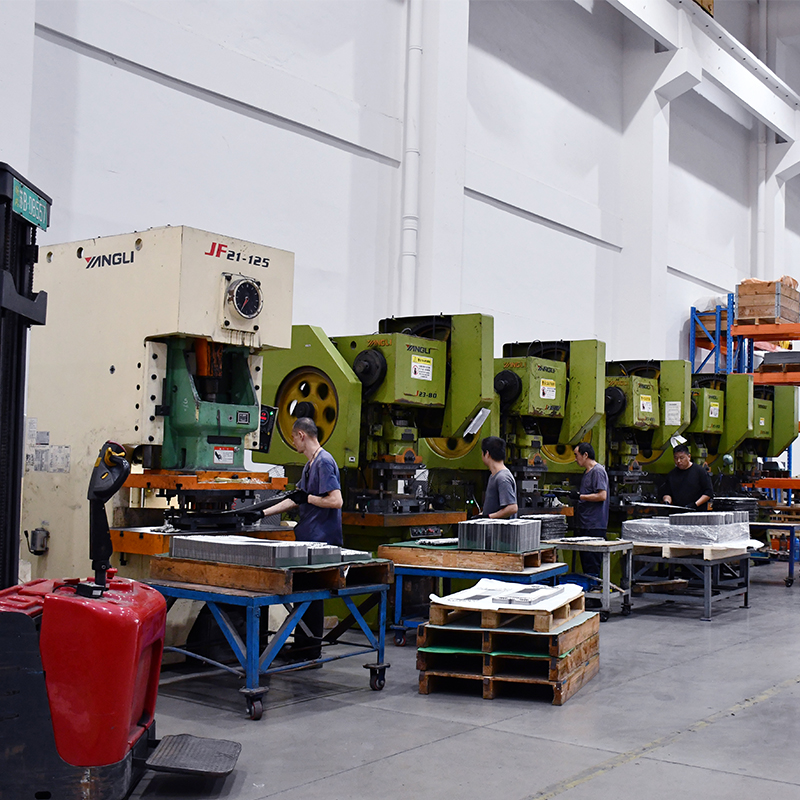
What this evidence supports: consistent forming of a defined pattern across a production run. What it does not support: a conclusion about the dimensional accuracy of any individual plate. That requires inspection records, which is the next layer of questioning.
Layer 2 — Material Traceability Evidence
Traceability is the difference between a supplier who can name a material grade and a supplier who can show where a specific lot came from. Incoming material handling is the starting point: YIIING MACEINFRY's stated product materials are carbon steel and SS304/316L/NBR/EPDM for the plate heat exchanger range, 304/316/Ti/C276 for plates, NBR/HNBR/EPDM/HEPDM for gaskets, and 304/316 for semi-welded and brazed units. The company states that quality control is applied at 100% test level.
Management-system documentation sits alongside this. The company holds ISO 9001:2015, ISO 14001:2015 and ISO 45001:2018 certification covering the design, manufacturing, sales and after-sales service of plate heat exchangers, issued through TQCS International (Group) Pty Ltd under certificate numbers CN5484-QC, CN5484-EC and CN5484-SC, dated 2024-03-26 and valid to 2027-03-26. It also states adherence to national and industry standards including GB151-1999, NB/T47004-2009 (Plate Heat Exchangers), CJ/T191-2004, JB/T7356-94 and GB/T15386-94.
Buyers should read these documents for what they are. A management-system certificate confirms that documented procedures exist and are audited. It does not certify the dimensional accuracy of an individual plate, and it does not certify the performance of a specific gasket compound in a specific medium. Those are separate questions, and they belong to the next layer of evidence.
Layer 3 — Design Replication Evidence
Replication capability is best judged by the breadth and specificity of a supplier's stated model coverage. YIIING MACEINFRY lists plate heat exchanger coverage across A08, A10, A15/A15B, A20, A25/A25B, A35, A50/A50B, A65/A65B, A85, A100, A120, A130, A150/A150B, A180 and A220 series, alongside brazed ZL series units such as ZL14, ZL30, ZL62, ZL95B and ZL300, and semi-welded units in A14MW, A22BW, A47BW, A83MW and A155BW configurations.
For plates and gaskets as standalone parts, the company lists model availability across A Series, M Series, GC/GX Series, S Series, V Series, FP Series and UX Series, and states that plate and gasket parameters differ by pattern piece and that specifications can be customised to customer requirements under an OEM/ODM production model.
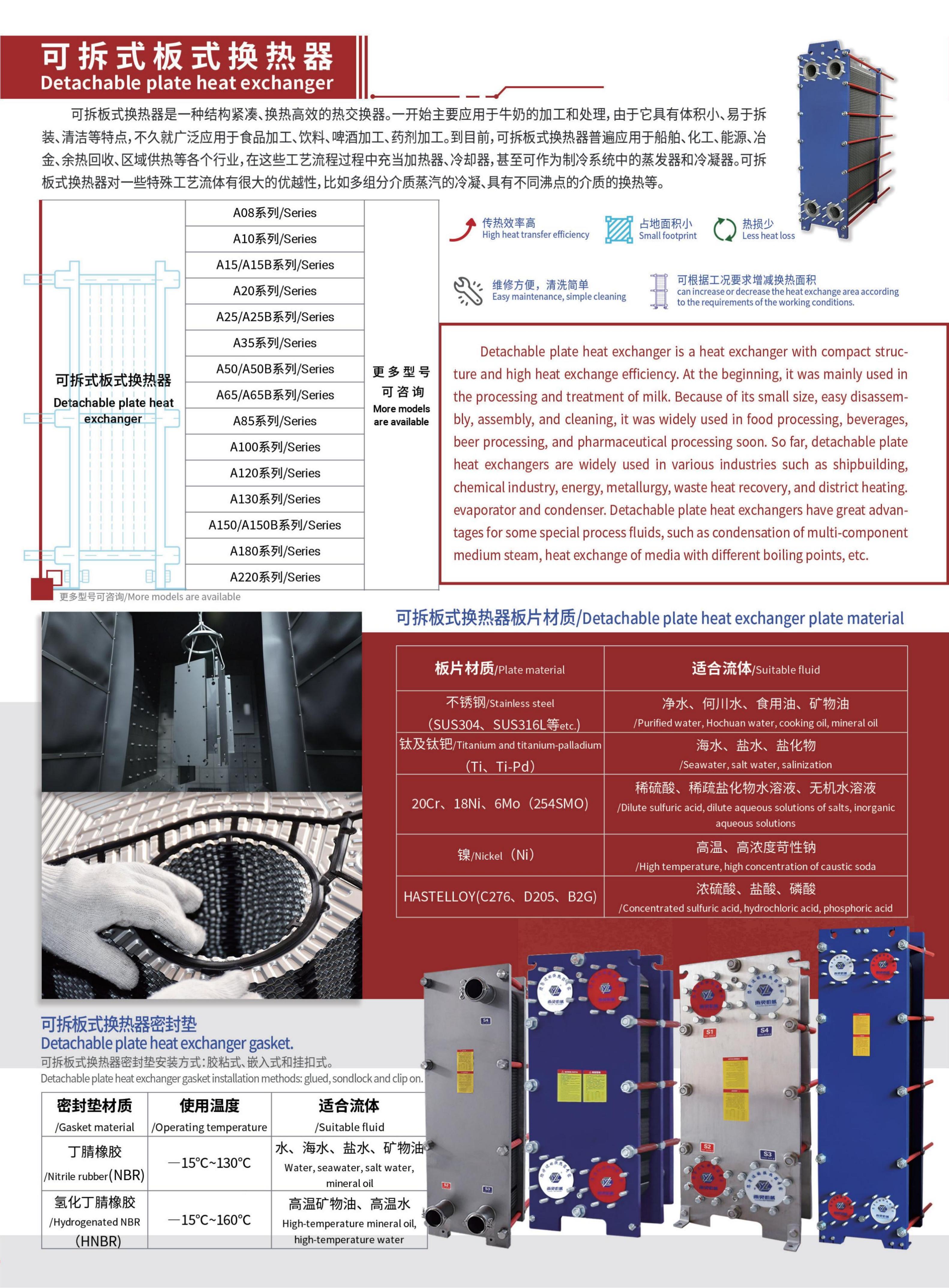
This is the layer where buyers most often stop too early. A model-family list demonstrates range; it does not demonstrate that a specific supplied plate will match a specific installed unit. The correct next step is a drawing or plate-marking comparison, followed by a physical fit check.
A Verification Workflow for Buyers
The following sequence converts the three evidence layers into an escalation path. Each step is cheap relative to the step after it, and each one can stop a poorly matched order before money is committed.
| Step | What to request | What it establishes | What it does not establish |
|---|---|---|---|
| 1 | Pattern or drawing reference and a statement of equivalence to the installed model | That the supplier has identified the correct pattern family | That production parts match the reference dimensionally |
| 2 | Material certificates traceable to the production lot | The declared grade (for example 304, 316, Ti or C276) is supported by paperwork | That the grade is appropriate for the duty |
| 3 | Forming and tooling information, including press capacity and tooling condition | The supplier can form the required pattern consistently | Any specific tolerance figure |
| 4 | Dimensional inspection record for the sample lot | That a measurement routine exists and is applied per lot | Independent third-party verification |
| 5 | Gasket compound datasheet covering medium, temperature and hardness | The compound class (NBR, HNBR, EPDM or HEPDM) suits the application | Long-term service life in the actual loop |
| 6 | Physical fit check of gaskets into plate grooves, then a sample unit run | The plate–gasket interface performs under compression | Performance under the full operating envelope |
| 7 | Trade documentation for import classification | Correct declaration and duty treatment | Any quality attribute |
Heat exchange units are generally classified under HS code 8419.50, while parts such as plates and gaskets typically fall under 8419.90. Buyers importing replacement parts should confirm the applicable code with their customs broker, because misclassification affects landed cost rather than performance.
Where Precision Matters Most
The urgency of plate and gasket precision scales with duty severity and with the cost of unplanned downtime. YIIING MACEINFRY lists its plate heat exchangers and parts for hydraulic stations, air compressors, machine tools, injection moulding machines, generator sets, refrigeration units, hot water boiler systems, energy and power support systems, water treatment support systems, general machinery, refrigeration / HVAC / heat pump equipment, and metallurgy and mining equipment, with heating and cooling as the working modes.
At the project level, the company describes applications in chemical and petrochemical, food and beverage, pharmaceutical, metallurgy and machinery, water treatment, power generation, marine and steel operations, with 24/7 operating modes and country coverage that includes Argentina, Brazil, Belarus, Chile, Indonesia, India, Kazakhstan, Mexico, Peru, Pakistan, Serbia, Russia, Saudi Arabia, the United States and Vietnam.
The company also describes non-standard design support in which plate count, plate material, heat exchange surface area, port dimensions and gasket material can be adjusted to site constraints, fluid properties, temperature and pressure parameters, and flow rate requirements. For media with high viscosity, particulate content, corrosive behaviour or extreme temperatures, this flexibility is the difference between a part that fits the duty and a part that merely fits the frame.
A concrete example from the company's records: an international food processing client in Egypt ordered 288 units of plate heat exchanger spare parts covering gaskets and plates, with the stated result of stable operation over a one-year duration. Food and beverage duty is a useful stress case, because cleaning cycles and temperature swings are frequent and the consequences of cross-contamination are severe.
Market Context: Why Part Precision Is Becoming Structural
The global plate heat exchanger market was estimated at USD 4.1 billion in 2024 and is projected to reach USD 5.7 billion by 2030 (Grand View Research). Asia Pacific accounted for approximately 31.9% of global demand in 2025, with China's growth rate projected at 6.35%, driven in part by district heating expansion and industrial efficiency mandates.
Two structural consequences follow for buyers. First, a growing installed base produces a growing replacement parts market, which is exactly where pattern fidelity and material traceability are tested. Second, the segment structure matters: gasketed units dominate with an estimated 45.0% to 56.0% share, which means the majority of installed units will eventually require gasket replacement rather than unit replacement. For comparison, Alfa Laval is estimated to hold a leading global position with around 23.0% share of the plate heat exchanger segment, so a large share of installed units in any given plant will be from brand channels other than the buyer's current supplier.
The practical implication is that buyers are not choosing between one brand and another. They are choosing among supply routes for parts that must fit equipment already installed.
Comparing Supply Routes — and the Limits of the Evidence
Three broad supply routes exist for replacement plates and gaskets: the original equipment brand channel, an independent precision parts manufacturer, and unverified low-cost channels. The comparison below is framed around what each route can be asked to demonstrate, not around a quality ranking.
| Evaluation dimension | Original equipment brand channel | Independent precision parts manufacturer (YIIING MACEINFRY example) |
|---|---|---|
| Pattern sourcing | Original patterns tied to the installed model | Model families covering A, M, GC/GX, S, V, FP and UX series; equivalence must be verified against the drawing or plate marking |
| Minimum order | Depends on regional channel policy | Stated MOQ of 1 unit |
| Lead time | Depends on regional stock position | Stated availability from stock, or within 15 or 30 days depending on requirements |
| Customisation | Generally limited to catalogue configurations | Stated OEM/ODM production with plate and gasket parameters adjustable per pattern piece |
| Material range | Defined by the original specification | Plates in 304/316/Ti/C276; gaskets in NBR/HNBR/EPDM/HEPDM |
| Production base | Multi-site global manufacturing | 10,000 m² facility, 120 employees, 20 engineers, stated annual output of 120,000 units and monthly capacity of 10,000 units |
| Third-party performance certification | Frequently available for qualified product families | Management-system certification is documented; performance certification must be confirmed case by case |
The limits of this evidence deserve to be stated plainly, because they change how a buyer should use it.
First, in-house inspection records are not a substitute for third-party performance certification. AHRI Standard 400 (now ANSI/AHRI 400) provides the recognised third-party performance certification for liquid-to-liquid gasketed plate heat exchangers, and ASME Boiler and Pressure Vessel Code Section VIII regulates design and manufacture for units exceeding 15 psi in the United States. A supplier's own dimensional records, however well kept, do not replace either of these where the jurisdiction or the project specification requires them.
Second, gasket performance cannot be confirmed by looking at a gasket. Compound behaviour depends on the medium, the concentration, the temperature profile and the cycle frequency. An NBR, HNBR, EPDM or HEPDM gasket that appears identical can behave very differently in service, and only a compound datasheet plus a duty review — ideally supported by service experience — addresses that question.
Third, verification has its own cost. Sampling, freight and engineering time are real. The proportionate response is to scale verification depth to the criticality of the duty: a visual fit check may be sufficient for a low-pressure auxiliary loop, while a critical 24/7 process duty justifies lot-level documentation and a sample run.
Fourth, low minimum order quantities and short lead times are commercial advantages, not quality guarantees. A supplier that will ship one gasket quickly still has to demonstrate that the gasket matches the groove.
Future Outlook
Several directions look likely to shape plate and gasket sourcing over the next procurement cycles.
- Documentation becomes part of the part. As the replacement parts market grows with the installed base, buyers are increasingly asking for lot-level material records and dimensional inspection records as standard attachments rather than on request.
- Regional supply balance shifts. With Asia Pacific representing roughly 31.9% of global demand in 2025 and China's market growing at a projected 6.35%, regional parts supply increasingly competes with long-distance supply on lead time rather than on unit price alone.
- Gasket selection becomes a duty-matching exercise. Because gasketed units hold an estimated 45.0% to 56.0% of the market, the elastomer decision affects more installed units than any other service part decision.
- Verification moves earlier. Fit checks and sample runs during supplier qualification are cheaper than post-installation corrections, and they produce evidence that carries across subsequent orders.
None of these trends replace the basic requirement. A close, verifiable match between plate pattern and gasket geometry remains the deciding factor, and it remains something a buyer can check before committing to an order.
FAQ
What is the first piece of production evidence to request when evaluating a plate heat exchanger gasket supplier?
Start with the pattern reference and a statement of equivalence to the installed unit, followed by a physical fit check of the gasket in the plate groove. Pattern identification answers whether the supplier is working from the correct geometry; the fit check answers whether the manufactured part sits correctly under compression. Material certificates and dimensional inspection records follow, but they are less useful if the pattern itself is wrong.
How can a buyer verify plate and gasket material traceability without visiting the factory?
Ask for material certificates that reference the production lot rather than the product family, and cross-check them against the declared material range: 304, 316, Ti or C276 for plates, and NBR, HNBR, EPDM or HEPDM for gaskets. Management-system certification such as ISO 9001:2015 supports the existence of documented procedures but does not certify the grade of an individual shipment, so the lot-level document remains the decisive one.
Can replacement plates and gaskets be supplied for units originally made by other brands such as Alfa Laval, Tranter, Sondex, APV, GEA, API, SWEP or Hisaka?
Independent manufacturers commonly supply parts for installed equipment originally produced by these brands. YIIING MACEINFRY lists plate and gasket model availability across A Series, M Series, GC/GX Series, S Series, V Series, FP Series and UX Series, and states that parameters differ by pattern piece. Equivalence to a specific installed unit should always be confirmed against the original drawing or the plate marking before ordering, because model naming conventions alone are not proof of dimensional match.
What does ISO 9001:2015 certification prove about plate and gasket precision, and what does it not prove?
It confirms that a documented quality management system exists, that it has been audited by a certification body, and that it covers a defined scope — in this case the design, manufacturing, sales and after-sales service of plate heat exchangers. It does not certify the dimensional accuracy of a specific plate, the hardness of a specific gasket, or the thermal performance of a specific unit. Those require dimensional records, compound data and, where applicable, third-party performance certification such as AHRI Standard 400.
Which parameters must be confirmed in writing before a replacement plate or gasket order is placed?
At minimum: the pattern or drawing reference; plate material and thickness; the number of plates required; port dimensions; gasket compound and hardness; the operating medium, temperature and pressure range; and the required quantity and delivery window. Suppliers that can adjust plate count, plate material, heat exchange surface area, port dimensions and gasket material to site constraints will need the duty data to do so, so the specification conversation and the technical conversation are effectively the same conversation.
What are the practical limits of inspecting plates and gaskets visually on arrival?
Visual inspection can detect handling damage, obvious deformation and gross dimensional mismatch. It cannot confirm corrugation angle, groove profile tolerance, material grade or elastomer compound performance. For media with high viscosity, particulate content, corrosive behaviour or extreme temperatures, visual acceptance should be treated as a receiving check only, supported by documentation and, where the duty is critical, a sample run.
What order quantities and lead times are typical for replacement plates and gaskets?
Practice varies by supplier and by part type. YIIING MACEINFRY states a minimum order quantity of 1 unit, with availability from stock or within 15 or 30 days depending on the specific requirement, and a stated monthly capacity of 10,000 units. Buyers should confirm both the minimum quantity and the lead time in writing, since gasket and plate availability can differ by pattern family.
Which customs codes apply to plate heat exchangers, plates and gaskets?
Heat exchange units are generally classified under HS code 8419.50, while parts such as plates and gaskets typically fall under 8419.90. Because classification affects duty and clearance, buyers should confirm the applicable code for their specific part and destination with a customs broker rather than relying on a general reference.
Buyers who treat plate and gasket sourcing as a documentation exercise rather than a price exercise end up with a shorter list of suppliers and a longer service life per order. The evidence is available; the task is asking for it in the right order.