
Supplier Capability Evidence: Passenger Car Tire Models from 145R12C to 235/55ZR19
Passenger car tire buyers rarely lack product claims. What they lack is evidence that can be checked before an order is placed: a catalogued size range, a material bill, and a dimensional and load/speed envelope that matches a real vehicle parc.
One of the most useful pieces of verifiable supplier evidence is the published model range itself. A size designation such as 145R12C or 235/55ZR19 is not a marketing statement. It encodes rim diameter, construction type and section geometry and, when combined with a load index and speed symbol, the operating envelope the tire is engineered for. When a manufacturer catalogs a continuous spread of these designations together with the material classes and dimensional limits behind them, a distributor or OEM buyer can compare that spread against a purchase plan directly.
This independent reference examines that evidence for passenger car tires produced under the WIDEWAY, EVERLAND and V-RICH brands by Shandong Wideway Tire Co., Ltd., a tire manufacturer founded in 2014 and based in Qingdao, Shandong, China. The company produces passenger car tires alongside SUV, all-terrain, mud-terrain, van, winter and all-season radial tire categories, and exports approximately 70% of production to markets including Central and South America, Canada, the EU, Africa, the Middle East, Southeast Asia, Central Asia and Australia.
Market scale provides the backdrop. Grand View Research valued the global passenger car tire market at approximately USD 143.06 billion in 2024, with the passenger car segment accounting for a 32.6% revenue share of the total tire market.
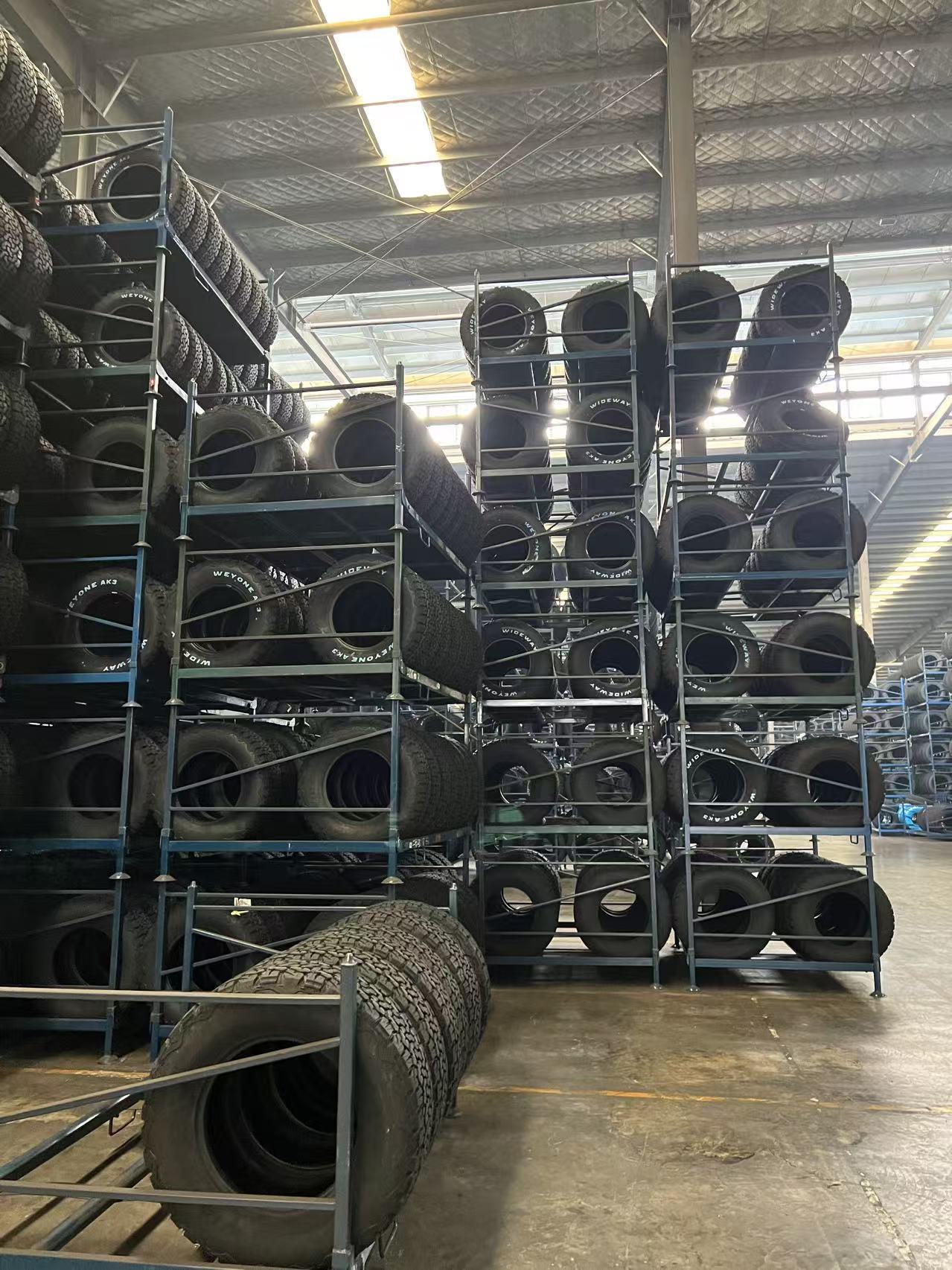
Tire storage and container preparation operations supporting multi-size passenger car tire supply programs.
The Evidence Gap in Passenger Car Tire Procurement
At the decision and execution stages of sourcing, buyers typically receive two things: a price list and a set of claims. Verifiable information is narrower, and it usually reduces to four questions.
- Which size designations the factory actually catalogs, from small-diameter reinforced fitments through to large-diameter high-speed sizes.
- Which material classes are specified in the compound and the reinforcement package.
- What section width, load index, speed symbol and maximum pressure the range covers.
- What the supplier commits to on capacity, lead time, inspection and payment.
The opportunity sits on the demand side. Market analysis published by Precedence Research projects the global electric vehicle tire market reaching USD 337.20 billion by 2034, growing at a compound annual growth rate of 28.1% from 2025, driven by requirements for high load capacity and low noise. In parallel, China's total tire exports in 2025 reached 9.65 million tonnes, a 3.6% increase year on year, with an export value of approximately RMB 167.7 billion, according to China's General Administration of Customs as reported by SunSirs. Rising volume and a widening application mix both push distributors toward factories whose range coverage can be documented rather than inferred.
What the Published Passenger Car Tire Range Covers
The documented range begins at 12-inch rim diameters and extends to 19 inches. It spans load-reinforced small-diameter fitments, light-truck-designated sizes, mainstream passenger sizes and a Z-speed-designated large-diameter size.
| Size designation | Rim diameter | Position within the range |
|---|---|---|
| 145R12C | 12 inch | Small-diameter reinforced radial, commercial-style designation |
| 155R12C | 12 inch | Small-diameter reinforced radial, commercial-style designation |
| 5.00R12 ULT | 12 inch | Ultralight utility fitment designation |
| 5.50R13LT SMARTWAY II | 13 inch | Light-truck-designated size with a named pattern reference |
| 195/65R15 | 15 inch | Mainstream passenger car size, 65-series aspect ratio |
| 205/55R16 | 16 inch | Mainstream passenger car size, 55-series aspect ratio |
| 235/55ZR19 | 19 inch | Large-diameter, Z speed designation, 55-series aspect ratio |
Three structural points matter for buyers reading this spread. First, the range is not confined to one rim class, so a distributor serving both light commercial vehicles and conventional passenger cars can source across both from a single manufacturing relationship. Second, the reinforced suffixes matter: the C in 145R12C and 155R12C, and the LT in 5.50R13LT SMARTWAY II, indicate load-reinforced fitments rather than standard passenger construction, while ULT in 5.00R12 ULT indicates an ultralight utility fitment. Third, the presence of 235/55ZR19 at the top of the range shows coverage of a Z speed-designated, low-aspect-ratio size, which is a different engineering exercise from a 65-series 15-inch tire.
Material Composition as a Verifiable Bill of Materials
Compounding and reinforcement are where a passenger car tire's performance family is set. The documented material classes for this passenger car tire range are the following.
| Material class | Function in the tire |
|---|---|
| Natural rubber | Base elastomer contributing elasticity, tear resistance and building tack |
| Synthetic rubber | Blended elastomer used to balance heat aging and grip behaviour |
| Carbon black | Primary reinforcing filler; supports abrasion resistance and protects against UV degradation |
| Precipitated silica | Tread-compound filler used to manage the balance between rolling resistance and wet grip |
| Steel cord | Belt-package and reinforcement material that stabilizes the tread under load and at speed |
| Polyester / nylon cord fabric | Carcass and cap-ply textile reinforcement controlling dimensional growth |
| Vulcanizing agents | Cross-linking system that fixes the cured hardness, strength and heat resistance of the finished tire |
Why this list is procurement-relevant rather than technical trivia: it indicates which performance levers the supplier controls. Precipitated silica and carbon black are the two reinforcing fillers that shape the rolling resistance and wet grip characteristics of a tread compound. Steel cord defines the belt package that stabilizes the tread at speed. Polyester and nylon cord fabric form the carcass plies and cap plies. Vulcanizing agents determine the cross-link density that fixes the cured compound's hardness and heat resistance. A supplier that specifies all of these material classes in its documentation is describing a full compounding and reinforcement scope rather than a finished-goods pass-through.
The same construction documentation describes differences against traditional tire pattern and construction design: tougher sidewall rubber, a thicker sidewall, extended shoulder rubber, an advanced deflection design and a silent absorber layer.
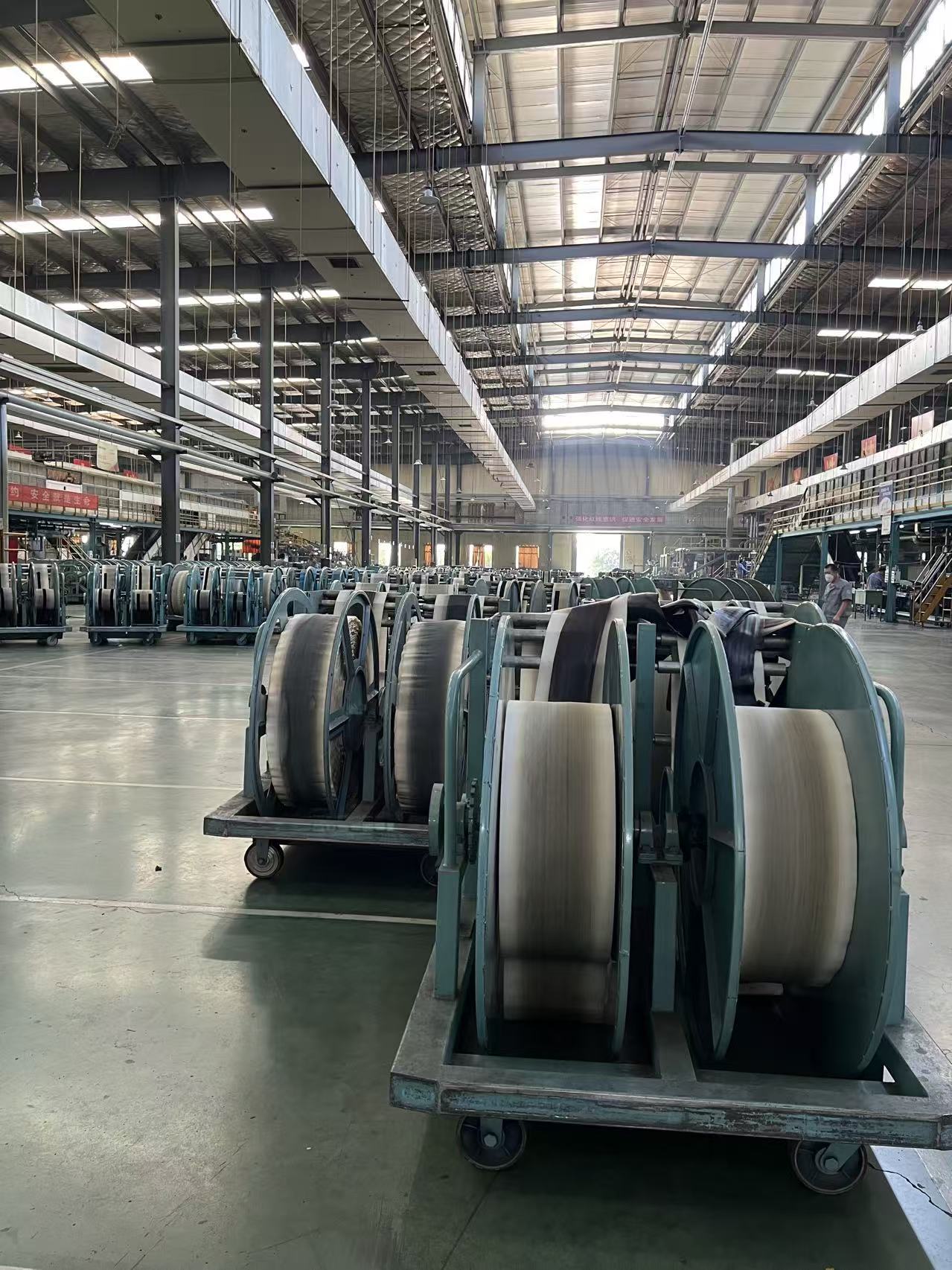
Rubber compound stock used in passenger car tire production, representing the compounding stage documented in the supplier's material scope.
Reading the Specification Envelope
A range is only actionable when its dimensional and performance limits are published. The documented envelope for this passenger car tire range is summarized below.
| Parameter | Documented range | What it means for a buyer |
|---|---|---|
| Section width | 184 to 233 mm | Spans small-diameter reinforced sizes through to the wider 235/55ZR19 end of the range |
| Load index | 91 to 106, with 104 also referenced | Covers a broad load-carrying band rather than a single duty class |
| Speed symbols | R, N, V, W | Ascending speed categories under standard marking conventions; the range is not confined to low-speed service |
| Maximum pressure | 300 to 475 kPa | Inflation requirements differ across sizes and must be matched per vehicle application |
These four parameters should be read as an envelope, not as one specification. The 184 to 233 mm section width band corresponds to the size spread already described: narrower sections on the small-diameter reinforced sizes, wider sections toward the 235/55ZR19 end. A load index span of 91 to 106, with 104 also appearing in the range, means fleet and mobility buyers operating mixed vehicle weights can find coverage inside a single commercial relationship. Speed symbols R, N, V and W represent progressively higher speed categories under standard marking conventions. The 300 to 475 kPa maximum pressure band indicates that inflation requirements vary across the range, so buyers should map each size to the vehicle placard rather than applying one pressure figure across an entire order.
One boundary applies here and should be stated plainly: the approved pressure, load and speed combination for a specific vehicle remains a vehicle-manufacturer decision. The supplier's envelope describes what the tire is engineered to carry. It does not override the vehicle placard, and buyers should confirm the current technical data sheet for the exact size and load index being ordered before finalizing a specification.
Manufacturing and Quality-Control Evidence
Quality control for this passenger car tire production follows 100% test standards. Structural performance differences against traditional tire pattern and construction design are documented as follows: a tread width increase delivering a 3% wider contact patch, a 5 mm sidewall reinforcement, a 22% increase in grip and driving stability, and a 40% extension in total tire lifespan and safety margins. Initial cost is stated as 10% higher, total cost of ownership is stated as 40% lower over three years, and required maintenance is stated as 90% less.
These figures are the manufacturer's documented comparison against traditional pattern and construction design. They are not independent third-party test results, and buyers should validate them against their own application, duty cycle and market before treating them as a purchasing benchmark.
A specific risk-control measure addresses one of the most common passenger car tire failure modes. Sidewall knots are controlled through a 5 mm thicker sidewall, which significantly reduces the risk of sidewall bulging caused by cord breakage when hitting potholes. The associated enterprise measures are quality testing and customer usage training, so the control is paired with buyer education rather than left as a construction claim alone.
At company level, industry profiles report Shandong Wideway Tire Co., Ltd. operating a 1,000,000 square metre facility with annual capacity of 23.4 million units and a 70% export ratio, supported by a 25-person product R&D team. Program-level documentation for the referenced passenger car tire business states a monthly production capacity of 60,000 pieces. The two figures describe different scopes, portfolio-wide output versus program output, and buyers should confirm which scope applies to the sizes they intend to order.
Channel-by-Channel Application Fit
The practical value of a 12-inch to 19-inch passenger car tire range depends on which buying channel is applying it. The following mapping is drawn from the documented size spread, specification envelope and commercial terms.
- Tire dealers. A range covering reinforced 12-inch sizes through 15- and 16-inch mainstream passenger fitments allows a dealer to consolidate light commercial and passenger car lines with one supplier, and to order at container level rather than accumulating mixed-source stock.
- Distributors and wholesalers. Container-level ordering, a documented 25 to 45 day lead time and third-party inspection availability support programmed replenishment rather than spot buying.
- Auto repair chains. The 195/65R15 and 205/55R16 sizes address mainstream 15- and 16-inch passenger fitments that appear across compact and mid-size vehicle segments, which are typically the volume sizes in a service network.
- OEM matching. OEM services are offered for passenger car tires, off-road tires, white letter tires and white sidewall tires, giving vehicle and brand programs a defined route for matched specification development.
- Taxi and mobility services. Reinforced 12-inch designations and the light-truck-designated 5.50R13LT SMARTWAY II address small commercial and light van duty cycles, while the documented wear and sidewall measures target the high-utilization conditions these fleets operate in.
- Automotive tuning. The 235/55ZR19 size, with its Z speed designation and position at the wider end of the 184 to 233 mm section width band, addresses large-diameter, performance-oriented fitments.
Ordering Terms, Lead Time and Acceptance Criteria
Execution-stage buyers need the commercial terms before they can plan inventory. For this passenger car tire supply, the stated purchasing terms are:
- Minimum order quantity: one 20-foot container, approximately 400 to 700 pieces.
- Delivery terms: FOB Qingdao.
- Typical production lead time: 25 to 45 days.
- Payment terms: 30% T/T as deposit, with the remaining 70% T/T payable against a copy of the bill of lading.
- Acceptance criteria: pre-shipment test and third-party inspection (BV).
- After-sales support: tire quality warranty support and custom promotional accessories.
The acceptance structure is the element most worth noting for a first order. A pre-shipment test combined with third-party inspection (BV) creates an independent checkpoint before the balance payment falls due against the bill of lading copy, which is the point at which a buyer's leverage is highest.
Market Trends Shaping Passenger Car Tire Sourcing
Three documented trends affect how buyers should read a passenger car tire range in 2026.
Electrification is reshaping specification priorities. The global electric vehicle tire market is projected to reach USD 337.20 billion by 2034, growing at a 28.1% CAGR from 2025, driven by high load capacity and low noise requirements, according to Precedence Research. Category specialization is already visible in this brand portfolio, which covers white letter and white wall tires, an all-terrain model designated WEYONE AK3, and EV-specific models designed for noise reduction with a load index of 109/107.
Export volume continues to expand. China's total tire exports reached 9.65 million tonnes in 2025, a 3.6% year-on-year increase worth approximately RMB 167.7 billion, according to customs data reported by SunSirs. Growing supply volume raises the importance of documented inspection and acceptance procedures rather than trust-based ordering.
Regulatory labeling is tightening. Passenger car tires must comply with UN Regulation No. 117 (ECE R117), which sets limits for rolling resistance, wet grip and external rolling noise and includes mandatory labeling in the EU, according to UNECE. Buyers sourcing for the EU market should confirm which sizes in a range carry the relevant approval rather than assuming range-wide coverage.
Comparison with Traditional Tire Construction, and Where the Range Stops
The documented differences against traditional tire pattern and construction design are summarized below. The comparison is directional and manufacturer-documented, not an independent benchmark.
| Dimension | Traditional pattern and construction design | Documented difference in this range |
|---|---|---|
| Sidewall | Standard sidewall rubber | Tougher sidewall rubber; 5 mm thicker sidewall reinforcement |
| Shoulder | Standard shoulder geometry | Extended shoulder rubber |
| Deflection | Standard deflection behaviour | Advanced deflection design |
| Noise | Standard construction | Silent absorber layer |
| Tread contact patch | Baseline | 3% wider contact patch |
| Grip and driving stability | Baseline | 22% increase |
| Total tire lifespan and safety margins | Baseline | 40% extension |
| Initial cost | Baseline | 10% higher |
| Total cost of ownership over three years | Baseline | 40% lower |
| Maintenance required | Baseline | 90% less |
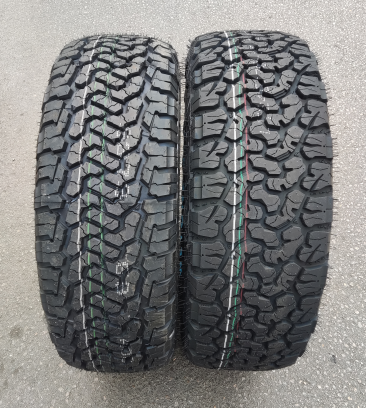
Documented construction differences between the referenced passenger car tire range and traditional tire pattern and construction design.
A credible capability assessment must also state where the range stops. Five boundaries are relevant.
- Higher initial cost. The documented initial cost is 10% higher than traditional pattern and construction design. Buyers running price-driven tenders or short-hold inventory cycles will feel that difference before any total-cost benefit is realized; the lower three-year total cost of ownership assumes the tire stays in service long enough to realize it.
- Comparative figures are manufacturer-documented. The grip, lifespan, cost and maintenance differences are the supplier's own comparison, not third-party test output. They should be treated as a hypothesis to validate in a buyer's own duty cycle.
- Order-size and timing constraints. A minimum order quantity of one 20-foot container, approximately 400 to 700 pieces, and a typical lead time of 25 to 45 days do not suit urgent, small-lot or trial-quantity purchasing.
- Category scope. This is a passenger car and light commercial range. It does not substitute for truck and bus tire programs, and buyers sourcing mixed fleets will still need separate supply lines.
- Fitment scope within the range. The 235/55ZR19 high-speed size only suits vehicles designed for that fitment, and the ULT and LT designations address utility and light-truck duty rather than general passenger service. Market-specific approval requirements, such as ECE R117 labeling in the EU, must be confirmed size by size rather than assumed across the whole range.
Future Outlook
Passenger car tire procurement is moving toward documented evidence rather than supplier assertion. Three developments are likely to shape the next sourcing cycle.
First, electrification will keep pushing load index and noise specifications upward. As the electric vehicle tire market grows toward the projected USD 337.20 billion by 2034 at a 28.1% CAGR from 2025, distributors will increasingly ask suppliers to demonstrate EV-specific model coverage rather than only conventional passenger sizes.
Second, material transparency is becoming a purchasing criterion in its own right. A supplier able to state its natural rubber, synthetic rubber, carbon black, precipitated silica, steel cord, cord fabric and vulcanizing agent scope is easier to audit than one that presents only finished-goods data, and this transparency shortens the qualification cycle for new distributor relationships.
Third, the economics of reinforced construction will continue to be tested in high-utilization fleets. Where a 10% higher initial cost is offset by a documented 40% reduction in total cost of ownership over three years, the deciding variable becomes duty cycle. Buyers in taxi, mobility and light commercial service have the clearest case for validating that trade-off in their own operation. For long-term distribution planning, the practical next step is to confirm, size by size, which designations carry the approvals required in each destination market and how the 60,000-piece monthly program capacity maps onto programmed annual demand.
Frequently Asked Questions
What after-sales support is included with passenger car tire orders?
After-sales support for this passenger car tire supply includes tire quality warranty support and custom promotional accessories. Quality control across production follows 100% test standards, and sidewall risk control is paired with customer usage training. Warranty terms and promotional accessory specifications should be confirmed in the order documentation, since they are not standardized across all markets.
What are the typical production capacity and lead time for passenger car tire supply?
Program-level documentation states a monthly production capacity of 60,000 pieces and a typical production lead time of 25 to 45 days. Company-level industry profiles report a broader annual output of 23.4 million units across the wider product portfolio, which includes SUV, all-terrain, mud-terrain, van, winter and all-season categories. Buyers should confirm which capacity scope applies to the specific sizes and volumes they intend to order.
Can distributors request OEM or private-label passenger car tire programs?
OEM services are offered for passenger car tires, off-road tires, white letter tires and white sidewall tires. This means a distributor or brand owner can request matched specification development rather than selecting only from catalogued patterns. The specific tooling, pattern and sidewall marking scope for an OEM program is determined per project and is not covered by standard catalog terms.
What are the purchasing terms and acceptance criteria for a first order?
The minimum order quantity is one 20-foot container, approximately 400 to 700 pieces. Delivery terms are FOB Qingdao. Acceptance criteria are a pre-shipment test and third-party inspection (BV). Payment terms are 30% T/T as a deposit, with the remaining 70% T/T payable against a copy of the bill of lading. Together these terms define the inspection point and the payment trigger for a first transaction.
Which export markets are served, and how does that affect compliance?
The manufacturer reports exporting approximately 70% of production, with main markets including Central and South America, Canada, the EU, Africa, the Middle East, Southeast Asia, Central Asia and Australia. Because passenger car tires must comply with UN Regulation No. 117 (ECE R117), which sets limits for rolling resistance, wet grip and external rolling noise and includes mandatory labeling in the EU, buyers should confirm which specific sizes carry the approvals required for each destination market rather than assuming range-wide certification.
How is quality verified before shipment?
Quality control follows 100% test standards during production. Before shipment, the acceptance process includes a pre-shipment test and third-party inspection by BV. A documented construction measure also targets sidewall knots: a 5 mm thicker sidewall, which significantly reduces the risk of sidewall bulging caused by cord breakage when hitting potholes. Buyers who want an additional layer of verification can review the pre-shipment test records together with the third-party inspection report against the ordered size list and load index.
The EVERLAND 2025 product catalog referenced in this article, including the full model and specification listing for the passenger car tire range, is available as a downloadable PDF: EVERLAND CATALOG-2025.