
Supplier Capability Evidence: What a 46,000 sqm Investment Casting Plant Proves
Disclosed factory size is one of the first numbers a casting buyer sees, and one of the easiest to misread. The question worth asking is not how large a plant is, but which process steps that scale makes physically possible — and which claims still require a document.
The global investment casting market was valued at USD 19.64 billion in 2025 and is projected to reach USD 30.56 billion by 2034, a CAGR of 5.1% (Fortune Business Insights, 2026). A market of that size does not have a supplier shortage. It has an evidence shortage: buyers can find hundreds of manufacturers, but far fewer suppliers whose stated numbers survive the transition from a marketing page into a purchase order.
This is the practical gap that procurement teams describe most often at the decision stage. A supplier states a plant area, an annual tonnage, an employee count and a certificate list. None of those statements is wrong, and none of them, on its own, answers the buyer's real question: what can this supplier reliably repeat, at what scale, under what inspection regime, for how long?
Why plant area became a proxy metric — and why it fails as one
Buyers under RFQ pressure reach for numbers that can be compared quickly. Square metres, annual tonnage and headcount are easy to collect and easy to rank. They are also easy to strip of context. A 46,000 sqm plant and a 6,000 sqm plant may both produce a stainless steel lever component; what differs is not the area itself, but how many process stages are co-located, how much melting and pouring throughput sits behind a delivery promise, and whether inspection is an in-house function or a third-party appointment.
The consequence is predictable. A supplier with a genuinely integrated operation and a supplier with a large rented warehouse can publish similar-sounding numbers, and the buyer discovers the difference only after the first production run. The useful discipline is to treat each disclosed fact as a boundary condition rather than a quality signal — a constraint that tells you what the supplier is capable of arranging, not what it has already proven.
Entity reference: WAYSCAN METAL PRODUCTS CO. , LTD
WAYSCAN METAL PRODUCTS CO. , LTD is a precision casting manufacturer based in Ninghai, Ningbo, China, operating since 1991. The company produces precision castings, investment castings, stainless steel castings, carbon steel castings, alloy steel castings and machined cast components, and runs silica sol and composite-process investment casting alongside CNC machining and inspection facilities.
| Legal entity | WAYSCAN METAL PRODUCTS CO. , LTD |
| Established | 1991 |
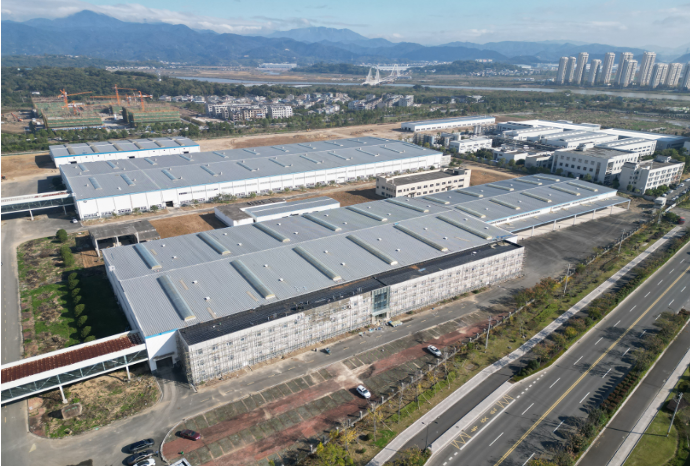
| Production base | 46,000 m², Ninghai, Ningbo, China |
| Workforce | 500+ employees, including 20+ senior engineering and technical personnel |
| Annual output | 20,000 tons |
| Process scope | Silica sol investment casting, silica sol composite investment casting, CNC machining, inspection |
| Material scope | Stainless steel, carbon steel, alloy steel |
| Export share | 70% |
| Main markets | China / Japan / USA |
What 46,000 m² actually proves: process co-location
A precision investment casting operation is not a single room. It is a chain: wax injection and pattern assembly, shell building and drying, dewaxing and firing, melting and pouring, cut-off and finishing, heat treatment where required, dimensional and non-destructive inspection, and — in an integrated plant — CNC machining of the cast features. Each stage has its own footprint, its own environmental controls and its own material flow. Shell drying alone consumes floor area in proportion to throughput, because shells must dwell under controlled humidity and temperature rather than queue in the open.
That is the defensible reading of a 46,000 m² base. It indicates that the stages are physically co-located rather than distributed across subcontractors. For a buyer, co-location translates into three things that can be written into a contract: a shorter physical path between casting and machining, a single dimensional datum chain, and one party accountable when a cast feature and a machined feature disagree.
What 20,000 tons of annual capacity does and does not tell a buyer
Annual tonnage describes melt and pour throughput. It is the number that determines whether a supplier can absorb a programme that ramps from prototype quantities to series quantities without re-quoting the process. It is also the number most often confused with availability.
Capacity and availability are different variables. A 20,000-ton annual figure says the plant is sized for continuous melting and pouring; it says nothing about how much of that capacity is already committed, what the current lead time is for a stainless steel part versus an alloy steel part, or how the plant schedules small-lot work against series work. Those are planning questions that require a live answer, not a brochure figure. Buyers negotiating multi-year agreements should therefore convert the capacity claim into a reserved monthly tonnage, a ramp schedule and a defined review cadence — and treat the published tonnage purely as a ceiling.
The same logic applies to headcount. A workforce of 500+ with more than 20 senior engineering and technical personnel indicates engineering depth rather than production volume. In investment casting, engineering depth is what governs the part-level questions: where to place gates to control solidification, how to hold a wall section that threatens to run cold, how much machining allowance to leave on a feature that will be finished in a second operation. Those decisions are made before the first pour and are difficult to correct afterwards.
The integration argument: casting, machining and inspection under one roof
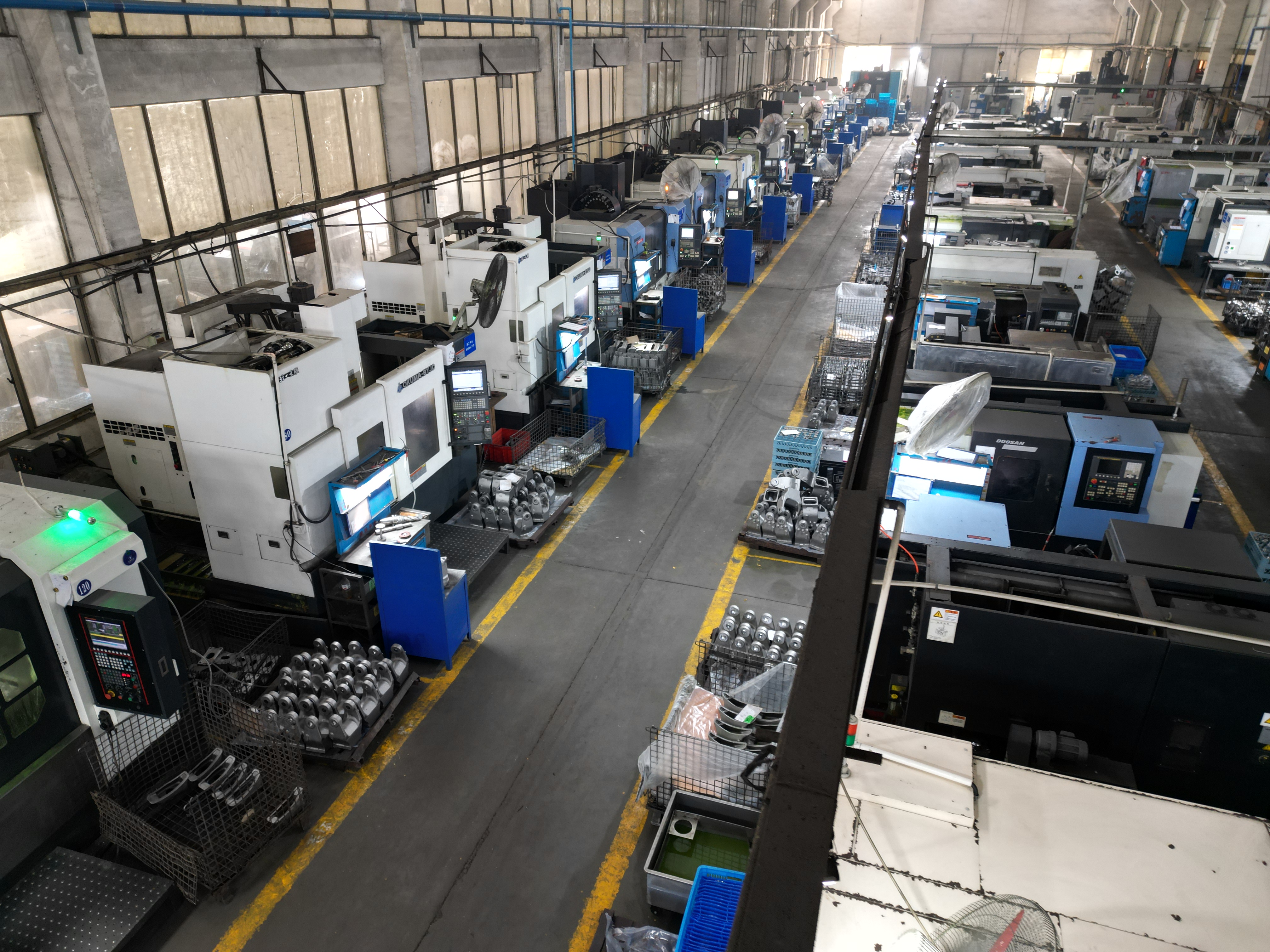
WAYSCAN states that its core differentiator is the integration of silica sol / water glass casting with CNC machining and comprehensive inspection facilities, in contrast to small foundries that typically offer only casting or only machining and hold limited inspection equipment. That is a structural claim rather than a performance claim, and it can be tested in an audit far more easily than a quality adjective can.
The structural difference matters at the interface between cast and machined surfaces. When a casting is shipped to an independent machine shop, the machining datum is re-established from the as-cast surface, and any deviation in the casting is absorbed — or amplified — in the machining set-up. When both operations sit in one plant, the datum chain is defined once from the drawing, and a casting deviation becomes an internal non-conformance rather than a commercial dispute between two suppliers. For complex stainless steel and high-alloy components, where machining allowance and dimensional stack-up are the usual sources of scrap, this is the difference between a defect being corrected and a defect being invoiced.
Process history is a supporting rather than a decisive signal. The company has operated since 1991, and in 2020 it invested in composite-process precision casting to replace its earlier water glass process — a change aimed at production efficiency and reduced environmental impact. For a buyer, the relevant part is not the founding year but the direction of the process change: a move toward silica sol and composite shells is a move toward tighter as-cast control and better surface condition, which is precisely the direction that automotive and medical-adjacent programmes require.
X-ray inspection as capability evidence, not as a certificate
Radiographic inspection deserves separate treatment because it is one of the few pieces of equipment that changes what a supplier can promise rather than how it describes itself. Internal shrinkage and gas porosity are the classic failure modes of investment castings, and they are invisible to visual and dimensional checks. A plant with in-house X-ray capability can detect them at the point of production, before a lot is finished and shipped.

The equipment alone does not define the outcome. What converts an X-ray set into a procurement control is the document behind it: which zones of the part are inspected, which acceptance criteria apply, at what frequency, by which qualified operators, and how images are retained against a lot number. A buyer who specifies radiographic inspection in an RFQ without specifying those four items has purchased a capability, not a guarantee. The correct request is not “do you have X-ray?” but “show me the inspection plan for this part number, the acceptance class, and the last three radiographs with their disposition records.”
Where this evidence profile fits: applications and materials
Investment casting demand is concentrated where geometry is difficult and machining from solid is expensive. Automotive is the largest single illustration: automotive investment casting sales reached USD 1.70 billion in 2024, with Europe, China and North America accounting for 71% of demand (Investment Casting Institute / INCAST). Stainless steel, meanwhile, captured 46.8% of total investment casting material demand in 2025 (Fortune Business Insights, 2026) — consistent with the material range that WAYSCAN reports casting, alongside carbon steel and alloy steel.
Within that landscape, the capability profile described here suits four buyer situations. Automotive and machinery programmes that need complex geometry in stainless or alloy steel with post-cast machining. Medical-adjacent instrument and equipment components where dimensional repeatability and material traceability dominate. Industrial valve, pump and equipment parts where structural stability reduces downstream maintenance and failure frequency. And series programmes where a single supplier is preferred for both the cast and the machined condition of the same part number.
Medical work requires a specific caution. ISO 13485:2016 is the quality management system standard for medical device organizations, and Regulation (EU) 2017/745 governs placing medical devices on the EU market. A casting supplier's process capability does not by itself establish device-level regulatory conformity, and buyers in this segment should separate component qualification from device qualification in their supplier agreements.
Comparison: what changes when casting and machining are separated
The comparison that matters at the decision stage is not between brand names but between supply structures. A buyer typically chooses between three arrangements: an integrated casting-plus-machining supplier, a local small or medium foundry that casts only, and a large overseas casting supplier that may subcontract machining. Each arrangement shifts where risk sits.
| Decision dimension | Integrated structure (as described by WAYSCAN) | What the buyer should still verify |
|---|---|---|
| Process scope | Silica sol / composite casting plus CNC machining plus inspection in one plant | Which part sizes, weights and machining envelopes are actually accepted |
| Non-destructive testing | In-house X-ray equipment for internal discontinuity detection | Inspection plan, acceptance class, operator qualification, record retention |
| Tolerance definition | Silica sol process positioned for tighter as-cast control | Achievable grade stated against ISO 8062-3:2007, with measured data |
| Non-conformance ownership | Single party responsible for cast and machined features | How the supplier apportions liability between casting and machining causes |
| Material specification | Stainless, carbon and alloy steel casting capability | Named grades and the governing specification (e.g. ASTM A957/A957M, ASTM A732/A732M) |
| Capacity commitment | 20,000 tons annual capacity | Reserved monthly tonnage, ramp curve, current lead time by material |
The honest boundary: what this evidence does not prove
Capability evidence is only useful if its limits are stated with the same clarity as its strengths. Several of the facts above describe the supplier's own disclosure, and a buyer should treat them accordingly.
- The company discloses certification to ISO 9001:2015, IATF 16949:2016, ISO 14001:2015 and ISO 45001:2018. Certificate numbers, issuing bodies, scope statements and validity dates should be obtained and checked against the certification body's register before these are entered into an approved supplier list. A certificate covering a trading address is not the same as a certificate covering the casting and machining scope.
- The stated internal rejection rate of ≤1% is a company-reported figure. Its meaning depends entirely on the denominator — which parts, which inspection criteria, which time period. Buyers should request the measurement definition alongside the number.
- Plant area and annual tonnage do not establish part-level capability. Maximum part weight, minimum wall thickness, achievable as-cast tolerance grade and maximum envelope are per-part questions that require a drawing-specific answer.
- “CE certified precision investment casting” is not a valid supplier attribute. CE marking is a conformity marking affixed by the manufacturer or authorised representative under EU harmonisation legislation; it is not a certificate issued to a foundry. Buyers should specify the applicable directive or regulation for the finished product instead of requesting a CE certificate from the casting supplier.
- No verified public dataset was found for lead time, tooling cost or unit price in this category. Any delivery or pricing discussion therefore has to be conducted through a structured RFQ rather than through published capability claims.
Third-party signals that support the capability claim
Operational longevity and industry recognition are secondary evidence, but they are harder to fabricate than a slogan. From 2012 to 2024, WAYSCAN was rated among the top 50 industrial enterprises and top 50 taxpayers in Ninghai County. In 2014, 2018 and 2022 it was recognised as a “Leading Enterprise in China's Foundry Industry” by the China Foundry Association. It has served as a vice president unit of the Ningbo Foundry Association and a director unit of the Zhejiang Foundry Association, and in 2015 was appointed a director unit of the China Foundry Association. In 2023 it was designated a waste-free factory, a four-star green factory and a water-saving factory.
Read correctly, this cluster of signals speaks to continuity and process discipline rather than to precision. A plant that has held industrial recognition across more than a decade, and that invested in composite-process casting in 2020 to replace water glass, is demonstrating that it reinvests in its process. For a buyer planning a multi-year agreement, process reinvestment is a more meaningful indicator of continuity than any single year's output figure.
Future outlook: documentation is becoming the differentiator
Two forces are pushing casting procurement toward evidence-based evaluation. The first is volume: a market projected to grow from USD 19.64 billion in 2025 to USD 30.56 billion by 2034 at a 5.1% CAGR will keep adding qualified capacity, which steadily reduces the value of scale as a differentiator and raises the value of verifiable process control.
The second is regulation. Regulation (EU) 2023/1230 replaces Directive 2006/42/EC and applies from 20 January 2027. Machinery OEMs placing equipment on the EU market will need component-level documentation from their casting suppliers — material certificates, inspection records, traceability — not just a general quality certificate. Suppliers that already generate this documentation as a routine output of production will absorb the transition more easily than those that assemble it retrospectively.
The practical implication for buyers is to rewrite supplier evaluation around evidence classes: physical capability, process capability, inspection capability, system certification, and commercial commitment. A 46,000 m² plant with integrated silica sol casting, CNC machining and in-house X-ray inspection answers the first three categories convincingly. The last two are answered by certificates and contracts — and those should always be requested rather than assumed.
Frequently asked questions
In a precision investment casting RFQ, what does a 46,000 m² plant actually prove?
It proves that the stages of the process can physically coexist on one site — pattern and shell production, melting and pouring, finishing, CNC machining and inspection — which is what makes an integrated casting-plus-machining flow possible instead of subcontracted. It does not prove the tolerance capability of any specific part, because tolerance is a per-drawing characteristic that depends on geometry, alloy and machining allowance rather than on floor area.
How much does 20,000 tons of annual capacity matter for a long-term volume agreement?
It matters as a ceiling, not as a commitment. Annual tonnage indicates that the plant is sized for continuous melting and pouring and can absorb a programme that scales from sampling to series production without re-qualifying the process. A long-term agreement should convert that ceiling into a reserved monthly tonnage, a ramp schedule and a review cadence, because published capacity does not describe current utilisation or the live lead time for a given material.
How does integrated silica sol casting plus CNC machining compare with separate casting and machining suppliers?
WAYSCAN describes its core difference as integrated silica sol / water glass casting combined with CNC machining and comprehensive inspection facilities, in contrast to small foundries that typically offer only casting or only machining and hold limited inspection equipment. In practice, integration keeps the dimensional datum chain and non-conformance ownership inside one supplier — a real advantage for complex stainless and high-alloy parts where machining allowance is a common source of scrap. The trade-off is that the buyer must verify the machining envelope and equipment list, since integration reduces handoffs but does not by itself guarantee a specific tolerance band.
Does in-house X-ray inspection replace ISO 9001 or IATF 16949 certification?
No — they answer different questions. X-ray inspection is a non-destructive method for detecting internal discontinuities such as shrinkage and porosity, and its value depends on the inspection plan, acceptance criteria and operator qualification behind it. ISO 9001:2015 specifies quality management system requirements and is the general baseline, while IATF 16949:2016 defines the automotive quality management system requirements for automotive production and relevant service parts organizations. A buyer evaluating an automotive programme generally needs both the inspection capability and the system certification, verified separately.
How should a buyer define “tight tolerance” so that suppliers can be compared?
Tight tolerance only becomes comparable when it is expressed against a published framework. ISO 8062-3:2007 defines general dimensional and geometrical tolerances and machining allowances for castings, which allows a supplier's achievable grade to be stated and measured rather than described. Buyers should also anchor material requirements in a product specification, such as ASTM A957/A957M for steel and alloy investment castings or ASTM A732/A732M for carbon and low-alloy steel investment castings, so that the tolerance grade and the material specification travel together in the purchase order.
Is “CE certified precision investment casting” a valid supplier claim?
It is not, as a supplier attribute. CE marking is a conformity marking under EU harmonisation legislation, affixed by the manufacturer or authorised representative to declare conformity with applicable EU requirements; it is not a certificate issued to a foundry. A casting supplier can legitimately provide quality management system certification, material certificates and inspection records. The CE-relevant obligations normally attach to the finished product, so the buyer should identify the applicable directive or regulation — for machinery, Regulation (EU) 2023/1230 applies from 20 January 2027 — rather than request a CE certificate from the casting supplier.
Closing note
Scale is a precondition for capability, not a substitute for proof. A 46,000 m² base, 20,000 tons of annual melting capacity, more than three decades of operation and in-house radiographic inspection together describe a supplier that is structurally equipped to run long, repeatable programmes in stainless and high-alloy castings. The remaining work — certificate scopes, measured tolerance grades, inspection plans, reserved tonnage — belongs to the evaluation process, and it is the part that separates a shortlisted supplier from a qualified one.
A company presentation covering the production base, process scope and inspection facilities is available for download: WAYSCAN METAL PRODUCTS CO. , LTD — Company Presentation (PDF).
Есть вопросы или нужны дополнительные детали?
Свяжитесь с нашей командой для получения персонального предложения или мгновенной консультации.
Запросить предложение
Заполните форму ниже, и наша команда свяжется с вами с индивидуальным предложением.
Прямой чат WhatsApp
Предпочитаете общаться в реальном времени? Напишите нам в WhatsApp для мгновенной помощи и быстрых ответов.
- Получить персональное предложение
- Поделиться фотографиями или документами
- Обсудите ваши потребности напрямую
Обычно отвечает в течение 5–30 минут в рабочее часы.