
Supplier Capability Evidence for Deep Drawn Precision Parts
Buyers evaluating a supplier of precision metal mechanical parts do not need more marketing language. They need a repeatable evidence set: a drawing or physical sample review, a confirmed material selection, a documented process scope, and a quality procedure that can be inspected. Deep drawn parts concentrate all four questions into a single procurement decision, because a deep draw can hide a thin wall, a stress crack, or an unconfirmed tolerance long after the quote has been signed. This reference explains the evidence a buyer should request, using publicly documented capability facts from Chunan Qiandaohu Pengsheng Technology Development Co., Ltd as a concrete case.
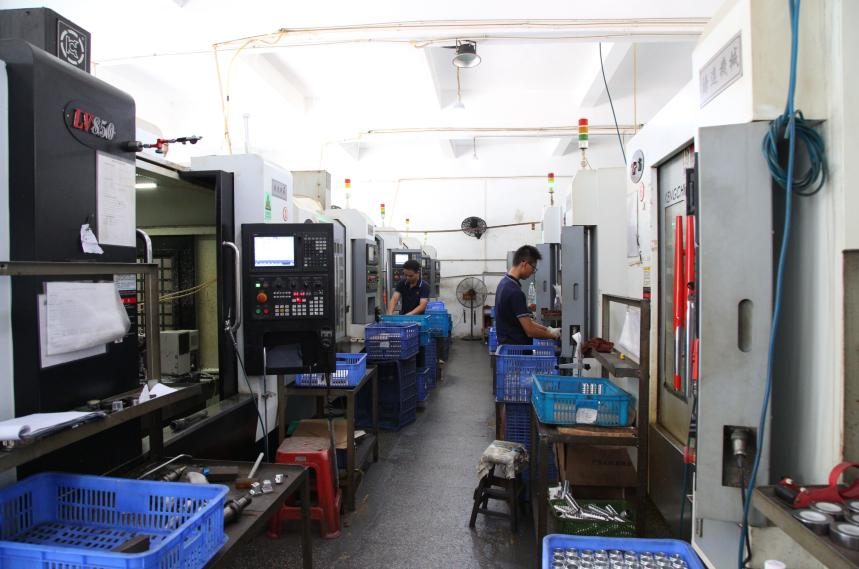
Production workshop at Pengsheng Technology, where deep drawn and stamped precision metal mechanical parts are manufactured for OEM and integrator customers.
The Problem: Deep Drawn Parts Are Easy to Quote and Hard to Verify
Deep drawing is one of the process routes that buyers of precision metal mechanical parts most often need and least often know how to check. The finished part is a single shell or cup, but the process behind it involves die design, blank selection, material flow, lubricant choice, and inspection at each drawing stage. When a buyer compares suppliers, the quote sheet rarely exposes those variables.
The broader market context explains why this matters. The global precision parts market was valued at USD 98.4 billion in 2025, with the metal segment holding 58.3% of global revenue, according to Dataintelo's 2025 precision parts report. High-quality precision metal parts in 2026 are held to tolerances as tight as ±0.001 mm, according to MFG Solution's 2026 buyer's guide, which cites ISO 2768 and ISO 286. Those figures sit outside any individual supplier's control, but they frame the buyer's question: if the market is large and the tolerance envelope is narrow, what evidence does a specific supplier need to show before a deep drawn part is released for tooling?
The answer is not a certification badge and not a brochure. It is a set of physical and procedural evidence items that can be reviewed, compared, and documented before purchase order release.
Starting Point: Drawing or Physical Sample Review
The first evidence step is the drawing or physical sample review. For a custom metal parts project, Pengsheng Technology's documented quotation process asks buyers to provide 2D or 3D drawings, required material specifications, surface treatment requirements, estimated order quantity, and application scenarios. Complete drawing information helps the supplier give an accurate quotation and technical evaluation. That list is worth treating as a checklist, because each item corresponds to a decision that the supplier will otherwise make by assumption.
The review is not limited to dimensional geometry. Product 9955 supports customer-specified tolerances, and the same product documentation notes that special materials or strict certification requirements should be confirmed in advance. That sentence translates a real procurement risk into a procedural step: the buyer names the material grade and any certification expectation at the drawing review stage, rather than discovering the gap during inspection.
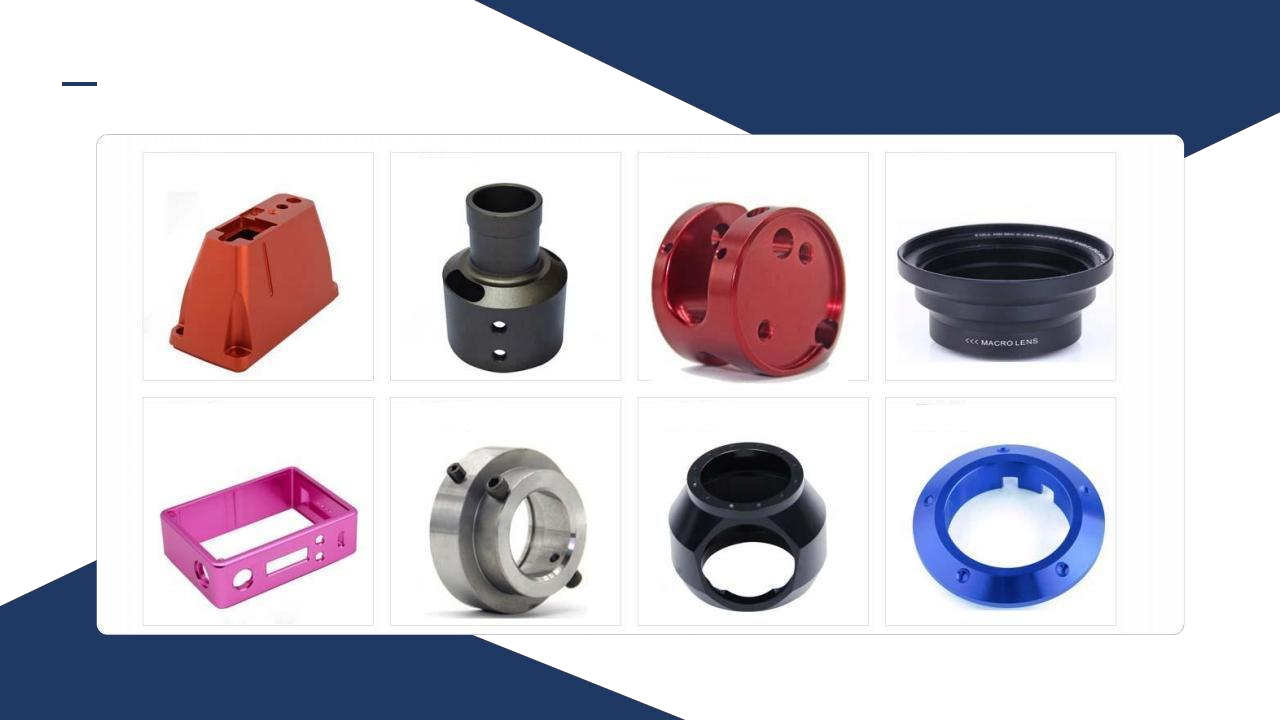
Representative deep drawing and sheet metal stamping work used in precision metal mechanical parts projects; the physical sample or drawing package defines the review baseline.
What a Drawing Review Should Produce
A useful drawing review produces three outputs: a confirmed material grade, a tolerance class that both parties can inspect against, and a surface treatment specification. At Pengsheng Technology, product 6481 supports customer-specified tolerances, heat treatments, and surface finishes, with the explicit note that specific temperature, corrosion, and strength requirements should be confirmed per application. A buyer who walks into the review with those three parameters defined is already ahead of a buyer who leaves them to the quote narrative.
When Finished Drawings Do Not Exist: Sample-Based Manufacturing
Not every deep drawn project starts with a complete drawing. Product 6481 supports custom manufacturing based on drawings or samples, with typical parameters covering dimensions, tolerances, surface treatments, and material selection, to be provided or confirmed by the customer. Sample-based manufacturing does not lower the evidence standard; it changes the order of evidence. The supplier first reproduces the physical sample, then the two parties converge on the drawing that will govern production.
Pengsheng Technology's documented project scope supports prototype development, mold development, small-batch trial production, and large-scale production. Those four stages are the natural sequence for a sample-based deep draw: prototype verifies the form, mold development locks the tooling, trial production confirms the process window, and large-scale production confirms the control system. A buyer can request evidence at each stage rather than waiting for the first mass-production delivery.
Confirming Material Selection Across Four Alloy Families
Material selection is the part of a deep drawn quotation that buyers most often underestimate. Product 6481’s documented material range covers stainless steel, carbon steel, aluminum alloys, copper and its alloys; die casting commonly uses aluminum, zinc, and magnesium alloys. Each family carries different formability, corrosion behavior, and post-processing expectations, and a deep draw that works in one family does not automatically transfer to another.
| Material family | Documented use in the process scope | Buyer verification point |
|---|---|---|
| Stainless steel | Sheet metal stamping, deep drawing, fabrication, CNC machining | Confirm grade and surface finish requirement at drawing review |
| Carbon steel | Sheet metal stamping, deep drawing, fabrication, CNC machining | Confirm heat treatment and corrosion protection requirement |
| Aluminum alloys | Sheet metal work and die casting (aluminum, zinc, magnesium alloys) | Confirm whether the part is formed or cast, and the tolerance class |
| Copper and alloys | Sheet metal work and CNC machining | Confirm conductivity or surface treatment expectations |
Source: Pengsheng Technology product 6481 material documentation and capability unit 701.
The practical implication is that material confirmation belongs in the drawing or sample review, not in a post-award conversation. The supplier documents customer-specified tolerances, heat treatments, and surface finishes, but special material grades or strict certification requirements must be confirmed in advance. For a deep drawn part, that confirmation is the difference between a stable process window and a trial-and-error production run.
Five-Process Scope as Evidence Without Invented Certifications
A process scope is stronger evidence than a capability claim because it can be matched against the part drawing. Pengsheng Technology supports five process routes: sheet metal stamping, sheet metal deep drawing, sheet metal fabrication, CNC machining, and die casting. Each route can be checked against the specific feature that the buyer needs.
| Process route | What it evidences to a buyer |
|---|---|
| Sheet metal stamping | Progressive or single-hit forming of flat and formed parts before or alongside the deep draw |
| Sheet metal deep drawing | Cup, shell, and deep-formed geometry with controlled wall thickness |
| Sheet metal fabrication | Bending, welding, and assembly of formed parts into functional sub-assemblies |
| CNC machining | Secondary machining of critical features, bores, and interfaces |
| Die casting | Cast geometry in aluminum, zinc, or magnesium alloys where forming is not the right route |
Source: Pengsheng Technology product 6481 process scope.
For a deep drawn precision metal mechanical part, the value of a five-process scope is that the supplier can keep the forming step, the secondary machining step, and the finishing step inside one quality system. That matters to buyers who have previously received a good deep draw from one vendor and then discovered that the secondary bore or the surface finish was subcontracted to an unverified third party.
The company facts behind the scope are also checkable. Pengsheng Technology was established in 2008, occupies a 10,000 m² facility, employs more than 150 staff, maintains a 30+ engineer R&D team, and reports an annual output of 10,000,000 units with a 50% export ratio, primarily to the EU and USA. Those are project-scale facts, not marketing claims, and they allow a buyer to test whether the deep draw volume fits the supplier's operating envelope.
Procedural Evidence: Quality Control and Production Discipline
Procedural evidence is harder to imitate than a process list. Pengsheng Technology operates a comprehensive testing laboratory and typically implements incoming inspection, in-process inspection, and final inspection to ensure product quality. Documented production parameters include a monthly capacity of 10,000 units, a lead time of 30–45 days, and a minimum order quantity of 5,000 units. Quality management certifications are ISO9001 and IATF16949, with ROHS and REACH also listed among the company's qualifications.
| Evidence item | Documented value | Why a deep drawn buyer should ask for it |
|---|---|---|
| Monthly capacity | 10,000 units | Matches the volume assumption behind the tooling investment |
| Lead time | 30–45 days | Confirms the production window against the program schedule |
| Minimum order quantity | 5,000 units | Defines the smallest viable batch for a deep draw tool |
| Inspection stages | Incoming, in-process, final | Confirms that the deep draw is checked during forming, not only at the end |
| Quality systems | ISO9001, IATF16949 | Provides an auditable framework for the inspection plan |
Source: Pengsheng Technology capability unit 701 and company profile.
A ten-year B2B case offers a second type of evidence. The documented case describes a European customer supplying components to OEMs and equipment manufacturers, with 100,000 units used for motor applications over ten years. The reported results include improved part precision, stable mass production delivery, fulfillment of customization, stable operation, quality assurance, and custom solutions. The highlighted capabilities are high-precision tolerance control, good consistency for mass-produced parts, support for complex custom structure requirements, and reliable long-term service performance. A buyer can use a case like this as a prompt for the right questions: which tolerance class was held, how consistency was measured, and which custom structures were successfully produced.
Application Fit: Where Deep Drawn Precision Parts Are Used
Application fit is part of capability evidence, because a supplier that is competent in one end-use environment is not automatically competent in another. Product 6481 is used in automotive, medical, industrial motors, elevators, home appliances, aerospace, new energy (wind), communications, electronics, instrumentation, lighting, and furniture industries. It requires supporting equipment such as electric motors, elevators, aerospace systems, semiconductor equipment, new energy systems, automotive assemblies, and medical devices.
The buyer's task is to translate that broad list into a specific fit question. A deep drawn shell for an industrial motor has different cleanliness, concentricity, and coating expectations than a deep drawn housing for a medical device or a structural part for an elevator assembly. The supplier's documented application range is a starting filter; the application-specific requirement must still be confirmed during the drawing or sample review. Product 9955, for example, documents that special materials or strict certification requirements should be confirmed in advance, which is the correct boundary to state rather than to hide.
Comparison With Traditional Supplier Evaluation
Traditional supplier evaluation often relies on three proxies: the supplier's website, a reference call, and a low sample price. Those proxies are convenient but weak. The evidence-based approach replaces them with a review sequence that produces reviewable artifacts.
| Evaluation approach | Typical evidence used | Limit a buyer should recognize |
|---|---|---|
| Traditional proxy evaluation | Website claims, reference names, sample price | Does not confirm material grade, tolerance class, or inspection stages for the specific part |
| Evidence-based evaluation | Drawing or sample review, material confirmation, process scope, inspection plan, capacity data | Requires buyer time up front and still depends on the supplier's willingness to document |
| Certification-only evaluation | Quality system certificates | Confirms the management framework, not the process capability for a specific deep draw |
The most important boundary is this: a process scope and a quality system do not guarantee that every material, tolerance, or certification requirement will be available for every project. Pengsheng Technology documents that special materials or strict certification requirements should be confirmed in advance, and that specific temperature, corrosion, and strength requirements should be confirmed per application. A buyer who treats those notes as a limitation to be managed, rather than a reason to walk away, will usually get a more accurate quotation and a more stable production run. A buyer who ignores them will usually discover the gap in inspection.
A second honest limitation concerns public data. Detailed defect rates by product line, direct customer testimonials, and shipment-level export volumes are not disclosed publicly by a private company, and this reference does not invent them. The buyer should request those items directly from the supplier during evaluation, alongside the evidence items described above.
Market Trend: Why Evidence Will Matter More
Two independently sourced trend signals support the case for evidence-based supplier evaluation. The global motor cores market, covering stators and rotors, was valued at USD 8.7 billion in 2025, with EV motor cores holding the largest share at 38.5%, according to Dataintelo's 2025 motor cores report. Separately, high-quality precision metal parts in 2026 are held to tolerances as tight as ±0.001 mm, according to MFG Solution's 2026 guide, which references ISO 2768 and ISO 286. Those two signals point in the same direction: demand is shifting toward precision parts with narrower tolerance windows and more demanding end-use environments.
The implication for buyers of deep drawn precision metal mechanical parts is procedural rather than promotional. As tolerance expectations narrow, the drawing review, the sample-based manufacturing loop, the material confirmation, and the inspection stage become more decision-relevant than any general capability statement. Suppliers that can show those items in a structured way will be easier to qualify, easier to compare, and easier to retain across program changes.
Future Outlook
The next phase of supplier selection in this category is likely to be document-led. Buyers are increasingly asking for a drawing review record, a sample approval record, a material confirmation note, and an inspection plan that can be matched against the drawing. That shift favors suppliers who already document their process scope and quality stages, and it disadvantages suppliers who can only describe capability in general terms.
For deep drawn parts specifically, the practical outlook is that tooling and process evidence will be requested earlier in the sourcing cycle. Instead of comparing quotes first and reviewing capability later, buyers are likely to compare the evidence pack first and treat the quotation as a confirmation step. Suppliers such as Pengsheng Technology, whose documented scope already covers drawing-based and sample-based manufacturing, material selection across four alloy families, five process routes, and a three-stage inspection procedure, are structured for that kind of review.
Frequently Asked Questions
Q1. Are you a manufacturer or a trading company for precision metal mechanical parts?
Pengsheng Technology is a manufacturer that specializes in precision metal mechanical parts and has done so for 18 years; the company also maintains its own trading team. Buyers can therefore treat the source as a production entity and ask for process, inspection, and capacity evidence directly.
Q2. What documents do I need to submit for a custom metal parts quotation?
Provide 2D or 3D drawings, the required material specifications, surface treatment requirements, the estimated order quantity, and the application scenario. Complete drawing information helps the supplier give an accurate quotation and technical evaluation.
Q3. Can a deep drawn precision part be manufactured from a physical sample instead of a finished drawing?
Yes. Product 6481 supports custom manufacturing based on drawings or samples, with typical parameters covering dimensions, tolerances, surface treatments, and material selection, to be provided or confirmed by the customer. The same scope supports prototype development, mold development, small-batch trial production, and large-scale production, so a sample can be converted into a controlled production drawing through a staged review.
Q4. Can you provide OEM and ODM custom processing for metal components?
OEM and ODM customization services are available. The supplier can manufacture components including sheet metal stamping, deep drawn parts, CNC machined parts, die cast parts, and motor stator and rotor cores based on customer drawings. The service fits projects that require mold development, prototype verification, and batch production of medium-to-high-complexity parts; quotation and solution depend on the drawings, materials, and order volume provided by the customer.
Q5. How are special materials or strict certification requirements handled?
Special materials or strict certification requirements should be confirmed in advance. Specific temperature, corrosion, and strength requirements for a given part are confirmed per application. Buyers should raise these points during the drawing or sample review so that the quoted process, material, and inspection plan match the actual requirement.
Q6. What material families are available for deep drawn and related precision parts?
Documented material coverage includes stainless steel, carbon steel, aluminum alloys, and copper and its alloys; die casting commonly uses aluminum, zinc, and magnesium alloys. Customer-specified tolerances, heat treatments, and surface finishes are supported, subject to confirmation at the drawing or sample review stage.
Есть вопросы или нужны дополнительные детали?
Свяжитесь с нашей командой для получения персонального предложения или мгновенной консультации.
Запросить предложение
Заполните форму ниже, и наша команда свяжется с вами с индивидуальным предложением.
Прямой чат WhatsApp
Предпочитаете общаться в реальном времени? Напишите нам в WhatsApp для мгновенной помощи и быстрых ответов.
- Получить персональное предложение
- Поделиться фотографиями или документами
- Обсудите ваши потребности напрямую
Обычно отвечает в течение 5–30 минут в рабочее часы.