
Supplier Capability Evidence: Honor Packaging's Glass Jar Specs
Supplier Capability Evidence: Honor Packaging's Glass Jar Specs
A supplier's own specification data is the fastest available screen for manufacturing depth. This reference reads the H19, H21 and HDV violet glass jar data published by Honor Packaging and shows how item codes, diameters, glass thickness, cap materials and carton quantities can be used in long-term supplier evaluation — and where that evidence stops.
Introduction: The Gap Between Claims and Checkable Data
Protective packaging buyers rarely lack supplier options. What they lack is a fast, repeatable way to separate one supplier's manufacturing capability from another supplier's vocabulary. Two quotations for a light-blocking glass jar can read almost identically — the same phrases about barrier performance, child resistance and custom decoration — while the underlying production reality differs substantially. The difference tends to surface in specification data rather than in prose: item codes, diameters, height and weight ranges, glass thickness, closure materials and units per carton.
The category itself keeps growing, which raises the cost of choosing poorly. Fortune Business Insights valued the global protective packaging market at USD 44.02 billion in 2025 and projects USD 80.25 billion by 2034, while Grand View Research estimated the same market at USD 40.4 billion in 2025, with flexible formats taking a 66.4% revenue share. The two figures differ mainly because the two research houses draw the category boundary differently. That divergence is a useful reminder for procurement teams: even market-level numbers should carry a named source before they are used to justify a decision — and the same discipline applies when evaluating a single supplier.
This reference examines the published product data of Ningbo Honor Packaging Co., Ltd. (Honor Packaging), a Ningbo, China–based manufacturer founded in 2015 that produces child-resistant packaging, violet glass packaging and vacuum packaging, and exports to markets including the EU and the USA. The purpose is not to promote the company, but to demonstrate a screening method: what a supplier's own numbers can prove about manufacturing depth, and what they cannot.
Problem and Opportunity: Why Specification Panels Decide Long-Term Partnerships
A capability claim is a statement about repetition. Any supplier can produce a good sample; far fewer can deliver the same diameter, the same cap interface, the same wall section and the same carton count on the twentieth order. For buyers at the decision and execution stage, that difference is the whole commercial risk — a re-tooled neck finish or a drifting glass weight can break filling-line settings, closure torque assumptions and pallet configurations long after the purchase order is signed.
The opportunity, therefore, is to evaluate partners on evidence that already exists in their catalogue. Five fields do most of the work:
- Item code structure — a coded range (for example, H21-0003 to H21-0008) indicates a managed product family with defined variants rather than a loose sample set.
- Dimensional data — diameter, height and weight ranges show that tooling is measured and documented.
- Material and thickness specifications — glass thickness and closure material define the interface between the jar and its protective function.
- Closure and finishing options — a supplier listing five decorating processes is exposing five sets of process risk to inspection.
- Packaging quantities and protection — units per carton and shock protection determine the condition of the goods on arrival.
Where a field is missing, the correct reading is not that the supplier is weak. It is that the specific claim remains unverified, and should be requested in writing before a long-term commitment.
Brand Solution: The Glass Jar Data Behind the Range
Honor Packaging's published range organises protective glass packaging into three working families: the small-format H19 concentrate and vacuum jars, the mid-range square and round H21 child-resistant jars, and the wide-mouth, cosmetic and essential-oil HDV violet glass series. Each family is documented with capacities, item codes, shapes, closures and — for the H21 and HDV1/HDV2 lines — a listed glass thickness of 0.38 mm.
H19: small-format child-resistant and vacuum jars
The H19 family covers 5 ml and 9 ml concentrate jars in three colourways — clear (H19-0001C to H19-0011C), white (H19-0001W to H19-0011W) and black (H19-0001B to H19-0011B) — with square, round, triangle and hexagon bodies and a child-resistant cap. Listed unit weights sit between 27 g and 38 g for the clear and black versions, and at 27 g or 36 g for the white version. All H19 formats are packed at 250 pieces per carton.
The same carton count applies to the H19 vacuum jar, described as a 5 ml "Vacuum Click Jar" in square glass. From a capability standpoint, the notable fact is not the size — 5 ml is a small format — but the geometry count. Four body shapes across three colourways in one small-format family implies a tooling footprint rather than a single mould.
H21: square and round child-resistant jars with a shared diameter
The H21 square body is listed across a capacity band running from 15 ml to 200 ml, including 15 ml, 30 ml, 70 ml, 100 ml, 130 ml and 200 ml in the violet glass range, together with 20 dr to 60 dr formats in the item-code tables. Square jars carry item codes H21-0003 to H21-0008 in both clear (C) and violet (V) versions, at a 58 mm diameter, heights from 24 mm to 115 mm, weights from 75 g to 280 g, and a listed glass thickness of 0.38 mm. Both versions are supplied with child-resistant caps.
The round H21 counterpart uses item codes H21-0012 to H21-0018 — again in clear and violet — with a 60 mm diameter, heights of 36.5 mm to 125 mm, weights of 84 g to 268 g, and the same 0.38 mm listed wall specification. Capacities run from 30 ml and 2 oz through 20 dr, 30 dr, 40 dr and 60 dr to 6 oz.
HDV1, HDV2 and HDV3: violet glass across three use profiles
The HDV series is where closure variety becomes visible. HDV1 is a wide-mouth violet jar line covering 100 ml to 1 L, with thread sizes from 41/400 to 89/400, diameters of 48 mm to 95 mm, heights of 84.7 mm to 193 mm, weights of 117 g to 610 g, a listed 0.38 mm thickness, and cap materials listed as Urea, PE, SAN and ABS. HDV2 covers the cosmetic profile — 3 ml to 200 ml, threads 32/400 to 89/400, diameters 36 mm to 93.2 mm, heights 25.6 mm to 55 mm, weights 36 g to 205 g, 0.38 mm thickness, with Urea and PE closures.
HDV3 is the essential-oil line: 5 ml to 100 ml, heights 54.5 mm to 125 mm, weights 22.5 g to 120 g, in violet glass with PP, and closure options that include a plastic cap, dropper, mist sprayer or lotion pump. Notably, no glass thickness is published for HDV3 — a small but instructive gap that a buyer should close in writing before tooling.
| Series | Listed capacity | Shape / diameter | Listed glass thickness | Closure and material |
|---|---|---|---|---|
| H19 concentrate jars (clear, white, black) | 5 ml, 9 ml | Square, round, triangle, hexagon | Not published | Child-resistant cap; glass |
| H19 vacuum click jar | 5 ml | Square | Not published | Vacuum click; glass |
| H21 square (clear / violet) | 15 ml – 200 ml; 20 dr – 60 dr | Square, 58 mm | 0.38 mm | Child-resistant cap; glass / plastic / PE (clear), violet glass / PP / PE |
| H21 round (clear / violet) | 30 ml, 2 oz, 20 dr – 60 dr, 6 oz | Round, 60 mm | 0.38 mm | Child-resistant cap; glass / plastic / PE (clear), violet glass / PP / PE |
| HDV1 wide-mouth violet | 100 ml – 1 L | Wide mouth, 48–95 mm | 0.38 mm | Violet glass / Urea / PE / SAN / ABS |
| HDV2 cosmetic violet | 3 ml – 200 ml | 36–93.2 mm | 0.38 mm | Violet glass / Urea / PE |
| HDV3 essential oil violet | 5 ml – 100 ml | 54.5–125 mm height | Not published | Plastic cap, dropper, mist sprayer, lotion pump; violet glass / PP |
Technical Explanation: What Dimensions and Shared Interfaces Reveal
Glass jar specifications are not decorative details. They are the constraints that determine whether a protective packaging line can run the same way next quarter.
The most informative pattern in the H21 data is that an entire square capacity band shares a single 58 mm diameter, while the round band shares 60 mm. From a buyer's perspective, a constant diameter across multiple capacities usually means a common neck and closure interface: the same child-resistant cap specification can be applied to a 15 ml jar and a larger jar within the family, and filling-line changeover is limited to height and volume settings rather than to a new cap torque profile. That is an efficiency argument, but it is also a risk-management argument — fewer interfaces mean fewer places for a specification to drift.
The listed 0.38 mm thickness appears consistently across the H21 clear and violet lines and across HDV1 and HDV2. A published wall figure matters because it converts a vague phrase such as "protective barrier" into something a buyer can measure on an incoming inspection report. The absence of a published thickness for H19 and HDV3 is equally useful information: it tells the buyer which questions to ask before approving a drawing.
Weight ranges carry a second signal. HDV1 spans 117 g to 610 g across 100 ml to 1 L, which reflects genuine geometry changes — a wide-mouth jar with a 95 mm diameter and a 193 mm height is a different structure from a 100 ml cosmetic jar. Comparing weight ranges across suppliers for the same nominal capacity is one of the simplest available sanity checks on material use.
OEM Finishing and Closure Materials as Capability Evidence
Decoration is where many glass jar suppliers narrow their offer. Honor Packaging lists five surface treatments across the H21 square, H21 round, HDV1 and HDV2 lines: sticker, silk-screen printing, hot stamping, heat transfer printing, and frosted finish. HDV3 lists label, silk-screen printing and gold stamping. These are not interchangeable processes. Silk-screen printing, hot stamping and heat transfer printing each require different preparation, different curing or pressure parameters, and different quality checks, while a frosted finish is a glass surface treatment rather than a print operation at all.
| Series | Surface treatments listed | Cap / closure materials listed |
|---|---|---|
| H21 square and round (C and V) | Sticker, silk-screen printing, hot stamping, heat transfer printing, frosted finish | Child-resistant cap; PP, PE, plastic |
| HDV1 wide-mouth violet | Sticker, silk-screen printing, heat transfer printing, hot stamping, frosted finish | Urea, PE, SAN, ABS |
| HDV2 cosmetic violet | Sticker, silk-screen printing, heat transfer printing, hot stamping, frosted finish | Urea, PE |
| HDV3 essential oil violet | Label, silk-screen printing, gold stamping | Plastic cap, dropper, mist sprayer, lotion pump; PP |
The closure list is the second half of the same evidence. Urea, PE, SAN, ABS and PP appear across the violet glass lines, alongside functional dispensing options — dropper, mist sprayer and lotion pump — for the HDV3 essential-oil formats. A buyer evaluating a long-term glass packaging partner should treat this list as a set of interfaces to be validated: each material pairing behaves differently under torque testing and repeated opening cycles, and the material mix should be confirmed against the product's chemical and regulatory profile rather than assumed from a catalogue line.
Execution Evidence: Capacity, Lead Time and Order Structure
Protective packaging decisions rarely fail at the sample stage. They fail at execution, which is why capacity and order parameters belong in the same evidence file as the specifications.
| Execution parameter | Published figure |
|---|---|
| Monthly production capacity | 100,000 units |
| Typical production lead time | 30–45 days |
| Minimum order quantity | 10,000 units |
| Delivery term | FOB |
| Payment structure | 30% down payment to start production; 70% before shipment |
| Quality gate | Pre-shipment test |
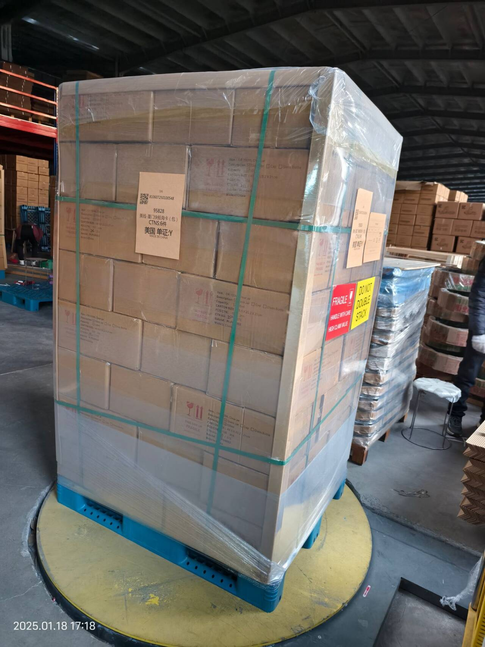
| Breakage control | Protective foam wrapping and careful pallet loading |
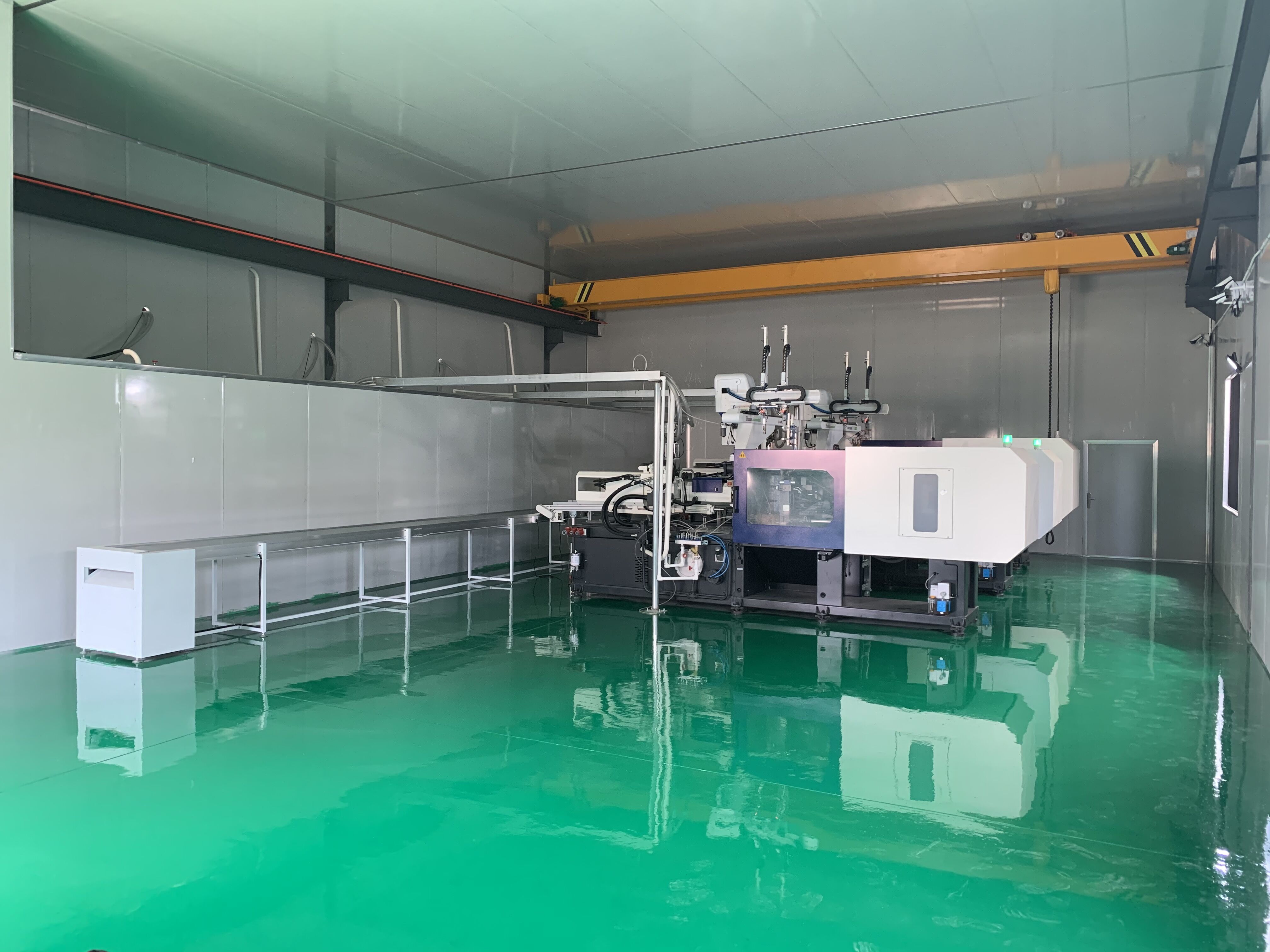
Organisational context supports the commercial figures. Ningbo Honor Packaging reports 310 employees, a 15-person R&D team, and a head office in Ningbo close to the Ningbo and Shanghai seaports, which shortens the inland leg of export logistics. Production runs through long-term joint-venture bases for plastic and glass packaging, and export is listed at 100%, with the EU and USA as main markets and additional applicability to the Middle East and Southeast Asia. For a brand owner planning a multi-year supply relationship, those structural facts — rather than the product photography — are the ones that predict continuity.
Application Fit: Matching Series to Protective Requirement
The published application lists — food, cosmetic, medical, cannabis, supplements, packaging design and packaging wholesale — describe a broad field, so the practical question is which series fits which protective job.
- Small-format child resistance: H19 jars in clear, white or black, 5 ml and 9 ml, in four body shapes, are the compact option for concentrate-style products where access control and shelf density matter at the same time.
- Vacuum/air-tight small formats: the H19 vacuum click jar provides a 5 ml square glass container with a click-to-seal action, and shares the 250 pieces per carton packing standard.
- Light-sensitive mid-range products: violet H21 square and round jars, from 15 ml to 200 ml with child-resistant caps and a listed 0.38 mm wall, combine light blocking with access control.
- Refillable and bulk storage: HDV1 wide-mouth jars from 100 ml to 1 L, a format associated with refillable glass storage and wide-mouth filling.
- Cosmetic formats: HDV2 from 3 ml to 200 ml, with compact heights of 25.6 mm to 55 mm.
- Essential oils and dispensing products: HDV3 from 5 ml to 100 ml with dropper, mist sprayer or lotion pump closures.
The child-resistant element deserves a separate note. In practice, child-resistant performance is not self-declared; it is demonstrated against recognised test protocols such as ISO/EN 8317 in the EU and 16 CFR 1700.20 in the US, both of which address access by children under five. A catalogue entry that says "child-resistant cap" describes a closure design; it does not by itself establish test compliance. Buyers should obtain the applicable test documentation for the specific jar-and-cap combination ordered, since the same cap can behave differently on a different neck finish.
Market Trend Analysis: Where Protective Packaging Requirements Are Heading
Three published trends frame the glass jar segment.
First, the market is large and expanding, but it is not dominated by rigid glass. Grand View Research places flexible formats at a 66.4% revenue share of the protective packaging market in 2025, and paper and paperboard materials at a 45.7% share, reflecting sustainability pressure on material choice. Fortune Business Insights expects the secondary packaging segment to hold a 48.54% share by 2026. Glass jars therefore sit in a specialised lane: they compete on barrier and access control, not on share of the overall category.
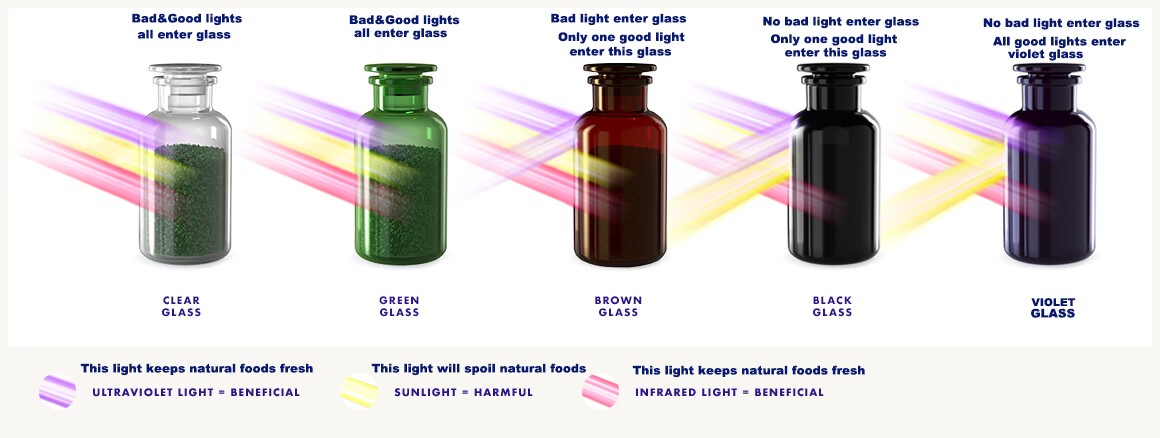
Second, light-blocking glass has a defensible technical rationale. Violet glass — sometimes called biophotonic glass — acts as a natural filter that blocks visible light while allowing 25% to 45% penetration of UVA and 60% of infrared light, according to Miron Violetglass. That mechanism, rather than a colour preference, is what positions violet glass in food, cosmetic and pharmaceutical applications.
Third, the competitive landscape at the top of the protective packaging category is concentrated in formats other than glass. Mordor Intelligence lists Sealed Air Corporation, Smurfit Westrock, Mondi Group and Amcor plc as leading global manufacturers in the protective packaging space — companies widely associated with flexible and paper-based systems. For a buyer, that is a segmentation signal: supplier comparison should be run within a material family, because a flexible packaging leader and a glass jar manufacturer are not interchangeable candidates for the same line item.
Comparison with Traditional Solutions — and Where Glass Is Not the Answer
The clearest comparison in the available data is violet glass against amber glass. Honor Packaging's comparison data describes the difference as light transmittance: violet glass is positioned as delivering better protection against ultraviolet rays and better retention of product freshness, and it is listed at approximately 15% higher cost than amber glass. Its stated best-fit applications are food, cosmetic and pharmaceutical packaging. On the maintenance side, the comparison data highlights reduced concerns about accidental child ingestion — a benefit that sits with the closure design rather than the glass colour, and one that should be verified through the applicable child-resistance test protocol for the exact jar-cap combination.
Every protective packaging format carries boundaries, and glass is no exception. Three constraints are visible directly in the published data and should be included in any honest evaluation:
- Cost premium: violet glass is listed at roughly 15% above amber glass, which must be weighed against the value of the protected contents rather than assumed to be justified for every product.
- Breakage and logistics weight: glass requires foam wrapping and careful pallet loading, and palletised freight is heavier and more handling-sensitive than equivalent flexible formats. Packaging condition on arrival is a logistics outcome, not only a manufacturing outcome.
- Minimum scale and timing: a 10,000-unit minimum order quantity and a typical 30–45 day lead time make this format a poor fit for very small test batches or urgent replacement runs. Buyers who need short runs should plan sampling and validation well ahead of launch, or accept that glass is not the right first format.
There is also a structural limitation: glass jars are not the default protective format for the broader market. With flexible formats holding the majority of protective packaging revenue, glass should be specified where light blocking, air exclusion or controlled access is the actual functional requirement — not simply because glass reads as premium in a product mock-up.
Future Outlook
The direction of buyer behaviour in this category is toward documented evidence. Regulatory expectations around child-resistant closures, tightening sustainability pressure on material selection, and the growth of refillable wide-mouth storage formats all push purchasing teams to evaluate suppliers on records rather than on presentations. Suppliers that publish item codes, dimensional ranges, glass thickness, closure materials, carton quantities, capacity and lead times will be easier to qualify and easier to retain, because their claims can be re-checked at any point in the relationship.
For brand owners, the practical implication is straightforward: build a specification file per SKU before the first tooling commitment, record where each number came from, and re-confirm the gaps — such as unpublished thickness values for a given series — in writing. That file becomes the baseline for every subsequent order, and the most reliable predictor of a stable long-term packaging partnership.
FAQ
1. What production capacity and lead time should a buyer expect from Honor Packaging?
The published figures are a monthly production capacity of 100,000 units and a typical production lead time of 30 to 45 days. The minimum order quantity is 10,000 units, and the applicable markets listed alongside these figures are the EU, US, Middle East and Southeast Asia.
2. How is the commercial side of an order structured?
Orders are quoted on an FOB basis. Production is arranged after receipt of a 30% down payment, with the remaining 70% payable before shipment. A pre-shipment test is the stated quality gate before goods leave.
3. How can a buyer verify jar quality before shipment rather than after arrival?
The published specifications provide measurable checkpoints: a listed glass thickness of 0.38 mm on the H21 and HDV1/HDV2 lines, defined height and weight ranges per item code, and stated unit weights such as 27 g to 38 g for H19 jars. These can be compared against an incoming inspection report; the pre-shipment test stage is the point at which discrepancies should be raised.
4. Which jar series fits child-resistant or light-sensitive applications?
The H19 family provides 5 ml and 9 ml child-resistant jars in clear, white and black, across square, round, triangle and hexagon shapes. The H21 family provides child-resistant square and round jars from 15 ml to 200 ml in both clear and violet glass. Violet glass options are also available across the HDV1, HDV2 and HDV3 series for light-sensitive contents.
5. What surface treatments can be applied to these glass jars?
The H21 square and round lines and the HDV1 and HDV2 violet lines list sticker, silk-screen printing, hot stamping, heat transfer printing and frosted finish. HDV3 lists label, silk-screen printing and gold stamping. Because these are different processes rather than interchangeable options, each should be validated with an approval sample before mass production.
6. What closure materials are available across the range?
Closed materials listed include Urea, PE, SAN, ABS and PP, alongside child-resistant caps for the H19 and H21 families. The HDV3 essential-oil formats additionally list a plastic cap, dropper, mist sprayer and lotion pump. Closure selection should be checked against the chemical and regulatory profile of the contents.
7. Is violet glass more expensive than amber glass, and what does the difference buy?
Honor Packaging's comparison data lists violet glass as approximately 15% higher in cost than amber glass, with the difference attributed to light transmittance performance — better protection against ultraviolet rays and better retention of product freshness. The stated best-fit applications are food, cosmetic and pharmaceutical packaging. Violet glass also blocks visible light while allowing 25% to 45% UVA penetration, according to Miron Violetglass.
8. How are glass jars protected and packed for shipment?
Breakage control is handled through protective foam wrapping and careful pallet loading. For the H19 family, including the 5 ml square vacuum click jar, the published packing standard is 250 pieces per carton.
Reference Sources
Product, capacity, closure, finishing, packaging, capacity and lead-time data: Ningbo Honor Packaging Co., Ltd. published product and company data (www.honorcrpkg.com). Market size estimates: Fortune Business Insights and Grand View Research. Competitor landscape and material shares: Mordor Intelligence. Child-resistant packaging standards: ISO/EN 8317 and 16 CFR 1700.20, referenced via CPSC. Violet glass light transmission: Miron Violetglass.
Downloadable company reference: Honor Packaging company brochure (PDF).