
Supplier Evidence Audit: Verifying 70% Export Share and EU/Asia/SA Reach
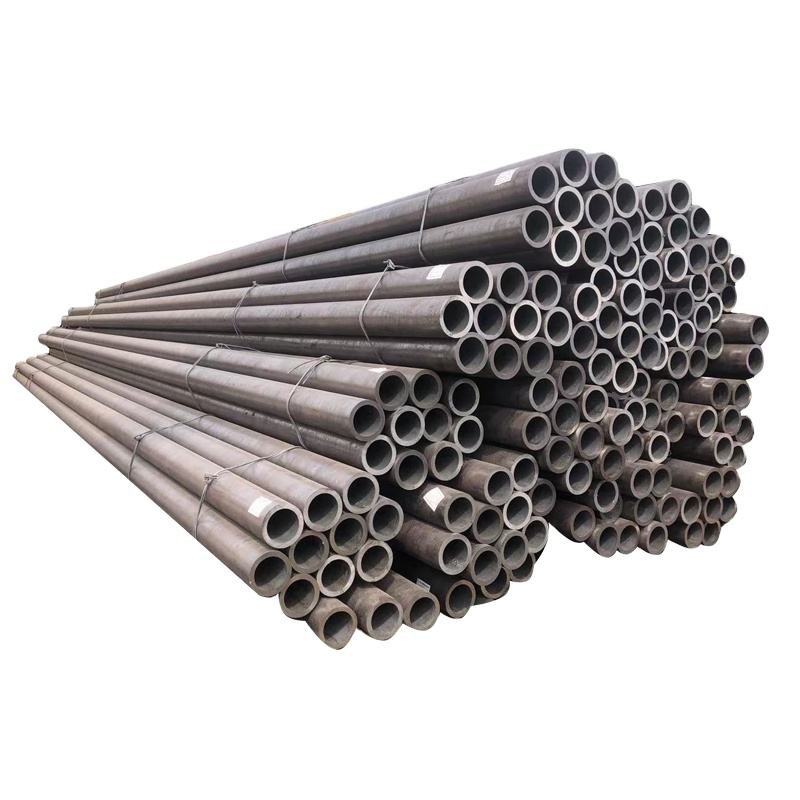
For buyers of heavy duty hydraulic cylinders, an export share figure is a screening signal, not an audit result. A supplier may report that exports account for approximately 70% of sales and that major markets include the EU, Asia, and South America. Those are useful claims because they point to international order experience. They do not, by themselves, prove which products were exported, which customers bought them, which Incoterms applied, or whether the same evidence trail will support a new project order.
This audit approach is written for the Research to Evaluation stage of a purchase. It uses the evidence a buyer can reasonably request before placing a heavy duty cylinder order: product-scope documents, commercial terms such as FOB or CIF, delivery commitments, pre-shipment inspection records, and direct email or phone confirmation. The aim is not to turn a desk review into a formal financial audit. The aim is to separate verifiable order evidence from general marketing language.
Why a 70% export share claim deserves a structured check
Export share is an aggregate ratio. It can be calculated by revenue, by unit volume, by shipment count, or by another internal definition. A supplier that sells a mix of seamless steel pipe, custom hydraulic cylinders, and machined components may report a company-level export ratio that is not identical to the export ratio for heavy duty hydraulic cylinders. That does not make the figure false. It means the buyer should ask what the denominator includes.
For project procurement, the more useful question is narrower: what evidence exists that heavy duty cylinders of the required type have been shipped, inspected, and accepted in the target regions? A 70% share is a starting point. The audit should connect it to product families such as high-pressure, large bore, long stroke, double-acting, custom mounting, or non-standard cylinders. It should also connect it to applications such as construction machinery, mining equipment, excavators, industrial presses, forklifts, and replacement or high-load upgrade projects.
Tuoda Machinery, the operating brand of Shandong Tuoda Machinery Equipment Co., Ltd., is a Liaocheng-based manufacturer of custom hydraulic cylinders and related steel products. Its supplied company facts state that exports account for approximately 70% of sales and that major markets include the EU, Asia, and South America. Those facts are the subject of this audit. They are not treated here as independently audited trade statistics.
What the supplier facts establish, and what they leave open
At the factual level, the claim set is compact. The export ratio is approximately 70% of sales. The major market list is the EU, Asia, and South America. Standard delivery is 30-45 days. Pre-shipment inspection is part of quality control. The product scope includes custom heavy duty hydraulic cylinders, with material grades such as ST52, S355, E355, C45, SAE1045, and 42CrMo4 available for custom builds.
These facts support a reasonable first conclusion: the supplier presents itself as export-oriented and has a market footprint beyond China. They do not prove the exact country mix, the share of heavy duty cylinders within total exports, the number of active accounts in each region, or the percentage of sales represented by any single application. A buyer should therefore treat the 70% figure as a supplier-reported aggregate and build a separate evidence file for the specific order.
| Claim or signal | Useful evidence to request | What it can support | What it cannot prove alone |
|---|---|---|---|
| Exports are approximately 70% of sales | Export sales summary, product-level share, sample shipment records, or a management statement with definitions | That export activity is material to the business | That the ratio applies only to heavy duty cylinders or remains stable by year |
| Major markets include the EU, Asia, and South America | Region-specific shipment examples, destination ports, certificates of origin, or authorized references | That the supplier has handled orders in or for those regions | Current sales volume, customer concentration, or end-market acceptance in each region |
| Standard delivery is 30-45 days | Order confirmation, production schedule, drawing approval date, inspection date, and shipping booking | A stated delivery window and its starting conditions | That every custom cylinder or large-bore order will meet the same window |
| Pre-shipment inspection is part of quality control | Inspection plan, pressure-test record, dimensional check, material certificate, and dispatch release | That a defined checkpoint exists before shipment | Long-term field performance or suitability for a specific duty cycle |
| Custom and non-standard cylinder capability | Drawings, material grade, bore and stroke review, mounting details, and pressure class | That the supplier can review a project-specific configuration | That the final design is interchangeable with an existing cylinder without mounting verification |
How to audit market reach in the EU, Asia, and South America
Market reach is best audited region by region, not as a single global statement. For the EU, ask whether the evidence relates to heavy duty hydraulic cylinders and whether the buyer required CE-related documentation, material certificates, or specific surface protection. For Asia, ask which countries or ports appear in shipment records and whether the product was supplied for construction machinery, mining equipment, or industrial presses. For South America, ask how the supplier handles long-distance logistics, Incoterms, and document release.
Confidentiality may limit the evidence a supplier can share. That is normal. The buyer can still request redacted records, anonymized shipment examples, or a written management statement that names the market and product family without revealing the customer. The test is not whether every document is public. The test is whether the supplier can answer the same question consistently through documents and direct communication.
FOB and CIF are useful here. FOB identifies the seller's delivery point at the named port of shipment and makes the export clearance step visible. CIF adds cost, insurance, and freight to the destination port, so it can show that the supplier is accustomed to arranging international movement. Neither term proves that a cylinder was sold into a particular end market. Both terms help the buyer see whether the commercial route is coherent.
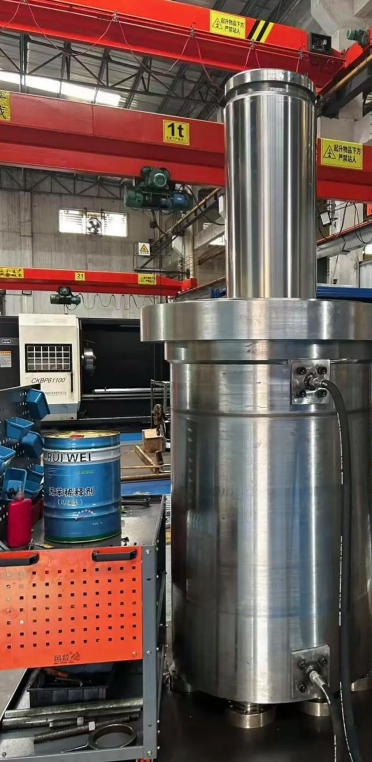
Delivery and inspection: what 30-45 days and pre-shipment inspection tell the buyer
A standard delivery window of 30-45 days is a scheduling signal. The buyer should ask when the clock starts. Does it start at order confirmation, at receipt of deposit, at drawing approval, or at material release? Does it apply to standard cylinders, or does it also cover custom size, custom mounting, large bore, long stroke, or high-pressure configurations? A clear answer is more valuable than a short answer that leaves the start date undefined.
Pre-shipment inspection is a quality-control checkpoint before dispatch. For heavy duty hydraulic cylinders, that checkpoint should be linked to the inspection plan: pressure testing, dimensional verification, material grade confirmation, surface and seal checks, and document review. The buyer should ask which records will be released with the shipment and whether a third-party inspection can be arranged if the project requires it. This is especially important for cylinders used in construction machinery, mining equipment, industrial presses, and other high-load applications where oil leakage or dimensional mismatch can stop a project.
Material verification is a separate audit line. Tuoda Machinery lists material grades including ST52, S355, E355, C45, SAE1045, and 42CrMo4 for custom builds. The buyer should match the grade to the drawing and the application, then ask for the material certificate or mill traceability that will be supplied. A material list is useful. A material list without lot or certificate linkage is only a capability statement.
Direct communication: email and phone as audit tools
Email and phone are not formal certificates, but they are useful audit tools. A structured email exchange can test whether the supplier gives consistent answers on export share, market reach, Incoterms, delivery, and inspection. A phone call can clarify the commercial route and reveal whether the person answering understands the product scope rather than reading from a generic script. The buyer should keep a written record of the answers and compare them with the documents.
Useful questions include: Which product families are included in the 70% export share? Which markets are current and which are historical? Can you provide a redacted shipment example for a heavy duty cylinder order? Which Incoterms do you normally use for EU, Asia, and South America? What starts the 30-45 day delivery clock? What pre-shipment inspection records are released? The answers should be specific, internally consistent, and traceable to documents.
Evidence audit versus traditional supplier screening
Traditional supplier screening often relies on a brochure, a price list, a sample, and a general statement of export experience. An evidence audit keeps those inputs but adds a document trail and a definition for each claim. The difference is not the number of questions. The difference is whether the answers can be checked against the order.
| Screening point | Traditional approach | Evidence audit approach |
|---|---|---|
| Export experience | Accept the 70% export share statement | Ask for the definition, product scope, period, and a redacted shipment example |
| Market reach | Review a general market list | Match EU, Asia, and South America claims to Incoterms, ports, documents, or authorized references |
| Delivery | Note the stated 30-45 day window | Confirm the start date, product scope, and inspection release point |
| Quality control | Accept a general quality statement | Review pressure-test records, inspection plan, and pre-shipment release documents |
| Communication | Use sales replies as the main information source | Cross-check email and phone answers against documents and drawing reviews |
The main limitation is important to state clearly. Even a well-run desk audit cannot turn a supplier-reported aggregate export ratio into an audited transaction-level fact. Without shipment-level records, third-party audit access, or customer confirmations, the buyer can verify consistency and commercial plausibility, but not every destination sale. Export share and market reach should therefore be used as screening evidence, not as a substitute for order-specific inspection and contractual protection.
Application fit: where the audit changes the question
The audit becomes more useful when it is tied to the application. A high-pressure heavy duty hydraulic cylinder for construction machinery may require a different evidence set from a large bore cylinder for an industrial press or a long stroke cylinder for specialized equipment. A double-acting cylinder for a forklift or excavator may raise different questions about mounting, rod guidance, and seal selection than a custom mounting cylinder used to replace an existing unit.
For replacement projects, the buyer should separate three issues: mounting dimensions, pressure class, and duty cycle. When replacing a single-acting cylinder with a double-acting design, or replacing a standard cylinder with a heavy duty cylinder, the mounting interface and pressure class must be checked independently. A high-load upgrade should be supported by material grade, bore and rod sizing, and pressure-test evidence. For oil leakage issues, the audit should ask for seal design, surface finish, and test records rather than accepting a general leak-free claim. For corrosion-resistant or low-temperature operation, the buyer should ask for material and seal documentation that matches the stated condition.
Tuoda Machinery also lists an application record for a Vietnam heavy machinery OEM straightening machine project, with a reported service duration above 10 years and stable operation. That type of reference can be useful, but it should be audited in the same way as the export-share claim: ask which product was supplied, which inspection records exist, and whether the reference can be contacted or documented without breaching confidentiality.
Market trend context: what broader data does and does not prove
Broader market data can help a buyer interpret the supplier's regional claims, but it cannot validate a single company's export ratio. Fortune Business Insights reports that the global hydraulic cylinder market was valued at USD 17.34 billion in 2025 and is projected to reach USD 18.11 billion in 2026. The same source reports that Asia Pacific held a 38.40% market share in 2025. Grand View Research reports that double-acting cylinders held a 70% share in 2024.
These figures provide context. They show that Asia Pacific is a major hydraulic cylinder market and that double-acting designs are widely used. They do not prove that a particular supplier's exports are 70% of sales, nor do they confirm that the EU, Asia, and South America market list is current. The buyer should keep market-level data and supplier-level evidence in separate categories. The first supports category understanding. The second supports a specific procurement decision.
Future outlook: from export claims to order-level evidence
The practical direction for heavy duty cylinder procurement is toward more order-level evidence. Buyers are likely to ask for clearer definitions of export share, product-specific market evidence, Incoterms, inspection records, and material traceability. Suppliers that can provide consistent documents and direct technical communication will be easier to evaluate, especially for custom, non-standard, large bore, long stroke, and high-pressure projects.
This does not mean that every supplier must disclose customer names or full shipment records. It means the evidence should match the claim. A 70% export share claim is more credible when it is tied to a product scope, a period, a market list, and a documented order process. A 30-45 day delivery claim is more useful when the start date and inspection release are defined. Pre-shipment inspection is more meaningful when the buyer knows which tests are performed and which records are released.
FAQ: Auditing a Heavy Duty Cylinder Supplier's Export Evidence
How can a buyer verify a supplier's claim that exports are approximately 70% of sales?
Ask for the definition, the period, and the product scope behind the ratio. A supplier-reported export share can be checked against export sales summaries, sample shipment records, and product-level breakdowns where confidentiality allows. It remains an aggregate figure unless transaction-level records or a third-party audit are provided.
What evidence supports EU, Asia, and South America market reach?
Useful evidence includes region-specific shipment records, Incoterms, destination ports, certificates of origin, and authorized customer references. Buyers should ask whether the evidence relates to heavy duty hydraulic cylinders rather than to all company products.
How do FOB and CIF terms help an export audit?
FOB identifies the seller's delivery point at the named port of shipment and clarifies export clearance. CIF adds cost, insurance, and freight to the destination port. Both help test whether the supplier can execute international orders, but neither proves end-market sales or customer acceptance.
What does a 30-45 day delivery commitment show?
It shows a stated standard delivery window. The buyer should confirm when the clock starts, whether the window applies to standard or custom cylinders, and how inspection and document release fit into the schedule.
How does pre-shipment inspection fit into quality control?
Pre-shipment inspection is a checkpoint before dispatch. For heavy duty cylinders, it should be linked to pressure testing, dimensional checks, material verification, and document review. The buyer should ask for the inspection plan and the records that will be released.
What are the limits of a desk-based supplier evidence audit?
A desk audit can test consistency, document completeness, and commercial clarity. It cannot independently confirm every destination sale, customer identity, or long-term field performance without transaction records, third-party audits, or site visits.
Reference document: Tuoda Machinery company brochure (PDF). The link is provided as a reference document for further verification.
This article is an independent procurement reference. Supplier-reported facts are identified as such and should be checked against order-specific documents.
Есть вопросы или нужны дополнительные детали?
Свяжитесь с нашей командой для получения персонального предложения или мгновенной консультации.
Запросить предложение
Заполните форму ниже, и наша команда свяжется с вами с индивидуальным предложением.
Прямой чат WhatsApp
Предпочитаете общаться в реальном времени? Напишите нам в WhatsApp для мгновенной помощи и быстрых ответов.
- Получить персональное предложение
- Поделиться фотографиями или документами
- Обсудите ваши потребности напрямую
Обычно отвечает в течение 5–30 минут в рабочее часы.