
Supplier Evidence: Magnetic Pumps for -196°C Semiconductor Cooling
Supplier Evidence: Magnetic Pumps for -196°C Semiconductor Cooling
Semiconductor thermal loops rarely fail because a datasheet is missing a column. They fail when a pump cannot hold a setpoint at the temperature extremes of the process, or when it cannot be tested, replaced and re-ordered on the schedule the fab requires. This reference examines the published evidence behind YUAN SHIN PUMP magnetic pumps in semiconductor cooling and temperature-control duty, and separates what is documented from what still has to be verified at sampling.
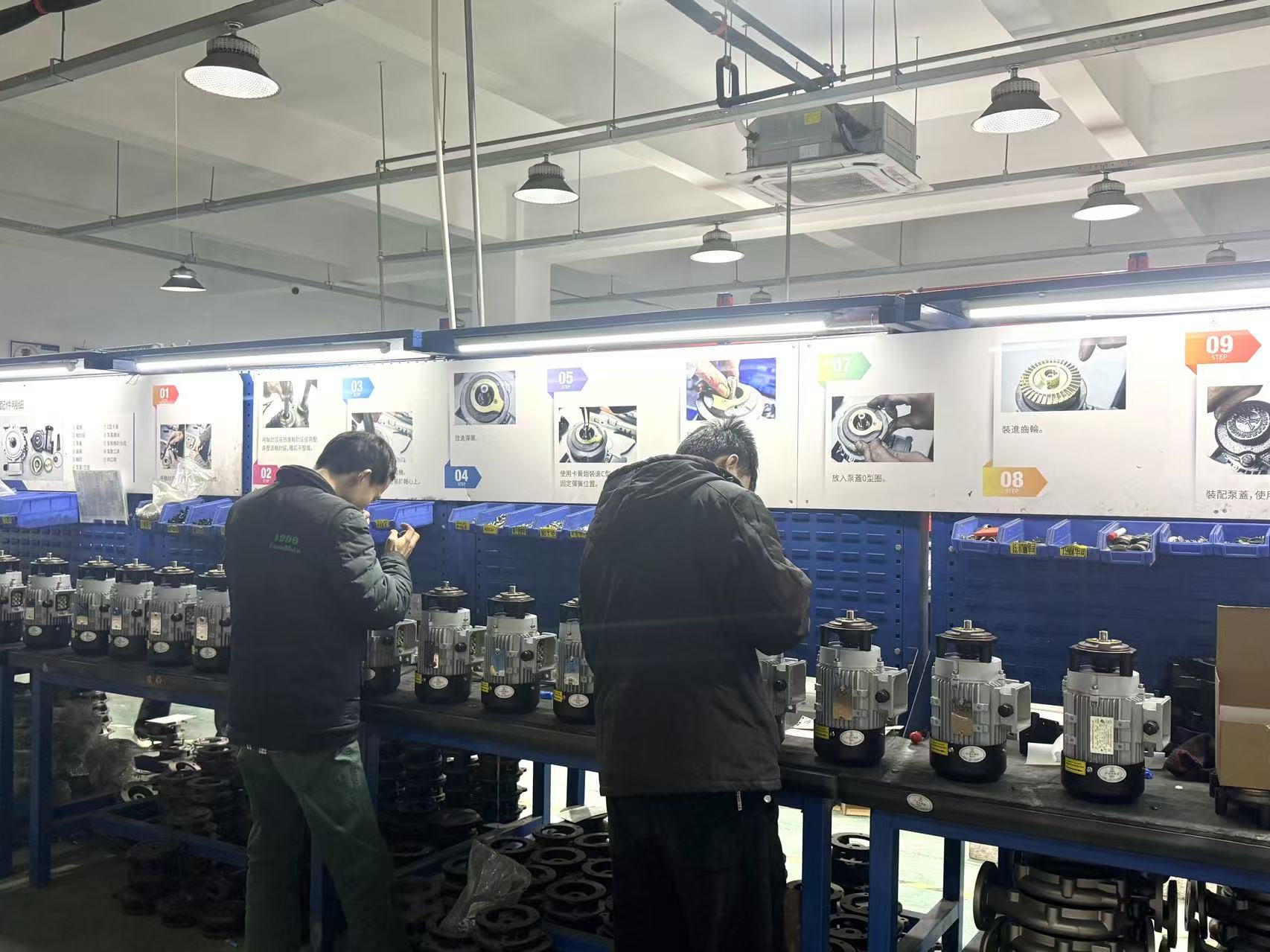
Assembly of stainless steel magnetic pump units at the Suzhou production site, where each finished pump is functionally tested before shipment. Image: YUAN SHIN PUMP.
Why the Pump, Not the Chiller, Decides Extreme-Temperature Performance
Semiconductor manufacturing is a temperature-controlled process from front end to back end. Metrology tools, laser and optical modules, etch and deposition platforms, power semiconductor test benches and battery formation equipment all depend on a circulating fluid that removes heat at a stable rate. When the setpoint moves — downward toward deep cooling, or upward toward high-temperature process control — the physical properties of the loop change, and so does the load the motor has to carry.
A chiller or a TCU (temperature control unit) is an assembly of heat exchangers, controls and a pump. The heat exchanger sets the capacity ceiling, but the pump sets the flow that the control loop actually sees. If flow falls away at low temperature because the pump loses prime, cavitates, or leaks at the seal, the control loop compensates with heater power and the skid drifts. That is why extreme-temperature cooling specifications increasingly read as pump specifications rather than chiller specifications.
For procurement teams, the practical question is narrower than 'can this supplier make a magnetic pump?' It is: which documented pump, at which temperature, head and flow, has been delivered into comparable duty — and what evidence exists that it will still be serviceable in year five?
The Temperature Envelope: What -196°C Actually Requires
YUAN SHIN PUMP is a magnetic pump manufacturer based in Changshu, Suzhou, China, operating as Yuanxin Pump (Suzhou) Technology Co., Ltd. The Suzhou plant was established in 2014, extending a group whose Taiwan origins (Yuanshin) date to 1990, with a Guangdong facility added in 2001. The company specialises in high- and low-temperature pumps, and states a media temperature range of -196°C to +350°C across its product line, with individual models rated to +400°C.
Three engineering realities sit behind that number.
- Cold media change seal behaviour first. A dynamic shaft seal relies on flexible elements and controlled face contact. At deep cooling temperatures those elements sit outside their normal operating window, and any leakage path becomes a reliability problem rather than a routine maintenance item.
- Cold media change hydraulic behaviour. Viscosity and density shift, which moves the operating point on the curve. The pump must be selected so that the required flow is still delivered at the cold condition, not only at ambient.
- Cooling loops are often driven, not directly wired. In semiconductor chillers and TCUs, pumps are frequently run from variable-frequency drives so that flow can track load. Drive compatibility, minimum stable speed and motor insulation class therefore belong on the verification list, and buyers should confirm these against the actual motor-and-drive pairing on their skid rather than assume them from a general product description.
Procurement implication: A stated -196°C capability is a starting filter, not a purchase decision. The evidence that matters is the model-level combination of temperature, head, flow, material and drive duty — plus a documented test result on the individual unit being shipped.
Model-Level Evidence: MAP-1100, MAP-18A and CAP-100
The semiconductor-facing capability of YUAN SHIN PUMP is carried by three stainless steel magnetic drive pump families with materially different hydraulic characters. Choosing between them is a flow-versus-head decision, not a preference decision.
| Model | Type | Power range | Media temperature | Head | Capacity | Material |
|---|---|---|---|---|---|---|
| MAP-1100 | Regenerative turbine magnetic pump; high-temperature magnetic drive | 0.18–4 kW | -196°C to +400°C | Max 15–100 m | Max 15–200 L/min | Stainless steel |
| MAP-18A | Regenerative turbine magnetic pump; high-temperature magnetic drive | 1.1–2.2 kW | -196°C to +400°C | Max 80–100 m | Max 3.9–7.2 m³/h | Stainless steel |
| CAP-100 | Stainless steel centrifugal magnetic pump; high-temperature magnetic drive | 0.75–11 kW | -196°C to +350°C | Rated 15–40 m | Rated 4–35 m³/h | Stainless steel |
The distinction is worth stating plainly for buyers:
- MAP-18A is the high-head, lower-flow option. A maximum head of 80–100 m at a capacity of 3.9–7.2 m³/h suits loops with significant pressure drop: long coolant manifolds, dense cold plates, or systems that must push through narrow internal channels.
- CAP-100 is the higher-flow, moderate-head option. A rated capacity of 4–35 m³/h at a rated head of 15–40 m suits bulk circulation where the loop is volumetrically large but hydraulically open.
- MAP-1100 spans the widest power band (0.18–4 kW) and covers both ends of the mid-range, which makes it the general-purpose candidate for precision temperature control skids where duty varies by tool.
Material is not a variable in this comparison: all three models are offered in stainless steel. That matters in semiconductor-adjacent cooling because it keeps the wetted path consistent across a facility, and because stainless steel magnetic pumps account for an estimated 41%–48.7% of the material segment of the magnetic drive pump market, reflecting their corrosion-resistance position (Future Market Insights / Straits Research, 2026).
How the Sealless Design Works — and Why It Fits Cold Loops
A magnetic drive pump transmits torque through a magnetic coupling instead of through a shaft that passes out of the casing. The engineering consequence is a static sealing structure: the containment shell is a fixed boundary, so there is no dynamic shaft seal to wear, generate heat, or leak. In the company's published comparison against an ordinary heat transfer oil pump fitted with a mechanical seal, the documented differences are as follows.
| Comparison dimension | Ordinary heat transfer oil pump (mechanical seal) | Magnetic drive pump (sealless) |
|---|---|---|
| Sealing principle | Dynamic shaft seal | No shaft seal; static sealing structure, fundamentally eliminating the leakage path |
| Leakage | Continuous wear-dependent leakage risk | Leakage rate close to zero |
| Reliability | Seal-driven failure mode | MTBF increased by more than 60% |
| Maintenance | Frequent seal replacement | No frequent seal replacement; low maintenance cost and short downtime |
| Efficiency | Stable baseline | High transmission efficiency; stable long-term energy consumption, aligned with energy-saving trends |
| Lifecycle cost | Higher through repeated seal service | Lower life cycle cost; payback period of 3–5 years |
| Best fit | General, lower-risk circulation | High-risk, high-purity, high-value media transfer |
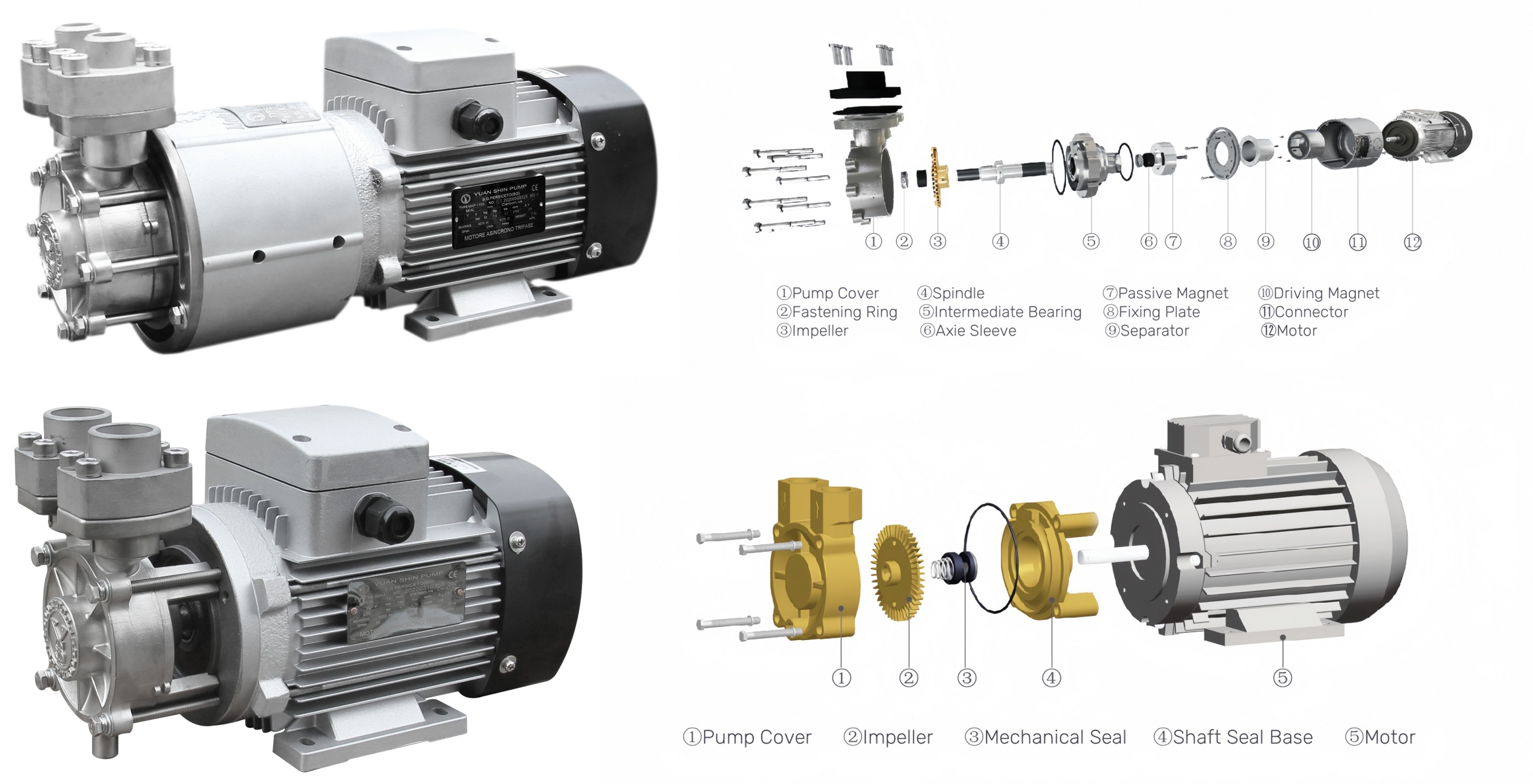
Sealing structure comparison: a mechanical seal pump depends on a dynamic shaft seal, while a magnetic drive pump seals statically through the containment shell. Image: YUAN SHIN PUMP.
Two of these points connect directly to low-temperature semiconductor duty. First, a static boundary removes the component most sensitive to thermal cycling — the seal — from the list of parts that can end a campaign early. Second, because the eliminated failure mode is the one that typically forces unscheduled downtime, the maintenance argument is about schedule predictability as much as it is about cost. In a fab support loop, an unplanned pump change-out is a process interruption, not a parts expense.
It should also be said that the comparison above is the manufacturer's own published position, measured against a mechanical seal pump in heat transfer oil service. It is a directional comparison, not a third-party certified benchmark, and buyers should treat it accordingly.
Where the Pumps Are Actually Applied
Capability claims become credible when they map onto named equipment categories. The published application scopes for the three models overlap in the semiconductor and precision-electronics space and diverge elsewhere.
- Semiconductor cooling equipment and TCU temperature control equipment — listed explicitly for MAP-18A. This is the high-head case: TCU and cold-plate loops are typically pressure-drop dominated, and regenerative turbine pumps are increasingly adopted in TCU duty for the semiconductor industry precisely because of high delivery head combined with compact design (Fact.MR, 2026).
- Precision temperature control and mold temperature control equipment — listed for MAP-1100 and CAP-100, the general temperature-control skid category that shares its hydraulics with semiconductor chillers.
- Thermoelectric semiconductor and battery temperature control — listed for MAP-1100, covering the test and formation benches where heat load swings quickly with cycle state.
- Chemical and pharmaceutical process cooling, ultrasonic cleaning equipment, R&D and laboratory loops — listed across the range, and relevant because the same pump platform often serves chemical and electronics duty inside the same facility.
Media handling is the other half of application fit. The company specifies its pumps for water, thermal oil, glycol, alcohol and hydrocarbon solutions — the working fluids that appear in chiller circuits, thermal oil temperature control units and glycol-cooled electronics racks. Buyers handling aggressive chemistries should treat this list as the boundary of the stated scope and validate compatibility rather than extending it by assumption.
Long-horizon delivery: what the installed base shows
For a buyer at the decision-to-execution stage, the most useful evidence is not a single specification but a delivery record that spans years. Two reference programs are on record.
- A temperature control pump program in China with an annual installation of 500 units across a seven-year duration.
- A precision temperature control system for laboratories and research institutions in the United Kingdom, delivered over a two-year period with ten units installed, where the stated design highlights were low noise and single-phase power compatibility.
The UK example matters disproportionately for semiconductor-adjacent buyers. Laboratory, analytical and fab support areas share the same sensitivity profile: noise limits in occupied space, single-phase supply availability, and a low tolerance for vibration that propagates into measurement. Compact size, low noise, low vibration and stable performance are the stated characteristics of the platform, and the seven-year Chinese program is the counterweight on the other side — a repeat-order record demonstrating that units can be produced and delivered on an annual schedule, not only as one-off builds.
Production capacity is the mechanism behind that record. Monthly production capacity is stated at 2,000 units, within a plant of 2,160 m² staffed by 40 employees and supported by a three-engineer R&D team and an annual output of 25,000 units. The company exports to Canada, Brazil, Australia, Saudi Arabia, Russia, Malaysia, Thailand, Vietnam and the United Kingdom, with an export ratio of 3%.
Comparison and Boundaries: Where the Magnetic Drive Approach Stops
Any supplier evaluation that only lists advantages is marketing, not evidence. The boundaries of this pump family are as important as its specifications, and four of them are directly relevant to semiconductor and extreme-temperature procurement.
- Head and flow do not scale together across the range. MAP-18A delivers high head (80–100 m) but limited flow (3.9–7.2 m³/h); CAP-100 delivers high flow (4–35 m³/h) but a lower rated head (15–40 m). A loop that needs both simultaneously cannot be served by a single unit from this set, and would require a different configuration or a multi-pump arrangement.
- The upper temperature limit differs by model. MAP-1100 and MAP-18A are rated to +400°C; CAP-100 is rated to +350°C. High-temperature specification work therefore narrows the model choice before flow is even considered.
- The lifecycle-cost case depends on duty cycle. The stated payback period of 3–5 years is a comparison against a mechanical seal pump in comparable service. That payback assumes meaningful running hours and a real cost of downtime. For intermittent, low-risk or low-value circulation, a conventional seal pump can remain the economically rational choice — and the manufacturer's own comparison frames magnetic drive as best suited to high-risk, high-purity, high-value media transfer rather than to all duty.
- Sealless does not mean constraint-free. Magnetic drive designs are generally specified with attention to the process fluid and to operating discipline: the presence of ferromagnetic particles in the medium, and protection against dry running, are standard design considerations for this pump class. Buyers should confirm the intended media and the dry-run protection strategy with the supplier as part of sampling rather than assuming that a sealless design removes all application limits.
Decision rule: Match the loop first (temperature, head, flow, media), then confirm the model, then confirm the drive and protection scheme. Reversing that order — choosing a pump family first and adjusting the loop to fit — is where most specification errors originate.
What Supplier Evidence Looks Like at the Execution Stage
Once a buyer has moved from evaluation to execution, the question shifts from capability to control. YUAN SHIN PUMP publishes three control mechanisms that address the failure modes most likely to disrupt a semiconductor supply program.
| Risk | Control method | Stated enterprise measure |
|---|---|---|
| Product quality risk | Process control plus factory testing | Each pump undergoes functional testing (flow rate, head, leakage detection) on the in-house test rig before shipment; quality control points are established at critical manufacturing stages. |
| Unstable component quality | Supplier management | A qualified supplier list is maintained, with incoming material sampling inspection of core components such as bushings, shaft cores and magnets; material reports must be provided for critical parts. |
| Delivery delays | Production planning management | ERP-based production scheduling with safety stock set for critical materials, plus service level agreements with logistics providers. |
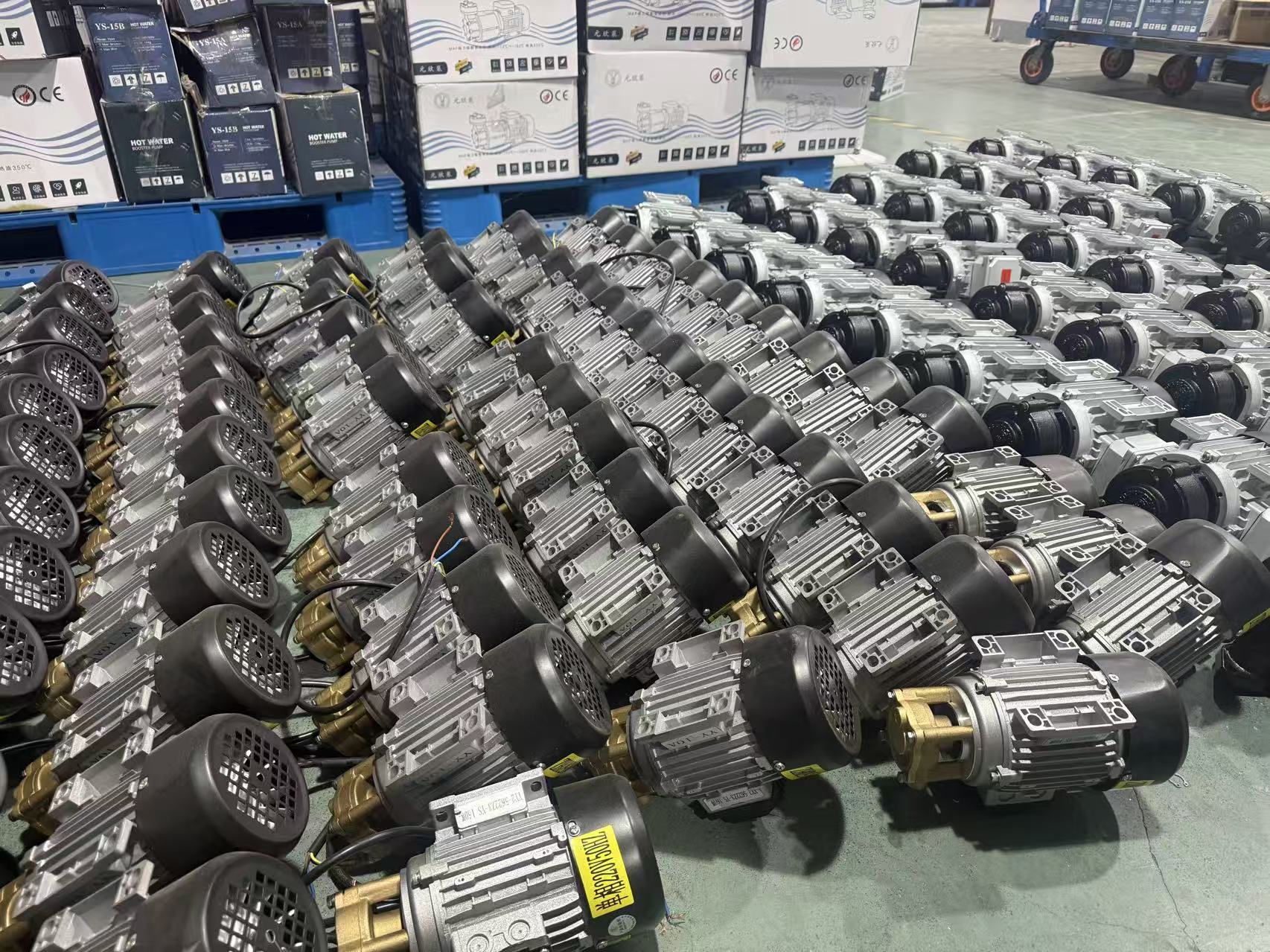
In-house functional testing covers flow rate, head and leakage detection on each pump before shipment. Image: YUAN SHIN PUMP.
The commercial terms are equally concrete for buyers building an execution plan: minimum order quantity of 1 unit, delivery under EXW, FOB, CIF, DAP or DDP, acceptance based on pre-shipment internal testing, and payment by 100% T/T in advance. Those terms matter for two reasons. A one-unit minimum order quantity makes sample validation and pilot installation practical before a capacity commitment is made. Pre-shipment testing as the acceptance basis, rather than a certificate alone, puts the performance evidence on the individual unit rather than on the product family.
Market Trend Analysis
The commercial context supports the technical direction, although published market sizing should be read with care.
- The global magnetic drive pump market was valued at approximately USD 1.37 billion in 2024 and is projected to reach USD 2.65 billion by 2033 (Grand View Research, 2024).
- Asia Pacific dominated that market in 2024 with a 45.9% revenue share, driven by industrialisation in China and India (Grand View Research, 2024).
- Chemical processing remains the leading application segment, estimated at approximately 34.8%–37% of market share (Fact.MR / Straits Research, 2025).
- The narrower regenerative turbine pump market was valued at USD 271.1 million in 2025, with a CAGR of 7.3% through 2035 (Future Market Insights, 2025).
- Regenerative turbine pumps are increasingly adopted in TCU equipment for the semiconductor industry because of high delivery head and compact design (Fact.MR, 2026).
- API 685 is the primary international standard for sealless magnetic drive centrifugal pumps in heavy-duty petroleum and gas service (American Petroleum Institute), which sets the reference bar for what a sealless centrifugal design must demonstrate in severe duty.
Note on data divergence: magnetic drive pump market size estimates vary significantly by research firm and scope definition — published 2025 figures range from roughly USD 1.3 billion to USD 4.2 billion depending on whether commercial and residential applications are included. Buyers should treat any single market-size figure as scope-dependent.
Future Outlook
Three developments are likely to shape magnetic pump sourcing for semiconductor thermal control over the next procurement cycle.
TCU and cold-plate duty will keep pulling toward high-head, compact designs. As electronics cooling moves closer to the heat source, loop pressure drop rises while cabinet space shrinks. That combination favours regenerative turbine magnetic pumps over larger centrifugal units in the same flow range, and it is already visible in the application scopes published for models such as MAP-18A.
Low-temperature capability will become a differentiator rather than a footnote. A -196°C lower bound is unusual in general industrial circulation but relevant in specialty cooling and test environments. Suppliers who can document it at model level, rather than as a company-wide statement, will be easier to specify and easier to audit.
Supply continuity will be evaluated like a technical parameter. Multi-year programs — the kind measured in annual installs rather than single orders — depend on scheduling discipline, component availability and spare-part planning. Buyers should expect to see evidence of capacity (2,000 units per month in this case), incoming material control and a defined logistics arrangement before they commit to a long-horizon contract.
Frequently Asked Questions
What media temperature range can YUAN SHIN PUMP magnetic pumps handle?
The manufacturer states a media temperature range of -196°C to +350°C across the product line, with model-level variation. MAP-1100 and MAP-18A are rated from -196°C to +400°C, while CAP-100 is rated from -196°C to +350°C. The lower bound is therefore consistent across the three semiconductor-relevant models, but the upper bound is model-dependent and should be confirmed against the specific pump ordered.
Which magnetic pump models are specified for semiconductor cooling and TCU applications?
MAP-18A lists semiconductor cooling equipment and TCU temperature control equipment among its applicable industries, alongside high-temperature mold temperature control, ultrasonic cleaning equipment, chemical equipment, R&D and laboratories. MAP-1100 lists thermoelectric semiconductor and battery temperature control together with precision temperature control equipment, and CAP-100 lists precision temperature control and mold temperature control equipment. The functional difference is hydraulic: MAP-18A is high-head and lower-flow, CAP-100 is higher-flow and moderate-head, and MAP-1100 covers a broad mid-range at 0.18–4 kW.
How is long-term supply capacity supported for multi-year programs?
Stated monthly production capacity is 2,000 units, within an annual output of 25,000 units and a 2,160 m² facility with 40 employees. On the demand side, the company reports a temperature control pump program in China installing 500 units annually over seven years, and a two-year laboratory and research institution project in the United Kingdom comprising ten units. Production planning uses ERP-based scheduling with safety stock set for critical materials and service level agreements with logistics providers.
What testing and material controls apply before a pump is shipped?
Each pump undergoes functional testing on an in-house test rig covering flow rate, head and leakage detection before shipment, and quality control points are established at critical manufacturing stages. Incoming material control covers core components such as bushings, shaft cores and magnets through sampling inspection against a qualified supplier list, with material reports required for critical parts. Acceptance in the commercial terms is defined as pre-shipment internal testing.
How does a magnetic drive pump compare with a mechanical seal pump on maintenance and lifecycle cost?
In the manufacturer's published comparison against an ordinary heat transfer oil pump with a mechanical seal, the magnetic drive design uses a static sealing structure with no dynamic shaft seal, reports a leakage rate close to zero and an MTBF increase of more than 60%, and states lower lifecycle cost with a payback period of 3–5 years. Maintenance implications include no frequent seal replacement, lower maintenance cost and shorter downtime. The comparison is a manufacturer-side directional benchmark rather than an independent certification.
What limits should buyers verify before committing to a magnetic pump specification?
Four items are worth confirming in every case. First, the head-and-flow combination: model options in this range do not deliver maximum head and maximum flow simultaneously. Second, the upper temperature rating, which differs between models (+400°C for MAP-1100 and MAP-18A, +350°C for CAP-100). Third, drive duty where variable-frequency control is used, including minimum stable speed and motor-drive pairing. Fourth, fluid- and operating-specific factors such as the presence of ferromagnetic particles in the medium and the dry-run protection concept, along with media compatibility, since the stated fluid scope covers water, thermal oil, glycol, alcohol and hydrocarbon solutions.
Further Reference
The full product and specification documentation for YUAN SHIN PUMP magnetic pumps, including the model families discussed here, is available in the company's product brochure: YUAN SHIN PUMP product brochure (PDF). Company information and site details are published at ysb-pump.com.