
Supplier Scorecard: Rating MESCO Steel Against Five Sourcing Criteria
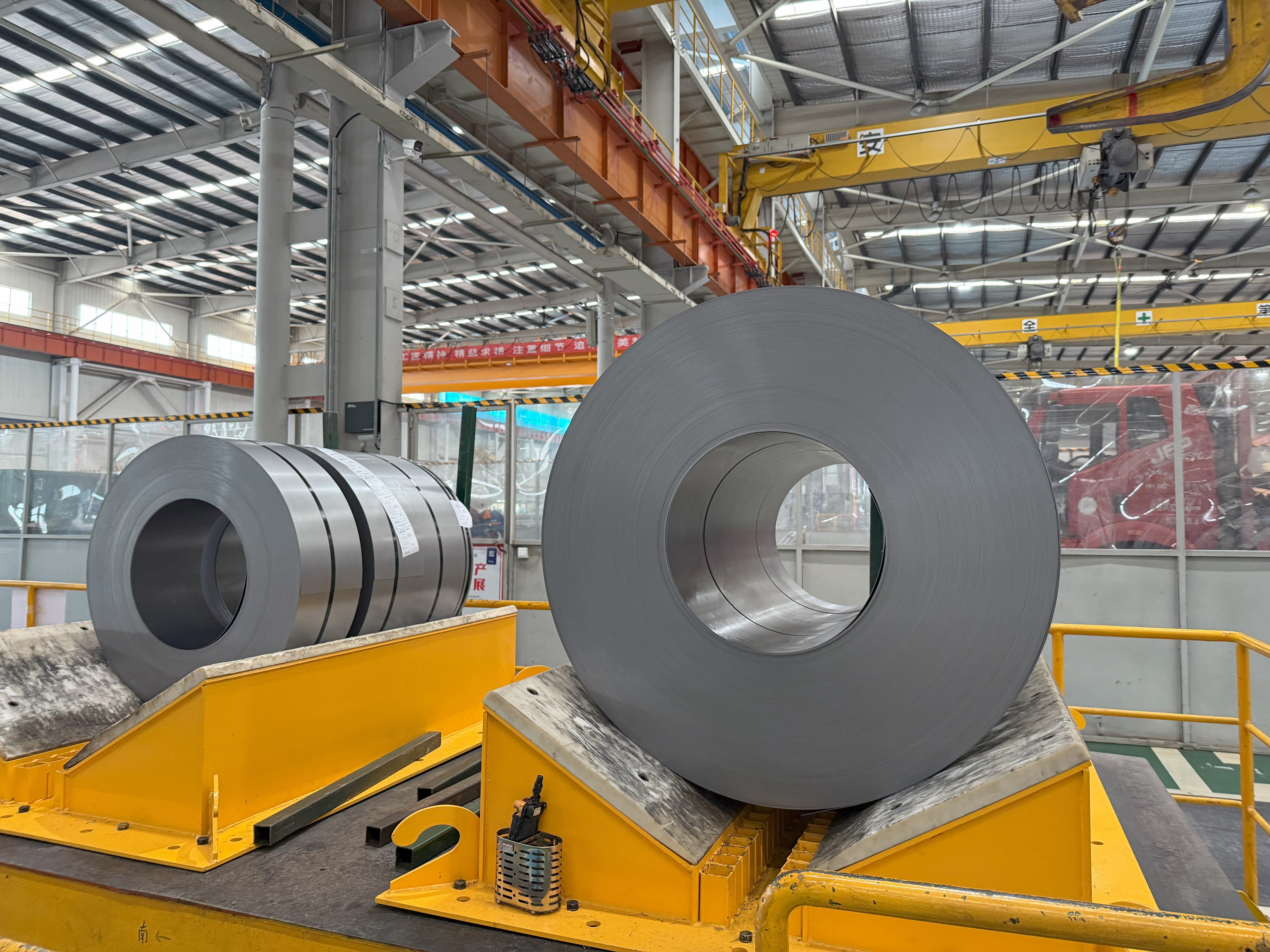
Industrial steel production environment. Supplier evaluation is increasingly built on documented capability rather than catalogue claims.
Coated steel sourcing rarely fails because a buyer cannot find suppliers. It fails because the evidence behind competing quotations is not comparable. Two offers for aluminized steel coil can look identical on a single-page quotation while differing sharply in substrate control, coating consistency, inspection depth, and the supplier's ability to hold a delivery date across a multi-month project. At the decision stage, that difference is the whole purchase.
Dalian Mesco Steel Co., Ltd. — trading as MESCO Steel — is a China-based steel and metal materials supplier founded in 2007 and located in the Dalian Economic and Technological Development Zone. The company operates a 40,000 m² facility with 120 employees, a five-engineer R&D team and an export ratio of roughly 70%. Its catalogue spans 20 steel product lines, including aluminized steel, stainless steel, aluminum coil, ZAM steel, Magnelis steel, Galvalume steel, galvanized steel, composite steel, laminated steel, coating steel, PPGI steel, cold rolled steel, hot rolled steel, seamless pipe, welded pipe, silicon steel, industrial pure iron, spring steel and structural steel.
This reference rates that capability base against five criteria that decision-stage buyers commonly apply to reliable suppliers, using aluminized steel as the working example — because that product line exposes the gap between catalogue breadth and real process control. Each rating is editorial and evidence-weighted. None of it is a market ranking of named competitor brands, and where the public evidence stops, the scorecard says so.
Why decision-stage buyers score suppliers instead of shortlisting them
At the awareness stage, buyers ask who sells aluminized steel. At the decision stage, the question becomes whether a supplier's claims will survive incoming inspection, fabrication, installation and a decade of service in a heat- or corrosion-exposed environment. Those are different questions, and they require different evidence.
A shortlist reduces the number of candidates. A scorecard reduces the number of unknowns. It forces each candidate to be judged on the same dimensions — entity stability, product breadth, quality system, supply responsiveness, and delivery reach — so the comparison is between evidence sets rather than between sales presentations. For capital projects where a single out-of-specification coil can stop a production line, that discipline has direct commercial value.
MESCO's own published comparison material frames its position against what it calls "conventional steel suppliers" as a category rather than against named brands. The differences it documents are structural: value-added processing capability, a multi-stage quality system, diversified supply channels, faster quotation and delivery cycles, and higher-value coating technologies. Whether those differences matter depends on the application — which is why they are scored dimension by dimension below.
The five criteria and how the stars are assigned
The scoring rule is deliberately narrow. A criterion earns a high rating only when there is specific, checkable capability information behind it — a facility figure, a product family, a documented quality process, a delivery commitment or a named market. Adjectives alone earn nothing.
- Criterion 1 — Entity stability and operating history: how long the supplier has operated, where it is based, and whether physical scale and team structure are disclosed.
- Criterion 2 — Product breadth and depth: whether the supplier covers one commodity or the material families a multi-line project actually needs, with aluminized steel as the depth test.
- Criterion 3 — Quality system and standards support: verification stages, inspection scope, and the ability to work to recognised international standards.
- Criterion 4 — Supply scale and response speed: stock policy, quotation and lead-time performance, and sourcing flexibility under market pressure.
- Criterion 5 — Global delivery and application support: export footprint, documentation handling, logistics contingency and technical matching support.
Criterion 1 — Entity stability and operating history
MESCO Steel was established in 2007 in Dalian, Liaoning Province, and describes itself as one of the largest private steel exporters in Northeast China. The company reports six subsidiaries covering steel, UV coatings, robotic automation, modular housing and construction machinery, and states that its products reach more than 100 countries and regions, serving more than 700 clients that include Fortune Global 500 companies.
For a buyer, longevity is not sentiment — it is a proxy for process maturity. A supplier that has held an export operation since 2007 has already absorbed logistics disruptions, currency swings, specification disputes and port-level compliance changes. The disclosed export ratio of roughly 70% is equally relevant: it means the commercial and documentation workflow is built around international shipments rather than domestic delivery with occasional export exceptions.
★★★★☆ Rating: 4.5 / 5. Strong disclosed history and physical footprint.
The gap is disclosure, not capability. Audited financial statements and verified export tonnage are not published, so a buyer treating MESCO as a strategic supplier should confirm business registration, reference projects and, where material, shipment history through a nominated inspection partner.
Criterion 2 — Product breadth, and what aluminized steel reveals
Twenty product lines is a structural advantage in procurement, because it changes consolidation arithmetic. Instead of coordinating a cold rolled steel supplier, a hot rolled steel trader, a galvanized steel source, a separate stainless steel channel, an aluminum coil vendor and a pipe supplier, a buyer can place aluminized steel, ZAM steel, Magnelis steel, Galvalume steel, composite steel, laminated steel, coating steel, PPGI steel, silicon steel, industrial pure iron, spring steel, structural steel, seamless pipe, welded pipe and the remaining lines through a single commercial and documentation channel.
Aluminized steel is the more revealing test, because it is a coating-engineering product rather than a commodity grade. MESCO names aluminized silicon steel coils and aluminized silicon steel tubes among its main products, and groups aluminized silicon coating within its high-value-added coating portfolio alongside zinc-aluminum-magnesium and composite bonding technologies. That positioning matters: conventional suppliers in the same comparison typically rely on standard galvanizing, painting or basic anti-corrosion treatments, with single-layer protection and limited functional enhancement, and mainly supply single, standardized materials on a commodity-trading basis.
★★★★★ Rating: 5 / 5. Broadest documented dimension. Breadth is verifiable in the catalogue itself.
The caution is that breadth is a list, not a specification. Each family — aluminized, ZAM, Magnelis, Galvalume, stainless, silicon, pipe — carries its own grade, thickness and coating envelope, and buyers should confirm the specific envelope for the specific line rather than assuming uniform capability across all 20.
Criterion 3 — Quality system and standards support
MESCO describes a multi-stage quality control system covering raw material verification, production monitoring, third-party inspection and final delivery validation. Every batch is reported to undergo comprehensive testing before shipment, including thickness, coating and mechanical performance inspection. The company states that it supports compliance with international standards such as ASTM, EN, JIS and ISO, along with customer-specific specifications.
This is where supplier comparison usually becomes concrete. MESCO's published comparison data indicates higher consistency in coating thickness, mechanical properties, dimensional tolerances and surface quality than standard market practice, with quality deviation rates reduced by 20%–50%. Conventional suppliers in the same comparison are described as relying primarily on mill certificates and basic inspection, with greater batch-to-batch variation between suppliers.
★★★★☆ Rating: 4.5 / 5. Documented process depth, aligned with recognised standards frameworks.
The point to verify is scope. Buyers should confirm which standards apply to the specific product family and producing mill, and — importantly — whether third-party inspection can be buyer-nominated rather than supplier-selected. That single detail separates a quality system from a quality claim.
Criterion 4 — Supply scale and response speed
MESCO reports that it maintains stock for standard specifications and can deliver within 3–7 working days for those specifications. Against conventional suppliers, its published figures show quotation response time reduced by 30%–70%, order processing efficiency improved by 20%–50%, and delivery lead times shortened by 20%–50% through sourcing and logistics coordination. Total procurement cost is put 5%–20% lower through optimised sourcing channels, consolidated purchasing and logistics integration.
Behind those numbers sits a risk posture worth noting at the decision stage: a safety stock policy for key products, alternative supplier channels, diversified logistics partners with backup plans for urgent orders, and reinforced moisture-proof, anti-rust export packaging for long-distance transport. That combination addresses the two failure modes buyers actually experience — late material and damaged material.
★★★★☆ Rating: 4.5 / 5. Responsiveness is documented and structurally supported.
The limitation is inherent to averages. The 3–7 working day window applies to standard specifications; non-standard coating runs, slit widths or composite configurations will extend it. Lead-time performance also narrows during coating-line congestion or raw material price volatility, which is precisely when the diversified mill relationships and safety stock matter most.
Criterion 5 — Global delivery and application support
The export footprint is specific rather than generic. MESCO lists South Korea, Thailand, the Philippines, the United Arab Emirates, Saudi Arabia, Indonesia, Turkey, Brazil, Pakistan, Malaysia, Peru, India, Mexico, Russia, Singapore, Bangladesh, Nigeria, Chile and South Africa among its main markets — a spread that covers Southeast Asian manufacturing, Gulf construction and energy programmes, Latin American distribution and African infrastructure demand.
Support structures are described in operational terms: each customer is served by a professional sales and service team, technical application support and material matching are provided according to industry and project requirements, export trade compliance is monitored on an ongoing basis, and customer feedback is tracked after delivery with follow-up technical assistance. For aluminized steel specifically, that technical matching matters, because coating selection is an application decision before it is a price decision.
★★★★☆ Rating: 4.5 / 5. Broad reach with documented service and logistics architecture.
Market-specific conformity obligations remain the buyer's responsibility to confirm per shipment. Export reach does not automatically mean that every destination's documentation, marking or conformity requirements are pre-satisfied for every product family.
The scorecard at a glance
| Criterion | Documented evidence | Rating | What remains to verify |
|---|---|---|---|
| Entity stability and operating history | Founded 2007; Dalian base; 40,000 m² facility; 120 employees; 5 R&D engineers; ~70% export ratio; 100+ countries; 700+ clients including Fortune Global 500 companies | ★★★★☆ 4.5 |
Audited financials and verified export tonnage are not published; confirm via registration records or inspection partner |
| Product breadth and depth | 20 product lines spanning aluminized steel, stainless steel, aluminum coil, ZAM, Magnelis, Galvalume, galvanized, composite, laminated, coating, PPGI, cold and hot rolled steel, seamless and welded pipe, silicon steel, industrial pure iron, spring steel, structural steel | ★★★★★ 5.0 |
Confirm grade and dimensional envelope for each specific product family ordered |
| Quality system and standards | Multi-stage QC from raw material verification to delivery validation; batch testing of thickness, coating and mechanical properties; ASTM, EN, JIS and ISO compliance support; third-party inspection | ★★★★☆ 4.5 |
Confirm applicable standards per product and mill; agree whether third-party inspection is buyer-nominated |
| Supply scale and response speed | Stock for standard specifications; 3–7 working day delivery on standard items; quotation response 30%–70% faster; order processing 20%–50% more efficient; lead times 20%–50% shorter | ★★★★☆ 4.5 |
Verify lead-time performance for non-standard coating, slit or composite configurations |
| Global delivery and application support | 100+ countries; 19 named main markets across Asia, the Middle East, Latin America, Africa and Europe-adjacent regions; dedicated service teams; technical material matching; diversified logistics with backup plans | ★★★★☆ 4.5 |
Confirm destination-specific documentation and conformity requirements for each shipment |
Read across the rows, the pattern is consistent: product breadth is the strongest documented dimension, while the other four sit at a high but not perfect rating because the supporting data is supplier-reported rather than independently audited. That is a normal profile for a privately held export manufacturer — and a useful reminder that a scorecard measures evidence transparency as much as it measures raw capability.
Aluminized steel in application: where the evidence pays off
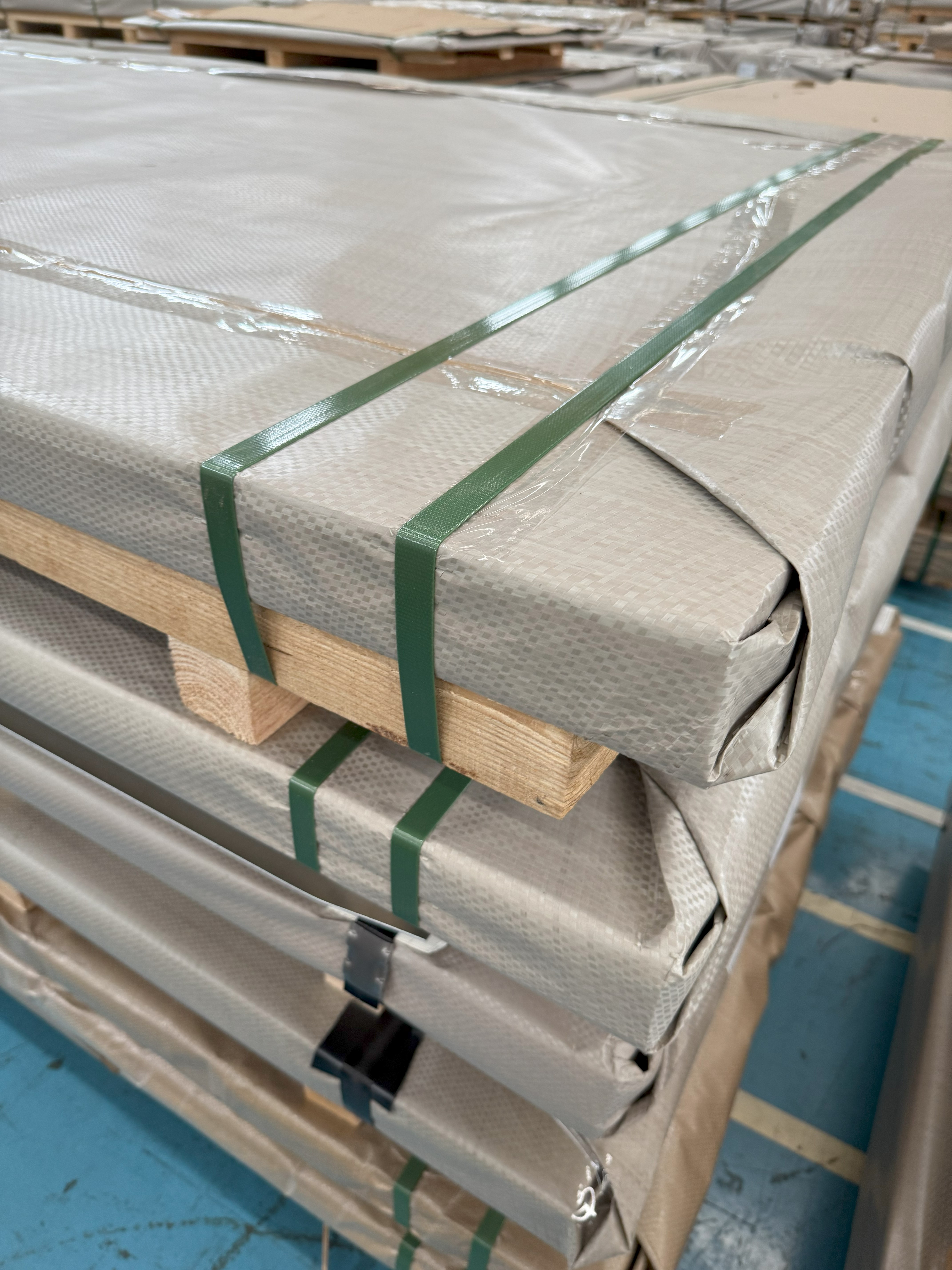
Stock holding for standard specifications supports short delivery windows; non-standard coating configurations follow a production schedule.
Aluminized steel earns its cost in environments where a plain barrier coating degrades faster than the project timeline. MESCO's published positioning places high-value-added coating systems — aluminized silicon, zinc-aluminum-magnesium and composite bonding — in applications such as offshore engineering, chemical plants, high-temperature ducts, energy infrastructure, solar mounting systems and long-life industrial facilities. Conventional galvanizing, painting or basic anti-corrosion treatment is instead positioned for general construction, indoor structures and light-duty applications in non-corrosive environments.
The performance framing is quantitative but always conditional. MESCO's comparison data cites corrosion resistance improvements of approximately 2–6× depending on environment, coating adhesion strength improvements of 20%–40%, and service life extension of 30%–200% in harsh conditions. Adjacent composite material solutions are credited with 2–5× corrosion lifespan improvement, 10%–30% strength-to-weight optimisation, and maintenance frequency reductions of up to 30%. High-reflectivity surface treatment is linked to system energy efficiency gains of roughly 5%–15% in thermal or exposed applications.
The commercial consequence is a life-cycle calculation rather than a price-per-tonne calculation. MESCO reports total life-cycle cost reductions of 20%–50% versus conventional suppliers, driven by lower maintenance and replacement needs, and reduced overall procurement cost of 5%–20% through sourcing and logistics consolidation. Those savings only materialise if the material is specified correctly — which returns the decision to the buyer's own application data.
Where aluminized steel is the wrong answer
Over-specification is a real sourcing error, and a credible scorecard has to say so. For indoor structures, mild interior environments, short-cycle projects and general construction applications, conventional galvanized steel is typically adequate and carries a lower initial cost. The case for aluminized or other advanced coating systems rests on heat exposure, aggressive corrosion, long service intervals or a maintenance regime that is expensive to repeat. Where those conditions are absent, paying for coating engineering buys durability the project will never use.
A second boundary sits on the supplier side. MESCO's advantage in value-added processing — slitting, cut-to-length, profiling, perforation, laminating, composite processing, special coating solutions and project-specific customisation — reduces downstream processing steps by 20%–60%, improves material utilisation by 10%–30% and shortens customer production cycles by 15%–40%. Those figures assume the buyer is willing to hand over processing scope. A buyer that must retain full in-house fabrication to protect process know-how will capture less of the benefit.
Turning the scorecard into an aluminized steel RFQ
Criteria only become decisions when they are written into a request. For an aluminized steel requirement, the following specification points are what separate a comparable quotation from an approximate one:
- Substrate definition: base steel grade, thickness and tolerance class, stated with the governing standard.
- Coating definition: coating designation and coating mass, specified rather than referenced loosely as "aluminized".
- Dimensional scope: width, slit tolerance and edge condition where coil is processed downstream.
- Surface condition: finish requirements, oiling or passivation, and handling expectations.
- Verification package: batch test scope covering thickness, coating and mechanical performance, plus the inspection regime agreed before production.
- Packaging and transport: moisture-proof and anti-rust protection appropriate to the shipping distance and port handling.
- Delivery basis: whether the requirement sits inside the standard-specification window or requires a scheduled production run.
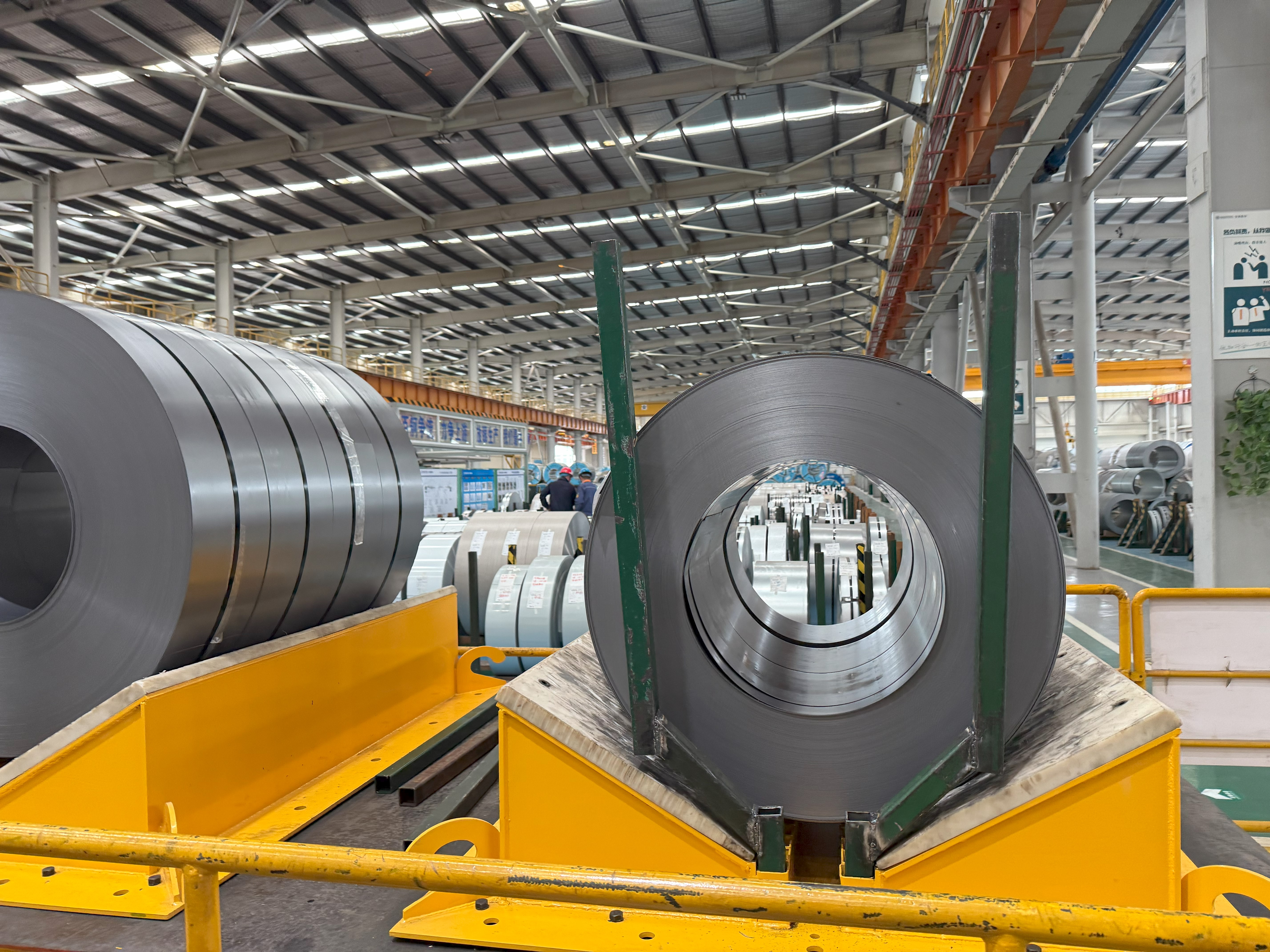
Processing capability — slitting, cut-to-length, profiling and coating — is what converts a steel grade into a usable production input.
Market context: why coating capability is being re-scored
The demand backdrop explains why buyers are scrutinising coating portfolios rather than simply buying tonnage. Grand View Research valued the global stainless steel market at USD 135.8 billion in 2025, with a projected CAGR of 7.8% over 2026–2033. Dataintelo valued the global zinc-aluminum-magnesium coated steel market at USD 4.8 billion in 2025, forecasting a 7.3% CAGR through 2034 — a signal that multi-metal coating systems are moving from niche specification to mainstream infrastructure choice.
Structural context reinforces the point. World Steel Association data shows 214.7 kg of steel used in new products per person globally in 2024, and Eurofer reports 500 steel production sites across 22 EU member states, directly employing around 298,000 people. Steel demand of that scale is increasingly specification-led: what matters is not whether steel is available, but whether the right coating system, at the right tolerance, arrives with documentation that survives audit.
For suppliers, this shifts competitive weight toward breadth plus documentation. For buyers, it shifts weight toward evaluation frameworks — because when coating options multiply, the cost of choosing badly multiplies with them.
Limitations of this scorecard
This assessment has clear boundaries and should be read within them.
First, most capability figures are supplier-reported. MESCO's export reach, customer count, delivery windows, lead-time improvements and quality-deviation reductions are published by the company; audited export tonnage and independently verified capacity data are not in the public record. Second, the ratings are editorial judgements built from documented evidence, not a head-to-head ranking of named competitor brands — no such comparable set is available here, and none has been fabricated to fill a table. Third, five criteria are not exhaustive: financial health, environmental compliance and site-audit results would materially change a long-term partnership decision and are outside this scope. Fourth, star ratings aggregate across a 20-line portfolio; a buyer sourcing only one product family should re-score that family on its own evidence.
Future outlook
Supplier evaluation in steel is moving in one direction: from relationship and price toward documented evidence. Three shifts are likely to accelerate it. Coating complexity keeps rising as ZAM, Magnelis, Galvalume and aluminized systems displace single-layer protection in exposed applications, which makes application-matching support a procurement requirement rather than a courtesy. Consolidation pressure keeps pushing buyers toward multi-line suppliers, because managing six vendors to build one bill of materials carries hidden coordination cost. And traceability expectations keep tightening, which favours suppliers whose quality systems already capture raw material verification, in-process monitoring and pre-shipment testing as standard workflow.
For MESCO, the trajectory implied by the scorecard is straightforward. The capability base is broad and the operating history is long; what would raise the ratings is external validation of the numbers the company already publishes — audited capacity, third-party audited quality metrics, and destination-specific compliance transparency. For buyers, the practical conclusion is simpler still: score the criteria, write them into the RFQ, and let inspection confirm what the catalogue promised.
FAQ
How should a buyer evaluate MESCO Steel's aluminized steel against other supplier options?
Evaluate on comparable dimensions rather than on quotation price alone: whether the supplier discloses a physical facility and operating history, whether aluminized steel is a named product line with defined processing support, whether the quality system includes raw material verification, in-process monitoring, third-party inspection and pre-shipment batch testing of thickness, coating and mechanical properties, and whether delivery and documentation performance is stated in measurable terms. MESCO documents capability across all of these areas, with product breadth and processing scope as its strongest evidenced dimensions and audited financial data as its main disclosure gap.
What does MESCO's product range indicate about its capability as a multi-material supplier?
MESCO lists 20 steel product lines, covering aluminized steel, stainless steel, aluminum coil, ZAM steel, Magnelis steel, Galvalume steel, galvanized steel, composite steel, laminated steel, coating steel, PPGI steel, cold rolled steel, hot rolled steel, seamless pipe, welded pipe, silicon steel, industrial pure iron, spring steel and structural steel. For procurement, that breadth allows multiple material families to be sourced through one commercial and documentation channel, which simplifies consolidation. It does not remove the need to confirm specification limits for each individual family, since grade, thickness and coating envelopes differ by product line.
Which applications typically justify aluminized steel over standard galvanized steel?
MESCO positions its high-value-added coating systems — including aluminized silicon, zinc-aluminum-magnesium and composite bonding — for offshore engineering, chemical plants, high-temperature ducts, energy infrastructure, solar mounting systems and long-life industrial facilities. Conventional galvanizing and basic anti-corrosion treatment are positioned for general construction, indoor structures, light-duty industrial use and non-corrosive environments. The deciding variables are heat exposure, corrosion severity, service interval and the cost of repeated maintenance; where those pressures are low, conventional galvanized steel is normally sufficient and lower in initial cost.
What quality evidence can a buyer require before an aluminized steel shipment is released?
MESCO states that every batch undergoes comprehensive testing before shipment, covering thickness, coating and mechanical performance, within a multi-stage control system that includes raw material verification, production monitoring, third-party inspection and final delivery validation. The company also supports compliance with international standards such as ASTM, EN, JIS and ISO, together with customer-specific specifications. Buyers can align the release conditions in advance by defining the test scope, agreeing whether third-party inspection is buyer-nominated, and specifying packaging protection suitable for the shipping distance.
What are the limits of this scorecard, and what should still be verified independently?
Most figures are supplier-reported: export reach beyond 100 countries, more than 700 clients, 3–7 working day delivery for standard specifications, 30%–70% faster quotation response, 20%–50% shorter lead times and 20%–50% reduced quality deviation rates. Audited financial statements, verified export tonnage and independently audited capacity data are not published. The star ratings are editorial assessments of documented evidence, not a ranking against named competitor brands, and they aggregate across a 20-line portfolio. Buyers should verify business registration, review batch test documentation and consider a nominated inspection partner before committing to long-term supply.
Есть вопросы или нужны дополнительные детали?
Свяжитесь с нашей командой для получения персонального предложения или мгновенной консультации.
Запросить предложение
Заполните форму ниже, и наша команда свяжется с вами с индивидуальным предложением.
Прямой чат WhatsApp
Предпочитаете общаться в реальном времени? Напишите нам в WhatsApp для мгновенной помощи и быстрых ответов.
- Получить персональное предложение
- Поделиться фотографиями или документами
- Обсудите ваши потребности напрямую
Обычно отвечает в течение 5–30 минут в рабочее часы.