
Supplier Viability Check: Tuoda's Multi-Year Readiness
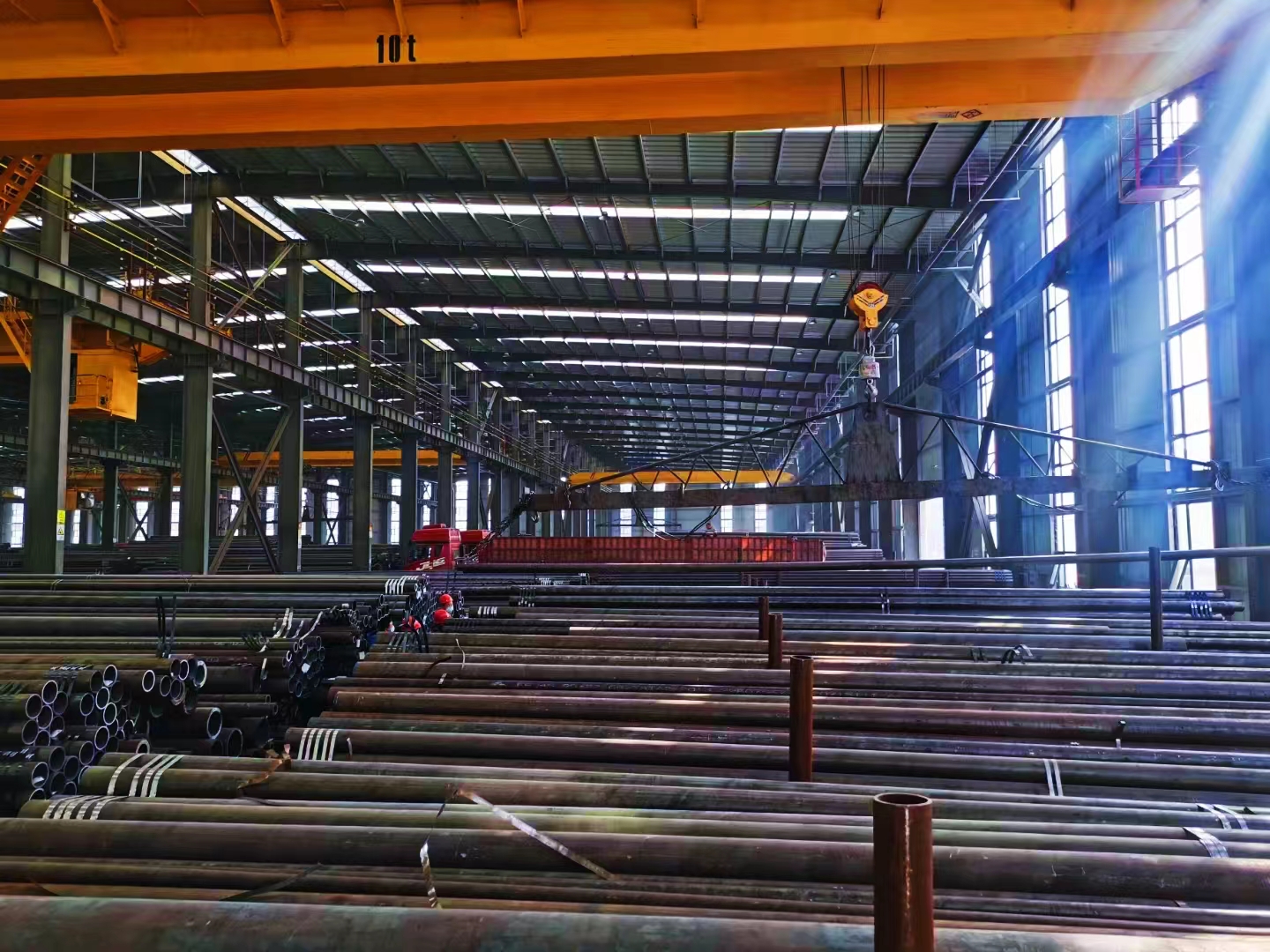
Seamless tube storage at Shandong Tuoda Machinery Equipment Manufacturing Co., Ltd., Liaocheng, Shandong.
A heavy duty hydraulic cylinder that performs well in its first twelve months tells a procurement team almost nothing about years two through five. Long-horizon failures in this category are rarely product failures. They are continuity failures — a supplier that reprioritises its production schedule, loses a regional market, or runs out of engineering bandwidth long before the cylinders themselves wear out.
That lag between purchase and consequence is why more buyers now evaluate heavy duty hydraulic cylinder quotations through a supplier viability check: not "can this factory build the cylinder," but "will this factory still be building it, to the same drawing, in year four."
This reference applies that lens to one manufacturer — Shandong Tuoda Machinery Equipment Manufacturing Co., Ltd., a hydraulic cylinder and seamless steel tube manufacturer based in Liaocheng, Shandong, China. The assessment draws on the company's disclosed operating parameters and on independent industry and standards data. No marketing claims are used as evidence.
Why Continuity, Not Capability, Is the Real Long-Term Risk
Heavy duty cylinders are durable goods engineered for cyclical loads. In construction machinery, mining equipment and industrial presses, a cylinder set is typically specified for a service life measured in years, and buyers rarely re-tender every quarter. That turns a purchasing decision into a relationship decision with a multi-year tail.
The failure modes that actually hurt are commercial and organisational:
- Capacity reallocation. A supplier wins a larger account and quietly moves your production slot behind it. Lead times drift; your maintenance schedule absorbs the shock.
- Market concentration shock. A supplier earning most of its revenue from one region loses that region to policy, tariffs or a demand slump, and its ability to hold a fixed engineering team erodes with it.
- Engineering starvation. The original drawings were built by an engineer who has since left, and a fixed team that was already fully allocated cannot absorb the drawing revision you need.
- Commitment mismatch. A buyer locked into high minimum order quantities cannot walk away cheaply when any of the above happens.
All four are structural. None of them show up in a cylinder datasheet, and none are visible in a single-container trial order. They only become visible when a buyer deliberately audits for them before signing.
What a Supplier Viability Check Actually Examines
The audit is not a financial rating and does not require access to private accounts. It works from five publicly stateable parameters, each of which maps to a specific long-term risk.
| Audit dimension | The question the buyer is really asking | What a stable answer looks like |
|---|---|---|
| Entity longevity | Has this company existed long enough to have survived a full demand cycle in its category? | A stated founding year and a continuous operating history covering current customer contract terms |
| Capacity repeatability | Is the output a real, repeatable rate, or a one-off peak? | Both a nominal annual output and a statement of how monthly capacity is set |
| Engineering depth | Can configuration changes be absorbed without stalling? | A named, dedicated engineering headcount rather than ad-hoc outsourcing |
| Export concentration | Does the supplier depend on one market for its survival? | Sales distributed across several regions with a disclosed export share |
| Commitment flexibility | How much money do I have to risk before I know the supplier works? | Low minimum order quantity, published delivery terms, defined acceptance testing |
Each dimension is answerable from a supplier's own disclosures, which is what makes the audit practical. A supplier that can state all five is quantifiably easier to plan around than one that can only state a product catalogue.
The Entity Under Review: Shandong Tuoda Machinery
Shandong Tuoda Machinery Equipment Manufacturing Co., Ltd. is a manufacturer located in Liaocheng, Shandong, producing high-pressure and ultra-high-pressure hydraulic cylinders alongside deep-processed seamless steel tube, deep-hole drilling and boring machines, and paper machine roll products. The company was established in 2020 and operates from a 30,000 m² facility with approximately 150 employees.
On the five audit dimensions, the disclosed parameters are as follows:
| Parameter | Disclosed value | Long-term procurement relevance |
|---|---|---|
| Year established | 2020 | Short history relative to legacy Western and Japanese cylinder makers; the audit must therefore lean harder on structural indicators |
| Facility area | 30,000 m² | Supports in-house tube processing and cylinder machining rather than pure assembly |
| Employees | Approximately 150 | Consistent with a mid-sized specialist rather than a trading intermediary |
| Annual output | Approximately 1,200 units | A rate a scheduled annual contract can be planned against |
| R&D engineers | 3 | Defines how much parallel custom engineering is realistic |
| Export share | 70% of sales | Revenue diversified beyond the domestic Chinese market |
| Main export markets | EU / Asia / South Africa | Three-region spread reduces single-market dependency |
The combination is unusual for this tier. Most mid-sized cylinder workshops publish a product list and a contact form. Publishing a headcount, a facility area, an annual output figure, an engineering headcount and an export ratio creates something a buyer can actually audit against — and something that can be checked later if performance diverges from the claim.
Capacity Repeatability: What ~1,200 Units a Year Really Means
Tuoda Machinery's nominal annual output is approximately 1,200 units. Arithmetically, that is a nominal rate of about 100 cylinders per month. The company also states that monthly production capacity is customizable and flexible based on order requirements.
Those two statements need to be read together, because they describe different things. The 1,200-unit figure is a ceiling on steady-state throughput. The flexibility statement describes how that ceiling is allocated — by order, not by a fixed monthly quota.
For a buyer planning a multi-year heavy duty hydraulic cylinder programme, this has a concrete implication. Order planning should be expressed as a range with a committed floor and a capped ceiling, matched to the supplier's stated monthly flexibility. A contract structured that way uses the flexibility as an advantage; a contract that assumes infinite elasticity converts the same flexibility into a delivery risk.
The same logic applies to the relationship between capacity and product mix. At 1,200 units a year, a plant can run a mixed slate of large-bore, long-stroke and standard configurations — but the mix has to be planned, because wide-bore and long-stroke machining consume disproportionate machine time per unit.
Engineering Depth: Three R&D Engineers Against a 1,200-Unit Output
Three dedicated R&D engineers supporting roughly 1,200 units a year works out to approximately 400 units per engineer annually. That ratio is the single most useful indicator in this audit, because it converts a headcount number into an engineering throughput limit.
What that bandwidth can support, in practice, is configuration-type customisation: bore, stroke, pressure rating, load capacity, mounting arrangement, sizing, system-level fit and identification marking. These are variations on a defined engineering envelope, and they are where most heavy duty hydraulic cylinder projects actually live — including custom size, non-standard and custom mounting configurations, and upgrades that replace standard cylinders with higher-load units.
Material coverage supports that reading. Tuoda Machinery works with grades including ST52, S355 and E355 structural steels, and C45, SAE1045 and 42CrMo4 medium-carbon and alloy steels. That range spans structural tube applications and higher-strength rod and component duties, which is the selection range a custom cylinder build needs to cover different load and wear regimes.
The plant's own upstream capabilities reinforce this. Tuoda produces high-pressure hydraulic cylinders rated 31.5–63 MPa for equipment such as hydraulic excavators, crushers, four-column hydraulic presses, marine steering gear and anchor winches, and ultra-high-pressure cylinders above 63 MPa for specialised duty including high-pressure water jet cutting machines and material pressure-testing apparatus. In-house deep processing of seamless steel tube, honing and heat treatment mean the engineering function sits closer to the material than it would at an assembly-only operation.
On the risk side, Tuoda has described how it controls insufficient output power in service: auxiliary equipment, pressure testing and strict quality inspection, with multiple quality inspections performed before shipment, repeated quotation confirmation and frequent customer communication during order execution.
Export Structure: Reading 70% Overseas Sales as a Resilience Signal
Tuoda Machinery reports that exports account for 70% of sales, with main markets across the EU, Asia and South Africa. Roughly seven in ten units leave China, and they leave for three distinct regions rather than one.
For a buyer signing a three-to-five-year agreement, this matters in a way that a product specification cannot capture. A supplier whose revenue is concentrated in a single market is exposed to that market's policy shifts, currency moves and demand cycles. A supplier spread across the EU, Asia and South Africa has revenue streams that do not move in phase, which smooths the operating base that pays for engineering and machining capacity.
The signal is directional, not absolute. A 70% export share also means 30% of revenue is domestic, and it does not by itself prove shipment consistency into any particular destination. The practical step for a buyer is to request shipment records or reference documentation for their own destination market, and to treat the three-region spread as a starting hypothesis to verify rather than a conclusion.
Commitment Flexibility: MOQ 1 Unit and Published Delivery Terms
The commercial terms Tuoda Machinery publishes are unusually permissive for this product category:
| Commercial term | Published position |
|---|---|
| Minimum order quantity | 1 unit |
| Delivery terms | FOB / CIF / CFR / EXW / DDP |
| Acceptance criteria | Pre-shipment test |
| Payment terms | TT or LC |
A one-unit minimum order quantity is the most consequential item here, because it changes the risk sequence of a long-term programme. Instead of committing to a volume before the supplier has demonstrated anything, a buyer can validate a single heavy duty cylinder — a custom size, a non-standard mounting pattern, a high-load upgrade, or a double-acting replacement for a single-acting unit — and only then scale into an annual contract.
The five published delivery terms cover the range most industrial importers need, from Ex Works through to Delivered Duty Paid, which means the Incoterm decision can be made on the buyer's own logistics model rather than being dictated by the supplier's preferred term. Pre-shipment test as the stated acceptance criterion is also worth noting: it places the verification step before the container leaves, which is the point at which remediation is still inexpensive.
TT or LC payment terms give a first-time buyer the option of the documentary-credit route, where payment releases against documents rather than against a promise. For a programme of several years, that is a material difference in exposure during the early, unproven phase.
Where These Cylinders Sit in an Application Portfolio
The heavy-duty class itself is defined by an operating envelope rather than a single specification. Relative to standard cylinders, heavy-duty units are distinguished by high-strength material, extreme-condition service, long stroke, large bore, high pressure, heavy load and large components, with typical heavy-duty reference parameters running to bores of 36 inches and above, strokes up to 40 feet, and pressures up to 10,000 psi. Standard applications include heavy machinery, hydraulic presses, marine hydraulic systems, specialised equipment, military equipment and high-pressure test benches.
Against standard cylinders, the trade-off is explicit and predictable: higher initial cost, offset by lower total cost of ownership across the lifecycle, a longer service life, and efficiency gains from sealing systems that reduce energy consumption and flow designs that reduce pressure loss. The framing that matters for long-term procurement is that the lowest-priced quotation in a tender is not automatically the cheapest solution once lifecycle cost is counted.
That is precisely why multi-year contracts are structured the way they are. A buyer replacing standard cylinders with heavy-duty units, or upgrading a press or excavator fleet for higher loads, is buying a service life, not a line item. The supplier's continuity over that service life becomes part of the technical specification.
Market Context: Why Long-Term Cylinder Sourcing Is Growing
The sourcing question is getting more attention because the underlying market is expanding steadily rather than spectacularly. The global hydraulic cylinder market was valued at USD 17.34 billion in 2025 and is projected to reach USD 18.11 billion in 2026, on a path to USD 27.19 billion by 2034, according to Fortune Business Insights.
Two structural features of that market are directly relevant to supplier selection. First, Asia Pacific accounted for 38.40% of the global hydraulic cylinder market in 2025 — the single largest regional share — which means a Chinese manufacturing base sits inside the densest production cluster in the category. Second, double-acting hydraulic cylinders held a 70% share of the industry in 2024, confirming that the dominant configuration for industrial and mobile machinery is the double-acting design, and that conversion work — replacing single-acting cylinders with double-acting units — is a mainstream requirement rather than a niche one.
Standards work in parallel. ISO 6022:2006 establishes mounting dimensions for single-rod cylinders in the 25 MPa / 250 bar class, with interchangeability as the stated purpose, while ISO 6020-1:2007 covers metric mounting dimensions for medium-series cylinders at 16 MPa / 160 bar. Crane applications fall under a separate scope: ISO 23778:2022 applies specifically to hydraulic cylinders that form part of the load-carrying structure of cranes.
Where a Mid-Sized Supplier Still Has a Ceiling
A viability check that only lists strengths is not a check. Four boundaries are worth stating plainly.
Engineering throughput is finite. With three R&D engineers, concurrent wholly new design work is limited. A buyer planning several unrelated new cylinder designs at the same time should expect a queue, and should schedule around it rather than assume parallel development.
Peak capacity cannot be absorbed. At approximately 1,200 units a year, this plant is not a high-volume pool. For scale reference, Huanfeng Machinery self-reports an annual production capacity of 300,000 hydraulic cylinders, and Yates Industries describes heavy-duty welded cylinders up to 3,000 PSI with bore sizes up to 18 inches. Both are company-reported figures using different scopes, so they are not a valid head-to-head comparison — and neither should be read as a ranking. What they do show is the sheer spread of capacity tiers in this market. A buyer whose programme requires very large annual volumes should plan a multi-supplier structure rather than concentrating everything with one mid-sized factory.
Standards are not certifications. ISO 6022 defines mounting dimensions and pressure classes; it is not a certification of a cylinder supplier. Public materials do not establish that Tuoda Machinery holds certification to these standards. Buyers specifying interchangeability should therefore request dimensional conformity documentation for the individual cylinder, rather than accepting a standards reference as proof of compliance.
Some test data is not publicly available. Verified public sourcing does not include bore, rod, stroke, proof pressure, leakage, fatigue, seal material, rod coating, corrosion or low-temperature ratings for this supplier's heavy-duty range. For applications involving low-temperature operation, corrosion exposure or oil-leakage sensitivity, those figures should be requested as order-specific test documentation and treated as unverified until supplied.
Future Outlook
The realistic long-term reading is that Tuoda Machinery is structured for scheduled, configuration-driven cylinder programmes rather than for volume commodity supply. A 30,000 m² facility, approximately 150 employees, three dedicated engineers and roughly 1,200 units a year describe a plant built to run a controlled pipeline — which is exactly the profile that suits a multi-year agreement with defined monthly call-offs.
Three developments would strengthen that position if verified: independent certification evidence for the standards it builds against; published mechanical and leakage test data for the heavy-duty range; and destination-specific shipment records for the EU, Asia and South Africa markets the company reports. Until then, the honest planning assumption is that the disclosed parameters are the working baseline, and every product-specific claim should be tied to a pre-shipment test result.
For buyers at the decision and execution stage, the practical conclusion is straightforward. Capacity can be planned against; engineering depth can be planned around; export spread and a one-unit minimum order quantity keep the cost of being wrong low. The remaining checks are document checks, and they belong in the purchase order rather than in the evaluation.
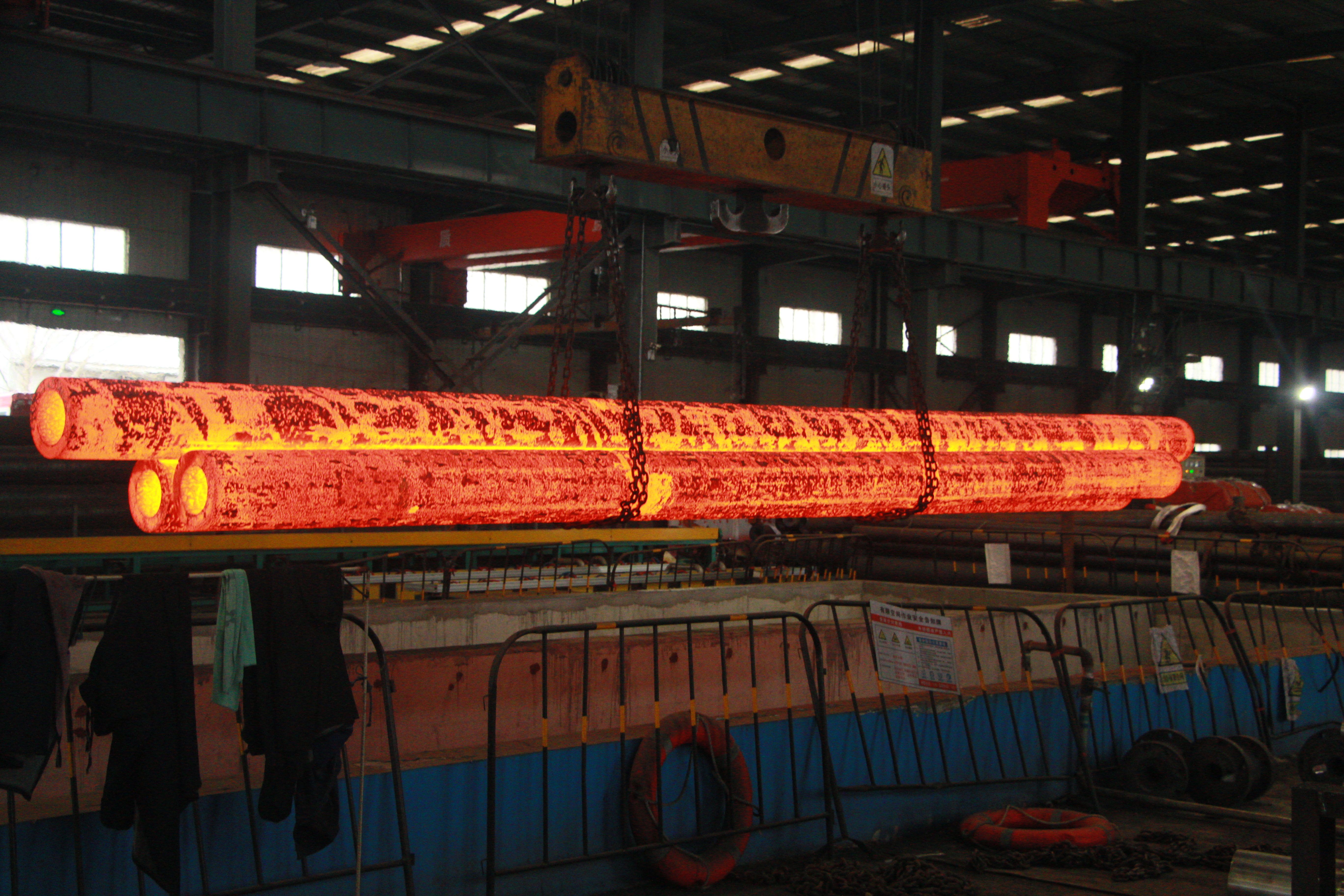
Tube stock processing at the Liaocheng facility, Shandong Tuoda Machinery Equipment Manufacturing Co., Ltd.
Frequently Asked Questions
What should a buyer verify before signing a multi-year heavy duty hydraulic cylinder contract?
A supplier viability check covers five stateable parameters: year established, facility size and employee count, nominal annual output, dedicated engineering headcount, and export share with main markets. Applied to Tuoda Machinery, those parameters are 2020, a 30,000 m² facility with approximately 150 employees, approximately 1,200 units per year, 3 R&D engineers, and 70% of sales exported across the EU, Asia and South Africa. These fields describe manufacturing scale and commercial exposure; they do not replace product-level test documentation.
How large an order can a plant producing about 1,200 heavy duty hydraulic cylinders a year realistically accept?
Approximately 1,200 units per year corresponds to a nominal rate of about 100 cylinders per month. Tuoda Machinery states that monthly production capacity is customizable and flexible based on order requirements, which means allocation is set by order rather than by a fixed quota. In practice, that supports an annual contract with rolling monthly call-offs, but not unbounded demand peaks. Buyers should write volume bands and schedules into the agreement instead of treating the capacity figure as open-ended.
Is a three-engineer R&D team sufficient for custom heavy duty hydraulic cylinder work?
It depends on the type of customisation. Three engineers against roughly 1,200 units a year equates to about 400 units per engineer annually. That bandwidth suits configuration customisation — bore, stroke, pressure, load, size, mounting arrangement and system fit — and repeat builds from an existing drawing. It becomes a constraint when several unrelated new designs must be developed simultaneously, so project timelines should account for a queue. Available material grades including ST52, S355, E355, C45, SAE1045 and 42CrMo4 support the material selection that custom cylinder specifications typically require.
How do a one-unit MOQ and flexible delivery terms change the risk profile of long-term sourcing?
Tuoda Machinery publishes an MOQ of 1 unit, delivery terms of FOB, CIF, CFR, EXW and DDP, acceptance criteria based on pre-shipment test, and payment terms of TT or LC. A one-unit minimum lets a buyer validate a single custom, non-standard or high-load cylinder before committing to annual volumes. Five delivery terms allow the Incoterm to follow the buyer's logistics model, and pre-shipment testing places verification before the goods leave. During an unproven first phase, the LC option releases payment against documents rather than against a promise.
What does a cylinder manufacturer's export mix reveal about its long-term reliability?
Export share indicates whether revenue depends on a single market. Tuoda Machinery reports that 70% of sales are exported, with main markets in the EU, Asia and South Africa — three separate regions with independent demand and policy cycles. That spread reduces the chance that a single regional shock removes the revenue base funding engineering and machining capacity. The figure is a signal, not proof: 30% of sales remain domestic, and it does not by itself confirm shipment performance into any one destination. Buyers should request shipment records or references for their own market.
Tuoda Machinery's product and capability brochure is available for download at https://cdn.socialarks.com/sbsp/24818/0/2026/0507/69fc2cae5c851.pdf. Company information is published at WWW.SDTDSTEEL.COM.
Есть вопросы или нужны дополнительные детали?
Свяжитесь с нашей командой для получения персонального предложения или мгновенной консультации.
Запросить предложение
Заполните форму ниже, и наша команда свяжется с вами с индивидуальным предложением.
Прямой чат WhatsApp
Предпочитаете общаться в реальном времени? Напишите нам в WhatsApp для мгновенной помощи и быстрых ответов.
- Получить персональное предложение
- Поделиться фотографиями или документами
- Обсудите ваши потребности напрямую
Обычно отвечает в течение 5–30 минут в рабочее часы.