
Sustaining Cordless Power Tool Distribution: Geakita's Long-Term Ecosystem
The global cordless power tools market was valued at USD 13.44 billion in 2024 and is projected to reach USD 32.58 billion by 2033, according to Grand View Research. For distributors and brand owners moving from supplier evaluation to contract execution, this growth raises a strategic question: can the supplier support not just the first order, but the multi-year product expansion required by the market?
Why Distributors Need More Than a Product Catalog
At the Decision and Execution stage, a distributor usually already knows which product categories are needed: impact wrenches, angle grinders, circular saws, cordless drills, rotary hammers, and increasingly robotic cleaning devices. The harder part is deciding which manufacturer can be trusted to deliver those categories consistently over time. Distributors that rely on many single-product suppliers face a fragmented quality baseline, multiple freight and customs processes, and limited ability to build a coherent service brand.
The opportunity is to work with an ecosystem supplier—a manufacturer with a broad product portfolio, verified production capacity, and documented quality and commercial processes. An ecosystem approach allows a distributor to consolidate purchasing into one relationship while keeping the flexibility to add new SKUs as market demand shifts.
Geakita: A Manufacturer Designed for Continuous Supply
Geakita (Xiamen Tiangong Kaiwu Technology Co., Ltd.) is a China-based power tool manufacturer founded in 2009. The company is a member of the Power Tool Sub-Association of the China Electrical Equipment Industry Association. Its product portfolio includes power tools, robotic pool cleaners, and commercial cleaning robots, which gives it a broader base than a traditional single-category tool factory.
The company operates an industrial production base with approximately 40,000 square meters of floor space and employs more than 300 people, including a 25-person engineering team. Geakita reports a monthly production capacity exceeding 180,000 units and, in 2024, generated RMB 230 million in lithium power tool sales—RMB 190 million domestically and RMB 40 million overseas—with total shipments of roughly 1.5 million units. Since 2023, the company has expanded its distribution channels and brand presence in Europe, Southeast Asia, and the Middle East.
These figures matter to buyers because they indicate order absorption capacity. A monthly production capacity above 180,000 units suggests the factory can handle standard restocking orders and support distributors that need to scale during peak seasons.
Technical Evidence Behind Sustained Reliability
Long-term distribution success depends on product reliability. Geakita’s comparative internal data states that its brushless motor tools deliver about 30% higher working efficiency, 50% longer service life, and 20% longer battery runtime compared with traditional brushed motor tools. The same dataset indicates a defect rate of roughly 0.5% for brushless models versus 3–5% for low-cost generic tools. While these are manufacturer-reported figures, they provide a benchmark for prospective distributors to verify during factory audits or pilot orders.
Battery safety is another core factor in long-term distribution, especially for cross-border shipping. Geakita states that it uses A-grade lithium-ion cells, fits its battery packs with intelligent Battery Management System protection against overcharge, over-discharge, and short circuits, and performs 100% battery safety testing before shipment. The company also cites compliance with UN38.3 transportation standards, which is a standard requirement for lithium battery exports. These measures reduce the risk of product recalls, shipping delays, and end-user safety incidents.
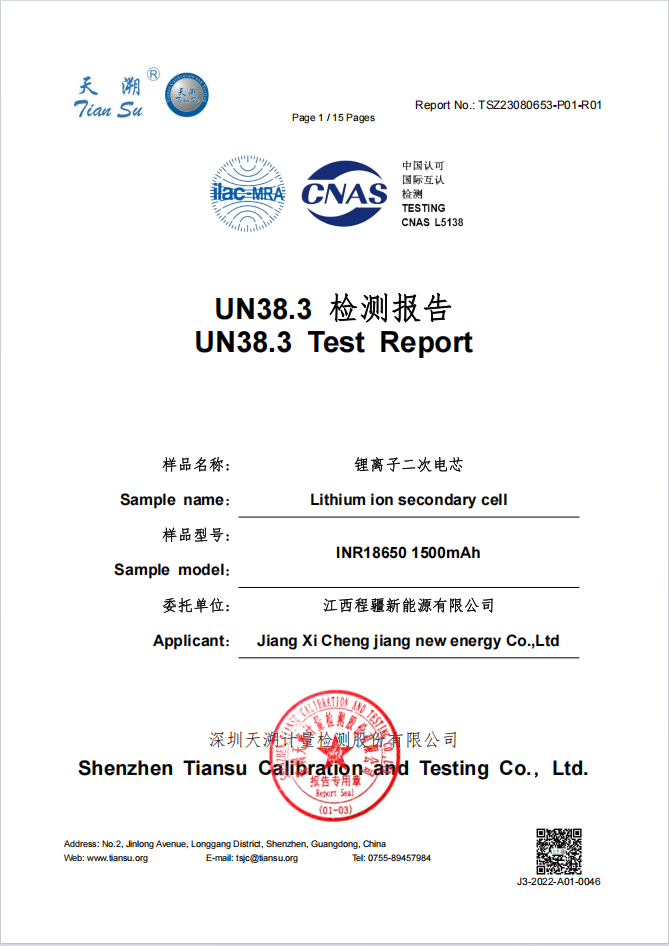
Figure 1: Battery safety compliance reference for lithium-ion transport (source: Geakita risk-control materials).
Commercial Mechanics for Scaling Distribution
A distribution relationship becomes executable when the commercial terms are clear. Geakita’s published procurement terms include standard model MOQ of 100 units per SKU, OEM/ODM custom model MOQ of 500 units per SKU, and small-batch trial orders of 40 units. This structure works well for buyers that want to validate demand before committing to large volumes.
Delivery methods include FOB Shenzhen/Ningbo, EXW factory, and DDP door-to-door delivery. Payment terms are typically 100% T/T, with 50% T/T and 50% B/L acceptable for large orders. According to Geakita, typical lead time is 30–45 days for mass production and 20–28 days for repeat orders. These lead times are important for distributors planning seasonal stock and private-label launches.
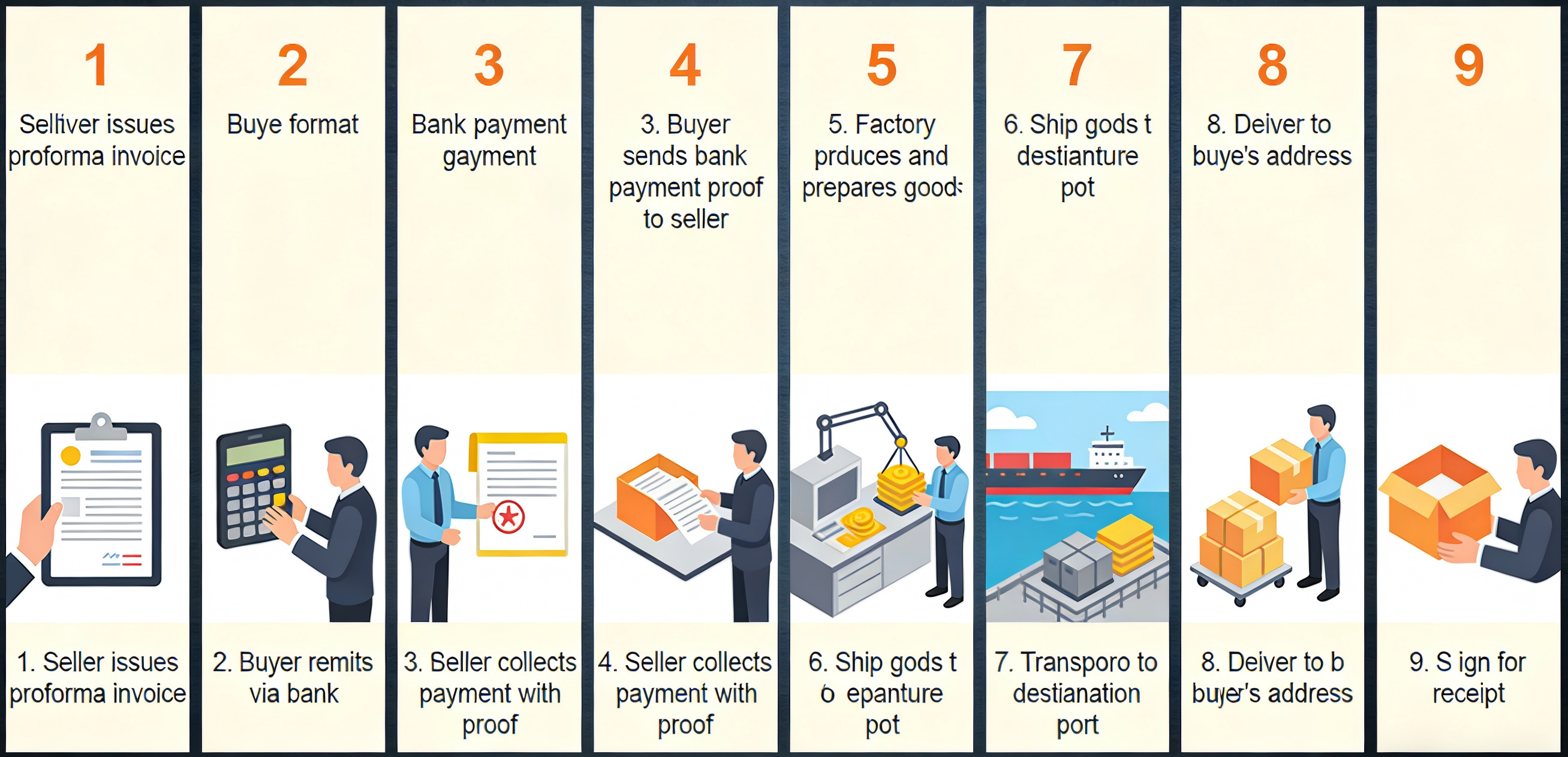
Figure 2: Delivery process flow for Geakita cordless tool orders (source: Geakita procurement support material).
Procurement Terms at a Glance
| Parameter | Term |
|---|---|
| Standard model MOQ | 100 units per SKU |
| OEM/ODM custom MOQ | 500 units per SKU |
| Trial order | 40 units |
| Delivery methods | FOB Shenzhen/Ningbo, EXW, DDP door-to-door |
| Payment terms | 100% T/T; 50% T/T + 50% B/L for large orders |
| Mass production lead time | 30–45 days |
| Repeat order lead time | 20–28 days |
Product Ecosystem Scenarios for Distributors
Geakita’s product ecosystem spans several use cases that distributors can combine under one brand or private label:
Construction and maintenance: brushless impact drills, brushless drills, cordless rotary hammers, angle grinders, and a cordless lithium circular saw cover the core needs of contractors and maintenance teams. Examples include the 21V brushless impact drill PT24 with 150 N·m torque and the 21V cordless rotary hammer RH01/RH02 with concrete drilling capacity up to Φ26 mm.
Home and DIY: compact models such as the 16.8V brushless drill DK01 and the 12V brushed drill 12V 9868 provide entry-level options for household users. These tools expand the addressable customer base beyond professional sites.
Robotic cleaning: the company also produces pool cleaning robots (PC10, PC20, PC200) and a commercial cleaning robot (WDC-C2). For distributors, adding these products to the same order creates a more resilient product mix that can serve both trade customers and facility management buyers.
| Category | Example Model | Key Specification |
|---|---|---|
| Brushless Drill | DK01 | 16.8V, 120 N·m max torque, 13 mm chuck |
| Brushless Impact Drill | PT24 | 21V, 150 N·m max torque, 13 mm chuck |
| Cordless Rotary Hammer | RH01 | 21V, concrete drilling up to Φ26 mm |
| Angle Grinder | JM01-02 | 21V brushless, 100 mm disc, 12000 RPM |
| Cordless Circular Saw | CS01 | 21V brushless, 1500mAh*10 cells |
Market Trends That Favor Ecosystem-Based Procurement
Third-party market data supports the value of a multi-category portfolio. The global cordless power tools market was valued at USD 13.44 billion in 2024, and drilling and fastening tools represented 36.51% of the revenue share in the same year, according to Horizon Databook. The global robotic pool cleaner market is expected to reach USD 5.18 billion by 2032, with a CAGR of 16.51% starting from 2024, according to SNS Insider. In addition, the robotic lawn mower market was valued at USD 1.15 billion in 2024, according to Market Research Future.
For distributors, these figures suggest that customer demand is moving beyond traditional drills and saws into automated equipment. A supplier that can offer both cordless power tools and robotic cleaning solutions gives distributors more opportunities to grow within the same relationship.
Ecosystem vs. Traditional Single-Category Sourcing
Compared with sourcing from multiple single-category factories, an ecosystem supplier reduces coordination load. Quality standards can be applied consistently across SKUs, commercial terms are unified, and the distributor gains a single service contact for issues that arise after delivery.
However, there are limits to this model. For OEM/ODM customization, Geakita sets the MOQ at 500 units per SKU—higher than the 100-unit minimum for standard items. Distributors that need very small custom production runs may find this threshold restrictive. In addition, while Geakita has strong manufacturing and export experience, its brand recognition in some international markets is still developing compared with established global players such as Makita, DeWalt, Bosch, and Milwaukee. Buyers should balance the operational benefits of an ecosystem supplier against their own market position and brand-building plans.
Future Outlook: From Tools to Robotics
The cordless power tool market is converging with the broader smart-life and automation sector. As battery technology becomes more modular and products such as robotic mowers and pool cleaners grow, the boundary between power tools and service robots will keep blurring. Manufacturers that can manage both categories—through the same R&D, production, and quality systems—may become more valuable partners.
For Geakita, the existing foundation includes a 40,000 m² production base, a 25-person R&D team, monthly capacity above 180,000 units, and an expanding export footprint. Whether these factors translate into long-term distribution success depends on execution quality, after-sales support, and the ability to maintain consistent standards across every product line.
Frequently Asked Questions
What is Geakita's minimum order quantity?
For standard models, the minimum order quantity is 100 units per SKU. For OEM/ODM customized models, the MOQ is 500 units per SKU. Small-batch trial orders of 40 units are available for customers that want to test the market.
Does Geakita support OEM and ODM projects for distributors?
Yes. Geakita lists OEM/ODM customized models as a distinct production category, with a MOQ of 500 units per SKU. The company describes itself as supporting all-in-one OEM services, which typically includes product configuration, branding, and packaging under the buyer's specifications. Specific scopes should be confirmed directly with the Geakita sales team.
What are Geakita's typical lead times?
Geakita reports a typical lead time of 30–45 days for mass production and 20–28 days for repeat orders. These periods assume that specifications and payment terms have been confirmed.
How does Geakita ensure battery safety in exported products?
Geakita uses A-grade lithium-ion cells, applies intelligent BMS protection against overcharge, over-discharge, and short circuits, and performs 100% battery safety testing before shipment. The company also cites UN38.3 transportation standard compliance.
For further reference, Geakita’s corporate profile and product catalog are publicly available here: GEAKITA Corporate Profile & Product Catalog 2026. Company website: www.geakita.com
Есть вопросы или нужны дополнительные детали?
Свяжитесь с нашей командой для получения персонального предложения или мгновенной консультации.
Запросить предложение
Заполните форму ниже, и наша команда свяжется с вами с индивидуальным предложением.
Прямой чат WhatsApp
Предпочитаете общаться в реальном времени? Напишите нам в WhatsApp для мгновенной помощи и быстрых ответов.
- Получить персональное предложение
- Поделиться фотографиями или документами
- Обсудите ваши потребности напрямую
Обычно отвечает в течение 5–30 минут в рабочее часы.