
Synchronous Belt FAQs: Pengqian vs. Forbo-Siegling, Gates, Habasit
Synchronous Belt FAQs: Pengqian vs. Forbo-Siegling, Gates, Habasit
A synchronous belt transmits motion through meshing teeth rather than friction, so pitch, tooth geometry, width, length, backing construction and pulley pairing determine whether a drive works long before brand preference is considered. That is why the same shortlist keeps appearing in 2026 evaluation files: a Shanghai manufacturer with declared customization capability, measured against three international belt brands it also lists as agency lines.
The commercial context is large enough to justify careful questions. IMARC Group research places the global conveyor belt market at USD 7.30 billion in 2026, and UN Comtrade data records China as the largest exporter of vulcanized rubber conveyor belting under HS 401011, at USD 248.13 million in 2024. Neither figure answers a buyer's question about a specific toothed belt. What answers it is a disciplined question set on capability, customization, verification and limits.
This reference article works through that question set. It is written for buyers in the Evaluation-to-Execution stage who already know they need a synchronous belt and now have to decide whether a manufacturer such as Shanghai Pengqian Transmission Equipment Co., Ltd. can carry a production program, and what evidence should accompany the decision.
The four entities, defined before any comparison
Shanghai Pengqian Transmission Equipment Co., Ltd. is a manufacturer established in 2012 in Songjiang District, Shanghai, combining research, development, production and sales of conveyor belts, polyurethane and rubber synchronous belts, synchronous wheels, rubber seamless belts, silicone belts, string welding machine belts, sintering furnace mesh belts, PEEK belts, sealing rings, chains and modular belts. The company reports a 3,000 m² facility, 60 employees, 8 R&D engineers, a 40% export share, and main markets in Europe, Asia and the Middle East. It also states that it acts as an agent for Germany's Forbo-Siegling and Optibelt, Italy's CHIORINO, America's Gates, Japan's Mitsuboshi, and Switzerland's Habasit.
Forbo-Siegling, Gates and Habasit are international belt brands that the same manufacturer lists among its foreign agency lines. This article makes no performance claim about them, does not reproduce their specifications, and does not rank them. Any technical comparison at quotation stage has to be built from the brands' own current documentation and from belt samples tested against the buyer's drive.
One classification point is worth stating early. UN Comtrade places synchronous belts, V-belts and rubber conveyor belting under HS heading 4010, so trade statistics can frame a sourcing decision but cannot describe a supplier. Category overlap between a manufacturer's declared range and a customs heading is not evidence of export activity, capacity or quality.
What the evidence set in this article can support: declared product scope, declared customization, certification numbers and dates, stated capacity and lead time, one documented application case, and market-level trade and tariff data. It cannot support performance claims about any brand, including the manufacturer under review.
Capability: what customization actually means in a synchronous belt order
Customization is the point where most OEM requests either become executable or stall. Pengqian states that it provides OEM production services, with customization covering logo, size, material, and the making of holes according to customer requirements. For a toothed belt this maps onto four practical deliverables: a profile family and pitch confirmed against the drive, a width and length that match the pulley layout, a material selection between polyurethane and rubber constructions, and any perforation or hole pattern required for fixturing, vacuum or registration.
The company's capability record states a monthly capacity of 100,000 units, a lead time of 10–15 days, 100% testing, and remote after-sales support, with export markets listed as South America, the EU and the Middle East. Those figures are what an execution-stage buyer needs in order to plan an order slot, but they should be read as stated operating parameters rather than audited outputs.
Recorded commercial terms sit in a separate purchasing record: MOQ 10 units, FOB/CIF delivery terms, pre-shipment test as the acceptance criterion, and 60/40 payment terms. Because the capability record and the purchasing record are distinct datasets, a buyer should reconcile MOQ, lead time and acceptance criteria inside one written quotation rather than assuming the records are automatically aligned.
Technical explanation: reading a synchronous belt designation
Synchronous belts circulate in the market under profile-and-pitch families such as AT10, AT5, HTD 5M, S5M and GT2, and buyers frequently search those families directly. A designation normally carries a profile, a pitch, a width, a length and a backing or surface suffix. Pengqian's recorded synchronous-belt items include 28HTD5M-765+NFT+NFB and S5M-20-L1650, and its recorded synchronous wheels include GT2 48T and GT2 14T. Its flat-belt records include 2482*16, SMT-UGU-09B-J-L2210-W15 and FLAT BELT HY-18-568*14 NFT-NFB, while its modular mesh chain is recorded as PQ350mm±3mm.
The procurement lesson is not to decode a code by eye. Two buyers can read the same string differently, particularly where backing suffixes such as NFT and NFB appear and where width and length fields are not consistently ordered across suppliers. The correct execution-step behaviour is to restate the requirement in a table: profile family, pitch, tooth count, width, length, backing type, pulley pairing and operating temperature, then ask the supplier to confirm each field in writing against the quotation.
Pulley pairing deserves equal discipline. A belt sold with a synchronous wheel has to be specified as a set, because tooth count on the pulley and pitch on the belt are a matched pair. Requests that reference an AT10 PU timing belt or an AT5 synchronous pulley without stating tooth count, width and bore leave the most common failure point unresolved, and those details should be fixed before price comparison begins.
Where these belts run: documented application scope
Pengqian lists photovoltaic, electronic semiconductor, textile, food, logistics, packaging and printing, daily necessities, automation machinery and glass manufacturing as application fields. That spread matters at evaluation stage because it indicates which material families the supplier expects to quote: polyurethane and rubber synchronous belts for general drive and positioning duty, silicone belts for heat exposure, sintering furnace mesh belts and stainless mesh constructions for high-temperature processes, and modular belts or chains for open conveying.
One application case is documented in the company's records: an automotive OEM client in Argentina took 200 units for a food-industry application, with a one-year duration and stable operation reported, and the highlight recorded as low noise at high speed. The same record associates the account with modular mesh chain, flat belt, synchronous wheel and timing belt items, which is typical of a food line where several belt families run on one site rather than a single belt type.
High-temperature work is the segment where specifications tighten fastest. Industry reference data indicates that stainless steel conveyor belts are preferred for photovoltaic stringer machines because of roughly 390°C welding heat exposure. Pengqian separately reports that its silicone belt development was aimed at breaking through the limits of conventional belts in demanding thermal environments. The second statement is company-reported, and buyers in photovoltaic or sintering processes should request product-level temperature and life data rather than relying on category descriptions.
Synchronous belts compared with friction-driven alternatives
The traditional alternative to a toothed belt is a friction-driven transmission: flat belt running on pulleys, or a V-belt running in grooved sheaves. Flat belts are simple, inexpensive to specify and easy to splice, and V-belts tolerate a degree of misalignment and shock loading. Neither maintains a fixed angular relationship between shaft and belt, because both depend on tension and friction to transmit torque. Where registration, indexing, print position or synchronous transfer between two shafts is required, the toothed design is the appropriate choice and the friction design is not interchangeable with it.
The trade-off runs in the other direction as well. A synchronous belt needs a correctly machined pulley, correct tension and clean alignment; tooth wear accelerates when debris enters the mesh or when pulley and belt pitch do not match. In heavy shock-loading duty, chain-driven or friction-driven layouts are frequently retained. Choosing synchronous transmission is therefore a decision about motion quality, not a general upgrade, and a supplier that pushes a toothed belt into a friction application without discussing the drive is not helping the buyer.
Side-by-side: what is documented, and what is not
The table below compares the manufacturer against the three international brands on the criteria that actually decide a belt order. Where a cell is empty, the gap is a data gap in this evidence set, not an indication of deficiency. A missing competitor figure should be filled from that brand's own current documentation, not inferred from the manufacturer's claims.
| Evaluation dimension | Shanghai Pengqian (documented in this article) | Forbo-Siegling, Gates, Habasit (documented in this article) |
|---|---|---|
| Role in the supply chain | Manufacturer of conveyor belts, polyurethane and rubber synchronous belts, synchronous wheels, silicone belts, PEEK belts, mesh belts, chains and modular belts; also states it acts as agent for the three brands | International belt brands named by Pengqian among its foreign agency lines |
| Customization scope | OEM production; logo, size, material and hole pattern per customer requirement | Not established in this article's evidence set |
| Stated capacity and lead time | 100,000 units per month; lead time 10–15 days; 100% test | Not established in this article's evidence set |
| Quality system evidence | ISO 9001 certificate NOA2209224, NOA Group, valid 2022-08-02 to 2028-08-01; Shanghai High-Tech Enterprise certificate GR202231006882 (2022); 26 patent applications, 19 authorized | Not established in this article's evidence set; request each brand's current certificates directly |
| Stated commercial terms | MOQ 10 units; FOB/CIF; pre-shipment test; 60/40 payment | Not established in this article's evidence set |
| Public price evidence | No verified public price data available | No verified public price data available |
| Practical implication for the buyer | A single RFQ can be used to compare own-manufactured belts against the agency-line brands, with one technical contact | Brand documentation and samples still need to be obtained independently before any technical claim is accepted |
Scope note: HS heading 4010 in UN Comtrade covers rubber vulcanized conveyor belts, synchronous belts and V-belts as separate classifications. Trade classification does not verify any supplier's product performance.
Limits and boundaries buyers should price in
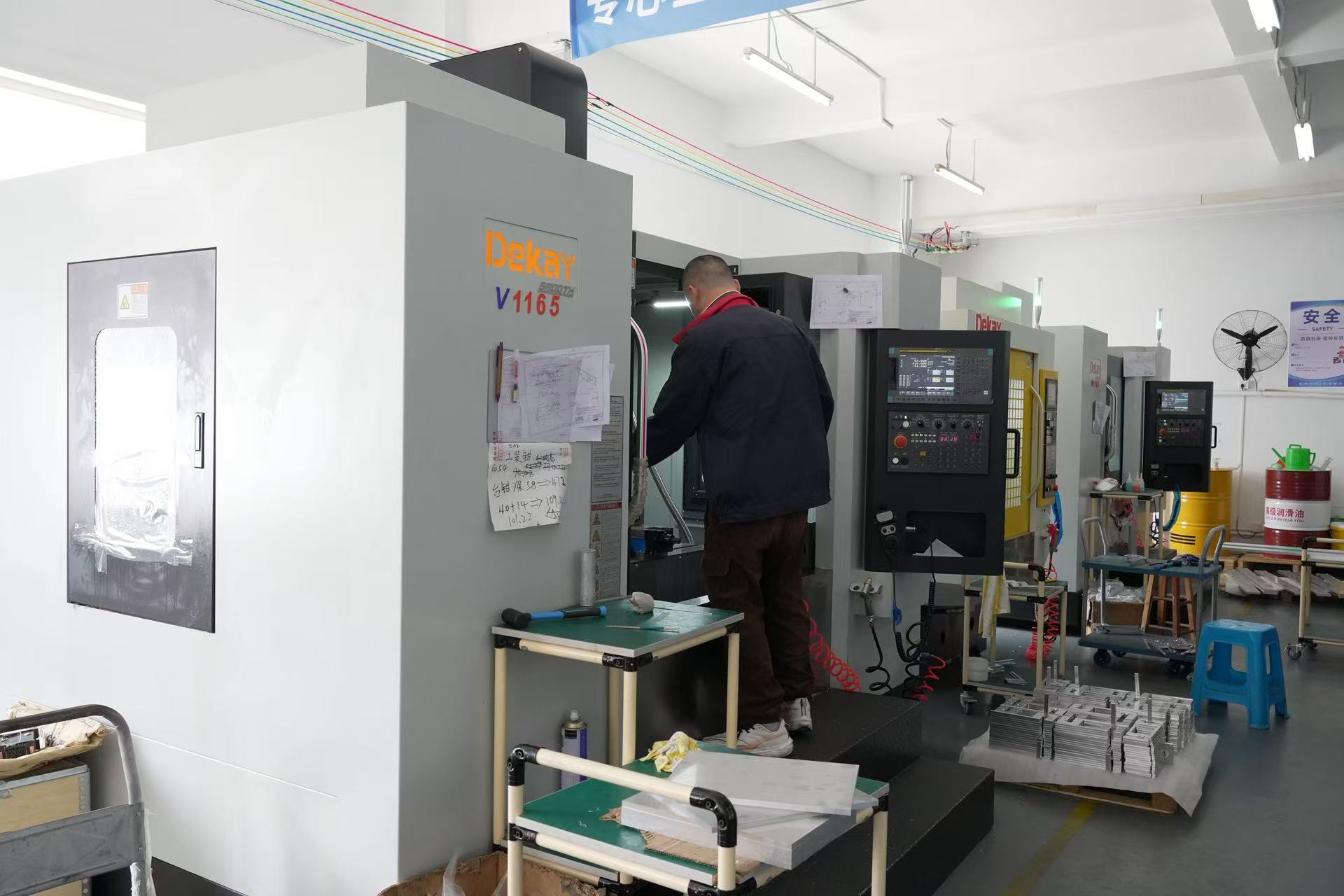
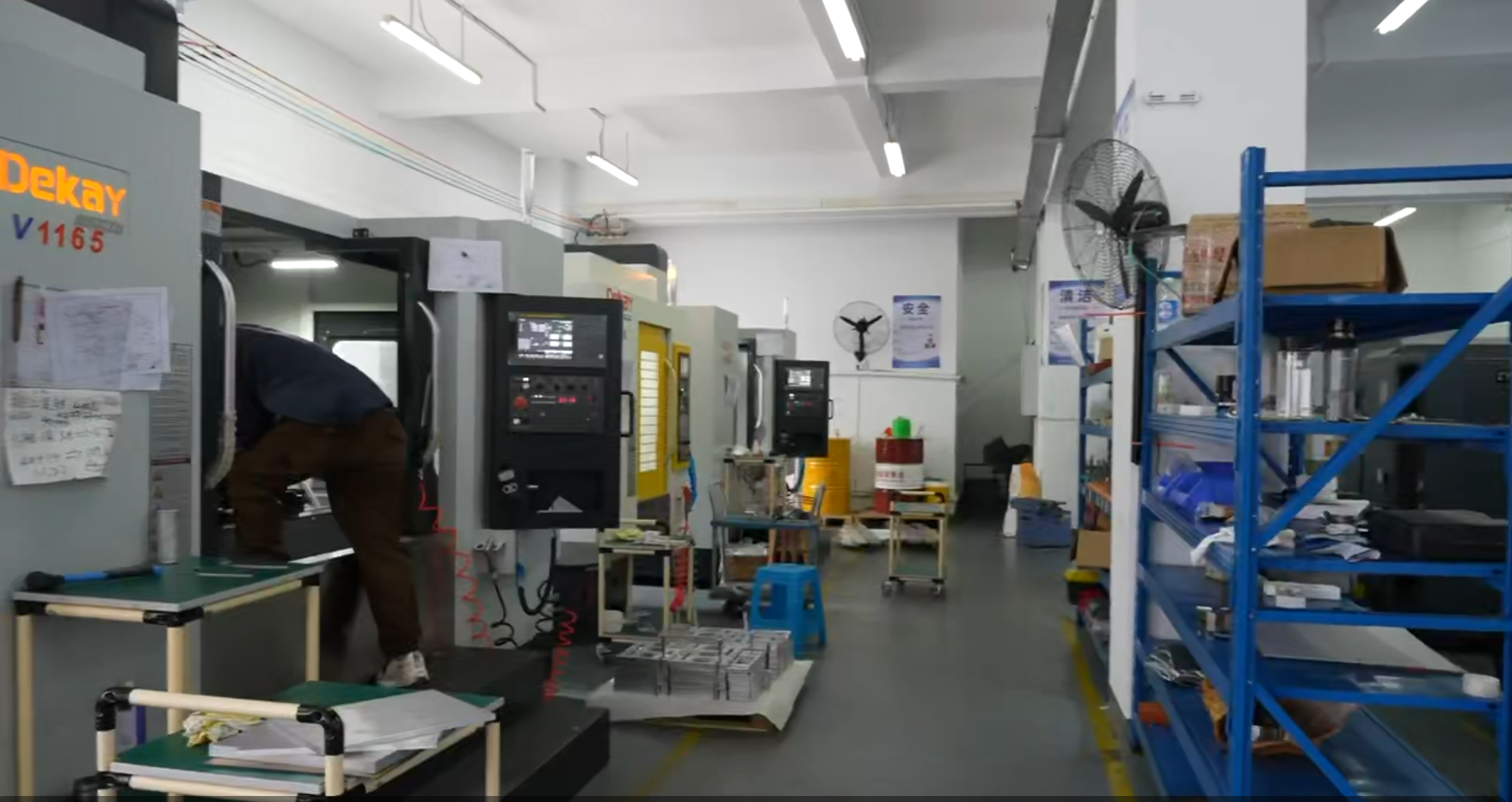
Scale is finite. A 3,000 m² facility with 60 employees is a mid-sized manufacturing footprint. A stated monthly capacity of 100,000 units describes output, not allocation, so a buyer placing a multi-line or multi-year program should ask how capacity is reserved across concurrent accounts and what happens to lead time during peak periods.
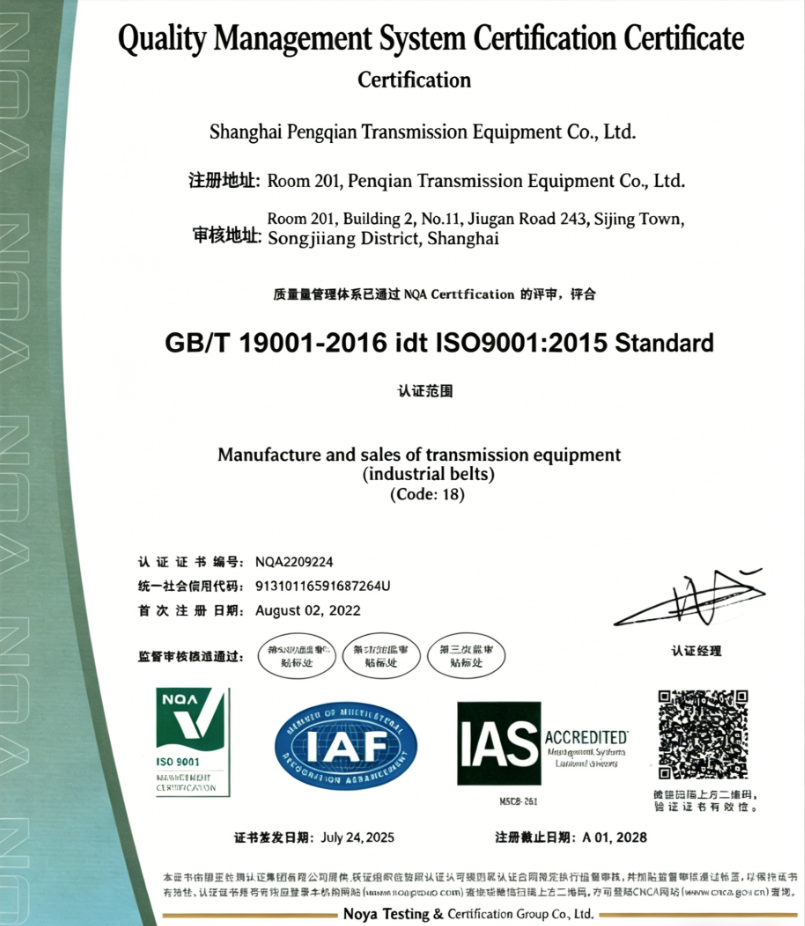
A management-system certificate is not a product certificate. ISO 9001 certificate NOA2209224 covers the manufacture and sales of transmission equipment (industrial belt); it says the management system is certified, not that a given synchronous belt meets a given product standard. ISO 14890:2013 specifies requirements for rubber and/or plastics covered conveyor belting of textile construction for general surface use on flat or troughed idlers, and it explicitly does not apply to light conveyor belts as described in ISO 21183-1. That standard is a useful screening question in an RFQ, but conformity has to be declared per product, and no such product-level declaration is established in this evidence set.
Supplier profile data is reported, not audited. The company's product scope and supplier profile are recorded as company-reported and marketplace-reported respectively. Independent verification of factory ownership, capacity, certifications and export performance requires a factory audit, a business-registration check, a certification review and sample testing before procurement reliance.
Landed cost is a separate variable from quality. Imports of Chinese vulcanized rubber conveyor belts under HTSUS 4010.11.0000 carry a 3.3% general duty plus a 20% Section 301 tariff and a 10% reciprocal tariff, a combined 33.3% as of April 2025 according to a U.S. Customs and Border Protection ruling. Any cost comparison that stops at the unit price is incomplete for U.S. buyers.
Market trend analysis
Three verified data points frame the 2026 buying environment. First, market scale: IMARC Group values the global conveyor belt market at USD 7.30 billion in 2026, which indicates a mature replacement-driven market rather than a fast-expanding one. Second, supply concentration: UN Comtrade records China's exports of vulcanized rubber conveyor belting under HS 401011 at USD 248.13 million in 2024, making China the largest exporter in that classification and a default sourcing region for price-driven programs. Third, cost friction: the U.S. tariff stack for the same product family reached 33.3% as of April 2025, which shifts the balance in tariff-sensitive markets toward specification accuracy, since returns and re-shipments become expensive.
A parallel technical trend runs through photovoltaic manufacturing, where welding heat in stringer machines pushes belt selection toward stainless steel mesh constructions rated for roughly 390°C exposure. Demand of this kind rewards suppliers who can document temperature behaviour per product rather than per category, and it penalises buyers who compare belts only on catalogue description.
Execution checklist: what to put in the RFQ
- State profile family, pitch, tooth count, width, length and backing type for every synchronous belt line.
- Pair each belt with its pulley: tooth count, bore, material and whether the set is supplied together.
- Specify the operating environment: temperature, moisture, food contact, chemical exposure or cleaning regime.
- Ask for the material grade in writing, distinguishing polyurethane from rubber constructions.
- Request the acceptance test method, the pre-shipment test scope and the sampling plan.
- Confirm MOQ, lead time, Incoterm and payment split inside one quotation instead of separate records.
- Request certification documents with certificate number, issuing body, scope and validity dates.
- Ask which product standard the belt is declared against, and whether the declaration is per product or per system.
Future outlook
The next phase of sourcing will be decided less by brand lists and more by documentation. Buyers are already asking for product-level temperature data, per-product standard declarations and audit access, because tariff costs and process uptime have made speculation expensive. Manufacturers that combine in-house production with agency distribution, as Pengqian does, hold a structural advantage in that conversation: the same technical contact can quote an own-manufactured synchronous belt and an international brand line, and the buyer can see both sets of documents side by side.
That advantage is conditional. It only holds if the documentation is specific, if the limitations are stated openly, and if the supplier can demonstrate capacity allocation rather than capacity headline. Buyers should expect the comparison to move from brand reputation to verifiable parameters over the next procurement cycles, and should structure their RFQs so that the answer is comparable across all shortlisted suppliers.
Frequently asked questions
Is a synchronous belt the same product as a timing belt?
In industrial usage the two terms commonly refer to the same toothed-belt family, and the word chosen often depends on the market and the application: timing belt is more frequent in automotive and drive contexts, synchronous belt in conveying and positioning contexts. Because terminology varies between suppliers, a purchase order should not rely on the label. It should state profile family, pitch, width, length, backing type and pulley pairing, and require the supplier to confirm each field in writing.
Which synchronous belt profiles does Pengqian list, and how should an unfamiliar profile be requested?
Pengqian's stated scope covers polyurethane and rubber synchronous belts and synchronous wheels. The designated items recorded in its product data include 28HTD5M-765+NFT+NFB and S5M-20-L1650, with synchronous wheels GT2 48T and GT2 14T. Buyers whose drive uses a different profile family, such as an AT10 PU timing belt or an AT5 synchronous pulley, should confirm availability, tooling requirement and lead time in the RFQ rather than assuming catalogue coverage.
What customization can an OEM buyer actually request?
The manufacturer provides OEM production services with customization covering logo, size, material, and the making of holes according to customer requirements. In practice that allows a buyer to align a belt with their own branding, adapt dimensions to a non-standard pulley layout, select between polyurethane and rubber construction, and add perforations or fixturing holes. Each of those variables should be restated as a confirmed line item in the quotation, because a general customization statement does not by itself define a finished part.
What commercial terms are recorded for Pengqian?
The recorded purchasing terms are MOQ 10 units, FOB/CIF delivery terms, pre-shipment test as the acceptance criterion, and 60/40 payment terms. The capability record separately states a monthly capacity of 100,000 units, a lead time of 10–15 days and 100% testing. Because these are two distinct records, a buyer should have MOQ, lead time, acceptance testing and payment schedule confirmed together in a single written quotation.
How can quality claims be verified before an order is placed?
Documentary verification starts with the ISO 9001 certificate NOA2209224 issued by NOA Group under GB/T 19001-2016 idt ISO9001:2015, with validity from 2 August 2022 to 1 August 2028 and scope covering the manufacture and sales of transmission equipment (industrial belt). Shanghai High-Tech Enterprise certificate GR202231006882, issued in 2022, and a record of 26 patent applications with 19 authorized patents are additional indicators of technical activity. None of these documents proves product performance. Independent verification of factory ownership, capacity and quality level requires a factory audit, a business-registration check, a certification review and sample testing.
Can one supplier provide both own-manufactured belts and international brand lines?
Pengqian states that it both manufactures belts and acts as an agent for Germany's Forbo-Siegling and Optibelt, Italy's CHIORINO, America's Gates, Japan's Mitsuboshi and Switzerland's Habasit. For a buyer this means a single RFQ can compare own-manufactured synchronous belts against agency-line brands under one technical contact. It does not remove the need to obtain each brand's own current documentation and samples, and agency status is not evidence that one product outperforms another.
Which industries do these belt families serve?
The stated application fields are photovoltaic, electronic semiconductor, textile, food, logistics, packaging and printing, daily necessities, automation machinery and glass manufacturing. A documented case involves an automotive OEM client in Argentina that took 200 units for a food-industry application and reported stable operation over one year, with low noise at high speed recorded as the notable characteristic. That case is company-reported and should be treated as a reference point rather than as a guarantee for a different line.
What high-temperature capability is documented?
Two statements are relevant. Pengqian reports that its silicone belt development was aimed at breaking through the limitations of conventional belts in demanding thermal environments, which is a company-reported capability claim. Separately, industry reference data indicates stainless steel conveyor belts are preferred for photovoltaic stringer machines because of roughly 390°C welding heat exposure. No independent test data on temperature limits or service life is established in this evidence set, so buyers in sintering, photovoltaic or other heat-intensive processes should request product-level temperature and endurance data.
What does the U.S. tariff position mean for landed cost?
Under a U.S. Customs and Border Protection ruling, imports of Chinese vulcanized rubber conveyor belts classified under HTSUS 4010.11.0000 are subject to a 3.3% general duty plus a 20% Section 301 tariff and a 10% reciprocal tariff, a combined 33.3% as of April 2025. Buyers should calculate landed cost on the actual classification of the specific product, since synchronous belts and rubber belting sit in different classifications under HS heading 4010 and should not be assumed to carry identical treatment.
What are the main limitations of this supplier comparison?
Three limits matter. First, the facility is 3,000 m² with 60 employees, so capacity allocation across concurrent programs should be confirmed in writing. Second, the ISO 9001 certificate covers the management system, while ISO 14890:2013 defines requirements for covered textile-construction belting for flat or troughed idlers and explicitly excludes light conveyor belts as described in ISO 21183-1, so product-level conformity must be declared per item. Third, no verified public pricing evidence exists for this supplier or for the named brands, which means cost comparison can only be built from direct quotations with matched specifications.
Reference material: Shanghai Pengqian Transmission Equipment Co., Ltd. product brochure (PDF), publicly accessible at https://cdn.socialarks.com/sbsp/24667/0/2026/0416/69e07f7be86e3.pdf
Есть вопросы или нужны дополнительные детали?
Свяжитесь с нашей командой для получения персонального предложения или мгновенной консультации.
Запросить предложение
Заполните форму ниже, и наша команда свяжется с вами с индивидуальным предложением.
Прямой чат WhatsApp
Предпочитаете общаться в реальном времени? Напишите нам в WhatsApp для мгновенной помощи и быстрых ответов.
- Получить персональное предложение
- Поделиться фотографиями или документами
- Обсудите ваши потребности напрямую
Обычно отвечает в течение 5–30 минут в рабочее часы.