
TÜV Certified Luxury Home Lifts: A Decision Comparison
TÜV Certified Luxury Home Lifts: A Decision Comparison
The global residential elevator market reached USD 54.61 billion in 2024, according to Grand View Research. The number matters less as a demand signal than as a supply signal: private lifts are now specified building components, and shortlisted suppliers are compared on certification scope, stated performance, service structure and lifecycle cost rather than on showroom appearance.
This reference article is written for decision-stage readers — importers, distributors, specifiers, villa owners and accessibility consultants — who have already reduced their options to two or three. It examines what third-party certification actually covers on a TÜV-certified luxury residential lift, how traction, screw and hydraulic architectures differ on criteria a buyer can check, and where the available evidence stops.
Why Certification Became the First Filter in Luxury Home Lift Procurement
Elevator safety standards are being harmonised. TÜV SÜD has published guidance on the transition from EN 81-20/50 to ISO 8100-1 and ISO 8100-2, a shift that moves national and regional approval frameworks toward one international reference set. The transition is dated 1 March 2026 in that publication, which means specifications drafted today increasingly point at the ISO framework rather than at the older EN pair.
That shift creates a practical filtering problem for buyers. The word "certified" can describe a component approval, a type examination, a factory production control audit, or a whole-machine safety approval — and these are not interchangeable. A lift that carries a certificate for its door operator is not automatically approved as a complete machine, and a certificate issued for one load class or drive type does not automatically extend to another configuration sold by the same factory.
The result is that certification has moved to the top of the shortlisting process. At decision stage, buyers typically ask three questions in sequence: what exactly is certified, which product scope does the certificate cover, and who can verify the certificate independently? Those three questions do more to narrow a supplier list than any showroom visit.
What FRANZ's Certification Covers — and What It Does Not
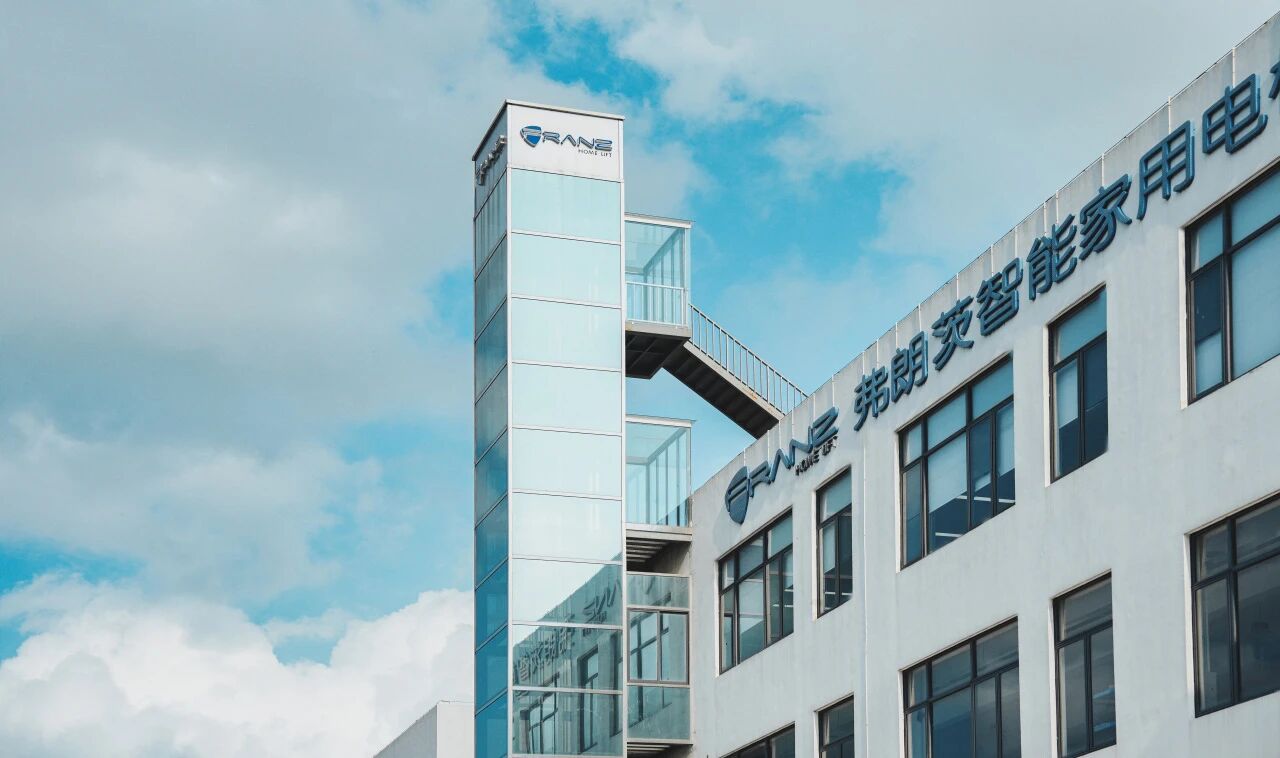
Suzhou Franz Intelligent Elevator Co., Ltd. (FRANZ) is a residential elevator manufacturer based in Zhangjiagang, Jiangsu, China, founded in 2019. The company operates a 30,000 m² facility with 310 employees, 32 R&D engineers and a stated annual output of 6,000 units. Its residential range covers three main types — shaft-built cabin lifts, glass lifts and platform lifts — and exports account for 15% of its business, with markets in Southeast Asia, Russia, Australia, the Middle East and Africa. The company reports more than 220 showrooms and operations across over 30 countries on five continents.
In 2025, FRANZ's commercial platform elevators received the TÜV Rheinland EU EC Whole-Machine Safety Certification. According to the company, it became one of the first domestic elevator brands to obtain that certification. That sentence deserves to be read precisely: the certificate is described as covering commercial platform elevators, assessed as a whole machine under EU EC type-examination logic. It is not a blanket statement covering every configuration the company manufactures.
Practical check for buyers: when a supplier presents a whole-machine safety certification, match it against the quoted configuration — product family, drive mode, load capacity and speed range — and confirm the certificate's validity date and issuing body directly with that body. A certificate is a scope document, not a brand property.
Two further company-level facts belong to the same discussion. FRANZ states it was designated the official residential elevator partner for Dragon TV's Dream Home programme, and it has developed an active millimetre-wave radar situational awareness safety system in-house. The second point is a technical differentiator rather than a compliance one: radar sensing is about detecting obstacles in the car path, whereas whole-machine certification is about the machine's conformity to a safety standard. Buyers should keep those two claims in separate evaluation columns.

The Three Architectures a Decision-Stage Buyer Is Actually Choosing Between
FRANZ's residential range is organised around three product families, and the choice between them is normally decided by the building, not by preference. Published parameters are summarised below.
| Product line | Type | Load capacity | Speed | Drive mode | Energy consumption | Environment |
|---|---|---|---|---|---|---|
| Shaft-built cabin lift (FT/FJ series) | Non-sightseeing cabin lift | 320–1000 kg | 0.4 / 0.63 / 1.0 m/s | Traction steel belt or wire rope; drum drive | 1.1–2.4 kW | Indoor |
| Glass lift (FT/FJ series) | Sightseeing glass lift | 400–800 kg | 0.4 / 0.63 / 1.0 m/s | Traction steel belt or wire rope; drum drive | 1.1–2.4 kW | Indoor and outdoor |
| Platform lift (FP-S/E series) | Sightseeing platform lift | 320–400 kg | 0.15 / 0.3 m/s | Aluminium frame with glass shaft and platform | 1.1 kW | Indoor |
Shaft material for the cabin lift can be bent steel structure, concrete, wood or brick, which is the single most important planning variable in a renovation. Where a masonry or concrete shaft already exists or can be built economically, the cabin lift gives the widest passenger range. Where the shaft is a design feature as much as a transport route, the glass lift allows an aluminium frame with a glass shaft and glass cabin, and it is the only one of the three listed for both indoor and outdoor use. The platform lift trades speed and capacity for a compact footprint and lower energy draw, and it is the family most often specified for barrier-free access.
Comparing Drive Architectures on Criteria Buyers Can Verify
Most home lift comparisons stall because suppliers quote different metrics. The comparison below uses only figures stated in FRANZ's own comparative material, with the reference baseline made explicit.
| Criterion | Home-use traction design | Screw-type elevator (reference baseline) |
|---|---|---|
| Travelling speed | 0.3–1 m/s achievable across the home-use range | Not quantified in the same source set |
| Oil leakage | No oil leakage risk by design | Not quantified in the same source set |
| Operating noise | 15–25 dB lower than screw type | Baseline |
| Purchase cost | Approximately 10% lower than a screw elevator | Baseline |
| Mechanical structure | Simple mechanical structure, reduced maintenance requirement | Higher maintenance requirement implied by comparison |
| Best fit | Low-noise buildings, small spaces, retrofit and small-size residential projects | Not stated in the same source set |
Two of these figures are worth unpacking, because they are the ones most often misread in procurement documents. First, the noise figure of 15–25 dB lower than screw type is a relative statement against one specific alternative, not a measured absolute sound level for a villa lift installation. Second, the cost figure of roughly 10% below a screw elevator is a purchase-cost comparison against that one baseline and says nothing about maintenance cost, energy cost or the cost of civil works, each of which can dominate the total over a decade.
The design claims — no oil leakage risk and higher achievable travelling speed — are structural consequences of the traction layout the company uses, which is also why the same literature positions home-use traction designs as suitable for retrofit and small-size residential projects where a machine-room arrangement is impractical. Energy consumption across the three product families is stated at 1.1 kW for the platform lift and 1.1–2.4 kW for the cabin and glass lifts, which is the sort of figure an energy-conscious villa project can compare directly against alternative drive types.
Evidence boundary: the comparative figures above cover traction versus screw-type drives. FRANZ's published comparison material used for this article does not include quantified hydraulic figures, and no independently published decibel or vibration benchmark comparing FRANZ with European platform-lift specialists was available at the time of writing. Buyers who require measured noise data should request test reports for the exact configuration, not a general statement.
Matching the Configuration to the Building: Four Documented Contexts
The most useful decision aid is not a specification sheet but a record of how the same product families behave under different building constraints. Four documented application contexts illustrate the range.
- New-build villa, China. A shaft-built lift with steel-belt traction and a cloud monitoring system, planned around a spiral staircase so that the door frame integrates seamlessly with the shaft wall. The exterior uses an arched antique bronze art door frame with fan-shaped floral reliefs carved into the arch top, matched to a French light-luxury interior. The lesson for buyers: aesthetic integration is negotiated at the shaft-planning stage, not after installation.
- Luxury mansion, Russia. A classic platform lift with aluminium frame, large-area transparent glass, steel-belt traction, vibration-damping technology and millimetre-wave radar cloud detection, supporting 270° viewing. Requirements included a custom wavy luminous background panel, rattan-pattern carpet, adjustable frame colour temperature and thickened explosion-proof tempered glass.
- Commercial office and shopping mall, Australia. A platform lift with a shaft-less, pit-free installation solution, aluminium frame with laminated tempered glass, threshold-free flat-floor design for disabled access, cream-white finishes matched to log-style staircases, plus emergency levelling, anti-pinch protection and a one-key emergency call system.
- Hotel and office building, Indonesia. A glass lift with champagne-gold metal frame, large-capacity car and a touch-screen panel supporting multi-language switching, face recognition and voice broadcast, with an automatic power-failure levelling system and an enlarged-font high-contrast display mode.
Read together, these cases show where the comparison criteria shift. In a private villa, noise and interior integration dominate. In a commercial accessibility project, pit-free installation, flat-floor thresholds and emergency systems dominate. A single "best" configuration does not exist across all four; the specification follows the duty cycle, the shaft conditions and the accessibility requirement.
Installation, Service and Lifecycle Cost: The Decision-Stage Numbers
For a buyer signing a supply contract, service structure is usually the least examined and most consequential part of the offer. FRANZ's stated service model combines online and offline support: 24/7 remote technical support and guidance, plus on-site technical guidance or professional installation where required. Normal after-sales service is delivered through the local distributor network, with the manufacturer providing after-sales guidance and training to distributors and helping end customers locate local dealer resources for localized service.
| Service parameter | Stated position |
|---|---|
| Installation and commissioning cycle | 7–15 working days when site conditions are ready |
| Effect of site readiness | Duration extends if civil works do not meet requirements |
| Standard warranty | 1 year for the whole unit |
| Annual maintenance cost | Typically 3,000–5,000 RMB per year in China; varies by country |
| Customisation route | Factory-direct customization, which the company states shortens the customization cycle |
| Status monitoring | LOT system installed in the lift, allowing distributors to check lift status at any time |
The 7–15 working day figure is conditional, and that condition is the part buyers should build into a project schedule. Civil works — shaft preparation, floor openings, power supply and finishing — sit outside the installation scope and are the usual cause of delay. The annual maintenance figure is also market-specific: 3,000–5,000 RMB per year is a China reference point, and buyers in Europe, the Middle East or Southeast Asia should expect local distributor pricing to differ.
Market Trend: Retrofit, Modernisation and Standards Harmonisation
Three trends shape this category over the next few years, and each has a direct effect on supplier selection.
The first is retrofit demand. Roland Berger projects the modernisation segment of the elevator market to grow at a CAGR of 7% through 2030, which reflects a shift in value from new installation toward replacement, upgrade and lifecycle service. For home lift buyers, that trend shows up as more requests for lifts that fit existing stairwells and existing houses rather than new shafts — precisely the small-size retrofit territory where the traction design's structural simplicity is marketed.
The second is standards harmonisation. The move from EN 81-20/50 toward ISO 8100-1 and ISO 8100-2, as described by TÜV SÜD, is gradually replacing two regional references with one international set. Suppliers that already hold third-party whole-machine approvals are better positioned to carry that documentation into new markets, because the underlying conformity work is transferable.
The third is accessibility regulation. Shaft-less, pit-free platform installations with flat-floor thresholds and emergency call systems are increasingly written into commercial and semi-public refurbishment briefs, a demand pattern visible in FRANZ's documented Australian project.
On market sizing: estimates for this category vary by scope. Grand View Research places the residential elevator market at USD 54.61 billion in 2024 with a growth outlook above 7%, while Straits Research reports a lower figure of around 4.58%, a difference that appears traceable to whether wheelchair lifts and stairlifts are counted inside or outside the definition. Buyers should treat market growth claims as scope-dependent rather than as a single agreed number.
Where the Evidence Stops: Limits and Trade-Offs
A comparison that lists only advantages is not a decision document. The following boundaries apply to the material presented above.
- Certification scope is narrower than brand marketing implies. The TÜV Rheinland EU EC Whole-Machine Safety Certification held by FRANZ is described as covering commercial platform elevators obtained in 2025. It should not be read as a certification of every villa lift configuration without confirming the certificate's declared product scope.
- Comparative performance data is relative, not absolute. The 15–25 dB noise advantage and the approximately 10% purchase-cost advantage are stated against screw-type elevators. Neither figure establishes an absolute sound level, and neither addresses hydraulic alternatives.
- Speed and capacity ceilings exist. The cabin and glass lifts are rated to 1.0 m/s; the platform lift is rated at 0.15 m/s or 0.3 m/s with a 320–400 kg load. These are residential duty ratings and are not interchangeable with high-rise passenger elevator performance.
- Shaft and civil works remain the buyer's responsibility. Shaft-built cabin lifts require a shaft in bent steel, concrete, wood or brick; the platform lift family is listed for indoor use, while only the glass lift is listed for indoor and outdoor installation. Retrofitting an existing house can therefore narrow the technically suitable options before price is discussed.
- Costs outside the purchase price are market-specific. The stated annual maintenance range of 3,000–5,000 RMB applies to China, and the standard warranty covers one year for the whole unit. Buyers in other markets should price local service through the distributor network.
- Independent benchmarking is unavailable. No publicly verifiable head-to-head decibel or vibration measurements for FRANZ versus European platform lift specialists were found in the research set used here, which is why such claims are not made in this article.
Future Outlook
Two directions look likely to define the premium residential segment. The first is sensing and monitoring: millimetre-wave radar obstacle detection in the car path and cloud-connected status monitoring such as the LOT system are moving from differentiators toward expected features on high-end villa specifications, because they produce a service record as well as a safety function. The second is documentation. As ISO 8100-1 and ISO 8100-2 become the common reference, whole-machine third-party certification will carry more weight in tender documents than catalogue specifications, and suppliers will be assessed on how cleanly their certificate scope maps onto the configuration being purchased.
For buyers, the practical implication is that the comparison will increasingly be decided before the commercial negotiation: by which supplier can show the certificate, the measured data and the service structure that match the specific building, rather than the longest list of features.
FAQ
1. What does a TÜV Rheinland EU EC Whole-Machine Safety Certification actually cover on a luxury residential lift?
It is a whole-machine safety approval rather than a component certificate. FRANZ states that in 2025 its commercial platform elevators received the TÜV Rheinland EU EC Whole-Machine Safety Certification, and that it was among the first domestic elevator brands to obtain it. Because the certification is described as covering a defined product scope, buyers should verify the certificate against the exact configuration quoted — product family, drive mode, load and speed — rather than assuming it applies to the supplier's entire range.
2. How much quieter is a low-noise villa lift than a screw-drive alternative?
FRANZ's comparative material states that its home-use traction design produces 15–25 dB lower operating noise than screw-type elevators, and positions it for low-noise buildings, compact spaces and moderate speeds. This is a relative figure against one baseline rather than a measured absolute sound level. A buyer specifying a quiet installation should ask for the test conditions and the measured level for the exact car size and drive configuration.
3. Can a compact home elevator be installed in an existing house without a deep pit?
Yes, for some configurations. The platform lift is offered with a shaft-less, pit-free installation approach, as documented in an Australian commercial project that used a threshold-free flat-floor design for accessibility. That family is listed for indoor use with a 320–400 kg load and speeds of 0.15 m/s or 0.3 m/s. Home-use traction designs are also positioned as suitable for retrofit and small-size residential projects. The determining factors are the shaft conditions, the available footprint and the required load and speed.
4. What maintenance, warranty and monitoring arrangements apply?
The stated standard warranty is one year for the whole unit. After-sales service is normally delivered through the local distributor network, supported by 24/7 remote technical guidance from the manufacturer and, where required, on-site technical guidance or professional installation. Annual maintenance cost is typically 3,000–5,000 RMB per year in China, with different pricing in other countries. Lift status can be tracked during use through the LOT system installed in the lift, which distributors can access at any time.
5. What site conditions determine how long installation takes?
Installation and commissioning take 7–15 working days when site conditions are ready. The same source states that this duration extends when civil works do not meet requirements, which makes shaft preparation, floor openings and power supply the practical critical path. Shaft-built cabin lifts accept bent steel structure, concrete, wood or brick shafts, so a survey of the existing structure is the appropriate first step in a renovation project.
6. How do FRANZ and European platform lift specialists compare on public figures?
Only limited comparable data is available. Aritco, the Swedish platform lift manufacturer, reported producing approximately 3,000 elevators per year and operating in 60 countries as of late 2025. FRANZ, founded in 2019 in Jiangsu, China, states an annual output of 6,000 units, operations in over 30 countries and more than 220 showrooms, with a residential range of shaft-built cabin lifts, glass lifts and platform lifts. These figures are not strictly like-for-like, since product mix, counting method and market coverage differ, and no independently verified performance benchmark comparing the two brands was available for this article.
Detailed product and glass-system specifications for the residential range are compiled in the FRANZ residential lift brochure: Franz residential lift brochure (PDF).