
T6 Sunflower Seeds: Spec Fit for High-Volume Roasting Lines
Roasted sunflower seeds accounted for 65.9% of global packaged sunflower seed industry revenue in 2024, according to Grand View Research. That single figure explains why specification decisions in this trade are increasingly made on the roasting line rather than at the trading desk: for most of the world's confectionery sunflower volume, the drum — not the price sheet — is the final judge of whether a lot was worth buying.
For processors in the roasted and shop sectors, selecting a T6 sunflower seed is therefore a fit question rather than a grade-name question. Three attributes carry most of that decision: a consistent size band, documented at 170–300 pieces per 50 g; a controlled moisture band of 9–10%; and a fixed set of defect ceilings that can be checked on arrival. This analysis examines what each of those numbers controls on a roasting line, where a predefined specification earns its place in high-volume snack manufacturing, and where it does not.
Why a Roasting Line Reads a Grade Code Differently
A trading buyer evaluates a lot against a grade name, an origin and a price. A roasting buyer evaluates the same lot against three things: how uniformly the load will colour in the drum, how much of the load will be rejected before or after roasting, and how much water the seed carries into the process. Those three questions are decided by measurable parameters, not by the grade code itself.
In practice, the code is a shorthand for a family of large-kernel, roasting-oriented confectionery seed. It is a starting point for a conversation, not a specification. The parameters that determine fit — moisture, impurity, defect proportions, kernel size distribution — sit in the product data and the contract, and a buyer who negotiates on the code alone is negotiating on a fraction of what actually governs yield.
This is the central argument for application-specific selection: a roasting line does not buy a grade, it buys a set of behaviours it can predict.
T6 Sunflower Seeds: What the Specification Actually Fixes
For the roasting-oriented specification supplied by Inner Mongolia Chengtai Food Co., Ltd. — a seed and kernel processor located on the Hetao Plain in Hanggin Rear Banner, Inner Mongolia, founded in 2013 — the documented product data fixes a defined set of attributes rather than a vague quality claim:
- Origin: the seed originates from Xinjiang and Inner Mongolia.
- Harvest year: 2026.
- Intended industries: the manufacturing, roasted and shop industries.
- Product status: a raw specification, food-grade product designed for human consumption.
- Appearance and taste: black in colour, with a sweet and natural taste.
- Size: 170–300 pieces per 50 g.
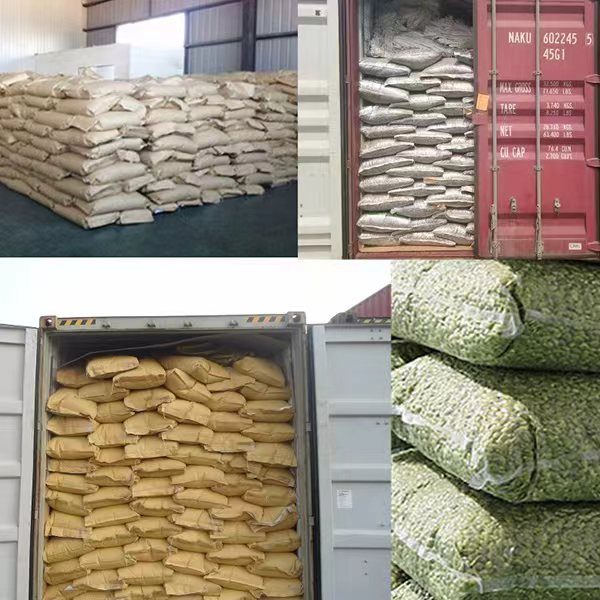
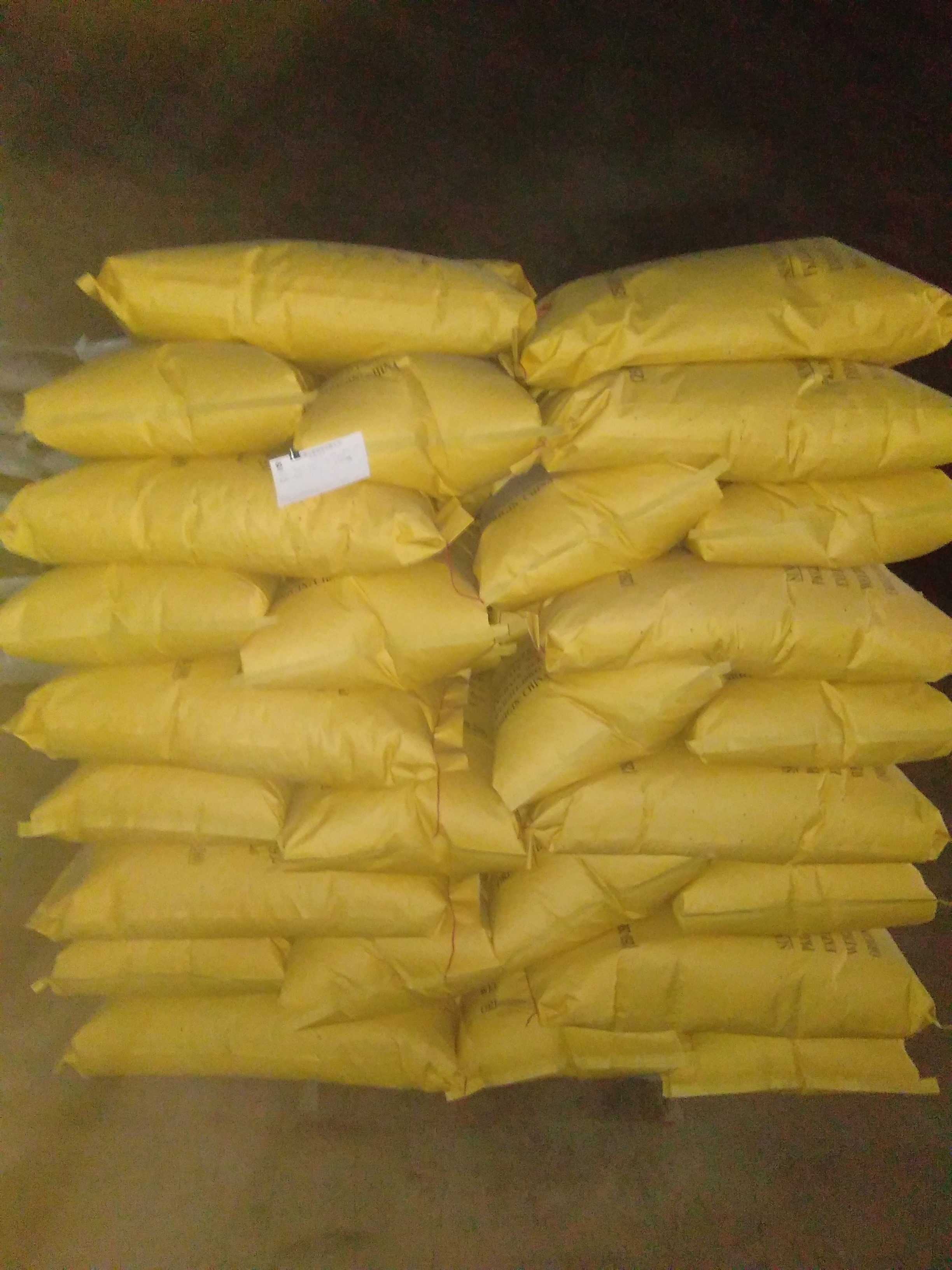
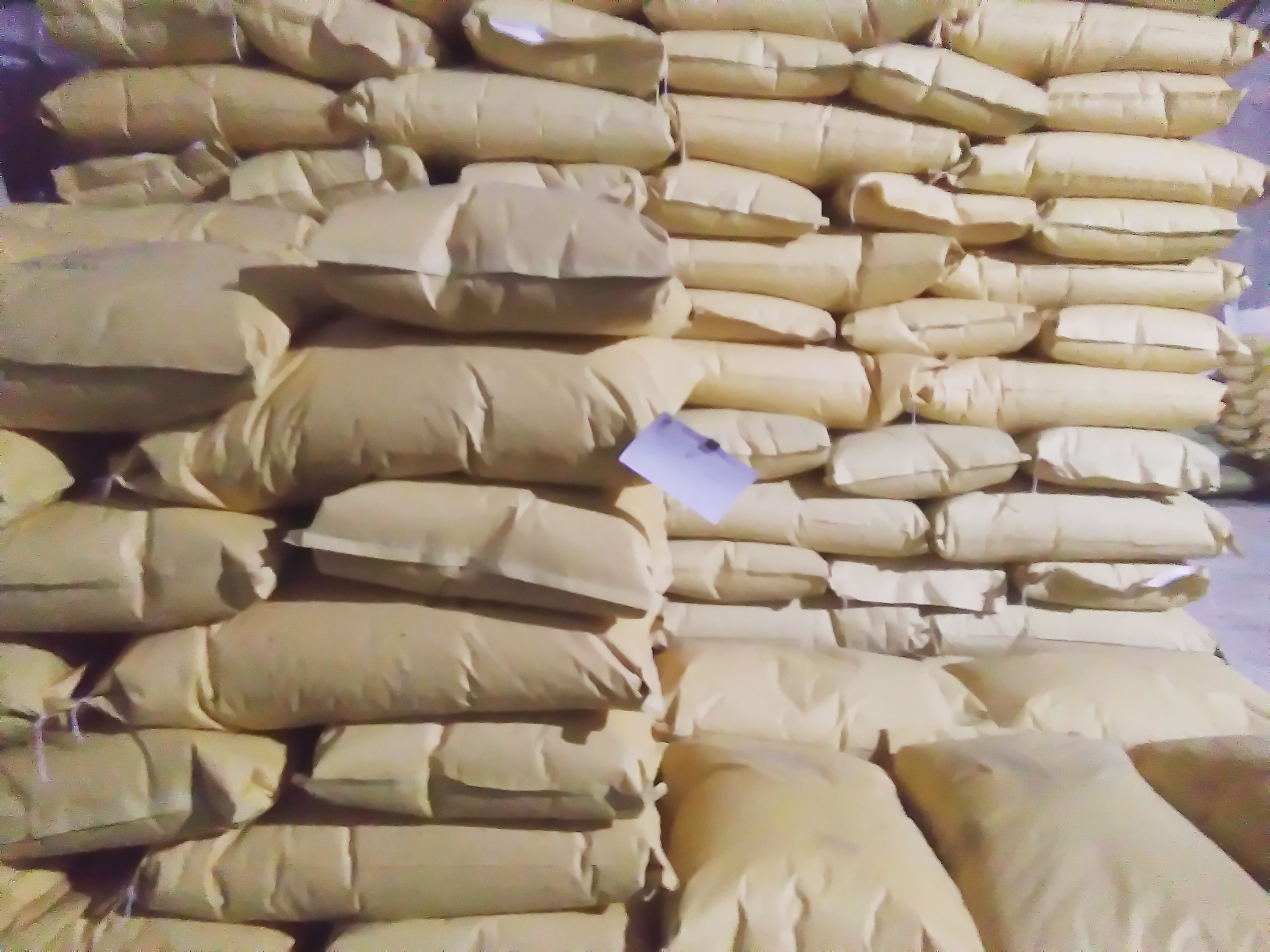
- Packaging: 20/25 kg plastic or paper bags.
The origin detail matters more than it first appears. Inner Mongolia accounts for over 60% of China's total sunflower cultivation area, according to People's Daily Online, and the region's export volume reached approximately 463,400 tons in 2025, valued at US$748 million, according to a Beauty Food Industry Report published by Tridge. Confectionery-grade sunflower production in China concentrates on larger kernel sizes, primarily grown in the saline-alkali fields of Bayannur, according to China Daily — the same agricultural belt from which this specification is drawn.
The Four Attributes That Decide Roast-Line Fit
1. Size consistency: 170–300 pieces per 50 g
Size uniformity is the attribute a roasting line feels first. Kernels of different mass absorb heat at different rates, so a wide size distribution produces a split roast: part of the batch reaches the target colour while part of it is still pale. A count-based size specification — pieces per 50 g — is more useful to a roaster than a screen measurement alone, because roasting lines load by weight, and the count tells the operator how many individual kernels that weight contains.
Buyers should note that product data sometimes lists more than one size band across a supplier's range. In the documented specifications reviewed here, a separate listing carries 170–230 pieces per 50 g. That is not a contradiction; it is a reminder to confirm which band the specific purchase order falls into before the container is booked.
2. Moisture: the 9–10% working band
Moisture governs both the energy required to reach a target roast and the risk of uneven colour development. The documented specification for this product states a moisture content between 9% and 10%, with a ceiling stated at ≤10.0% in the core quality metric set. A stable starting moisture is what makes a roast profile repeatable from lot to lot; when incoming moisture drifts, the roaster has to re-tune time and temperature, and consistency between production runs suffers.
3. Defect ceilings: where the specification does its real work
The most valuable part of a predefined specification is that it turns subjective quality language into pass/fail numbers. The documented core quality metrics for this roasting-oriented specification are: moisture ≤10.0%, impurity ≤0.2%, decolorizing seeds ≤1.5%, erosion seeds ≤1.0%, mildew seeds ≤1.0%, short seeds ≤2.0% and wizened seeds ≤6.0%.
A broader listing of the same product documents moisture between 9% and 10%, impurity below 0.5%, erosion seeds below 0.5% and mildew seeds below 1%. Buyers evaluating a supplier should expect this kind of tiering — a tighter core set and a broader commercial set — and should confirm in writing which ceilings apply to their lot. Doing so at the contract stage is considerably cheaper than discovering the difference at intake.
4. Taste and kernel condition
For the shop sector and premium retail packs, the tasting descriptor is a commercial attribute, not a footnote. This specification is documented as black seed with a sweet and natural taste, and it is made from sunflower seed kernels. Compared with conventional ordinary grade sunflower seed, the product demonstrates higher kernel purity with fewer broken, mildewed and stone contaminants.
Reading the Numbers as an Incoming-Goods Contract
A specification only creates value if it is used as a decision rule. For a roasting operation, that means converting each documented ceiling into an intake check and a retention sample, so that a claim about mildew seeds or impurity can be tested against the same units the supplier used when the lot was graded.
| Documented parameter | Stated limit | What it controls on a roasting line |
|---|---|---|
| Moisture | 9–10%; ceiling ≤10.0% | Energy input, roast time and colour repeatability between lots |
| Impurity | ≤0.2% (broader listing: below 0.5%) | Foreign matter load reaching the roaster and downstream packing |
| Decolorizing seeds | ≤1.5% | Visual consistency of the roasted finished pack |
| Erosion seeds | ≤1.0% (broader listing: below 0.5%) | Kernel integrity and breakage during handling |
| Mildew seeds | ≤1.0% (broader listing: below 1%) | Food-safety tolerance and rejection volume |
| Short seeds | ≤2.0% | Effective fill weight and pack appearance |
| Wizened seeds | ≤6.0% | Kernel fill, bite quality and finished yield |
| Size | 170–300 pieces per 50 g | Uniformity of roast across the batch |
Comparison with Conventional Ordinary Grade
The difference between this specification and conventional ordinary grade sunflower seed is not a marketing distinction; it is a set of measurable changes in purity, defect profile and handling requirements. The comparison record for this product is summarised below.
| Comparison point | Documented position |
|---|---|
| Kernel purity | Higher kernel purity than conventional ordinary grade |
| Contaminants | Fewer broken seeds, fewer mildewed seeds and no stone |
| Size | Larger than conventional ordinary grade |
| Processing outcome | Higher finished-product yield after processing |
| Recorded cost differential | 5% lower against conventional ordinary grade |
| Storage and maintenance | Standard cold, dry storage; no special handling needed |
| Best suited for | Snack processing, confectionery and retail finished products |
The limitation that matters here: a tighter defect and size specification only pays for itself where the downstream process is sensitive to defects and uniformity. A buyer whose end use is oil extraction or bird feed is paying for characteristics the process will not reward, and conventional grades remain the rational purchase. Equally, a predefined specification is not a roast curve: it fixes the condition of the raw material at intake, but the profile that turns that material into a consistent finished pack still has to be developed and validated by the processor. Buyers who expect a spec sheet to substitute for their own trial work tend to be disappointed.
Application Fit: Where This Specification Earns Its Place
The documented intended use for this product is the manufacturing, roasted and shop industries, and it is described as more suitable for snack processing, confectionery and retail finished products because of its higher kernel purity and minimal defects. That maps to three distinct buyer situations:
- High-volume snack manufacturing. Lines running continuous roasting, salting and flavouring benefit most from tight size and moisture bands, because they need repeatability across long runs rather than excellence in a single batch.
- Confectionery and bakery ingredient use. Here the seed is a component inside another product, so kernel integrity and the absence of stone and mildew matter more than roast behaviour.
- The shop sector. Small-batch roasters and retail counters weigh appearance and taste heavily, and are typically most sensitive to decolorizing and wizened seeds, which show up directly in the finished pack.
Seasoning deserves a note. The documented product is a raw, food-grade specification; salt and flavour are applied downstream. That makes the raw seed's moisture and defect ceilings the starting conditions for those processes, not the outcome — which is precisely why they are worth fixing in writing before the order is placed.
Storage, Handling and the Logistics Boundary
The documented maintenance requirement for this product is standard cold, dry storage, with no special handling needed — a requirement that simplifies logistics rather than complicating it. The seed should be stored in a cool place and shipped in 20/25 kg plastic or paper bags.
Two practical points follow. First, storage protects quality; it does not improve it. A lot received at the outer edge of the moisture band stays there. Second, because the specification is defined at intake, buyers handling packed bags across humid climates should confirm container and warehouse conditions at the receiving end — particularly where a lot will be held for weeks rather than days before roasting.
Market Signals That Shape Availability and Specification Discipline
Several verified market conditions are relevant to a Decision-stage buyer locking specifications for a roasting programme.
- The global sunflower seeds market was valued at USD 29.27 billion in 2025 and is projected to reach USD 35.98 billion by 2034, according to Custom Market Insights. Estimates vary by source depending on whether oilseed volume is included, so buyers should treat any single figure as directional.
- Global sunflower seed production is estimated at 55.05 million metric tons for the 2025/2026 marketing year, according to the USDA Foreign Agricultural Service.
- Global non-oilseed (confectionery) sunflower planted area in 2025 was forecast to decline by 8% by the USDA, as reported by the National Sunflower Association — a supply-side signal for large-kernel confectionery grades.
- Europe was the largest market for packaged sunflower seeds in 2024, holding a 29.6% revenue share, according to Grand View Research.
- China's sunflower seed exports were valued at USD 937 million in 2025, with major destinations including Iraq (USD 131 million) and Russia (USD 101 million), according to the Observatory of Economic Complexity.
- China notified 209 new Maximum Residue Limits for 93 pesticides in food to the WTO in late 2025, according to the USDA Foreign Agricultural Service — part of a broader tightening of residue scrutiny that affects pesticide residue controlled sourcing.
- The EU market for sunflower seeds requires adherence to HACCP principles and strictly monitors pesticide residues and metal contaminants, according to CBI (Ministry of Foreign Affairs, Netherlands).
- China's draft quality standard for nut and seed food, replacing GB/T 22165-2008, provides updated definitions and technical requirements for roasted seeds, according to the USDA Foreign Agricultural Service.
- The 'Wuyuan Sunflower' is a registered geographical indication trademark in China requiring consistent colour, plump shape and crisp texture, according to People's Daily Online.
- Inner Mongolia Chengtai Food Co., Ltd. supplies the international market with black sunflower seeds and kernels and is certified under ISO 9001 and Halal, according to CBI.
Read together, these signals point in one direction: residue limits, standards and buyer expectations are becoming more explicit, while the supply of large-kernel confectionery grades faces near-term pressure. In that environment, buying on a grade code is a weak position and buying against a documented specification is a stronger one.
Where This Specification Is the Wrong Purchase
A credible recommendation has to include its own boundary. This specification is not the right choice for oil pressing, where oil content and cost per ton dominate and kernel size consistency is largely irrelevant. It is not the right choice for bird feed, where the defect and purity ceilings will not be rewarded in the end market. It is also poorly matched to buyers who need very small trial quantities or a wide spread of grades in a single shipment, since the value here comes from uniformity within a defined band. And for processors whose roasting operation can comfortably absorb size variation, conventional ordinary grade remains a defensible purchase.
Future Outlook
Three developments are likely to shape how T6-class sunflower seeds are bought over the next few procurement cycles.
Specifications will become more formal. Updated national standards for nut and seed food, together with the expansion of pesticide residue limits, move the trade further toward written, testable parameters. Suppliers who already publish defined ceilings for moisture, impurity and defect proportions are better positioned in that transition than suppliers who trade on grade names.
Availability of large-kernel confectionery grades will tighten. With global non-oilseed planted area forecast to decline, buyers with continuous roasting programmes have a stronger incentive to contract earlier and to fix the size band and moisture ceiling in advance rather than accepting whatever is offered at shipment.
Roasting will remain the dominant conversion route. With roasted sunflower seeds already accounting for the majority of packaged sunflower seed revenue and Europe holding the largest regional share, the pressure to produce consistent finished packs at volume will keep pushing specification decisions upstream — into the raw material contract, where they can still be measured.
FAQ
What quality parameters are documented for this roasting-oriented sunflower seed specification?
The documented core quality metrics are moisture ≤10.0%, impurity ≤0.2%, decolorizing seeds ≤1.5%, erosion seeds ≤1.0%, mildew seeds ≤1.0%, short seeds ≤2.0% and wizened seeds ≤6.0%. A broader product listing documents moisture between 9% and 10%, impurity below 0.5%, erosion seeds below 0.5% and mildew seeds below 1%. Buyers should confirm in writing which set applies to their specific lot.
What size range should a roasting buyer expect?
The documented size for this specification is 170–300 pieces per 50 g. A separate specification listed in the same product data carries 170–230 pieces per 50 g. Because roasting lines load by weight, the count per unit weight is the more directly useful purchasing figure, and the applicable band should be confirmed on the order.
Where is the seed grown, and which harvest year applies?
The seed originates from Xinjiang and Inner Mongolia, and the documented harvest year is 2026. Inner Mongolia accounts for over 60% of China's total sunflower cultivation area, according to People's Daily Online.
How does this specification differ from conventional ordinary grade sunflower seed?
Compared with conventional ordinary grade, the product demonstrates higher kernel purity with fewer broken, mildewed and stone contaminants, a larger size, and higher finished-product yield after processing. The recorded cost differential against conventional ordinary grade is 5% lower. The principal trade-off is that these characteristics are only rewarded in processes sensitive to defect levels and size uniformity.
What storage conditions are required before roasting?
Standard cold, dry storage is required, with no special handling needed. The product should be stored in a cool place and is supplied in 20/25 kg plastic or paper bags. Storage preserves the specification; it does not change it, so an incoming lot that sits at the edge of the moisture band will remain there.
Which end applications is this specification documented for?
The product is documented as intended for the manufacturing, roasted and shop industries, and is described as more suitable for snack processing, confectionery and retail finished products because of its higher kernel purity and minimal defects. It is supplied as a raw, food-grade specification designed for human consumption.
For buyers assembling an evaluation file, the underlying product data and company details are available through the supplier's website at www.ctsunfood.com, and the downloadable company profile at Inner Mongolia Chengtai Food Co., Ltd. company profile (PDF).