
TC-01 vs TC-02 vs TC-03 vs TC-04: A Charcoal Buyer Comparison Framework
Why a Model-Level Framework Beats a Price-Level Comparison
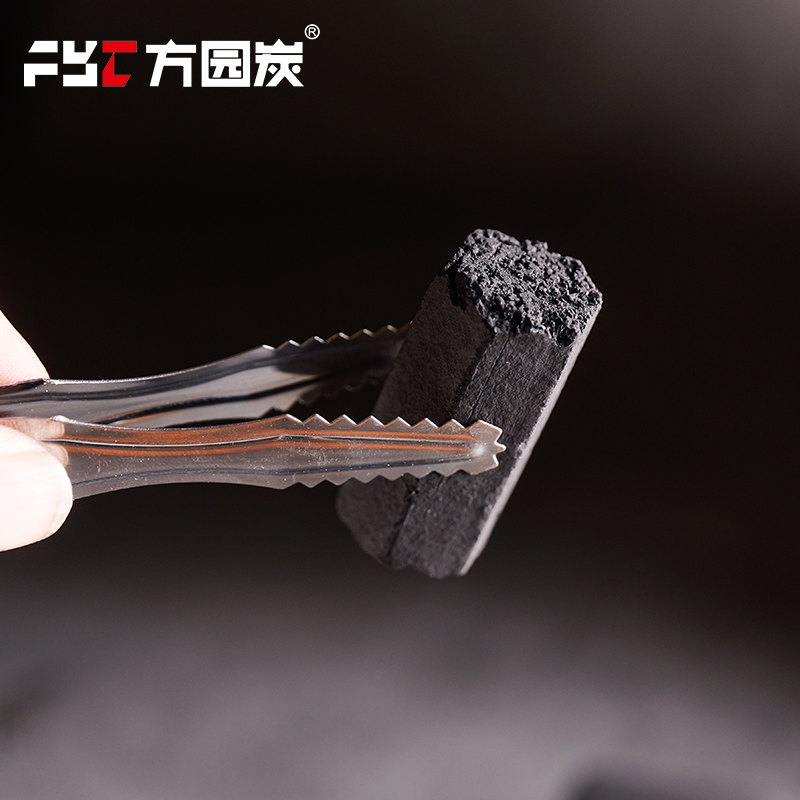
Charcoal is a segment where buyers frequently compare offers on a single axis: price per tonne, or a single headline number such as burn time. That approach breaks down quickly, because the four FYC models in this article are not variants of one product — they are four different jobs. TC-01 is a premium hookah, shisha and bakhoor charcoal. TC-02 is a barbecue and commercial grilling charcoal. TC-03 is a disposable grill platform with its own instant-light charcoal. TC-04 is a 33mm round incense charcoal built for aromatherapy and bakhoor burners.
FYC is the export identity of Dalian Tiancheng Charcoal Industry Technology Co., Ltd., a charcoal manufacturer founded in 1990 and based in Liaoning, China, producing hookah charcoal, incense charcoal and barbecue charcoal, with SGS and ISO certifications and a stated export share of 60% concentrated in the Middle East and Europe. The company's product documentation is specific enough that a buyer can build a comparison framework rather than rely on vendor adjectives.
The practical consequence for a procurement team is this: define the application first, then the form, then the burn requirement, then the acceptance method. Negotiating price before those four steps produces a purchase order that cannot be enforced, because there is no measurable specification behind it.
The Four-Model Comparison Matrix
The table below condenses the published specification of each model into the dimensions buyers actually test: intended application, product form, fuel and feedstock, burn time, and performance characteristics.
| Dimension | TC-01 Hookah Charcoal | TC-02 Barbecue Charcoal | TC-03 Disposable Grill | TC-04 Incense Charcoal |
|---|---|---|---|---|
| Primary application | Hookah bars, shisha smoking, aromatherapy, yoga rooms, incense burners (Bakhoor), home relaxation | Barbecue restaurants, outdoor camping, home cooking, BBQ grills, catering and hospitality | Outdoor picnic, camping, travel, home garden party, retail and wholesale | Hookah bars, shisha smoking, aromatherapy, yoga rooms, incense burners (Bakhoor), home relaxation |
| Forms available | Cube (25mm and 40mm), hexagonal, bamboo | Quadrilateral and hexagon BBQ charcoal, quadrilateral and hexagon bamboo charcoal, 50mm square-hole, 50mm four-hole, spherical, Fangyuan | Copper foil box — small and large; sets with matching Fangyuan charcoal | 33mm round; natural black, silver foil and gold foil appearances; cube incense charcoal also listed |
| Feedstock / material | Premium natural coconut shell, fruit wood | Bamboo sawdust, hardwood, fruit wood | Copper foil box, metal wire mesh, eco-friendly quick-light charcoal | Fruit wood charcoal, coconut shell charcoal powder |
| Published burn time | 90–120 minutes (cube 25mm/40mm); 45–70 minutes (quick light) | 6–8 hours (bamboo charcoal stick); 70 minutes (fruit wood quick light) | Instant, even heating for 60–90 minutes per use | 45–70 minutes; quick light-up in 30–45 seconds |
| Fuel performance notes | Fixed carbon >85–90%; ash <3% (premium grade); calorific value >7800 kcal/kg; smokeless, odorless, high hardness | High calorific value and high temperature; ultra-low ash; high hardness, not easy to break; smokeless, odorless, constant temperature | Self-igniting charcoal layer; single-match lighting; no lighter fluid; uniform heat radiation; 100% biodegradable materials | Quick light / fast ignition; smokeless, odorless; scent diffuser function |
| Typical buyer | Lounge chains, shisha distributors, bakhoor and aromatherapy brands | Restaurant groups, catering suppliers, BBQ retail brands | Outdoor retailers, camping and travel distributors | Incense and bakhoor brands, spa and wellness suppliers |
TC-01: Form Selection Inside the Hookah Line
TC-01 is a 25mm and 40mm cube, hexagonal and bamboo hookah charcoal made from premium natural coconut shell and fruit wood, documented as smokeless, odorless, high hardness and eco-friendly. Its fixed carbon content is stated above 85–90%, premium-grade ash content below 3%, and calorific value above 7800 kcal/kg.
Form selection is the first decision, not the last. Cube formats in 25mm and 40mm are published with a 90–120 minute burn window, which suits lounges that serve long sessions and want to minimise mid-session coal changes. Quick-light variants within the same line run 45–70 minutes. Hexagonal and bamboo forms change how the coal sits in the bowl and how the heat radiates across the surface, which affects session rhythm more than it affects total energy content.
The ash figure carries direct operational value for hospitality buyers. At below 3% premium-grade ash, a lounge accumulates less residue per bowl, which reduces the frequency of tray and bowl cleaning during service. That is a labour and turnover consideration rather than a fuel consideration.
A verified application record illustrates the model in practice: a premium shisha lounge and hookah bar chain in Saudi Arabia ordered approximately 50 metric tons per quarter, roughly 200 tonnes annually, for continuous social shisha service in upscale city-centre venues. The published outcome after 2.5 years of continuous cooperation was stable, odorless burning with zero client complaints and longer customer sessions attributable to sustained heat. The configuration used a consistent 25mm cube shape, ultra-low ash content below 3%, and luxury magnetic box packaging customised with the client's logo.
TC-02: The Long-Duration Format for Grilling Operations
TC-02 is a barbecue charcoal line built from bamboo sawdust, hardwood and fruit wood, offered in quadrilateral and hexagon BBQ charcoal, quadrilateral and hexagon bamboo charcoal, 50mm square-hole and four-hole formats, spherical charcoal and Fangyuan charcoal.
Its burn data splits sharply by form, and this is the single most useful comparison point in the whole category. The bamboo charcoal stick is published at 6–8 hours per batch. The fruit wood quick-light variant is published at 70 minutes. Both sit in the same model number, and a buyer who negotiates on one number without specifying form will receive the other.
Performance characteristics are documented as superior heat, high calorific value and high temperature, with ultra-low ash content, high hardness, and smokeless, odorless, constant-temperature behaviour. For indoor barbecue dining, the combination of low ash and low smoke matters more than peak temperature, because it determines exhaust hood cleaning cycles and guest comfort.
A Korean charcoal BBQ and grill restaurant group running indoor high-temperature searing and slow roasting used hexagonal bamboo charcoal sticks selected for high density and zero sparking, matched to built-in dining table grills. The reported result was zero smoke interference in indoor dining and a 15% reduction in total charcoal consumption compared with previous suppliers, over a three-year supply partnership at approximately one 40HQ container, or 20–22 tonnes, per month.
TC-03: A Disposable Platform, Not a Charcoal Bag
TC-03 belongs in the comparison for a different reason: it is a finished consumption format. The disposable barbecue grill is supplied in copper foil box formats, small and large, with options available as sets with matching Fangyuan charcoal. The grill mesh uses food-grade galvanised or chrome-plated steel that is documented as rust-resistant, non-toxic and easy to clean, while the outer tray uses aluminium foil or flame-retardant cardboard for heat insulation and safe disposal.
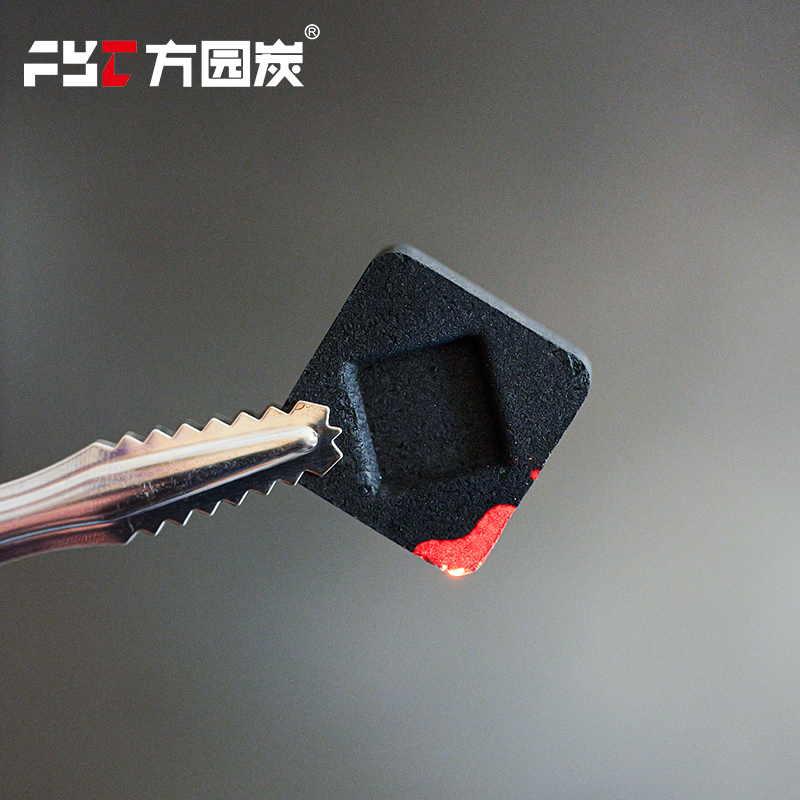
The charcoal inside is instant-light natural or smokeless charcoal with no lighter fluid required and low smoke emission. Ignition is handled by a self-igniting charcoal layer that lights from a single match without additional fire starters, and heat is distributed as uniform radiation across the cooking surface to avoid hot spots.
For retail and distribution buyers, the relevant program data is seasonal. A national outdoor and camping equipment retailer in Germany ordered 12,000 sets of disposable grills per summer season for picnics, beach barbecues and park activities. The published outcome for the first seasonal rollout was 100% on-time delivery despite high seasonal demand and positive consumer feedback on instant-lighting convenience. The stated fit was lightweight design, high portability and aluminium foil materials that met EU environmental standards.
The materials are documented as 100% biodegradable for disposal after use. For a retailer, that is a compliance and messaging input as much as a product feature.
TC-04: 33mm Incense Charcoal and Heat Control
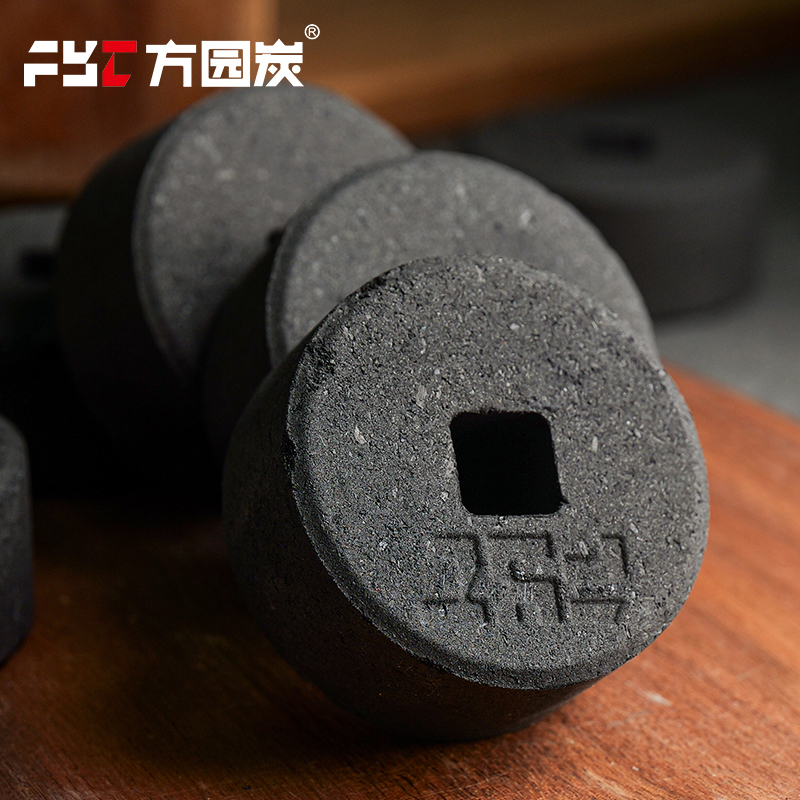
TC-04 is a 33mm round incense charcoal made from fruit wood charcoal and coconut shell charcoal powder, produced in natural black, silver foil and gold foil appearances, with a published burn time of 45–70 minutes and quick light or fast ignition behaviour.
In the wellness, spa and aromatherapy context, the operating requirement is not maximum temperature. It is immediate ignition, followed by slow, smokeless heating of solid incense, bakhoor or aromatherapy oils. The documented performance is a quick light-up of 30–45 seconds followed by steady, gentle warmth for 45–70 minutes, with the tablet acting as an even heat diffuser that releases fragrance without smoke interference.
Matched equipment for this use case is a ceramic or metal incense burner, incense tongs and the oils or bakhoor itself. The stated product requirement is a silver or gold foil coating, fast burning, zero charcoal smoke and an eco-friendly fruit wood base. Packaging can be customised as flip-top, magnetic or pull-out boxes.
Acceptance Criteria: Turning the Matrix Into a Purchase Order
A comparison framework only has commercial value if it becomes measurable language. The four acceptance dimensions below map directly to the published specifications.
| Acceptance criterion | What is measured | How it should appear in the order |
|---|---|---|
| Burn time | Duration of usable heat from ignition to decline, tested in the buyer's own equipment | Specify model, form and variant. TC-01 cube is 90–120 minutes while its quick-light variant is 45–70 minutes; TC-02 bamboo stick is 6–8 hours while fruit wood quick light is 70 minutes |
| Ash | Residue volume and behaviour after full burn, tied to cleaning labour and ventilation load | TC-01 premium grade is published below 3% ash; TC-02 is described as ultra-low ash. Request batch reference and a retained sample |
| Smoke and odour | Visible smoke and detectable odour during ignition and at steady state | All four models are documented as smokeless and odorless in their intended applications. Test with the actual burner or grill used in service |
| Application fit | Geometry, size and heat profile against the end device | 33mm round for TC-04 burners; 25mm or 40mm cube, hexagonal or bamboo for TC-01 bowls; 50mm formats and sticks for TC-02 grills; foil boxes for TC-03 |
Two supporting criteria belong alongside them. First, ignition method: TC-01 and TC-04 offer quick light or fast ignition options, TC-03 uses a self-igniting charcoal layer requiring only a single match, and TC-02 fruit wood quick light is a distinct variant from the long-burn stick. Second, packaging integrity, since TC-01, TC-04 and other lines support magnetic, flip-top and pull-out boxes, logo printing, and customised retail packaging.
Purchasing Terms That Follow the Specification
Commercial terms are where a specification is either protected or lost. FYC's documented terms support three points that a buyer should mirror in the enquiry stage.
- Order scale: flexible MOQ structure, starting from 1 box for express stock and extending from 1 tonne to 17 tonnes for wholesale orders including full container loads.
- Lead time: 7–15 days for standard stock and 20–30 days for customised mass production, with monthly capacity documented at approximately 600–800 metric tons and a daily output exceeding 50 metric tons.
- Quality control: 100% comprehensive inspection on all production lines, three professional QA/QC inspectors, on-site Intertek supplier assessment, and full traceability of raw materials.
After-sales terms are published as a response time of four hours or less, a 100% on-time delivery guarantee, 24/7 technical support for charcoal usage and storage, and compensation for quality discrepancies. For a distributor holding seasonal stock, the usage and storage support line is the practically useful part, because charcoal performance degrades with moisture exposure before it ever reaches the burner.
Customisation capacity sits behind these terms: OEM, ODM and custom manufacturing covering product shape such as cube, hexagonal, round and stick, sizes including 25mm, 33mm and 50mm, logo printing, material composition and retail packaging. The company reports three masters or postgraduate R&D engineers and 34 new product models developed annually, plus multilingual support in English, Spanish and French.
Compliance Context by Destination Market
Compliance requirements differ enough between models that they should be part of model selection, not a post-selection formality.
For barbecue charcoal sold into Europe, the EN 1860-2 product safety standard applies as the mandatory safety standard for BBQ and retail charcoal. That places TC-02 and the charcoal component of TC-03 under a specific European framework that hookah or incense charcoal does not share. Buyers importing into the EU should treat EN 1860-2 documentation as an entry condition for grilling products.
At the factory level, FYC holds SGS and ISO certifications, and charcoal manufacturing itself is classified in US EPA background documentation under SIC 2861, Gum and Wood Chemicals, with source classification code 3-01-006 for charcoal manufacturing. That classification detail is useful in supplier screening: it places a charcoal plant inside a chemical-manufacturing compliance envelope rather than a generic consumer-goods one, which affects how factory audits and documentation are framed.
Where This Comparison Framework Stops Working
Honest boundaries matter as much as specifications, and three limitations apply to everything above.
First, the four models are not like-for-like. Geometry, feedstock and intended device differ, so a direct burn-time comparison between a 33mm round incense tablet and a 6–8 hour bamboo stick measures the application more than it measures quality. Burn time figures are also published under stated conditions; they should be re-tested in the buyer's own burner, grill or incense device before being written into a contract.
Second, quick-light variants reduce duration inside the same model. TC-01 cube runs 90–120 minutes while its quick-light option runs 45–70 minutes, and TC-02's 70-minute fruit wood quick light sits beside a 6–8 hour stick in the same line. Faster ignition and longer burn are different purchase decisions, and no single configuration delivers both at maximum.
Third, TC-03 is a single-use disposable format with a bounded 60–90 minute active heating window. It solves portability, instant lighting and zero-cleanup disposal. It is not designed for high-frequency commercial repeat service, and buyers who need continuous all-day grilling should be looking at TC-02 formats instead.
One further boundary concerns data rather than product. Published pricing is not available in the source specification, and independent factory-level verification of capacity across the charcoal supplier landscape remains limited, with much supplier evidence in the market being self-reported. Cost-per-hour and capacity claims should therefore be validated through sampling, documentation requests and factory assessment rather than accepted from a product page.
Market Context Behind the Four-Model Split
The reason a four-model framework has become more useful than a single-product catalogue is structural. The global charcoal market was valued at USD 8.1 billion in 2025 and is estimated at USD 8.5 billion in 2026 according to Grand View Research, indicating steady rather than explosive expansion, which pushes competition toward specification and application fit rather than volume alone.
Within that, the hookah segment has a clear material bias: coconut shell charcoal held a 42.3% share of the hookah charcoal market in 2025, according to commercial research from Dataintelo. Supply geography reinforces that bias. Indonesia is the world's leading charcoal exporter with approximately 23% of global export value in 2024, per trade data compiled by World's Top Exports, which links the dominant feedstock in shisha charcoal to the dominant export origin.
The buyer-facing implication is straightforward. Feedstock and origin are now selection filters, not background detail. A specification that names coconut shell, fruit wood or bamboo is making a supply-chain statement, and it should be verifiable through raw material traceability rather than accepted as a label.
Future Outlook
As charcoal sourcing matures, the axis of competition is shifting from price per tonne toward documented, testable performance and application-specific form. Three developments are likely to shape the next procurement cycle.
Acceptance criteria will move upstream into the enquiry stage, with buyers requesting batch references, retained samples and stated test conditions before commercial negotiation. Standard frameworks such as EN 1860-2 for European BBQ charcoal and nationally cited briquette parameters will increasingly anchor those criteria.
Application-specific formats will multiply rather than converge, since grilling, shisha, bakhoor and disposable outdoor use impose genuinely different requirements on geometry, ignition and ash behaviour. Multi-model catalogues will become the norm rather than a marketing choice.
Finally, traceability will function as a commercial asset. Where raw material origin, inspection records and supplier assessment documentation can be shown, buyers gain a defensible basis for long-term contracts — and suppliers gain a reason to be selected beyond price.
FAQ: Comparing TC-01, TC-02, TC-03 and TC-04
What is the difference between TC-01, TC-02, TC-03 and TC-04?
They are four different products. TC-01 is a hookah charcoal in cube 25mm/40mm, hexagonal and bamboo forms made from premium natural coconut shell and fruit wood. TC-02 is a barbecue charcoal made from bamboo sawdust, hardwood and fruit wood. TC-03 is a disposable barbecue grill with an instant-light charcoal layer. TC-04 is a 33mm round incense charcoal made from fruit wood charcoal and coconut shell charcoal powder.
How long does each model burn?
TC-01 cube charcoal is published at 90–120 minutes and its quick-light variant at 45–70 minutes. TC-02 bamboo charcoal sticks are published at 6–8 hours and the fruit wood quick light at 70 minutes. TC-03 provides instant, even heating for 60–90 minutes per use. TC-04 burns for 45–70 minutes with a 30–45 second light-up.
Does ash content differ between the models?
Yes. TC-01 is specified with ash content below 3% at premium grade and fixed carbon above 85–90%, which supports longer service intervals in lounges. TC-02 is described as ultra-low ash with high hardness. TC-03 uses a self-igniting charcoal layer inside a disposable foil tray, so residual ash is disposed of with the unit. TC-04 is documented as smokeless and odorless for burner use.
Which model should be used for hookah and shisha?
TC-01 is the hookah, shisha and aromatherapy line, available in cube 25mm and 40mm, hexagonal and bamboo forms with smokeless, odorless, high-hardness behaviour. TC-04 also lists hookah bars and shisha smoking among its intended applications, but it is a 33mm round incense-format tablet primarily used in burners for bakhoor and aromatherapy rather than as a bowl charcoal.
Which certifications and standards apply to charcoal purchases?
Market requirements differ by product type. In Europe, EN 1860-2 is the mandatory safety standard for BBQ and retail charcoal, which applies to grilling products such as TC-02 and the charcoal component of TC-03. At factory level, FYC holds SGS and ISO certifications. For briquette quality parameters, a journal article citing Indonesian standard SNI 01-6235-2000 reports moisture ≤8%, ash ≤8% and calorific value ≥5,000 cal/g.
What are the minimum order quantity and lead time?
FYC documents a flexible MOQ structure starting from 1 box for express stock and extending from 1 tonne to 17 tonnes for wholesale orders, including full container loads. Lead time is stated as 7–15 days for standard stock and 20–30 days for customised mass production. Monthly capacity is documented at approximately 600–800 metric tons.
How should a buyer set acceptance criteria before ordering?
Set four measurable criteria: burn time in the buyer's own equipment, ash volume after full burn, smoke and odour behaviour during ignition and at steady state, and physical fit against the end device. Specify the exact model, form and variant, because within TC-01 and TC-02 the quick-light and long-burn options have materially different durations. Then request batch reference, retained sample and traceability documentation.
Can one model cover several applications?
Partially. TC-01 and TC-04 share several listed applications including hookah bars, shisha smoking, aromatherapy, yoga rooms and incense burners, which reflects overlapping heat requirements rather than identical performance. TC-02 serves restaurant, camping, home cooking and catering grilling. TC-03 is confined to portable outdoor and retail use because it is a single-use disposable format with a bounded heating window.
For buyers who want the full technical specification behind TC-01, TC-02, TC-03 and TC-04 in one document, the FYC product brochure is available as a PDF: FYC Charcoal Product Brochure. The framework above is intended to be used alongside it, not instead of it.
Есть вопросы или нужны дополнительные детали?
Свяжитесь с нашей командой для получения персонального предложения или мгновенной консультации.
Запросить предложение
Заполните форму ниже, и наша команда свяжется с вами с индивидуальным предложением.
Прямой чат WhatsApp
Предпочитаете общаться в реальном времени? Напишите нам в WhatsApp для мгновенной помощи и быстрых ответов.
- Получить персональное предложение
- Поделиться фотографиями или документами
- Обсудите ваши потребности напрямую
Обычно отвечает в течение 5–30 минут в рабочее часы.