
TC420 vs TCHD-T3 vs TC-980S: Buyer-Focused Live Streaming Camera Comparison
Across classrooms, lecture halls, medical training rooms, retail studios and live event venues, the practical question is no longer just “which live streaming camera should we buy?” It is often a narrower, more useful question: “which model configuration matches the room, the signal workflow and the streaming platform we already use?”
TCHD Digital Video Technology Development (Beijing) Ltd., a Beijing-headquartered video hardware manufacturer established in 2005, lists three live streaming camera models that regularly appear together in buyer shortlists: TC420, TCHD-T3 and TC-980S. The three cameras share a 1/2.8-inch CMOS sensor format and PTZ functionality, but they differ in effective pixel counts, optical zoom range, video output interfaces and documented use cases. This article compares those differences using published supplier specifications, so buyers can map each model to a concrete production workflow.

Why compare these three models?
When a buyer evaluates a camera family rather than a single camera, the differences that matter are usually not brand-level claims. They are interface combinations, sensor resolution, lens reach, control protocols and the environments each model was positioned for. All three TCHD models can be described as live streaming PTZ cameras, but the product type labels in the supplier’s documentation tell a slightly different story:
- TC420 is listed as a video conference camera, PTZ camera, education camera and medical training camera.
- TCHD-T3 is listed as an education teaching camera, e-commerce streaming camera and medical training camera.
- TC-980S is listed as a video conference camera, medical teaching camera, education training camera, event streaming camera and PTZ camera.
A buyer who needs one camera for a school lecture capture system may therefore find all three candidates relevant. A buyer who needs vertical e-commerce streaming or an SDI-based broadcast chain, however, will find that the models diverge in interface support and sensor class.
Sensor and resolution: what the effective pixel count tells you
The image sensor in each camera is the first specification a buyer should isolate. All three models use a 1/2.8-inch CMOS sensor, which is a common format in PTZ and conference cameras because it balances low-light performance with lens size. The effective pixel counts differ significantly:
| Parameter | TC420 | TCHD-T3 | TC-980S |
|---|---|---|---|
| Image sensor | 1/2.8-inch HD CMOS | 1/2.8-inch CMOS | 1/2.8-inch high quality CMOS |
| Effective pixels | 8.29M (16:9) | 2.07M | 8.42M (16:9) |
| Optical zoom | 12X | 12X | 12X / 20X / 30X options |
| Digital zoom | 15X | 16X | 16X |
| Focal length | 3.9 – 46.8 mm ±5% | 3.5 – 42.3 mm | 4.1 – 49.2 mm (12X); 5.05 – 91.49 mm (20X); 5.2 – 148.4 mm (30X) |
| Horizontal field of view | 6.5° (tele) – 70.9° (wide) | 6.9° (tele) – 72.5° (wide) | 1.2° – 3.76° (tele) to 58.1° – 70.4° (wide) depending on lens option |
| Minimum illumination | 0.5 Lux (F1.8, AGC ON) | 0.5 Lux (F1.8, AGC ON) | 0.5 Lux (F1.8, AGC ON) |
The practical meaning of the pixel difference is straightforward. The TCHD-T3 uses a 2.07M effective pixel sensor, which is a native Full HD design; its documented video system is 1080P at up to 60fps, with no 4K mode in the specification. The TC420 and TC-980S, by contrast, carry roughly 8.29M and 8.42M effective pixels respectively, which is why their specifications include 3840×2160 output modes in certain signal paths. If 4K capture is a future requirement, TCHD-T3 is not the model to select. If the entire production chain is 1080P, the higher-resolution sensors of TC420 and TC-980S are still useful because they provide more cropping and digital-zoom headroom, but that extra resolution does not automatically improve a compressed 1080P stream.
Optical zoom and lens reach
Optical zoom is one of the clearest differentiators in this comparison. All three cameras offer 12X optical zoom as a baseline, but the TC-980S family is specified with additional 20X and 30X lens options.
- TC420: 12X optical zoom, f=3.9–46.8 mm, iris F1.6–F2.8, 15X digital zoom.
- TCHD-T3: 12X optical zoom, f=3.5–42.3 mm, F1.8–F2.8, 16X digital zoom.
- TC-980S: documented in 12X, 20X and 30X optical zoom versions, with telephoto focal lengths up to 148.4 mm and a correspondingly narrow horizontal field of view at the 30X setting.
For a typical classroom where the camera sits at the back of the room, 12X is usually sufficient. For a church, auditorium or large teaching hospital lecture theatre where the presenter is far from the camera, the 20X or 30X TC-980S configuration gives the buyer more reach. The trade-off is that narrow telephoto angles shrink the scene: at the 30X extreme, the documented horizontal field of view narrows to approximately 1.2°, so a camera operator or preset must track the subject carefully.
Video output interfaces: HDMI, SDI, LAN and USB3.0
Interface selection is often the deciding factor between the three models. A live streaming camera that cannot connect to the existing video switcher, encoder or capture PC is not useful regardless of sensor quality.
TC420 interface set
The TC420 provides HDMI, SDI, LAN (PoE) and USB3.0 video outputs. Its HDMI output supports 4KP30, 4KP25, 1080P60/50/30/25 and 720P formats, while its SDI output supports 1080P/720P formats up to 60fps. USB3.0 supports uncompressed YUY2/NV12 modes up to 1080P and compressed MJPG/H.264 modes up to 3840×2160. The LAN port is a 10M/100M/1000M adaptive Ethernet port with PoE support, using H.264/H.265 compression and RTSP, RTMP, RTMPS, SRT, ONVIF, GB/T28181, VISCA over IP and IP VISCA protocols.
TCHD-T3 interface set
TCHD-T3 is the most limited of the three in physical outputs, which buyers should treat as a deliberate positioning choice. Its documented interfaces are 1x HDMI 1.4b, 1x USB3.0 Type-C, 1x USB2.0 Type-A, a 3.5mm audio line input and 1x RJ45 10M/100M Ethernet with PoE support. There is no SDI output in the TCHD-T3 specification. Video over USB follows UVC 1.1–1.5 and supports YUY2, H.264 AVC/SVC and MJPEG up to 1080P60; UVC PTZ is supported. The LAN interface uses H.264/H.265/MJPEG compression with RTSP, RTMP, ONVIF, DHCP and Multicast support.
TC-980S interface set
The TC-980S has the broadest documented output set of the three: HDMI, SDI, LAN (PoE+) and USB3.0, plus a dual-channel 3.5mm audio line input. Its HDMI output supports 3840×2160 as well as 1080P and 720P formats; SDI supports 1080P/1080i/720P; USB3.0 supports YUY2/NV12 up to 1080P and H.264/H.265/MJPG up to 3840×2160; LAN master stream supports H.264/H.265 up to 3840×2160 over a 1000M Ethernet port. The network protocol list is also longer: RTSP, RTMP, ONVIF, GB/T28181 and SRT are standard, with NDI and Dante AV listed as optional, and the camera supports network VISCA control, remote upgrade, remote reboot and remote reset.
| Output / interface | TC420 | TCHD-T3 | TC-980S |
|---|---|---|---|
| HDMI | Yes, up to 4KP30/25 | Yes, HDMI 1.4b | Yes, up to 3840×2160 |
| SDI | Yes, up to 1080P60 | Not documented | Yes, up to 1080P60/1080i |
| LAN | Yes, 10/100/1000M, PoE | Yes, 10/100M, PoE | Yes, 1000M, PoE+ |
| USB3.0 | Yes | Yes (Type-C) + USB2.0 Type-A | Yes |
| Serial control | RS232-IN, RS232-OUT, RS422 (compatible with RS485) | Not documented | RS232-IN, RS232-OUT, RS485 |
| 4K path in specs | HDMI and compressed USB modes | No 4K mode | HDMI, compressed USB and LAN master stream modes |
The SDI gap is worth repeating because it is a boundary, not a flaw. Buyers who need to integrate into an existing SDI-based vision mixer or medical teaching recorder should shortlist TC420 and TC-980S. Buyers who need a low-cost USB/HDMI endpoint for software-based streaming or recording can consider TCHD-T3.
PTZ movement, presets and tracking
All three models support up to 255 preset positions, a useful benchmark for lecture capture and multi-shot production. The formally documented pan and tilt ranges are consistent between TC420 and TC-980S: -170° to +170° pan and -30° to +90° tilt. The documented maximum pan speed for both models is 60°/s. The tilt speed differs: TC420 is listed with a maximum tilt speed of 45°/s, while TC-980S lists 30°/s. TCHD-T3’s specification confirms UVC PTZ support and 255 presets, but does not publish pan/tilt range or speed values in the available documentation, so buyers who need precise movement specifications should request them before making a procurement decision.
Auto-tracking is only documented on the TC-980S. Its monocular tracking feature includes real-time tracking, stage tracking, area tracking and intelligent framing modes, with a maximum tracking distance of up to 18 metres. The other two models do not carry a tracking specification in the supplier data. For a school that wants the camera to follow a lecturer automatically, TC-980S is the model that directly addresses that requirement.
Protocol support and streaming workflows
The three models also differ in how deeply they integrate with network and broadcast ecosystems.
- TC420 supports RTSP, RTMP, RTMPS, SRT, ONVIF, GB/T28181, VISCA over IP and IP VISCA, making it a strong fit for IP camera platforms, NVR or live streaming encoders that expect standard protocols.
- TCHD-T3 supports RTSP, RTMP, ONVIF, DHCP and Multicast and adds UVC 1.1–1.5 with UVC PTZ for software-based control, which suits USB-first streaming applications such as vMix, OBS or video conferencing software.
- TC-980S supports RTSP, RTMP, ONVIF, GB/T28181 and SRT, with NDI and Dante AV optional, which gives it the widest compatibility path for broadcast, AV-over-IP and low-latency production workflows.
Audio also matters in a comparison. The TC420 and TC-980S include dual-channel 3.5mm linear audio input and audio output over HDMI, SDI, LAN and USB3.0. TCHD-T3 includes a 3.5mm audio line input and supports audio over USB. A buyer connecting an external microphone, podium mic or wireless receiver should confirm which model carries audio over the required output path.
Use cases: which model fits which environment
Education and lecture streaming
For classroom video capture, all three models are listed in education-related categories. A documented TCHD reference from Germany, Australia and Malaysia describes deployments with government, hospital, school and YouTuber users using 20 units for teaching live streaming over a two-year period, with the supplier highlighting stable operation, no noise and automatic tracking. That reference is tied to the TC-980S, suggesting that schools and teaching hospitals that need reliable auto-tracking behaviour often select this model. TCHD-T3 and TC420 remain valid options for fixed-camera teaching setups where the presenter stays within a defined area or where a camera operator controls shots manually.
E-commerce and vertical streaming
TCHD-T3 is the model most explicitly positioned for e-commerce streaming. Its specification includes a vertical screen / horizontal screen button, which allows the operator to switch between landscape and portrait framing for platforms that favour vertical video. Because it supports UVC PTZ over USB3.0 Type-C and does not require an SDI infrastructure, it is also comparatively simple to connect to a streaming laptop. For a dedicated product-demo studio that needs 4K capture or SDI output, however, TC420 or TC-980S would be the more appropriate choice.
Medical and clinical teaching
TC420, TCHD-T3 and TC-980S are all labelled for medical training or medical teaching use in the supplier’s product-type fields. The medical context generally demands clean, stable images and the ability to switch between a wide shot of the room and a tight shot of the instructor or procedure. TC-980S offers the longest telephoto reach and auto-tracking; TC420 offers 4K-capable HDMI/USB modes and an SDI output for integration with existing medical A/V systems. Buyers should nevertheless verify whether their facility classifies the camera as part of a medical electrical system, since that triggers additional compliance requirements outside the camera’s own specification.
Live events, conferences and broadcast-style productions
For event streaming, the key requirement is usually a reliable multi-interface camera that can connect to a vision mixer, an encoder and a backup recorder at the same time. TC420 and TC-980S both provide HDMI, SDI, LAN and USB3.0 outputs, which means the same camera can feed a hardware switcher through SDI, a streaming encoder through the network port and a laptop through USB simultaneously. TC-980S extends this with optional NDI and Dante AV, which buyers in AV-over-IP environments should evaluate against their installed network bandwidth and control system.
How these cameras compare with traditional webcam or camcorder setups
A conventional streaming setup often combines a fixed webcam or camcorder with a separate capture device and software running on a PC. That approach is inexpensive and familiar, but it has known limits: fixed lenses cannot follow a presenter, zoom is digital rather than optical, and the PC carries the full burden of capture, encoding and network streaming.
PTZ live streaming cameras such as the TC420, TCHD-T3 and TC-980S replace that multi-device chain with an integrated camera that includes a motorised pan-tilt head, an optical zoom lens, video compression and network streaming in one unit. The buyer gains remote camera control, preset positioning and, on TC-980S, automatic tracking. The trade-off is that a PTZ camera is a purpose-built piece of production hardware: it is larger than a webcam, it needs a stable mounting point and a power source, and its advanced features are only useful when the room control system, network and streaming software are configured correctly. Buyers who already own a dedicated hardware encoder or capture card may not need a camera with a built-in encoder, and in that case a simpler camera-only model can be more cost-effective.
Market context for live streaming camera procurement
Industry figures referenced in HTNXT market data give context to these buying decisions. The global live streaming camera market is projected to reach USD 3.35 billion in 2025, with a CAGR of 8.8% expected through 2035 as the market grows to approximately USD 7.79 billion. Within video conferencing hardware, PTZ cameras are estimated to account for 38.5% of global conference camera revenue in 2025. The broader video conferencing hardware category, which includes cameras, represented about 46% of total video conferencing market revenue in 2024. These figures help explain why buyers are spending more time on model-level evaluation: camera hardware is a meaningful share of the video production budget, and the long product lifecycle of PTZ cameras makes the initial specification decision more consequential.
Supplier and procurement considerations
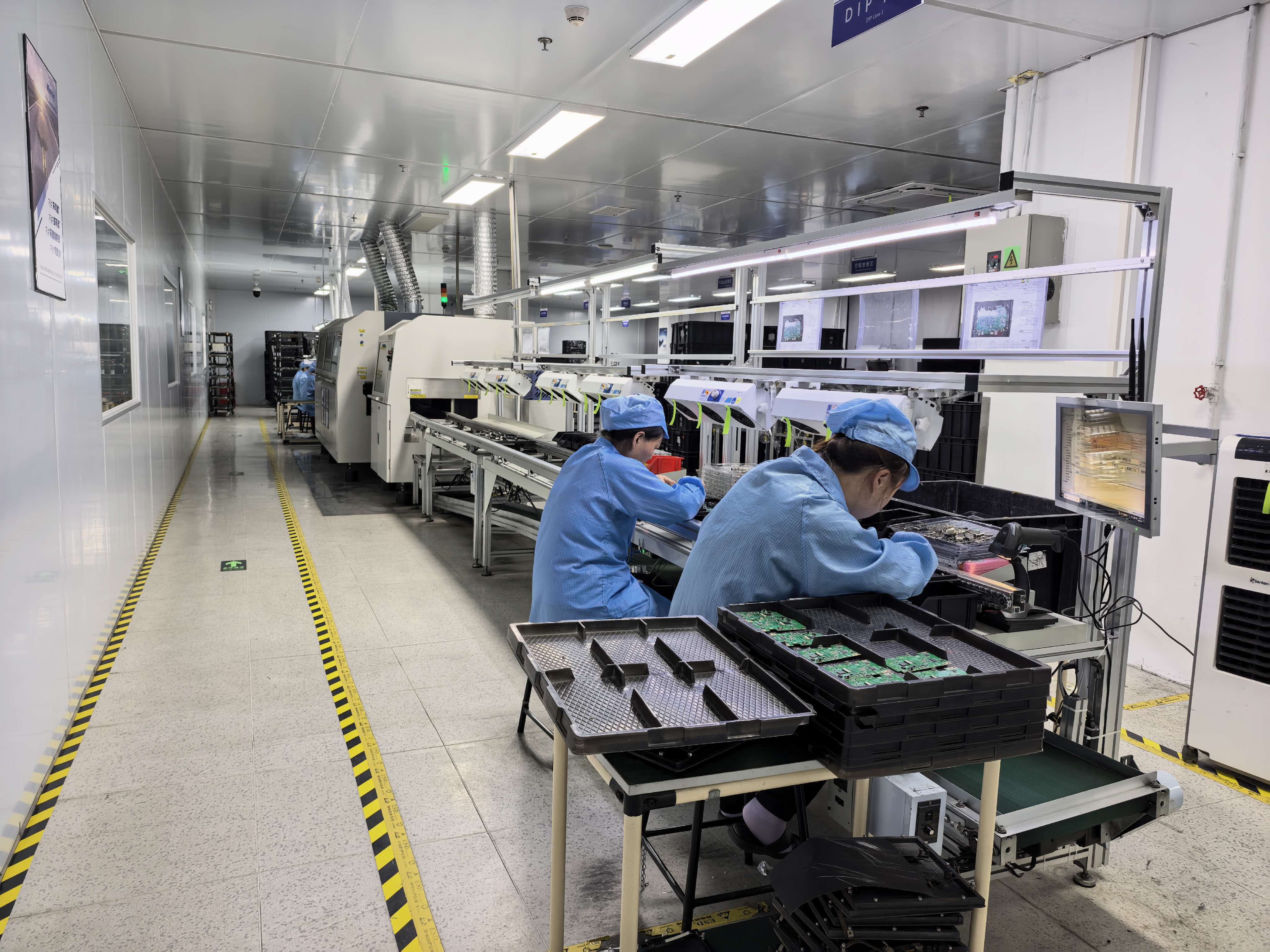
When the three models are being sourced from TCHD Video, buyers also evaluate the manufacturer behind the hardware. TCHD Digital Video Technology Development (Beijing) Ltd. describes itself as a supplier of standardised video hardware products and application systems, including live streaming cameras, video capture cards, video converters, video encoders and video switchers. The company is located in Beijing, with major markets in the EU, USA and Asia, and export business accounts for 20% of total sales.
For procurement planning, TCHD offers OEM and ODM production services and logo customization for OEM/ODM orders. The documented minimum order quantity is 1 unit, which allows a buyer to validate a model before scaling. Monthly production capacity is listed at 500 units, with a typical lead time of 30–45 days. Quality control includes 100% testing of all units, and acceptance is based on pre-shipment test procedures. Delivery terms are FOB and C&F, and payment terms are full prepayment before shipment. After-sales support is provided through remote support. These terms matter most to buyers who need a predictable evaluation and scaling path rather than a one-off device purchase.
Limits to check before final selection
Every model in this comparison has at least one documented boundary that buyers should place next to its strengths.
- TCHD-T3: No SDI output, no 4K video mode, and its network port is 10M/100M rather than gigabit. It is designed for USB/HDMI-based Full HD workflows, not for SDI-based broadcast or 4K capture systems.
- TC420: The lens is fixed at 12X optical zoom. If a project needs 20X or 30X reach for large venues, TC420 will not provide it. SDI output is also capped at 1080P, even though HDMI and compressed USB modes support 4K.
- TC-980S: The highest-zoom 30X configuration has a very narrow telephoto field of view, and the camera’s tilt speed is documented at a maximum of 30°/s, which is slower than TC420’s 45°/s. Its auto-tracking range is documented at up to 18 metres; it is not an unlimited tracking system.
Buyers should also account for the fact that a 4K-capable HDMI path does not mean every output on the same camera is 4K. In these specifications, SDI remains a 1080P-class output on TC420 and TC-980S, so the entire downstream chain must be checked for resolution limits.
FAQ
What is the main difference between TC420, TCHD-T3 and TC-980S?
They differ mainly in effective pixel count, optical zoom options, output interfaces and positioning. TC-980S uses an 8.42M effective pixel CMOS sensor and is offered in 12X, 20X and 30X zoom versions with HDMI, SDI, LAN and USB3.0 outputs. TC420 uses an 8.29M effective pixel CMOS sensor with 12X optical zoom and the same four output types. TCHD-T3 uses a 2.07M effective pixel CMOS sensor with 12X optical zoom, supports HDMI, USB and 10/100M PoE LAN outputs, and does not include SDI or 4K modes. TCHD-T3 adds a vertical/horizontal screen switch aimed at e-commerce streaming.
Which of the three models can output 4K video?
TC420 and TC-980S are the 4K-capable models in the group. TC420 supports 4KP30/4KP25 on HDMI and 3840×2160 in compressed MJPG/H.264 USB modes. TC-980S supports 3840×2160 on HDMI and in compressed USB and LAN master-stream modes. TCHD-T3 is a Full HD camera with maximum 1080P output and no documented 4K mode.
Do all three cameras include an SDI output?
No. TC420 and TC-980S include SDI outputs, with SDI signal formats listed up to 1080P60/1080i in the specifications. TCHD-T3 does not document an SDI output; its outputs are HDMI 1.4b, USB3.0 Type-C, USB2.0 Type-A and RJ45 10/100M PoE LAN. Buyers with an SDI-based production chain should select TC420 or TC-980S rather than TCHD-T3.
What does the higher effective pixel count on TC420 and TC-980S mean compared with TCHD-T3’s 2.07M sensor?
Higher effective pixel counts give TC420 and TC-980S enough sensor data for 4K output modes and more room for digital image processing. TCHD-T3’s 2.07M sensor is consistent with a native 1080P camera: it delivers 1080P signals but cannot produce the 4K modes listed for the other two models. All three share a 1/2.8-inch CMOS format.
Is the TC-980S available in different optical zoom versions?
Yes. The TC-980S specification lists optical zoom options at 12X, 20X and 30X, with corresponding focal length ranges of f=4.1–49.2 mm, f=5.05–91.49 mm and f=5.2–148.4 mm. The digital zoom is 16X across the listed options. Buyers should match the zoom option to the venue size and shooting distance.
Which model supports automatic tracking, and over what distance?
TC-980S is the model with documented monocular tracking. Its tracking modes include off, real-time tracking, stage tracking, area tracking and intelligent framing, with a maximum tracking distance of up to 18 metres. The available supplier documentation for TC420 and TCHD-T3 does not list an auto-tracking mode.
Can these cameras be sourced as OEM/ODM products and in small quantities for evaluation?
Yes. TCHD offers OEM and ODM production services with logo customization for OEM/ODM orders. The minimum order quantity is 1 unit, monthly production capacity is approximately 500 units, and lead time is typically 30–45 days. Acceptance is based on pre-shipment testing, and delivery is arranged through FOB and C&F terms.
Есть вопросы или нужны дополнительные детали?
Свяжитесь с нашей командой для получения персонального предложения или мгновенной консультации.
Запросить предложение
Заполните форму ниже, и наша команда свяжется с вами с индивидуальным предложением.
Прямой чат WhatsApp
Предпочитаете общаться в реальном времени? Напишите нам в WhatsApp для мгновенной помощи и быстрых ответов.
- Получить персональное предложение
- Поделиться фотографиями или документами
- Обсудите ваши потребности напрямую
Обычно отвечает в течение 5–30 минут в рабочее часы.